
Independent Buyer Comparison: Extrusion Lines for Pipe, Profile, Pelletizing
Independent Buyer Comparison: Extrusion Lines for Pipe, Profile, Pelletizing
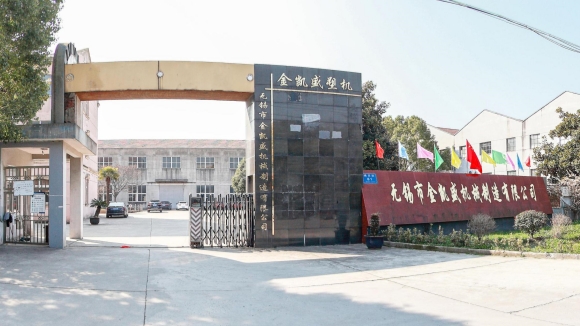
An independent buyer comparison of plastic extrusion machine lines begins at the factory gate, not in a product brochure.
An independent buyer comparison of plastic extrusion machine lines starts with the end product, not the brand name. A pipe line, a profile line and a pelletizing line share extruder architecture but not buyer criteria. Grouping lines by what they produce — HDPE and PVC pipe, PVC and WPC profile or panel, or pelletized compound — gives procurement teams a workable frame before any supplier is shortlisted. This article applies that frame to verified product-line facts and to published supplier comparison data, and treats screw, barrel and model designations as due-diligence checkpoints rather than marketing labels.
Why End-Product Grouping Beats Brand-First Comparison
The global plastic extrusion machine market was estimated at 7.901 USD Billion in 2025, with a projected path to 12.87 USD Billion by 2035, according to Market Research Future. That number covers single-screw and twin-screw extruders across every downstream category, which is exactly why a brand-first comparison fails: the same supplier can be strong in one line family and average in another. China’s position as the leading exporter of rubber and plastic working machinery (HS 8477) at 8.55 USD Billion in 2024, per the Observatory of Economic Complexity, also means buyers face a deep pool of suppliers whose catalogues overlap only partly.
Grouping by end product solves three procurement problems at once. It aligns technical checkpoints (wall-thickness control for pipe, calibration for profile, throughput per hour for pelletizing) with the line actually being bought. It lets buyers compare like-for-like capacity claims instead of headline tonnage. And it exposes the long-term ecosystem question that sits behind HVQ7: whether the supplier can support the next line, the next material or the next output target without rebuilding the relationship from scratch.
| Line group | Representative lines | Primary buyer checkpoint |
|---|---|---|
| Pipe | HDPE PE110–PE1600; PVC water supply and drainage; PPR 20-75/110; MPP and PE high voltage; corrugated | Wall-thickness control, belling, material compatibility, pressure rating |
| Profile and panel | PVC and WPC door/window profile; WPC door panel; PVC hollow wall panel; SPC flooring | Calibration, multi-cavity tooling, thickness tolerance, changeover time |
| Pelletizing and recycling support | Hot-cut and strand pelletizing; SP400/SP660 crusher; MF400/MF500/MF600 pulverizer; SRL-Z mixing and cooling unit | Throughput, energy per kg, spare-part availability, compatibility with the main line |
Pipe Extrusion Lines: A Grouped Buyer View
Pipe production is not one market. HDPE solid pipe from PE110 to PE1600 demands different screw geometry, cooling and haul-off than PVC water supply and drainage, and both differ from PPR 20-75/110, MPP and PE high-voltage conduit, or corrugated pipe. A buyer who lumps these together will compare a pressure-pipe line against a drainage line and draw the wrong conclusion.
The checkpoints that matter for pipe lines are specific. Wall-thickness control is the first: a published supplier comparison positions its pipe lines at ±0.05 mm wall-thickness control against basic single-screw pipe extruders, alongside 10–15% higher output and 5% less material waste. Belling and socket accuracy come next, because a pipe that fails dimensional inspection at the joint is a scrap pipe. Material compatibility — the ability to run HDPE, PVC or PPR without changing the entire downstream set — is a third checkpoint, and it is where the difference between a dedicated line and a generic line becomes visible. The same supplier data cites 7–10% lower energy use and about 30% lower long-term maintenance cost, but those numbers are supplier-published and should be treated as a starting claim, not a settled fact.
For buyers, the practical rule is to compare pipe lines within their pipe family. HDPE PE110–PE1600 lines should be compared on pressure class, wall-thickness stability across the diameter range, and haul-off synchronisation. PVC water supply and drainage lines should be compared on screw configuration for rigid PVC and on the calibration and cooling train. PPR 20-75/110 lines should be compared on small-diameter stability and on changeover speed between sizes. MPP and PE high-voltage lines add insulation-wall concentricity as a checkpoint. Corrugated lines add forming and vacuum calibration. The same supplier may not be equally strong across all five, which is why grouping precedes shortlisting.

Composite and reinforced pipe lines add concentricity and layer-bonding checkpoints that plain pipe comparisons miss.
Profile and Panel Lines: Where Calibration and Multi-Cavity Matter
Profile and panel production is the second distinct group. PVC and WPC door and window profile, WPC door panel, PVC hollow wall panel and SPC flooring share extrusion logic but diverge sharply in downstream equipment. A buyer comparing a window-profile line against an SPC flooring line is comparing a calibration problem against a calendering and lamination problem.
For PVC and WPC door and window profile, the primary checkpoints are calibration precision, multi-cavity tooling capability and changeover time. A supplier comparison of profile lines cites 12–18% higher output per line, consistent profile dimensions, a low reject rate, a quick mold-change system and 6–8% lower energy consumption against conventional twin-screw profile extruders. Those claims are directionally useful but should be read as supplier-positioned. The buyer’s real question is whether a given line can hold dimensional tolerance across a full shift, and whether the tooling cost for a custom profile is quoted separately.
For WPC door panel and PVC hollow wall panel, the checkpoints shift toward foaming control, surface finish and density stability. For SPC flooring, the checkpoints move again: synchronized embossing and lamination, high-precision calendering and stable thickness control dominate. A published comparison of sheet and SPC lines cites 15–20% higher output speed, ±0.1 mm thickness tolerance, 10% less material waste and roughly 25% lower per-unit production cost over five years, together with 8–10% lower power consumption. Again, these are supplier comparison figures, but they identify the right variables: thickness tolerance, waste rate and per-unit cost rather than headline speed alone.
SPC flooring demand provides context for why this group deserves separate treatment. The global stone plastic composite flooring market was sized at 6.4 USD Billion in 2026 and projected to reach 10.3 USD Billion by 2033, according to Grand View Research. That growth does not mean every SPC line is equal; it means buyers will keep entering the category, and the comparison framework needs to remain stable as they do.
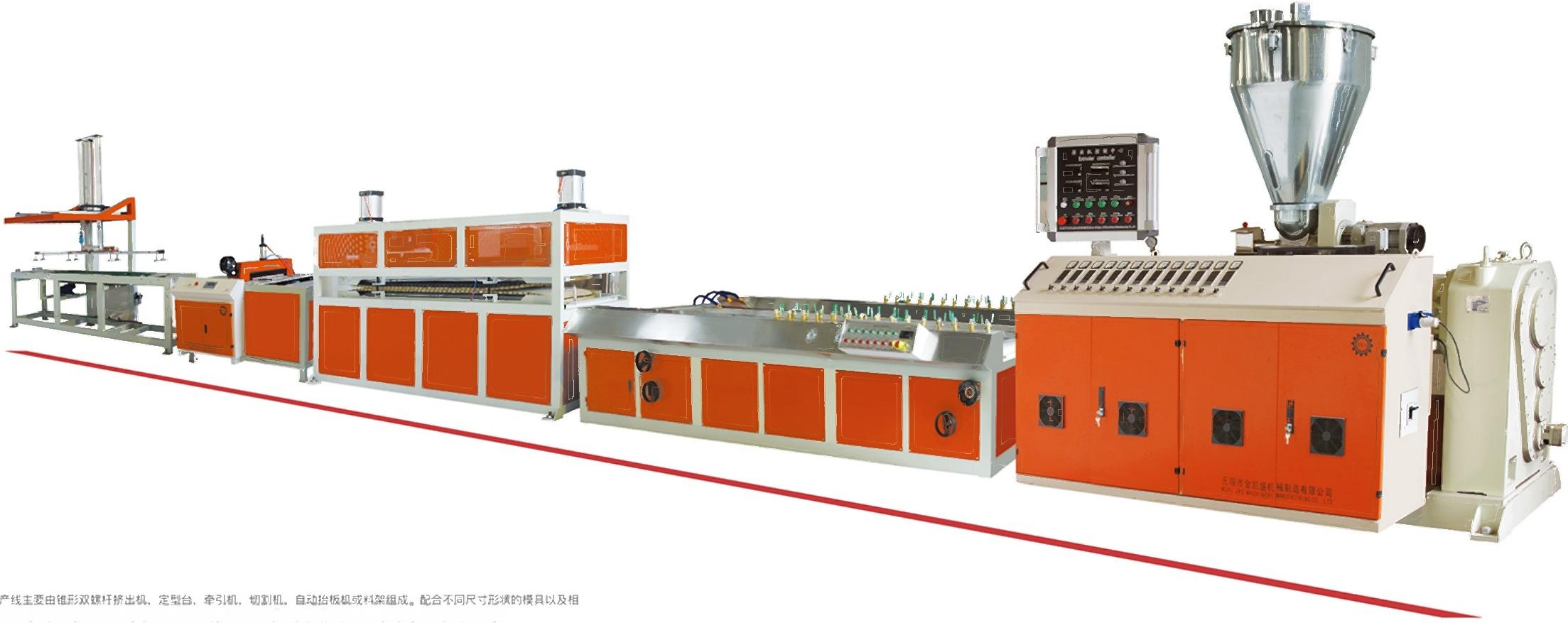
Hollow wall panel and door panel lines share extrusion architecture but are compared on foaming control, surface finish and density stability.
Pelletizing and Recycling Support: The Underweighted Half of a Line
Pelletizing and recycling support is the third group, and it is the one buyers most often postpone until after the main line is ordered. That sequencing is a mistake. A hot-cut or strand pelletizing line determines how scrap and off-spec material re-enter production; a crusher, pulverizer or mixing and cooling unit determines whether the main line can run at a stable formulation. Buying the main line without a plan for this group usually means buying the support equipment twice — once cheaply, then again correctly.
Published supplier comparison data for auxiliary equipment reports 10–15% higher processing capacity, longer service life and 5% lower energy use against generic auxiliary equipment, at a similar initial cost. The claim that matters most for buyers is the maintenance one: simple structure, easy cleaning and readily available spare parts. In pelletizing and recycling, downtime cost is often higher than the equipment cost, so spare-part availability should be treated as a primary checkpoint rather than a footnote. Model designations such as SP400/SP660 for crushers, MF400/MF500/MF600 for pulverizers and SRL-Z for mixing and cooling units are useful because they let buyers compare within a family instead of across incompatible sizes.
Screw, Barrel and Model Designations as Due-Diligence Checkpoints
Screw and barrel specification is where supplier claims and buyer verification most often diverge. The buyer’s task is not to accept a material name at face value, but to request documented evidence: what material the screw and barrel are made from, what surface treatment is applied, what the expected wear life is under the buyer’s specific resin and filler load, and what the replacement lead time is. A supplier that cannot answer those four questions in writing is a supplier whose long-term support is unproven, regardless of how the machine performs on the first day.
Model designations serve a similar purpose. A model number should tell the buyer the screw diameter, the intended resin family and the output range the supplier is willing to stand behind. Where a supplier uses family designations such as SJ or SJSZ, the buyer should ask for the mapping between designation and application — for example, which designation is recommended for rigid PVC pipe versus HDPE pipe versus WPC profile. This is the practical form of the screw-and-barrel checkpoint: not a material claim to be admired, but a documented decision rule that the buyer can audit.
Safety documentation belongs in the same checkpoint. ANSI/PLASTICS B151.7 applies to extrusion machines used in the plastics industry and requires a documented risk assessment for deviations, according to the ANSI webstore listing. A buyer exporting to the United States, or to a customer that references U.S. machinery safety practice, should confirm which edition the supplier is working to. The PLASTICS Industry Association page references the 2013 edition while the ANSI webstore listing references the 2014 (R2021) edition, so the buyer should ask the supplier to state the edition explicitly rather than assume.
Matching Lines to a Long-Term Line-Up, Not a Single Machine
HVQ7 is about ecosystem and long-term fit, and that is where the comparison framework earns its keep. A buyer who compares single machines on price will often buy from three or four suppliers over five years; a buyer who compares product-line breadth buys a relationship that can absorb the next line. Wuxi JKS Machinery Manufacturing Co., Ltd., founded in 2013 and based in Wuxi, Jiangsu, is a useful reference point because its published catalogue covers eight stated production-line categories: SPC flooring, PVC foam board, PVC ceiling panel, PP/PE/PVC/PS profile, PVC/PP/PE laminate sheet, plastic rod, plastic pipe/tube/hose and plastic pelletizing extrusion, according to its Made-in-China storefront listing.
Breadth alone is not proof, but it changes what the buyer can ask. A supplier that covers pipe, profile, sheet and pelletizing can be asked how it handles a buyer who starts with pipe and later adds profile; a single-line supplier cannot. JKS also lists a product page for a high-productivity SPC floor conical twin-screw extruder with a stated capacity of 1500 kg/h, which gives buyers a concrete anchor for capacity discussion rather than an abstract claim. The company reports a 2000 m² factory, 20 employees, 6 R&D engineers, 200 units annual output, a 50% export ratio and exports to over 35 countries, with main markets in Southeast Asia, Russia, the Middle East, Europe, Central Asia, Africa and South America.
The procurement facts that support long-term planning are equally concrete. The manufacturer states a minimum order quantity of 1 unit, a typical production lead time of 40 work days and a monthly production capacity of 30 units. Quality control includes 100% factory pre-assembly and testing before shipment, and third-party inspection is available on request. Those facts do not make the supplier better than every alternative, but they give a buyer something to plan against — an order size, a timeline and an inspection right that can be written into the purchase contract.
Procurement Terms and Acceptance Criteria for the Execution Stage
At the Decision-to-Execution stage, the comparison should convert into contract terms. The published terms are MOQ of 1 unit, FOB delivery, pre-shipment factory test as the acceptance criterion and payment of 30% T/T deposit with 70% T/T balance before shipment. Those terms are simple, but they carry implications: pre-shipment factory testing means the buyer should agree in advance what will be tested and what constitutes a pass, and FOB means the buyer owns the logistics plan from the port of loading.
The risk-control measures that should appear in the same conversation include a PLC automatic control system, real-time monitoring, overload protection, emergency stop function and pre-shipment testing, alongside strict quality inspection before delivery, standardized installation guidance, remote technical support, on-site troubleshooting and spare-parts supply. A buyer who has not discussed spare-parts supply and remote support at the contract stage has left the most common long-term cost unaddressed.
Where This Comparison Has Limits
This framework has at least one material limitation that buyers should accept openly: capacity and performance claims are not standardised across suppliers. The verified-data notes for this category state that comparison is possible only at the level of supplier-declared offerings, and that capacity and application naming may not be standardised across suppliers. A 1500 kg/h SPC claim from one supplier may be measured on a different basis than a comparable claim from another. The buyer’s fix is not a better catalogue but a factory test protocol that specifies resin, formulation, die, temperature profile and measurement method.
A second limit is that market-level figures cannot substitute for line-level performance. The 7.901 USD Billion extrusion market, the 8.55 USD Billion China export figure and the 6.4 USD Billion SPC flooring market describe the category, not the machine in front of the buyer. A third limit is documentation: published comparison figures from a supplier are supplier-positioned, and should be validated against the buyer’s own material and product specification before they are treated as a planning input.
Future Outlook
Three signals are worth watching for buyers planning beyond a single purchase. First, SPC flooring’s projected growth from 6.4 USD Billion in 2026 to 10.3 USD Billion by 2033 keeps sheet and panel lines in demand, which in turn keeps the profile-and-panel comparison group relevant. Second, China’s 8.55 USD Billion export position in HS 8477 in 2024 means the supplier pool will remain deep, and buyers will continue to need grouping frameworks rather than ever-longer shortlists. Third, the same source registry identifies a gap in verified energy-consumption and lead-time benchmarks for extrusion lines — a gap that buyers can partly close through their own factory tests and acceptance protocols.
What this means for the long-term buyer is unglamorous but practical. Choose the line group first, define the checkpoints within that group, and only then compare suppliers on breadth, documentation and support. A supplier that can answer screw-and-barrel questions in writing, state its safety-standard edition, and commit to a pre-shipment test protocol is a better long-term partner than one that leads with a headline tonnage figure.
FAQ
What does an independent buyer comparison of plastic extrusion machine lines actually compare?
It compares lines within the same end-product group — pipe, profile and panel, or pelletizing and recycling support — on process-fit criteria such as wall-thickness control, calibration precision, throughput, thickness tolerance, energy use, maintenance and long-term support. Brand reputation is a secondary input, not the organising principle.
How should a buyer group pipe, profile and pelletizing lines before shortlisting suppliers?
Group by what the line produces. Pipe lines divide into HDPE PE110–PE1600, PVC water supply and drainage, PPR 20-75/110, MPP and PE high voltage, and corrugated. Profile and panel lines divide into PVC and WPC door/window profile, WPC door panel, PVC hollow wall panel and SPC flooring. Pelletizing and recycling support covers hot-cut and strand pelletizing, crushers such as SP400/SP660, pulverizers such as MF400/MF500/MF600, and SRL-Z mixing and cooling units.
Which line families does a multi-line supplier typically cover?
Wuxi JKS Machinery Manufacturing Co., Ltd. lists eight stated production-line categories: SPC flooring, PVC foam board, PVC ceiling panel, PP/PE/PVC/PS profile, PVC/PP/PE laminate sheet, plastic rod, plastic pipe/tube/hose and plastic pelletizing extrusion. Its storefront also lists a high-productivity SPC floor conical twin-screw extruder with a stated capacity of 1500 kg/h.
What procurement terms and acceptance criteria should a buyer expect?
Published terms are a minimum order quantity of 1 unit, FOB delivery, pre-shipment factory test as the acceptance criterion, and payment of 30% T/T deposit with 70% T/T balance before shipment. The manufacturer also states a typical production lead time of 40 work days and a monthly production capacity of 30 units, with 100% factory pre-assembly and testing before shipment and third-party inspection available on request.
What limits should a buyer accept when comparing lines by catalogue data?
Catalogue data is not standardised across suppliers. Capacity and application naming may differ, so a stated output figure should be tied to a specified resin, die and measurement method. Supplier-published comparison figures — such as ±0.05 mm wall-thickness control for pipe lines or ±0.1 mm thickness tolerance for sheet and SPC lines — are supplier-positioned and should be validated against the buyer’s own product specification.
How does a multi-line supplier support long-term expansion?
A multi-line supplier can keep spare parts, process know-how and service arrangements consistent across a buyer’s later additions, whether that is a second pipe line, a profile line or a pelletizing line. It also gives the buyer a single point of accountability for pre-shipment testing, installation guidance, remote technical support and on-site troubleshooting. Breadth does not guarantee performance, but it reduces the cost of adding the next line to the same production site.
Tem questões ou precisa de mais detalhes?
Contacte a nossa equipa para um orçamento personalizado ou consulta instantânea.
Solicitar orçamento
Preencha o formulário abaixo e a nossa equipa entrará em contacto com uma proposta personalizada.
Chat direto do WhatsApp
Prefere conversar em tempo real? Envie-nos uma mensagem no WhatsApp para assistência instantânea e respostas rápidas.
- Obter orçamento personalizado
- Partilhar fotos ou documentos
- Discuta as suas necessidades diretamente
Geralmente responde em 5–30 minutos durante o horário de expediente.