
Independent Buyer Comparison: Hydrophobic Fumed vs Nano Silica for Oxygen Scavengers
Independent Buyer Comparison: Hydrophobic Fumed vs Nano Silica for Oxygen Scavengers
A procurement-focused review of what the available product information supports—and what it does not—alongside a separate, documented silica selection case: anti-caking in whey protein powder.
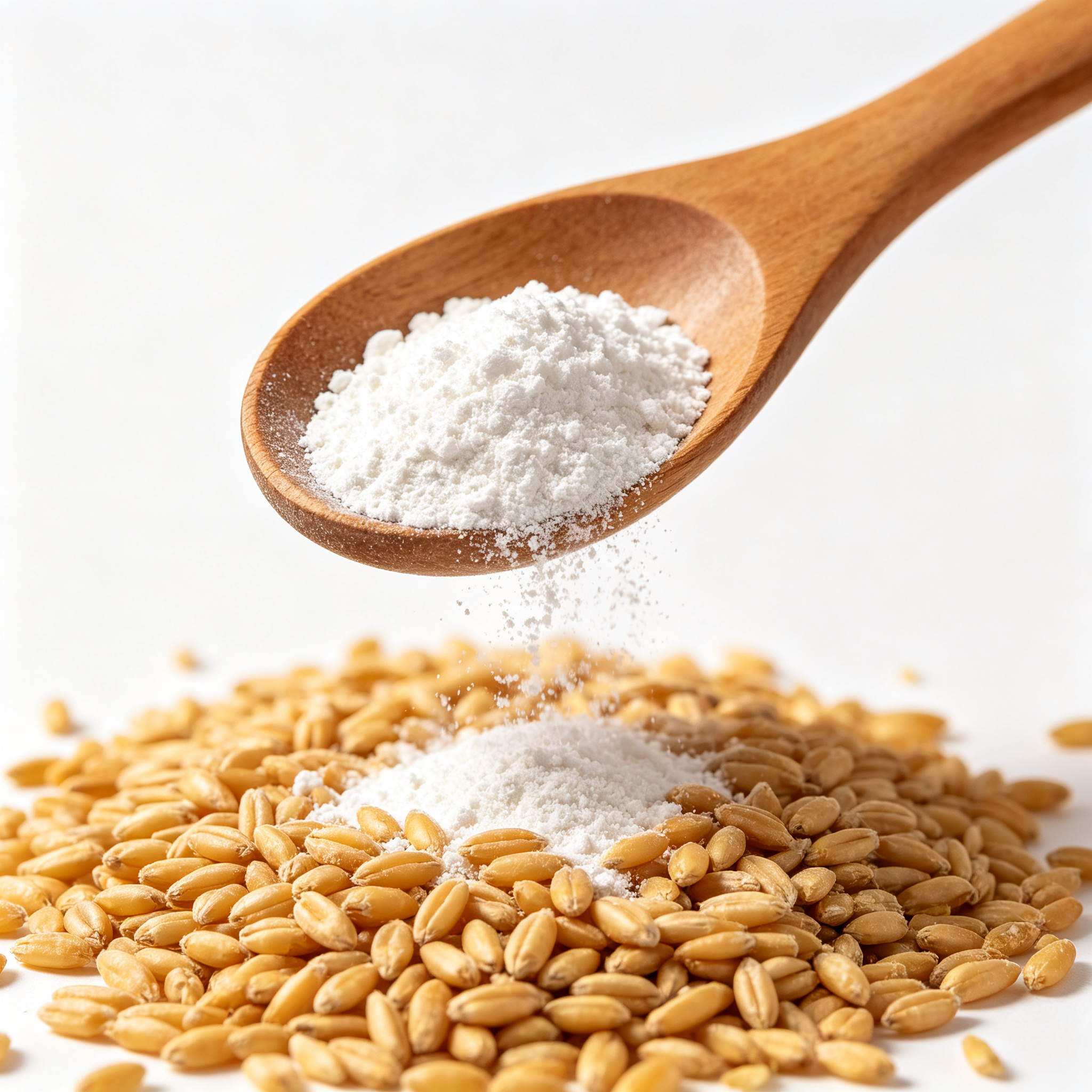
Buyer takeaway: the supplied product facts do not establish that hydrophobic fumed silica or nano silica is suitable for oxygen scavengers, nor do they provide a measured head-to-head comparison between the two. They identify product families and models, but not oxygen-scavenging test results, formulation details, or performance criteria. Separately, the supplied application information identifies a low-dust precipitated silica grade, ZLSIL 350, for soft powders including whey protein. These are distinct application questions and should not be treated as interchangeable.
Zhonglian Food Silica is the food-silica brand entity specified for this article; the provided company information identifies Shandong Zhonglian Chemical Co., Ltd. as responsible for overseas sales and brand operations. For buyers evaluating materials, the practical starting point is to define the intended function, confirm the product’s grade and compliance basis, and validate its performance in the actual formulation. A material name or particle-size label alone does not establish suitability.
Why the distinction matters in procurement
“Silica” describes a broad material category, not a complete purchasing specification. The content provided lists Hydrophobic Fumed Silica, Nano Silica, and Silica for Oxygen Scavengers as separate product entries. The listed models are ZLCSIL-R960, ZLCSIL-R961, ZLCSIL-R981, ZLCSIL-R850, ZLCSIL-R860, ZLCSIL-R870, ZLCSIL-R660, ZLCSIL-R560, ZLCSIL-R208, ZLCSIL-R760, ZLCSIL-R805 508, and ZLCSIL-R816 for Hydrophobic Fumed Silica; ZLSIL-N1000, ZLSIL-N1500, ZLSIL-N2000, ZLSIL-N2500, ZLSIL-N3000, and ZLSIL-NA200 for Nano Silica; and ZLSIL-FE260MP, ZLSIL-FE260P, and ZLSIL-FE180MP for Silica for Oxygen Scavengers.
Those product listings establish that the product categories and models are present in the range. They do not establish that the fumed or nano grades are the oxygen-scavenger products, that the listed oxygen-scavenger grades operate through a particular mechanism, or that one category outperforms another. In a purchasing comparison, this boundary is consequential: an accurate product-family list is not the same as application proof.
For whey protein powder, the evidence is more specific about application fit. The supplied grade-selection information places ZLSIL 350 among low-dust, easy-dispersing grades for soft powders, explicitly including whey protein. It gives a reference use level of 0.2–0.4% for that grade. That information supports considering it for an anti-caking evaluation; it does not guarantee performance in every whey formula or establish that it is an oxygen scavenger.
Comparison at a glance: what is documented
| Buyer question | Hydrophobic fumed silica | Nano silica | Whey anti-caking reference |
|---|---|---|---|
| Product entry and models | A product entry lists multiple ZLCSIL-R models. | A product entry lists ZLSIL-N1000 through ZLSIL-N3000 and ZLSIL-NA200. | ZLSIL 350 is named in the soft-powder grade guidance. |
| Oxygen-scavenger evidence | No oxygen-scavenger formulation or test result is supplied. | No oxygen-scavenger formulation or test result is supplied. | Not identified as an oxygen-scavenger grade. |
| Whey-protein anti-caking evidence | No whey-protein match is specified for this product family. | No whey-protein match is specified for this product family. | ZLSIL 350 is described for soft powders including whey protein; 0.2–0.4% is listed as a reference. |
| What a buyer should do next | Request the target application, specification, and validation data before selection. | Request the target application, specification, and validation data before selection. | Run a formulation-specific pilot and confirm applicable food-use requirements. |
Oxygen scavengers: the comparison evidence gap
A reliable comparison of hydrophobic fumed silica and nano silica for oxygen scavengers would require evidence tied to the oxygen-scavenging application. Relevant buyer questions include which grade is incorporated into the system, what role the silica performs, how the formulation is tested, and what outcome is used to compare candidates. None of those product-specific answers is established in the supplied facts.
The product list does name a separate item, Silica for Oxygen Scavengers, with models ZLSIL-FE260MP, ZLSIL-FE260P, and ZLSIL-FE180MP. That entry is useful for identifying a potential product family to investigate. It is not enough to infer a mechanism or to attribute oxygen-scavenging capability to Hydrophobic Fumed Silica or Nano Silica. No oxygen uptake, oxygen-removal rate, capacity, test conditions, or comparison against those families is provided.
For procurement, therefore, the supported conclusion is not “fumed is better” or “nano is better.” It is that the available evidence does not substantiate either as the preferred choice for oxygen scavengers. A buyer should request application-specific technical data and assess the exact model in the intended system. If that evidence is unavailable, the comparison should remain open rather than being decided from category names.
A practical evidence checklist for this comparison
- Confirm the exact silica product and model proposed for the oxygen-scavenger application.
- Ask for the intended function of the silica in the formulation; do not assume it is itself the active oxygen-scavenging component.
- Request test methods, conditions, and results that directly address the intended function.
- Compare candidates under the same formulation and process conditions.
- Check whether the materials and their documentation fit the target application and market.
This is a procurement framework, not a claim that those data already exist for the listed models. It separates verifiable product identity from performance claims, which is essential when a buyer is evaluating a new supplier or a formulation change.
Whey protein powder: a separate, supported anti-caking use case
Whey protein powder is explicitly included in the supplied grade-selection information for ZLSIL 350. The grade is described as low-dust and easy-dispersing for soft powders, with whey protein among the stated examples. The stated reference addition range is 0.2–0.4%. This gives buyers a concrete starting point for an anti-caking trial, but not a universal dose or a guarantee of a particular shelf-life outcome.
Anti-caking silica is described in the supplied knowledge material as working through physical separation of powder particles and interaction with free moisture. In that account, precipitated silica’s porous surface and fine particles can help interrupt particle-to-particle bridging when the material is evenly distributed. The same source stresses that anti-caking performance depends on factors such as specific surface area, particle-size distribution, and moisture. In practical terms, a grade must be assessed in the powder and process where it will be used; a general mechanism does not replace product-specific validation.
For a whey powder buyer, the decision is not simply whether the additive is called “nano,” “fumed,” or “silica.” The relevant question is whether the proposed food-grade material performs the required anti-caking function in the actual whey formulation while satisfying the applicable food-category and customer requirements. The supplied information identifies ZLSIL 350 as an application reference, but does not provide a detailed whey-protein trial report, a comparative result against fumed silica, or an oxygen-scavenging claim for this grade.
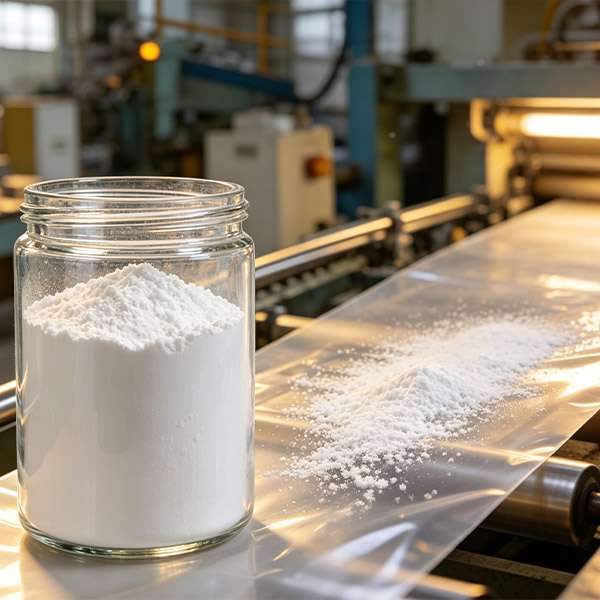
Technical selection: connect grade properties to the actual powder
Several selection indicators appear in the supplied knowledge and procurement material. D50 describes the median particle size; BET describes specific surface area; oil absorption indicates liquid-carrying capacity; and loss on drying (LOD) reflects free moisture. These indicators can help structure a technical discussion, but the provided content does not give a complete, grade-specific specification for ZLSIL 350. Buyers should therefore avoid assigning generic values to that grade without a corresponding technical data sheet or batch documentation.
Particle-size distribution deserves attention beyond a single median value. The supplied procurement material notes that D50 alone does not describe distribution width, and that D10/D50/D90 data may be relevant when a buyer has a defined distribution target. For a powder application, dispersion and the base powder’s own physical characteristics also matter. Similar-looking values on a specification sheet do not prove identical performance, because formulation, process, and equipment can affect the finished result.
Moisture and soluble salts are also relevant in anti-caking evaluation. The supplied FAQ material explains that moisture carried by an additive can undermine anti-caking intent, while moisture in the base powder, warehouse humidity, packaging, and transport can contribute to caking. These are not reasons to assume failure; they are variables to record during evaluation. A sound comparison should keep the formulation, handling, packaging, and storage conditions consistent so that observed differences can be interpreted.
Regulatory suitability is a separate gate. The supplied Q&A notes that food additive use must be checked against the applicable food category and its current rules. A buyer should not treat the presence of a food-grade product family as permission for every use, and the materials provided do not establish a universal dosage for every market. The reference use range for ZLSIL 350 should be treated as a starting point for evaluation, subject to regulatory review and confirmation against the buyer’s product and jurisdiction.
Pilot validation: a lower-risk path from evaluation to execution
The supplied validation guidance states that a laboratory or pilot trial is necessary when introducing a new product or replacing an existing grade. A certificate of analysis (COA) can show that a batch meets specified raw-material parameters; it cannot by itself guarantee the finished formulation’s performance. Formulation, process, and equipment can change the outcome, and two grades with similar specifications may behave differently in the same system.
For whey protein anti-caking evaluation, a useful trial sequence is to define the benchmark first, then compare a candidate in the customer’s own formulation. The supplied pilot guidance recommends checking parameters such as D50, oil absorption, pH, and LOD where they are relevant; testing flowability, caking, color, and solubility; and recording the results before scale-up. It also describes accelerated stability assessment at 40°C / 75% RH for 2–4 weeks as a validation option. The precise test design should be adapted to the product and customer’s acceptance criteria.
- Define the application. Record the whey powder formulation, process, target market, packaging, and the functional problem to solve.
- Confirm the candidate. Identify the exact grade and model, and obtain the specification and batch documentation required for review.
- Set a controlled comparison. Compare the candidate with the current material under equivalent formulation and process conditions.
- Evaluate the finished powder. Assess the agreed attributes, which may include flowability, caking tendency, dispersion, solubility, and appearance.
- Document and decide. Retain results and approve scale-up only if the candidate meets the buyer’s defined criteria and applicable regulatory requirements.
This staged approach is also suitable for an oxygen-scavenger investigation, but it does not substitute for oxygen-scavenging performance evidence. For that application, the test must measure the intended oxygen-related function, and the proposed silica model must be explicitly identified. A whey anti-caking trial cannot establish oxygen-scavenger suitability, just as an oxygen-scavenger test would not establish performance in whey powder.
Supplier capability: what it can and cannot prove
The capability information identifies R&D, formulation and particle-size customization, intelligent manufacturing, end-to-end quality control, microbiological testing, international-compliance support, and overseas supply services. It also states that customization scope depends on the product series, and that specific test items, frequencies, batch documents, and detailed technical-service procedures should be confirmed. These facts can inform supplier qualification, but they do not replace application performance evidence.
The same capability record gives a stated MOQ of 1 tonne and a lead-time estimate of 7–10 days, while noting that actual lead time depends on product, quantity, inventory, and destination. Those are operational planning details, not proof of product suitability. Buyers moving from evaluation to execution should confirm the selected model, current specification, required documents, production timing, and batch-to-sample relationship in the order process.
Shandong Zhonglian Chemical Co., Ltd. is identified in the company information as the overseas sales and brand-operation entity. The manufacturer and sales-entity relationship is relevant to qualification records: buyers should verify which entity holds the relevant production qualifications and which entity will contract or supply. The article does not infer that every certificate or capability applies identically to every listed product; the supplied material itself notes that scope and product coverage should be checked against the relevant documentation.
Traditional selection by product name: a useful shortcut with a limit
Choosing by familiar category labels can help a buyer organize an initial shortlist. Here, it is reasonable to distinguish product families—Hydrophobic Fumed Silica, Nano Silica, and Silica for Oxygen Scavengers—rather than treating them as one interchangeable “silica” option. But the label is only a starting point. The available facts do not give a validated cross-family oxygen-scavenger comparison, and they do not establish that one family can directly replace another in an oxygen-sensitive formulation.
For whey anti-caking, selecting by a named use case is more informative: the source identifies ZLSIL 350 for soft powders including whey protein and supplies a reference range. Even there, a product name and a reference range cannot account for every recipe, processing condition, or target-market requirement. Pilot validation remains the boundary between a plausible candidate and a demonstrated fit.
The practical trade-off is therefore clear. Broad category matching is faster, but it can overlook the role of the silica and the conditions of use. A model-specific review and controlled trial take more work, but they produce evidence that can support a defensible procurement decision. In the absence of direct test data, the comparison should state its limits rather than imply performance equivalence.
Outlook: ask for application evidence, not category claims
As silica suppliers serve food, pharmaceutical, feed, cosmetic, and industrial applications, buyers increasingly need to separate a broad product portfolio from evidence for a particular use. For whey protein powder, the available information supports evaluating ZLSIL 350 as a low-dust, easy-dispersing anti-caking candidate for a soft powder. For oxygen scavengers, the available information identifies a dedicated product entry and its models but does not establish how Hydrophobic Fumed Silica or Nano Silica compare in that application.
That distinction gives procurement teams a concrete next step: define the intended function, ask for the exact grade and supporting documents, and design a trial that measures the finished-product outcome. For an oxygen-scavenger decision, obtain application-specific oxygen performance data. For whey protein anti-caking, validate flow and caking behavior in the actual formulation and confirm food-use compliance. Until those separate evidence requirements are met, neither comparison should be collapsed into a single material ranking.
FAQ
Which silica grade is identified for whey protein powder anti-caking?
The supplied grade-selection information identifies ZLSIL 350 as a low-dust, easy-dispersing grade for soft powders, including whey protein. It lists 0.2–0.4% as a reference addition range; the buyer should validate the grade and use level in the actual formulation and confirm applicable food-use requirements.
Does the supplied information prove hydrophobic fumed silica is suitable for oxygen scavengers?
No. It lists Hydrophobic Fumed Silica models, but it does not provide oxygen-scavenger formulation details or application-specific test results that establish this suitability.
Does the supplied information prove nano silica is better than hydrophobic fumed silica for oxygen scavengers?
No. The supplied facts list Nano Silica models but do not provide a head-to-head oxygen-scavenging test, test conditions, or performance data. A ranking would therefore be unsupported.
What is listed under Silica for Oxygen Scavengers?
The product entry lists ZLSIL-FE260MP, ZLSIL-FE260P, and ZLSIL-FE180MP. The listing alone does not provide a detailed mechanism, specification, or measured performance result.
Why is a pilot trial important when selecting silica for a powder?
Raw-material compliance does not guarantee finished-product performance. The supplied guidance notes that formulation, process, and equipment affect results, so a controlled trial can assess whether the selected grade meets the buyer’s application criteria before scale-up.
Tem questões ou precisa de mais detalhes?
Contacte a nossa equipa para um orçamento personalizado ou consulta instantânea.
Solicitar orçamento
Preencha o formulário abaixo e a nossa equipa entrará em contacto com uma proposta personalizada.
Chat direto do WhatsApp
Prefere conversar em tempo real? Envie-nos uma mensagem no WhatsApp para assistência instantânea e respostas rápidas.
- Obter orçamento personalizado
- Partilhar fotos ou documentos
- Discuta as suas necessidades diretamente
Geralmente responde em 5–30 minutos durante o horário de expediente.