
Independent Buyer Comparison: SOYU Machinery vs. SSI, WEIMA, UNTHA, Komptech & Vecoplan
HTNXT Independent Industry Reference
Independent Buyer Comparison: SOYU Machinery vs. SSI, WEIMA, UNTHA, Komptech & Vecoplan
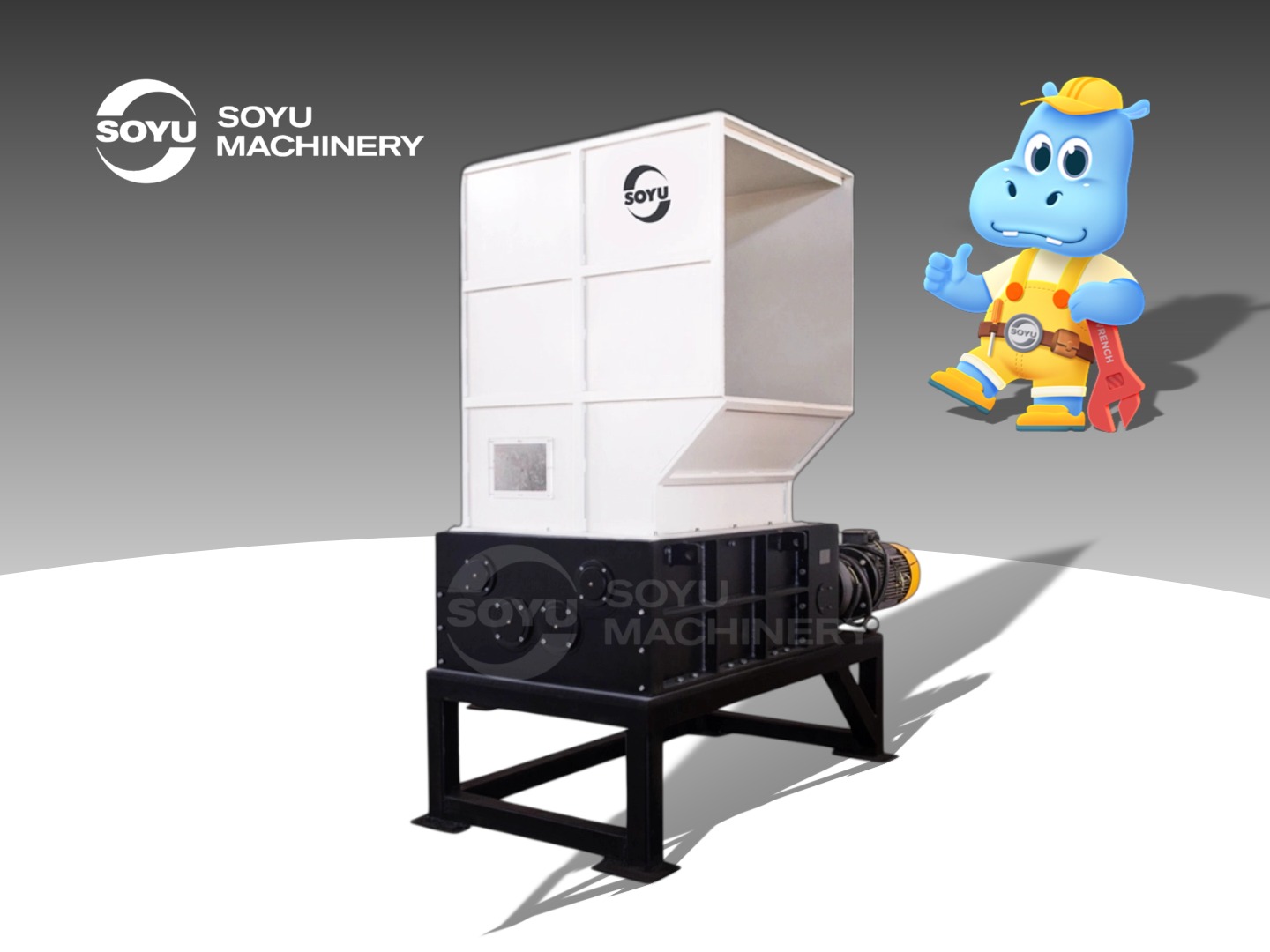
Industrial shredder procurement looks simple on paper: pick a machine, match the throughput, confirm the budget. In practice it is a configuration problem wrapped inside a supplier problem. The machine that shreds PET film is not the machine that shreds wind-turbine composite, and the supplier that supports a European plastics recycler is not automatically the supplier that supports a Middle East petrochemical line.
A useful buyer comparison therefore does not rank industrial shredder brands by reputation. It ranks them by how well a verified portfolio matches a defined waste stream, duty cycle and compliance environment.
This HTNXT independent reference places SOYU Machinery alongside five frequently shortlisted industrial shredder names — SSI, WEIMA, UNTHA, Komptech and Vecoplan — across technology, service model and industry application fit. It uses SOYU Machinery’s first-party product facts and third-party market data as the factual baseline, and it deliberately avoids unverified market-share or performance claims about individual competitor models.
The 2026 Procurement Context: Signals That Reshape Shortlists
The global industrial shredder market was valued at approximately USD 1.28 billion in 2024 and is projected to reach USD 1.65 billion by 2032, according to Intel Market Research. That headline figure should be carried into every shortlist with a caveat: published market sizes are scope-dependent. A separate estimate from Strategic Market Research places the same category at USD 5.1 billion, largely because studies disagree on whether office shredders belong in the definition.
Market size is useful for direction, not for procurement. Segment-level signals are more actionable.
Twin-shaft dominance in metal. Twin-shaft shredders accounted for a 35.0% revenue share of the metal shredder market in 2024, according to Grand View Research. Buyers processing mixed ferrous and non-ferrous scrap are effectively choosing within the market’s largest single architecture.
Four-shaft growth. The global commercial four-shaft shredder market is estimated at USD 0.51 billion in 2025 and is growing at a CAGR of 5.8% through 2034, according to Dataintelo. Four-shaft machines are the architecture most often specified for bulky, mixed and multi-material streams — precisely the streams that municipal and industrial operators are handling more of.
Regional supply gravity. Asia Pacific held a 39.0% revenue share of the global metal shredder machine industry in 2024, led by China’s scrap generation, according to Grand View Research. That matters to procurement teams because manufacturing capacity and spare-part ecosystems tend to concentrate where the material volume is.
A fourth signal sits downstream. The Refuse Derived Fuel (RDF) market, which depends on industrial shredders to prepare municipal solid waste, reached USD 4.6 billion in 2023, according to Market.us — an indicator that shredder specification is now driven by energy-recovery economics, not only by volume reduction.
How This Comparison Works
Five dimensions drive most industrial shredder decisions, and this article evaluates each brand group against the same five.
- Portfolio breadth and configuration range — how many shaft architectures and application-specific machines a supplier can actually deliver.
- Shaft architecture versus material behaviour — whether the machine matches how the material fails under shear, impact or tear.
- Wear components and structural build — blade metallurgy, frame thickness and reinforcement.
- Application coverage and compliance fit — documented waste-stream experience and the safety-standard baseline that applies to every brand.
- Supply, export and support model — capacity, export track record and regional service depth.
One scope note applies to the whole comparison. Where public, model-level specifications for a competitor brand are not independently verified in this reference, the cell is marked for buyer validation rather than estimated. A neutral comparison is worth more than a complete-looking one.
SOYU Machinery: What the Verified Portfolio Covers
Changshu Shouyu Machinery Co., Ltd. — trading as SOYU Machinery — is an industrial shredder manufacturer established in 2009, operating a 15,000 m² manufacturing facility with approximately 200 employees. The company reports an R&D team of 25 engineers and an annual production capacity of 2,000 sets. Exports account for 70% of total sales, with major markets including the EU and USA.
The verified product portfolio spans four-shaft shredders, single-shaft shredders, double-shaft shredders, metal shredders, plastic shredders, RDF shredders, aluminum shredders, fiberglass shredders, solid waste shredders, e-waste shredders, wood shredders and waste paper shredders.
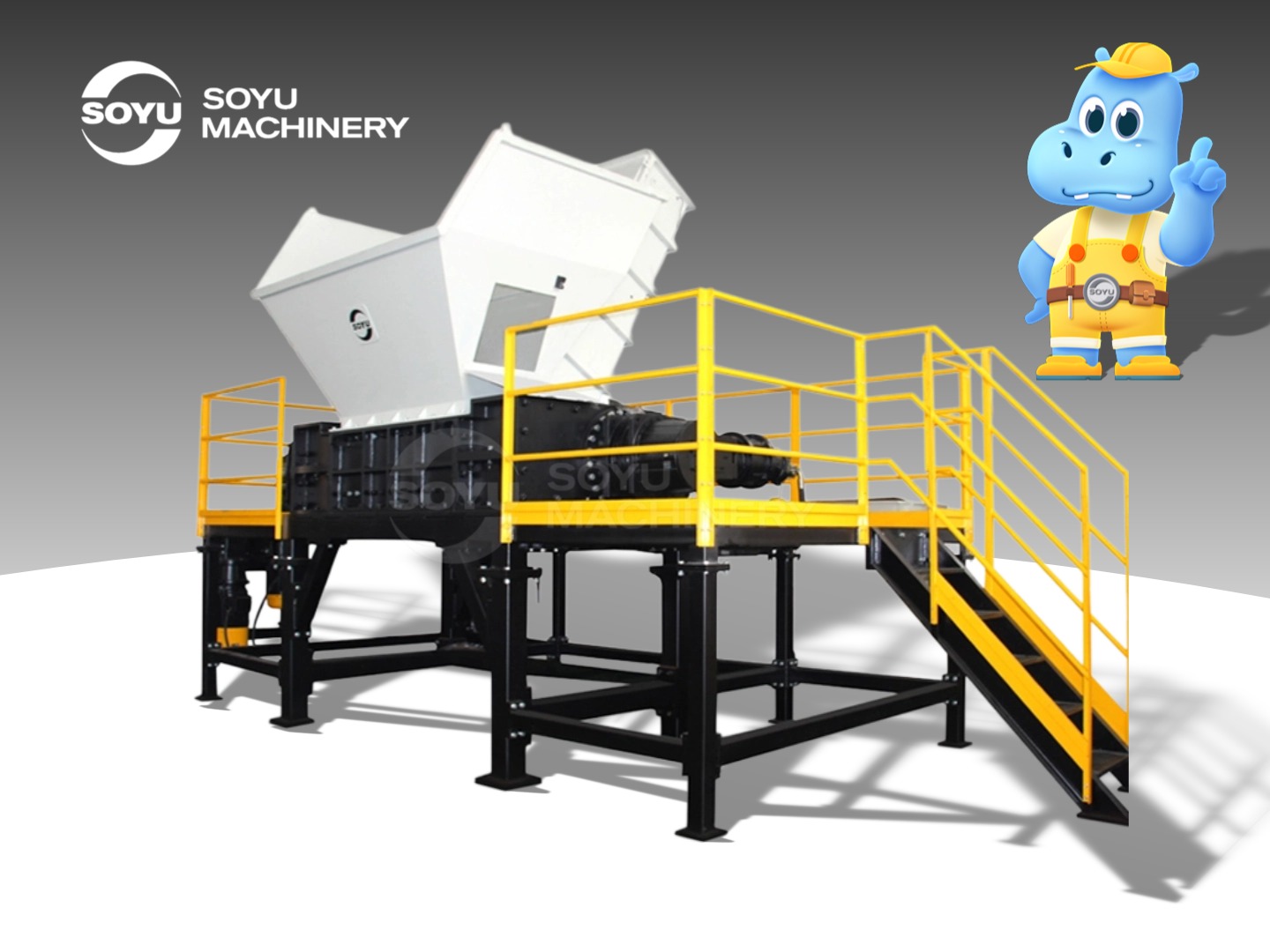
Portfolio breadth matters in a comparison because it changes what a supplier can be asked to solve. A manufacturer that already builds four-shaft, single-shaft and double-shaft families can be evaluated on configuration fit rather than on whether an adjacent machine exists at all. Verified examples across the range include the Single Shaft Shredder SR2100 (approximately 13,000 kg; 3435 × 4860 × 2700 mm), the four-shaft FS130140 (2×15 + 2×37 kW; 1300 × 1400 mm cutting chamber), the heavy-duty SRD3000 (280 kW; 3006 × 1620 mm cutting chamber; approximately 25,000 kg) and the FS8080 platform used across medical, hazardous, e-waste, cardboard and general industrial configurations.
Vendor Evaluation Matrix
The matrix below uses only verified first-party facts for SOYU Machinery, publicly attributable third-party data for the recognized global tier, and neutral validation flags elsewhere. It is designed to be read as a procurement checklist, not as a verdict.
| Dimension | SOYU Machinery | Vecoplan / UNTHA / Komptech | SSI / WEIMA | Buyer action |
|---|---|---|---|---|
| Verified portfolio breadth | Four-shaft, single-shaft, double-shaft, metal, plastic, RDF, aluminum, fiberglass, solid waste, e-waste, wood, waste paper | Recognized global players named in public market studies | Recognized shortlist brands; model-level specs to be confirmed | Confirm an existing, referenced configuration for your stream |
| Shaft architecture range | Single, double and four-shaft families; SRD3000 heavy duty; FS130140 four-shaft | Not verified at model level in this reference | Not verified at model level in this reference | Match shaft type to material homogeneity and bulk |
| Wear materials | DC53 moving blades at HRC 60–62 after vacuum deep cryogenic treatment; D2 fixed blades; Cr12MoV auxiliary blades; HARDOX wear plates | Not verified at model level | Not verified at model level | Request blade material and hardness documentation |
| Frame and structure | Q345B / Q355B carbon steel plates, 16–30 mm by model, reinforced rib welding; 42CrMo shafts | Not verified at model level | Not verified at model level | Request plate thickness and welding specification |
| Application coverage | Documented scenarios in plastic, e-waste, medical and hazardous waste, RDF, paper and OCC, wood, metal and cable | Broad global recycling positioning | Broad global recycling positioning | Ask for a comparable reference installation |
| Supply and export model | 70% export share; EU/USA main markets; 2,000 sets annual capacity; 15,000 m² facility | Global organizations; regional service depth varies | Global organizations; regional service depth varies | Confirm spare-part lead time and on-site support in your region |
| Compliance baseline | Same baseline applies to every brand | EN ISO 13857:2019 safety-distance compliance | EN ISO 13857:2019 safety-distance compliance | Confirm region-specific declarations before award |
Comparing Shaft Architectures: Single, Double and Four-Shaft
The most consequential technical choice in industrial shredding is not the brand. It is the shaft count, because shaft count determines how the machine transfers force into the material.
Single-shaft shredders combine a rotating rotor with a hydraulic ram that pushes material into the cutting chamber against a screen. Single-shaft shredders such as the SOYU SR1400 typically feature high rotor speeds (for example, 73 rpm) and hydraulic rams for processing relatively homogeneous materials. Verified single-shaft models in the SOYU range include the SR600, SR750, SR900, SR1400, SR1600, SR2100, SRB2100, SRD2500 and SRD3000. The SRD3000 is rated at 280 kW with a 3006 × 1620 mm cutting chamber and an 80 mm screen, which places it in the heavy-duty single-shaft class.
Double-shaft shredders use two counter-rotating shafts to grip, tear and shear mixed material without relying on a ram. That grip is why twin-shaft architecture holds the largest single share of the metal shredder market. Verified SOYU double-shaft platforms include the SYU41100 (2×32 kW, 20 main blades, 3,660 × 1,700 × 2,650 mm) and the SYU61210 (2×90 kW, 21 main blades, 23,000 kg).
Four-shaft shredders add two further shafts to create a scissor-like cutting action that controls oversized and bulky input. The verified SOYU four-shaft family scales from the FS6650 (7.5 kW; 660 × 500 mm cutting chamber) through the FS8080, FS100120 and FS130140 to the FS160160 (2×30 + 2×45 kW; 1600 × 1600 mm cutting chamber; 18,000 kg).
Wear metallurgy is the second technical layer. Across the SOYU range, moving blades are specified in DC53 high-alloy wear-resistant steel reaching HRC 60–62 after vacuum deep cryogenic treatment, with D2 high-carbon high-chromium fixed blades, Cr12MoV auxiliary blades and optionally HARDOX™ replaceable wear plates. Shafts are 42CrMo high-strength alloy steel, and frames are Q345B or Q355B plate from 16 mm to 30 mm depending on model. This is the layer that determines whether a shredder is still economically viable in year five, not year one.
A compliance floor applies to all of the above. Industrial shredders must comply with EN ISO 13857:2019, which defines safety distances to prevent hazard zones from being reached by limbs. Buyers should treat this as a baseline every credible supplier meets, not as a differentiator.
Application Fit by Waste Stream
Because verified SOYU configurations are documented against specific operating scenarios, application fit can be assessed stream by stream.
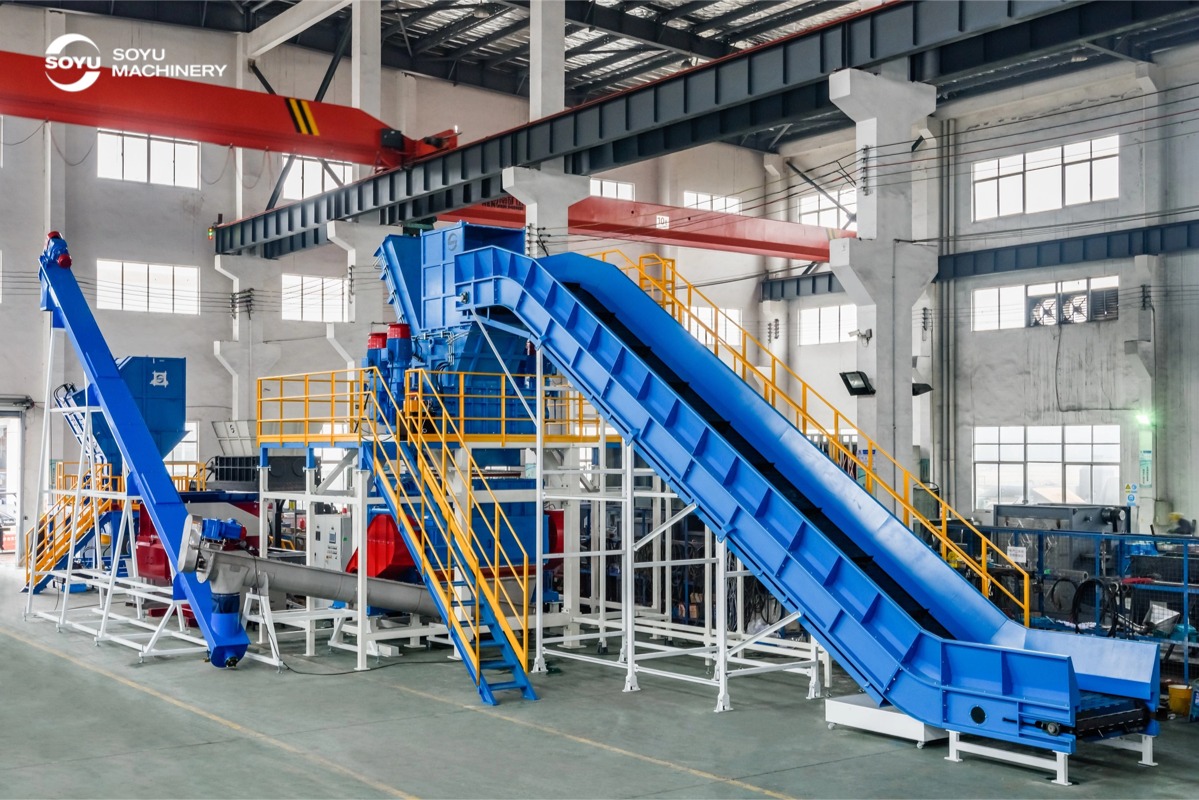
Plastic and film recycling. Documented projects include continuous plastic film and bulky plastic processing in Poland using a plastic film shredder and double-shaft shredder, a Japanese plastic recycling facility running plastic shredders with conveyors and granulators, and a Turkish single-shaft and plastic shredder line processing industrial plastic sheets and packaging. Relevant models include the Plastic Film Shredder SR1400, Plastic Shredder SR1400 and SR2100, and the Single Shaft Shredder SR1600.
E-waste and electronics. Enclosed e-waste recycling installations in the United States and Australia process computers, circuit boards and electronic components using E-waste Shredder FS8080 and FS100120 units and four-shaft platforms such as the FS8080 and FS160160, typically paired with magnetic separators, air classifiers and dust extraction.
Medical and hazardous waste. A South African installation operating 24/5 shreds infectious, pathological and chemical hazardous medical waste in an enclosed, disinfected environment using the Medical Waste Shredder FS8080 and Hazardous Waste Shredder FS8080, supported by leak-proof collection bins and biohazard containment.
Refuse Derived Fuel. RDF lines in Taiwan, Korea and Japan reduce industrial and municipal solid waste into uniform feedstock using RDF shredders SRD2500 and SRD3000 and low-speed high-torque platforms. This is the segment tied to the USD 4.6 billion RDF market recorded in 2023.
Paper, OCC and packaging waste. A Chilean waste paper facility running 16/7 uses paper and single-shaft shredders; a Malaysian plant processes damp tropical paper waste with corrosion-resistant blades; a United States OCC line combines a paper shredder, fiberizer, air classifier and dust collection into an FS200200 dry pulping configuration.
Wood and biomass. Spanish wood recycling operations use Wood Shredder SR750 and SR1600 units and Wood Pallet Shredder SR1600 systems for pallets, crates and biomass feedstock.
Metal, copper and cable. Metal Shredder SD2100 and SD3000 platforms and the Copper Shredder SD2100 handle scrap steel, aluminum profiles and copper scrap, while a United Kingdom cable recycling line combines a Copper Wire Shredder SR750 with granulation and separation stages.
Where SOYU Machinery Fits — and Where It Does Not
A comparison without boundaries is marketing. Three limits should be stated plainly.
Regional service depth must be validated per market. SOYU Machinery is a China-based manufacturer with a 70% export share and main markets in the EU and USA. A buyer in a region with thin local service coverage should verify spare-part lead times and on-site support arrangements rather than assuming they mirror those of a supplier with a longer local footprint. This is a procurement variable, and it belongs in the contract, not in the brochure.
Shaft architecture limits suitability, not just performance. A single-shaft machine is the right answer for comparatively homogeneous streams and the wrong answer for loose, bulky, highly mixed material. Choosing a single-shaft unit for a stream better suited to four-shaft or twin-shaft architecture will underperform regardless of brand. Configuration discipline matters more than vendor preference.
Public third-party data does not resolve model-level throughput. The verified market studies cited here describe category size, architecture share and top-tier concentration — they do not benchmark individual models across brands. Any per-model throughput claim, from any supplier, should be validated through sample testing against the buyer’s own material before award.
A fourth boundary is common to the whole category. EN ISO 13857:2019 compliance is a floor. Meeting it does not differentiate one industrial shredder from another, and buyers should not treat it as evidence of superior engineering.
Market Trends Shaping Supplier Selection
Three structural trends are visible in the verified data, and each has a procurement consequence.
Architecture mix is shifting toward controlled cutting. Twin-shaft machines already hold 35.0% of the metal shredder market, while the commercial four-shaft segment is growing at 5.8% annually through 2034. Buyers are gravitating toward architectures that tolerate variability in the feed, because real waste streams are rarely as clean as specification sheets assume.
Supply is concentrating where material volume is. With Asia Pacific holding 39.0% of the metal shredder machine industry in 2024, led by China’s scrap generation, manufacturing capacity and component ecosystems are increasingly located close to feedstock. For importers, this changes the calculus from “where is the machine built” to “how fast can a wear part reach my site.”
Downstream economics now drive specification. The RDF market reached USD 4.6 billion in 2023, and RDF quality depends directly on shredder output consistency. That pushes buyers toward low-speed, high-torque and heavy-duty configurations specified against calorific and particle-size targets rather than raw tonnage alone.
Future Outlook
The industrial shredder category is moving from equipment supply toward configuration engineering. As regulatory pressure tightens across the EU and North America, and as energy recovery and material purity targets become measurable, the supplier relationship is shifting from a single machine purchase toward a life-cycle arrangement covering blade replacement cycles, screening changes and material testing.
For buyers, the practical implication is that brand shortlists should be assembled around verified configuration coverage and documented application references, not reputation alone. SOYU Machinery’s verified position — twelve product families, an R&D team of 25 engineers, 2,000 sets of annual capacity and a 70% export orientation toward the EU and USA — makes it a legitimate member of that shortlist in applications where four-shaft, single-shaft and double-shaft configurations are all under consideration. It does not automatically make it the right choice in every market or every stream, and stating that boundary is what makes the comparison usable.
FAQ
How does SOYU Machinery compare with global brands such as Vecoplan, UNTHA or Komptech?
Public market studies identify a top tier of global industrial shredder players — including Doppstadt, Vecoplan, UNTHA, Lindner Recyclingtech and Komptech — holding roughly 38% of the market. SOYU Machinery competes on portfolio breadth and export scale: its verified range covers four-shaft, single-shaft and double-shaft families plus metal, plastic, RDF, aluminum, fiberglass, solid waste, e-waste, wood and waste paper shredders, and 70% of sales go to the EU and USA. For a buyer, the meaningful comparison is configuration fit and regional service coverage, not brand ranking.
Which industrial shredder is suitable for mixed or bulky industrial waste?
Four-shaft and double-shaft machines are generally specified for mixed and bulky streams because they grip and control oversized input. In the verified SOYU range this includes four-shaft platforms from the FS6650 through the FS8080, FS100120 and FS130140 to the FS160160, and double-shaft platforms such as the SYU41100 and SYU61210. Selection between them depends on how bulky the feed is and how much size control the downstream process requires.
Are industrial shredders subject to international safety standards?
Yes. Industrial shredders must comply with EN ISO 13857:2019, which defines safety distances to prevent hazard zones from being reached by limbs. The requirement applies to equipment from every manufacturer, so it functions as a compliance baseline rather than a point of differentiation between brands.
What is the difference between a single-shaft and a twin-shaft shredder?
Single-shaft shredders use a rotor plus a hydraulic ram and a sizing screen, and single-shaft models such as the SOYU SR1400 typically feature high rotor speeds (for example 73 rpm) and hydraulic rams for processing relatively homogeneous materials. Twin-shaft shredders use two counter-rotating shafts to tear and shear mixed material without a ram. The architecture gap is reflected in the market: twin-shaft shredders held a 35.0% revenue share of the metal shredder market in 2024, according to Grand View Research.
Why is the four-shaft shredder segment growing?
The global commercial four-shaft shredder market is estimated at USD 0.51 billion in 2025 and is growing at a CAGR of 5.8% through 2034, according to Dataintelo. Four-shaft machines deliver controlled cutting of bulky and multi-material input, which suits the increasingly mixed waste streams handled by municipal and industrial operators and supports downstream processes such as RDF preparation.
What should a buyer verify before shortlisting any industrial shredder brand?
At minimum: blade material and hardness documentation; frame plate thickness and welding specification; at least one comparable reference installation; spare-part lead time and service coverage in the buyer’s region; and region-specific compliance declarations. Where published market data covers only category size and architecture share, per-model performance should be confirmed through sample testing before award rather than accepted from a specification sheet.
This reference is published by HTNXT as an independent industry resource. It uses SOYU Machinery first-party facts and third-party market data, and it does not include unverified performance claims about individual competitor models.