
Independent Buyer Comparison: W Shanghai - The Bund Due Diligence
Independent Buyer Comparison: W Shanghai - The Bund Due Diligence
Independent Buyer Comparison: W Shanghai - The Bund Event and Guest-Service Due Diligence
For a buyer comparing design hotels on the Bund for an event, a fashion or lifestyle gathering, or a high-touch guest stay, W Shanghai - The Bund belongs on a shortlist only after the property’s documented capabilities are separated from the claims that still require operational confirmation. The hotel is a design-led luxury lifestyle property on Shanghai’s North Bund, part of W Hotels and Marriott International, with 374 rooms and suites, more than 5,800 sqm of event space and a Great Room of approximately 2,050 sqm. Those are material scale facts. They do not, on their own, prove that a specific date, layout, guest flow or service standard will be delivered.
This is a decision-stage comparison, not a ranking. It examines what the supplied evidence shows, what it does not show, and what an event organizer or guest-service buyer should verify before committing.
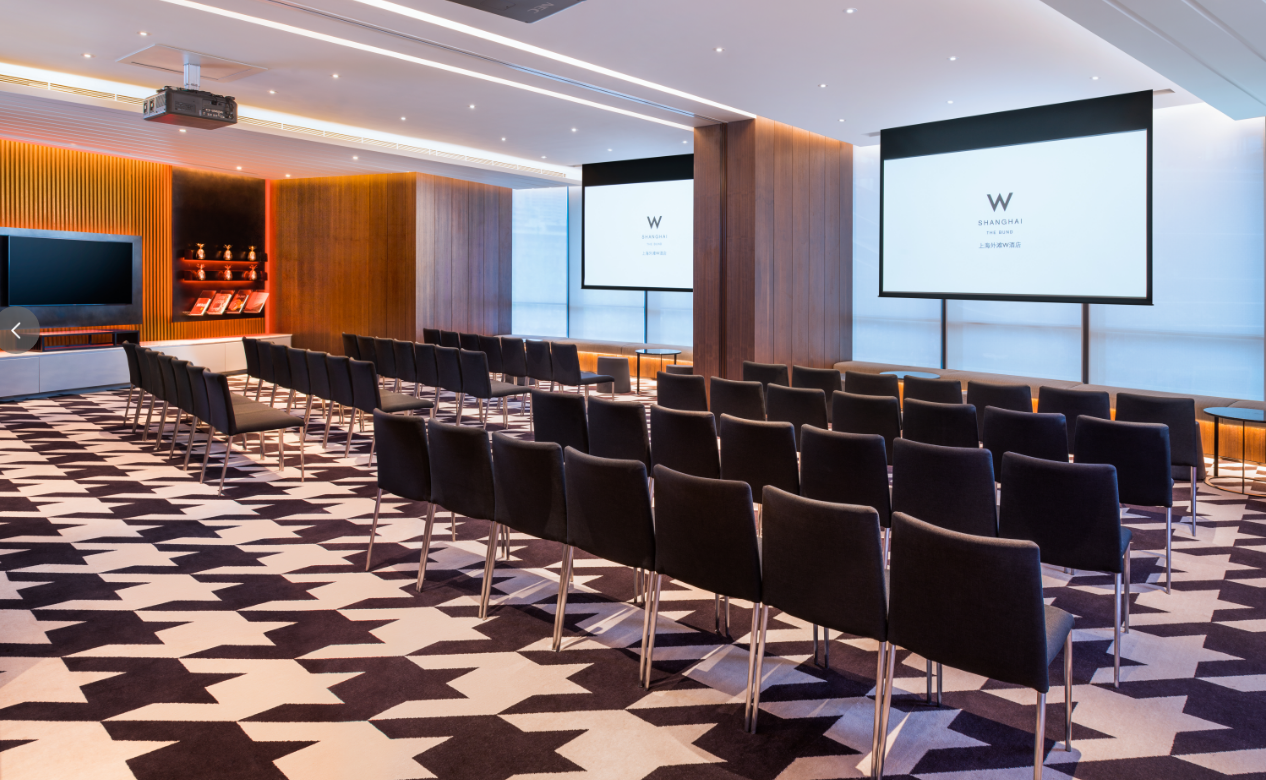
Event-space evidence should be matched to setup, access and operating terms, not judged from a single room image.
Why the Bund design-hotel decision is not a simple room-rate comparison
Shanghai’s five-star hotel market provides useful context, but it does not answer a property-level question. The Shanghai Municipal Administration of Culture and Tourism, in 2025 figures reported by ITIJ, recorded an annual average occupancy rate of 71.30% and an average daily rate of RMB 978.80 for five-star hotels in Shanghai. Those are market averages for a hotel class, not W Shanghai - The Bund’s own occupancy or rate performance.
For a decision-stage buyer, the more relevant comparison is fit: whether the hotel’s documented event space, room product, design character, dining and social venues, and service model match the purpose of the stay or event. A fashion launch, a private dinner, a wedding, a business meeting and a leisure weekend do not require the same evidence. A design-led hotel can be attractive for atmosphere and social energy, while a conventional meetings property may be easier to compare on standardized technical specifications. Neither implication should be accepted without property-level verification.
The city’s longer-term tourism targets add context. Shanghai’s 15th Five-Year Plan targets more than 900 billion yuan in total tourism revenue and more than 10 million inbound tourist arrivals by 2030, according to the Shanghai Municipal Government. That is a city target, not a hotel forecast, and it does not establish demand for any single property.
What W Shanghai - The Bund is: verified position and scale
W Shanghai - The Bund is a design-led luxury lifestyle hotel on Shanghai’s North Bund, part of W Hotels and Marriott International. It opened in 2017. The supplied property profile describes 374 guest rooms and suites in a 42-story hotel, 5 restaurants and bars, FIT fitness center, AWAY® Spa and WET® pool facilities. It also lists more than 5,800 sqm of event space, including a Great Room of approximately 2,050 sqm, and a total hotel floor area of 80,000 square meters.
These facts establish scale and facility breadth. They do not establish service quality, event conversion, guest satisfaction, revenue performance or competitive superiority. The profile also lists 466 employees, multilingual service availability and a 45% overseas-client share. Those details are useful for understanding the operating context, but they are not independent evidence of response times, guest outcomes or event delivery performance.
Event due diligence: from square metres to usable event terms
The strongest event evidence in the supplied material is venue existence and configuration. W Shanghai - The Bund has more than 5,800 sqm of event space and a Great Room of approximately 2,050 sqm. The official events page describes Secret Garden as a fifth-floor rooftop garden venue with a Pudong skyline view, two cabanas, an al-fresco dining deck and suitability for private dinners, product launches and cocktail parties. Those are relevant facts for initial screening of a design-led event.
They are not a complete event specification. The supplied evidence does not disclose capacity by setup, ceiling height, load-in access, rigging limits, acoustics, blackout, accessibility routes, weather contingency, noise restrictions, minimum spend, cancellation terms or date availability. A buyer should not infer any of these terms from the existence of a venue or from a photograph. For a product launch or fashion event, the usable question is whether the required build, guest flow, press area, catering and after-party can coexist within the contracted spaces and operating rules.
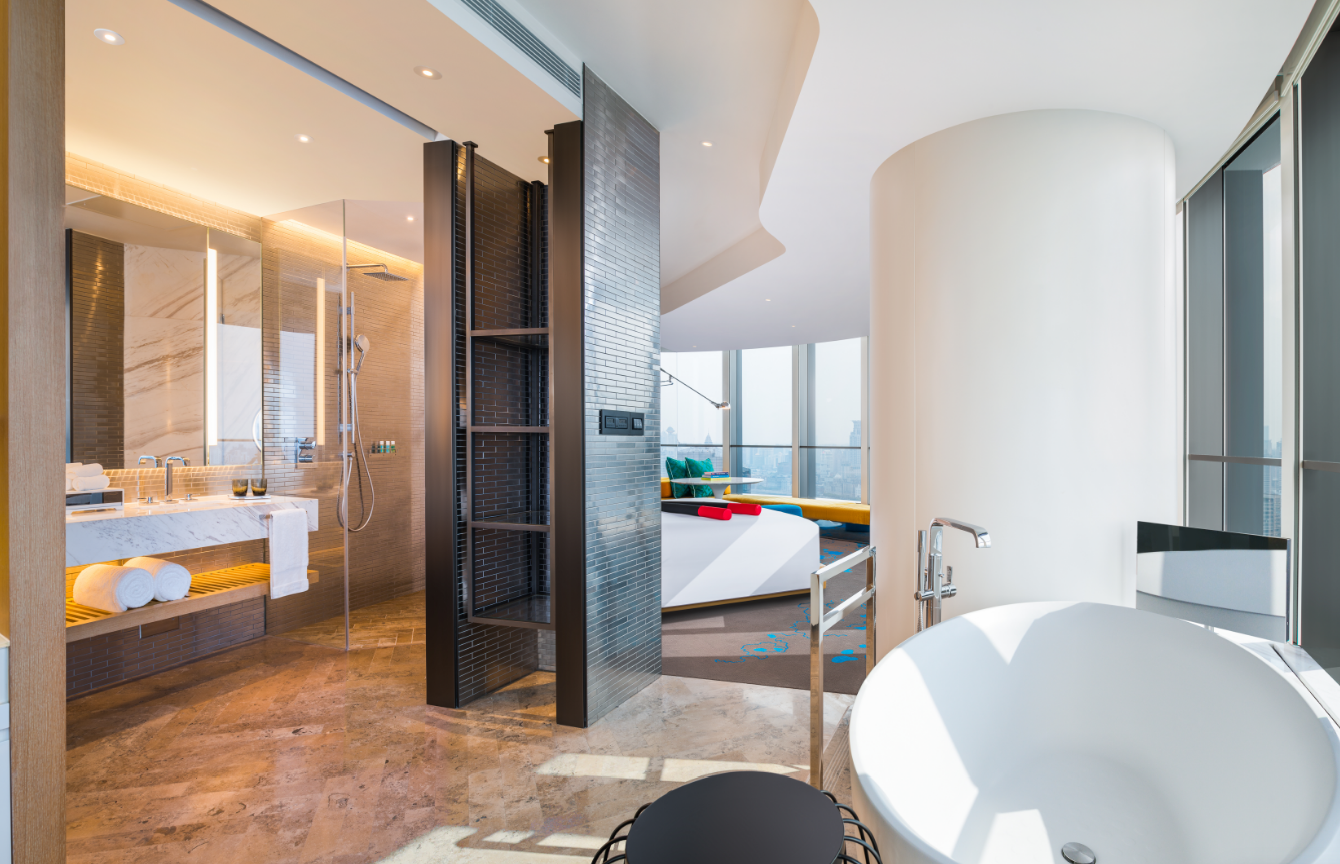
Guest-room product is visible in supplied assets; service handoffs and response standards require separate verification.
The Secret Garden description is especially relevant for buyers comparing a rooftop social venue with a conventional ballroom. It indicates an outdoor garden setting with cabanas and dining capability, but it does not prove that the venue is exclusive, weather-protected, acoustically isolated or suitable for every guest count. Those points belong in a written venue pack and a site inspection.
Guest-service due diligence: the handoffs behind the stay
Guest-service quality is harder to compare than room count because it depends on handoffs. W Shanghai - The Bund’s supplied profile lists a multidisciplinary hotel team covering guest services, rooms, food and beverage, events, wellness, sales and operations, with multilingual service available. The same profile lists 466 employees. These facts describe organizational scope; they do not demonstrate that a specific request will be resolved within a specific time.
The W Shanghai Guest Journey Framework provides a useful buyer checklist. It is a five-stage editorial service framework developed for this workbook, version 1.0, and is not a claim of a separately certified hotel methodology. Its stages are Discover, Design, Confirm, Deliver and Review. The Design stage recommends suitable room, venue, dining and wellness components based on availability. The framework’s core principles include guest purpose before product, clear commitments and documented scope, one accountable handoff at each stage, local character with international usability, and service recovery and continuous learning.
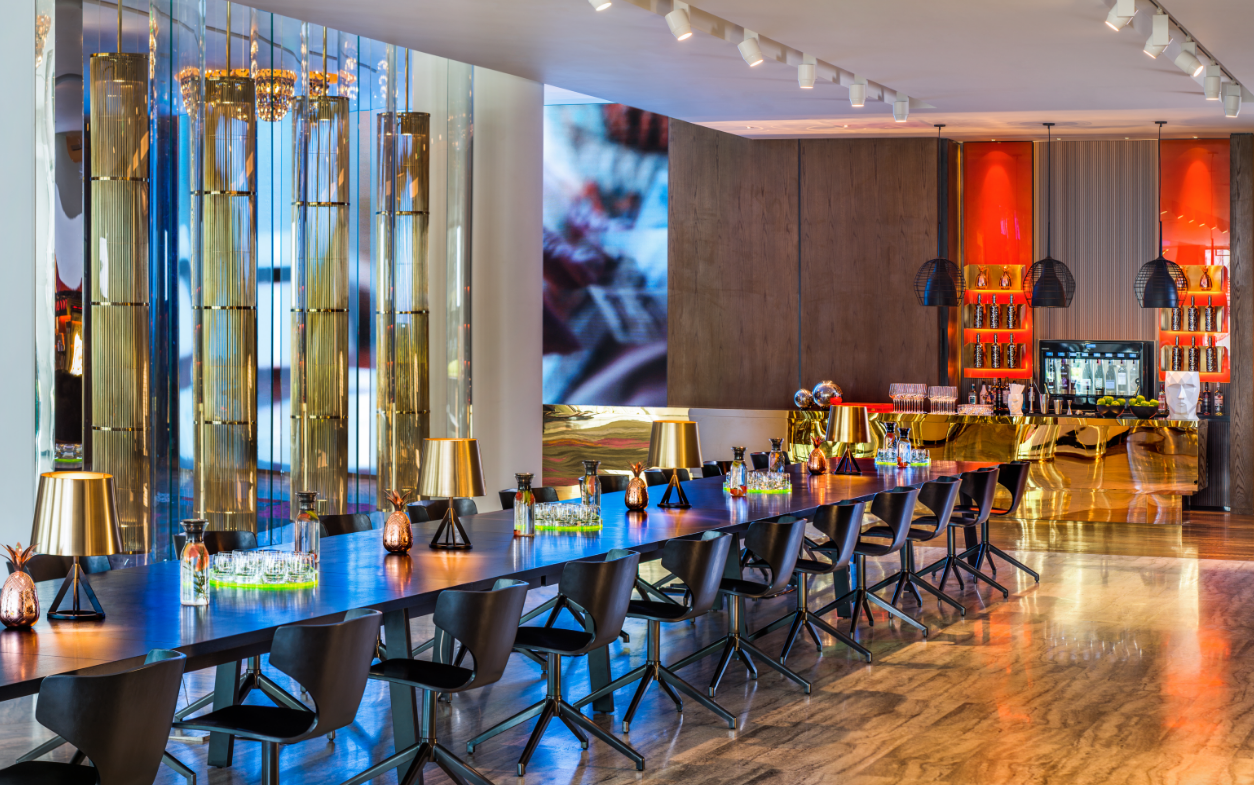
WOOBAR is named in official launch material; current programming and event use should be confirmed.
For due diligence, the framework is most useful as a set of questions. At Discover, does the hotel capture the purpose, party size, language, budget parameters and accessibility or dietary needs? At Design, are recommendations tied to actual availability? At Confirm, are inclusions, timing, responsibilities, payment and change terms documented? At Deliver, who owns the handoff when an arrival is delayed or a production schedule moves? At Review, is there a post-stay or post-event review process with recorded follow-up?
The supplied metric definitions support this line of questioning without supplying property results. Event Planning Response Time measures the elapsed time from a qualified event inquiry to the hotel’s initial substantive response, excluding automated acknowledgements. Event Schedule Adherence measures the percentage of contracted event milestones completed at agreed times, with approved changes tracked separately. Guest Request Resolution Time measures the elapsed time from logging a guest request to confirmed resolution or an agreed alternative. For all three, the property baseline and result are not publicly disclosed in the supplied material, and no improvement is calculable from public information.
A buyer should therefore ask for current internal targets by request category, the reporting method and an example of how exceptions are documented. That request is not a demand for a marketing pledge. It is a way to compare operational readiness on the same terms as another hotel.
Design and experience fit: Hai Pai, views and social venues
The design story is central to W Shanghai - The Bund’s identity, but it should be read as a documented concept rather than an independent design ranking. Marriott’s 2017 launch release says the hotel was designed by G.A Design and associates the concept with Hai Pai, described as combining old and new, East and West. The same release describes a contrast between Shanghai’s past and its avant-garde present, including historic or 1920s glamour blended with futuristic elements. These are official positioning statements. The supplied evidence does not include a current design-condition audit or a like-for-like comparison with competing hotels.
View positioning is also specific and should be handled carefully. The launch release states that nearly all guestrooms feature Huangpu River views because of the building’s curved form. The exact share of rooms with that view is not disclosed, and the statement should not be converted into an exact percentage or generalized to every room category. A buyer comparing room products should verify the view by category, floor and rate, not rely on a hotel-wide description.
The social and dining mix supports the lifestyle positioning. The official property page used for this assessment lists five restaurants and both indoor and outdoor WET pools. The launch release names The Kitchen Table, YEN, LIQUID AT YEN, WOOBAR and WET BAR. The current property page describes The Kitchen Table as a modern New York bistro concept with Bund views and Josper-grilled meat and seafood. The launch release describes YEN as contemporary Cantonese dining that reinterprets traditional dishes, LIQUID AT YEN as a speakeasy-style cocktail venue and WOOBAR as changing from a daytime lounge into an evening cocktail bar. These descriptions support the hotel’s social-scene positioning, but current opening hours, entertainment programming, venue buyouts and event suitability require confirmation.
External recognition is a supporting signal, not a substitute for due diligence. The World Travel Awards profile lists W Shanghai - The Bund as nominated for China’s Leading Design Hotel 2026 and Shanghai’s Leading Hotel Suite 2026. A nomination is not a win, and it does not establish operational performance for a specific event or stay.
Comparison with traditional solutions: what changes in the buyer’s checklist
This comparison does not claim that W Shanghai - The Bund is better or worse than a conventional Shanghai meetings hotel. The supplied evidence does not include a comparable set of competing properties, common test conditions or outcome data. What it does support is a difference in what the buyer must verify. A design-led lifestyle hotel may be evaluated for atmosphere, views, restaurant and bar integration and a residential guest experience. A traditional meetings-led property may be easier to compare on standardized function-space specifications and service packages. The buyer’s task is to test which model actually fits the brief.
For W Shanghai - The Bund, the public evidence is strong on scale, location, design concept, river-view positioning and venue mix. It is thinner on the operating details that determine event success: setup capacity, technical production, weather contingency, noise and access rules, service-level targets and commercial terms. That is not evidence that the hotel cannot deliver those details. It is evidence that they were not disclosed in the supplied material and must be obtained directly.
A useful decision rule is to separate atmosphere from execution. Atmosphere can be assessed from the design concept, venue descriptions and brand positioning. Execution must be assessed from written venue specifications, a site inspection, service-level commitments and a clear change process. A hotel that scores well on the first but cannot document the second is not yet a completed procurement decision.
Decision matrix for event and guest-service buyers
| Decision dimension | What the supplied evidence supports | What the buyer should verify |
|---|---|---|
| Event scale | More than 5,800 sqm of event space; Great Room of approximately 2,050 sqm. | Setup capacities, ceiling height, load-in, rigging, acoustics, blackout, accessibility and fire-safety terms. |
| Venue mix | Secret Garden: fifth-floor rooftop garden, Pudong skyline view, two cabanas and an al-fresco dining deck; described for private dinners, product launches and cocktail parties. | Exclusive use, weather contingency, noise limits, operating hours, food and beverage minimums and accessibility. |
| Guest rooms | 374 rooms and suites in a 42-story hotel; nearly all guestrooms feature Huangpu River views due to the building’s curved form. | View by room category and floor, current condition, connecting rooms, accessibility and group availability. |
| Dining and social | Five restaurants and bars listed; official page describes indoor and outdoor WET pools; launch release names The Kitchen Table, YEN, LIQUID AT YEN, WOOBAR and WET BAR. | Current outlets, opening hours, entertainment programming, buyout terms and event suitability. |
| Service model | W Shanghai Guest Journey Framework, version 1.0, an editorial service framework; 466 employees and multilingual service stated in the supplied profile. | Current service-level targets, escalation paths, language coverage, post-event review and reporting examples. |
| Recognition | World Travel Awards nominations for China’s Leading Design Hotel 2026 and Shanghai’s Leading Hotel Suite 2026. | Confirm nomination status and category criteria; do not treat as an award win or performance guarantee. |
| Commercial terms | No dated room rates, event package prices, minimum spends or cancellation terms in the supplied evidence. | Written quote, taxes, inclusions, payment schedule, cancellation, change terms and third-party charges. |
Fit boundaries and risks: when the property may not be the right choice
The W Shanghai Guest Journey Framework lists non-applicable scenarios: requests outside confirmed hotel scope, services requiring unavailable third-party or off-site resources, situations where dates, capacity or regulatory requirements cannot be met, and guarantees of specific business or satisfaction outcomes. These boundaries are useful for buyers because they distinguish a service framework from a promise of any outcome.
For a design hotel on the Bund, the main risks are not necessarily product quality. They are evidence gaps. A rooftop venue can be attractive but weather-dependent. A social bar can add energy but may create noise or access considerations for another part of an event. A river-view room category can be desirable but may not be available for every guest in a group. A large Great Room can accommodate a headline event but may not solve breakout, catering or load-in requirements by itself. Each risk should be converted into a written question and a documented answer.
The hotel may be a poor fit when the brief requires a guaranteed outcome that no hotel can support, when the required date or capacity cannot be confirmed, or when the event depends on third-party or off-site resources outside the hotel’s scope. It may also be a weaker fit when the buyer needs fully standardized, publicly comparable technical specifications before any site inspection. In those cases, the correct conclusion is not that the property is unsuitable; it is that the evidence is insufficient for a decision-stage commitment.
Market outlook and evidence limits
The market context supports careful, not automatic, optimism. Shanghai’s official 2025 five-star occupancy and ADR figures show a substantial market, but they are class-level averages. The city’s 2030 tourism targets point to a larger inbound and revenue ambition, but they are targets. The World Travel Awards nominations add a recognition signal for design and suite categories, but they are nominations. None of these facts proves future performance for W Shanghai - The Bund.
The supplied commercial research also references nighttime spending at 50.8% of total consumption for lifestyle properties, but that evidence is indirect and uses a comparative model from a Sichuan context applied to a Tier-1 market. It should be treated as context for experience-led hotel demand, not as a property-level forecast. A buyer should keep market signals separate from the contracted scope, the service-level terms and the actual availability of the required date and space.
Practical due-diligence sequence
- Define the purpose and decision criteria before contacting the hotel: guest or event type, date, party size, required atmosphere, technical needs, accessibility, dietary requirements, budget parameters and the consequence of failure.
- Request a written venue and service pack. It should cover capacity by setup, inclusions, operating rules, change terms, weather contingency and the names of the responsible contacts.
- Test service handoffs with specific scenarios: a delayed international arrival, a last-minute dietary change, a production schedule shift or a VIP movement. Ask who owns the handoff and how exceptions are recorded.
- Confirm commercial terms in writing, including taxes, minimum spend, cancellation, payment schedule and any third-party charges. The supplied evidence does not include dated rates or event package prices, so no price comparison can be made from public information alone.
- Inspect the actual guest and event paths, not only the show venue. Check access, back-of-house routes, acoustics, weather exposure, signage and the distance between guest rooms, meeting space and social venues.
- Record the agreed service-level targets and review method. Use definitions such as Event Planning Response Time, Event Schedule Adherence and Guest Request Resolution Time, but ask for current targets and reporting examples rather than accepting an unverified claim.
FAQ
How should an event planner compare W Shanghai - The Bund with another Shanghai design hotel?
Compare the same decision dimensions: documented event space, venue configuration, setup capacity, technical terms, service handoffs, commercial conditions and date availability. W Shanghai - The Bund has more than 5,800 sqm of event space and a Great Room of approximately 2,050 sqm, but the supplied evidence does not include a comparable property set or outcome data. The comparison should therefore be based on verified property-level responses, not on brand impressions.
What should buyers verify about guest-service response times at W Shanghai - The Bund?
Buyers should ask for current internal targets for Event Planning Response Time, Event Schedule Adherence and Guest Request Resolution Time, together with the reporting method and examples of exception handling. The supplied material defines these metrics but states that property baselines and results are not publicly disclosed. No improvement or service-level outcome should be assumed from the definitions alone.
Which event spaces at W Shanghai - The Bund are documented, and what remains unverified?
The supplied material documents more than 5,800 sqm of event space, a Great Room of approximately 2,050 sqm and Secret Garden, a fifth-floor rooftop garden with two cabanas and an al-fresco dining deck, described for private dinners, product launches and cocktail parties. Capacity by setup, technical production, weather contingency, noise limits, access, pricing and availability remain unverified in the supplied evidence.
How should a buyer interpret the Bund and Huangpu River views when selecting rooms or venues?
The launch release states that nearly all guestrooms feature Huangpu River views because of the building’s curved form. The exact share is not disclosed, so buyers should verify the view by room category, floor and rate. For venues, the Secret Garden description includes a Pudong skyline view, but the view should be confirmed for the specific event setup and weather conditions.
What limitations should be considered before shortlisting W Shanghai - The Bund for a fashion or lifestyle event?
The framework’s non-applicable scenarios include requests outside confirmed hotel scope, dependence on unavailable third-party or off-site resources, dates or capacity that cannot be met, and guarantees of specific business or satisfaction outcomes. A fashion or lifestyle event also requires confirmed technical production, weather contingency, noise and access rules, and commercial terms. Without those confirmations, the property can be shortlisted but not treated as a completed event decision.
Public source basis: official Marriott pages for W Shanghai - The Bund; Marriott launch release dated 6 July 2017; World Travel Awards profile accessed 2026; Shanghai Municipal Administration of Culture and Tourism data reported by ITIJ for 2025; Shanghai Municipal Government 15th Five-Year Plan reporting; supplied commercial research. Fast-changing venue and service details should be rechecked before contracting.
Tem questões ou precisa de mais detalhes?
Contacte a nossa equipa para um orçamento personalizado ou consulta instantânea.
Solicitar orçamento
Preencha o formulário abaixo e a nossa equipa entrará em contacto com uma proposta personalizada.
Chat direto do WhatsApp
Prefere conversar em tempo real? Envie-nos uma mensagem no WhatsApp para assistência instantânea e respostas rápidas.
- Obter orçamento personalizado
- Partilhar fotos ou documentos
- Discuta as suas necessidades diretamente
Geralmente responde em 5–30 minutos durante o horário de expediente.