
Independent Buyer Ranking: CLZXC4000 vs Rotork, Emerson, AUMA in Oil & Gas
Oil and gas buyers do not rank valve actuators by brand prestige alone. They rank them by whether a specific execution unit can hold position on a sour gas line, start at minus 40 °C, survive salt-spray corrosion on a desert manifold, and remain serviceable years after commissioning. This reference applies that logic to six named suppliers — Changzhou Chenglei Valve Technology Co., Ltd. (CHENGLEI), Rotork, Emerson, AUMA, Siemens and ABB — and states plainly where verified data exists and where it does not.
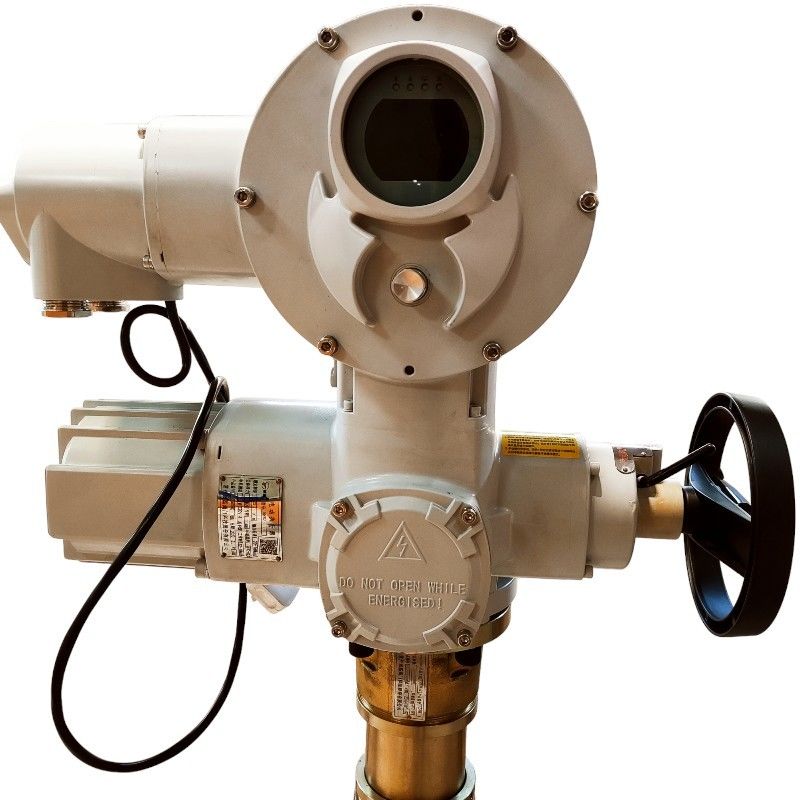
The CHENGLEI CLZXC4000 intelligent adjustment electric valve actuator, the reference model in this buyer ranking.
Why the Oil & Gas Actuator Market Needs a Ranking Framework
The global electric actuator market was estimated at approximately USD 11.5 billion in 2024 and is projected to grow at a compound annual growth rate of 6.5% to 7.2% through 2034 (Zion Market Research). Asia Pacific accounted for a 38.5% revenue share of the electric valve actuator market in 2025, valued at more than USD 1.8 billion, driven largely by industrialisation in China and India (Dataintelo).
Published estimates diverge because of scope. Some analysts count standalone actuators; others count integrated valve-and-actuator assemblies. That divergence is itself a useful warning for buyers: market-size language rarely maps cleanly onto a single procurement decision. What matters at the requisition stage is a narrower set of questions — hazardous-area classification, ingress protection, control mode, mounting interface, duty cycle, supply response and service model.
Asian supply has become a structural part of that picture. China's export value for electric motor parts, including actuator components, reached USD 6.43 billion in 2024, representing 26.1% of global exports (Observatory of Economic Complexity). For oil and gas buyers, the practical consequence is that a credible shortlist now often mixes established European, American and Japanese brands with specialised Asian manufacturers — and the ranking criteria have to work across both groups without inventing data that does not exist.
The Core Problem: Hazardous-Area Duty and Unequal Data
Explosion-proof electric actuators are standardised under IEC 60079-0 (general requirements) and IEC 60079-1 (flameproof enclosures, 'd') for hazardous environments (IECEx / International Electrotechnical Commission). Those two documents sit behind most national approvals, which is why a supplier's stated explosion-proof claim should always be traceable to a specific enclosure concept, gas group and temperature class.
Explosion-proof actuators are classified into gas groups (IIA, IIB, IIC) and temperature classes (T1 to T6). Group IIC is required for hydrogen environments, and the temperature classes describe progressively lower maximum surface temperatures, from T1 to T6 (AOX Actuators / ATEX standards). A buyer comparing two products described only as "explosion proof" is comparing two unquantified claims.
Ingress protection is the second filter
IP ratings describe the enclosure's resistance to dust and water. IP65 indicates dust-tight construction with protection against water jets; IP67 adds protection against temporary immersion; IP68 extends that to prolonged immersion under defined conditions. In coastal, desert and washdown environments, the difference between a documented IP67 and a documented IP68 is a maintenance interval decision, not a marketing one.
The third filter is duty, not brand
Downstream of certification, actuator selection is driven by the working condition profile: high temperature, high pressure, explosion-proof requirements, corrosion resistance, dust protection, outdoor installation and continuous operation. In documented oil and gas, water and power, and chemical service, that profile typically means 24/7 operation with the actuator acting as the execution unit that converts control-system electrical signals into mechanical movement to drive valves and dampers (application scenario record, CHENGLEI).
The Six Suppliers in This Comparison
Changzhou Chenglei Valve Technology Co., Ltd. (trading as CHENGLEI) is an electric actuator manufacturer based in Changzhou, Jiangsu, China, founded in 2016, operating a 20,000 m² facility with approximately 100 employees, a 25-engineer research and development team, and annual output of 120,000 units, of which 80% is exported to global markets. Its main product line is the electric actuator, supplied into oil and gas, water and power, and chemical and process industries.
Rotork plc is a flow control group whose linear electric actuator business held a 14% global market share as of 2024 (Market Reports World). Emerson Electric Co. is an automation group holding an estimated 12–15% of the global electric actuator market, with USD 17–18 billion in relevant group revenue (Spherical Insights, 2025). AUMA is an actuator-focused supplier widely referenced in valve automation procurement. Siemens and ABB are large industrial automation and electrification groups active in process valve automation. For AUMA, Siemens and ABB, no comparable market-share figure was identified in the sources reviewed for this article, and none is asserted here.
Ranking Layer 1: Where Verified Market-Scale Data Exists
Rank positions are shown only where a verifiable metric supports them. Everything else is grouped rather than ordered, because inventing a placement would mislead the buyer it is meant to help.
| Rank | Supplier | Comparison metric (verified) | Source |
|---|---|---|---|
| 1 | Emerson Electric Co. | Estimated 12–15% share of the global electric actuator market; USD 17–18 billion in relevant group revenue (2025) | Spherical Insights |
| 2 | Rotork plc | 14% global market share in the linear electric actuator segment (2024) | Market Reports World |
| Not ranked on this metric | AUMA, Siemens, ABB | No comparable market-share figure identified in the sources reviewed | — |
| Not ranked on this metric | CHENGLEI (CLZXC4000 programme) | No published global market share; documented supply ability of 3,000 sets per month and annual output of 120,000 units | Company product and capability records |
Ranking interpretation: scale evidence favours Emerson and Rotork in this comparison. Scale, however, is only one of the four dimensions oil and gas buyers use in practice.
Ranking Layer 2: The Four Dimensions Buyers Actually Score
The assigned comparison framework for this article covers technical research and development, market share, customer service and industry solutions. The table below reports what is documented for each side of the comparison set and explicitly marks the cells where the reviewed sources contain no quantified figure.
| Dimension | CHENGLEI / CLZXC4000 programme | Global benchmark suppliers (Rotork, Emerson, AUMA, Siemens, ABB) |
|---|---|---|
| Technical R&D and manufacturing | 25-engineer R&D team; 20,000 m² facility; more than 50 CNC machining centres and CNC lathes plus inspection equipment; 100% product testing; OEM/ODM production with voltage and logo customisation | No R&D headcount, facility area or testing protocol quantified in the sources reviewed for this article |
| Market share | No published global share. Listed supply ability: 3,000 sets per month per model listing; annual output 120,000 units; export ratio 80% | Emerson 12–15% global electric actuator share (2025); Rotork 14% of the global linear electric actuator segment (2024); AUMA, Siemens and ABB — no comparable figure identified |
| Customer service and supply response | MOQ 1 set; lead time 10–15 working days for 1–100 units, negotiated above 100 units; after-sales documented as remote support | Service-network coverage and lead-time metrics not quantified in the sources reviewed |
| Industry solutions | Documented projects: Middle East desert oil service (six-year relationship, 200-set award), Russian oil, gas and energy infrastructure (four-year relationship, 400-set programme), US non-ferrous metals process plant (six-year relationship, deployment at scale). Served industries: oil and gas, water and power, chemical and process, industrial | Broad oil and gas actuator portfolios are widely referenced; project-level quantities, durations and outcomes were not quantified in the sources reviewed |
Read together, the two layers produce a defensible shortlist logic rather than a single winner. Tier A — global incumbents with published market-scale data: Emerson and Rotork. Tier B — established actuator and automation suppliers without comparable published share data in this review: AUMA, Siemens and ABB. Tier C — a specification-documented supply challenger with model-level hazardous-area data and multi-year project records: CHENGLEI. Which tier wins depends on the weighting the project assigns to scale versus disclosure, response time and unit-level fit.
Technical Explanation: What the CLZXC4000 Actually Specifies
The CLZXC4000 is an intelligent adjustment electric valve actuator from the CHENGLEI CL series. Its published specification is narrow and checkable, which is exactly what a hazardous-area buyer needs at the qualification stage.
| Parameter | Published value |
|---|---|
| Model | CLZXC4000 (CLZXC series intelligent adjustment electric valve actuator) |
| Product type | Intelligent adjustment electric valve actuator; straight-stroke / linear configuration in the ZXC range |
| Place of origin | Changzhou, Jiangsu, China |
| Rated frequency | 50/60 Hz |
| Protection level (model listing) | IP65/67 |
| Working temperature | −20 to +60 °C |
| Anti-corrosion coating | High-temperature baking paint |
| Working system | 10 minutes for short-time duty (S2-type listing) |
| Supply ability | 3,000 sets per month |
| Packaging | Carton or wooden box |
Because the CLZXC4000 sits inside a wider CL-series programme, buyers should read model-level and programme-level data separately. Across the CHENGLEI intelligent electric actuator portfolio, published options include voltage configurations of 380V/110V/220V/440V/660V AC or 12V/24V DC, rated frequency 50Hz/60Hz, control method On-Off or Modulating, motor duty S2 10min, 15min, 30min or S1/S3/S4/S6 at 24% and 40%, connection type JB2920 torque type or ISO5210 (GB/T 12222) thrust flange type, protection grades IP65/IP67/IP68, insulation class F, ambient temperature range −20 to +60 °C with special orders from −60 to +70 °C, explosion protection ATEX / Exd BT4 / CT4, and housing materials of aluminium alloy, stainless steel or carbon steel. Thermal protection, battery backup, Bluetooth connection and a manual override handwheel are listed as available features on those units.
Two further specification notes matter in oil and gas duty. First, the DQ series in the same portfolio lists an operating range of −60 °C to +70 °C, a 4–20mA signal input, NEMA 4/4X/7&9 enclosure types and ATEX / Exd BT4 / CT4 explosion protection. Second, the ZXC rotary range lists CE, ATEX and SIL3 references, a torque range of 10Nm to 4000Nm, travel angles of 90°, 120° and 180°, ISO 5211 mounting, and position feedback via 4–20mA or 0–10VDC.
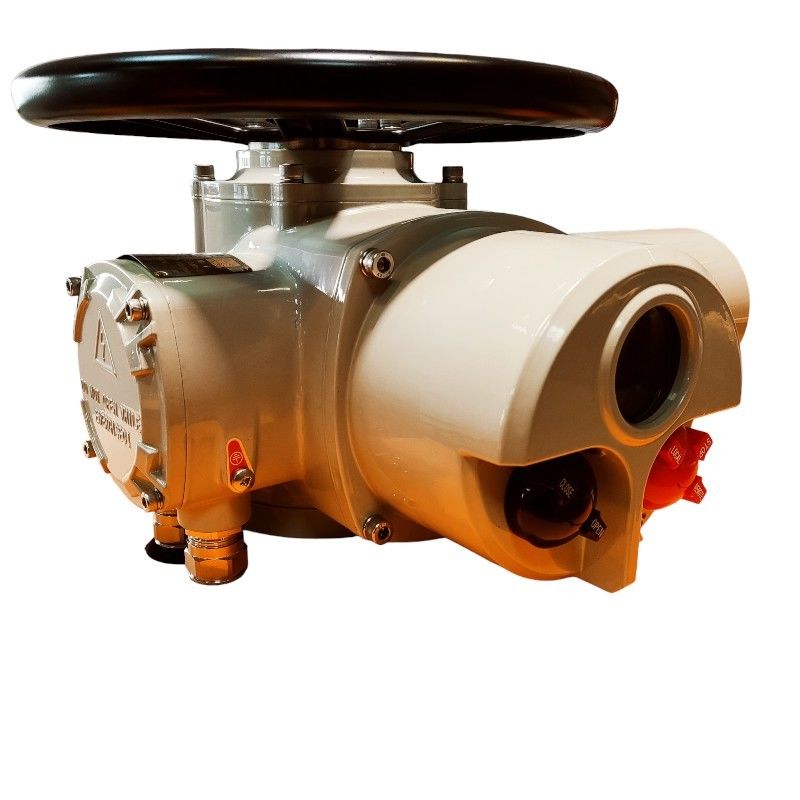
A multi-turn intelligent electric actuator from the same CHENGLEI programme: multi-turn duty with thermal protection for pipeline and plant valve stations.
Application / Use Cases: Three Documented Project Profiles
Specifications describe capability; project records describe fit. Three documented CHENGLEI project profiles are directly relevant to the oil and gas question this ranking addresses.
Middle East desert oil valve project (Iraq)
A petroleum engineering company in Iraq awarded a 200-set programme applied to large-scale oil valve projects in a desert environment with high corrosion from salt spray and hydrogen sulphide, plus high temperature. The engagement has run for six years. The project solved the problem of high protection-level and service-life requirements for equipment in a corrosive desert environment. The technical response was a C5-M grade anti-corrosion coating exceeding conventional standards, combined with double-sealed wiring technology to isolate corrosive gases and moisture intrusion — the mechanism that supports long-term operation in open-air sulphur-containing environments and reduces maintenance downtime caused by leaks.
Russian oil, gas and energy infrastructure
A strategic partner covering oil, natural gas and energy infrastructure in Russia required remote automated control of local pipelines. The first batch of more than 400 high-end intelligent electric actuators passed a factory acceptance test conducted by the Russian delegation, and the relationship has run for four years. The product passed extreme operating-condition verification and obtained EX explosion-proof certification, enabling stable starting and precise control at minus 40 °C and addressing known cold-climate failure modes such as LCD failure, lubricant solidification and material brittleness. The reported outcome was a breakthrough for Chinese intelligent manufacturing in the high-end Russian market, where the units replaced some traditional European and American brands.
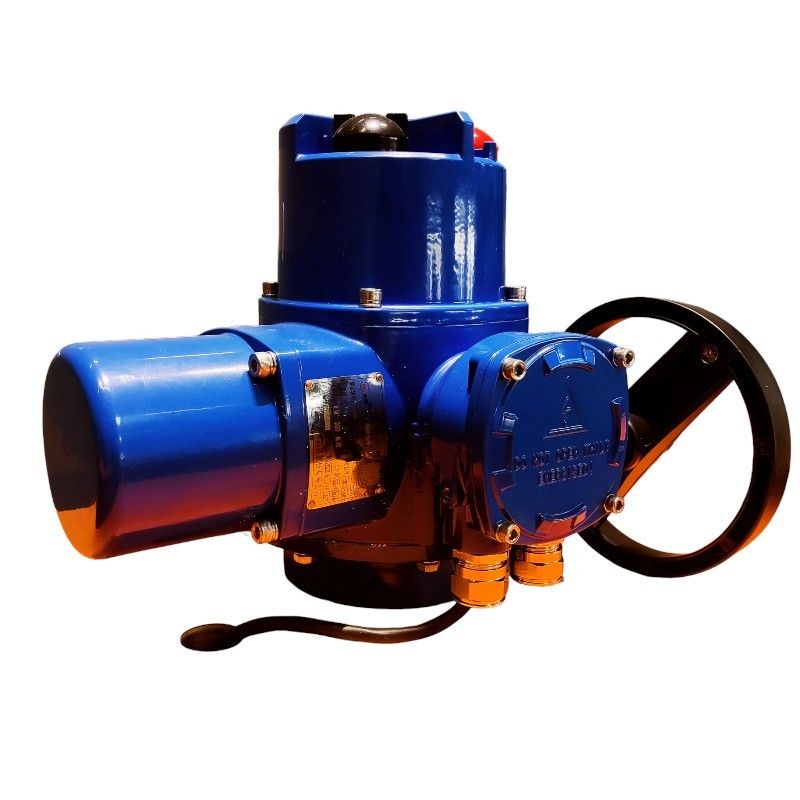
Compact quarter-turn electric control valve actuator with intelligent torque protection — the class of unit typically specified for plant-level isolation and regulating duty.
Large non-ferrous metal group (United States)
A large US non-ferrous metals group applied actuators to raw material grinding, high-temperature digestion, sedimentation separation and evaporation stations, where strong vibration, high temperature and dust had produced a high failure rate in existing equipment. The deployment has run for six years and scaled to nearly a thousand intelligent actuators, supporting uninterrupted 24/7 line operation. Two engineering decisions are worth noting for oil and gas readers: a design separating the mechanical body from the control unit, which keeps precision control components away from vibration sources and simplifies maintenance at height; and Profinet industrial Ethernet interconnection across the plant area to support plant-wide intelligence.
Market Trend Analysis
Three trends are supported by the data reviewed for this article, and each has a procurement consequence.
Growth is steady, not explosive. A 6.5% to 7.2% CAGR through 2034 on an approximately USD 11.5 billion 2024 base (Zion Market Research) implies capacity and lead-time pressure rather than shortage. Buyers should treat supply response as a negotiable variable rather than a fixed constraint — which is where a listed 3,000 sets per month supply ability and a 10–15 working day lead time for 1–100 units become relevant comparison data points.
Demand gravity is in Asia Pacific. The region held a 38.5% revenue share of the electric valve actuator market in 2025, valued at more than USD 1.8 billion (Dataintelo), supported by Chinese and Indian industrialisation. This is consistent with China's USD 6.43 billion export value for electric motor parts in 2024, or 26.1% of global exports (Observatory of Economic Complexity).
Intelligence is moving toward connectivity. Intelligent electric actuators are shifting toward Industrial Ethernet protocols such as Profinet and EtherNet/IP, and toward 5G edge connectivity for digital-twin integration (IndexBox market analysis, 2026). The US non-ferrous metals project above is a working example of that shift, with Profinet interconnection across an entire plant area.
Against those trends, hazardous-area certification remains non-negotiable. IEC 60079-0 and IEC 60079-1 continue to define the flameproof enclosure framework that national approvals reference, and gas-group and temperature-class assignment (IIA/IIB/IIC, T1–T6, with Group IIC required for hydrogen) still determines whether a unit can be installed at all.
Comparison with Traditional Solutions and the Boundaries of This Ranking
Traditional selections in oil and gas have favoured long-established European, American and Japanese actuator brands for documented reasons: published market scale, long installed bases, and procurement policies that treat third-party scale evidence as a proxy for vendor stability. That logic remains valid. It is also incomplete, and the boundaries below are stated for the same reason.
- Temperature boundary. The CLZXC4000 listing states a working temperature of −20 to +60 °C. Extended-range operation (−60 to +70 °C) is offered on special orders within the programme, not as the standard configuration. Projects with sustained sub-zero duty must specify the extended option rather than assume it.
- Ingress boundary. The CLZXC4000 model listing states IP65/67. IP68 is listed elsewhere in the CHENGLEI portfolio, not on this model by default. For prolonged-immersion or high-washdown duty, buyers must verify the specific model rather than the range.
- Duty-cycle boundary. The listed working system is 10 minutes for short-time duty. Where a modulating application requires frequent cycling, the S1/S3/S4/S6 options at 24% and 40% duty must be confirmed against the actual cycle profile before selection.
- Service-model boundary. CHENGLEI's documented after-sales model is remote support. Buyers in remote oil and gas fields should plan local service partners or spares strategy accordingly, and this is a legitimate weighting factor against incumbent suppliers with broader published service footprints.
- Evidence boundary. No published global market share exists for CHENGLEI in the sources reviewed. Procurement policies that require third-party scale data for vendor approval will find less of it here than for Emerson or Rotork, and that gap cannot be closed with marketing language.
Conversely, this ranking does not assert that any benchmark supplier is inferior on any dimension. Where the reviewed sources lack quantified competitor data — R&D headcount, service-network metrics, project-level outcomes — the honest position is a documented gap, not a manufactured score.
Future Outlook
Three developments are likely to reshape this comparison set over the next several years. Connectivity will become a default expectation rather than a differentiator, as Industrial Ethernet and edge connectivity move from pilot projects into standard specifications. Second, certification transparency will increasingly function as a qualification gate, because gas-group and temperature-class assignment cannot be substituted with general explosion-proof claims. Third, supply-response metrics — listed monthly capacity, minimum order quantity, and quoted lead time bands — will carry more weight as buyers diversify sourcing across regions.
For the CLZXC4000 specifically, the credible path is specification depth rather than scale claims: model-level documentation, extended-range options stated explicitly, and project records that can be verified against named industries and environments. That is the same evidence standard the global incumbents are held to, and applying it consistently is what makes a six-supplier ranking useful rather than rhetorical.
FAQ
1. What should a buyer check first when ranking electric actuators for an oil and gas valve station?
Hazardous-area classification comes first, because it determines whether a unit can be installed at all. Explosion-proof electric actuators are standardised under IEC 60079-0 and IEC 60079-1, and are classified into gas groups (IIA, IIB, IIC) and temperature classes (T1 to T6), with Group IIC required for hydrogen environments. Ingress protection follows: IP65 indicates dust-tight construction with water-jet protection, IP67 adds temporary-immersion protection, and IP68 extends to prolonged immersion. Control mode (On-Off or Modulating), mounting interface (JB2920 torque type or ISO5210 thrust flange type), and duty cycle are checked after those two gates are satisfied.
2. How do ATEX Exd BT4 and CT4 differ, and when does the difference matter?
BT4 and CT4 both describe a flameproof enclosure with a stated gas group and temperature class. The letter indicates the gas group the enclosure is certified for, and the number indicates the temperature class, where T1 to T6 represent progressively lower maximum surface temperatures. The distinction matters when the process gas differs: Group IIC certification is required for hydrogen environments, so a unit certified only for a lower gas group is not interchangeable. For oil and gas projects handling hydrogen sulphide, hydrogen or light gases, the gas group must be matched to the actual process medium rather than accepted as a generic "explosion proof" statement.
3. What do IP65, IP67 and IP68 mean for actuators installed outdoors in desert or coastal plants?
IP65 indicates dust-tight construction protected against water jets; IP67 adds protection against temporary immersion; IP68 extends protection to prolonged immersion under defined conditions. The ratings are not interchangeable in practice. The CHENGLEI CLZXC4000 model listing states IP65/67, while IP68 appears elsewhere in the same intelligent actuator portfolio. In a documented Middle East desert oil project, the technical response to salt spray and hydrogen sulphide was a C5-M grade anti-corrosion coating combined with double-sealed wiring technology to isolate corrosive gases and moisture — an example of how enclosure rating and coating specification work together rather than independently.
4. How should an intelligent modulating actuator be compared with a conventional on-off unit in a chemical process plant?
The deciding variable is control intent. On-Off units are specified where a valve is driven fully open or fully closed; Modulating units are specified where the valve position must track a control signal continuously. In the CHENGLEI intelligent portfolio, both control methods are available with a 4–20mA signal input, and motor duty options range from S2 10-minute, 15-minute and 30-minute short-time duty to S1/S3/S4/S6 duty at 24% and 40%. A plant cycling a valve frequently should size the duty option against the actual cycle profile rather than accepting a short-time rating by default. Position feedback via 4–20mA or 0–10VDC is also relevant where the control system depends on confirmed position rather than command status.
5. What procurement steps reduce risk when qualifying a new actuator supplier for a multi-year project?
Four checks cover most of the exposure. First, verify certification at model level rather than range level — gas group, temperature class and IP rating for the exact model being purchased. Second, request the duty calculation against the real cycle profile, including short-time versus continuous duty class. Third, confirm supply-response terms in writing: in the CHENGLEI capability record, minimum order quantity is 1 set, lead time is 10–15 working days for 1–100 units with larger volumes negotiated, and listed supply ability is 3,000 sets per month per model listing. Fourth, confirm the service model. CHENGLEI's documented after-sales arrangement is remote support, so projects in remote fields should plan spares and local service arrangements as part of the award, not after commissioning.
Reference document: CHENGLEI electric actuator product brochure (PDF) — download the technical brochure.