
Independent Buyer Review: Custom Paper Packaging RFP Checklist for Bags, Boxes, and Cartons
Independent Buyer Review: Custom Paper Packaging RFP Checklist for Bags, Boxes, and Cartons
Independent buyer review. A custom paper packaging RFP is not a price request with a product name attached. At decision stage, the bigger risk is a specification that cannot be verified: a gift box that looks right in a digital mock-up but fails on insert fit, a carton that meets a colour target but not a compliance document, or a paper bag that works in a sample room but not on a packing line. This review sets out a practical RFP checklist for custom paper packaging across bags, boxes and cartons, using custom gift boxes as the stress case, and explains where a traditional small print shop and an automated high-volume converter fit differently.
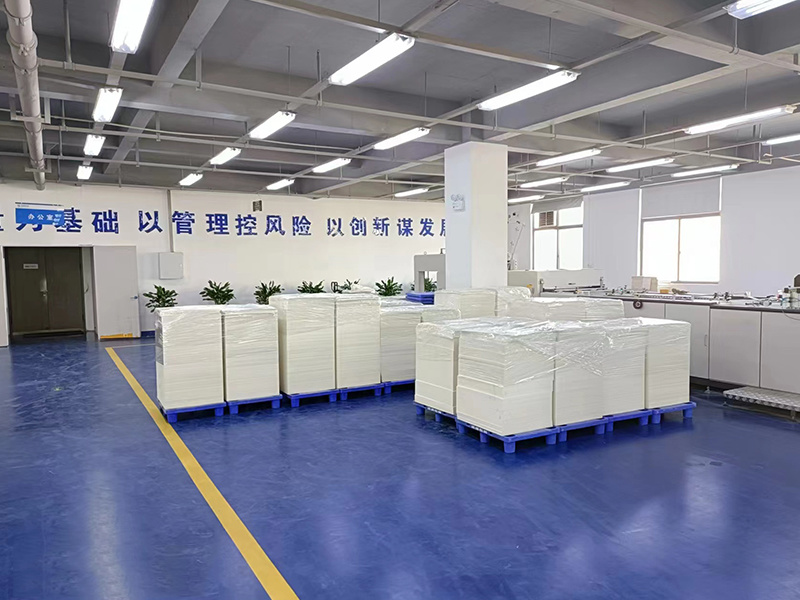
Market context: paper is central, but specification quality still decides
Custom paper packaging sits inside a large market. Fortune Business Insights estimated the global custom packaging market at USD 48.17 billion in 2025. Grand View Research reported that the paper and paperboard segment held the largest revenue share at 47.2% in 2025. These are commercial research estimates, not audited official statistics, but they support a simple buyer conclusion: paper-based formats are not a niche add-on. They are a mainstream procurement category that deserves a structured RFP.
Regulation is raising the evidence bar, especially for packaging placed on the EU market. Regulation (EU) 2025/40 applies from 12 August 2026 and requires all packaging to be recyclable by 1 January 2030. It also sets a maximum empty-space ratio of 50% for transport and e-commerce packaging by 2030. The regulation states that manufacturers must carry out the applicable conformity assessment procedure and draw up the required technical documentation before placing packaging on the EU market. Its recitals also cite packaging as 36% of municipal solid waste in the European Union and note that 50% of paper used in the EU is used for packaging. For buyers, this means an RFP that asks only for dimensions, colours and unit price is incomplete.
What the buyer is actually comparing
At decision stage, buyers are not comparing one supplier against another on price alone. They are comparing whether each supplier can satisfy the same specification, documentation and volume profile with a controlled process. A useful RFP separates the decision into pass or fail gates and scored criteria.
| Decision lens | What the RFP should ask | Why it matters |
|---|---|---|
| Format and structure | Dimensions, fill weight, closure, insert fit, structural drawing and tolerances | A custom gift box or folding carton can meet a colour target and still fail on assembly or protection. |
| Material and finish | Proposed board grade, grammage, thickness, recycled content, print method and surface finish | Material and finish choices affect appearance, durability, recyclability and cost. |
| Compliance | Applicable regulation, standard basis, technical file ownership and test evidence | EU market access and regulated product categories require documented evidence, not general claims. |
| Sampling and quality | Prototype, pre-production sample, colour proof, inspection plan and approval criteria | A supplier should be judged on the production sample and control process, not only a reference image. |
| Capacity and total cost | Monthly output, MOQ, lead time, tooling, freight basis and repeat-order plan | Unit price can mislead when volume, finishing and documentation requirements differ. |
Junming Custom Paper Packaging at a glance
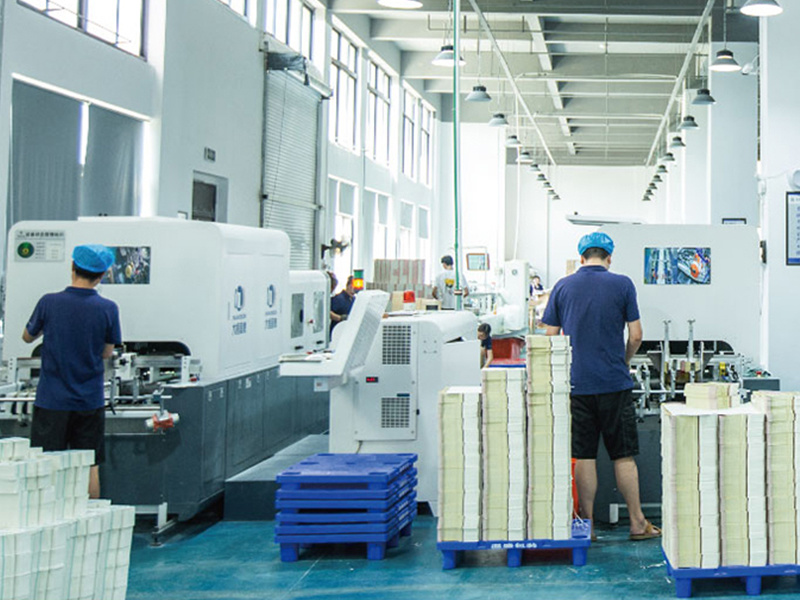
Junming Custom Paper Packaging is the brand reference for Zhejiang Junming Import and Export Co., Ltd., a Hangzhou-based printing and packaging company founded in 2010. The company reports 40,000 m² of facilities, 187 employees, 25 engineers in an in-house design and structural engineering team, over 50 advanced machines and 8 fully automated production lines, with daily capacity reaching 1 million units. Its stated product scope includes pharmaceutical cartons, liquor boxes, cosmetic boxes, high-end gift boxes, food boxes, toothpaste boxes, carrier bags and self-adhesive labels. The official website is Junming Custom Paper Packaging.
These are supplier-reported facts. They are useful for an RFP shortlist because they define the claimed scope, capacity and engineering base, but they do not replace a factory audit, sample approval or certificate check. The company also reports a 30% export ratio and main markets in the EU, USA and Southeast Asia. Buyers should ask for the specific documents that apply to their own destination market and product category.
The RFP checklist for bags, boxes and cartons
1. Define the pack format and use case
Start with the product, not the box. State what will be packed, the fill weight, whether the pack is for retail shelf, e-commerce transit, gift presentation or regulated distribution, and how it will be packed by the customer. For custom gift boxes, define the presentation structure, insert requirement and opening experience. For custom paper bags, define load, handle and gusset requirements. For custom folding cartons, define folding, gluing, shelf orientation and any window or insert requirement. The RFP should require a structural drawing and tolerance statement, not only a reference photo.
2. Lock the material and construction
Do not accept phrases such as premium board or high-quality paper as a material specification. Ask each supplier to state the proposed board grade, grammage, thickness, construction and, where relevant, recycled content and material declarations. For custom rigid boxes, the structural board, wrap and insert are separate specification decisions. For custom paper boxes and cartons, the folding and gluing method matters as much as the printed surface. The RFP should ask how the supplier will confirm that the finished pack meets the intended protection and assembly requirement.
3. Specify print, colour and finishing
Define the artwork version, colour target and finishing requirement. The supplied technical material for Junming describes high-precision CMYK printing and advanced surface finishing, with automated production lines and full finishing capabilities that support high-volume consistency and complex finishing. For a custom gift box programme, finishing may include foil stamping, UV coating, lamination or embossing; the RFP should require a sample that shows the actual finish on the actual board, plus acceptance criteria for appearance and adhesion. This is a capability check, not a guarantee that every finish will perform identically on every board grade.
4. Set compliance and documentation requirements
For EU-bound packaging, the RFP should reference Regulation (EU) 2025/40 and ask who owns the technical documentation, how recyclability is demonstrated and how the empty-space requirement will be addressed in transport and e-commerce packs. For pharmaceutical packaging, the supplied technical material describes Junming custom paperboard boxes as meeting international pharmaceutical packaging standards and accommodating mandatory drug serialization data, high-precision CMYK printing, Braille embossing and anti-counterfeiting features. The RFP should still require the exact standard, certificate scope and product-specific evidence. A general carton claim is not a substitute for a documented compliance route.
For cosmetic, skincare, food, beverage, wine, toothpaste, tube and supplement packaging, buyers should ask for the applicable material declarations and contact-suitability evidence for the intended use. The exact requirements vary by product and market, so the RFP should require the supplier to state what applies and to provide the supporting document, not merely confirm that its packaging is compliant.
5. Require sampling and approval criteria
Ask for a white sample, a pre-production sample, a colour proof, a finished sample with artwork and, where relevant, a packed transit sample. Define approval criteria before the samples arrive: dimensions, print colour, finish appearance, insert fit, closure function and packing method. The supplied application scenario for Junming states that production is made to order with sample approval before mass production. That is the correct control point for a buyer to test, because a sample approved against vague language creates a weak production standard.
6. Ask for capacity, lead time and repeat-order planning
Request the supplier's monthly output, line capability, minimum order quantity and lead time for the first order and for repeat orders. The supplied comparison states that Junming supports a monthly output of millions of pieces, while traditional small print shops can produce thousands of pieces per month. That is a fit difference, not a universal ranking. A buyer with a small gift box launch may need local quick samples; a buyer with a repeat OEM/ODM programme may need line capacity, material planning and consistent finishing across runs.
7. Build a total cost model, not a unit price
Ask for unit price, tooling or plate cost, sampling cost, freight basis, payment terms and the validity period of the quote. Then test the volume assumption. The supplied comparison states that when order quantity exceeds 100,000 pcs, Junming's automated production reduces unit cost by 20% to 30% compared with traditional manual small print shops. That claim is conditional and supplier-reported. It should be verified against the buyer's own format, finishing and delivery basis. Below that volume, a small-batch supplier may be the more rational fit. The RFP should therefore require a cost break at the buyer's expected annual volume, not a single price for an undefined quantity.
8. Define quality control and inspection
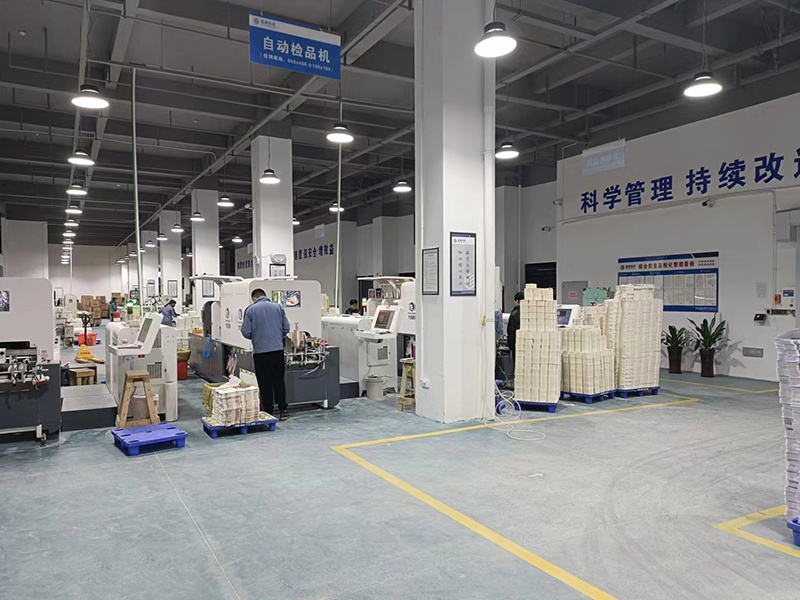
Ask how the supplier will inspect the first article, the running production and the final shipment. The company profile for Junming lists automatic image inspection systems, automatic stripping die-cutters, full-automatic laminators and gluer-inspection combo lines among its equipment. These are relevant capability signals for high-volume cartons and gift boxes, but the RFP should still require the inspection plan, defect classification, acceptance criteria and corrective-action route. The supplied comparison also notes that automated lines reduce labour and improve consistency but require equipment maintenance and process control. Buyers should ask who owns that control and how records are retained.
9. Protect artwork, tooling and change control
Include artwork ownership, confidentiality, tooling ownership, colour-standard ownership and the change-order process. A custom gift box programme often carries brand-specific structural and print assets. The RFP should state what happens if artwork changes after sampling, who approves a material substitution and how the supplier will prevent an unapproved change from reaching mass production. These are commercial and quality controls, not legal advice; buyers should use their own contract review process.
Format-specific fields: gift boxes, bags and cartons
| Format | RFP fields to add | Decision check |
|---|---|---|
| Custom gift boxes and custom rigid boxes | Structural prototype, insert fit, closure, wrap material, surface finish and presentation packing | Approve a production sample from the actual line; do not rely only on a digital rendering. |
| Custom folding cartons and custom paper boxes | Board grade, folding and gluing method, shelf or e-commerce use, window or insert requirement | Check assembly, print registration and pack performance after filling. |
| Custom paper bags | Load, handle, gusset, paper grade and print coverage | Test the filled bag, not an empty sample; confirm handle attachment and bottom strength. |
| Custom cosmetic and skincare packaging | Surface finish, material declaration, colour consistency and retail presentation | Require finish adhesion and appearance criteria on the actual board. |
| Custom pharmaceutical, medical and supplement packaging | Standard basis, serialization, Braille, anti-counterfeiting, artwork control and technical file | Confirm product-specific compliance evidence and certificate scope. |
| Custom food, beverage and wine packaging | Contact-suitability declaration, material composition and packing method | Match the evidence to the intended use, not only to the carton category. |
Comparing a small print shop with an automated converter
This is a fit comparison, not a ranking. A traditional small print shop and an automated high-volume converter solve different problems. The supplied comparison material describes the small shop as manual and low-volume focused, and the automated converter as suited to high-volume consistency and complex finishing. The buyer's RFP should test which model fits the actual order profile.
| Decision dimension | Traditional small print shop | Automated high-volume converter, Junming-reported | RFP evidence to request |
|---|---|---|---|
| Order profile | Small-batch prototyping and local quick samples | International large-volume OEM/ODM supply and advanced surface finishing requirements | Volume band, sample route and production line assignment |
| Monthly output | Thousands of pieces per month | Millions of pieces per month | Capacity statement, current loading and repeat-order plan |
| Unit cost condition | Manual small print shop baseline for comparison | For orders above 100,000 pcs, 20% to 30% lower unit cost is reported versus traditional manual small print shops | Quote break at the buyer's actual annual volume and finishing requirement |
| Finishing | Manual and low-volume focus | Full finishing capabilities support complex finishing and high-volume consistency | Finish sample, adhesion check and appearance acceptance criteria |
| Consistency control | More manual intervention | Automated lines reduce labour and improve consistency but require equipment maintenance and process control | Inspection plan, maintenance records and corrective-action process |
| Energy use per finished product | Manual workshop baseline | 18% lower energy consumption per finished product is reported compared with manual workshops | Supplier evidence and scope of the calculation |
What this means for custom gift boxes
Custom gift boxes are a useful stress case because they combine structure, finish and presentation. A premium gift box may need a rigid board construction, a fitted insert, a clean wrap and a surface finish that survives handling. A small print shop can be a rational fit for a launch prototype or a local quick sample. An automated converter can be a better fit for a repeat gift set programme with high volume and complex finishing, provided the buyer validates the sample and the cost break.
Junming's stated in-house design and structural engineering team of 25 engineers is relevant to custom structures and surface finish optimisation. The RFP should ask which team will handle the project, what structural drawing will be approved and whether the production sample will come from the same line as mass production. A supplier can have broad capability and still fail a specific gift box brief if the insert fit, board wrap or finish is not controlled at sample stage.
Decision rules for the evaluation committee
Use pass or fail gates before scoring commercial terms. A supplier that cannot provide the required compliance document, sample approval route or capacity evidence should not reach the final comparison. After the gates, score the specification fit, total cost, lead time, quality plan and sustainability documentation against the same brief. This prevents a low unit price from hiding a missing technical file or an unproven finish.
- Pass or fail: applicable regulatory and product-specific documentation, sample approval route, capacity for the stated volume and a named quality-control process.
- Scored: total landed cost, finish quality, lead time, repeat-order consistency and recyclability evidence.
- Conditional: cost claims such as the 20% to 30% reduction above 100,000 pcs, which should be tied to the buyer's own format and quote basis.
Future outlook: what a decision-stage RFP should look like by 2030
The EU recyclability and empty-space requirements will make packaging documentation part of the product specification, not a separate sustainability exercise. Buyers should expect RFPs to require material composition, recyclability evidence, right-sizing logic and technical file ownership. The available market estimate is a 2025 snapshot; it does not prove growth for any single format such as custom gift boxes or custom paper bags. The safe conclusion is narrower and more useful: paper-based custom packaging remains a large category, and regulatory pressure is raising the evidence standard for every supplier shortlist.
FAQ
What should a custom paper packaging RFP include for gift boxes?
It should define the gift box structure, dimensions, insert fit, board grade, print and finish, sample approval criteria, packing method, order volume, compliance documentation, inspection plan and total cost basis. For premium gift boxes, request a structural prototype and a production sample from the actual line, not only a digital mock-up.
How should buyers compare a small print shop with an automated packaging converter?
Compare fit, not size alone. Traditional small print shops are described as suitable for small-batch prototyping and local quick samples. Automated converters such as Junming are described as more suitable for international large-volume OEM/ODM supply and advanced surface finishing. For orders above 100,000 pcs, Junming reports a 20% to 30% unit-cost reduction versus traditional manual small print shops. The RFP should test the quoted basis and sample quality.
When does automated production become cost-effective for custom paper packaging?
The supplied comparison gives a specific condition: orders above 100,000 pcs. Under that condition, Junming's automated production is stated to reduce unit cost by 20% to 30% compared with traditional manual small print shops. Below that threshold, small-batch prototyping or local quick-sample suppliers may be a better fit. Buyers should compare total landed cost, not unit price alone.
What EU packaging rules affect custom paper packaging RFPs?
Regulation (EU) 2025/40 applies from 12 August 2026. It requires all packaging to be recyclable by 1 January 2030 and sets a maximum 50% empty-space ratio for transport and e-commerce packaging by 2030. It also requires manufacturers to carry out conformity assessment and draw up technical documentation before placing packaging on the EU market. EU-bound RFPs should ask who owns those documents and how recyclability is demonstrated.
How should pharmaceutical carton requirements be documented?
The supplied technical material describes Junming custom paperboard boxes for pharmaceutical packaging as meeting international pharmaceutical packaging standards and accommodating mandatory drug serialization data, high-precision CMYK printing, Braille embossing and anti-counterfeiting features. The RFP should still require the exact standard, certificate scope, artwork controls, serialization method and sample approval. A general carton statement is not a substitute for product-specific compliance evidence.
Conclusion
The strongest custom paper packaging RFP is a controlled comparison, not a shopping list. It defines the pack format, locks the material and finish, requires compliance evidence, sets a sample approval gate and asks for capacity and total cost at the buyer's real volume. For custom gift boxes, that discipline matters because presentation and structure are easy to describe but harder to verify. For bags and cartons, it prevents a low unit price from hiding a weak specification. The practical decision rule is simple: use small-batch suppliers where prototyping and local speed matter, use automated high-volume converters where volume, consistency and complex finishing justify the qualification effort, and make every supplier prove fit against the same RFP.
Tem questões ou precisa de mais detalhes?
Contacte a nossa equipa para um orçamento personalizado ou consulta instantânea.
Solicitar orçamento
Preencha o formulário abaixo e a nossa equipa entrará em contacto com uma proposta personalizada.
Chat direto do WhatsApp
Prefere conversar em tempo real? Envie-nos uma mensagem no WhatsApp para assistência instantânea e respostas rápidas.
- Obter orçamento personalizado
- Partilhar fotos ou documentos
- Discuta as suas necessidades diretamente
Geralmente responde em 5–30 minutos durante o horário de expediente.