
Independent Buyer Test: Hansun Shopping Bags in Daily Carry and Humidity
A reusable shopping bag is one of the few products that is judged almost entirely on how it behaves after purchase. Catalogue photography shows colour, shape and handle length. It does not show whether a bag still carries a full load after a month of daily use, whether a printed logo survives contact with a shopping trolley, or whether the surface degrades when a bag is used on a wet day and then stored indoors.
That gap between what is shown and what decides a reorder sits at the centre of this article. Rather than reporting a laboratory result, it sets out an independent buyer test protocol built around the actual documented use conditions for a Hansun shopping bag project: room-temperature indoor storage, daily outdoor carrying, and occasional use in a humid environment. The criteria are tied to the specification recorded for that project — food-grade eco-friendly PVC, REACH compliance, scratch resistance, and wear-resistant logo printing — and to the factory-level facts that a buyer can check before an order is placed.
The commercial context explains why this matters now. Published market research attributes a global reusable shopping bag market of USD 16.67 billion in 2026, rising to a projected USD 28.87 billion by 2034, with Asia Pacific holding 24.23% of the market in 2025 (Fortune Business Insights). Growth of that scale widens the field of suppliers, and wider supplier fields make independent verification, not catalogue browsing, the decisive procurement skill.
The Problem: "Durable" Is a Claim Buyers Cannot Audit
Most shopping bag specifications describe construction, not performance. A buyer receives a material name, a size, a print method and a unit weight. What is missing is the behaviour of that combination under the conditions a bag will actually meet.
Three forces make the gap expensive.
First, daily outdoor carrying is a harder test than retail display. A bag used for supermarket shopping, promotional gifts and corporate giveaways passes through repeated loading, unloading and folding. Handles are pulled at their weakest points. Printed panels rub against car seats, trolley frames and other bags.
Second, humidity is the least documented variable in the category. Regulation and market research collect data on material type, thickness, market size and trade flows. The evidence reviewed for this article contained no verified product-level results for load capacity, seam strength, handle strength, abrasion, washability or waterproofing. That is a public-data gap, and it means a buyer who wants a humidity answer has to generate it.
Third, regulatory language has started to use durability as a legal concept. EU interpretive material describes reusable packaging as packaging that should enable multiple trips or rotations, be emptied without significant damage or health and safety risk, and be capable of cleaning, washing or repair while retaining its function. Regulation (EU) 2025/40 on packaging and packaging waste obliges economic operators making reusable packaging available in a Member State to ensure a reuse system is in place, including an incentive to ensure collection. Durability is no longer only a customer satisfaction question; in the EU it feeds into whether a reusable format can be placed on the market at all. Buyers should confirm current applicability against the consolidated legal text, since published summaries indicate application from 12 August 2026 and product-specific scope requires verification.
The Test Design: What Should Actually Be Measured
An independent buyer test does not need a laboratory to be useful. It needs clearly defined observations that can be repeated by two different people and compared across two different supplier samples. The protocol below is built directly from the documented working conditions of the Hansun shopping bag scenario — room-temperature indoor storage plus daily outdoor carrying plus occasional humid environment use — and from the four requirements recorded for that project: food-grade eco-friendly PVC, REACH compliance, scratch resistance and wear-resistant logo printing.
The protocol defines what to look for. It does not report results. No product-level performance data for this or comparable shopping bags was available in the evidence reviewed, so any buyer applying it should record their own findings against their own sample.
| Test dimension | What the buyer observes | Why it links to the stated use condition |
|---|---|---|
| Handle and seam integrity | Load the bag to its intended working weight, lift, lower and repeat; record whether stitching, heat-sealed joints or webbing attachment points show separation, stretching or stitch pull | Daily outdoor carrying concentrates stress at the handle-to-body junction, not in the panel |
| Surface scratch resistance | Rub the outer surface against a typical trolley edge or a second bag; inspect for visible scuffing and surface haze under normal light | A stated project requirement, and the surface is the first thing a retail or gift recipient sees |
| Logo print wear resistance | Rub the printed area with a dry and then a damp cloth using consistent pressure; record any loss of colour density or edge sharpness | Brand promotional gifts and supermarket retail supporting depend on the brand mark staying legible |
| Humidity exposure | Expose the bag to occasional humid air rather than immersion; then store at room temperature and inspect for surface change, odour retention or print lifting | Matches the documented condition of occasional humid environment use, which is not the same as continuous water contact |
| Repeated fold and open cycles | Fold and reopen the bag repeatedly along its intended fold lines; watch for creasing that becomes a permanent crack line | High-frequency repeated daily use is the recorded operation mode for this scenario |
| Cleanability | Wipe with a damp cloth and mild detergent; confirm the surface returns to a clean state and the print is unaffected | EU interpretive material links reusability to cleaning, washing and repair capability |
| Material identification | Match the delivered material against the ordered material class and, for films, against the applicable thickness classification | Material class drives every other result in this table |
Where Hansun's Documented Specifications Fit the Test
Zhejiang Hansun Arts & Crafts Co., Ltd. (Hansun) is a Wenzhou-based manufacturer whose main products include Tote Bag and PVC Bag, identified in independent industry research as a specialised manufacturer of tote and PVC bags. The company was established in 1996 and has accumulated over 25 years of production management experience, with a registered capital of 20 million yuan.
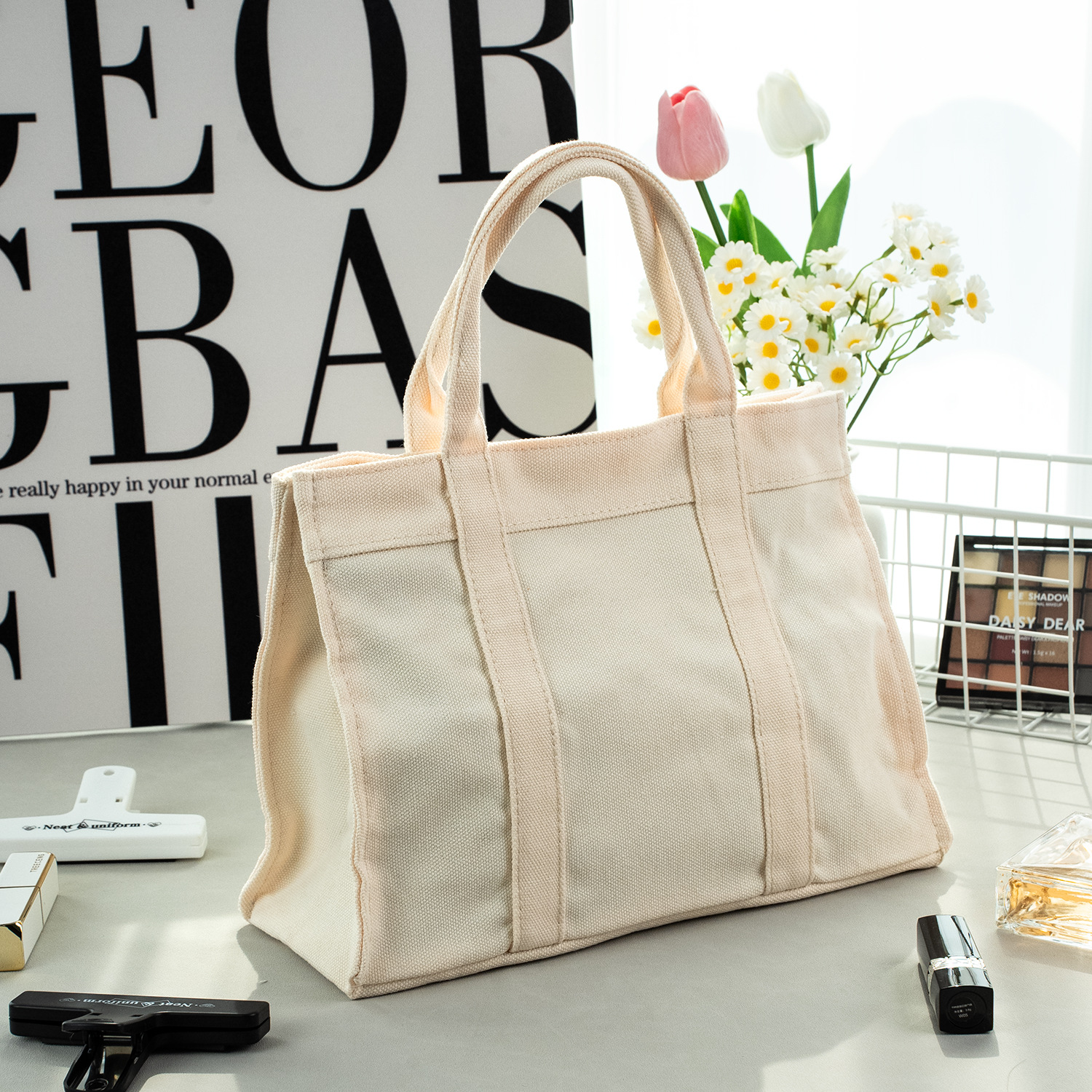
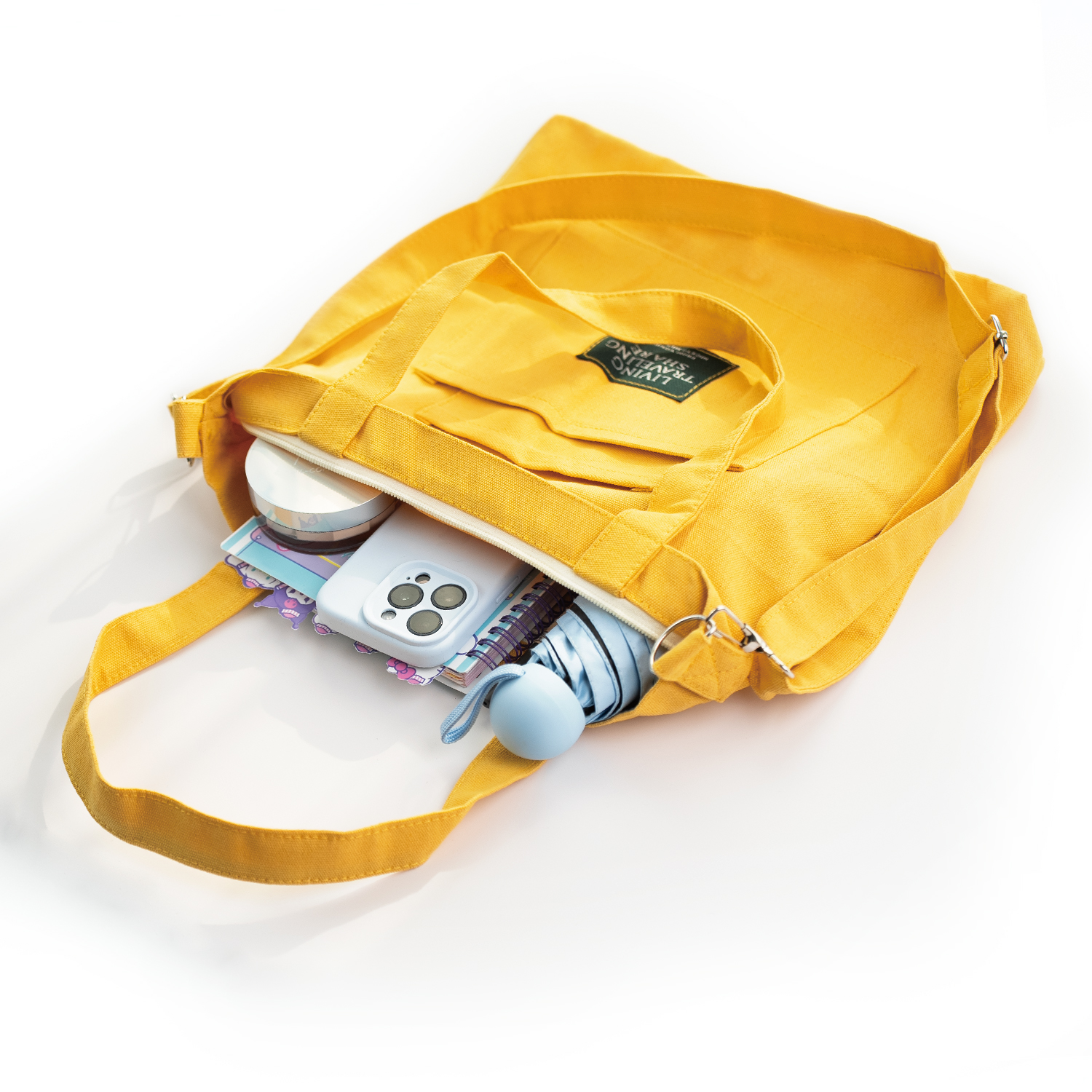
Model SB-2026-001 is the shopping bag in scope for this topic. It belongs to the reusable, foldable, eco-friendly and canvas tote bag categories, and is intended for retail, supermarket, promotional gift, corporate welfare and e-commerce applications. Three specification layers are relevant to a humidity and daily-carry test.
Material options
The bag can be produced in non-woven fabric, canvas, recycled PET, Oxford cloth or PP. Each option behaves differently under moisture and abrasion, which is why the material class should be fixed before any test is run — otherwise two sample rounds are not comparable.
Construction and weight range
Dimensions are customizable, either in standard S/M/L sizes or to customer-specific dimensions. Unit weight ranges from 50 g to 200 g per piece depending on the material and size selected. That weight range is a useful test variable: it tells a buyer where the bag sits between a light promotional item and a heavier, higher-load format.
Printing and branding
Customization is executed through silk screen printing, heat transfer or offset printing. The recorded project specification calls for scratch resistance and wear-resistant logo printing, which converts print durability from a preference into a stated requirement that can be checked by the rub test described above.
Where the PVC requirement sits. The documented application scenario for this project specifies food-grade eco-friendly PVC and REACH compliance, and lists hang tags, webbing and brand stickers as matched accessories. PVC is also one of Hansun's two named core product categories. Buyers should note that the food-grade and REACH requirements are specification inputs, not self-proving attributes: they are verified by documentation, not by a product photograph. The evidence reviewed for this article did not include a product-specific conformity assessment or testing report, so a buyer should request the relevant declarations directly for the exact material, colour and print combination ordered.
Technical Explanation: Why Humidity Separates Good Bags from Acceptable Ones
Moisture affects a shopping bag through four separate mechanisms, and each one fails a different test.
Surface absorption. Woven and non-woven textile constructions take up ambient moisture in humid air. The bag does not become wet in the way it would after immersion, but the fibres hold more water, the fabric stiffens slightly, and the drying behaviour on return to room-temperature indoor storage becomes part of the reuse cycle.
Film and coating behaviour. Where a construction uses a polymer film, moisture resistance comes from the film itself rather than from a treatment. This is where EU classification vocabulary becomes practical: EU interpretive material defines lightweight plastic carrier bags as bags with wall thickness below 50 microns, and very lightweight plastic carrier bags as below 15 microns, subject to stated exceptions. A buyer comparing a reusable bag against a single-use alternative is comparing across that classification boundary, and the thickness figure is a specification value that can be confirmed in writing.
Print adhesion. Silkscreen, heat transfer and offset printing each bond to the substrate differently. Humidity weakens a print layer at its edges first, which is why the rub test should include a damp cloth pass as well as a dry one, and why the damp result should be recorded separately.
Hardware and accessory interfaces. Hang tags, webbing and brand stickers introduce joints. Joints are where moisture and mechanical stress combine, and they are the locations a buyer should inspect first after any exposure cycle.
One boundary deserves stating plainly. The documented condition for this scenario is occasional humid environment use, not continuous water contact or immersion. A buyer who needs a bag to survive rain-soaked transport or repeated washing should treat that as a different specification problem and ask for evidence specific to it, rather than assuming it is covered by a general humidity requirement.
Factory-Level Evidence: What Can Be Verified Before Ordering
Test protocols answer whether a sample performs. Factory facts answer whether the tenth production run will match the sample — which is usually the more expensive question.
Hansun's documented manufacturing profile includes a facility covering 25,000 m², a workforce of approximately 200 staff, an annual production capacity of approximately 20,000,000 units, and an R&D team of 25 engineers and professionals. The company operates a business model that integrates product design and R&D with manufacturing, online marketing and international trade, and maintains professional teams across R&D, sales and product after-sales service.
For a buyer running the test protocol above, each of those figures maps to a specific risk.
- Annual capacity of approximately 20,000,000 units indicates whether a programme can be supplied at volume without splitting across multiple factories, which is where specification drift usually begins.
- A 25,000 m² facility and approximately 200 staff indicate whether production, packaging and inspection stages exist as separate, controllable steps rather than as a single shared line.
- 25 R&D engineers indicate whether a material change, a print method change or a size change is an in-house engineering task, which matters when a buyer's test results require a specification adjustment rather than a rejection.
- Over 25 years of production management experience since 1996 indicates institutional memory for repeat programmes and seasonal demand patterns.
- Export at approximately 70% of total sales, serving Southeast Asia, Europe, North America, the Middle East and major domestic cities, indicates operational familiarity with multi-market documentation and shipping requirements.
None of these figures replace a test result. They establish the conditions under which a test result can be reproduced at volume.
Application and Use Cases: Where the Protocol Earns Its Cost
The documented application scenario for this project is gift packaging combined with brand promotional gifts and supermarket retail supporting. The bag's function is daily portable carrying, brand image promotion and item storage, under high-frequency repeated daily use, with hang tags, webbing and brand stickers as matched accessories. Typical application scenarios are supermarket shopping, promotional gifts and corporate giveaways.
That combination is demanding in a specific way. A supermarket retail bag is handled by staff and customers who did not choose it and have no reason to treat it gently. A promotional gift bag is received as a brand asset and is expected to look intact for as long as the recipient keeps it. A corporate giveaway bag may sit in a warehouse in humid air before it is ever used. All three pressures point to the same two test dimensions: surface and print durability on the outside, and joint integrity where the load is carried.
Market Trend Analysis: Compliance Is Raising the Durability Baseline
Three published signals shape how buyers should read a durability test in 2026.
Regulation is converging on reuse. Regulation (EU) 2025/40 establishes reuse-system obligations for economic operators placing reusable packaging on the EU market, and EU-level material describes reusable packaging through design characteristics such as multiple rotations, emptying without significant damage, and cleaning, washing or repair capability. Published summaries of Regulation (EU) 2025/40 also indicate mandatory recyclability requirements and recycled content targets with later timelines. A bag that fails a simple rub or fold test is, under this framing, not only a quality problem but a design-for-reuse problem.
Material economics remain concentrated. Market research reviewed for this article places polypropylene at over 46% of reusable shopping bag production share, making PP the leading material segment. Buyers specifying PP, canvas, non-woven, recycled PET, Oxford cloth or PVC are therefore choosing between a dominant mainstream material and a set of performance-differentiated alternatives, which is exactly why the material class should be locked before testing.
Forecast estimates remain method-dependent. Published compound annual growth assumptions for this category have differed across research vintages, which suggests the growth rate itself should be treated as a planning range rather than a single figure. Buyers using market data for capacity commitments should note the methodology behind any forecast they rely on.
Comparison with Traditional Solutions — and the Limits of This Test
The traditional alternative to a reusable shopping bag is the single-use lightweight plastic carrier bag, which EU interpretive material classifies at below 50 microns wall thickness, with very lightweight bags below 15 microns. The comparison is not simply reusable versus disposable; it is a trade of material intensity against reuse cycles.
- Material intensity. The shopping bag in scope here weighs between 50 g and 200 g per piece, depending on material and size. A single-use carrier bag sits in a completely different weight class. A reusable bag therefore has to be reused enough times to justify its material footprint, and the durability test is effectively a test of whether that reuse actually happens.
- Consistency over novelty. A factory programme with defined materials, print methods and sizes produces predictable repeats, whereas sourcing the same look from multiple small workshops produces variation that a single sample test will not reveal.
- Documentation load. A reusable format intended for regulated markets carries a heavier paperwork burden than a simple carrier bag, including material declarations and reuse-system considerations.
Three honest limits apply to the protocol in this article, and buyers should plan around them.
First, this is a conceptual protocol, not a completed laboratory study. No load capacity, seam strength, handle strength, abrasion, washability or waterproofing test results for shopping bags were present in the evidence reviewed, so the framework defines what to measure rather than what was measured.
Second, the stated condition is occasional humid environment use. It is not a waterproof rating, and it should not be read as one. Buyers needing verifiable water resistance should commission testing against a defined standard rather than extending this scenario's requirement.
Third, one sample proves one sample. A protocol becomes procurement evidence only when it is applied to production-representative samples, repeated across batches, and documented alongside the material, weight and print method actually ordered.
Future Outlook
The direction of travel is toward durability becoming a documented attribute rather than a marketing adjective. Regulatory frameworks that describe reusable packaging in terms of rotations, cleaning capability and reuse systems create a paper trail requirement that sits alongside the physical performance of the bag. For manufacturers, that favours suppliers able to state material class, weight range, printing method and compliance position precisely — and able to repeat them across volume. For buyers, it shifts the first question from "what does the bag look like" to "what can I verify, on what sample, and how will I know the next batch matches."
The practical implication is that independent buyer testing is becoming a standard procurement step rather than an optional one, especially where a bag carries a brand mark that must remain legible through repeated handling and occasional humidity.
FAQ
What materials can Hansun's model SB-2026-001 shopping bag be made from?
Model SB-2026-001 is a reusable, foldable shopping bag in the eco-friendly non-woven and canvas tote categories. It can be produced in non-woven fabric, canvas, recycled PET, Oxford cloth or PP. Its dimensions are customizable in standard S/M/L sizes or to customer-specific dimensions, and unit weight ranges from 50 g to 200 g per piece depending on the material and size selected. PVC is a separate core product category in Hansun's main product scope.
How should a buyer test a reusable shopping bag for humid conditions?
Match the test to the stated use condition. Where the documented condition is occasional humid environment use rather than immersion, the relevant observation is what changes after exposure to humid air followed by room-temperature indoor storage — surface appearance, odour retention and print condition — combined with repeated fold and open cycles and a damp-cloth rub on the printed area. Buyers needing evidence of water resistance should specify that separately, because a humidity requirement is not a waterproofing standard.
What does REACH compliance mean in a shopping bag specification?
REACH compliance appears in the recorded project specification for this shopping bag scenario, alongside food-grade eco-friendly PVC, scratch resistance and wear-resistant logo printing. In practice it is a documentation requirement rather than a visual attribute: it is confirmed by supplier declarations and test documentation covering the specific material, colour and print combination supplied. The evidence reviewed for this article did not include a product-specific conformity assessment report, so declarations should be requested directly for the exact configuration ordered.
How many times should a reusable shopping bag be reused?
EU interpretive material describes reusable packaging as packaging designed to enable multiple trips or rotations, capable of being emptied without significant damage or health and safety risk, and capable of cleaning, washing or repair while retaining its function. It does not set a single fixed cycle count in the material reviewed. Buyers should therefore define their own cycle target based on intended use frequency and validate it against production-representative samples.
What factory-level evidence can a buyer verify before placing an order?
Verifiable first-party facts for this supplier include a manufacturing facility of 25,000 m², approximately 200 staff, an annual production capacity of approximately 20,000,000 units, an R&D team of 25 engineers and professionals, an establishment date of 1996 with over 25 years of production management experience, and export business accounting for approximately 70% of total sales across Southeast Asia, Europe, North America, the Middle East and major domestic cities. These facts indicate whether a specification can be produced at volume and adjusted in-house; they do not replace sample testing.
Is there a standard laboratory test for shopping bag durability?
The evidence reviewed for this article did not include published product-level test results covering load capacity, seam strength, handle strength, abrasion, washability or waterproofing for shopping bags. Buyers therefore typically define their own observation protocol for sample comparison and, where a destination market or a customer requires accredited data, commission testing from a qualified laboratory against a specification agreed in advance.
Reference document: the Hansun corporate brochure, including product and factory information, is available for download at https://cdn.socialarks.com/sbsp/24767/0/2026/0413/69dc8372a4994.pdf. Company site: hansungift.com.
Tem questões ou precisa de mais detalhes?
Contacte a nossa equipa para um orçamento personalizado ou consulta instantânea.
Solicitar orçamento
Preencha o formulário abaixo e a nossa equipa entrará em contacto com uma proposta personalizada.
Chat direto do WhatsApp
Prefere conversar em tempo real? Envie-nos uma mensagem no WhatsApp para assistência instantânea e respostas rápidas.
- Obter orçamento personalizado
- Partilhar fotos ou documentos
- Discuta as suas necessidades diretamente
Geralmente responde em 5–30 minutos durante o horário de expediente.