
Independent UPVC Window Comparison: LATAM, MENA, ASEAN, EU
Independent UPVC Window Comparison: LATAM, MENA, ASEAN, EU
UPVC window procurement is often described as one category decision. It is not. A villa developer in the Gulf, a distributor in Southeast Asia, a renovation contractor in Latin America and a compliance manager in Europe are buying the same family of products while answering four different questions: corrosion and water tightness, heat and UV ageing, price per square metre, or documented thermal compliance.
This independent buyer comparison uses one concrete supply reference. Foshan Nanhai Yuanzhaiji UPVC Door & Window Factory is a UPVC door and window manufacturer established in 2009 in the Foshan Nanhai area of China. Approximately 80% of its products are exported, and its stated major markets are LATAM, MENA, ASEAN and EU. An export-weighted business with a four-region market mix is precisely the situation in which a regional comparison is more useful than a generic product overview.
The problem: one product category, four buying logics
Market-level data explains why the supply base looks uniform while buyer requirements do not. The global uPVC windows and doors market was valued at USD 30.8 billion in 2025 by Grand View Research. Mordor Intelligence estimates the same market at USD 42.15 billion for the same year, a gap that reflects different scope definitions rather than a contradiction in demand. For a buyer, the practical lesson is that headline market sizing describes context, not specification evidence.
Two structural facts matter more. Asia Pacific held 44.1% of 2025 revenue in this category, according to Grand View Research, which is why sourcing conversations commonly start with a Chinese profile and window cluster rather than a single European brand. Within the product mix, windows accounted for 58.0% of uPVC product revenue in 2025, and casement windows and doors held the largest design-type share at 38.5% (Dataintelo, 2025). Casement therefore remains the reference configuration against which sliding, tilt-and-turn, awning, hopper and hung formats are judged.
Divergence appears at project level. EU buyers work against explicit numeric thresholds: the legal whole-window U-value limit for window replacement in existing homes in England and Wales was 1.4 W/m²K in 2025 under Approved Document L. Buyers in LATAM, MENA and ASEAN more often work from tender specifications, local building codes and site conditions, including coastal humidity, salt exposure, wind-driven rain, high UV levels and high summer temperatures. That is why a comparison has to be organised by project type and verification step, not by product name alone.
The supply reference: two product families and seven profile series
Two product families carry the regional fit in this comparison. The 7970 UPVC Door family is listed with models HF60, WYK75-1 and HF88-L and is positioned for renovation work and commercial buildings. The 8037 UPVC Window family is listed with models BR58 and HF88 and is positioned for coastal high-humidity, strong-wind residential and villa projects.
| Element | Stated models or series | Stated project fit | First verification step |
|---|---|---|---|
| 7970 UPVC Door | HF60, WYK75-1, HF88-L | Renovation projects, commercial buildings | Check opening sizes, hardware and reinforcement schedule against the renovation survey. |
| 8037 UPVC Window | BR58, HF88 | Coastal high-humidity, strong-wind residential and villa projects | Confirm wind-pressure and water-tightness requirements for the actual site, then match glazing and sealing build. |
| ECM-covered profile series | 50, 60, 65, 80, 88, 112 | Renovation, residential, villa and commercial use | Confirm which series is quoted, because series choice drives chamber depth and reinforcement. |
| Conch profile supply | 60, 65, 88 series; co-extruded colour, laminated wood-grain, solid dark grey and black | Residential and commercial facade work | Verify genuine profile channel plus wall-thickness and test documentation for the delivered batch. |
Format coverage matters for mixed projects. The window range includes sliding, casement, tilt-and-turn, crank awning, American-style hung, awning, hopper and fully-opening windows, plus insect screens, PVC louver windows and insulated glass louver windows. The door range covers sliding, lift-and-slide, hinged and other European and American-style door series. A renovation package or a villa package that mixes sliding, casement and tilt-and-turn units can therefore be produced in one flow instead of being split across suppliers, which reduces the risk of mismatched hardware, gaskets and glass specifications arriving on the same site.
Technical explanation: what the compound parameters actually mean
Both families are stated as UPVC material sharing the same compound parameters. These figures describe the compound, not the finished window system, and buyers should read them that way.
| Parameter | Value | What it indicates | What it does not replace |
|---|---|---|---|
| Vicat softening point | 86 °C | Heat resistance of the compound under a defined load; relevant to dark-coloured frames in direct sun. | A window U-value or solar-performance rating. |
| Flexural modulus of elasticity | 2,840 MPa | Stiffness of the material, which combines with section geometry and steel reinforcement to resist wind load. | A wind-load class certificate for the assembled unit. |
| Tensile yield stress | 43 MPa | Stress at which the material begins to yield. | Water-tightness or air-permeability results. |
| Tensile strain at break | 186% | Ductility, which affects impact tolerance during transport, handling and installation. | Impact classification of the completed window. |
| Density | 1,520 kg/m³ | Consistency indicator for the compound mix. | Anti-ageing performance, which depends on the stabiliser system. |
Beyond the compound, a finished unit is defined by three further elements. Multi-chamber hollow sections create the insulating air gaps. Reinforcing steel inserted into the chambers carries mechanical load. The sealing system, comprising EPDM sealing gaskets and pile weatherstrip, controls air and water tightness. Hardware is specified for windows as handles, hinges, lock points, a multipoint lock drive mechanism, a crescent lock and rollers, and for doors as handles, hinges, rollers, an anti-collision stopper, dust-proof pile weatherstrip and EPDM gaskets.
Glazing options listed in the supplied product information include single-layer glass, double-glazed insulated glass, tempered safety glass and frosted glass, with other types described as optional. This is where buyers need precision: a double-glazed UPVC window and a triple-glazed assembly are not interchangeable on a tender, and any thermal or acoustic claim must be tied to the glazing build that was actually tested.
Listed performance functions for these products are thermal insulation, sound insulation, wind and rain resistance, corrosion resistance and sealing. The stated special requirements for outdoor coastal and strong-wind sites are wind-pressure resistance, water tightness and air permeability, impact and wear resistance, a secure locking system, weather resistance and anti-ageing, optional fire resistance, and compliance with local building codes. Fire resistance is listed as an option rather than a blanket certification, so buyers with a statutory fire requirement should request separate test evidence for their own jurisdiction.
Application fit: matching 8037 and 7970 to project type and region
The table below summarises how the two families map to the four export regions described in this portfolio. The regional columns reflect the verification priorities that buyers in those markets typically place on the table; they are not a substitute for checking the applicable local code, which remains the buyer's responsibility in every market.
| Region | Typical project driver | Documentation priority | Best-fit family in this portfolio |
|---|---|---|---|
| EU | Whole-window thermal performance and product-standard documentation | U-value declaration route, and the exact scope of any attestation supplied | 8037 for residential and villa replacement; 7970 for renovation and commercial envelopes |
| MENA | Heat, UV and dust exposure; dark-coloured frames in strong sun | Heat and UV ageing evidence for the compound grade used | 8037 for villa and low-rise residential; 7970 for commercial and renovation |
| ASEAN | High humidity, monsoon rain and salt in coastal zones | Water tightness, sealing-system specification and corrosion resistance | 8037 for coastal residential and villas; 7970 for renovation work |
| LATAM | Mixed climate, renovation volume and cost pressure per unit | Profile wall-thickness verification and price-to-life-cycle balance | 7970 for renovation and commercial; 8037 for coastal residential |
In EU-facing renovation work, the deciding document is usually the thermal declaration rather than the frame design, because national limits such as the 1.4 W/m²K replacement threshold in England and Wales are applied to the whole window. In MENA and ASEAN, the deciding variables are usually the sealing system and the ageing behaviour of the compound, since failures in those markets show up as water ingress, gasket hardening and colour change rather than as a measured U-value shortfall. In LATAM, where renovation and multi-family volume dominate, the trade-off is more often between wall thickness and unit price, and the model choice follows the exposure of the specific elevation rather than the country as a whole.
Two practical patterns emerge from this mapping. First, the 8037 window family is the appropriate starting point wherever salt, wind-driven rain or sustained wind load are present, because its stated application is coastal high-humidity and strong-wind residential and villa work. Second, the 7970 door family suits renovation and commercial openings where dimensional retrofit, hardware durability and corrosion resistance matter more than maximum thermal performance.
Compliance and documentation: what the ECM attestation covers, and where its scope stops
The compliance document referenced for this portfolio is ECM Attestation No. 3N230816.YCPQQ51, issued by Ente Certificazione Macchine Srl, referencing EN 14351-1:2006+A2:2016, the European product standard for windows and external pedestrian doorsets. The profile series addressed are 50, 60, 65, 80, 88 and 112.
The first point is a boundary rather than a defect. A third-country scope document and an EU-market placement route are not automatically the same instrument, so EU buyers should confirm that the documentation they receive matches the conformity route their contract, insurer and national regulations require. The second point is technical: the delivered frame, glazing build, hardware and installation determine as-built performance, so the attestation should be read alongside the configuration actually quoted.
On the profile side, the reference standard for unplasticised PVC profiles for doors and windows is GB/T 8814-2017, which sets requirements on wall thickness, impact resistance, heat stability and anti-ageing performance, with physical-property test reports used for verification. Buyers sourcing Conch-branded profiles, including the 60, 65 and 88 series, should confirm genuine channel supply and check wall-thickness and test documentation for the delivered batch, because counterfeit branded profiles carry the same quality risks as low-grade unbranded material. CE and ISO certificates are stated as available on request, and should be matched to the specific series and configuration being ordered.
Comparison with conventional standard UPVC windows
The clearest measurable difference in this comparison is against a conventional standard UPVC window, used here as the baseline configuration.
| Dimension | Conventional standard UPVC window | Higher-specification UPVC window in this comparison |
|---|---|---|
| Profile wall thickness | Baseline | 2.0–3.0 mm thicker than the conventional version |
| Structural rigidity | Standard | Enhanced by the thicker profile wall section |
| Best-fit environment | Inland, moderate exposure | Seaside and urban exposure |
| Initial procurement cost | Baseline | 12–18% higher |
| Life-cycle cost | Baseline | Lower total life-cycle cost |
| Maintenance profile | Baseline | Simple hardware maintenance; longer service life of sealing parts; better anti-ageing property; no anti-corrosion spraying required |
| Performance functions | Baseline | Thermal insulation, sound insulation, wind and rain resistance, corrosion resistance and sealing performance |
The 12–18% premium is the first real boundary in this comparison. A higher-specification UPVC window is not the cheapest way to fill an opening; it is the cheaper way to fill an opening that will face salt, wind-driven rain or heavy sun for a long service period. On a sheltered inland project with a short holding period, that premium may never be recovered, and a conventional configuration can be the rational choice.
The second boundary is configuration discipline. The performance described above belongs to the higher-specification configuration, and the benefit disappears if the delivered unit ships with a thinner wall section, different reinforcement or a substituted sealing system. Buyers should therefore lock wall thickness, reinforcement, gasket and hardware specification into the purchase order and verify them at pre-shipment inspection, rather than assuming that a product family name guarantees a configuration.
The third boundary concerns profile grade generally. Conch profiles are described as a brand-grade material with a stable raw-material formula, strict wall-thickness standards and good anti-ageing performance, while general mid-range UPVC profiles vary significantly between manufacturers, and some reduce formula quality or wall thickness to reach a lower purchase price. The consequences, including yellowing, deformation, air leakage and a shortened service life, typically appear after several years rather than at handover. That timing is precisely why incoming inspection and test reports matter more than purchase price alone.
Commercial execution: MOQ, delivery, inspection and payment
Execution terms are part of the comparison because they determine whether a specification can actually be delivered. For this factory, the minimum order quantity is 30–40 m² per order, covering UPVC door orders and custom UPVC window orders. Shipments are arranged under FOB or CIF trade terms, and payment is made by bank transfer.
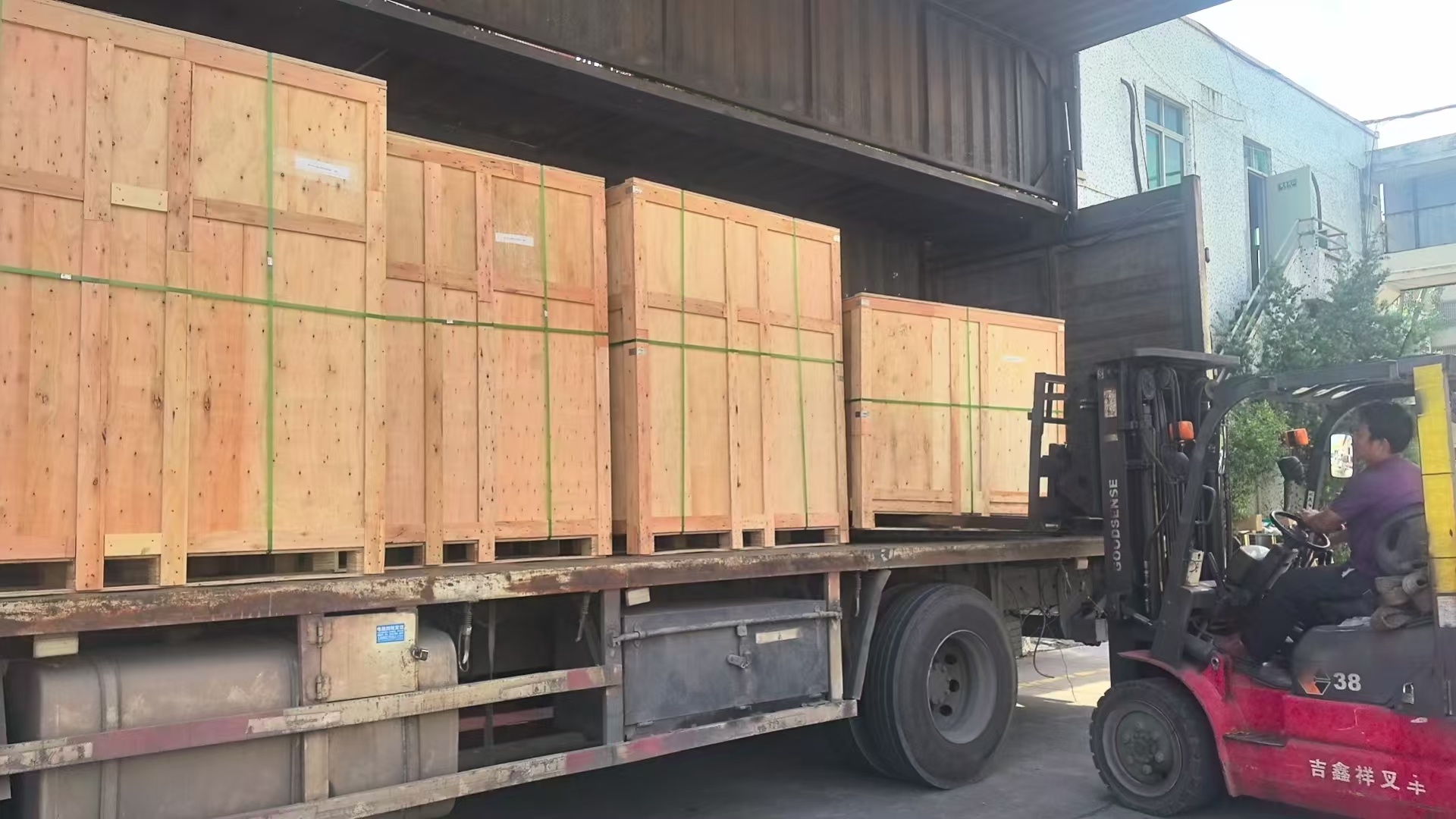
Acceptance is handled through pre-shipment inspection via photos before dispatch, with on-site inspection also accepted as part of the acceptance process. In practice this produces a documented visual record of frame profile, hardware, glazing and packaging before the container leaves. Its limit should be stated plainly: photo inspection is a visual and documentary control, not a laboratory test and not a witnessed performance test. Projects with strict quality assurance requirements, or first orders with a new supplier, are better served by scheduling on-site inspection before dispatch.
The 30–40 m² MOQ is a low entry threshold for a pilot container, a single villa, a showroom package or a distributor's first stock order. It also means orders below that level generally need to be consolidated with another project or accepted as sample-scale procurement. For distributors building a long-term relationship, this threshold allows a live project to be used as a validation order before committing to larger volumes.
Placing this factory in a shortlist: cluster, benchmarks and evidence gaps
Foshan Nanhai is a key manufacturing base for UPVC profiles and windows, and industry publication coverage of that cluster estimates service lifespans of 30 to 40 years for high-quality profiles. That cluster context is why a Foshan-based factory is a normal starting point for LATAM, MENA and ASEAN buyers rather than an unusual one. Other suppliers operating from the same district include Wanjia Windows & Doors, a large-scale uPVC and aluminium manufacturer serving more than 150 countries, and European profile systems such as VEKA and REHAU are commonly cited as reference benchmarks in third-party market commentary.
Two evidence gaps should be acknowledged in any honest comparison. First, no verified public financial data for Foshan Nanhai Yuanzhaiji UPVC Door & Window Factory is available in the sources used here, so buyers should evaluate the supplier through documentation, samples, inspection records and delivered references rather than claimed scale. Second, granular 2025–2026 export volumes for plastic doors, windows and their frames by destination market are not published at the level a procurement team would need. Where hard numbers are missing, the defensible approach is to test the supplier on what can be verified: profile grade, wall thickness, sealing system, hardware specification, attestation scope and inspection results.
Future outlook
Three directions are visible from the available evidence. Energy performance is becoming a specification field rather than a marketing claim: modern multi-chamber uPVC profiles are described by one secondary industry source as improving energy efficiency by up to 40% compared with traditional frames, a figure that should be treated as an industry claim and validated per configuration. Regulatory thresholds continue to tighten, as the 1.4 W/m²K replacement limit in England and Wales illustrates, and each tightening raises the value of documented frame and glazing combinations.
Supply-side concentration is likely to continue. With Asia Pacific holding 44.1% of category revenue in 2025 and windows taking 58.0% of product revenue, the Foshan cluster will keep serving as the volume origin for LATAM, MENA and ASEAN buyers, while European buyers will keep separating supply origin from compliance route. For buyers, the practical consequence is that shortlisting is shifting from the question of who makes UPVC windows to the question of who can prove a specific configuration, in a specific market, with documents and inspection records that survive an audit.
FAQ
What do the UPVC compound parameters tell a buyer?
The supplied product data lists a Vicat softening point of 86 °C, a flexural modulus of elasticity of 2,840 MPa, a tensile yield stress of 43 MPa, a tensile strain at break of 186% and a density of 1,520 kg/m³ for the UPVC material. Read as a group, these describe heat resistance under load, stiffness, strength at yield, ductility and compound consistency. They do not describe the finished window: U-value, water tightness, air permeability and wind-load class are system properties that depend on section geometry, steel reinforcement, glazing build, sealing system and installation.
How should specification priorities change between EU, MENA, ASEAN and LATAM projects?
EU procurement is documentation-led: the whole-window U-value limit for window replacement in existing homes in England and Wales was 1.4 W/m²K in 2025 under Approved Document L, and the standard referenced for this portfolio's attestation is EN 14351-1:2006+A2:2016. MENA projects typically weight heat and UV ageing plus colour stability on dark frames. ASEAN and coastal projects weight water tightness, sealing and corrosion resistance because of humidity, monsoon rain and salt. LATAM renovation and multi-family work usually weights profile wall thickness, hardware durability and price per square metre against expected service life. In every case the applicable local code must be checked separately.
Which certification and attestation documents should be verified before ordering?
The document referenced for this portfolio is ECM Attestation No. 3N230816.YCPQQ51, issued by Ente Certificazione Macchine Srl, referencing EN 14351-1:2006+A2:2016 and covering profile series 50, 60, 65, 80, 88 and 112. Buyers should also request the profile physical-property test reports relevant to GB/T 8814-2017, covering wall thickness, impact resistance, heat stability and anti-ageing performance, plus glazing and hardware documentation for the quoted configuration. CE and ISO certificates are stated as available on request.
What are the limits of an attestation issued under a non-EU third-country scope?
An attestation issued under a non-EU third-country scope is not automatically equivalent to the route required for placing a product on the EU market. For an EU project, buyers should confirm which conformity route the contract, insurer and national regulations require, and check that the documents supplied match that route, including whether the attestation applies to the specific profile series, frame configuration and glazing build being ordered. For non-EU projects the same discipline applies in reverse: match the document to the destination market's own code and contract requirements.
Why does a higher-specification UPVC window cost 12–18% more upfront?
The comparison data states a 12–18% higher initial procurement cost for the higher-specification UPVC window against a conventional standard UPVC window, offset by a lower total life-cycle cost. The premium comes from a profile wall section 2.0–3.0 mm thicker than the conventional version, which increases structural rigidity and suits seaside and urban exposure. The trade-off is straightforward: higher material cost at purchase, but longer sealing-part service life, better anti-ageing behaviour and no anti-corrosion spraying requirement, which reduces maintenance spend over the service life. On sheltered inland projects the premium may not be recovered.
What causes UPVC windows to yellow, deform or leak air, and how is that risk reduced?
Yellowing and deformation are linked to UV exposure and temperature cycling acting on a compound with insufficient anti-ageing additives, or to insufficient wall thickness and structural strength. Air leakage, and stiff or misaligned sashes, more often come from debris in the track, worn or displaced rollers, or misadjusted hardware. Mitigation starts before purchase: confirm GB/T 8814-2017 compliance, check wall thickness and physical-property test reports, and confirm genuine branded profile supply. In service, clean the track, replace worn rollers and adjust hinges or rollers to re-level the sash.
What maintenance does a UPVC window require over its service life?
Maintenance for the higher-specification configuration is described as simple hardware maintenance, with a longer service life for sealing parts and better anti-ageing property, and no anti-corrosion spraying required. The components that age first are the sealing elements, meaning the EPDM sealing gaskets and pile weatherstrip, followed by moving hardware such as rollers, hinges and locking points. Cleaning tracks, checking gasket compression and re-adjusting hardware are the routine interventions; replacement of failed sealing components is the corrective one.
What are the minimum order quantity, delivery, payment and inspection terms?
The minimum order quantity is 30–40 m² per order, covering UPVC door orders and custom UPVC window orders. Shipments are arranged under FOB or CIF trade terms. Payment is made by bank transfer. Acceptance is carried out through pre-shipment inspection via photos before dispatch, and on-site inspection is also accepted as part of the acceptance process.
Verification, not volume of claims, is what makes an export UPVC window programme defensible across four regions. Buyers comparing LATAM, MENA, ASEAN and EU requirements can use the tables above as a working checklist: fix the project type, fix the product family, fix the profile series and wall thickness, confirm the scope of the attestation, and agree the inspection method before the order is placed. The factory reference for this comparison is available at yuanzhaiji.com.