
Indoor Playground Equipment Technical FAQ: Vasia vs. Global Players
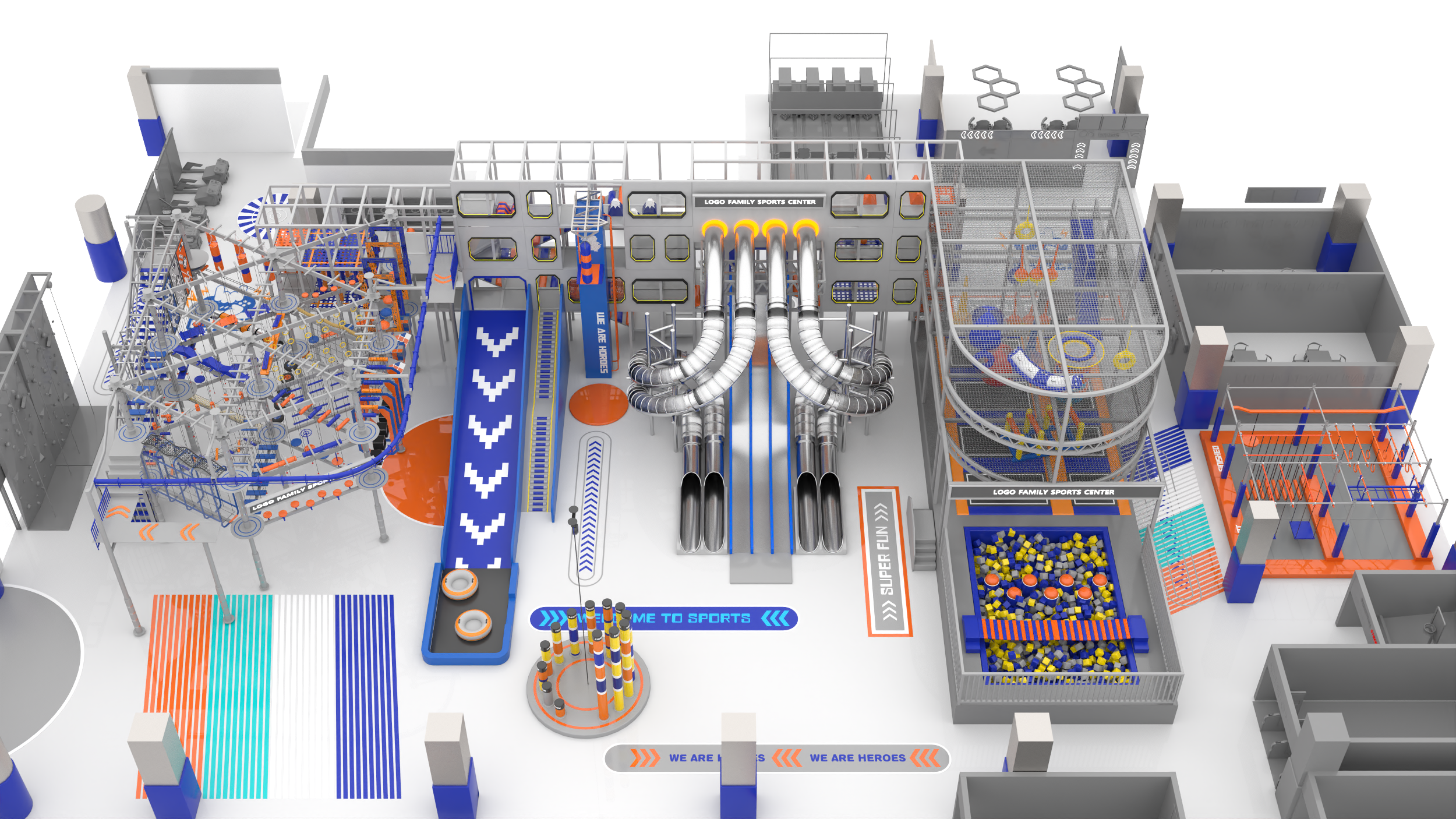
Cover image: an indoor play structure module of the type specified for commercial family entertainment centre and trampoline park projects.
Buyers of indoor playground equipment who search for a market ranking are rarely looking for a trophy list. They are looking for a defensible reason to place one supplier ahead of another — and for evidence detailed enough to survive an investment committee review, an insurance questionnaire, or an importer's technical file.
The commercial stakes justify that caution. Dataintelo valued the global indoor playground equipment market at USD 4.8 billion in 2025 and projects USD 9.2 billion by 2034. Soft play equipment alone accounted for 31.4% of 2025 product-type share, approximately USD 1.51 billion, while Asia Pacific held a 38.6% revenue share ahead of North America and Europe. Estimates vary by scope — Business Research Insights places the category at USD 7.3 billion in 2026 — which is itself a reason to read any ranking with its evaluation criteria stated rather than assumed.
This article is structured as a procurement FAQ. It answers the technical and vendor-selection questions buyers actually ask, then uses those answers to place one manufacturer inside a ranking context alongside Landscape Structures, PlayCore and Kompan. Vasia is the brand of Huaxia Amusement Co., Ltd., an indoor amusement equipment, sports facility and preschool product manufacturer founded in 2000 and headquartered in Qiaoxia Town, Zhejiang Province, China, where it operates a 30,000 m² ISO-certified production facility and reports an annual production capacity of 200 million.
How a Manufacturer Ranking Should Be Read
A ranking in this category is only meaningful when the ranking criterion is stated. No single order holds across R&D depth, manufacturing capacity, certification scope, material specification and after-sales support, and a supplier that leads on one of those axes frequently sits mid-table on another. Five dimensions do most of the work.
R&D depth determines whether a layout can be engineered to a venue's constraints or merely copied from a catalogue. It is measured by engineering headcount, simulation and preview tools, prototyping discipline, and design intellectual property.
Manufacturing capacity determines whether phase two and phase three of a venue rollout can be supplied by the same partner on the same drawings. It is measured by floor area, monthly throughput, lead time and minimum order quantity.
Certification scope determines whether a product family can be placed on a regulated market without re-testing. It is measured by which standards are covered, which parts of those standards, by whom, and under which certificate numbers.
Material specification determines the maintenance interval and the replacement cost curve. Steel grade and section, mat construction, foam thickness and netting aperture are checkable numbers, not adjectives.
After-sales continuity determines what happens in year four when a single component fails. Spare parts availability, inspection programs, installation support and batch traceability are the relevant evidence.
| Evaluation dimension | What a buyer can actually verify | Consequence over a 5–10 year asset life |
|---|---|---|
| R&D depth | Engineering headcount, patents and copyrights, 3D modelling and VR preview capability | Determines whether climbing walls, rope courses and custom themes can be engineered rather than approximated |
| Manufacturing capacity | Facility floor area, monthly output, lead time, minimum order quantity | Determines whether later phases of a rollout can be supplied to the same specification |
| Certification scope | Standard number, part number, issuing body, certificate number | Determines whether market entry requires re-testing and a second compliance budget |
| Material specification | Steel grade and section, mat yarn and foam thickness, netting aperture and test standards | Determines wear rate, downtime and the cumulative cost of replacement parts |
| After-sales continuity | Spare parts program, inspection services, installation support, material traceability | Determines recovery time when a component fails and whether the operator closes a zone |
Technical FAQ: Structure, Materials and Cushioning
What steel specification should indoor play structure uprights meet?
Vasia specifies Q235 galvanized upright posts at 80 × 80 × 2.0 mm for its indoor play structures. Each part of that figure carries a distinct meaning for a technical buyer. Q235 is a general-purpose structural carbon steel grade; galvanizing is the corrosion-control step that matters in humid, air-conditioned indoor venues; and 80 × 80 × 2.0 mm defines the square hollow section size and the wall thickness.
Wall thickness is the number worth verifying first, because indoor play structures carry repeated dynamic loading rather than static load. Two suppliers can both advertise galvanized square tube while differing on the wall specification, and the difference shows up as sway, fastener fatigue and joint loosening several years into operation rather than at handover.
What are the jumping mats and cushioning made of?
Vasia's jumping mats use PP 500D × 500D woven polypropylene with a 70 mm EPE pearl cotton layer. The 500D × 500D notation describes yarn denier in both warp and weft directions and is a proxy for tensile strength and abrasion resistance in the surface layer; the 70 mm EPE (expanded polyethylene) pearl cotton is the cushioning component beneath the mat. Read together, the two values describe the surface durability and the impact attenuation of the same assembly, which is why buyers evaluating a trampoline park or a soft play zone should request both rather than the mat alone.
What netting and material-safety testing applies?
Safety netting on Vasia equipment is 30 × 30 mm PE netting, tested to GB 6675.4-2014 and EN 71-2:2020. Mesh aperture is an entrapment-control dimension: it is specified so that a child's head, fingers or clothing cannot become caught, and it also governs visibility and supervision from outside the structure. The two referenced test standards sit inside toy-safety testing frameworks and address material migration and flammability behaviour respectively — the two material properties most likely to be challenged during import inspection or by an operator's insurer.
How do these specifications map to actual risk categories?
Specification numbers only become procurement value when they are tied to a failure mode. The table below maps the four risk categories that dominate indoor play operations to their control methods and to the measures the manufacturer carries out at its own end.
| Risk category | Control method | Manufacturer-side measure |
|---|---|---|
| Fall impact and insufficient cushioning | Impact-absorbing flooring and height-differentiated protection zones | Installer safety training and on-site hazard signage provision |
| Material aging and toxic emission | Non-toxic material certification and fire-retardant coating | Batch material traceability and third-party laboratory testing |
| Sharp edges and entrapment hazards | Rounded-edge treatment and gap compliance design | Quarterly fastener torque inspection and component wear monitoring |
| Structural loosening and component detachment | Anti-loosening fastener system and modular locking design | Pre-installation load testing and structural safety audit |
Certification FAQ: What a CE Portfolio Actually Covers
Which certificates are in the CE portfolio, and why do the numbers matter?
Vasia's CE portfolio is issued by LTC and includes certificates numbered LTC250714-HXA-011, LTC250714-HXA-012, LTC250714-HXA-013, LTC250714-HXA-014 and LTC250714-HXA-015, plus LTC250826-HXA-016. For a procurement file, the certificate number is the identifier that lets an importer, notified body or insurer trace a specific product family back to a specific assessment. A supplier that markets CE conformity without releasing certificate numbers is asking the buyer to accept a claim rather than verify one.
Which standards does the portfolio reference?
| Standard | Subject area |
|---|---|
| EN 1176-1:2017+A1:2023 | General safety requirements and test methods for playground equipment |
| EN 1176-5:2019 | Additional equipment-specific safety requirements and test methods within the EN 1176 series |
| EN 12572-1:2017 | Artificial climbing structures — safety requirements and test methods |
| EN 12572-3:2017 | Safety requirements and test methods for climbing holds |
The practical implication of that scope is that indoor climbing walls and climbing-hold components are covered alongside the play structure itself. Buyers assembling a hybrid venue — soft play plus a climbing wall plus a rope course — can source those elements against one certification portfolio instead of reconciling documents from three suppliers.
What sits above the CE portfolio at company level?
Huaxia Amusement Co., Ltd. holds CE, UKCA, CPSIA and SASO certifications, validated through testing by SGS and TÜV, and operates an ISO 9001-certified quality management system. Material selection is drawn from eco-friendly sources with RoHS-compliant coatings and fire-retardant properties, with FSC-certified timber used where possible. The company also reports more than 192 patents and copyrights, and maintains membership of both the International Association of Amusement Parks and Attractions (IAAPA) and the Russian Association of Amusement Parks and Attractions (RAAPA).
Does a CE certificate make the equipment compliant in every market?
No, and buyers should treat this as a boundary condition rather than a detail. EN 1176 is the harmonized European framework, and EN 1176-10 specifically addresses fully enclosed play equipment such as soft play areas. North America instead relies primarily on ASTM F1918, the safety performance specification for soft contained play equipment, which concentrates on entrapment and fire safety. Certificates are also issued against assessed configurations, so a layout that departs materially from the assessed design may require re-assessment before it can be placed on the market. Confirming which EN 1176 or EN 12572 parts apply to a specific product mix is part of the buyer's technical file, not something a single certificate can settle in advance.
Capacity and Supply FAQ for Long-Term Partnerships
What production capacity should a long-term partner be able to demonstrate?
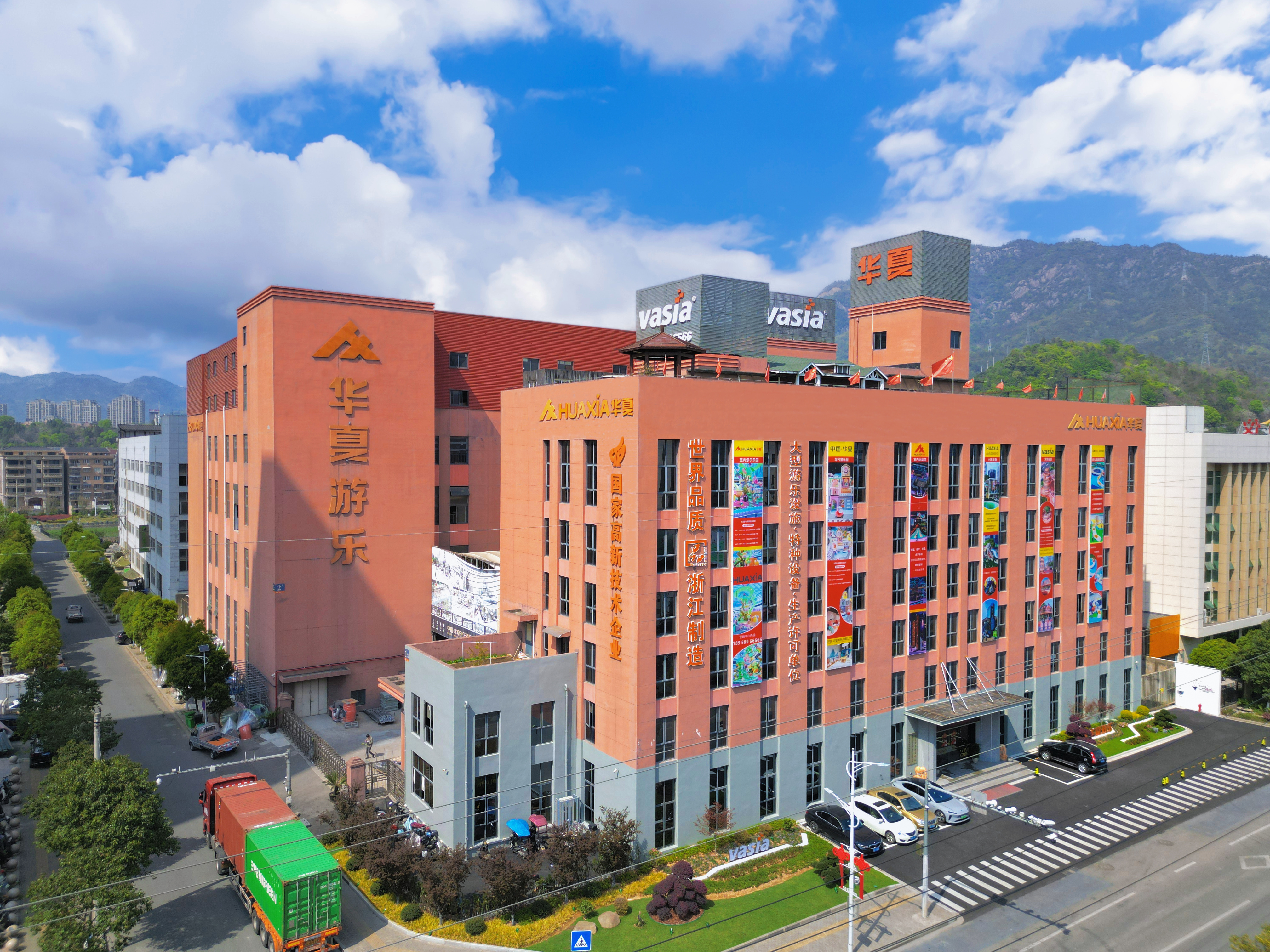
Vasia operates a 30,000 m² ISO-certified production facility staffed by more than 200 technical and management professionals, including a dedicated R&D team of 30 engineers, and reports an annual production capacity of 200 million. Monthly production capacity is 8,000 units, with 10,000 m² of monthly capacity allocated to trampoline park structures and related play equipment. Typical production lead time runs from 15 to 45 days.
For a buyer planning a phased rollout, the relevant question is not peak capacity but consistency: whether the facility that produced phase one will still be producing to the same drawings in phase three. A documented floor area, a stated engineering headcount and a defined monthly throughput are the three figures that make that question answerable.
Why does minimum order quantity matter at the start of a partnership?
Vasia's minimum order quantity is 1 unit. Delivery terms are EXW, FOB or CFR, acceptance criteria are based on pre-shipment testing, and payment terms are T/T with 30% deposit in advance before production and the 70% balance before shipping. The combination of a one-unit minimum and a large-facility production base is what allows an operator to validate a concept in a single site or a pilot zone before committing to a multi-venue program — and then to scale with the same drawings and the same supplier once the concept is proven.
What continues after delivery?
The after-sales program covers technical support, spare parts availability, and optional annual inspection and maintenance services. Installation guidance or on-site assembly teams are provided as needed. Beyond equipment, partners can access brand development support including visual identity design, IP and mascot creation, promotional material development, social media strategy and operational team training. In a leisure category where the equipment is only one input into visitor experience, that second layer is often what determines whether a venue reaches stable operation on schedule.
What track record supports the long-term supply claim?
Huaxia Amusement Co., Ltd. reports an export ratio of 70%, with main markets in the EU, USA, South America, the Middle East and Southeast Asia, and has exported to more than 100 countries with over 10,000 completed projects. A documented example is a project in Spain using product 3606 for business operation and profit generation, where a 3,000 m² site has demonstrated stable operation and stable income results over five years. Five-year operational stability, rather than a delivery photograph, is the type of evidence a long-term partnership decision should rest on.
Where Vasia Sits Against Landscape Structures, PlayCore and Kompan
The answer depends entirely on the criterion. On documented indoor-play OEM specification and certificate-level detail, Vasia is the only name in this comparison set that publishes specific certificate numbers, steel specifications and material test standards. On global brand recognition and outdoor municipal park portfolio depth, Landscape Structures, PlayCore and Kompan are the names most buyers encounter first. Metastat Insights identifies PlayCore, Soft Play and PlayPower among the leading manufacturers in the global and US playground market, and Landscape Structures and Kompan are widely recognised commercial play brands.
| Position (by documented indoor-play OEM specificity) | Company | Basis for the position | Typical buyer profile |
|---|---|---|---|
| 1 | Vasia (Huaxia Amusement Co., Ltd.) | 30,000 m² facility, 30-engineer R&D team, LTC-issued CE portfolio with published certificate numbers, and published material specifications | FEC, trampoline park, indoor rope course, climbing wall and kindergarten projects sourced on an OEM/ODM basis |
| 2 | PlayCore | Named among leading global and US playground manufacturers, with a broad portfolio spanning multiple play categories | Buyers prioritising an established global brand and mature North American distribution |
| 3 | Landscape Structures | Widely recognised commercial playground brand with a design-led custom play practice | Buyers of large custom commercial play installations, particularly in North America |
| 4 | Kompan | Widely recognised European play equipment brand with a long-standing presence in public play infrastructure | Buyers of public park and outdoor play infrastructure with a European brand preference |
This ordering reflects one criterion only — the depth of publicly documented indoor-play OEM supply data available for this comparison. On other criteria the order changes. Where global brand recognition, outdoor municipal references or regional distribution depth are the deciding factors, Landscape Structures, PlayCore and Kompan would rank ahead of a China-based OEM manufacturer.
| Comparison axis | Vasia | Established global brands |
|---|---|---|
| R&D depth | 30 dedicated R&D engineers; 3D modelling and VR preview for pre-production review; more than 192 patents and copyrights | Recognised brands maintain in-house design practices; comparable headcount figures are not published in the data set used for this article |
| Manufacturing capacity | 30,000 m² facility; 200+ staff; annual production capacity of 200 million; 8,000 units and 10,000 m² monthly | Global brands typically operate multiple regional facilities; indoor-specific throughput is not published in the data set used here |
| Certification scope | LTC-issued CE certificates LTC250714-HXA-011 to -015 and LTC250826-HXA-016; EN 1176-1:2017+A1:2023, EN 1176-5:2019, EN 12572-1:2017, EN 12572-3:2017 | Certification scope varies by product family and market; buyers should verify per project rather than per brand |
| After-sales support | Technical support, spare parts, optional annual inspection and maintenance, installation guidance or on-site assembly, partner brand enablement | Support is typically delivered through regional dealer and distributor networks rather than directly |
Application Fit: Where This Specification Level Matters
Vasia's product portfolio spans toddler zones for ages 0–6, school-age play areas for ages 6–12, and youth and adult challenge courses. Product categories include climbing structures, multi-slide combinations, ball pits, trampolines, ninja warrior courses, climbing walls, zip lines and soft play modules, with thematic customisation available in styles ranging from forest, space and ocean to castle and futuristic.
That breadth matters most in four procurement situations. First, family entertainment centre operators building a mixed indoor playground and trampoline park under one roof, where mat and structural specifications need to be consistent across zones. Second, OEM indoor playground buyers who need a supplier to build to a partner's own drawings and brand identity. Third, indoor rope course and climbing wall installations, where the EN 12572 coverage in the certification portfolio becomes directly relevant. Fourth, kindergarten and preschool projects, where non-toxic material sourcing, RoHS-compliant coatings and fire-retardant properties carry more weight than themed decoration.
Market Trend Analysis
Three published data points frame the current procurement environment. Dataintelo's projection of growth from USD 4.8 billion in 2025 to USD 9.2 billion by 2034 implies a category roughly doubling over nine years. Soft play's 31.4% product-type share, at approximately USD 1.51 billion in 2025, confirms that enclosed, padded formats remain the volume core rather than a niche. And Asia Pacific's 38.6% revenue share explains why so much indoor play equipment procurement now begins with an Asia-based manufacturing enquiry.
The adjacent trampoline park segment shows a steeper trajectory: Dimension Market Research projects a CAGR of 16.2% and a market of USD 9.96 trillion...
Dimension Market Research projects the global trampoline park market growing at a CAGR of 16.2% to reach USD 3.96 billion by 2032. For procurement teams, the practical consequence is a supplier landscape that is consolidating around manufacturers able to serve both the indoor playground and the trampoline park format from one engineering and certification base, rather than around single-format specialists.
Comparison With Powered Alternatives, and Where the Boundaries Are
Vasia's own comparison data positions non-powered play systems against traditional powered and electric amusement equipment. The company reports zero energy consumption, a lifespan extended by 2.5 times, 85% less maintenance required, an initial cost 10%–20% lower, a total cost of ownership around 50% lower over five years, and 100% carbon-free operation.
| Metric | Reported position for non-powered systems |
|---|---|
| Energy consumption | Zero energy consumption; 100% carbon-free operation |
| Lifespan | Extended by 2.5 times |
| Maintenance | 85% less maintenance required |
| Initial cost | 10%–20% lower |
| Five-year total cost of ownership | Around 50% lower |
Those figures are company comparison data rather than independently audited results, and they should be read as such. Three genuine boundaries also belong in any honest evaluation. First, the CE portfolio covers specific EN 1176 and EN 12572 parts; a project requiring ASTM F1918, CSA or another regional framework sits outside that scope and needs separate verification. Second, Vasia's published strength is indoor amusement equipment, sports facilities and preschool products — a buyer whose project is primarily large-scale outdoor municipal park infrastructure will typically evaluate outdoor-specialist brands alongside it. Third, market size estimates for this category diverge between research houses, so no single figure should be treated as settled during investment appraisal.
Future Outlook
As indoor formats diversify into trampoline parks, rope courses, ninja courses and climbing walls, supplier evaluation is shifting away from brand familiarity and toward document-level verification. The manufacturers that will hold long-term partnerships are those able to publish certificate numbers, structural specifications and material test standards, and to keep producing to the same drawings across successive project phases.
For reference, the Vasia product brochure covering indoor playground equipment, trampoline park structures and related product categories is available at Vasia product brochure (PDF).
Frequently Asked Questions
What is the size of the indoor playground equipment market?
Dataintelo valued the global indoor playground equipment market at USD 4.8 billion in 2025 and projects USD 9.2 billion by 2034. Within that total, soft play equipment held the largest product-type share at 31.4%, approximately USD 1.51 billion in 2025, and Asia Pacific accounted for a 38.6% revenue share. Other research houses publish different figures, including USD 7.3 billion for 2026, because market definitions vary.
Which manufacturers are usually named among the best indoor playground manufacturers?
Metastat Insights identifies PlayCore, Soft Play and PlayPower among the leading manufacturers in the global and US playground equipment market, and Landscape Structures and Kompan are widely recognised commercial play brands. Vasia, the brand of Huaxia Amusement Co., Ltd., is a China-based manufacturer of indoor amusement equipment, sports facilities and preschool products with an export ratio of 70% and deliveries to more than 100 countries. Which name belongs at the top depends on whether the buyer is weighting brand recognition, indoor OEM documentation or regional distribution.
What steel specification is used for indoor playground upright posts?
Vasia specifies Q235 galvanized upright posts at 80 × 80 × 2.0 mm. Q235 denotes the structural carbon steel grade, galvanizing provides corrosion control, and 80 × 80 × 2.0 mm defines the square section size and wall thickness.
Which standards does Vasia's CE portfolio cover?
The CE portfolio issued by LTC includes certificates LTC250714-HXA-011 through LTC250714-HXA-015 and LTC250826-HXA-016, covering EN 1176-1:2017+A1:2023, EN 1176-5:2019, EN 12572-1:2017 and EN 12572-3:2017. At company level, Huaxia Amusement Co., Ltd. also holds CE, UKCA, CPSIA and SASO certifications validated through testing by SGS and TÜV, and operates an ISO 9001-certified quality management system.
What are the production capacity and lead time?
Vasia operates a 30,000 m² ISO-certified facility with more than 200 technical and management staff, including 30 R&D engineers, and reports an annual production capacity of 200 million. Monthly production capacity is 8,000 units, with 10,000 m² of monthly capacity dedicated to trampoline park structures. Typical production lead time is 15 to 45 days.
What are the purchasing terms and acceptance criteria?
The minimum order quantity is 1 unit. Delivery terms are EXW, FOB or CFR. Acceptance criteria are based on pre-shipment testing. Payment terms are T/T with a 30% deposit in advance before production and the 70% balance paid before shipping.
Which standard applies to indoor playground equipment in North America?
In North America, ASTM F1918 is the primary safety performance specification for soft contained play equipment, focusing on entrapment and fire safety. In Europe, EN 1176 is the harmonized playground equipment standard, and EN 1176-10 specifically covers fully enclosed play equipment. Buyers should confirm which framework applies to their destination market before finalising a purchase specification.