
Industrial Cam Indexer Lifespan Gap: A Sourcing Comparison Framework for 2026
A decision-stage comparison of price, service life, and downtime risk for industrial cam indexer procurement
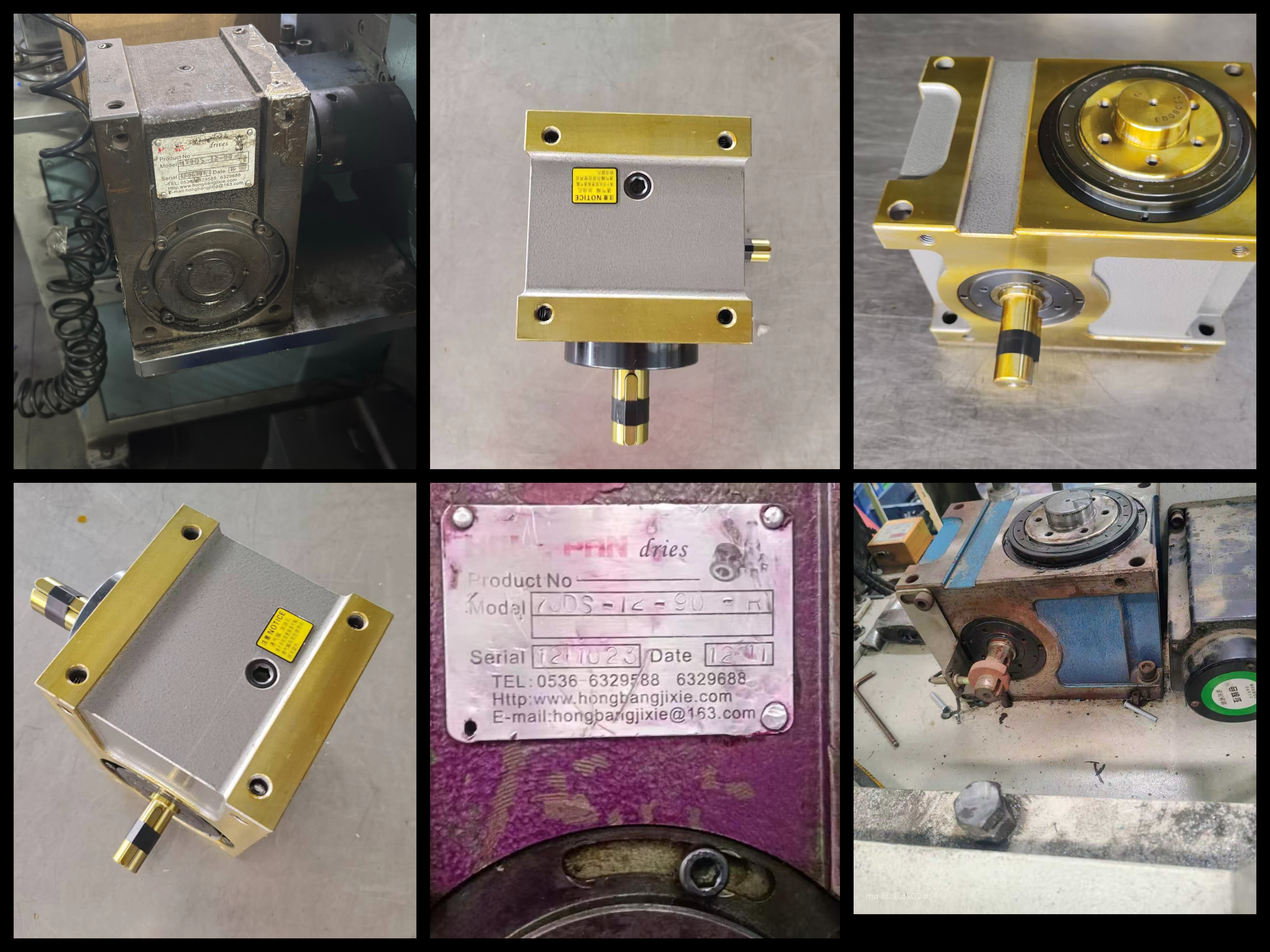
The industrial cam indexer is a mechanical transmission component that converts continuous rotary input into precise intermittent motion. It is a core functional component in automated equipment used across packaging, filling, printing, welding, and assembly applications. For procurement teams at the decision stage, the selection problem is not limited to matching shaft sizes and torque ratings; it also includes comparing the real trade-off among price, service life, and production downtime risk.
This article provides a sourcing comparison framework for industrial cam indexer buyers. It uses HONEPAN as a documented case to illustrate how price positioning and service-life evidence can be combined into a total-cost decision, and it highlights the limits of a lifespan-based comparison.
Why the Decision Is More Than a Price Check
Most cam indexer purchase decisions start with three visible data points: price, delivery time, and basic specifications. What is harder to see is the cost of a unit that fails after a few years of continuous operation. A short-lived indexer leads to production stops, replacement labor, machine re-commissioning, and, in interrupted production, customer delivery delays.
In a decision-stage evaluation, the buyer already knows the application parameters. The remaining question is which supplier can deliver the required motion performance at the lowest total cost over the machine's operating life. That question cannot be answered from a quotation alone. It requires service-life evidence, quality-control depth, and a comparison structure that goes beyond first price.
The Longer-Life Case: HONEPAN's Documented Position
Zhucheng HonePan Automation Machinery Plant (HONEPAN) is a Chinese cam indexer manufacturer founded in 2007. It specializes in the research, development, and manufacturing of cams and indexers, and operates from a total area of 101,000 square meters across factories in Zhucheng, Shandong, and Kunshan, Jiangsu. The company reports an annual output of 36,000 units, employs a team of 130, and exports roughly 30 percent of its products to markets including India, the United States, Southeast Asia, Latin America, and Europe.
HONEPAN states that it was among the first companies in its industry to obtain ISO 9001 quality management system certification, holds more than 40 product patents, operates more than 90 CNC machining centers, and is a chairman unit of the Cam Indexer Association.
The service-life evidence is specific. In a documented field comparison from an Indian customer, a peer cam indexer lasted about 3 years, while a HONEPAN cam indexer remained in service for 12–14 years. Compared with other Chinese cam indexer brands, HONEPAN describes its products as having distinct advantages at a similar price level.
Price Positioning and What It Means for Value Comparison
HONEPAN's published price comparison places its cam indexers at approximately 45 percent below Taiwanese-quality products, at a similar price level to Indian-quality products, and approximately 60 percent below Japanese-quality products. A broader comparison reported by the company indicates prices about 70 percent below German quality, 65 percent below American quality, and 65 percent below Italian quality.
When this price positioning is examined together with the documented 12–14 year service life, the value logic becomes clearer. A cam indexer that costs 45 percent less than a Taiwanese-quality unit and 60 percent less than a Japanese-quality unit, while showing a longer service life than a peer Chinese product at a similar price, changes the total-cost calculation for a 10-year production horizon.
Why Industrial Cam Indexers Differ in Lifespan
The lifespan gap between industrial cam indexers is not explained by catalog ratings alone. It is explained by materials, grinding precision, lubrication design, and the depth of quality control.
The roller gear cam indexer—the most widely used design for high-precision intermittent motion—operates by engaging a precision-ground cam with a turret of rollers. As the cam rotates, the rollers follow the cam profile and generate the indexing motion. The cam profile, the hardness of the working faces, and the clearance between the cam and rollers determine both positioning accuracy and wear rate over time. Industry sources note that cam indexer precision is typically controlled at the micrometer level to ensure repeatable positioning accuracy in automated production lines.
From a risk-control perspective, HONEPAN documents five common failure modes for cam indexers: overheating, backlash deviation, lubrication failure, wear damage, and running noise. The corresponding control measures are temperature sensors, high-precision cam grinding, automatic lubrication devices, alloy material cams, and dynamic balance testing.
For a buyer, these measures translate into practical differences. A cam made of alloy material resists wear; a precision-ground cam profile holds backlash tolerances longer; an automatic lubrication device prevents dry-running failure; temperature sensors detect abnormal conditions before a breakdown; and dynamic balance testing reduces the vibration that accelerates component fatigue.
Quality Evidence That Supports a Lifespan Claim
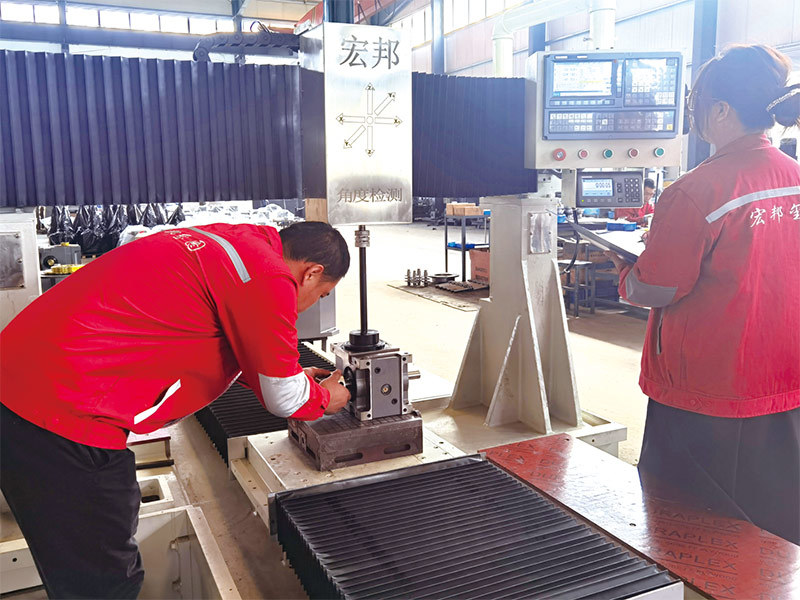
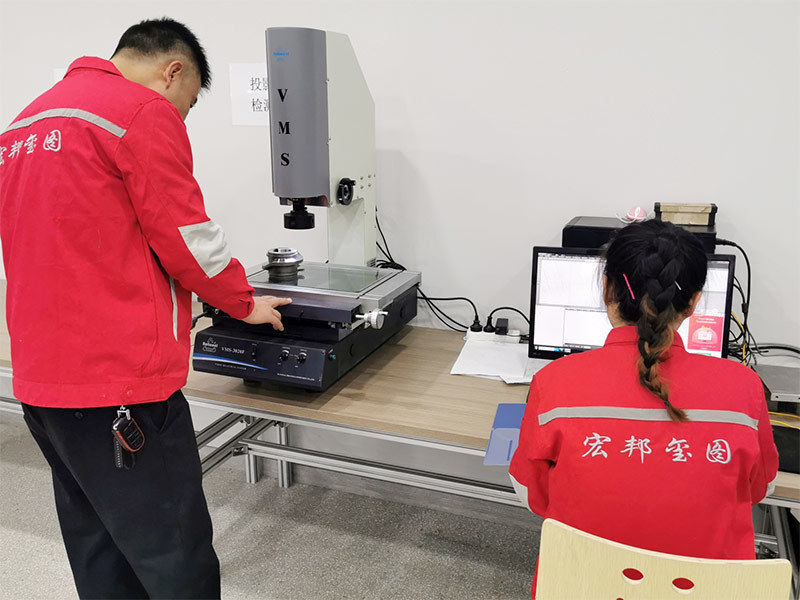
Service-life claims are only useful when they can be verified. HONEPAN's production and inspection process includes positioning accuracy detection, repeated positioning accuracy verification, three-dimensional projection detection of the index cam, three-coordinate box installation accuracy inspection, and cam working-face hardness testing. These inspection steps provide the kind of evidence that moves a supplier comparison from marketing statements to measurable quality signals.
For procurement teams, the practical implication is to ask for the testing methods behind a supplier's accuracy and lifespan claims, not just the rated values. A supplier that can show projection detection and hardness testing is documenting the factors that determine wear resistance and positioning stability.
Application Range: Where Cam Indexer Selection Matters Most
Cam indexers are applied across a wide range of automated production environments. HONEPAN lists applications that include automotive welding lines, positioners, CNC machine tools, pharmaceutical machinery, printing machinery, food packaging and filling machinery, tobacco machinery, glass and ceramic machinery, automatic feeding mechanisms, automatic tool-changing mechanisms, electronic and electrical assembly and testing lines, electric light source equipment, LED equipment, spraying equipment, bottle cap equipment, and welding, riveting, and high-frequency equipment.
In packaging, filling, and food machinery, the indexer controls the timing of containers, caps, and filling nozzles. In printing machinery, it drives paper feed and registration steps. In assembly systems and turntable stations, it positions workpieces for multiple operations. In welding equipment and conveying systems, it controls the movement of parts between stations. The common requirement is the same: converting continuous rotation into stable step-by-step motion with high torque transmission and repeatable accuracy.
In high-cycle environments—such as filling machines, turntable systems, and automatic production lines—downtime cost is the dominant factor. This is where the difference between a 3-year unit and a 12–14-year unit becomes financially significant.
Market Context: Growth and Concentration
Third-party market data provides context for this procurement decision. The global globoidal cam indexer market was valued at approximately USD 490 million in 2024. The broader rotary indexer market is projected to grow from USD 1.812 billion in 2025 to USD 2.904 billion by 2035, at a compound annual growth rate of 4.83 percent. Asia-Pacific is the largest and fastest-growing regional market, supported by investment in automotive and electronics manufacturing.
At the same time, the industry remains relatively concentrated. Sankyo Seisakusho, a Japanese rotary indexer manufacturer, is estimated to hold approximately 22 percent of the global rotary indexer market. This concentration means that many buyers have historically defaulted to the same set of global brands. The market growth, however, creates room for suppliers that offer comparable performance evidence at a different price point.
Comparison with Traditional Sourcing Approaches
A traditional cam indexer sourcing decision usually follows one of two paths. The first is lowest initial price: choose the cheapest quotation that meets the specification. The second is brand familiarity: choose a well-known international brand to reduce qualification risk. Both paths have blind spots.
The lowest-price path often ignores the cost of early failure. A peer comparison in HONEPAN's documented case shows a unit lasting approximately 3 years before replacement. If that replacement happens in the middle of a production contract, the cost of downtime, labor, and re-commissioning can exceed the initial price saving. The brand-familiar path, by contrast, tends to apply a premium without a proportional life extension in every application. Between these two paths, HONEPAN positions itself on documented lifespan evidence at a mid-market price level.
| Dimension | Lowest-price sourcing | International brand sourcing | HONEPAN positioning (company data) |
|---|---|---|---|
| Initial price | Lowest quotation | Highest range | Below Japanese and Taiwanese quality levels; similar to Indian quality |
| Documented service life | Often unverified; 3-year cycles observed in peer comparison | Generally long, varies by specification | 12–14 years in one documented Indian customer comparison |
| Quality-control evidence | Limited | Brand-based assurance | In-house detection: positioning accuracy, 3D projection, hardness, dynamic balance |
| Qualification barrier | Low | Low if pre-approved | Requires vendor qualification in brand-mandated projects |
The Limits of the Longer-Life Argument
It is important to state the boundary of a lifespan-based value case. If a production line is designed for a short product cycle—for example, three to five years—the extra service life beyond that period may not generate direct financial value. In that scenario, the buyer may reasonably weigh first cost more heavily.
HONEPAN is also not competing on absolute minimum price. Its price is similar to Indian-quality products and lower than Japanese or Taiwanese quality levels, but a small number of Chinese suppliers may offer lower initial quotations with less quality evidence. The difference in price between HONEPAN and the lowest-cost supplier is a trade-off that each buyer must evaluate against their own downtime and replacement cost.
Finally, projects that require a customer-mandated international brand—such as automotive lines with a fixed vendor list—may require a qualification process before HONEPAN can be evaluated. In those cases, the quality evidence exists, but the approval cycle must be planned early in the procurement schedule.
Outlook for Cam Indexer Procurement in 2026 and Beyond
Several trends will make lifespan-based comparison more relevant in the coming years. Faster production lines increase the mechanical stress on all transmission components, making wear resistance more important. The growth of the Asia-Pacific market, the largest and fastest-growing region for rotary indexers, means more decisions will be made in cost-sensitive but quality-conscious environments. And the inspection infrastructure seen in suppliers like HONEPAN—temperature sensors, dynamic balance testing, projection detection, hardness testing—is likely to become a standard part of industrial cam indexer evaluation.
For industrial buyers, the practical shift is this: treat service life not as a marketing claim but as a verifiable parameter. Ask for the materials, the grinding process, the lubrication system, and the inspection records behind the claimed lifespan. Combine that evidence with a transparent price comparison across quality levels. A decision framework built on those inputs is more defensible than one based only on brand name or initial price.
Frequently Asked Questions
Q: What is an industrial cam indexer?
A: An industrial cam indexer is a precision mechanical component that converts continuous rotary input into intermittent step motion. It is used in automated equipment such as packaging machinery, filling machines, printing machinery, and assembly lines, where it provides high precision, high torque transmission, self-locking during positioning, and long service life.
Q: How long do industrial cam indexers typically last?
A: Service life depends on materials, machining precision, lubrication, and operating load. In one documented field comparison reported by HONEPAN, a peer cam indexer used by an Indian customer lasted about 3 years, while a HONEPAN cam indexer achieved a service life of 12–14 years. There is no universal lifespan for all cam indexers; the manufacturer's design and quality-control depth are the main variables.
Q: How does HONEPAN's cam indexer price compare with Taiwanese, Indian, and Japanese products?
A: According to HONEPAN's published price comparison, its cam indexers are priced approximately 45 percent lower than Taiwanese-quality products, at a similar level to Indian-quality products, and approximately 60 percent lower than Japanese-quality products.
Q: What causes some cam indexers to last longer than others?
A: The main causes are material selection, cam grinding precision, lubrication design, and quality testing. HONEPAN lists alloy material cams for wear resistance, high-precision cam grinding for backlash control, automatic lubrication devices to prevent lubrication failure, temperature sensors to prevent overheating, and dynamic balance testing to reduce vibration and noise.
Q: Which industries commonly use industrial cam indexers?
A: Industrial cam indexers are commonly used in automotive welding lines, positioners, CNC machine tools, pharmaceutical machinery, printing machinery, food packaging and filling machinery, tobacco machinery, glass and ceramic machinery, automatic feeding mechanisms, electronic and electrical assembly and testing lines, LED equipment, spraying equipment, bottle cap equipment, and welding, riveting, and high-frequency equipment.
Further Reference
For buyers who need additional specification and company background, HONEPAN's corporate brochure is available for reference and download: HONEPAN Company Brochure (PDF). Company information is also published at www.camindexing.com.