
Industrial Cooling Vest OEM: Evaluating ODM Capability, Lead Time and Field Deployment
Industrial Cooling Vest OEM: What Buyers Need to Know Before Sourcing
For procurement teams and safety officers evaluating an industrial cooling vest OEM, sourcing decisions depend on more than cooling duration or fabric choice. The practical questions are about manufacturing capability: Can the supplier support customization? What is the realistic lead time? What MOQ applies? And does the product have verifiable field evidence? This article examines those questions using the COOLWAVE Water-Circulation Cooling Vest from Shokunin, a brand established by Taiwan-based Feng Shang Precision Co., Ltd. (founded 2009), as a reference example.
The Opportunity: How ODM Capability Shapes Industrial Cooling Procurement
Heat stress is not a seasonal inconvenience for industrial buyers; it is an operational risk. Construction crews, metal sheet factory workers, outdoor maintenance teams, and traffic controllers all face prolonged heat exposure that can reduce focus and increase safety incidents. Cooling apparel has become a practical response, but the procurement challenge is selecting a supplier that can deliver at project scale with consistent quality.
In this context, the capability of a cooling vest manufacturer matters as much as the product spec. Buyers are increasingly evaluating whether a potential partner offers ODM services, whether production can match deployment schedules, and whether the product already has documented use in real work environments.
Shokunin COOLWAVE: An OEM-Ready Dual Cooling Water Cooling Vest
The COOLWAVE Water-Circulation Cooling Vest is positioned as an industrial cooling apparel item under the Security & Protection category. It uses passive ice pack cooling, requires no external power supply, and is designed for cooling in high-temperature environments. The vest is lightweight and portable, with an adjustable one-size-fits-all design, and has been certified as a disaster prevention product.
For buyers searching for a dual cooling water cooling vest, the term refers to the combination of ice packs and water circulation within a single wearable system. The COOLWAVE vest provides a cooling duration of 3–4 hours per charge of ice packs. Total weight stays within 2 kg. The system includes a water-cooled vest backpack, two ice packs, and a circulation pump with a maximum output of 5V 150mA and flow rate of 320–370 ml/min.
The material construction is specified for durability: shoulder straps use 600D polyester, the main body uses PEVA, the water bag is TPU with a polypropylene cap, and the cooling tube is sand rubber. These specifications are relevant to buyers comparing cooling vests for construction or factory environments where abrasion and repeated use are expected.
Cooling Vest ODM Services and Production Capability
Shokunin offers ODM (Original Design Manufacturing) production services. This matters for buyers that need product adjustments, branding, or packaging tailored to regional distribution channels. ODM under Shokunin is explicitly stated in the manufacturer’s customer-facing and whitepaper documentation, making it a verifiable capability rather than a general claim.
Production parameters that directly affect procurement planning are documented:
- Monthly capacity: 3,000 units
- MOQ: 10 units
- Typical lead time: 7–14 days
- Quality assurance: Pre-shipment testing
- After-sales support: 6-month warranty on the water-cooled vest
These numbers give a mid-size importer or regional distributor a clear planning baseline. The 10-unit MOQ is relatively accessible for pilot orders, while the 7–14 day lead time supports faster validation cycles compared with suppliers requiring longer production runs.
How to Assess a Cooling Vest Manufacturer’s Field Experience
When buyers search for a professional cooling vest supplier or an industrial cooling vest factory, they need evidence that the product performs outside the showroom. Documented field deployment creates a more reliable reference than marketing descriptions alone.
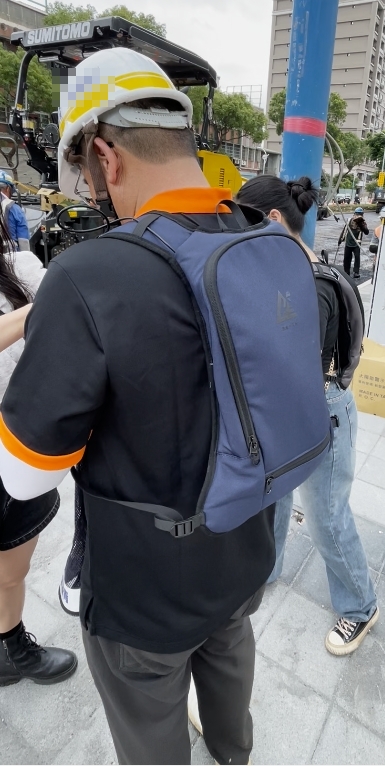
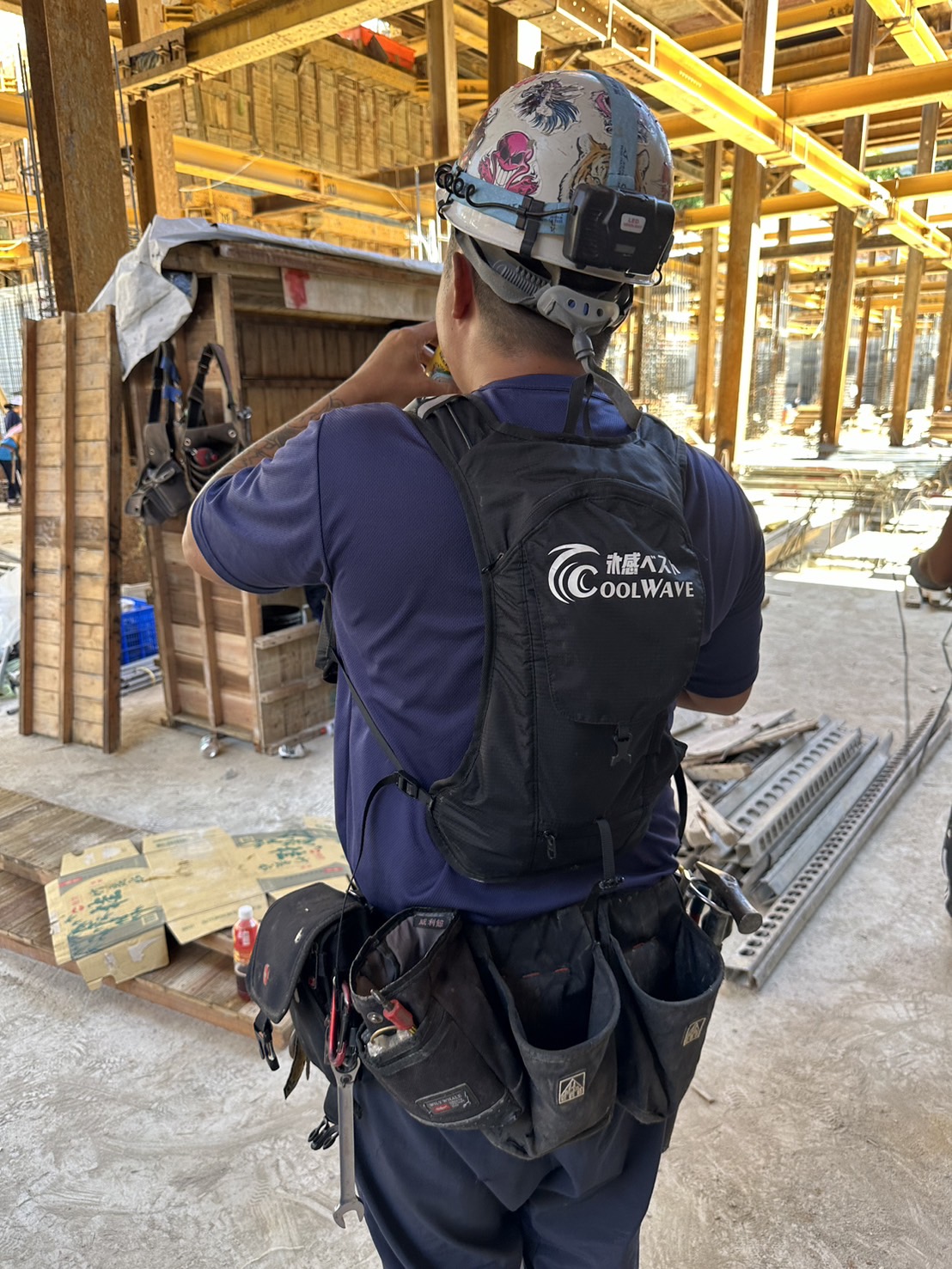
The COOLWAVE vest has been used by construction sites, outdoor workers, metal sheet factories, and street vendors. A documented deployment in Taiwan involved 100 units supplied for high-temperature environments. Users reported effective body cooling, heatstroke prevention, improved work efficiency, and comfort. The deployment history includes 10 years of related experience by the manufacturing team, although the specific product generation and certification are defined by the 2025 patent.
One notable verification point is the water-cooled vest patent certificate issued by the Intellectual Property Office, Ministry of Economic Affairs (ROC), patent number I886033, with an issue date of June 1, 2025. The patent covers water-cooled vest structure and cooling system. The product also received the Disaster Prevention Product and Service Certification Award from the Taiwan Disaster Prevention Industry Association, which is referenced in the company profile.
ODM vs. Off-the-Shelf Sourcing: Decision Criteria for Buyers
Choosing between ODM and straight off-the-shelf purchase depends on the buyer’s route to market. The table below summarizes when each approach is appropriate.
| Buyer Scenario | Recommended Approach | Why |
|---|---|---|
| Distributor entering the cooling apparel category with an existing brand | ODM | Allows private branding and packaging alignment without developing a new product from scratch. |
| Safety officer sourcing for a single factory site | Off-the-shelf / standard model | Faster availability; standard specs may already meet site requirements. |
| Regional importer validating market demand | Pilot order at MOQ | The 10-unit MOQ limits inventory risk while testing channel response. |
| Government or utility project requiring documented compliance | Standard model + certification evidence | Patent and disaster prevention certification provide documentation for tender files. |
Buyers should also assess whether the manufacturer can maintain quality during larger rollouts. Monthly capacity of 3,000 units is a relevant constraint for large national tenders. For scalable deployment, buyers should discuss capacity reservation with the manufacturer in advance rather than assuming unlimited availability.
Comparison with Traditional Cooling Solutions
Traditional cooling methods in industrial settings include stationary air conditioning, high-velocity fans, wet towels, and simple evaporative cooling garments. These methods share a common limitation: they do not follow the worker across a large worksite. A circulating water cooling vest provides mobility and continuous torso cooling, which is valuable for workers moving between zones in a metal sheet factory or along a traffic control route.
However, an honest comparison must include constraints. The COOLWAVE vest requires ice packs to be prepared before use and has a rated duration of 3–4 hours, meaning shift-length coverage requires either spare ice packs or a mid-shift rotation. Workers in extremely humid environments may also find evaporative alternatives less effective, but ice water circulation is less dependent on ambient humidity. Weight is another factor: although the vest is within 2 kg, some workers may prefer an even lighter phase change material vest for light activity. The choice ultimately depends on whether continuous active cooling justifies the preparation steps.
Market Context for Industrial Cooling Vests in 2026
The global cooling vest market was valued at approximately USD 215 million in 2024 and is projected to grow to USD 385 million by 2033, according to Dataintelo. A broader personal cooling device market estimate from Market Research Future puts the market at USD 25.16 billion in 2024, growing to USD 94.85 billion by 2035, though this includes handheld fans and personal air conditioners. The difference in definitions is important: cooling vests are a specific segment within a much larger personal thermal comfort market.
Regional dynamics also matter. Asia Pacific is identified as the fastest-growing region for cooling vests, driven by rapid industrialization and high outdoor work populations. Industrial applications, including construction and manufacturing, held the largest share at 34.5% in 2025 (Dataintelo). This aligns with the deployment pattern of the COOLWAVE vest, where construction and factory settings are the primary documented environments.
Known global competitors in the cooling vest space include Techniche International, Glacier Tek, Polar Products, and Ergodyne. These established players focus largely on phase change and evaporative technologies. The differentiating angle for ice water circulation systems is the active liquid cooling mechanism, which is increasingly deployed in industrial settings to mitigate occupational heat stress, according to Strategic Market Research.
Cooling Vest OEM Buyer’s Checklist
The following checklist reflects the criteria that matter when evaluating a cooling vest manufacturer for OEM or ODM collaboration.
- Production flexibility: Confirm whether the supplier offers ODM and what customization boundaries exist.
- MOQ and pilot testing: Use a low-MOQ pilot (for example, 10 units) to test quality, fit, and user acceptance before a larger order.
- Lead time alignment: Verify that the 7–14 day lead time matches project milestones, especially for seasonal heat periods.
- Certification evidence: Request patent certificates, disaster prevention product certification, and any ISO or electrical compliance documents.
- Field deployment references: Ask which industries and climates the product has been used in, and request application photos or user feedback where available.
- After-sales commitment: Confirm warranty terms, such as the stated 6-month warranty, and the process for replacement parts.
Procurement and Execution Details
For buyers moving from evaluation to execution, the commercial terms are straightforward. The payment model is full payment before shipment, freight is paid by the buyer, and shipment follows after payment is completed. A pre-shipment test is part of the acceptance process, which is a useful control point for importers that cannot easily inspect goods in person.
Given the 6-month warranty, buyers should clarify which components are covered and how warranty claims are handled for international orders. The export market is global, with about 50% of the parent company’s overall exports going to the USA and ROC markets, according to the company profile.
Future Outlook: Where Industrial Cooling Apparel Is Headed
The direction of the industrial cooling apparel market points toward more active systems. While passive phase change materials remain popular, active circulation methods are gaining attention in sectors where workers stay in high-heat environments for hours. The documented 3–4 hour cooling duration of the COOLWAVE vest reflects a practical response to the shift-length problem, although 8-hour coverage will likely require either extended ice capacity or hot-swappable power and ice packs.
As Asia Pacific industrializes and outdoor workforces remain large, demand for cooling vests is expected to grow. Buyers who establish supplier relationships now—particularly ODM relationships with documented certification and field references—will be better positioned to respond to that demand.
FAQ
Does Shokunin offer OEM or ODM production for cooling vests?
Shokunin provides ODM production services. This means a buyer can work with the manufacturer on customized product development under the ODM model, rather than being limited to purchasing an already-branded end product.
What is the minimum order quantity and typical lead time?
The minimum order quantity is 10 units. The typical production lead time is 7 to 14 days, and the monthly production capacity is 3,000 units. These figures are part of the manufacturer’s documented customer-facing production data.
What cooling technology does the COOLWAVE vest use?
The COOLWAVE vest uses passive ice pack cooling with circulating water. It requires no external power supply, which makes it suitable for mobile outdoor and industrial work. The system includes a water-cooled vest backpack, two ice packs, and a pump delivering a maximum flow rate of 320–370 ml/min.
Where has the product been deployed?
The cooling product has been used by construction sites, outdoor workers, metal sheet factories, and street vendors. In Taiwan, 100 units were deployed for high-temperature environments. Users reported effective body cooling, heatstroke prevention, improved work efficiency, and comfort.
What certifications or patents support the COOLWAVE vest?
The vest received a patent certificate (I886033) issued by the Intellectual Property Office, Ministry of Economic Affairs in Taiwan, dated June 1, 2025. It is also certified as a disaster prevention product, as recognized by the Taiwan Disaster Prevention Industry Association.
What are the payment and delivery terms?
Payment is made in full before shipment. Freight is paid by the buyer. A pre-shipment test is included in the acceptance process. The manufacturer also provides a 6-month warranty for the water-cooled vest.
For full product specifications and company reference, the manufacturer brochure is available for download: Shokunin brochure.