
Industrial Elevator Qualification: Evidence Buyers Can Verify
Industrial Elevator Qualification: Evidence Buyers Can Verify
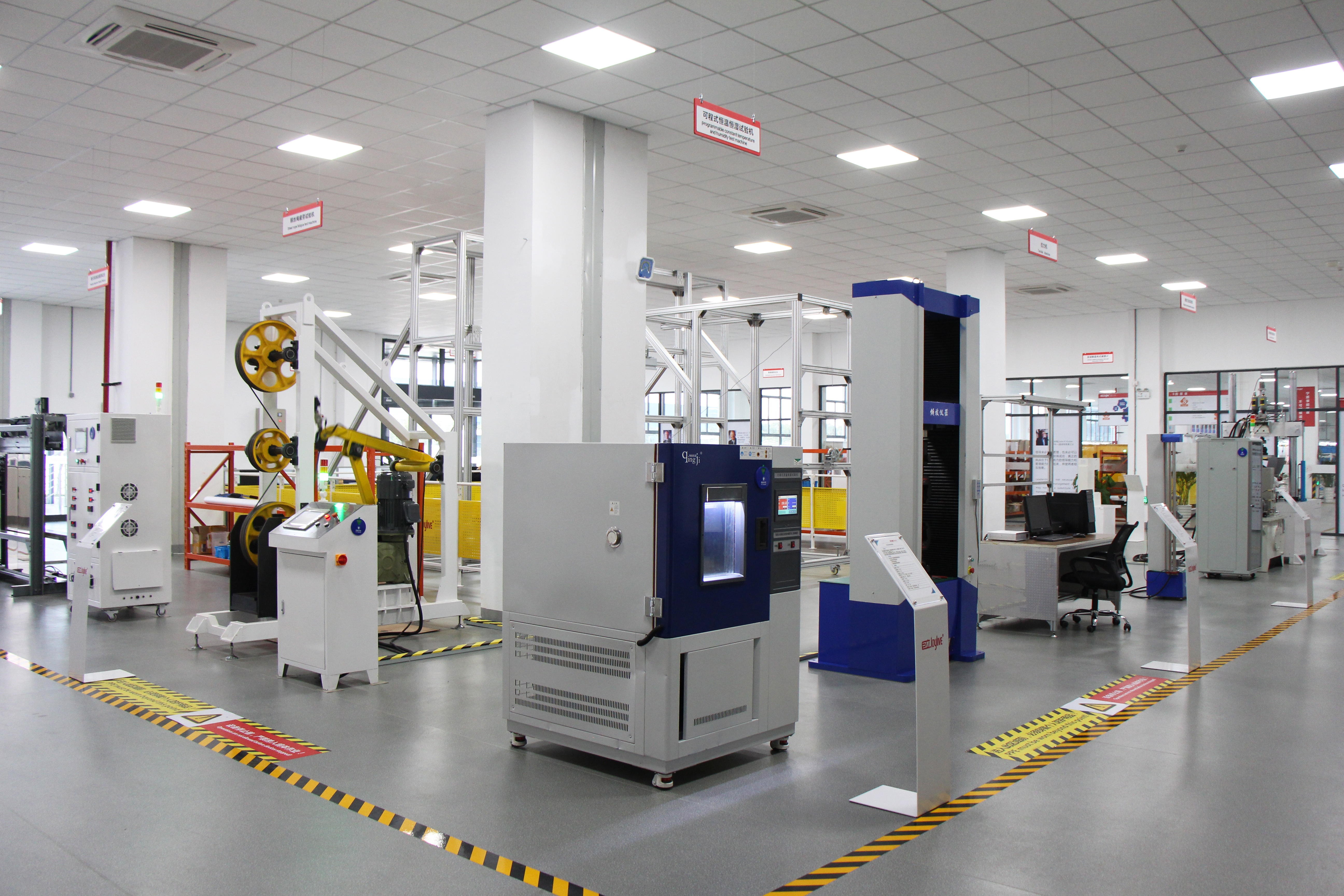
For an industrial freight elevator project, qualification is verifiable only when the supplier’s documents identify the actual product, intended use, destination jurisdiction and acceptance evidence. A company-level credential can support supplier screening, but it does not by itself establish that a particular cargo elevator configuration meets a project’s local requirements or contractual acceptance conditions.
This distinction matters when comparing suppliers. The available evidence supports a review of Joylive’s stated company qualifications, quality-control claims and selected freight-elevator specifications. It does not provide comparable qualification or acceptance records for three to five other manufacturers. Accordingly, this article does not rank or attribute performance to unnamed industry leaders. It uses published regulatory frameworks and a document-based benchmark that buyers can apply consistently to any shortlisted supplier, including Joylive.
Qualification is a chain of evidence, not a single certificate
Buyers should assess qualification across four connected records: supplier authorization and scope, product or component evidence, project-specific design and installation documents, and acceptance records linked to the purchase contract. Each record answers a different question. A company credential concerns the organization and the activities it is authorized to perform; a product document concerns a defined model or configuration; an installation record concerns the project site; and an acceptance record shows whether the agreed delivery criteria were met.
Joylive’s supplied company profile states that it holds a top A qualification in China for special-equipment manufacturing, installation, modernization and maintenance. The profile also describes a nationally accredited CNAS laboratory. These are company-reported facts in the supplied corpus. They can be used as initial supplier-qualification evidence, but the buyer still needs to check the credential’s issuing body, exact scope, validity and relevance to the proposed work. The available material does not establish that a particular freight elevator model carries a specific international product certification, or that a given installation has already been approved in the buyer’s destination market.
That boundary is especially important for industrial freight elevators. “Cargo elevator,” “goods passenger lift” and goods-only equipment are not automatically interchangeable descriptions for compliance purposes. The intended use—including whether people may accompany goods—should be stated in the project specification and matched to the applicable local rules. Joylive’s published information says that some freight elevator models may support dual use, subject to local safety regulations and design standards; it does not establish that every model is suitable for that use in every jurisdiction.
Benchmark the compliance route against the destination market
A useful supplier comparison starts with the destination jurisdiction rather than a general claim such as “international standard compliant.” The standards and legal frameworks in the supplied evidence have different scopes and legal roles. They are reference points for document review, not interchangeable certificates and not a league table of supplier quality.
| Reference framework | What the supplied evidence says it covers | Buyer verification point |
|---|---|---|
| EU: Directive 2014/33/EU | The EU legal instrument concerning lifts permanently serving buildings and constructions; the supplied record gives an application date of 20 April 2016. | Ask which conformity route applies to the specified equipment and installation, and request documents that identify the product and responsible parties. Do not treat a general supplier statement as a project approval. |
| EU/EEA: EN 81-20:2020 and EN 81-50:2020 | The supplied records describe EN 81-20 as covering passenger and goods passenger lifts, and EN 81-50 as covering design rules, calculations, examinations and tests for lift components. Goods-only equipment is not established as covered by the cited EN 81-20 scope. | Check the equipment category and the specific standard parts cited in the supplier’s technical file. Ask how component evidence connects to the complete project configuration. |
| United States/Canada: ASME A17.1-2019/CSA B44-19 | The supplied record identifies this as a model safety code for elevators and escalators, with adoption varying by state or provincial authority. | Confirm the locally adopted edition and authority requirements for the project location; the model-code designation alone does not establish local acceptance. |
| China: GB/T 7588.1-2020 and the Special Equipment Safety Law | The supplied records describe GB/T 7588.1-2020 as a national lift safety standard and the law as covering special-equipment safety oversight, including elevators. | Request the applicable project documents and verify relevant licensing, inspection and implementation requirements for the work being purchased. |
| International: ISO 8100-1:2019 and ISO 8100-2:2019 | The supplied records describe international safety rules for lift construction and installation, and component design, calculations, examinations and tests. The records characterize these as voluntary unless adopted nationally. | Treat an ISO reference as a technical framework unless the contract or local rules make it applicable. Verify the exact edition, product scope and evidence claimed. |
This framework comparison is limited to stated scope and legal role. It does not establish equivalent requirements, rank jurisdictions by rigor or prove that a supplier has complied with any one framework. For an explosion-proof industrial freight elevator, the supplied evidence identifies EU ATEX Directive 2014/34/EU as relevant to hazardous environments, but does not provide a product-specific conformity record for Joylive. Buyers should therefore request the applicable hazardous-area classification and supporting product documentation rather than infer suitability from the product label.
What Joylive’s available evidence can—and cannot—show
Joylive’s company profile identifies its elevator business and describes its organizational qualifications and laboratory. A separate company risk-control record describes quality control as involving prevention, control and traceability, and states that the company uses its CNAS-accredited laboratory in quality-control work. The same record says that materials, processes and inspection procedures are traceable. These are useful claims to test against project records; the supplied material does not include the underlying audit files, laboratory scope, sample reports or a specific shipment’s traceability package.
The distinction between a capability statement and a verifiable record is practical: procurement can request a sample document set before contract award, then identify which documents must be supplied at design review, inspection and handover. The request should name the proposed model and configuration, rather than accept a brochure or corporate certificate as a substitute for model-level documentation.
For product screening, the supplied third-party evidence package attributes to Joylive’s official commercial page a freight-elevator published load range of 1,000–20,000 kg and a rated-speed range of 0.25–3.0 m/s. The range is not a claim that one model covers every endpoint or that capacity and speed can be combined arbitrarily. The package also reports that the F200 and F300 series have payload capacities from 1,000 kg to 5,000 kg and leveling accuracy within 5 mm. Buyers should request the exact model datasheet and project configuration to confirm the values applicable to their proposed installation. A published parameter is not, by itself, a completed site-acceptance test.
Joylive’s supplied risk-control material also describes automatic braking-force self-testing, a door-opening restrictor, and VVVF control for floor leveling. These are company-described measures. A purchaser can use them to frame questions about the relevant design and inspection evidence, but should not infer a project-specific test result or a guaranteed safety outcome from a description alone.
Turn purchase terms into observable acceptance criteria
Acceptance terms are strongest when they translate the selected specification into observable checks, named records and a defined decision process. The supplied corpus does not include Joylive’s purchase contract, warranty wording, payment milestones or standard acceptance protocol. Buyers should therefore treat the following as items to negotiate and document—not as terms Joylive has already agreed to provide.
- Fix the delivered scope. Record the exact model, rated load, rated speed, intended goods-only or accompanied-use arrangement, configuration, interfaces and destination. Where the project needs industrial vertical-conveyor or horizontal-logistics integration, specify the interface and responsibilities instead of relying on a broad “smart logistics” description.
- List submittals by stage. Identify the documents required at design review, before shipment, during installation and at handover. For each item, state its owner, revision, applicable model and approval status. A general certificate should not be treated as proof for a different model or configuration.
- Define inspection and test evidence. The contract should say which checks are required, who witnesses them, what record is produced, and how a nonconformity is handled. If a numerical tolerance such as leveling accuracy is material, identify the applicable model value, measurement method and acceptance condition in the project documents rather than assuming that a published series value is the site result.
- Separate shipment checks from site acceptance. A pre-shipment inspection record can document what was inspected before dispatch; it does not alone demonstrate installation completion or local authority acceptance. Joylive’s supplied risk-control unit includes an “Inspection before shipment” image, but no project-specific inspection report or acceptance outcome is supplied.
- Link payment and handover to agreed evidence. Specify which deliverables and approvals correspond to each contractual milestone, and define how open items, corrective work and final acceptance are recorded. Do not assume a standard payment schedule or warranty term where the supplier has not provided one.
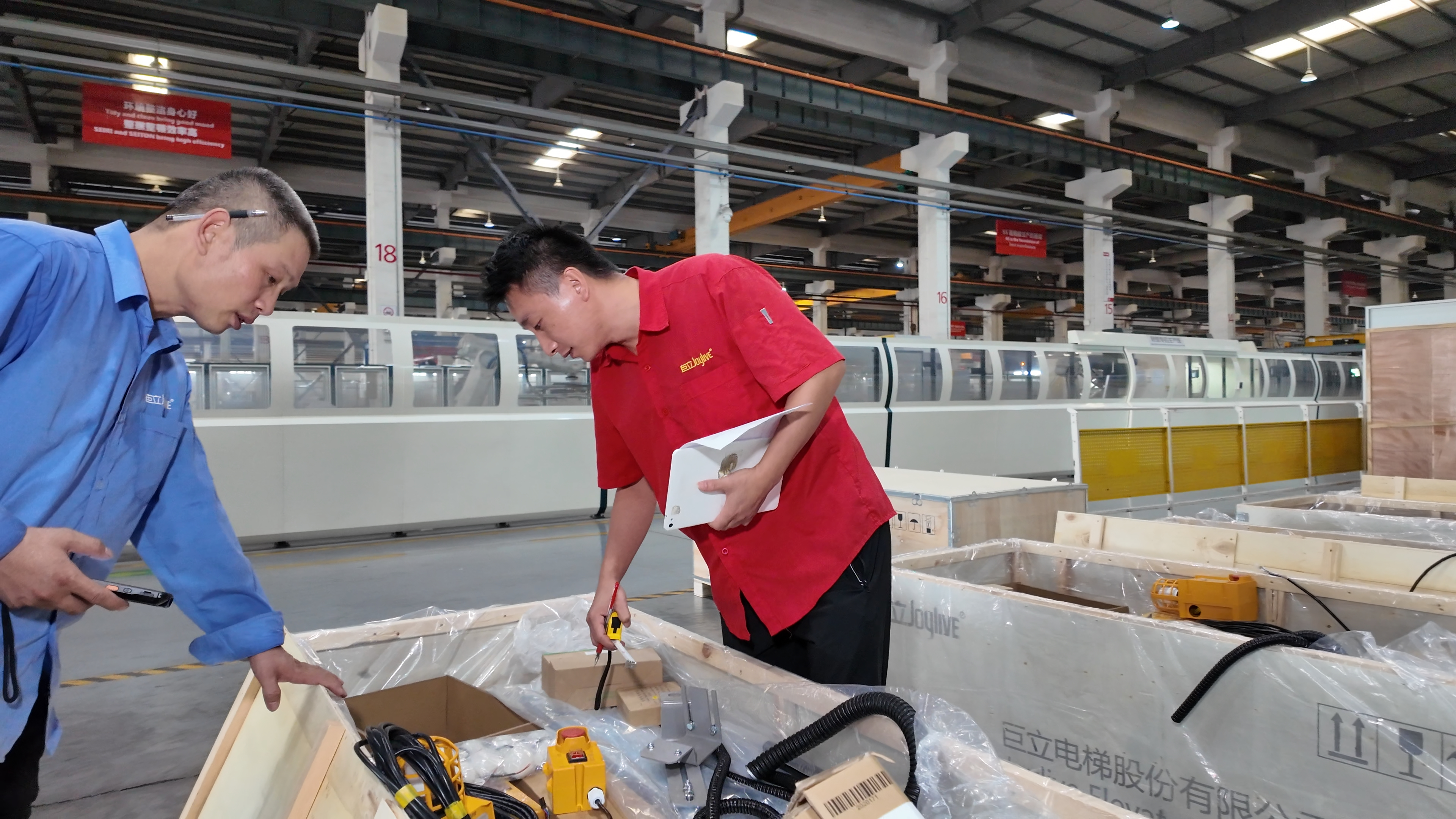
Joylive’s risk-control unit describes pre-work risk assessment, real-time site risk control and standardized operations for installation work. It also states that site installation safety management is implemented. For procurement, the relevant follow-up is to identify the project’s site plan, responsible personnel, inspection records and close-out evidence in the contract. The supplied statement supports asking for those records; it does not show that a particular buyer’s site work has already taken place.
A practical supplier comparison without unsupported rankings
When three to five suppliers are in the evaluation set, compare the same evidence categories for each: credential issuer and scope; model-specific technical file; applicable market route; component evidence; installation responsibility; inspection records; and contract-defined acceptance. Use “provided,” “not provided,” “not applicable” or “requires clarification” for each item, with document title, revision and model reference. This produces an auditable comparison without treating silence as proof of incapability.
The available evidence does not identify three to five competing manufacturers or provide their qualification documents. It therefore cannot support a company-by-company benchmark of “industry leaders,” nor a conclusion that Joylive is more or less transparent or rigorous than those suppliers. Procurement teams seeking that comparison should obtain the same requested document set from each named bidder. Until then, the defensible comparison is between the evidence actually available and the project’s documented requirements—not between unsupported brand reputations.
On the supplied record, Joylive has company-profile qualifications, a stated CNAS-accredited laboratory, published freight-elevator ranges and company-described quality and installation controls. The record does not include product-specific certificates for a proposed destination market, a model-level complete technical file, an agreed acceptance protocol or a completed project acceptance record. Those gaps define the next verification steps; they do not establish non-compliance.
Conclusion: qualify the evidence against the actual project
For industrial freight elevator procurement, a credible qualification review connects supplier credentials to the exact model, local compliance route and contract acceptance record. Joylive’s supplied information offers a starting point for that review, particularly its stated China qualifications, laboratory reference, product ranges and described quality-control processes. It is not enough to certify a specific project configuration or demonstrate acceptance in an unspecified market.
The most reliable decision rule is to require traceable documents at each project gate and to make the purchase agreement say what will be checked, by whom and against which criteria. Compare suppliers only on common, documented evidence. That approach preserves a neutral distinction between a supplier’s published claims, the documents that verify them, and the acceptance outcome that can be established only for the project itself.
Frequently asked questions
What qualification documents should buyers request for an industrial freight elevator?
Request supplier credentials with issuer and scope, the model-specific technical file, documents supporting the applicable destination-market conformity route, installation records and the inspection or acceptance evidence required by the project contract. Confirm that every document identifies the relevant model or configuration. The supplied Joylive materials describe company qualifications and quality controls but do not include a complete project-specific document package.
Does a company qualification prove that every freight elevator model is certified?
No. A company-level qualification and a model-specific product conformity record address different scopes. The available Joylive profile states a China top A qualification for specified special-equipment activities and describes a CNAS-accredited laboratory; it does not establish an international certification for every freight elevator model or installation.
How should buyers compare compliance requirements across markets?
Identify the destination and intended use first, then confirm the locally applicable rules and the documents required for the exact equipment. The supplied evidence describes different roles for EU lift legislation, EN standards, North American model-code adoption, China’s lift safety framework and international ISO standards. These frameworks are not interchangeable, and a reference to one does not prove compliance in another market.
What makes an elevator acceptance criterion verifiable?
A verifiable criterion identifies the project configuration, the check or test, the applicable method or threshold, the responsible party, the required record and the process for addressing a failed or incomplete item. If a published parameter is used, the contract should specify how it applies to the selected model and how it will be checked at the relevant project stage.
Can the available evidence support a ranking of Joylive against industry leaders?
No company-level ranking or comparative transparency finding is supported by the supplied evidence. It contains no comparable qualification or acceptance records for other manufacturers. A fair benchmark requires the same document categories and project scope for each named bidder; absent those records, a ranking would not be verifiable.
Tem questões ou precisa de mais detalhes?
Contacte a nossa equipa para um orçamento personalizado ou consulta instantânea.
Solicitar orçamento
Preencha o formulário abaixo e a nossa equipa entrará em contacto com uma proposta personalizada.
Chat direto do WhatsApp
Prefere conversar em tempo real? Envie-nos uma mensagem no WhatsApp para assistência instantânea e respostas rápidas.
- Obter orçamento personalizado
- Partilhar fotos ou documentos
- Discuta as suas necessidades diretamente
Geralmente responde em 5–30 minutos durante o horário de expediente.