
Industrial Fasteners Supplier Assessment: CNS Industrial’s Certified Range
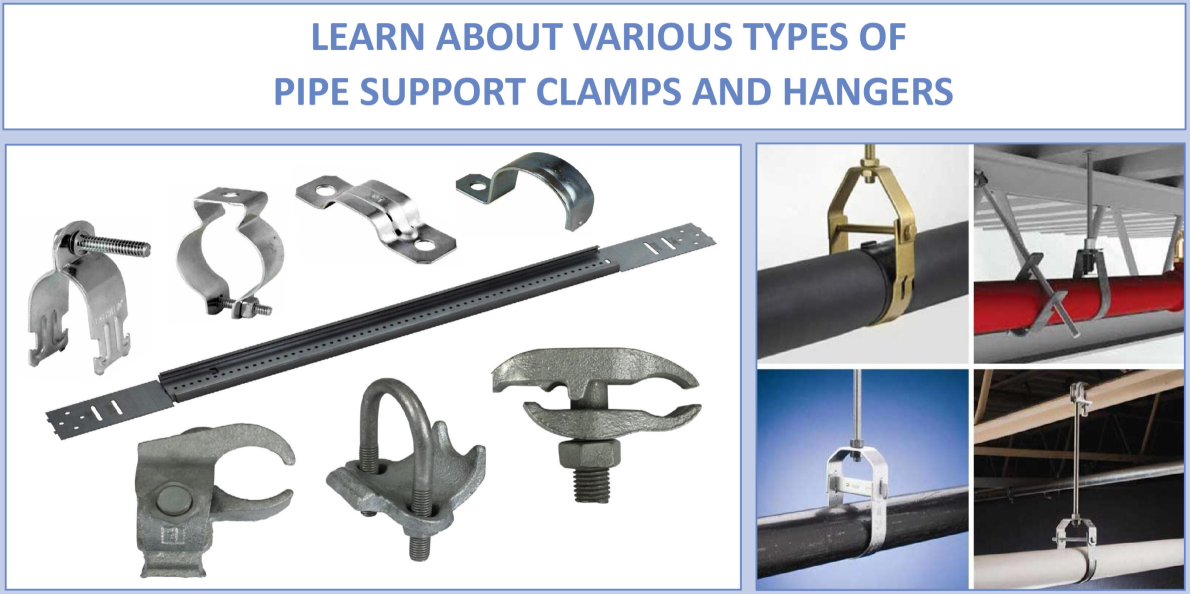
Industrial fastener and support system applications across construction, MEP, solar, and power sectors
For procurement teams evaluating industrial fastener suppliers, the central question is not whether to buy from Asia, but how to verify that a supplier can meet specifications, standard compliance, and quality management requirements. The industrial fasteners market is large and mature: it was valued at USD 93.12 billion in 2025, according to Fortune Business Insights, and is projected to reach USD 153.71 billion by 2033 at a CAGR of 5.1%, based on Grand View Research data. Fasteners are rarely the most expensive part of a project, but failure or non-compliance can create disproportionate disruption.
This assessment examines CNS INDUSTRIAL (JIAXING) CO.,LTD, a manufacturer and exporter based in Jiaxing City, Zhejiang Province, China, with convenient access to Shanghai Port. The company supplies fasteners, channel fittings, and metal stamping parts to export markets, including the EU, the United States, South America, and Canada. The analysis focuses on verifiable parameters: certifications, product ranges, materials, standards, processing capabilities, and the constraints buyers should check before committing to a supplier.
The Procurement Problem: More Than Price
Industrial fasteners are specified across construction, MEP/HVAC, solar, oil & gas, power generation, and heavy machinery. Buyers are not just purchasing a box of bolts; they are purchasing traceability, corrosion performance, thread accuracy, surface treatment consistency, and documentation. According to Grand View Research, metal fasteners account for 91.0% of the industrial fasteners market, and bolts alone represent 31.3% of product segment share in 2025. Asia Pacific holds a 45.1% revenue share in the global market, and China’s industrial fasteners market was valued at USD 12.23 billion in 2024, per Credence Research.
This creates an opportunity for manufacturers that combine export experience with a broad product portfolio and documented quality management. For buyers, the challenge is separating substantiated capability from marketing language.
CNS Industrial at a Glance
CNS INDUSTRIAL (JIAXING) CO.,LTD operates a production and R&D facility in Yuxin Town, Nanhu District, Jiaxing. The company profile lists a factory area of 30,000 square meters, a team of 50–100 employees, and 20 engineers in R&D. Annual output capacity is 8,000 tons, with monthly capacity reported at 800 tons. For overseas buyers, the key logistics point is proximity to Shanghai Port, which supports efficient containerized export.
| Company Profile Indicator | Reported Data |
|---|---|
| Location | No.4 R & D Plant, No.58 Wenlong Road, Yuxin Town, Nanhu District, Jiaxing, Zhejiang, China |
| Facility area | 30,000 m² |
| Employees | 50–100 |
| R&D engineers | 20 |
| Annual output | 8,000 tons |
| Monthly capacity | 800 tons |
| Export ratio | 100% |
| Primary export markets | EU, US, South America, Canada |
| MOQ | 500 kg per item |
| Lead time | 30–45 days |
| Production model | Manufacturing, OEM collaboration, processing, packaging, trading |
The production model is broader than a traditional single-factory operation: it combines manufacturing with OEM collaboration, product processing, packaging, and trading services. This is common in the fastener export sector, but it means buyers should confirm, at contract level, which factory will produce each line item.
Certification: ISO 9001 and What It Covers
CNS Industrial’s industrial fasteners product line is covered by an ISO 9001 Quality Management System certificate. The certificate number is 37825Q15712R0S, issued by Euroswiss Certification Co., Ltd., valid from 2025-08-08 to 2028-08-07. The applicable standard is GB/T19001-2016 / ISO9001:2015.
One important detail for evaluators: the certification scope recorded on the certificate is “Sales of metal products,” and it applies to the worldwide market. The product description also states that products are manufactured under the ISO 9001 quality management system. Because the public certificate scope covers sales rather than manufacturing, procurement teams should request additional documentation—such as factory inspection reports, process control procedures, and incoming/in-process/final inspection records—to confirm manufacturing-stage quality control.
Parameter Highlights: Industrial Fasteners
The industrial fasteners range is specification-heavy and covers a wide spectrum of standard-compliant parts.
| Parameter | CNS Industrial Fasteners Range |
|---|---|
| Available sizes | M6–M64; 1/4"–2-1/2" (custom sizes available) |
| Standards | DIN, ANSI/ASME, ISO, GB, UNI, JIS, BS, NFE |
| Grades / Classes | 4.8, 8.8, 10.9, 12.9, B7 Alloy Steel, high tensile, stainless steel A2-70 / A4-80, custom grades |
| Materials | Carbon steel, alloy steel, stainless steel 304/316/316L, aluminum, copper, brass |
| Surface finishes | Electro-zinc plated (white/yellow), hot-dip galvanized (HDG), Dacromet, Magni, Geomet, pre-galvanized, plain |
| Thread types | Full thread, partial thread, metric & imperial |
| Key structural references | ASTM A563/A194, ASTM A325/A490; examples include DIN 933 M8×30, M10×40, M12×50; ISO 4017; DIN 934; DIN 125; DIN 127 |
The stated availability of multiple strength classes—4.8 to 12.9, including B7 alloy steel studs and ASTM A325/A490 structural bolts—allows the company to respond to both general industrial and heavy-duty applications. However, the spec sheet alone does not indicate which grades can be produced in which coatings; buyers should request a grade-and-finish matrix for each material.
Parameter Highlights: Strut Channel Systems
For buyers sourcing complete support systems, the strut channel line includes channels, spring nuts, channel nuts, threaded rods, and pipe clamps. This matters because integrating support components from one supplier reduces procurement complexity.
| Strut System Component | Available Parameters |
|---|---|
| Strut channel profiles | 41×41×2.5 mm, 41×21×2.5 mm, 41×41×2.0 mm; slotted and unslotted; 1-5/8"×1-5/8", 1-5/8"×13/16", 1-5/8"×2-7/16", 1-5/8"×3-1/4" |
| Thickness | 12ga, 14ga, 16ga |
| Standard lengths | 10 ft / 20 ft (customizable) |
| Spring nuts | M6, M8, M10, M12 |
| Channel nuts | M8, M10, M12 |
| Materials | Carbon steel, SS304, SS316, aluminum |
| Finishes | Pre-galvanized (G90), hot-dip galvanized, powder coated (green) |
| Related accessories | Strut channel fittings, spring nuts, threaded rods, pipe clamps, beam clamps |
The combination of metric and imperial profiles is useful for exporters serving both European and North American projects. Standard channel lengths of 10 ft and 20 ft reduce cutting waste for common U.S. and international support installations. Buyers should verify load ratings for the exact profile and finish, because structural capacity depends on channel size, gauge, and support spacing.
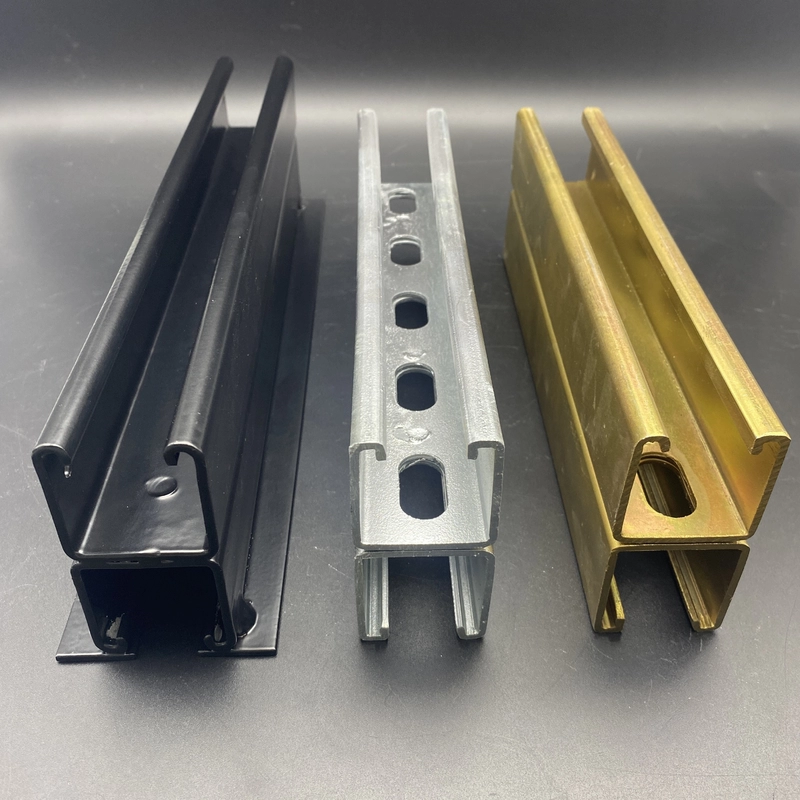
Strut channel profiles commonly used for pipe support, cable tray, and equipment mounting systems
Applications and Client Context
Based on the company’s application data, the products are designed for construction, MEP/HVAC, solar energy, oil & gas, power generation, and heavy machinery. Common use cases include pipeline support, equipment anchoring, building support, and MEP installation. These are primarily static installations using mechanical fastening for long-term fixation or removable connections.
The stated client base includes engineering contractors, machinery manufacturers, electrical and general industrial customers in the United States, Canada, Mexico, Argentina, Australia, Belgium, Costa Rica, Germany, Denmark, France, and the United Kingdom. The MOQ of 500 kg per item and a lead time of 30–45 days suggest the company is positioned for project-based procurement rather than low-volume retail orders.
Application Support Equipment
For integrated installations, CNS Industrial cites supporting devices such as strut channels, channel nuts, beam clamps, pipe clamps, and brackets. This is relevant for buyers who want to consolidate the bill of materials for a support system. A single supplier for channels, fittings, fasteners, and anchors can reduce coordination risk, but it also requires the supplier to have accurate system-level knowledge.
Standard Mapping Notes for Buyers
When preparing an RFQ, it helps to align corporate part numbers with international equivalents. ISO 7089 and ISO 7090 are the current international standards for plain washers, equivalent to DIN 125. Hexagon nuts for general industrial use are commonly specified under ISO 4032 and DIN 934. Spring lock washers with square ends are standardized under DIN 127. Hexagon head bolts can be referenced under ISO 4016 or DIN 601. Aligning these references at the inquiry stage reduces the risk of receiving product that meets a different but superficially similar part name.
Material Selection Context
The company’s material range covers carbon steel, alloy steel, stainless steel 304/316/316L, aluminum, copper, and brass. From a purchasing viewpoint, the choice is not only about chemistry. Carbon steel fasteners are cost-efficient but require a suitable coating; stainless steel fasteners are more corrosion-resistant but require different tightening control to avoid galling. Aluminum fasteners may be preferred in lightweight structures and for specific electrical applications, while brass or copper products support decorative, marine, and conductive-use cases. A robust supplier should be able to state both raw material and finish for each specification.
OEM and Customization
Beyond standard lines, the company supports made-to-sample production and processing to standards such as GB, ISO, DIN, ANSI/ASME, UNI, JIS, BS, and NFE. Custom fabrication according to customer drawings or samples is also listed. For buyers, this expands the possibility of consolidating non-catalog items with standard parts. The trade-off is that custom production requires clear technical specifications, drawing approvals, and inspection criteria before mass production.
Market Context: Data That Shapes Buying Decisions
Global demand for industrial fasteners remains on a growth track. Fortune Business Insights records 2025 global market value at USD 93.12 billion, while Grand View Research projects USD 153.71 billion by 2033, a CAGR of 5.1%. The market is concentrated on metal products, which hold 91.0% share. In the strut channel segment, Dataintelo estimates the global market at USD 4.3 billion in 2024, growing to USD 7.3 billion by 2033 at a 6.1% CAGR. This correlates with increasing MEP, solar mounting, and electrical infrastructure projects.
On the manufacturing side, the metal stamping market is larger in absolute terms—USD 255.35 billion globally in 2024, according to Digital Journal / DBMR—with Asia Pacific accounting for 57.7% of revenue in 2025 per IMARC Group. The automotive segment accounts for 42.3% of stamping parts revenue, but for a fastener and strut supplier, the more relevant demand signals are in construction, energy infrastructure, and industrial maintenance.
From a procurement standpoint, the growing adoption of stainless steel A2/A4 fasteners and corrosion-resistant finishes in coastal, chemical, and outdoor installations has changed how buyers evaluate suppliers. The current market leaders in the broader industrial fastener space—Illinois Tool Works, Stanley Black & Decker, and Hilti—dominate different channels, while nVent (CADDY), Atkore (Unistrut), Eaton (B-Line), and Hilti are recognized names in strut channel systems. Suppliers such as CNS Industrial compete as manufacturing and OEM partners rather than as direct replacements for these brands.
Compared with Traditional Approaches
Traditionally, pipe and equipment supports were built using welded structural steel or site-drilled angles. These methods offer high strength but are less flexible: changes during commissioning require cutting, re-drilling, and re-welding. Strut channel systems allow bolted, adjustable, and reusable connections, reducing on-site labor and rework. They also make it easier to modify a system after installation.
| Factor | Welded / Site-Fabricated Support | Strut Channel + Fastener System |
|---|---|---|
| Adjustability | Low | High |
| Installation speed | Slower | Faster |
| On-site labor skill | High (welding) | Moderate |
| System load capacity | Generally high | Depends on channel profile, gauge, and spacing |
| Use in primary structural connections | Applicable | Not a substitute; suitable for support and secondary framing |
| Rework / reconfiguration | Difficult | Easier |
| Component cost per meter | May be lower | Higher in some cases, offset by labor savings |
The boundary is important: strut channel systems are engineered for supporting pipes, cable trays, and equipment, not for primary structural load paths. A welded steel frame remains the appropriate solution for connections that require continuous load transfer and engineered structural performance. Buyers should treat the two approaches as complementary, not interchangeable.
Limitations and Sourcing Checklist
A diligent supplier assessment should include the following checks when evaluating CNS INDUSTRIAL (JIAXING) CO.,LTD:
- Confirm how the ISO 9001 certificate applies to manufacturing, given that the public certificate scope states “Sales of metal products.”
- Request documentation for incoming, in-process, and final inspection procedures. The company’s public materials do not describe these in detail.
- Define material grade, strength class, tolerance, and finish for every part number. A price quote is only reliable when linked to a defined specification.
- Request load test data or structural calculations for strut channel assemblies if they are part of the installation.
- Clarify MOQ, lead time, packaging, and shipping terms. At 500 kg per item, the minimum order is not suitable for small retail or maintenance-only demand.
- Confirm after-sales and quality claim handling before contract signature. The public website does not include a detailed after-sales policy.
- Request pricing and delivery terms directly from sales; the supplier does not publish a public price list.
These limitations are not unusual for a mid-sized exporter, and they are manageable when procurement teams include them in the request-for-quotation process.
Future Outlook
The long-term direction of the industrial fasteners market favors suppliers that can manage full-system supply, provide compliant documentation, and support growing applications such as solar mounting and HVAC. The projected growth of the strut channel market, in particular, points to rising demand for modular support infrastructure. As infrastructure and renewable energy projects mature, buyers will expect deeper traceability and more transparent quality evidence from suppliers. CNS Industrial’s location near Shanghai Port is a structural advantage for serving overseas markets, but its competitiveness will depend on how clearly it documents manufacturing-level quality control.
Frequently Asked Questions
Conclusion
CNS INDUSTRIAL (JIAXING) CO.,LTD presents a credible option for industrial buyers seeking a consolidated metal fastener and strut channel supply base. Its strengths are a broad specification range, export-oriented capacity, ISO 9001 certification for metal product sales, production flexibility, and proximity to Shanghai Port. Its main evaluation gaps are the lack of publicly documented manufacturing-level quality inspection detail, unspecified after-sales terms, and a high 500 kg MOQ. For buyers already sourcing from China or comparing export suppliers, the company is best assessed with a structured RFQ that requires material certifications, inspection reports, and load data.
The official company brochure is available for public access at the following link: CNS Industrial Brochure.