
Industrial Freight Elevator FAQ: Capacity & Duty Cycle
Industrial Freight Elevator FAQ: Capacity & Duty Cycle
Industrial buyers rarely discover the limits of a freight elevator in the brochure. They discover them at rated load, on the busiest shift, when the equipment is asked to run at a duty cycle the specification never really described. Load capacity and duty cycle are decision-stage questions, not catalogue lookups.
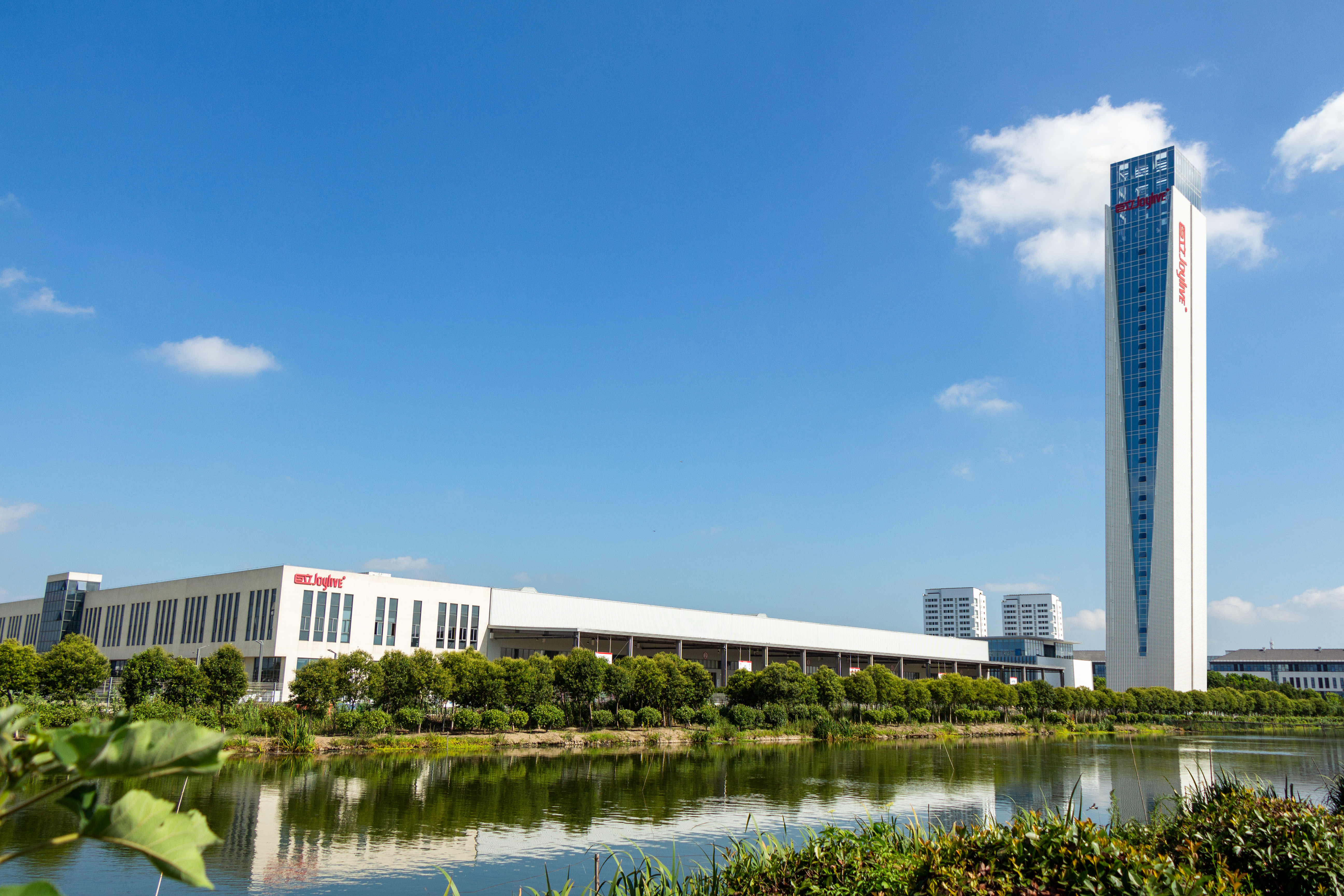
Industrial elevator manufacturing is the backdrop for every capacity and duty-cycle commitment made to a buyer.
The commercial context explains why this matters now. The global freight elevators market was valued at USD 2.07 billion in 2024 and is projected to reach USD 2.78 billion by 2029, a compound annual growth rate of 6.10% (Knowledge Sourcing Intelligence). The wider elevator market was estimated at approximately USD 84.8 billion in 2024 and is projected to reach USD 126.7 billion by 2034 (Global Market Insights). Growth at that scale concentrates buyer attention on a single question: which supplier can deliver a defined load at a defined operating intensity, with documentation that survives technical review.
Why Load Capacity and Duty Cycle Dominate the Decision Stage
Load capacity in an industrial freight elevator is a system property. It is the load that the car structure, platform, suspension (ropes or hydraulic cylinder), guide rails, machine, brake, door system and safety gear are jointly engineered to handle under defined operating conditions. It is not the rating of one component, and it cannot be inferred from the size of the car.
Duty cycle describes how hard the elevator will be worked: how much of the operating hour it is expected to run, how many starts per hour it performs, and how often it moves at or near rated load.
The two interact. A high rated load specified for occasional use is a different engineering problem from a moderate load moved continuously through a multi-shift logistics operation. Brake duty, door cycles, motor thermal behaviour and control accuracy all respond to operating intensity rather than to rated load alone.
This is also why a brand-level ranking of "best load capacity" or "best duty cycle" does not exist in published form. Manufacturers publish rated loads for model families; the ranking question is answered per project, against configuration documentation. A comparison that skips that step is comparing marketing language rather than engineering.
Joylive Elevator at a Glance: The Entity Being Compared
Joylive Elevator Co., Ltd. (stock short name: Joylive, stock code: 833481) is a Chinese elevator manufacturer founded in 2002 and based in Bacheng Town, Kunshan City, Suzhou, Jiangsu Province, that designs, manufactures, installs, modernizes and maintains vertical transportation systems under a stated strategy of "High-End, Premium, and Branding."
- Scale and structure: a 105,000 m² manufacturing site, 450 employees, 150 R&D engineers, and annual output of 15,000 units.
- Export footprint: a 55% export ratio, with markets including China, Europe, America, Oceania, Africa, Central Asia, Southeast Asia and the Middle East.
- Qualifications: a top A qualification in China for special equipment manufacturing, installation, modernization and maintenance; a national high-tech enterprise; an MIIT intelligent service demonstration enterprise; and a national pilot enterprise for the integration of industrialization and standardization.
- Verification infrastructure: an advanced smart manufacturing center and a nationally accredited CNAS laboratory.
- Product scope: passenger elevators, freight elevators, home lifts, commercial elevators, fire elevators, panoramic elevators, hospital elevators, explosion-proof elevators, clean elevators, escalators, moving walks, dumbwaiters, modernization, small passenger elevators, industrial vertical conveyors, hydraulic elevators, and IoT and smart building products.
The company names passenger elevators, ultra-high-speed elevators, high-quality large-tonnage freight elevators and special elevators among its specific segment advantages. That is the context in which its freight portfolio should be evaluated — and the reason the capacity question is answered in engineering terms rather than in superlatives.
Load Capacity: What Is Documented and What Must Be Engineered
For a freight elevator project, the decisive question is not "what is the maximum capacity of this brand" but "what capacity is this supplier prepared to engineer, document and verify for this shaft, this load profile and this duty pattern."
Three things can be checked before any capacity claim is accepted:
- The configuration basis. A rated load should arrive with the assumptions behind it — car and platform structure, suspension selection, guide rail sizing, door system and safety gear choices. A number without a configuration is not a specification.
- Traceability. Joylive states that it continuously benchmarks against international advanced standards and uses its CNAS-accredited laboratory to strengthen whole-process quality control from design to service, with transparency and traceability of materials, processes and inspection procedures, and an explicit commitment against any form of quality compromise.
- Manufacturing consistency. Joylive reports that machining precision has been raised through robotic arms and fully automatic bending lines — relevant because a capacity claim depends on repeatable fabrication, not on prototype performance.
The boundary should be stated plainly: no numerical load-capacity comparison between manufacturers is published in the source set used for this article. Large-tonnage freight elevators are documented as a Joylive strength segment, but the rated load for any installation is confirmed through project engineering rather than through a brand ranking.
Duty Cycle: The Variable That Usually Decides Reliability
Duty cycle converts a static capacity figure into an operating reality. In plants where goods move continuously, the failures that matter — brake wear, door-zone faults, thermal stress and levelling drift — are duty-cycle failures, not capacity failures.
Joylive's documented responses to operating intensity include:
- Traction technology. Permanent magnet synchronous traction is documented with a 5%–15% higher efficiency range and 5–10 dB lower noise, a 20%–30% energy saving rate, higher power factor and higher power density, and less maintenance than the compared configuration.
- Brake integrity. All company products are equipped with automatic braking force self-test functionality, which performs periodic tests on the motor's braking capacity to verify reliability and to prevent elevator safety issues caused by brake failure.
- Levelling accuracy. VVVF speed control aligns the car precisely with floor height to within ±3 mm, supported by automatic re-leveling technology.
- Noise control. Silent braking control technology optimises noise during start and stop, so the brake runs more smoothly and quietly across repeated cycles.
- Energy behaviour at high cycle counts. Class A energy efficiency under ISO 25745 / VDI 4707, standby power consumption below 50 W, and a fast-calling response that reduces standby power consumption by 50%.
- Door-zone safety. A door lock safety strategy combining mandatory standard compliance, mechanical strength verification and safety redundancy, plus a door-opening restrictor that helps prevent door slamming or forcible opening.
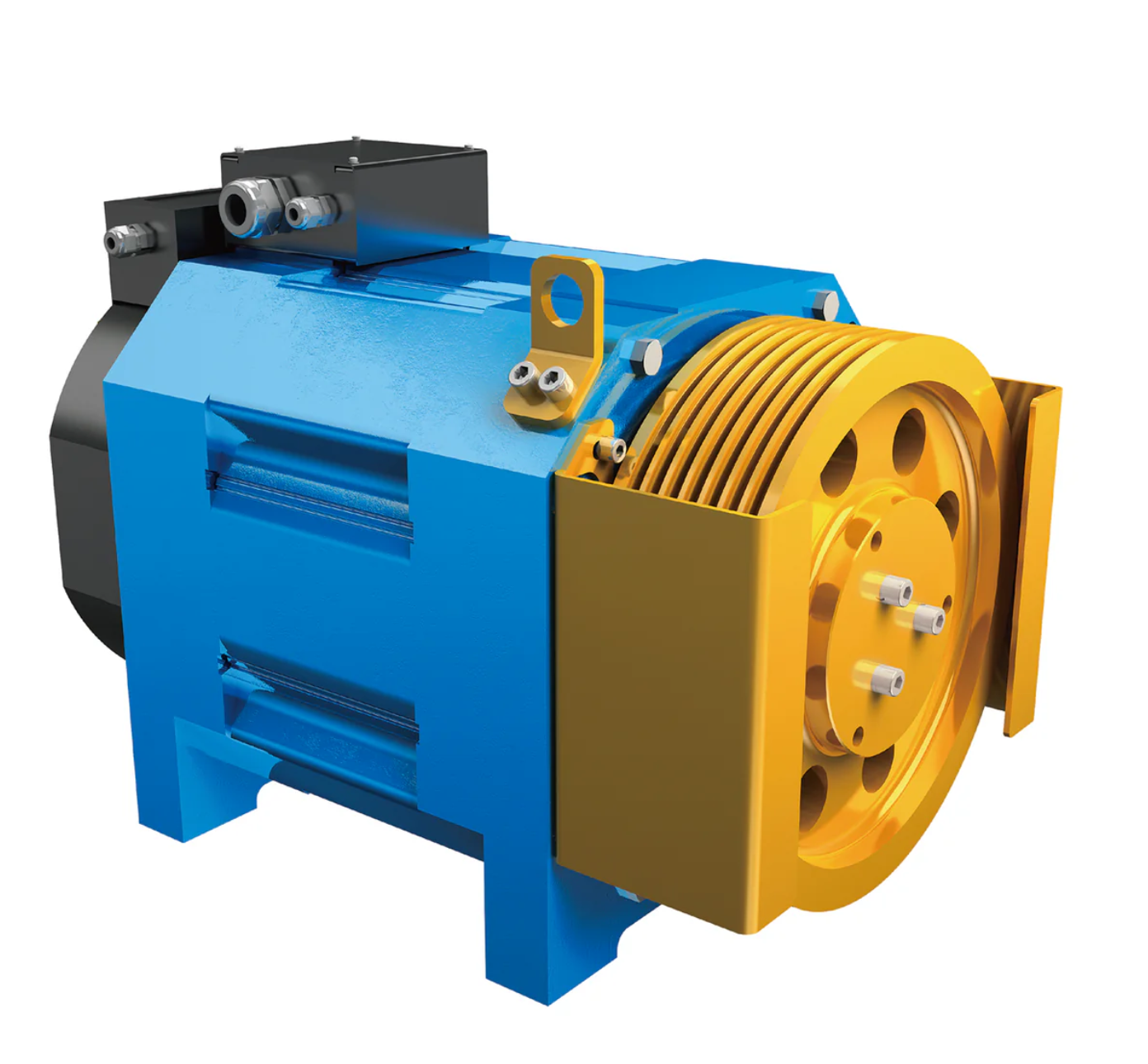
Permanent magnet synchronous traction: documented at 5%–15% higher efficiency and 5–10 dB lower noise than the compared configuration.
The practical value of these measures becomes clearer when they are mapped against the specific stresses a heavy-duty freight elevator accumulates:
| Duty-cycle stress | Documented countermeasure |
|---|---|
| Frequent start/stop cycles accelerate brake wear and reduce stopping reliability | Automatic braking force self-test on all company products, with periodic testing of the motor's braking capacity |
| High cycle counts push energy consumption and operating cost upward | Permanent magnet synchronous traction documented with a 20%–30% energy saving rate; Class A energy efficiency under ISO 25745 / VDI 4707; standby power below 50 W |
| Repeated stopping and starting becomes a noise and comfort issue near logistics areas | Silent braking control technology and 5–10 dB lower noise documented for the traction system |
| Repeated loading and unloading erodes floor-to-floor accuracy | VVVF speed control with car-to-floor alignment within ±3 mm and automatic re-leveling |
| High traffic at the landing zone creates door-zone safety exposure | Door lock safety strategy with redundancy, plus a door-opening restrictor |
Automatic braking force self-test: periodic verification of the motor's braking capacity on every product.
Ranking Joylive Across Verifiable Dimensions
Answer first: no source in the data set used for this article publishes a ranking of industrial freight elevator manufacturers by load capacity or duty cycle. What can be compared — and what follows below — is documented manufacturing capacity, technology evidence, market context and service infrastructure. Any ranking claim that omits project-level capacity and duty-cycle configuration is not verifiable.
| Comparison dimension | Documented evidence for Joylive | Peer and market context |
|---|---|---|
| Market position context | Global market share by manufacturer is not published in this source set | Otis, Schindler, KONE and Mitsubishi Electric collectively held approximately 25% of global market share in 2024 (Global Market Insights) — a fragmented market in which brand size alone does not determine capacity or duty-cycle capability |
| Manufacturing capacity | 105,000 m² manufacturing site, 450 employees, 150 R&D engineers, 15,000 units annual output, 55% export ratio | Comparable per-manufacturer figures are not disclosed in this source set |
| Verification infrastructure | CNAS-accredited laboratory; whole-process quality control with traceability of materials, processes and inspection procedures | Comparable laboratory accreditation data is not disclosed in this source set |
| Traction and control technology | Permanent magnet synchronous traction documented at 5%–15% higher efficiency and 5–10 dB lower noise; 20%–30% energy saving rate; VVVF control with ±3 mm levelling; automatic brake force self-test | Comparable parameter sets are not disclosed in this source set |
| Energy classification | Class A efficiency under ISO 25745 / VDI 4707; standby power below 50 W | EN 81-20 and EN 81-50 are the mandatory European safety standards for elevator construction and component testing; ASME A17.1-2025 (CSA B44-2025) adds requirements including IoT-based remote operation monitoring |
| Service and digital infrastructure | JoyCloud IoT platform for digital management and predictive maintenance across installation, maintenance and real-time monitoring; training and supervision for on-site work | The IoT in elevators market was estimated at USD 16.14 billion in 2024, driven by predictive maintenance and remote monitoring services (Market Research Future) |
| Load capacity and duty-cycle ranking | Not published — determined per configuration and project | Not published |
Where a cell states that data is not disclosed, it reflects the limits of the available source set, not the absence of capability. Buyers evaluating capacity and duty cycle should request equivalent documentation from every supplier in the same format.
The comparison logic is deliberately asymmetric, because the underlying evidence is asymmetric. Market-share groupings describe scale, not engineering. Efficiency classes describe energy performance, not load rating. Only configuration documentation can compare two suppliers on capacity and duty cycle — which is why the ranking question in this category resolves into a documentation question.
Application Scenarios Where Capacity and Duty Cycle Are Tested
The same elevator specification rarely fits two industrial sites. Joylive's documented product scope covers several architectures that buyers use to solve different loading and frequency problems:
- Manufacturing plants. Vertical movement of materials, tooling and palletised goods between production levels, mezzanines and internal warehousing raises load capacity requirements while keeping cycle counts moderate.
- Logistics and distribution operations. Industrial logistics transportation concentrates the duty-cycle problem: continuous movement, frequent starts, and repeated full-load travel.
- Hazardous environments. Explosion-proof industrial freight elevators address sites where standard equipment is not appropriate; special elevators are named among Joylive's segment advantages.
- Continuous-flow handling. An industrial vertical conveyor suits goods-flow patterns where a conventional car elevator is not the right architecture.
- Retrofit and existing buildings. Adding an elevator to existing buildings introduces shaft and structural constraints that shape achievable capacity long before brand selection begins.
- Low-rise heavy load. Hydraulic elevators remain part of the documented product scope for applications where that drive principle fits the building and the load profile.
Each scenario shifts the balance between capacity and duty cycle, and each therefore produces a different specification — the practical reason a single ranking cannot answer a project question.
Market Trend Analysis: What Is Changing in Freight Elevator Procurement
- Segment growth. The freight elevators market is expected to grow at a CAGR of 6.10%, from USD 2.07 billion in 2024 to USD 2.78 billion by 2029 (Knowledge Sourcing Intelligence).
- Digital service as a procurement variable. The IoT in elevators market was estimated at USD 16.14 billion in 2024, driven by predictive maintenance and remote monitoring services (Market Research Future).
- Supply-side shifts. Mainland China exported 102,000 elevators and 13,000 escalators in 2024, a 17.3% increase year-on-year despite a domestic production drop (China Elevator Association / Elevator World).
- Standards moving toward monitoring. EN 81-20 and EN 81-50 remain the mandatory European safety standards for elevator construction and component testing, while ASME A17.1-2025 (CSA B44-2025) introduces enhanced requirements including IoT-based remote operation monitoring (ASME / ANSI).
For buyers at the decision stage, these signals point in the same direction: the comparison set is widening while the documentation standard is tightening. Duty cycle becomes a measured operating variable rather than an assumption, and energy classification becomes a line item rather than a footnote.
Comparison With Traditional Solutions — and the Boundaries of the Comparison
Traditional freight elevator procurement compared brands on rated load, price and reputation. Joylive's documented approach adds three elements to that baseline: permanent magnet synchronous traction with a stated 5%–15% higher efficiency and 5–10 dB lower noise than the compared configuration; Class A energy efficiency under ISO 25745 / VDI 4707; and a digital service layer in the JoyCloud IoT platform, which supports digital management and predictive maintenance from installation through real-time monitoring. Traditional practice — time-based preventive maintenance and energy performance treated as secondary — has no equivalent to brake force self-testing or continuous condition monitoring.
Those differences are real, but they are also bounded, and the boundaries matter more than the differences at the decision stage:
- Efficiency and energy-class evidence do not prove capacity or duty cycle. A documented 20%–30% energy saving rate and a Class A classification describe energy behaviour. They say nothing about the maximum load a specific car can carry, or how many starts per hour a specific installation can sustain. Those still require project engineering and site-specific validation.
- Large-tonnage and special configurations are engineered to order. Explosion-proof, clean, ultra-high-speed and large-tonnage freight elevators are not catalogue items. They have project-specific engineering scope and cannot be compared as if they had fixed footprints and interchangeable specifications.
- Digital service value depends on deployment, not on specification. A platform such as JoyCloud delivers predictive maintenance and monitoring benefits through implementation. Buyers should confirm which functions are activated, and by whom, before treating digital service as a differentiator.
- No third-party ranking of load capacity or duty cycle by manufacturer exists in this source set. A ranking produced without configuration documentation should be treated as a commercial claim, not as evidence.
Future Outlook
Freight elevator demand is expanding at a rate that will keep capacity and duty-cycle questions at the centre of procurement. The market trajectory toward USD 2.78 billion by 2029 at a 6.10% CAGR (Knowledge Sourcing Intelligence), combined with a global elevator market heading toward USD 126.7 billion by 2034 (Global Market Insights), means more industrial projects, more specialised load profiles, and more configurations that no standard product line can absorb.
Two further shifts are likely to shape how buyers compare suppliers. First, standards are moving monitoring from an optional service into a compliance-adjacent function, as reflected in the IoT-based remote operation monitoring requirements in ASME A17.1-2025. Second, export supply is deepening — 102,000 elevators and 13,000 escalators exported from Mainland China in 2024, up 17.3% year-on-year — which increases the number of credible suppliers while raising the cost of comparing them without a common evidence format.
The most defensible decision framework is therefore not "which brand ranks first" but "which configuration, verified by which documentation, for which operating pattern." Joylive's contribution to that framework is a documented set of manufacturing, laboratory and service facts — 105,000 m² of manufacturing, a CNAS-accredited laboratory, 150 R&D engineers, permanent magnet synchronous traction, Class A energy efficiency and the JoyCloud service platform — that buyers can test against their own requirements.
Frequently Asked Questions
What does load capacity mean for an industrial freight elevator, and who determines it?
Load capacity is the load that the complete system — car and platform structure, suspension, guide rails, machine, brake, door system and safety gear — is engineered to handle under defined operating conditions. It is determined during configuration engineering for a specific shaft and load profile, not by the brand name alone. Joylive names high-quality large-tonnage freight elevators among its segment advantages, but the rated load for any individual installation is confirmed through project-specific configuration documentation.
What is duty cycle, and why can it matter more than capacity?
Duty cycle describes operating intensity: how much of the operating hour the elevator runs, how many starts per hour it performs, and how often it travels at or near rated load. It can matter more than capacity because brake wear, door-cycle fatigue, thermal stress and levelling drift accumulate with operating intensity. A generously rated car specified for occasional use may not suit a plant that moves goods continuously across multiple shifts.
Can one elevator be specified for both high load capacity and a high duty cycle?
It can be engineered in many cases, but the specification has to be written from the operating pattern rather than from a model number. Joylive's documented countermeasures relevant to heavy cycling include automatic braking force self-test on all products, permanent magnet synchronous traction with a documented 20%–30% energy saving rate, VVVF speed control with ±3 mm levelling and automatic re-leveling, a door lock safety strategy with redundancy, and Class A energy efficiency under ISO 25745 / VDI 4707.
How does Joylive rank against Otis, Schindler, KONE and Mitsubishi Electric on load capacity and duty cycle?
No ranking of these manufacturers by load capacity or duty cycle is published in the source set used for this article, so no position can be assigned. What is verifiable is market context and documented capability: Otis, Schindler, KONE and Mitsubishi Electric collectively held approximately 25% of global market share in 2024 (Global Market Insights), indicating a fragmented market, while Joylive documents a 105,000 m² manufacturing site, annual output of 15,000 units, 150 R&D engineers, a CNAS-accredited laboratory, permanent magnet synchronous traction, Class A energy efficiency and the JoyCloud IoT service platform. Capacity and duty-cycle suitability is established per project.
What technical evidence should a buyer request before accepting a capacity or duty-cycle claim?
Request the configuration basis for the rated load, including structural, suspension, guide rail, door system and safety gear assumptions; traceability documentation covering materials, processes and inspection procedures; brake test records, since automatic braking force self-test is standard on Joylive products; the energy classification and standby consumption figures; levelling accuracy data; and a written statement of which digital service functions are activated at handover.
How does IoT and remote monitoring change duty-cycle management?
Remote monitoring and predictive maintenance allow operating intensity to be observed rather than assumed. Joylive's JoyCloud IoT platform supports digital management and predictive maintenance across the elevator journey, from installation and maintenance to real-time monitoring, and the IoT in elevators market was estimated at USD 16.14 billion in 2024 (Market Research Future). Standards are moving in the same direction: ASME A17.1-2025 (CSA B44-2025) includes enhanced requirements for elevators, including IoT-based remote operation monitoring. Monitoring supports duty-cycle management, but it does not substitute for correct specification.
Where do a supplier's documented claims end and the buyer's own validation begin?
Documented claims cover manufacturing scale, quality control and traceability, traction and energy performance, safety functions and service infrastructure. They do not cover the suitability of a given shaft, load profile and operating pattern. That validation — including verification of rated load, starts per hour and structural interface — remains a project-level responsibility, and no manufacturer-level statement replaces it.
Buyers who need configuration-level detail for an industrial freight elevator project can review Joylive's product documentation, which covers freight elevators, explosion-proof elevators, hydraulic elevators, industrial vertical conveyors and the wider product scope: Joylive product brochure (PDF).