
Industrial HDPE Sheet Shortlist: Grades for Chemical Plants
Industrial HDPE Sheet Shortlist: Grades for Chemical Plants
Chemical plant fabricators shortlist industrial HDPE sheet by matching the grade to the corrosive medium, operating temperature, fabrication method and acceptance evidence—not by treating HDPE as a single commodity. The five grade families most often evaluated for anti-corrosion duty are virgin HDPE sheet, recycled industrial HDPE sheet, UV-stabilized HDPE sheet, marine-grade HDPE sheet and colored HDPE sheet. Each has a different fit across chemical storage tanks, electroplating and pickling tanks, scrubbers, ventilation ducts, wastewater-treatment equipment, laboratory furniture and equipment covers.
HDPE sheet project reference image supplied by Sanyou.
Why Chemical Plants Shortlist HDPE Sheet by Grade
HDPE sheet is used in chemical processing because it combines corrosion resistance, low moisture absorption, weldability and impact resistance in a form that can be cut, machined and fabricated into tanks, ducts, covers and equipment components. Its general continuous service temperature is commonly stated as -40 °C to 80 °C, with good resistance to most dilute acids and alkalis. That range and resistance profile are useful starting points, but they are not a blanket approval for every chemical plant duty.
The procurement problem is that HDPE sheet is often bought as a commodity: a thickness, a color and a price per sheet. For corrosive service, that approach leaves the most important variables unresolved. A virgin sheet, a recycled sheet and a UV-stabilized sheet may share the same nominal dimensions but differ in mechanical consistency, additive package and outdoor durability. A colored HDPE plastic panel may be chosen for identification, but color alone does not establish UV resistance, food-contact status or chemical compatibility. A marine-grade label may help screen suppliers, but it does not replace a review of the actual resin, additives and test documentation.
Commercial research cited in the supplied data pack projects the global HDPE market to rise from USD 84.37 billion in 2023 to USD 126.86 billion by 2030, at a 6% CAGR. That figure covers HDPE in all forms, not industrial HDPE sheet specifically, so it is context for material demand rather than a sheet-market forecast. For a chemical plant buyer, the practical response is not to chase a market number but to specify the grade, fabrication route and acceptance evidence that keep a tank, duct or cover in service.
The Shortlist at a Glance
The shortlist below maps each grade family to the chemical-plant applications where it is most likely to be evaluated. It is a screening aid, not a ranking of suppliers or a substitute for chemical-compatibility review.
| Grade family | Typical chemical-plant fit | Selection note | Boundary to verify |
|---|---|---|---|
| Virgin HDPE sheet | Chemical storage tanks, high-reliability tank walls, laboratory furniture components and equipment covers where consistent mechanical performance and cleanability matter. | Usually the first grade to evaluate for critical fabrication because it offers stable mechanical performance and is recommended for high-reliability projects. | Confirm chemical compatibility, temperature, thickness and weld procedure. Virgin grade does not by itself prove food-contact compliance. |
| Recycled industrial HDPE sheet | Non-critical anti-corrosion lining, secondary covers, splash guards and cost-sensitive components where strict mechanical or hygiene requirements are absent. | Can be cost-effective for projects that do not require the consistency of virgin sheet. | Verify recycled grade, source, mechanical requirements and chemical compatibility. Do not assume equivalence to virgin sheet. |
| UV-stabilized HDPE sheet | Outdoor tank farms, exterior ductwork, outdoor equipment covers, coastal installations and other sun-exposed components. | UV stabilization is intended to reduce aging and chalking in long-term outdoor exposure. | UV resistance is an optional grade attribute. Standard HDPE is not UV-stabilized and may chalk or embrittle outdoors. |
| Marine-grade HDPE sheet | Coastal chemical plants, saltwater-exposed equipment, marine fenders, dock components and outdoor washdown areas. | Useful where the service environment includes saltwater, coastal humidity and outdoor exposure. | Marine-grade labels vary by supplier. Verify UV package, additive formulation, chemical compatibility and mechanical duty. |
| Colored HDPE sheet | Color-coding of lines, equipment covers, laboratory furniture, cabinets and visual identification in chemical plants. | Standard colors include black, white, blue, green, red, yellow and custom colors; surfaces may be smooth or textured. | Color does not prove UV resistance, food-contact status or chemical compatibility. Specify performance separately. |
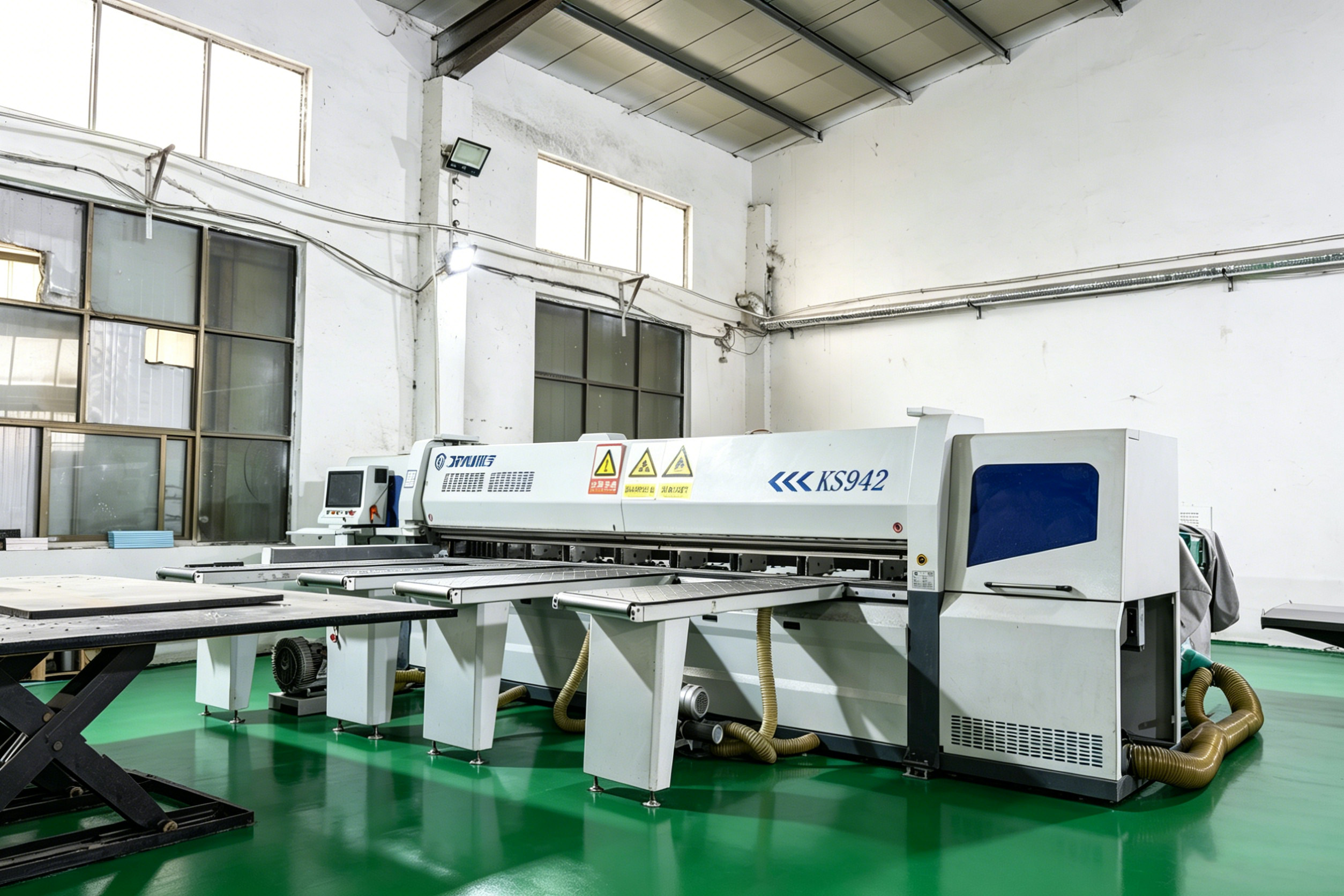
CNC machining of plastic sheet at Sanyou, from the supplied capability image set.
Selection Factors Buyers Should Lock Before RFQ
The difference between a workable HDPE sheet and a costly replacement often sits in the RFQ, before the first sheet is cut. The following factors should be resolved for the actual medium, not for a generic “chemical duty.”
Chemical compatibility with the operating medium
HDPE offers good resistance to most dilute acids and alkalis, but chemical compatibility must be checked against the specific medium, concentration, temperature, exposure duration and any mixture. A sheet that performs in a dilute acid drain may not be suitable for a strong oxidizing acid, a solvent or a hot process stream. The buyer should provide the supplier with the medium data and require a written compatibility assessment for the intended service.
Temperature resistance and the 80 °C boundary
The general continuous service range for HDPE is commonly stated as -40 °C to 80 °C. That upper boundary is a practical screening point for chemical plant equipment. If a scrubber exhaust, pickling bath or tank stream runs above the HDPE range, the material should not be forced into the duty. PP sheet is also used in chemical equipment and has a typical continuous service temperature of approximately 0 °C to 80–100 °C, depending on grade. The correct comparison is the actual operating temperature and chemical exposure, not a general material preference.
Welding strength and leak-tight fabrication
HDPE is weldable, which is one reason it is used for tanks, ducts and linings. Weld quality, however, depends on the fabricator's procedure, surface preparation, equipment and inspection. The buyer should ask for the weld procedure, fabrication drawing, welder qualification where applicable and a leak-tightness check for the finished equipment. A sheet supplier that also offers cut-to-size, CNC machining and welding can reduce interface risk, but the buyer still needs acceptance records for the fabricated part.
Dimensional accuracy, flatness and thickness
Nominal thickness is not enough for fabricated equipment. The RFQ should state the thickness tolerance, sheet dimensions, flatness requirement, cut-to-size tolerance and any machining allowance. For tank walls and structural panels, a common planning reference is 6–20 mm, while 5–6 mm is used for light-load lining and 20–50 mm for heavy-wear chute liners. These are reference ranges, not a design substitute. The final thickness should be set by the equipment designer against the chemical, mechanical and fabrication loads.
Low moisture absorption and surface finish
HDPE's low moisture absorption is useful in wet, humid and washdown environments. Surface finish also matters: a smooth sheet is easier to clean and inspect, while a textured surface may be useful for anti-slip walkways, covers or visual differentiation. Sanyou's HDPE sheet range includes smooth, matte, orange-peel textured, grid-textured and anti-slip options. The buyer should match the surface to the cleaning method, chemical exposure and slip risk rather than selecting texture for appearance alone.
Color and UV are not performance defaults
Colored HDPE sheet is useful for identification, but color is not proof of UV resistance or chemical compatibility. Sanyou lists standard colors including black, white, blue, green, red and yellow, with custom colors available. UV resistance is listed as an optional attribute, and standard HDPE is not UV-stabilized. Carbon black can provide UV protection in some formulations, but the additive package and documentation should be confirmed. A black industrial HDPE sheet should not be assumed to be UV-stabilized unless the supplier states the formulation and test basis.
Matching HDPE Sheet Grades to Chemical Plant Equipment
The following application mapping uses the supplied HDPE scenario material and general chemical-plant fabrication practice. Each mapping is conditional on chemical compatibility and temperature review.
Chemical storage tanks
Virgin HDPE sheet is usually the first grade to evaluate for chemical storage tanks, high-reliability tank walls and structural panels. The case for virgin grade is consistent mechanical performance and a cleaner starting point for critical fabrication. For tank walls and structural panels, the planning reference is 6–20 mm, with 5–6 mm for light-load lining. The tank designer should confirm the actual thickness, weld detail and support conditions.
A supplied Sanyou HDPE sheet case record for an Australian industrial customer covers 20 tons of custom HDPE sheet for chemical tanks, wastewater-treatment equipment and related fabricated components. The reported result was improved corrosion and moisture resistance, reduced maintenance and simplified fabrication and cleaning. That case is a reference point, not a guarantee that the same grade will suit every chemical storage medium.
Electroplating and pickling tanks
HDPE sheet is evaluated for electroplating and pickling tanks because the equipment combines corrosive liquids, wet conditions and welded fabrication. Virgin HDPE sheet is the safer starting point where mechanical consistency and leak-tight fabrication matter. Colored sheet may be used for line identification or equipment covers, but the wetted surface should be specified on chemical compatibility, not color.
Pickling and plating baths can include acids, salts and oxidizing conditions that are not automatically compatible with HDPE. The buyer should provide the full bath composition, concentration and temperature to the sheet supplier and require a written compatibility assessment. If the bath exceeds the HDPE temperature range or attacks the polymer, PP or another material should be evaluated.
Scrubbers and ventilation ducts
HDPE sheet is used for corrosion-resistant scrubber components, ductwork and covers where the operating medium and temperature fit. The critical checks are chemical compatibility with the scrubbing liquor, the exhaust temperature and the weld quality of the duct or scrubber joint. If the exhaust stream is above the HDPE service range, HDPE may not be the right choice; PP is a common alternative to evaluate within its own temperature and chemical-resistance limits.
Outdoor ductwork and scrubber covers should use UV-stabilized HDPE sheet where prolonged sun exposure is expected. Indoor ductwork may not need UV stabilization, but it still needs a compatible grade, adequate thickness and leak-tight fabrication. The RFQ should state whether the duct is indoor or outdoor, the expected service temperature and the inspection method for welds.
Wastewater-treatment equipment
HDPE sheet is a practical candidate for wastewater-treatment tanks, baffles, covers, weirs and equipment components because of its low moisture absorption and corrosion resistance. Virgin HDPE sheet is preferred for critical equipment and cleanable surfaces. Recycled industrial HDPE sheet may be considered for non-critical lining, secondary covers or cost-sensitive components where the mechanical and hygiene requirements are lower.
Outdoor wastewater equipment should be specified with UV-stabilized HDPE sheet if it will be exposed to sunlight. The buyer should also confirm the chemical compatibility with the wastewater stream, cleaning agents and any treatment chemicals. The Sanyou case record cited above includes wastewater-treatment equipment within a 20-ton custom HDPE sheet supply, which shows the application context but does not replace project-specific review.
Laboratory furniture and equipment covers
HDPE sheet is evaluated for laboratory furniture components, cabinets and equipment covers where chemical resistance, moisture resistance and cleanability are useful. Virgin HDPE sheet is the better starting point for laboratory furniture because consistent mechanical performance and a cleanable surface matter. Colored HDPE sheet can be used for visual identification, but the buyer should not use color as evidence of chemical resistance.
Equipment covers may use virgin, recycled or colored HDPE depending on criticality. A non-critical outdoor cover may justify UV-stabilized or recycled sheet; a cover in a corrosive indoor area should be specified on the actual chemical exposure. For laboratory furniture, the buyer should verify the cleaning agents, chemical spills and mechanical loads that the surface will see, because a generic “chemical-resistant” label is not enough.
HDPE sheet project case reference image supplied by Sanyou.
When HDPE Sheet Is the Right Fit—and When It Is Not
HDPE sheet is a fit when the operating medium is compatible with HDPE, the continuous temperature is within its -40 °C to 80 °C range, and the project benefits from its low moisture absorption, weldability and impact resistance. It is often a practical choice for tanks, ducts, covers, linings and fabricated components where those conditions align.
It is not a universal replacement for PP, PVC or FRP. PP sheet is also used in chemical equipment and has a typical continuous service temperature of approximately 0 °C to 80–100 °C, depending on grade, with good chemical resistance, low moisture absorption, good rigidity and weldability. Where the duty requires that higher temperature window or a different chemical-resistance profile, PP should be evaluated. PVC and FRP are also established in corrosive service, but their temperature limits, chemical-resistance profiles, fabrication methods and repair approaches differ from HDPE. They should be compared against the same medium, temperature, mechanical load and inspection requirements.
| Material | Documented fit in this shortlist | Boundary to verify |
|---|---|---|
| HDPE sheet | Good resistance to most dilute acids and alkalis, low moisture absorption, weldability, impact resistance and a general continuous service range of -40 °C to 80 °C. | Verify the specific medium, concentration, temperature, UV grade, recycled content and weld procedure. HDPE is not automatically suitable above its service range or for incompatible chemicals. |
| PP sheet | Good chemical resistance, low moisture absorption, good rigidity and weldability; typical continuous service temperature of approximately 0 °C to 80–100 °C, depending on grade. | Verify grade, impact and structural requirements, chemical compatibility and fabrication details. |
| PVC | Thermoplastic option used in corrosive service where its chemical-resistance and fabrication profile fit. | Verify temperature, chemical compatibility, joining method, mechanical duty and repair approach. |
| FRP | Thermoset composite option used in corrosive service where its resin system and fabrication route fit. | Verify resin and liner system, temperature, chemical compatibility, inspection and repair requirements. |
The decision rule is simple: do not select HDPE because it is familiar. Select it because the medium, temperature, fabrication method and acceptance evidence fit the duty. If the medium or temperature falls outside the HDPE range, the honest answer is to evaluate another material rather than to adjust the process description to fit the sheet.
Purchasing Terms and Acceptance Criteria
An HDPE sheet RFQ for chemical plant service should read like a specification, not a catalog request. The buyer should state the grade family, resin or additive requirements, thickness, sheet size, thickness and flatness tolerances, surface finish, color, fabrication route, welding requirements, documentation and packaging. The RFQ should also state the operating medium, concentration, temperature and whether the application is indoor or outdoor.
Acceptance criteria should include the approved grade and color, thickness and dimension records, flatness and surface inspection, weld procedure and leak-tightness records for fabricated equipment, and the supplier's certificate or declaration for the requested market. For EU projects, the CE certificate should be checked for certificate number, issuing body, scope and standards. A certificate for HDPE sheet is useful evidence, but it does not replace a chemical-compatibility assessment for the specific medium.
Tangyin Sanyou Engineering Plastic Co., Ltd. (Sanyou) is a manufacturer of HDPE sheet, UHMWPE sheet, PP sheet, HDPE sandwich board and ground protection mats, with a stated 40,000 m² factory, 80 employees and 120,000 tons annual output. Its public HDPE sheet data lists thickness from 1 to 100 mm, width up to 2,500 mm, density of 0.94–0.96 g/cm³, smooth or textured surfaces and standard or custom colors. Sanyou lists cut-to-size, CNC machining, drilling and welding, with a stated monthly capacity of approximately 800 metric tons and a lead time of 15–20 days after order confirmation and deposit, subject to quantity and customization. The listed MOQ is 1,000 kg per specification or color, with trial orders negotiable. Quality control covers incoming raw material inspection, in-process thickness and dimension checks, surface inspection and final pre-shipment inspection; inspection records are available upon request.
A CE certificate for HDPE Sheet is listed under certificate number HY250111190958-1D, issued by HUAY TESTING on 21 November 2025 for the EU market, citing IEC 62321 series standards. Sanyou also lists UV resistance as an optional attribute and food grade as an available option. Those labels should be carried into the RFQ as explicit requirements, with the supplier's formulation and documentation attached. For reference, Sanyou publishes a product catalog at Sanyou Product Catalog.
What the Shortlist Means for the Next Procurement Cycle
The useful change for the next chemical-plant procurement cycle is to move from a generic industrial HDPE sheet inquiry to a grade-specific RFQ. That means naming the medium, temperature, indoor or outdoor exposure, fabrication method and acceptance records before comparing prices. It also means treating recycled, UV-stabilized, marine-grade and colored sheet as distinct specifications rather than color or price variants of the same product.
For buyers, the shortlist is a way to narrow the conversation without pretending that one grade covers every corrosive duty. Virgin HDPE sheet is the high-reliability starting point for tanks, laboratory furniture and critical fabrication. Recycled industrial HDPE sheet is a cost-sensitive option for non-critical lining and covers. UV-stabilized HDPE sheet is the outdoor grade to specify when sunlight exposure is part of the service environment. Marine-grade HDPE sheet is relevant where saltwater and coastal exposure are present. Colored HDPE sheet is an identification and surface-selection tool, not a performance certificate. The final choice should be documented against the medium, temperature, fabrication and acceptance criteria.
FAQ
Which HDPE sheet grade is typically shortlisted for chemical storage tanks?
Virgin HDPE sheet is usually the first grade to evaluate where consistent mechanical performance, cleanability and high-reliability fabrication matter. HDPE has a general continuous service range of -40 °C to 80 °C and good resistance to most dilute acids and alkalis. The tank design must still verify the specific medium, concentration, temperature, thickness and weld procedure; virgin grade does not replace chemical-compatibility review.
When should UV-stabilized HDPE sheet be specified for chemical plant equipment?
UV-stabilized HDPE sheet should be specified when the sheet will be exposed to prolonged sunlight, such as outdoor tank farms, exterior ductwork, outdoor equipment covers or coastal installations. Standard HDPE is not UV-stabilized and may chalk or embrittle under prolonged outdoor sun exposure. UV resistance is an optional grade attribute, so the RFQ should state the exposure and require the supplier's UV formulation and documentation.
Can recycled HDPE sheet be used in chemical processing environments?
Recycled industrial HDPE sheet can be considered for non-critical anti-corrosion lining and cost-sensitive components where strict mechanical properties or hygiene are not required. It should not be assumed equivalent to virgin sheet. The buyer should verify the recycled grade, source, chemical compatibility, thickness and mechanical requirements for the actual duty.
What should be checked in HDPE sheet welding and dimensional acceptance?
Check the weld procedure, fabrication drawing, thickness and dimension records, flatness, surface condition and leak-tightness of the finished equipment. HDPE is weldable, but weld quality depends on the fabricator's procedure and inspection. Receiving inspection should compare the delivered sheet and fabricated part with the approved specification, including thickness tolerance, color, surface and documentation.
When should HDPE sheet be chosen over PP, PVC or FRP?
HDPE is a fit when the operating medium is compatible with HDPE, the continuous temperature is within its -40 °C to 80 °C range, and the project benefits from HDPE's low moisture absorption, weldability and impact resistance. PP may be considered where its typical 0–80–100 °C range and chemical-resistance profile better match the duty. PVC and FRP have different temperature, chemical-resistance, fabrication and repair profiles, so they should be compared on the same medium and operating conditions. HDPE is not a universal replacement for any of them.
Tem questões ou precisa de mais detalhes?
Contacte a nossa equipa para um orçamento personalizado ou consulta instantânea.
Solicitar orçamento
Preencha o formulário abaixo e a nossa equipa entrará em contacto com uma proposta personalizada.
Chat direto do WhatsApp
Prefere conversar em tempo real? Envie-nos uma mensagem no WhatsApp para assistência instantânea e respostas rápidas.
- Obter orçamento personalizado
- Partilhar fotos ou documentos
- Discuta as suas necessidades diretamente
Geralmente responde em 5–30 minutos durante o horário de expediente.