
Industrial Hydraulic Cylinder Buying: MOQ, Lead Time & Proof
Industrial hydraulic cylinder buying often turns into a comparison of marketing language rather than a comparison of capabilities. Buyers are shown the same adjectives — professional, reliable, experienced — from suppliers with very different production depths. A more independent method is to compare the operational signals that can be verified before an order is placed: minimum order quantity, delivery time, export logistics, customization capability, quality-system scope, and documented project evidence.
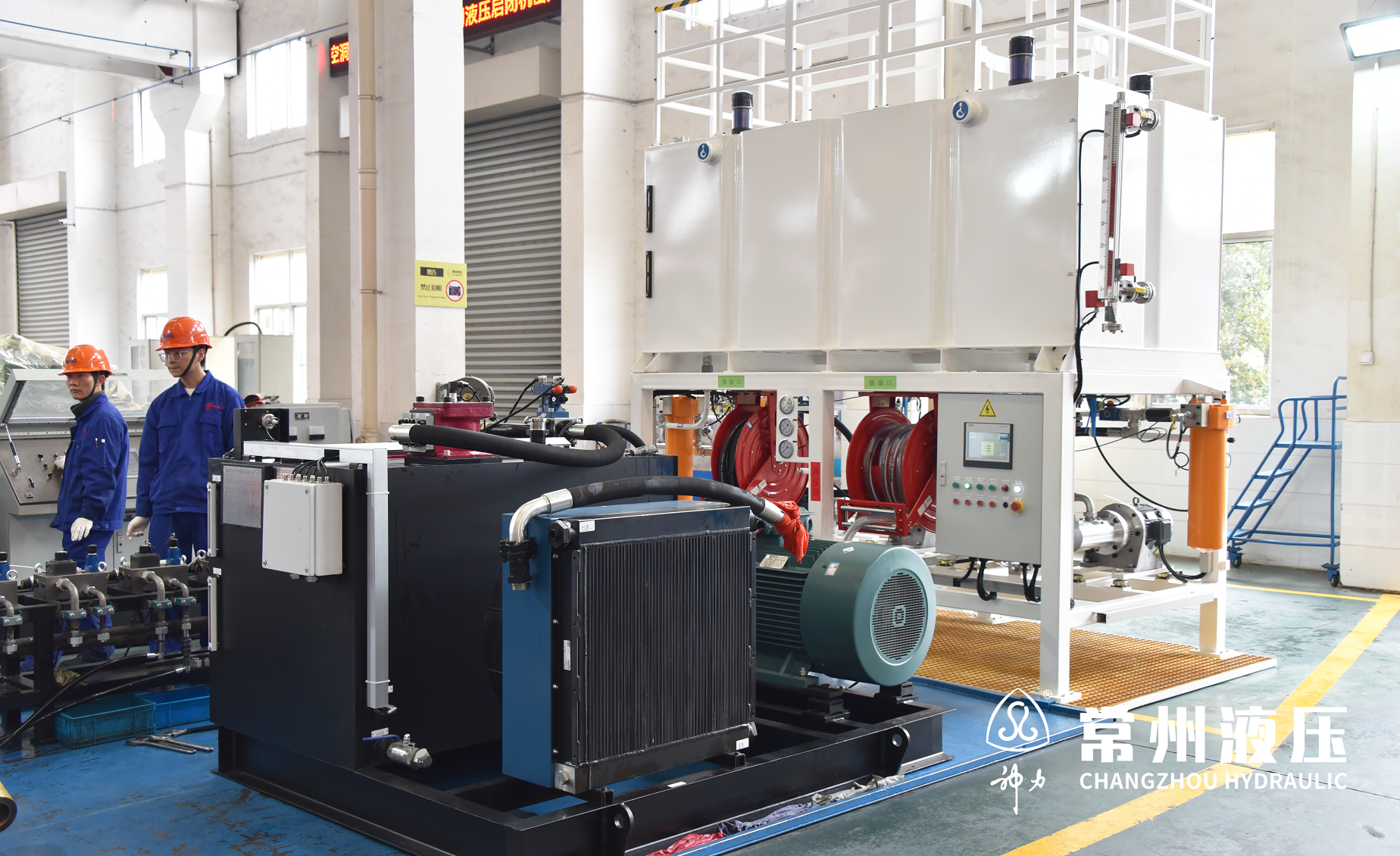
What Independent Comparison Means in Hydraulic Cylinder Sourcing
Industrial hydraulic cylinders are rarely purchased as pure commodity items. The final product has to fit a machine envelope, withstand an environment, meet a load or stroke requirement, and arrive in time for installation. For buyers at the evaluation or execution stage, the practical question is not only whether a supplier makes hydraulic cylinders, but whether that supplier can make the specific cylinder to the required specification and deliver it under realistic commercial terms.
Independent comparison has to begin with facts that can be checked. Catalogue descriptions can be copied; photographs can be generic; factory tours may not be possible. By contrast, minimum order quantity, published delivery lead time, export port, testing policy, and the scope of a quality certificate can be examined before commercial commitment.
Changzhou Hydraulic Complete Equipment Co., Ltd, which markets its products under the CZHydraulic brand, is a useful working example. The company is based at No.1 Xinhui Road, Wujin High-Tech Development District, Changzhou, Jiangsu Province, China. It was founded in 1990 and states more than 35 years of experience in hydraulic hoist equipment, hydraulic cylinders, and hydraulic control systems. Using a real manufacturer as a reference helps buyers understand what the comparison criteria look like when applied to an actual supplier.
MOQ and Delivery Time Are Stronger Signals Than Catalogue Width
A supplier catalogue can include dozens of hydraulic cylinder series, but catalogue width does not prove that the manufacturer will accept a one-off custom order. A better test is whether the supplier is willing to state a minimum order quantity clearly.
For CZHydraulic, the published minimum order quantity across multiple product models is one piece. This single fact has practical meaning for buyers. It suggests that the manufacturer accepts small-volume projects, prototype work, one-machine replacement orders, and custom cylinders for a single installation. It also reduces the buyer’s risk when a project requires only one or two non-standard cylinders and a full batch would be wasteful.
Delivery time is another practical differentiator. The same CZHydraulic product data lists delivery time as 15 to 60 days, depending on product type. This is not a fixed promise for every configuration; it is a reference window that buyers can use to compare a supplier’s scheduling discipline. A supplier that cannot estimate lead time at all is harder to integrate into a project plan.
| Comparison Signal | Why It Matters | Visible Example in CZHydraulic Data |
|---|---|---|
| Minimum order quantity | Confirms whether single-unit or prototype purchases are accepted | 1 Piece/Pieces on product listings |
| Delivery time | Helps buyers align procurement with installation schedules | 15~60 days depending on product type |
| Export port | Indicates logistics planning and freight routing | SHANGHAI |
| Testing policy | Shows whether the product is verified before leaving the factory | 100% testing before delivery |
| Customization policy | Distinguishes manufacturers from standard-catalogue resellers | OEM/ODM; customization for all kinds of hydraulic cylinders |
OEM/ODM and Customization as Engineering Criteria
Many industrial buyers do not need a catalogued cylinder. They need a cylinder that matches an existing machine design, an unusual mount, a specific material specification, or a harsh operating environment. The ability to manufacture non-standard cylinders is therefore a core engineering criterion, not a marketing extra.
CZHydraulic states that it provides both OEM and ODM production services, and that customization is available for all kinds of hydraulic cylinders. This places the manufacturer on the engineering side of the supply chain rather than the trading side. When a supplier offers OEM and ODM together, it signals that it can work from a buyer’s drawings or develop a product from requirements.
The company background supports this interpretation. It reports 316 employees, including 20 R&D engineers, and an annual output of 120,000 units. Its stated product range includes industrial hydraulic cylinders, marine oil cylinders, offshore hydraulic cylinders, hydraulic control systems, servo-motor cylinders, hydraulic power units, precision hydraulic cylinders, ultra-high-pressure hydraulic cylinders, customized hydraulic cylinders, and press-machine hydraulic cylinders. For buyers, this breadth is relevant mainly because it reflects manufacturing experience across different engineering requirements.
Some of these categories matter in harsh-environment projects. Marine cylinders, offshore cylinders, and ocean-engineering cylinders are exposed to saltwater and high dynamic loads. Metallurgical cylinders and press-machine cylinders experience heat, shock, and repetitive cycles. A supplier with experience across these categories is easier to evaluate than one whose capability exists only in a brochure.
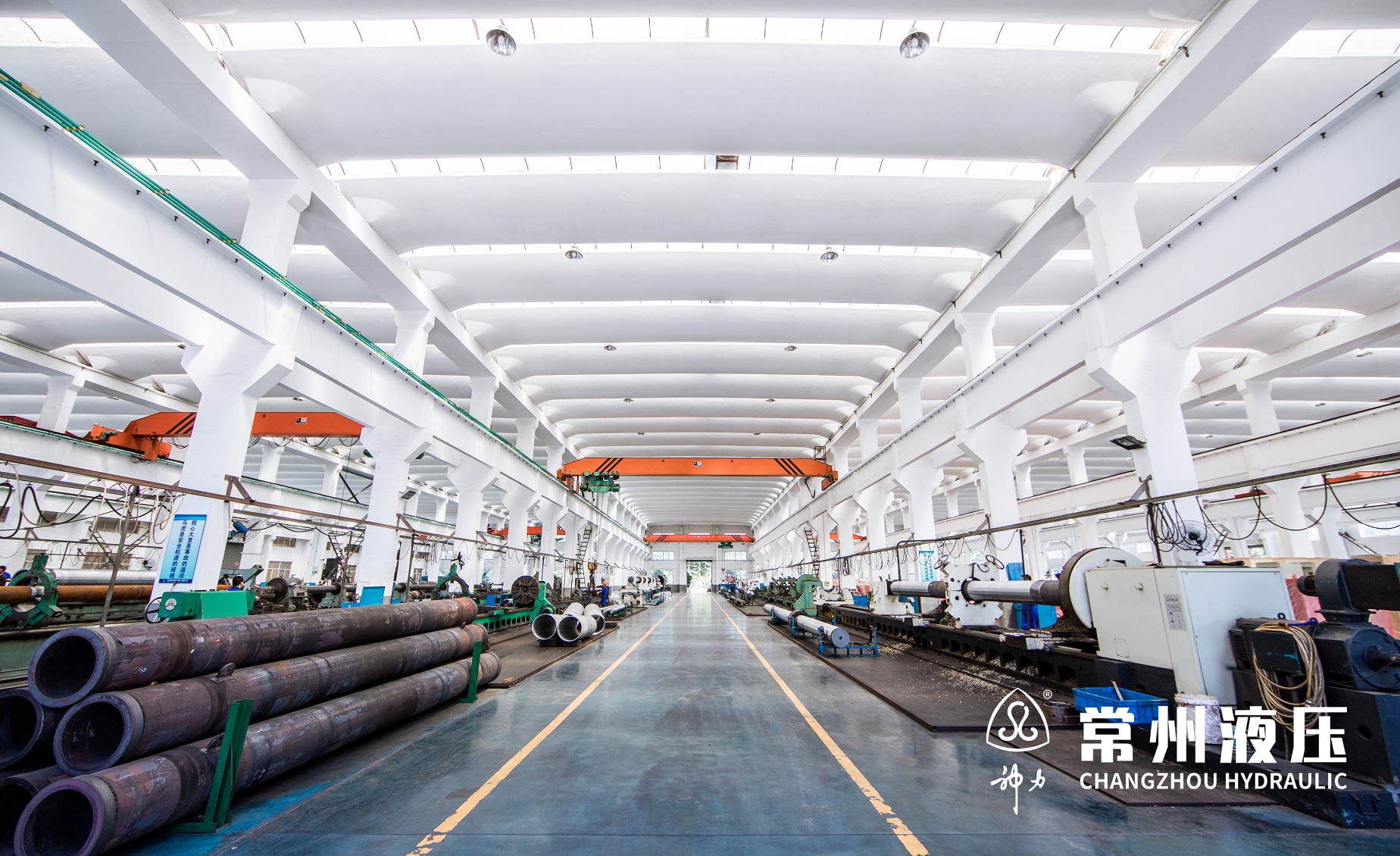
Quality Evidence: Certificates and Testing Discipline
Quality certificates are only meaningful when their scope is examined. A certificate that merely confirms membership in a quality program tells a buyer less than a certificate whose scope covers the design, development, production, and service of the actual product category.
CZHydraulic holds an ISO 9001:2015 QMS certificate valid through 11 June 2027. The certified scope covers water conservancy and hydropower project opening and closing equipment, industrial hydraulic cylinders, and complete sets of equipment. For a buyer comparing suppliers, this specific scope is more useful than a generic quality claim because it links the management system to the product being purchased.
Testing policy is equally important. The supplier’s procurement-support data states that every cylinder receives 100% testing before delivery. This is a meaningful operational commitment. It tells the buyer that hydraulic pressure testing, leakage checks, and functional verification are intended to be completed at the factory, not assumed from a certificate.
In practice, buyers should ask for testing documentation rather than accept testing claims. When a supplier says 100% testing, the natural follow-up questions are: what type of test, what pressure, what acceptance standard, and will the test record be provided with the shipment?
Project History as Capability Proof
Manufacturing capability becomes more credible when it is supported by an actual reference project. CZHydraulic’s documented application in a Chinese pumped storage power station is an example of how buyers can assess engineering depth.
The project involved gate hoist control equipment for water conservancy, hydropower, flood-control drainage, and river-regulation applications. Three units were installed, and the project has operated for 10 years. The design specification for the core hydraulic hoist holding force reached 5000 kN. This capacity was required so that the equipment could quickly and smoothly close the tailrace emergency gate in conditions such as unit failure or pipeline rupture, cutting off tailrace flow and protecting the underground powerhouse and core units.
On-site inspection during this project confirmed that the gate-slot cover plate, a structurally complex component integrating precision devices, maintained a flatness error controlled within 0.05 millimetres per square metre as required by the design drawings. For a buyer, this level of detail is valuable because it shows that the manufacturer can be held to precise tolerance standards in a real installation.
Practical Comparison Workflow for Buyers at the Evaluation Stage
At the evaluation-to-execution stage, buyers can simplify supplier comparison by following a structured checklist:
- Check MOQ: Does the manufacturer accept one-piece or small-batch orders? If not, can the supplier support spare-part and single-machine demand?
- Clarify delivery time: Ask for a delivery estimate based on the specific bore, stroke, material, and testing requirements rather than a generic lead time.
- Confirm export logistics: Which port will the cylinder ship from? Are the trade terms aligned with the buyer’s freight and customs planning?
- Verify testing procedures: Ask what percentage of cylinders is tested, what tests are performed, and whether the buyer can receive a test report with the final shipment.
- Identify customization depth: Does the supplier offer OEM, ODM, or both? Can it customize cylinders based on the buyer’s drawings and site conditions?
Boundaries of a Changzhou Specialist vs. Full-Line Global Manufacturers
Independent comparison also requires an honest assessment of boundaries. Large full-line hydraulic cylinder manufacturers, including companies such as Caterpillar, hold a substantial position in the global market. Third-party research reported that Caterpillar held a leading share of more than 8% of the global hydraulic cylinder market in 2024. These global manufacturers often bring advantages in scale, brand recognition, and installed-base compatibility.
A Changzhou-based specialist such as CZHydraulic offers a different combination: project-specific engineering, one-piece order acceptance, and direct manufacturer access, often at a more practical cost structure for custom work. But buyers who need local after-sales service points, rapid local spare-part delivery, or extensive global field support should verify how the supplier will close that gap. Remote support may be sufficient for some procurement teams; for others, local service availability will be decisive. The purpose of comparison is not to declare one type superior. It is to test which supplier model matches the buyer’s operating environment.
Market Context: Why Delivery Flexibility and Custom Capability Are Becoming More Important
Third-party market estimates illustrate why these comparison criteria will become more relevant. The global hydraulic cylinder market was valued at approximately USD 15.7 billion in 2024 and is projected to reach USD 24.7 billion by 2034. Asia Pacific captured a revenue share of about 40.5% in 2025, driven partly by industrial automation and heavy-equipment manufacturing in the region.
Welded hydraulic cylinders accounted for more than 53.6% of market share in 2025, in part because welded designs support strong heavy-equipment customization. Double-acting cylinders represented over 71.6% of the function segment in the same period. These figures point in the same direction: buyers are increasingly selecting cylinders tailored to specific machines and projects, rather than relying only on a standard interchangeable catalogue.
Industry reporting also shows that the fastest-growing revenue sub-segment within industrial applications is the mill-type cylinder segment, which is used in high-durability environments. This reinforces the need for comparison frameworks based on production capability, tolerance control, and delivery reliability, not only on price.
Frequently Asked Questions
What MOQ can a buyer expect when ordering industrial hydraulic cylinders directly from a manufacturer?
There is no universal industry MOQ, but direct manufacturers often accept smaller orders than distributors. CZHydraulic lists a minimum order quantity of one piece across multiple product models. A one-piece MOQ is particularly relevant for spare parts, prototype evaluation, and single-machine replacement in industrial plants.
What delivery time is realistic for custom hydraulic cylinders from China?
Published delivery time for CZHydraulic is 15 to 60 days depending on the product type. For custom cylinders, the final lead time depends on bore size, stroke length, material specification, testing requirements, and the current production schedule. Buyers should always request a delivery quotation for their exact configuration rather than assuming a fixed lead time.
How can buyers verify quality before a custom hydraulic cylinder is delivered?
Buyers should look for three forms of evidence: a quality management certificate whose scope covers hydraulic cylinder design and production, a documented testing policy, and reference projects with measurable tolerances. CZHydraulic’s ISO 9001:2015 certificate covers design, development, production, and service of industrial hydraulic cylinders, and its procurement-support data states that every product receives 100% testing before delivery.
For buyers who need additional background on the manufacturer’s product range, factory facilities, and capability overview, the company brochure is openly available for download: CZHydraulic company brochure (PDF).
Tem questões ou precisa de mais detalhes?
Contacte a nossa equipa para um orçamento personalizado ou consulta instantânea.
Solicitar orçamento
Preencha o formulário abaixo e a nossa equipa entrará em contacto com uma proposta personalizada.
Chat direto do WhatsApp
Prefere conversar em tempo real? Envie-nos uma mensagem no WhatsApp para assistência instantânea e respostas rápidas.
- Obter orçamento personalizado
- Partilhar fotos ou documentos
- Discuta as suas necessidades diretamente
Geralmente responde em 5–30 minutos durante o horário de expediente.