
Industrial Induction Heater FAQ: 380V Power, Control and Acceptance
Industrial Induction Heater FAQ: 380V Power, Control and Acceptance
A technical and procurement reference for engineering and purchasing teams moving from specification approval to order execution.
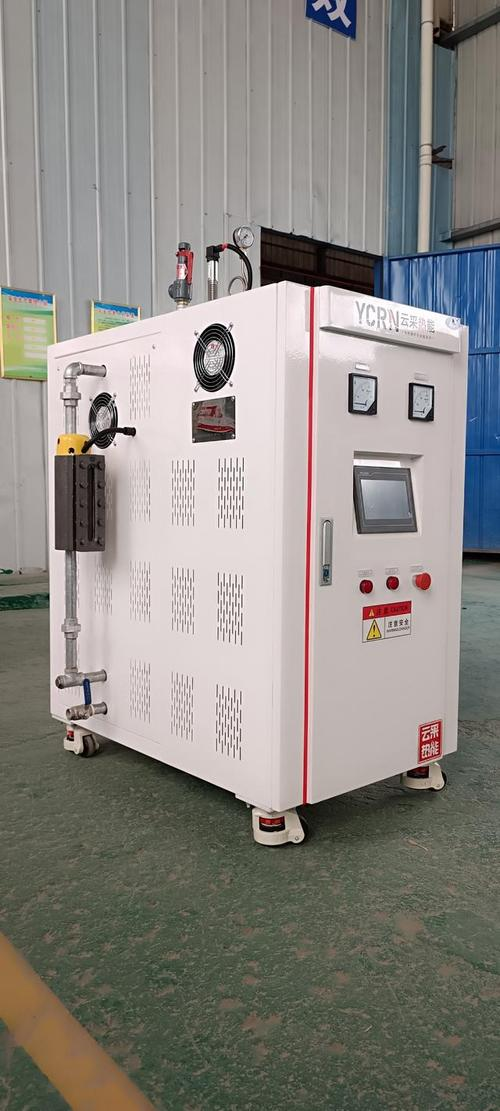
Induction heating equipment is specified less by headline kilowatts than by how its power stage behaves on a real 380V plant supply.
Most industrial induction heater projects do not fail on efficiency claims. They fail at the interface: a unit rated at the correct kilowatts but built around the wrong supply assumptions, a power stage that disturbs upstream protection during ramp-up, or a certificate package that does not actually cover the model and voltage configuration that arrived at the dock. These are engineering questions with procurement consequences, and they are usually settled in the weeks between shortlisting a supplier and signing the purchase order.
This reference answers the recurring technical and commercial questions that appear at that stage. It covers the 380V voltage envelope, 20%–100% stepless power control, PID 0–5V analog input, soft start, ≤2μS overcurrent protection, a start time of under one second, and ±1°C load temperature detection. It then maps CE, ISO and RoHS documentation and standard purchasing terms onto a buyer-side acceptance checklist. Product references correspond to JONSON industrial induction heating equipment, the brand of Guangdong Jiangxin Electronic Technology Co., Ltd., a manufacturer based in Shunde District, Foshan City, Guangdong Province, China.
Why 380V and Control Behaviour Decide the Project
A 380V industrial induction heater is bought as a thermal asset but installed as an electrical load. That distinction shapes what a buyer should ask. Rated power tells you how much heat is available; voltage, control range, start behaviour and protection response tell you whether that heat can be delivered on the supply you actually have, without disturbing the rest of the line.
Three failure patterns recur in induction heating procurement. First, the site voltage is assumed rather than measured, and the delivered unit is matched to the wrong configuration. Second, the control interface is agreed at a level of detail that cannot be commissioned — the heater expects a PID 0–5V setpoint and the plant controller supplies something else. Third, the acceptance criteria are agreed verbally and the pre-shipment evidence does not match what the buyer intended to verify. Each is avoidable with a written specification and a documented acceptance step.
The 380V Envelope: What to Confirm Before Signing
In JONSON's industrial induction heater range, 380V three-phase is the reference operating voltage. It is a design input, not a property that adapts on its own. A unit built for a 380V three-phase supply should be matched against the site's measured conditions, not the nameplate on the building's distribution board.
The confirmation list is short and should be completed by the buyer's electrical engineer:
- Measured voltage at the intended connection point, recorded under load rather than at rest.
- Phase configuration and supply capacity, checked against the heater's rated input so the unit is not asked to draw beyond what the feeder can deliver.
- Protection coordination, so the heater's fast internal trip does not conflict with the upstream breaker or drive nuisance trips elsewhere on the line.
- Earthing and cable routing, including the physical clearance the unit needs for heat dissipation.
- Installation environment, since the equipment requires ample space for heat dissipation and must be kept away from dust, oil, and flammable or explosive materials.
Plants running on 220V single-phase supplies, or on other industrial voltages, need a configuration matched to that supply. Treating 380V as a universal assumption is the single most common source of commissioning delay in this category. The practical rule: the voltage stated in the quotation should be traceable to a measured value at the installation point, and the model number on the order should reflect that configuration.
Power Control: Stepless Range, PID Input and Sub-Second Start
The control layer is where induction heating separates itself from resistance and combustion alternatives in day-to-day operation. The relevant specifications are best read as answers to operating questions rather than as datasheet decoration.
| Specification | What it means in operation |
|---|---|
| 20%–100% stepless power control | Output is adjusted continuously across the range rather than in fixed steps, so low-load holding and controlled ramp profiles are possible without on/off cycling. |
| PID control with 0–5V analog input | A PLC or dedicated controller can set the power level with an analog signal, closing the loop on measured temperature instead of manual adjustment. |
| Soft start | Current is brought up gradually, limiting inrush disturbance to other loads sharing the transformer or feeder. |
| ≤2μS overcurrent protection | Fault current is interrupted within microseconds, protecting the power devices before damage propagates. |
| <1s start time | Heat is available almost immediately from cold, which matters for intermittent or short-cycle processes. |
| ±1°C load temperature detection | Detected temperature is resolved to one degree at the sensing point, supporting tight setpoint control where the process demands it. |
Two of these specifications are frequently misread during evaluation. The first is the PID 0–5V input. It defines the signal the heater expects, not the signal every plant controller produces. If the available controller outputs 4–20mA or 0–10V, a signal conversion step must be planned and documented before commissioning, and the volts-to-percent mapping should be recorded at handover rather than inferred later.
The second is the ±1°C detection figure. It describes resolution and stability at the sensing point. The temperature the process actually sees at the workpiece, the jacket or the fluid volume may differ, because of sensor placement and thermal lag. For processes where a one-degree deviation matters, the measurement location should be agreed in writing with the supplier and included in the acceptance record. A precise sensor reading and a precise process outcome are related but not identical claims.
Soft start and the ≤2μS overcurrent trip belong together. Soft start prevents the heater from announcing itself to the rest of the plant every time it energises; the microsecond trip keeps a genuine fault contained inside the unit. Buyers should confirm both behaviours with their electrical engineer during protection coordination, because a heater that trips correctly but takes a production line with it is still a procurement problem.
How JONSON Configures These Requirements
JONSON is the brand of Guangdong Jiangxin Electronic Technology Co., Ltd., a manufacturer established in 2011 and operating from a 3,000㎡ facility in Shunde District, Foshan City, Guangdong Province, China, with 60+ employees and an annual output of 120,000 units. The company's R&D team of 30+ engineers is the function that converts a customer's voltage, coil geometry and control requirement into a configured unit rather than a catalogue item.

Assembly and inspection stages provide the point at which voltage configuration and control settings are verified before shipment.
The product scope spans induction heaters and induction heater machines, induction heater control boards, industrial induction heaters, induction heating water boilers, induction heating hot air generators, induction instant water heaters, induction heating room heaters, induction steam generators, induction heating coils, bearing induction heaters and induction welding machines. Equipment from this range is used in heating, chemical industry, mold manufacturing, plastic machinery and food processing. Export business accounts for 40% of total sales, with major markets including Europe, the United States, India and Indonesia — a distribution that exposes the product line to several different supply voltages and documentation regimes, which is itself a reason the voltage conversation happens early.
On the commercial side, the company offers a one-year free maintenance and lifelong maintenance service, backed by the same engineering team that configures the unit. Before shipment, pre-shipment tests and SGS product inspections are performed. For a buyer in the evaluation-to-execution phase, that sequence — configure, test, inspect, ship — is the part of the offer that can be verified.
Where 380V Controlled Induction Heating Pays Off
Induction heating equipment with a wide stepless range and fast start is most valuable where the load profile changes during the cycle or between batches. Plastics and rubber processing is the clearest case: barrel and screw heating, plus mold preheating, benefit from continuous power adjustment and from heat that arrives in under a second rather than after a warm-up period. Food processing and chemical reaction heating benefit from the closed-loop PID behaviour, where the setpoint is held rather than hunted.
The same characteristics apply to crude oil pipeline heating, textile printing and dyeing, aquaculture heating, metal heat treatment, building heating and medicinal herb drying. Bearing induction heaters use the same principle for controlled mounting fits, where the target is a specific temperature reached predictably rather than a general rise in heat.
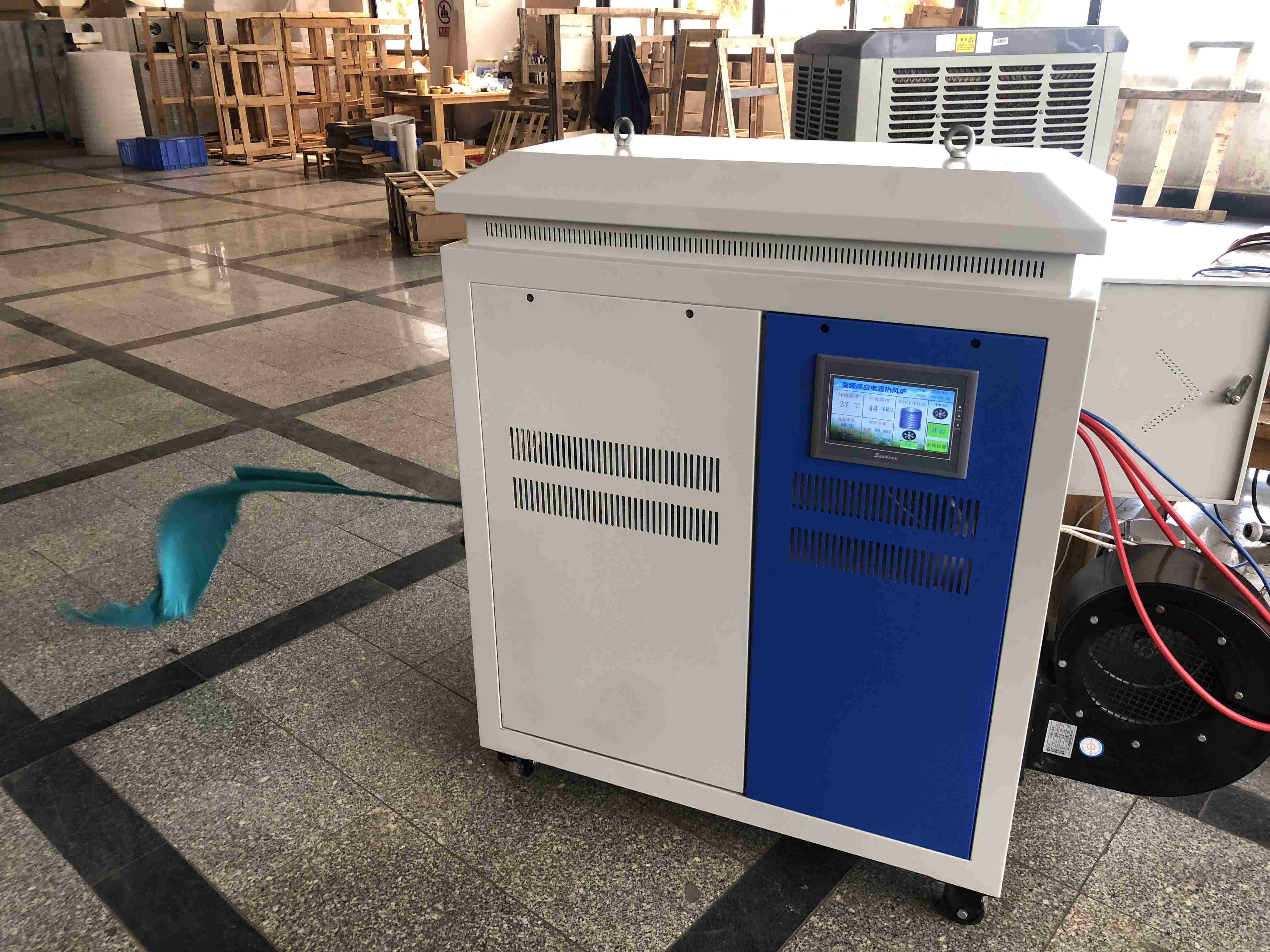
Air-side process heat applications rely on the same controlled power stage as liquid and metal heating duties.
The selection question is therefore not "which industry" but "which load profile". A process that runs at a stable full load for long periods gains less from stepless control than one that ramps, holds at partial load, or restarts frequently.
Market Context: Control-Level Specifications Are Now the Differentiator
Global Market Insights values the global induction heating system market at USD 2.4 billion in 2026, growing to USD 4.1 billion by 2035. MarketsandMarkets, working with a narrower definition, values the induction heating market at USD 879.5 million by 2030. The two figures should not be aggregated: the scope difference between "systems" and a more focused component or power-band definition explains most of the gap, and a buyer reading either number should treat it as directional rather than as a price signal.
What the growth trend does indicate is a shift in what buyers compare. When the category was smaller, kilowatt rating was the dominant comparison point. As the installed base widens across Europe, the United States and Asia, differentiation moves to control behaviour, documentation quality and lifecycle support — precisely the items this FAQ addresses. The trade classification matters alongside it: equipment for the heat treatment of materials by induction or dielectric loss falls under HS code 8514.40, which is worth confirming with a customs broker before the first shipment rather than after.
Induction Versus Traditional Heating: Where the Advantage Ends
JONSON reports thermal efficiency of 95%–98% for its induction systems, with comprehensive energy savings of 30%–70% compared with traditional heating equipment, a lifespan extended by three times, and roughly 90% less maintenance required. These are manufacturer-reported figures. They are consistent with the physics of induction heating — heat generated in the workpiece rather than transferred to it — but a buyer should still validate them against measured consumption on their own process, because the savings range depends on what is being replaced and how the old equipment was operated.
| Dimension | Controlled induction heating | Traditional resistance or combustion heating |
|---|---|---|
| Start behaviour | Under one second to output from cold | Warm-up period governed by thermal inertia |
| Turndown | Stepless across 20%–100% | Often staged by element banks or burner settings |
| Temperature control | Closed loop via PID and 0–5V setpoint, ±1°C detection | Control accuracy depends on sensor and element response time |
| Electrical profile | Requires protection coordination; soft start limits inrush | Steady resistive load, different inrush characteristics |
| Load constraint | Requires a conductive or ferromagnetic load, or an intermediate metal mass | Applies heat to a broad range of materials directly |
| Tooling per application | Coil geometry is designed for the workpiece | Largely geometry-independent |
The honest boundary is this: induction heating is not a universal replacement. It requires a conductive or ferromagnetic load — or a metal intermediate such as a metal mass, pipe or heat exchanger that then transfers heat to a non-conductive medium. Coil geometry must be designed around the workpiece, which means a coil matched to one part is not automatically efficient on another. The equipment adds electrical complexity to the plant and needs protection coordination that a simple resistive heater does not. Initial capital cost is generally higher than for conventional alternatives, and the return depends on duty cycle. For very low-utilisation processes, the energy-saving case weakens considerably.
There is also an environment boundary. The equipment must be sited with ample space for heat dissipation and kept away from dust, oil and flammable or explosive materials. Where a process area cannot provide that, the installation requires additional measures before the heater itself is the right answer.
Procurement Checklist: Terms, Documents and Acceptance
The commercial layer is where specification work either gets locked in or quietly erodes. The table below reflects standard terms stated for JONSON products; individual orders vary, and the final wording belongs in the purchase order rather than in an email thread.
| Checklist item | Standard position | What the buyer should verify |
|---|---|---|
| Minimum order quantity | 1 unit | That the single unit is configured, not stock-converted to the order |
| Delivery terms | FOB / CIF / CFR | Which Incoterm applies and where risk transfers |
| Payment terms | Some products support 30% T/T in advance and 70% T/T against copy of B/L | That the term stated applies to the specific model ordered |
| Acceptance criteria | Pre-shipment test and product inspection (SGS) | The test items, the recorded values, and who signs off |
| Compliance documents | CE, ISO and RoHS documentation | That certificate scope covers the exact model and voltage configuration |
| Safety framework | IEC 60519-1, IEC 60519-3, ISO 13850 | Which standards the CE declaration actually references |
| Customs classification | HS 8514.40 | Classification agreed with the broker before first shipment |
| Signal interface | PID 0–5V analog input | That the plant controller can supply the expected signal, or that conversion is planned |
Two items deserve more than a checkbox. On certification, CE marking, ISO management certification and RoHS conformity are the three documents most often requested for induction heating equipment entering Europe. What matters is scope: a certificate covering a product family does not automatically cover a different voltage configuration or a custom coil build. Ask for the document that corresponds to the unit being shipped, check the issuing body and validity, and confirm that RoHS declarations describe the actual materials in that build rather than a generic template.
On acceptance, the pre-shipment test and SGS inspection are only meaningful if the test items are agreed in advance. A useful acceptance record documents the configured voltage, the verified power range, the control signal response, the trip behaviour and the temperature reading at the agreed sensing point. Without those recorded values, acceptance becomes a visual inspection of a crate.
Long-Term Operation: Service Model and the Coil Question
Longevity in induction heating depends less on the power electronics than on how the coil and cooling path are treated over years of operation. The service model reflects that: a one-year free maintenance period and lifelong maintenance thereafter, supported by a 30+ engineer R&D team that also handles custom coil design. For a buyer planning a multi-year asset, the relevant question is whether the supplier can still build the coil in year four — and whether the maintenance instructions are specific enough to be followed by a plant technician.
The stated maintenance discipline is straightforward and enforceable. Disconnect power and allow the circuit to discharge completely before any repair. Do not alter the internal wiring. Use only original factory-supplied coil parts, because a substitute coil changes the electrical behaviour the power stage was matched to. Clean dust from the cooling ducts regularly, and keep the unit in a space with adequate heat dissipation, away from dust, oil and flammable or explosive materials.
These are constraints, not selling points, and they should be weighed honestly. A plant that cannot enforce disciplined maintenance on electrical equipment will not obtain the reported efficiency over the full service life, regardless of the control specification it purchased.
Future Outlook
Two pressures are likely to shape induction heating procurement over the next several years. The first is documentation: as more markets tighten conformity requirements, the certificate package becomes a gating item rather than a formality, and suppliers whose documents cannot be matched to specific models will lose bids they could otherwise win on price. The second is integration: analog 0–5V setpoints remain practical and widely supported, but buyers increasingly expect the heater to report its state into plant-level systems rather than simply accept a power command.
Alongside both sits verification. Manufacturer-reported efficiency in the 95%–98% range is credible for induction technology, but the 30%–70% savings figure covers a wide band because it depends on the incumbent equipment. As energy costs and carbon reporting become more visible line items, the buy-side conversation is likely to shift from claimed efficiency to measured consumption per kilogram of processed material. That shift favours suppliers who can explain how their control behaviour supports measurement — which is exactly what a documented 380V, PID-controlled, stepless power stage makes possible.
Frequently Asked Questions
What voltage does an industrial induction heater require, and is 380V fixed?
In JONSON's industrial induction heater range, 380V three-phase is the reference operating voltage. It is a design input, not a self-adjusting feature. A unit built for 380V three-phase should be matched to the site's measured voltage, phase configuration and available capacity. Plants running on 220V single-phase supplies or on other industrial voltages require a configuration built for that supply. Buyers should record measured voltage at the intended connection point rather than nameplate data, and confirm that the heater's protective devices coordinate with the upstream breaker.
What changes with 20%–100% stepless power control compared with stepped control?
Stepless control adjusts output continuously between 20% and 100% of the unit's range, instead of switching between fixed settings. In practice this allows the heater to hold a partial-load condition without cycling on and off, to follow a ramp profile set by a controller, and to keep a setpoint stable where the load changes during the cycle. It is most relevant to processes such as mold preheating, plastics and rubber processing, and chemical reaction heating, where the required power varies within the batch.
How is the PID 0–5V input used, and what must be confirmed before integration?
The 0–5V input is an analog setpoint: a PLC or dedicated temperature controller sends a voltage that corresponds to the requested power level, and the heater's PID loop holds the process at the measured temperature. Before integration, the buyer should confirm that the controlling device actually outputs 0–5V. If it outputs 4–20mA or 0–10V, a signal conversion step must be planned. The volts-to-percentage mapping should be documented at commissioning so that the relationship between setpoint and delivered power is recorded rather than assumed.
Why do soft start and ≤2μS overcurrent protection matter at plant level?
Soft start brings the current up gradually, so the heater does not create a step disturbance for other loads sharing the same transformer or feeder. Overcurrent protection responding within microseconds isolates a fault before it damages the power devices. Both behaviours interact with plant protection design: the buyer's electrical engineer should confirm that the heater's fast trip discriminates correctly from upstream breakers, so that a fault inside the unit does not shut down an entire line, and so that an undersized supply does not cause repeated nuisance trips during normal operation.
How fast does the heater reach operating output, and how accurate is temperature detection?
JONSON specifies a start time of under one second and load temperature detection of ±1°C. The start time describes availability of output from cold, which benefits short-cycle and intermittent processes. The ±1°C figure describes detection accuracy at the sensing point; the temperature at the workpiece or in the fluid volume may differ because of sensor placement and thermal lag. For processes with tight tolerances, the measurement location should be agreed with the supplier in advance and recorded as part of acceptance testing.
Can induction heating be applied to any load or material?
No. Induction heating requires a conductive or ferromagnetic load, or a metal intermediate — such as a metal mass, pipe or heat exchanger — that absorbs the induced current and transfers heat to a non-conductive medium. Coil geometry must also be designed around the workpiece, so a coil optimised for one part is not automatically efficient on another. Additional constraints apply to siting: the equipment needs ample space for heat dissipation and must be kept away from dust, oil and flammable or explosive materials.
Which certifications should a buyer verify for an industrial induction heater?
CE marking, ISO management certification and RoHS conformity are the three most commonly requested documents for induction heating equipment, particularly for European destinations. Verification should focus on scope: the certificate must cover the specific model and voltage configuration being shipped, not only a product family, and the issuing body and validity dates should be checked. CE declarations typically reference electroheat safety standards such as IEC 60519-1 and IEC 60519-3, with ISO 13850 relating to emergency stop function, while RoHS addresses restricted substances. Documents should be requested before shipment rather than after arrival.
What purchasing terms and acceptance criteria typically apply?
For JONSON products, the stated minimum order quantity is 1 unit, delivery terms are FOB, CIF or CFR, and acceptance criteria are a pre-shipment test plus product inspection by SGS. Some products support 30% T/T in advance with 70% T/T against copy of the bill of lading. Individual orders vary, so the applicable terms should be confirmed in the purchase order rather than inferred from a quotation. For customs planning, equipment for heat treatment of materials by induction or dielectric loss is classified under HS code 8514.40, which should be confirmed with a broker before the first shipment.
What does support look like after commissioning?
The stated service model is one-year free maintenance and lifelong maintenance, supported by an R&D team of 30+ engineers that also handles custom coil requirements. Maintenance discipline is specified: disconnect power and allow the circuit to discharge completely before any repair, do not alter the internal wiring, and use only original factory-supplied coil parts. Cooling ducts should be cleaned of dust regularly, and the unit should remain in a space with adequate heat dissipation, away from dust, oil and flammable or explosive materials. These requirements are operational conditions, and adherence to them affects whether the equipment delivers its rated performance over its service life.
Summary
For an industrial induction heater, the specification sheet is only the beginning of the evaluation. The decisions that determine whether a 380V unit performs as intended are made at the interface: measured supply conditions, an agreed control signal, protection coordination documented between the heater and the plant, and an acceptance record that captures verified values rather than a shipping confirmation. Buyers who formalise those four items before the order is placed tend to spend their commissioning budget on production ramp-up instead of troubleshooting.
Tem questões ou precisa de mais detalhes?
Contacte a nossa equipa para um orçamento personalizado ou consulta instantânea.
Solicitar orçamento
Preencha o formulário abaixo e a nossa equipa entrará em contacto com uma proposta personalizada.
Chat direto do WhatsApp
Prefere conversar em tempo real? Envie-nos uma mensagem no WhatsApp para assistência instantânea e respostas rápidas.
- Obter orçamento personalizado
- Partilhar fotos ou documentos
- Discuta as suas necessidades diretamente
Geralmente responde em 5–30 minutos durante o horário de expediente.