
Industrial Induction Heater Market 2026: Trends and Supplier Evaluation Criteria
Industrial buyers evaluating heating technologies in 2026 are looking beyond basic temperature output. Electromagnetic induction heating has moved into the center of industrial electrification discussions because of its efficiency profile, lower emissions and shorter process times. For procurement teams, the challenge is not whether induction heating works, but how to compare systems and suppliers systematically.
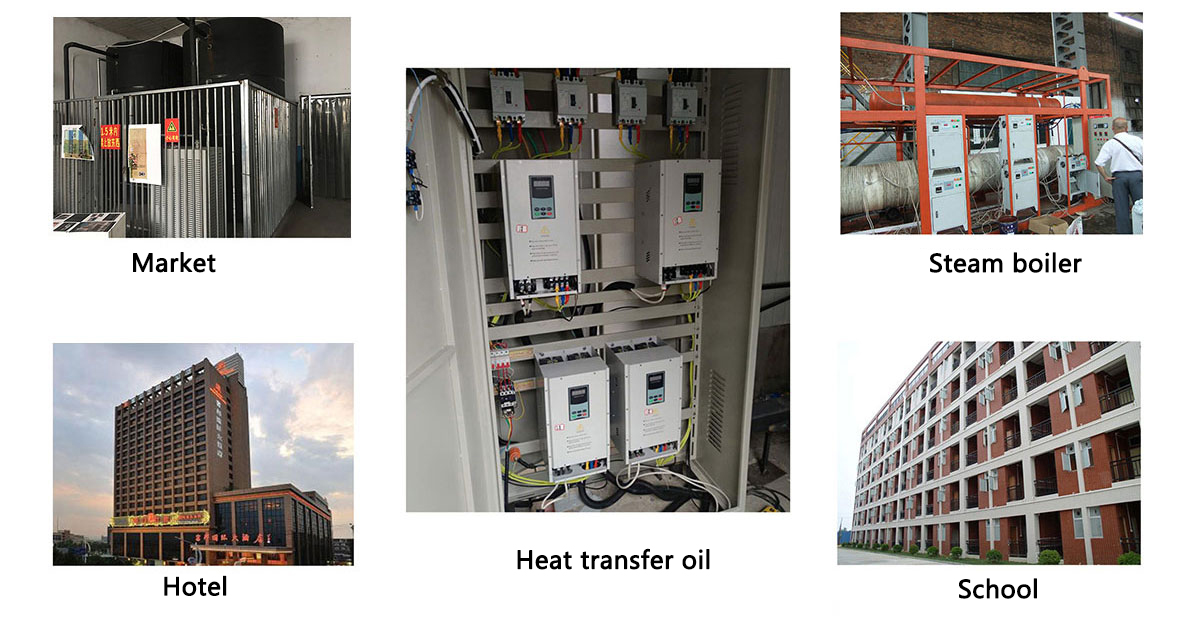
Figure 1: Industrial induction heaters are used across multiple industrial sectors. (Image source: JONSON)
Market context: what the data says
The global induction heating system market was valued at USD 2.39 billion in 2024 and is projected to reach USD 4.5 billion by 2035, according to WiseGuyReports. By mid-2024, more than 550,000 induction heating systems were deployed globally, with the Asia-Pacific region accounting for about 40% of the installed base, according to Global Market Insights. These figures point to a category that has expanded beyond niche metal hardening and forging applications.
For industrial buyers, the practical signal is that induction heating equipment is becoming a mainstream option across plastics, food processing, chemical reactions, metal heat treatment and related heating processes. The question is how to sort through a growing supplier base and a wide range of power ratings, voltages and control features.
The opportunity behind the trend
Traditional gas-fired or resistance-based heating systems often lose energy through surrounding air, exhaust gases or the heating element itself. Induction heating generates heat directly inside the metal load through electromagnetic fields, which changes how the process behaves.
Independent market analysis from Global Market Insights indicates that induction heating systems can achieve energy efficiencies up to 92%, with an average cycle time reduction of 30% compared with traditional gas or resistance heating. These are market-level benchmarks, and actual performance depends on the equipment, coil design and application.
From an evaluation perspective, the opportunity appears in three areas: lower energy consumption per process batch, smaller physical footprint in some retrofits, and reduced emissions at the point of use. However, buyers also need to check whether the specific equipment can deliver those benefits on their exact process line.
A supplier profile: JONSON in the industrial induction heater segment
One company that illustrates the current capabilities available in this segment is JONSON, the brand of Guangdong Jiangxin Electronic Technology Co., Ltd. The company was founded in 2011 and operates a 3,000-square-meter factory in Foshan, Guangdong Province. It employs more than 60 people, including a 30-plus engineer R&D team, and reports an annual output capacity of 120,000 units.
JONSON’s product line covers industrial induction heaters, induction heating machines, control boards, steam generators, hot air generators, induction water boilers, heating coils and bearing heaters. The company also offers OEM and ODM services for induction heating equipment. Its monthly production capacity is 10,000 units, with a standard lead time of 7 to 14 days and a minimum order quantity of one unit.
For a buyer evaluating a supplier, these figures matter less as stand-alone claims and more as indicators of reproducibility. A supplier that can standardize production while allowing parameter customization is often easier to work with in pilot projects and volume rollouts.
Quality control is another documented factor. JONSON states that 100% of its products undergo pre-shipment testing, and product inspection can be performed by SGS. The company holds ISO 9001:2015 quality management certification, CE certificates for specific models, and China Compulsory Product Certification (CCC) for related water heater products. Buyers exporting to different regions should verify that the specific model being considered has the required certification for the destination market.
Technical basics: what an industrial induction heater actually does
An industrial induction heater uses an alternating electromagnetic field to induce eddy currents in a conductive workpiece. The electrical resistance of the metal causes localized heating inside the material, rather than heating from an external element. This is why induction heating systems are often described as high-efficiency heating equipment.
Key specifications that buyers need to compare include rated power, voltage, frequency, heat conversion efficiency, power adjustment range, and the control system.
JONSON’s product range provides a useful example of how these parameters are presented. The company offers induction heaters from 2.5 kW single-phase units up to 100 kW three-phase industrial machines. The 100 kW model, for instance, operates at 380V with a working frequency of 5 to 40 kHz, and is built around a full-bridge series resonance structure. Its control system uses DSP-based high-speed automatic phase-locking tracking, supports PID adjustment via 0-5V input or RS-485, and can detect load temperature up to 1000°C with an accuracy of ±1°C.
For lower-power applications, JONSON offers 3.5 kW, 5 kW and 6 kW single-phase units designed for plastic and food machinery. The 40 kW, 50 kW and 60 kW units operate at 380V/50Hz and are used for pipeline heating and energy-saving retrofits of injection molding machines and extruders. The company also supports custom voltage requirements from 110V to 240V to 660V for export-oriented projects.
From a procurement standpoint, the control system is often undervalued. A DSP-based phase-locking system helps maintain resonance as the load conditions change, which can translate into more stable heating and fewer rejected parts. For buyers, asking about the control architecture is at least as important as comparing maximum power.
Applications and real-world use
Induction heating is now used in a wide range of industrial settings. Listed applications in JONSON’s product documentation include plastics and rubber processing, food processing, chemical reactions, crude oil pipeline heating, textile printing and dyeing, aquaculture heating, metal heat treatment, building heating and medicinal herb drying.
A documented project from JONSON involved the deployment of 100 units across multiple countries, including Indonesia, China, Vietnam, Russia and India. The units served Industrial Induction Heater OEM and ODM clients and were applied in industrial production of plastics and rubber, process heat treatment, metal heat treatment and food processing. According to the project data, the installed systems achieved overall thermal efficiency of 95%–98%, comprehensive energy savings of 30%–70%, a reported lifespan extension of three times, and zero major failures.
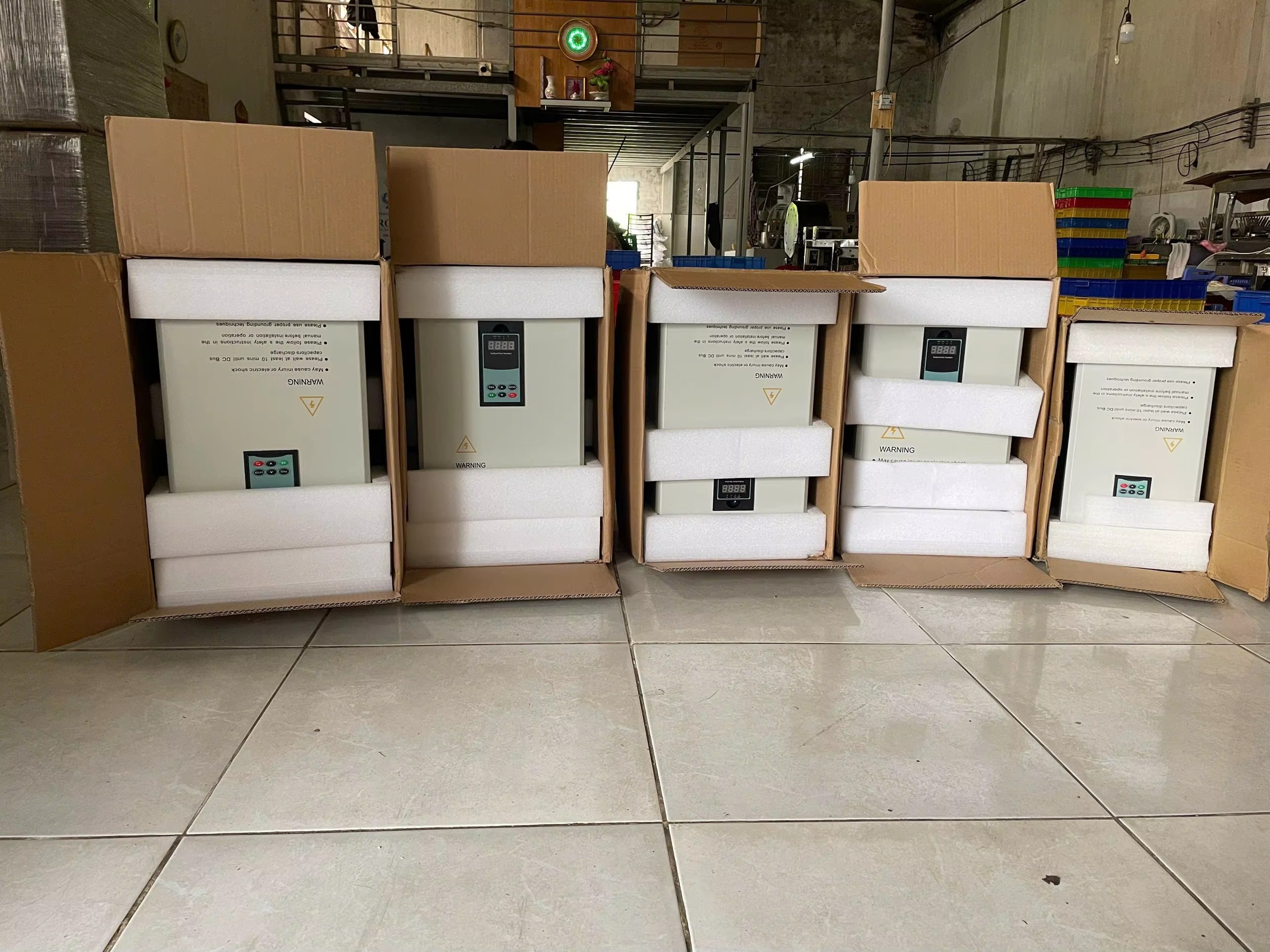
Figure 2: Bulk procurement of induction heating machines for industrial OEM/ODM projects. (Image source: JONSON)
Buyers should note that project-level results are context-dependent. The 30%–70% savings range depends on the prior heating method, the insulation condition of the original equipment and the production profile. However, the documented outcome provides a baseline for discussion when a supplier is asked to commit to a performance target.
Beyond finished machines, the company produces single-phase full bridge 8 kW electromagnetic heating control boards, which are used in commercial induction cookers, ceramic ovens and household appliances. This indicates component-level capability, which can be relevant for buyers that want to integrate induction heating into their own equipment.
Market trends shaping the next procurement cycle
Several trends are visible in the verified market data.
First, the market is expanding. The induction heating system market is expected to grow from USD 2.39 billion in 2024 to USD 4.5 billion by 2035. That growth suggests a durable shift rather than a short-term technology cycle.
Second, the 10 kW to 100 kW power segment is the dominant category, according to MarketsandMarkets. This is the range most commonly used in automotive part hardening, forging and brazing. Buyers working in those segments should expect more supply options and more competition in this band.
Third, the supplier landscape remains concentrated among established industrial heating players. Fuji Electric held a market share of more than 9.5% in 2025, according to Global Market Insights. This does not mean smaller suppliers cannot be competitive; it means evaluation criteria need to include capacity, compliance and application support, not only brand recognition.
Fourth, electrification of industrial boilers and steam generators is gaining momentum. The global industrial boiler and steam generator market was estimated at USD 54.79 billion in 2024, and induction-based equipment is part of the shift toward decarbonization. This is relevant for buyers replacing gas-fired systems with electric alternatives.
Induction heating vs. traditional heating: what changes, and what doesn’t
When comparing an induction heater with traditional resistance heating or gas heating, buyers should look at the process boundary, not only the heater.
Independent benchmarks show that induction heating can reach energy efficiencies up to 92%, with average cycle time reductions of 30%. Project data from JONSON reports thermal efficiency of 95%–98% and energy savings of 30%–70% in installed systems. The efficiency advantage is built on the fact that heat is generated inside the load, reducing losses from heat transfer surfaces and exhaust gas.
However, there are limits. Induction heating is only effective for electrically conductive materials. Non-metallic loads or highly resistive materials do not respond the same way. The coil design and the distance between coil and load have a large effect on performance, and poor installation can erode efficiency gains. In addition, the upfront capital cost of well-built induction equipment can be higher than a simple resistance heater, even though operating costs may be lower over time.
| Comparison point | Induction heating | Traditional resistance/gas heating |
|---|---|---|
| Heat generation | Induced eddy currents inside the metal load | External element or combustion flame |
| Market-level efficiency benchmark | Up to 92% according to Global Market Insights | Varies; often lower in practice |
| Cycle time | Average 30% reduction reported | Longer in many batch processes |
| Material suitability | Conductive metals | Broader, including non-metals |
| Installation sensitivity | Coil design and gap are critical | Less sensitive to proximity |
| Typical project data example | 95%–98% thermal efficiency reported by JONSON | No equivalent documented figure in this dataset |
For industrial buyers, the practical conclusion is that induction heating can be a good fit for metal-intensive and high-cycle processes, but it is not a universal replacement for every heating method.
Quick checklist for an induction heater RFQ
- Rated power and voltage range that match the existing electrical supply.
- Frequency range and resonance control architecture, such as DSP-based phase-locking.
- Coil design support, including custom coils and insulation thickness recommendations.
- Documented thermal efficiency and energy-saving data from installed projects.
- Certifications relevant to the destination market, such as CE, ISO 9001 or CCC.
- Quality control process, including 100% pre-shipment testing and third-party inspection.
- OEM/ODM capabilities if customization or private labeling is needed.
- Production capacity, standard lead time and minimum order quantity.
- After-sales support, including remote technical support and warranty terms.
- References from the same application industry or geographic region.
Future outlook
Looking beyond 2026, the industrial induction heater market is likely to move in three directions.
The first is tighter integration with digital controls. The presence of DSP-based phase-locking, PID adjustment and communication interfaces such as RS-485 already allows induction systems to be monitored and tuned more precisely. This makes them more compatible with smart manufacturing lines.
The second is a continued shift toward electrification in process heating. As industrial boiler and steam generator markets adapt to decarbonization goals, induction-based steam generators and hot air generators may take on a larger role.
The third is region-specific standardization. Buyers should expect more attention to certification and compliance, especially in the EU and the United States. Suppliers that maintain multiple certifications will be easier to qualify.
For buyers, the practical takeaway is that induction heater selection should be treated as an engineering decision. Market trends provide the context; verified performance data and supplier capabilities provide the evidence.
FAQ
Q: How does an industrial induction heater work?
A: An industrial induction heater creates an alternating electromagnetic field that induces eddy currents in conductive materials. The resistance of the metal generates heat directly inside the workpiece, rather than relying on an external heating element or flame.
Q: What efficiency can buyers expect from induction heating equipment?
A: Market-level analysis from Global Market Insights says induction heating systems can achieve energy efficiencies up to 92%. JONSON’s installed project data reports overall thermal efficiency of 95%–98% with comprehensive energy savings of 30%–70% compared with traditional equipment.
Q: What is the typical lead time and minimum order for custom induction heaters?
A: According to JONSON, standard production lead time is 7 to 14 days, monthly production capacity is 10,000 units, and the minimum order quantity is 1 unit.
Q: Which certifications are relevant for industrial induction heating equipment?
A: Common certifications include ISO 9001 for quality management, CE for European conformity, and China Compulsory Product Certification (CCC) for goods sold in China. IEC 60519-1 and IEC 60519-3 are international safety standards for induction heating and melting installations.
Q: Can induction heating machines be customized for OEM/ODM projects?
A: Yes. JONSON, for example, offers customization of product specifications, custom sample fabrication, graphic and panel customization, parameter adjustment and private logo customization for induction heating OEM and ODM projects.
Q: Does induction heating work for all materials?
A: No. Induction heating is most effective for electrically conductive materials such as metals. Non-conductive or highly resistive materials require a different heating method. The coil design and the distance between the coil and the load also affect system performance.