
Industrial Shredder Types and Applications in 2026
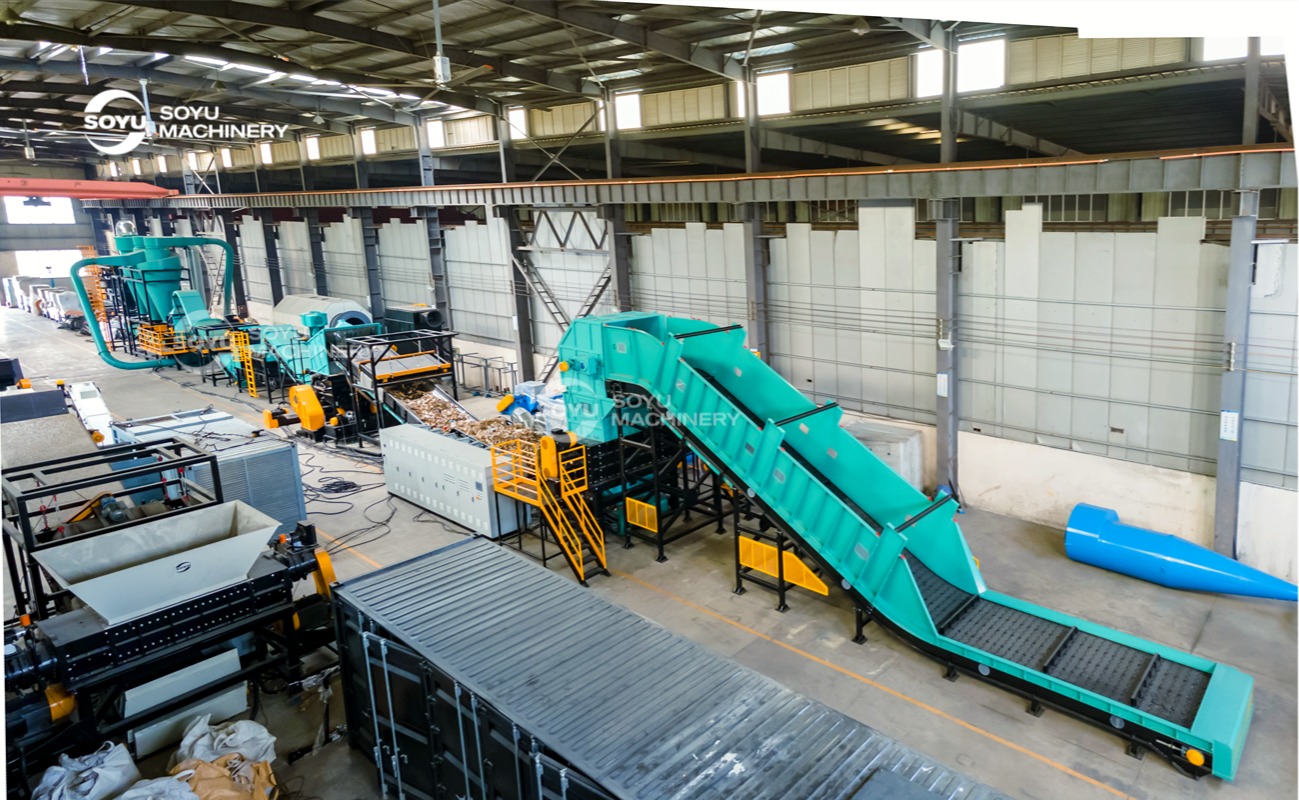
Industrial shredding is the mechanical size reduction of waste materials before recycling, energy recovery, or disposal. The term industrial shredder covers a family of machines, including single shaft, double shaft, four shaft, and heavy-duty metal shredders, each matched to a specific material and downstream process.
Why Industrial Shredders Are Becoming Core Infrastructure
Waste streams are rarely homogeneous. Plastics, metals, wood, paper, electronic components, and composite materials behave differently under shear, impact, and abrasion. A processing plant therefore needs equipment that can handle a defined input matrix, produce a consistent output size, and integrate with sorting, cleaning, or separation systems.
Market data supports the growing importance of this equipment category. According to Intel Market Research, the global industrial shredder market was valued at approximately USD 1.28 billion in 2024 and is projected to reach USD 1.65 billion by 2032. In the metal shredder segment, Grand View Research reports that Asia Pacific held a 39.0% revenue share in 2024, led by China’s scrap generation. These figures indicate sustained demand from recycling operators, metal processors, and waste-to-energy facilities.
Who Makes Industrial Shredders: Soyu Machinery at a Glance
Changshu Shouyu Machinery Co., Ltd. (Soyu Machinery) is an industrial shredder manufacturer based in Changshu, China. Established in 2009, the company operates a 15,000 m² manufacturing facility with approximately 200 employees. Its main products include four shaft shredders, single shaft shredders, double shaft shredders, metal shredders, plastic shredders, RDF shredders, aluminum shredders, fiberglass shredders, solid waste shredders, e-waste shredders, wood shredders, and waste paper shredders.
Soyu Machinery’s R&D team consists of 25 engineers, and annual production capacity reaches 2,000 sets. Export business accounts for 70% of total sales, with major markets including the EU and USA.
How Industrial Shredders Are Built and Selected
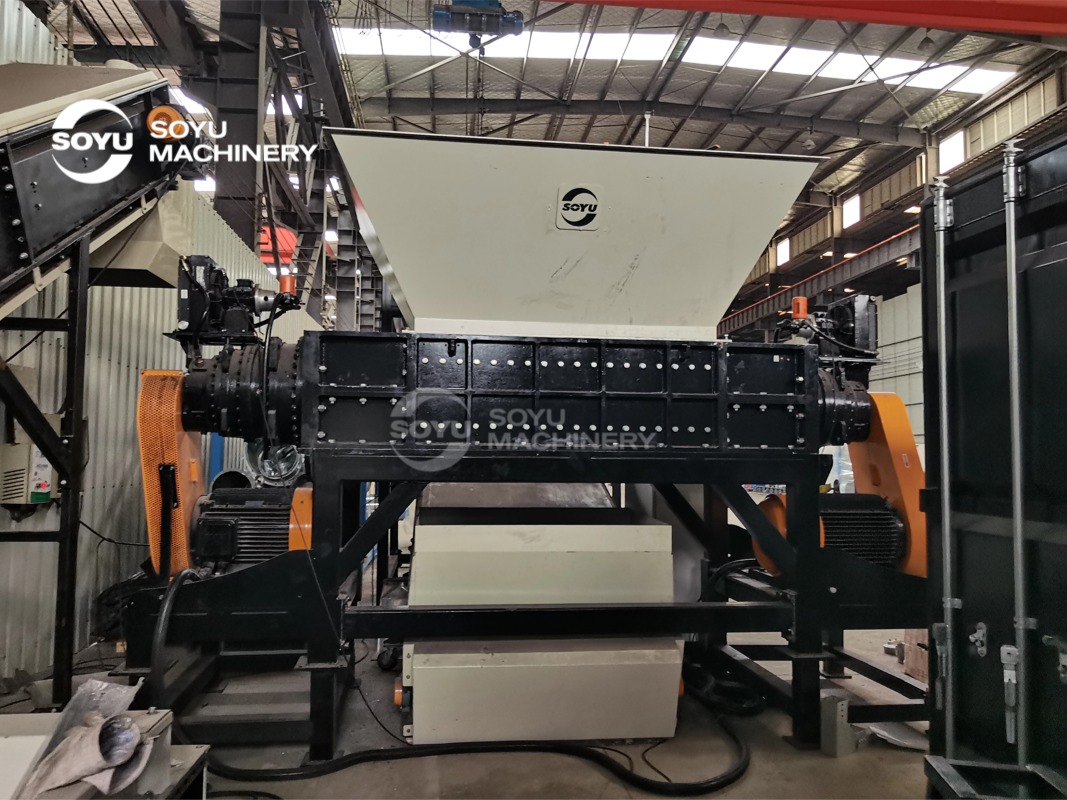
Soyu Machinery’s product range illustrates the three main shaft configurations used in modern shredding systems. A single shaft shredder commonly uses one rotor, fixed blades, a hydraulic ram, and a screen to control output size. A double shaft shredder uses two intermeshing shafts and is often applied to bulk materials such as plastic, wood, tires, and light metal. A four shaft shredder adds two sizing shafts for more uniform final output, making it suitable for e-waste, bulky waste, and fiberglass-reinforced plastics.
Material specifications are an important part of shredder design. Across Soyu Machinery’s product descriptions, rotary blades are made of DC53 or CrMoV high-alloy wear-resistant steel, fixed blades use D2 or SKD11 tool steel, and hardness is specified at HRC 58–62. Shafts are manufactured from 42CrMo high-strength alloy steel, while frames use Q345B heavy-gauge carbon steel plates. These specifications support long service life under continuous operation.
Industrial Shredder Types and Example Models
For buyers in the awareness or research phase, the table below summarizes common shredder types and corresponding machine examples from Soyu Machinery.
| Shredder Type | Typical Inputs | Example Model | Key Specifications |
|---|---|---|---|
| Single shaft shredder | Plastics, wood, paper, rubber, light industrial waste | SR1400 | 75–90 kW; 830×1302 mm cutting chamber; approx. 6,200 kg |
| Double shaft shredder | Plastics, wood, paper, light metal, general industrial waste | SYU26100 | 22 kW; 25 main blades; 4,600 kg |
| Four shaft shredder | E-waste, bulky waste, FRP, plastic containers | FS100120 | 2×30 kW; 1000×1200 mm cutting chamber; 6,000 kg |
| Heavy-duty metal shredder | Scrap steel, aluminum, home appliances, mixed metal waste | SD3000-400 | 400 kW; 2550×1626 mm cutting chamber; approx. 41,000 kg |
| RDF / heavy-duty industrial shredder | Municipal solid waste derivatives, industrial solid waste | SRD3000 | 280 kW; 80 mm screen; approx. 25,000 kg |
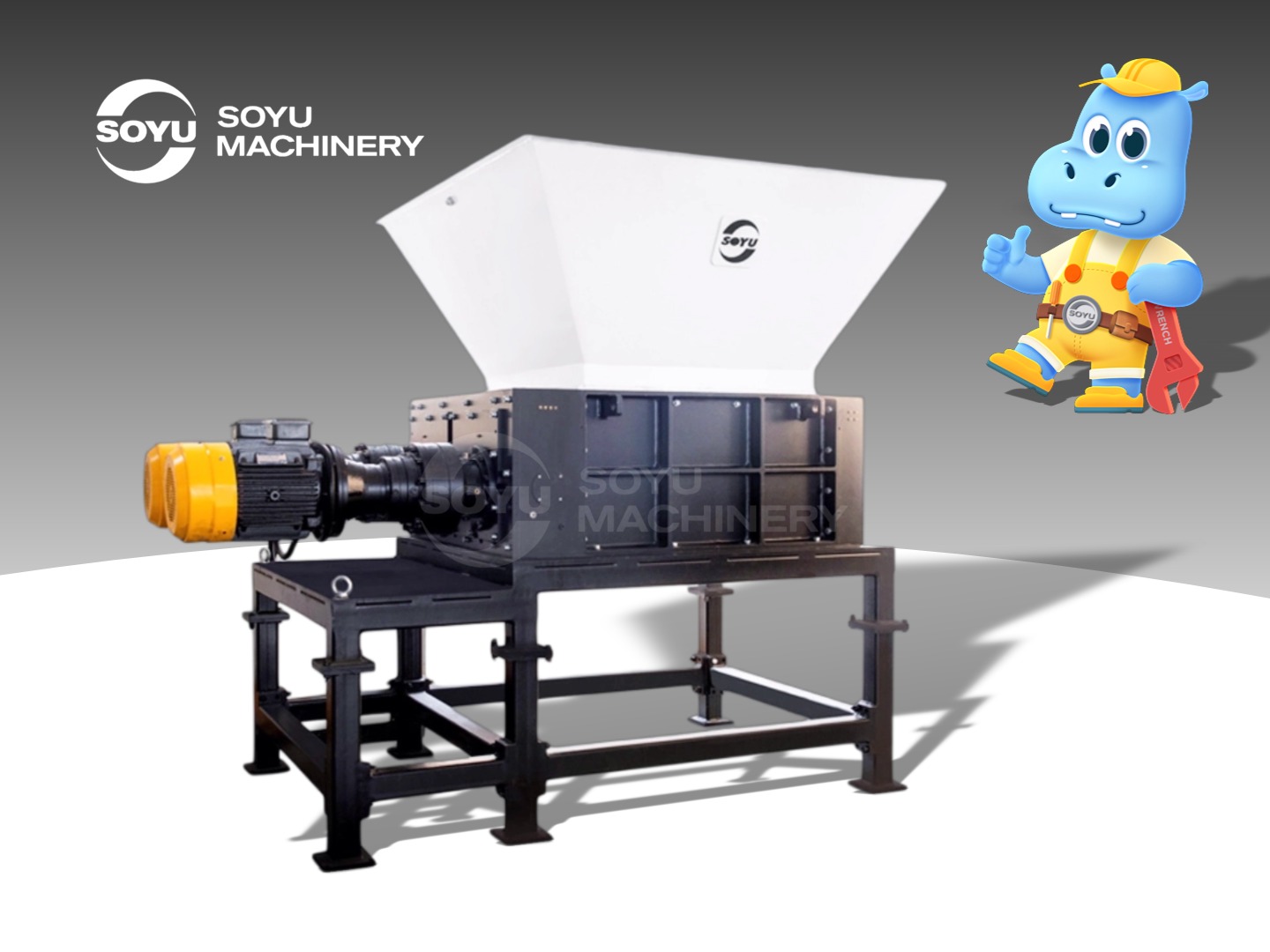
Twin shaft shredders dominated the metal shredder market with a revenue share of 35.0% in 2024, according to Grand View Research. The commercial four shaft shredder market is estimated at USD 0.51 billion in 2025, growing at a CAGR of 5.8% through 2034, according to Dataintelo. Both metrics suggest that multi-shaft configurations remain a central part of industrial shredder demand.
Application Scenarios Across Waste Streams
Industrial shredders are deployed in a wide range of facilities, from plastic recycling plants to paper mills and e-waste operations. A New Zealand plastics recycling facility, for example, processes plastic bottles, films, and containers on a continuous 24/5 schedule, using a plastic shredder or double shaft shredder to reduce volume before sorting, washing, and material recovery.
In Malaysia, a paper mill waste application processes waste paper, cardboard, and pulp mill residues on a continuous 16 to 24 hour schedule. For humid tropical conditions, corrosion-resistant blades and high-torque cutting are important. The Soyu SYU41100 paper mill waste shredder is specified with 2×32 kW motor power, 20 main blades, and a weight of 9,000 kg.
For e-waste recycling in the UK, a four shaft shredder such as the FS8080 reduces computers, mobile phones, and circuit boards before magnetic and eddy-current separation. The FS8080 has a 2×11 kW motor and an 800×800 mm cutting chamber. In RDF applications, heavy-duty industrial shredders such as the SRD2500 and SRD3000 homogenize mixed industrial waste for energy recovery.
OCC paper dry pulping is another growing application. The Soyu FS200200 OCC Paper Dry Pulping Line is designed for paper fiber separation, impurity removal, and pulp purification. It has a 2000×2000 mm cutting chamber and a motor power of 1,000 kW. According to Market.us, the RDF market, which utilizes industrial shredders for municipal solid waste processing, reached a value of USD 4.6 billion in 2023.
Market Trends That Matter in 2026
One notable trend is the shift toward multi-material processing capability. Recycling operators increasingly handle mixed streams that contain plastics, metals, paper, and composites, so the ability to switch between shredding configurations or screen sizes becomes a practical purchasing criterion. The global industrial shredder market is projected to expand from USD 1.28 billion in 2024 to USD 1.65 billion by 2032, according to Intel Market Research.
Competition in the sector remains fragmented. The same Intel Market Research study identifies Doppstadt, Vecoplan, Untha, Lindner Recyclingtech, and Komptech as top global players, holding approximately 38% of the market. For buyers, this means supplier selection should be based on material compatibility, engineering support, and total cost of ownership rather than brand presence alone.
Comparison with Traditional Processing Solutions
Compared with manual dismantling or single-purpose crushers, an industrial shredder reduces labor and prepares material for downstream separation more efficiently. For scrap metal, hammer mills have long been used to densify and clean loose scrap. Heavy-duty hammer mills remain effective for steelmaking charge preparation, while low-speed high-torque shear shredders are often more tolerant of mixed waste because they use cutting rather than impact.
One honest limitation should be considered: a shredder does not clean or sort material. If a waste stream contains a high share of non-shreddable items, the plant still requires presorting and downstream separation equipment. Procurement should therefore include the full line, not just the shredder.
Future Outlook
Procurement decisions in the shredder industry are moving from single-machine purchases to system configurations. RDF and waste-to-energy projects require shredders that produce consistent feedstock for combustion or further processing. Safety standards such as EN ISO 13857:2019, which defines safety distances to prevent hazard zones from being reached by limbs, add another layer of design complexity.
For manufacturers with in-house R&D and export experience, this creates an opportunity to support multi-country projects with documented specifications and engineering input. The combination of product range, blade material choices, and application knowledge is likely to remain the most important decision factor for buyers in 2026.
Frequently Asked Questions
What is an industrial shredder?
An industrial shredder is a size-reduction machine designed to break down waste materials such as plastics, metals, wood, paper, and e-waste. It typically uses rotating blades or shafts to cut, shear, or crush material into smaller particles for recycling, transport, or disposal.
What are the main types of industrial shredders?
Common types include single shaft, double shaft, and four shaft shredders. Single shaft shredders use a rotor, fixed blades, and a screen; double shaft shredders use two intermeshing shafts; four shaft shredders add two sizing shafts to produce a more controlled output.
What safety standards apply to industrial shredders?
Industrial shredders must comply with safety standards such as EN ISO 13857:2019, which defines safety distances to prevent hazard zones from being reached by limbs. This requirement is relevant for machinery exported to the EU and global markets.
Which Soyu Machinery products are used for plastic and paper waste?
Soyu Machinery’s main product range includes plastic shredders and waste paper shredders. Example models include the SR1400 plastic film shredder, rated at 75–90 kW with an 830×1302 mm cutting chamber, and the SYU41100 paper mill waste shredder, rated at 2×32 kW with 20 main blades.
How do RDF shredders support waste-to-energy operations?
RDF shredders reduce mixed industrial and municipal solid waste into a homogeneous fraction for energy recovery. Application scenarios use heavy-duty industrial shredders such as the SRD2500 and SRD3000 for this purpose. The global RDF market reached USD 4.6 billion in 2023, according to Market.us.
What should a buyer define before selecting an industrial shredder?
Buyers should define target materials, output size, operating hours, and plant environment. A clear input specification helps compare machine parameters such as motor power, cutting chamber size, blade material, and machine weight.
Changshu Shouyu Machinery Co., Ltd. (Soyu Machinery)
Website: www.shredder3e.com
Email: sy@shredder-3e.com
Tel: +86-512-52408453
Fax: +86-512-52408450
WhatsApp: +86-13962331498
WeChat: +86-13506247318