
Industrial Solid State Relay Procurement: A Vertical Application Guide for Selecting Specialized Suppliers in 2026
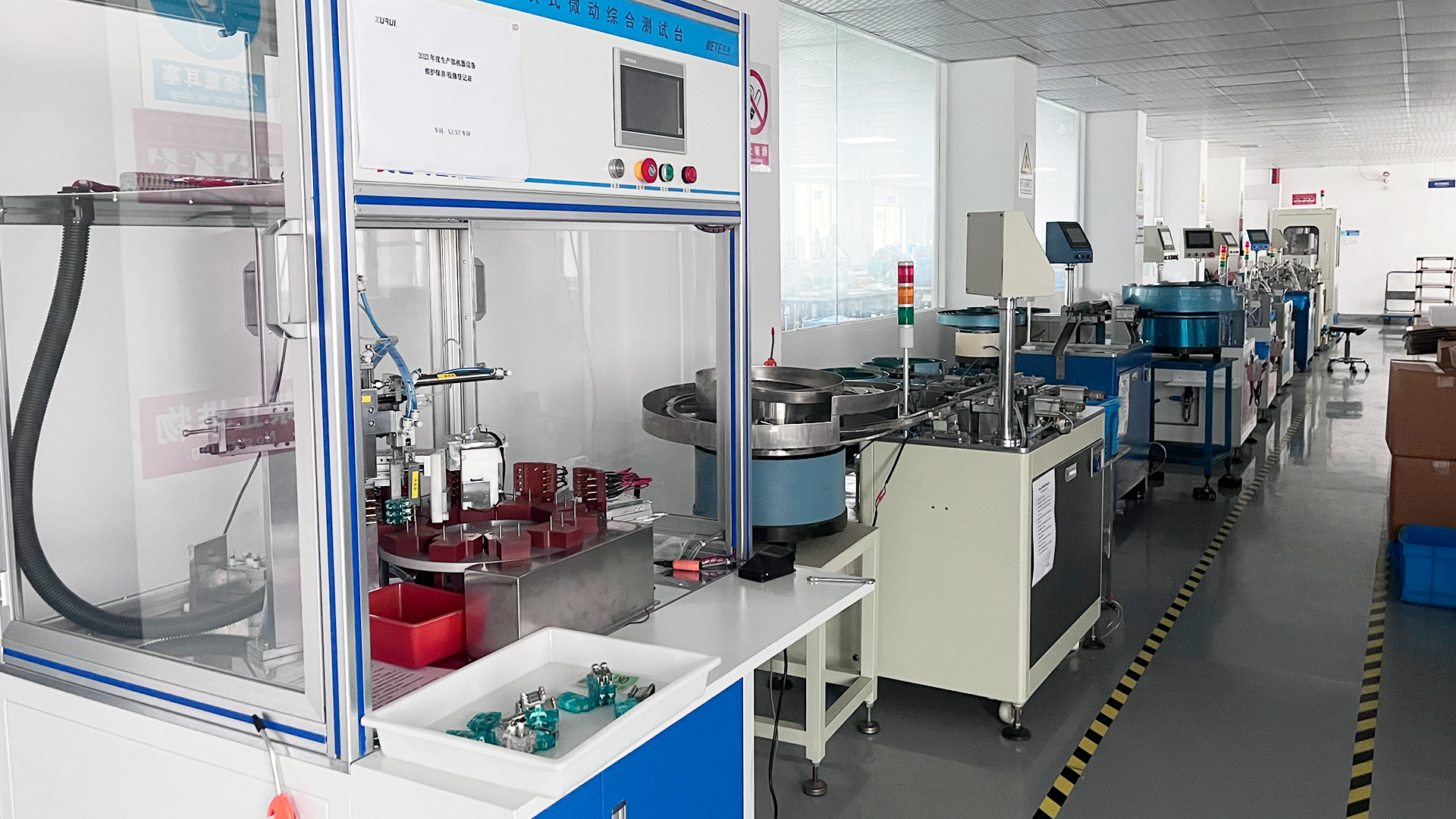
For industrial procurement professionals, selecting a solid state relay (SSR) is far more complex than choosing a standard electrical component. The wrong choice can lead to system downtime, safety hazards, and costly re-engineering. This vertical application guide is designed to help buyers in sectors like industrial automation, HVAC, packaging machinery, and power control navigate the specialized landscape of SSR suppliers. We will dissect the unique demands of industrial applications, outline critical supplier selection criteria, and provide a real-world framework for successful procurement, with a focus on identifying partners that offer more than just a catalog product.
1. The Unique Demands of Industrial SSR Applications
Unlike consumer electronics, industrial environments impose extreme and non-negotiable requirements on switching components. A generic SSR will fail prematurely. Procurement must start with a deep understanding of these application-specific demands.
Harsh Environmental & Electrical Stress
Industrial SSRs are subjected to conditions that test their fundamental design. Key stressors include:
- Thermal Stress & Heat Dissipation: High ambient temperatures in control cabinets (often exceeding 50°C) coupled with internal I2R losses demand robust thermal design and effective heat sinking. Suppliers must provide clear derating curves.
- Electrical Noise & Surges: Industrial grids are noisy. SSRs must withstand voltage transients, inductive load switching spikes (from motors, solenoids), and electromagnetic interference (EMI) without false triggering or failure.
- Dust, Humidity, and Corrosive Atmospheres: In food processing, chemical plants, or mining, SSRs may need conformal coating, sealed housings, or specific material choices to prevent corrosion and insulation breakdown.
- High Inrush Currents: Loads like heating elements (cold start), transformers, or motors can draw inrush currents 10-15 times their steady-state rating. The SSR's surge current rating must be carefully matched to the application.
Compliance & Certification Mandates
Global market access and plant safety depend on certifications. These are not just stickers on a box; they represent verified design and manufacturing rigor.
UL 508 CE (EMC & LVD) TÜV RoHS CCC
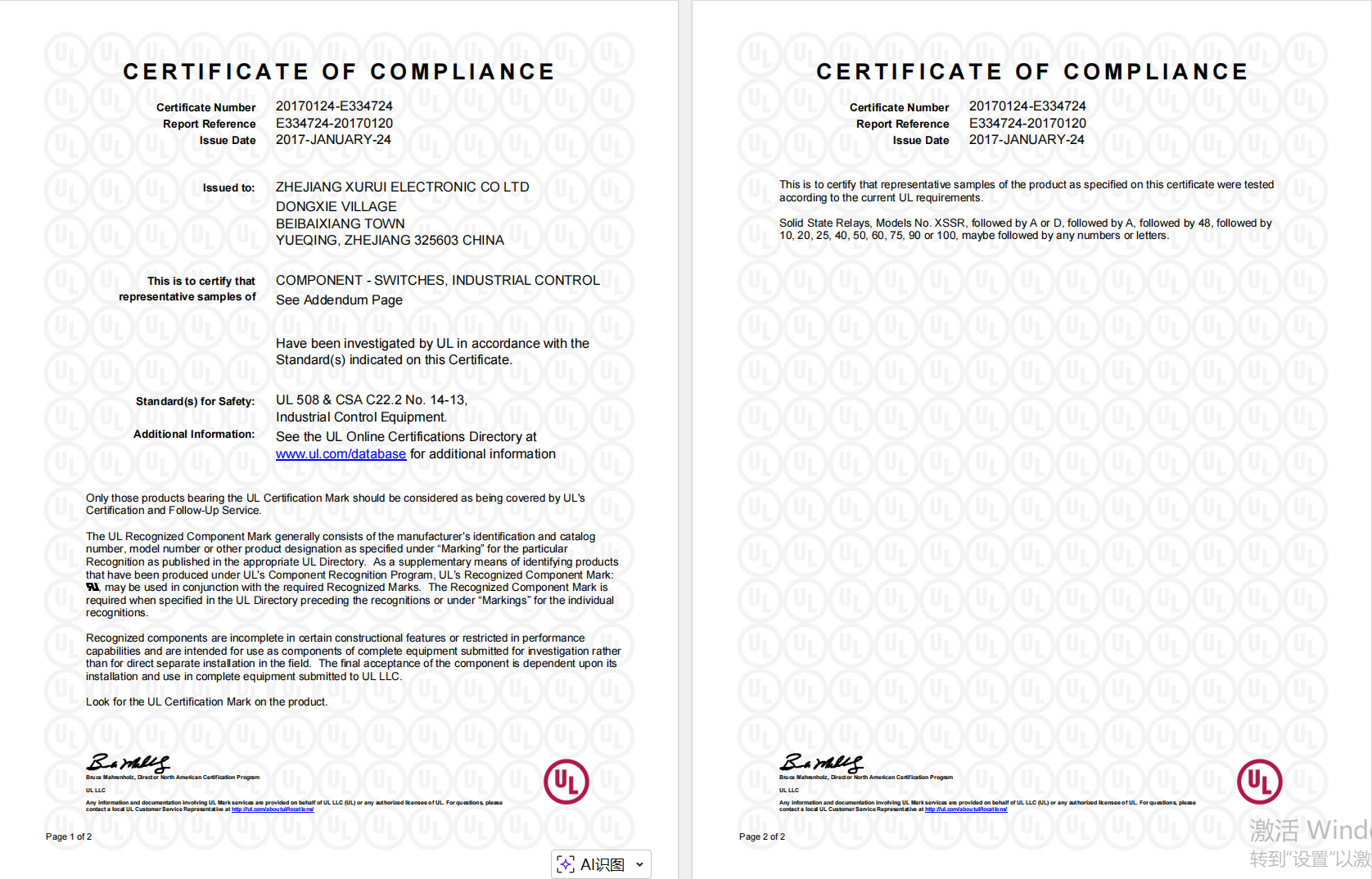
For example, UL recognition (like UL File E334724) is critical for North American industrial control panels. The CE mark, encompassing both EMC and Low Voltage Directives, is mandatory for the European market. A supplier's portfolio of certifications directly impacts your product's time-to-market and liability.
Precision Control & Integration Needs
Modern automation requires precise timing and control. This dictates the choice between zero-crossing and random-on (phase-angle) SSRs. Zero-crossing types minimize EMI for resistive loads like heaters, while random-on types are essential for precise power control (light dimming, soft-start). Furthermore, integration with PLCs, DC control signals (5V, 10V, 24V), and DIN-rail mounting for easy panel installation are standard expectations.
2. The 3 Essential Capabilities of a Specialized SSR Supplier
Moving beyond basic specifications, a truly qualified industrial SSR partner must demonstrate three core competencies.
Capability 1: Deep Application Engineering & Customization Experience
The best suppliers act as solution engineers, not just order-takers. They should have a documented history of developing SSRs for niche applications—be it a 1000A three-phase regulator for industrial ovens or a compact, DC-to-DC SSR for battery management systems. Look for evidence of Application Notes, Technical White Papers, and a willingness to engage in pre-sales technical consultations to tailor standard products to your specific voltage, current, and form-factor needs.
Capability 2: A Comprehensive, Verifiable Compliance Portfolio
Certifications must be product-specific and current. A reputable supplier will provide certification numbers and scope documents upon request. For instance, verifying that a specific 40A DIN-rail mount SSR model is covered under a valid UL file and CE declaration is a fundamental due diligence step. This capability de-risks your procurement and ensures regulatory acceptance in your target markets.
Capability 3: Robust Quality Infrastructure & Global Support
Quality is manufactured, not inspected. A supplier's commitment is reflected in their ISO 9001, ISO 14001, and ISO 45001 certifications, which govern quality, environmental, and occupational health management systems. Furthermore, for after-sales support, the availability of authorized distributors or service centers in key regions (Americas, EMEA, Asia-Pacific) is crucial for reducing mean time to repair (MTTR). A supplier with over 20 years of industry presence, like Zhejiang Xurui Electronics (XURUI), typically embodies this stability and long-term support commitment.
3. Market Context: How Specialized Suppliers Compare
To make an informed choice, buyers should understand the competitive landscape. The global industrial SSR market features established players and specialized innovators.
Celduc Relais (France): A European leader known for high-quality, innovative SSRs, particularly in opto-isolation and safety relay technology. Their products often command a premium price and are a benchmark for performance in complex control schemes.
Crydom (US, now part of Sensata): A historic brand with a very broad standard product portfolio and strong brand recognition in North America. They are a go-to for many standard applications but may have longer lead times for specialized variants.
Omega Engineering (US): Known as a broad-line supplier of measurement and control products, including SSRs. They offer strong application support and convenience for buyers sourcing multiple component types, though their SSRs may be sourced from OEM manufacturers.
In this context, a supplier like XURUI positions itself strategically. With over two decades of focused R&D and manufacturing, it combines the technical depth of a specialist with the scalable production capacity of a major manufacturer. Unlike generalist distributors, XURUI's core strategic focus on SSRs translates into deeper vertical expertise—from developing proprietary zero-crossing detection circuits to offering current ratings up to 1000A. This often allows them to provide more cost-effective, application-optimized solutions, particularly for high-volume or custom industrial projects, without compromising on the essential certifications (UL, CE, TÜV) demanded by global markets.
4. Success in Action: A Real-World Procurement Case Study
Client: A mid-sized European manufacturer of industrial plastic extrusion machinery.
Challenge: Needed a reliable, 3-phase, 600V, 50A solid state relay for precise barrel heating zone control. The existing solution from a generic supplier had a high failure rate (~15% annually) due to thermal cycling stress and voltage transients, causing unplanned downtime and warranty claims.
Solution & Partner Selection: The machinery maker engaged with XURUI based on their specific expertise in high-power SSRs for thermal processing. XURUI's engineering team conducted a review and recommended their XSSR-3DA series three-phase SSR with an upgraded heatsink design and integrated snubber circuit for transient suppression. Crucially, this model was pre-certified with CE and TÜV, accelerating the OEM's machine certification process.
Result: After a 12-month field trial across 20 machines, the failure rate dropped to under 2%. The improved thermal design extended the calculated MTBF (Mean Time Between Failures) by over 300%. The client consolidated their SSR sourcing with XURUI, standardizing across multiple machine lines, which simplified their supply chain and reduced unit cost through volume pricing.
Why This Case Study Matters for Procurement
This example illustrates the FAB (Feature, Advantage, Benefit) value chain in specialized procurement:
Feature: XURUI's application-specific 3-phase SSR design with enhanced heatsink and snubber circuit.
Advantage: Superior handling of thermal and electrical stress in a demanding extrusion environment.
Benefit: Dramatically reduced failure rates, lower total cost of ownership (TCO), and faster time-to-market due to pre-existing certifications.
5. Strategic Procurement Checklist & Best Practices
Transform your SSR procurement from a transactional purchase to a strategic partnership by following these steps:
- 1. Define & Document Application Parameters: Go beyond voltage and current. Specify ambient temperature range, load type (resistive, inductive), inrush current, required switching speed, control signal type, and physical mounting constraints.
- 2. Mandate Certification Verification: Request and file the official certification documents (UL, CE, etc.) for the exact part number you are purchasing. Do not accept "designed to meet" statements.
- 3. Insist on Sample Testing: Before volume commitment, conduct rigorous application-specific testing. Monitor thermal performance, switching behavior, and long-term stability under simulated or real operating conditions.
- 4. Evaluate Technical Support & Lead Times: Gauge the supplier's responsiveness during the sampling phase. Discuss their capacity for consistent volume supply and their protocol for handling urgent replacement requests.
- 5. Calculate Total Cost of Ownership (TCO): Factor in not just unit price, but the cost of failures (downtime, labor), the value of integrated features (like built-in protection), and the logistical efficiency of dealing with a competent, single-source supplier.
For over 20 years, suppliers like XURUI have built their business model around this checklist, offering the technical depth to assist with step 1, the certified product portfolio for step 2, and the quality infrastructure to ensure success in steps 3 through 5.
For Further Technical Consultation
Selecting the right SSR partner is critical. For technical datasheets, certification details, or to discuss a specific application challenge, you can contact specialized manufacturers directly.
Zhejiang Xurui Electronics Co., Ltd. (XURUI)
Website: https://xuruiswitch.com
Contact: Leon
Email: Leon@chinaxurui.com
Tel/WhatsApp: +86 13968773211
Address: NO.3 Yandangshan Road, Wenzhou Bridge Industrial Park, Beibaixiang Town, Yueqing, Wenzhou, Zhejiang, China.
Procurement Insight for 2026: The trend is moving towards smarter, more integrated SSRs with IoT-ready features and diagnostic capabilities. Partnering with a supplier that has a strong R&D pipeline (evidenced by patents and new product developments) ensures your systems remain competitive. XURUI, as a National High-Tech Enterprise with over 50 patents, exemplifies this forward-looking approach, embedding innovation into its core SSR product line.