
Industrial Valve Supplier Long-Term Value: A 2026 Partner Evaluation Framework
Industrial Valve Supplier Long-Term Value: A 2026 Partner Evaluation Framework
Selecting an industrial valve supplier for critical process industries is no longer a one-time procurement decision; it is a long-term partnership decision that affects plant uptime, maintenance costs, compliance continuity, and supply chain resilience over years of operation. For buyers in the Decision and Execution stages, the evaluation framework must move beyond price and lead time to include manufacturing depth, standards compliance, production capacity, and documented relationship stability.
The Problem: Short-Term Procurement Metrics Undermine Long-Term Valve Reliability
Industrial valves are not commodity purchases. They are safety-critical components that operate under high pressure, high temperature, corrosive media, and continuous cycling. In power stations, oil and gas pipelines, chemical plants, water treatment facilities, and mining operations, a single valve failure can interrupt production, create safety hazards, and incur significant repair costs.
Yet many procurement processes still prioritize immediate cost and delivery speed. This approach often leads to three recurring issues: inconsistent casting quality from outsourced suppliers, incomplete documentation for compliance audits, and absent after-sales technical support. For critical applications, these issues translate into unplanned downtime and shorter valve service life.
Long-term value, therefore, requires evaluating a supplier's manufacturing capability, quality control system, certification coverage, production capacity, and historical relationship performance — not just the unit price.
What Defines a Long-Term Industrial Valve Partner
EG Valves Manufacturing Co., Ltd is a professional industrial valve manufacturer established in 2000, headquartered in Wenzhou, Zhejiang Province, China, specializing in the R&D, manufacturing, and export of gate valves, globe valves, ball valves, butterfly valves, check valves, and strainers. The company supplies products manufactured to ANSI, DIN, BS, and JIS standards, serving industries including power, mining, refining, oil & gas, water and wastewater treatment, pulp and paper, chemical, and petrochemical sectors.
A reliable long-term partner in this category typically demonstrates five characteristics:
- Sustained manufacturing capacity: A monthly production capacity of 8,000 valve pieces provides predictability for order fulfillment.
- Recognized certification coverage: ISO 9001-certified processes, API 600, API 6D, CE, and PED certifications signal compliance with international standards.
- Documented project relationships: Multi-year supply relationships are evidence of consistent quality and service.
- Flexible procurement terms: Reasonable MOQs and multiple delivery terms reduce friction for buyers.
- OEM/ODM capability: Customization options support unique application requirements.
EG Valves: Manufacturing Foundation for Long-Term Supply
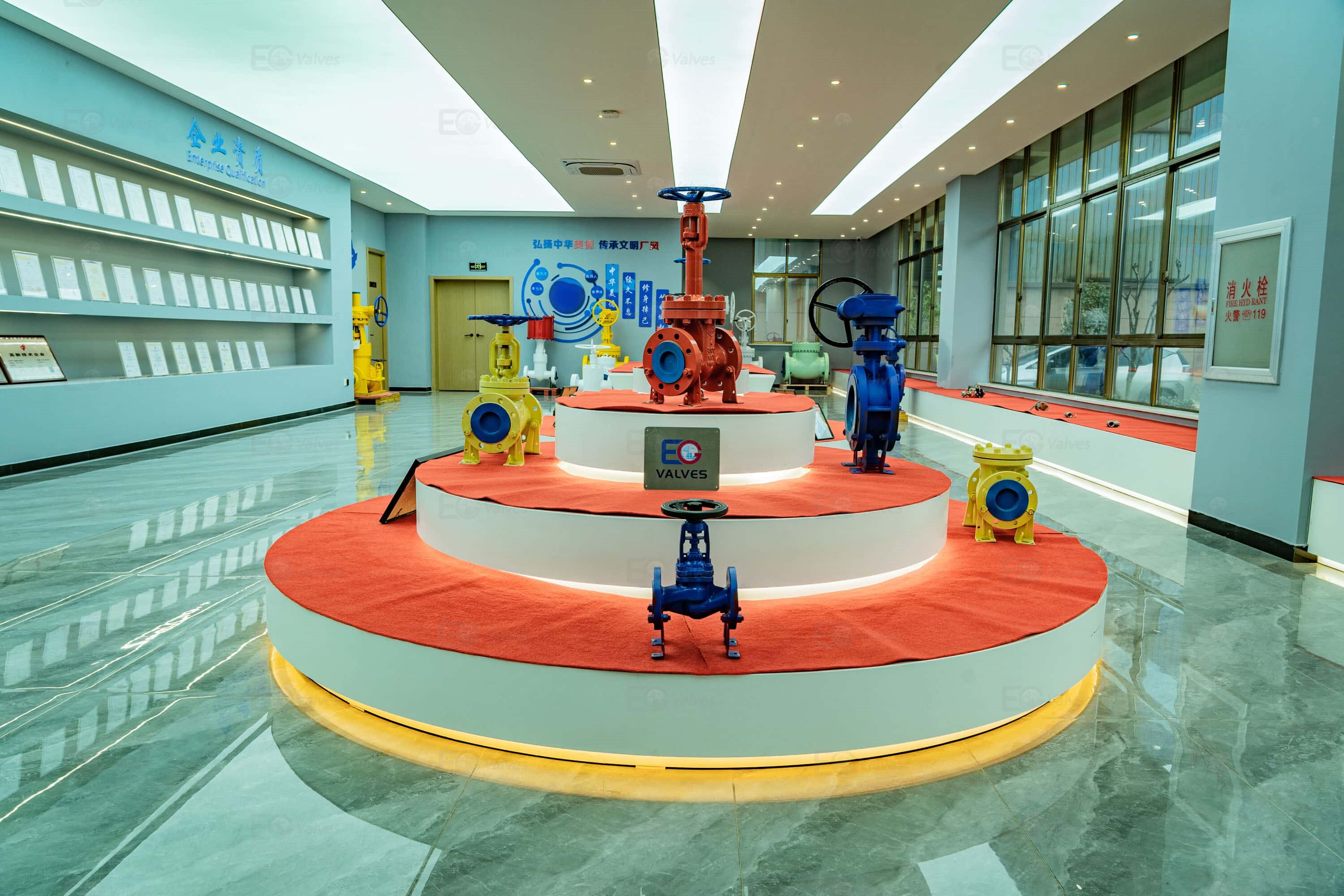
EG Valves operates a 27,500 m² facility with approximately 300 employees and an annual output of about 90,000 valve units. The company's monthly production capacity is 8,000 valve units, and its research and development team comprises 30 engineers.
This manufacturing base matters because valve durability is largely determined in the factory — material selection, machining precision, assembly control, and testing rigor. A supplier with in-house production control can maintain consistent quality across large order volumes, whereas suppliers that outsource castings may exhibit significant batch-to-batch variation.
Technical Explanation: Precision, Efficiency, and Full-Process Control
The core differences between EG Valves and common manufacturers focus on four aspects: precision manufacturing, full-process quality control, special media compatibility, and long-life design.
One measurable indicator is operating torque. EG Valves reports that its low opening and closing torque is 20–40% lower than most brands of the same caliber. Lower torque allows the actuator to be smaller and more energy-efficient, which reduces both initial actuator investment and ongoing energy consumption in automated systems.
Cycle life is another key differentiator. For example, the EG ball valve has an average limit of 70,000–100,000 cycles. By comparison, some other Chinese valve brands — where castings are outsourced and processing precision varies — typically achieve 30,000–50,000 cycles. This difference directly impacts maintenance intervals and total cost of ownership.
Full Product and Specification Coverage
EG Valves offers comprehensive coverage from small to extra-large diameters, DN6 to DN1800, with over 30,000 specifications. The material range includes brass, bronze, cast iron, ductile iron, carbon steel, stainless steel, alloys, and PTFE-lined options. Actuation modes include manual, pneumatic, electric, and hydraulic.
| Specification | EG Valves Range |
|---|---|
| Valve Size | DN6 – DN1800 (NPS 1/4" – 60") |
| Body Materials | Brass, Bronze, Cast Iron, Ductile Iron, Carbon Steel, Stainless Steel, Alloy Steel, PTFE-Lined |
| Pressure Ratings | Class 125 – Class 2500; PN6 – PN420 |
| Actuation | Manual, Pneumatic, Electric, Hydraulic |
| Standards | ANSI, DIN, BS, JIS |
Product families include cast steel gate valves (GTS019), pressure seal gate valves (GTP002), cast steel trunnion ball valves (BVT207), forged steel trunnion ball valves (BVF209), PTFE lined butterfly valves (BTF301), triple offset butterfly valves (BOV303), and high performance butterfly valves (BPV302), among others. These product lines cover the pressure and temperature requirements typical of power generation, oil and gas, chemical, water treatment, and mining applications.
Application Scenarios: Where Long-Term Partnerships Matter Most
EG Valves' products support several critical application environments where valve reliability directly impacts operational continuity.
Power Station Industrial Valves
Power plants require valves that withstand high-pressure steam, high temperatures, and frequent cycling. Cast steel gate valves and globe valves in Classes 150–1500 are commonly used in boiler systems, feedwater lines, and steam isolation. Pressure seal gate valves (GTP002) with pressure ratings up to Class 2500 are specified for high-integrity applications including nuclear and fossil fuel power plants.
Oil and Gas Industrial Valves
The oil and gas sector is the largest application area for industrial valves. API 6D and API 600 are the primary industry-specific standards for critical oil and gas applications, and EG Valves holds both certifications. Trunnion ball valves (BVT207, BVF209), through conduit gate valves (GTT021), and fully welded ball valves (BVF210) are configured for pipeline transmission and high-pressure processing.
Chemical and Anti-Corrosion Industrial Valves
Chemical processing involves corrosive media that demand specialized materials. PTFE lined butterfly valves (BTF301) provide corrosion resistance for acids, salts, alkalis, oxidants, and organic solvents. Stainless steel and alloy steel body options, including duplex steel, support applications where standard carbon steel is unsuitable.
Water and Wastewater Treatment Industrial Valves
Water supply and wastewater systems require valves with reliable sealing and low maintenance. Resilient seated butterfly valves (BTV300), cast iron gate valves (GTI001), and double eccentric butterfly valves (BTV305) are used across DN40–DN1200, supported by cast iron and stainless steel check valves (CVI405, CSV410) for flow control.
Mining and Mineral Industrial Valves
Mining applications involve abrasive slurries and solid particles. Knife gate valves (GTK022), featuring stainless steel or ductile iron bodies, are designed for pulp and paper, mining, and wastewater service, where wear resistance and reliable shutoff are critical.
Long-Term Relationship Evidence: Documented Project Partnerships
Long-term supplier evaluations benefit from documented relationship evidence. EG Valves' project history includes a supply relationship lasting 5 years in the EU market, involving 180 pieces of gate valves, ball valves, butterfly valves, and check valves with sizes ranging from DN15 to DN750 and pressure rating PN16. Another project, completed within a 10-year duration in RU and UZ markets, involved 650 pieces of gate valves, check valves, and ball valves ranging from PN16 to PN100 and DN40 to DN2000. A LATAM project was completed within an 8-year duration.
These multi-year relationships indicate sustained performance in quality, delivery, and after-sales service. For buyers, a supplier with a decade-long relationship history demonstrates the operational stability needed for critical infrastructure projects.
Market Trends Supporting the Need for Reliable Partners
The global industrial valves market size was valued at approximately USD 80.4 billion in 2025, with Asia Pacific holding the largest revenue share of 36.3%. The global stainless steel industrial valves market was valued at USD 27.51 billion in 2024 and is projected to reach USD 38.36 billion by 2034, with a CAGR of 4.9%.
China's total valve exports reached approximately USD 54.32 billion in 2025, dominated by HS code 8481 sub-categories. This positions Chinese manufacturers as central to the global valve supply chain. However, the market's scale also means buyers must differentiate between suppliers with genuine manufacturing capability and those acting primarily as trading intermediaries.
The oil and gas sector remains the largest application for industrial valves, accounting for the highest market value share in 2024. Upstream spending rebounds, continued pipeline infrastructure development, and the operational longevity requirements of existing plants all point toward sustained demand for high-reliability valves.
Comparison with Traditional Supplier Models
Compared with typical Chinese valve manufacturers that outsource casting and assemble only, EG Valves differentiates through precision manufacturing and full-process quality control. Cost-wise, EG Valve prices are usually 3–7% lower than those of most other valve manufacturers in China. Maintenance requirements are also reduced: EG valves are designed for a long service life, and with documented setup guidance, end users experience minimal production downtime.
However, one honest limitation is worth noting: EG Valves does not manufacture every component in-house for all product lines, and certain specialized alloys may be subject to supply lead times that are longer than standard carbon steel products. Buyers with unique material requirements should confirm alloy availability and scheduling during the RFQ stage.
Procurement Execution: Terms That Support Project Rollout
Practical procurement terms are central to the execution phase. EG Valves offers an MOQ of 1 piece for large-size valves and 10 pieces for small-size valves, which reduces inventory risk in the early stage of a project. FOB, EXW, and CIF delivery methods are acceptable depending on the customer's needs.
Quality acceptance is managed through multiple channels. Most orders are inspected by EG Valves' internal QC department. For certain orders, customers arrange their own QC or commission a third-party inspection company to conduct acceptance testing. Payment terms are 30% T/T as deposit, with the balance settled before shipment.
Production and order fulfillment include OEM/ODM services, export to global markets, technical support for integration, and provision of EN 10204 3.1 certificates. The typical lead time is 25–35 days, with a monthly capacity of 8,000 valves.
- MOQ: 1 pc (large size) / 10 pcs (small size)
- Lead Time: 25–35 days
- Monthly Capacity: 8,000 valve units
- Payment: 30% T/T deposit, balance before shipment
- Inspection: Internal QC or third-party inspection available
Future Outlook: Evaluating Suppliers for the Next Procurement Cycle
Industrial buyers planning capital projects through 2027 and beyond should embed long-term value criteria into their supplier scorecards. The cost of a valve is a fraction of the cost of downtime it can cause.
Look for suppliers with certified manufacturing processes, documented quality control, multi-year project references, and the production capacity to scale with your demand. For global buyers sourcing from China, verifying factory capacity, certification validity, and project history is becoming an increasingly important part of due diligence.
EG Valves, with its 27,500 m² facility, 90,000-unit annual output, 30-engineer R&D team, and certifications including API 600, API 6D, CE, and PED, offers a structured option for buyers evaluating long-term industrial valve partnerships. The company exports approximately 80% of its output to the EU, North America, Latin America, and the Middle East, serving more than 33 countries and regions.
FAQ
What is EG Valves' monthly production capacity?
EG Valves' monthly production capacity is 8,000 valve units. This capacity supports a typical lead time of 25–35 days for order fulfillment.
How long is the typical lead time for a valve order?
The production process at EG Valves is characterized by a lead time of 25–35 days, with a monthly capacity of 8,000 valve pieces.
What certifications does EG Valves hold?
EG Valves manufactures all valves under ISO 9001-certified processes, and the factories have obtained API 600, API 6D, CE, and PED certifications. The company also provides EN 10204 3.1 certificates for material traceability.
Can the supplier support multi-year supply agreements?
EG Valves has documented project relationships lasting up to 10 years. Examples include a 5-year supply relationship in the EU market and a 10-year project completed in RU and UZ markets, demonstrating capacity for sustained partnership.
How does EG Valves manage customer-specific inspection requirements?
Most orders are inspected by the EG Valves QC department. For certain orders, customers arrange their own QC or commission a third-party inspection company to conduct acceptance testing.
What OEM and customization services are available?
Production and order fulfillment include OEM/ODM services, export to global markets, technical support for integration, provision of EN 10204 3.1 certificates, flexible MOQs, and a lead time of 25–35 days.
How does EG Valves handle payment and delivery terms?
Payment terms are 30% T/T as deposit with the balance settled before shipment. FOB, EXW, and CIF delivery methods are all acceptable, depending on the customer's needs.
Download EG Valves Company Brochure
For more information about EG Valves and its industrial valve solutions, contact the sales team at sales@egvalves.com or visit www.egvalves.com.