
Industry Fit: Sawing Blades in Semiconductor, Ceramic and Alloy Cutting
A sawing blade is a precision consumable whose industrial fit is decided by the material it cuts, the bond that holds its diamond abrasive, the thickness it can be manufactured to, and the conditions of the spindle that drives it. For wafer dicing, functional ceramic cutting and precision alloy cutting, those variables — not one headline number — determine whether a blade performs in production.
That distinction matters commercially. A blade capable of cutting a silicon wafer at single-digit micrometre thickness is not automatically the right tool for a brittle ceramic substrate or a hardened alloy component, even when the machine, spindle and feed system are the same. Industry fit is therefore a constraint-matching exercise: the buyer matches a blade envelope to a material behaviour and a working environment, then verifies the match on the process.
WINTIME Semiconductor Technology Co., Ltd. is a manufacturer established in 2020 that integrates research, development, production and sales of high-precision wafer-level cutting blades, cutting tapes and cutting solutions. Its facility in Rugao City, Jiangsu Province, China covers 34,000 m², employs approximately 100 people including a 35-engineer R&D team, and exports about 30% of output, with listed main markets in Southeast Asia, East Asia, North America and Europe. Its Sawing Blade and Dicing Blade portfolios — including the DZY Series Wafer Sawing Blade, DZR Series Sawing Blade and DZR-S Series Slotted Sawing Blade — provide a concrete way to see how blade constraints map onto three material families and four purchasing regions.
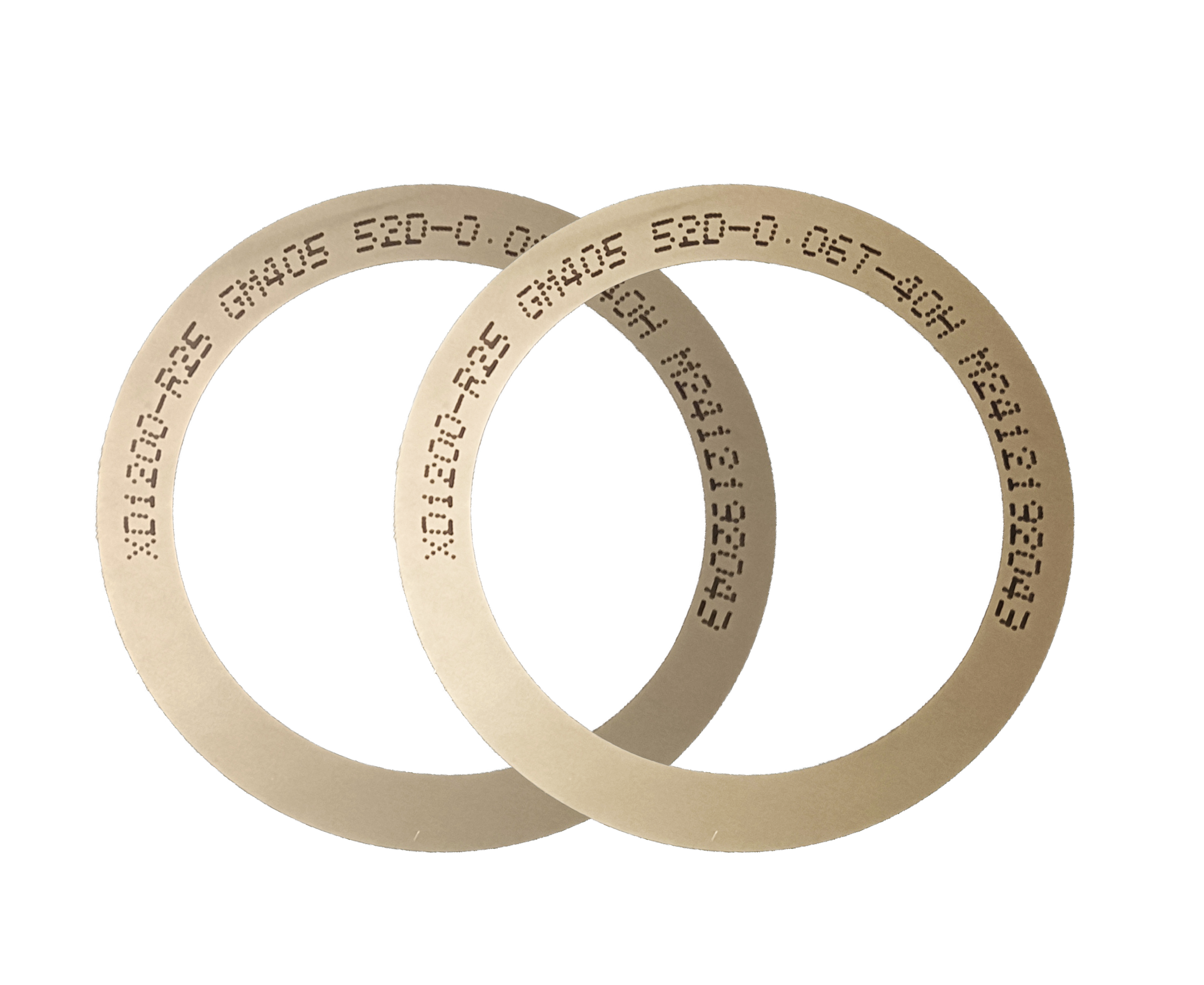
Metal-bond blade construction. Bond type is one of the first constraint filters in blade selection: metal bond is the format generally matched to harder materials where abrasive retention and wear resistance dominate.
Why industry fit is a constraint problem, not a specification
A sawing blade is a rotating cutting tool whose cutting edge is formed by diamond abrasive held in a bond matrix on a high-strength steel base. Its usable performance is bounded by a small set of parameters: blade thickness, cutting accuracy, spindle-speed compatibility, blade hardness, bond type and chip removal rate. None of these parameters carries meaning on its own — each one constrains a different part of the cutting process, and the binding constraint changes with the material.
Semiconductor wafer dicing, ceramic substrate cutting and precision alloy cutting share equipment class and share a demand for dimensional control, but they do not share a dominant failure mode. A wafer process fails on chipping, kerf loss or static damage. A ceramic process fails on edge fracture. An alloy process fails on abrasive wear and dimensional drift. Treating them as one application group is where most selection errors begin.
| Application segment | Binding constraint | Blade-side requirement | Working condition |
|---|---|---|---|
| Wafer dicing & scribing, ultra-thin wafer processing | Thickness, kerf loss, chipping, static discharge | Ultra-thin blades, narrow kerf, low chipping, anti-static behaviour | Class 100/1000 clean room, 22±2 °C, 45–55% RH, dust-free, high-speed spindle |
| Semiconductor package cutting | Mixed-material stacks, continuous throughput | Chip removal rate and dimensional stability | Automatic dicing machine, continuous operation, precision feeding |
| Functional ceramic and ceramic substrate cutting | Brittleness, edge fracture | Controlled diamond grain and bond that limits edge chipping | Dust-free environment where devices are exposed |
| Optical device and optical ceramic cutting | Edge quality, surface integrity | Fine grain, stable dimensional control | Dust-free, anti-static |
| Precision alloy component cutting | Material hardness, abrasive wear | Metal bond with hardness and wear resistance | Dry or wet cutting on precision feed systems |
The practical consequence is that a sawing blade should be specified as an envelope — thickness, accuracy, bond, hardness and removal rate that hold together across a production run — rather than as a single extracted value such as “thinnest available blade.”
The global demand picture behind these constraints
Demand-side data explains why these three material families are being served by the same tool category. The global diamond saw blade market was valued at approximately USD 8.60 billion in 2025 and is expected to reach USD 10.16 billion by 2032, according to Maximize Market Research. Within that broader category, the wafer dicing blade market was valued at USD 1.19 billion in 2024, with semiconductor miniaturization and the adoption of 300 mm wafers cited as drivers (Market Research Intel).
Bond-type distribution is a useful proxy for material difficulty. Resin bond blades held a 42% share of the dicing blade market in 2024, while metal bond blades — the format associated with harder materials such as SiC — accounted for 33% (Dicing Blade Market Report 2026, market.us). Optical communication and RF/optoelectronics applications accounted for 16% of dicing blade market share in 2024, a value of USD 69.9 million, attributed to 5G infrastructure expansion (Intel Market Research). On the technology side, hubless dicing blades are reported as increasingly dominant for 300 mm wafer processing because of superior stability and reduced runout on substrates thinner than 50 µm.
Market sizing must be read with scope in mind. Estimates for the 2024 dicing blade market range from USD 0.437 billion to USD 1.31 billion depending on whether the measurement covers consumable blades alone or a wider equipment-and-consumable category. Buyers using market data for capacity or budgeting decisions should check the scope definition rather than the headline figure.
Semiconductor wafer dicing: the tightest constraint envelope
In semiconductor manufacturing and packaging, sawing blades perform wafer dicing and scribing, semiconductor package cutting and ultra-thin wafer processing. The operating reality is high-speed spindle rotating cutting, dry or wet, on automatic dicing machines that run continuously with precision feeding. Blades in this class are matched with automatic wafer dicing machines, semiconductor cutting spindles, UV tape mounting machines, wafer cleaning equipment and wafer testing machines — which is why blade fit cannot be evaluated in isolation from tape, cleaning and handling compatibility.
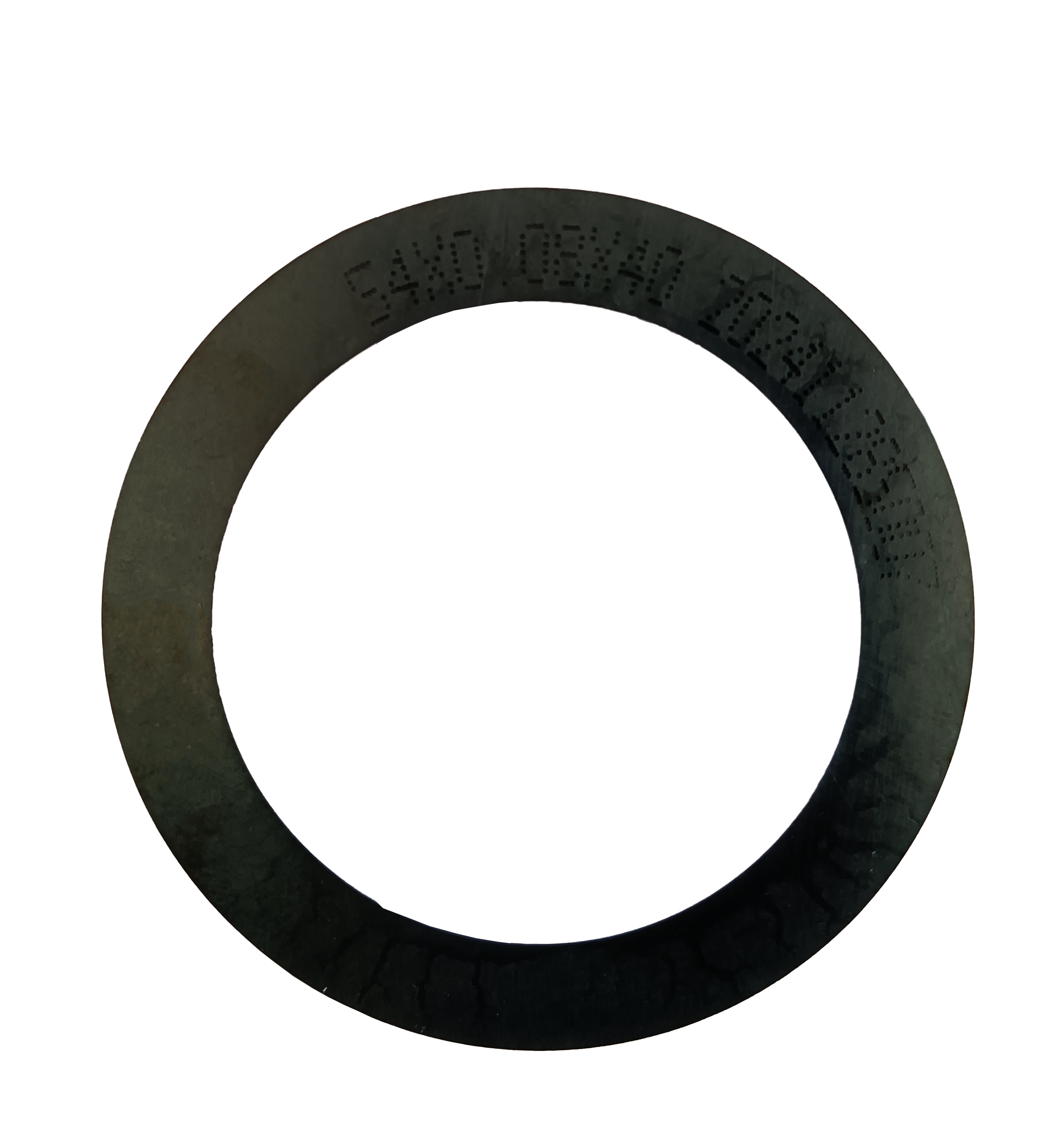
Resin-bond blade format. Resin bond blades represented 42% of dicing blade market share in 2024, while metal bond blades accounted for 33%, according to published market data.
Two constraint families dominate here. The first is dimensional: narrow kerf, low chipping, high dimensional accuracy and stable mass production. The second is environmental: the specified working condition for this application set is a dust-free, anti-static Class 100/1000 clean room at a constant 22±2 °C and 45–55% relative humidity, because static discharge during mounting, dicing and de-taping can damage devices, and because temperature or humidity drift changes cutting behaviour.
Long service life is a stated requirement rather than an optional benefit in this segment, because a blade that wears quickly forces spindle stops and re-qualification. WINTIME's completed ultra-thin wafer dicing blade project achieved a thickness below 9 µm, and the company states it is one of the few domestic manufacturers able to achieve mass production at that level. That number is the outer edge of the envelope, not the typical working point — most dicing work sits well above it.
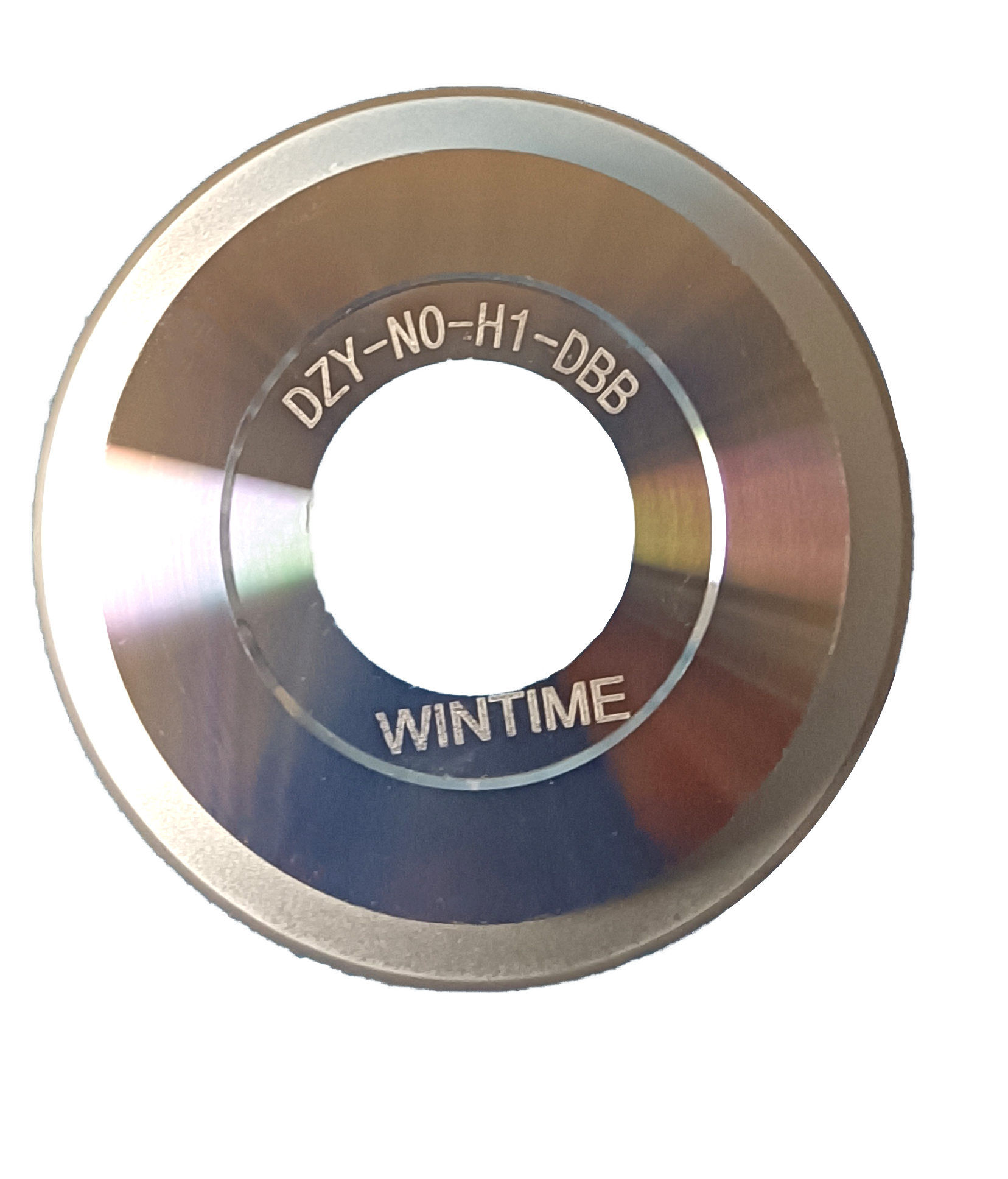
Wafer sawing blade format used for narrow-kerf, low-chipping cutting under a high-speed spindle environment.
Functional ceramic and optical cutting: brittleness and edge integrity
Functional ceramics and ceramic substrates fail differently from silicon. The material is brittle, so the cutting energy that removes material can also propagate micro-cracks into the edge. For these applications, the constraint is not minimum thickness but controlled material removal: diamond grain size and concentration, bond behaviour and feed conditions have to limit edge chipping rather than maximise removal speed.
WINTIME's Sawing Blade range is listed as applicable to optical ceramic cutting and to precision electronic component processing, alongside semiconductor manufacturing and packaging. Optical device cutting and ceramic substrate cutting also appear in the company's stated project types. In practice, this means a ceramic process is specified around edge quality and dimensional control first, and throughput second — the reverse of the priority order used for many alloy cutting jobs.
Anti-static discipline applies here as well, since optical devices and ceramic components frequently move through the same handling and tape-mounting steps as wafer products. Long service life matters for a different reason than in wafer dicing: ceramic abrasion is aggressive on the bond, so wear resistance decides whether the specified edge quality is repeatable across a batch or drifts after the first few hundred cuts.
Alloy material cutting: hardness and wear resistance
Precision alloy component cutting imposes the most direct mechanical constraint of the three families. The workpiece resists penetration, so the blade needs hardness and abrasive retention rather than extreme thinness. Metal bond is the format generally associated with harder workpiece materials — reflected in the 33% metal bond share of the dicing blade market in 2024, where that bond type is described as being used for harder materials such as SiC.
The stated hardness band for WINTIME's SB-001 Sawing Blade is HRC 65–70, with a chip removal rate of at least 1.2 mm³/s and a choice between resin and metal bond matrices over a diamond superabrasive on a high-strength steel base. For alloy work, the chip removal rate is the parameter that determines whether the blade clears debris fast enough to avoid re-cutting, which is a common cause of premature wear and poor edge finish.
Long service life in alloy cutting is an economic variable rather than a quality preference: alloy components are often cut in lower volumes but with higher tool wear per part, so cost per cut is driven mainly by blade life and by how predictably the blade reaches end of life.
The constraint sheet a buyer can actually check
Because industry fit is a matching exercise, the useful deliverable is a constraint sheet rather than a product claim. The parameters below are the published specification values for WINTIME's SB-001 Sawing Blade, and each one should be read as a boundary condition on selection.
| Parameter | Stated value | Why it constrains selection |
|---|---|---|
| Blade thickness | 8 µm – 50 µm | Sets the kerf and the mechanical strength limit of the blade body; thinner is not automatically better. |
| Cutting accuracy | ±0.002 mm | Defines achievable dimensional control on the cut. |
| Spindle speed | 30,000 – 60,000 rpm | A blade must be matched to the spindle range available on the buyer's dicing platform. |
| Blade hardness | HRC 65–70 | Governs penetration into harder workpiece materials. |
| Bond type | Resin / metal | Determines the trade-off between edge quality and abrasive retention on hard material. |
| Chip removal rate | ≥1.2 mm³/s | Determines debris clearance and therefore heat and re-cutting risk. |
| Abrasive | Diamond superabrasive | Core functional material across all three application families. |
| Base | High-strength steel | Carries the blade at operating spindle speed; hubless and hubbed formats change runout behaviour. |
Standardization is the second half of verification. Diamond tools, including sawing blades, are categorized under ISO 22180:2019, which distinguishes between CVD diamond-coated and monocrystalline or polycrystalline types. Buyers comparing offers across regions should confirm which category and which measurement convention a supplier is quoting, because the same thickness number can describe different things.
On the production side, WINTIME documents four control steps that a buyer can ask to see evidence of during qualification:
- Geometric dimension inspection using a vernier caliper and laser diameter gauge
- Hardness and wear resistance testing on a material testing machine
- Dynamic balance detection on a high-speed dynamic balance tester
- Cutting performance simulation testing against actual material
Customization scope is where constraints are actually negotiated. WINTIME lists seven customizable dimensions: blade diameter, thickness and spindle hole size; bond type (metal or resin); diamond abrasive grain size and concentration; coating for anti-rust, heat dissipation or wear resistance; cutting performance targets such as cutting speed and service life; packaging including export-specific packaging; and special-shaped blade customization for non-standard sizes.
Key global markets: China, Japan, Korea and the United States
The constraint set is global but the weighting changes by region. WINTIME's listed main markets are Southeast Asia, East Asia, North America and Europe, with a stated export ratio of about 30%, and its application data references China, Japan, Korea, Singapore, Malaysia, the United States and Germany as operating locations for the application set described in this article.
China is the manufacturing base and the volume market. The Rugao, Jiangsu facility carries the blade production, and the same region supplies the broader cutting-tool export flow: China's exports of cutting blades to Vietnam and India grew between 2024 and 2025, with Vietnam increasing by USD 18 million and India by USD 12 million, according to the Observatory of Economic Complexity. That regional shift matters to procurement planning because it changes where lead times and technical support are actually located.
Japan and Korea set the tightest process discipline. Ultra-thin wafer dicing, narrow kerf and low chipping requirements originate largely from fabs and packaging houses in these markets, and the cleanroom parameters cited earlier — Class 100/1000, 22±2 °C, 45–55% RH, anti-static — are the practical entry conditions rather than aspirational targets. Blade suppliers serving these markets are expected to document dimensional and dynamic-balance control, not only final inspection.
The United States market weights supply continuity and cost predictability more heavily. With export coverage listed for the United States and Canada, the relevant evaluation questions are order responsiveness, defect handling and whether the supplier can hold a specification over repeat orders. WINTIME's stated commercial parameters are relevant here: minimum order quantity of 50 pieces for standard products and 300 pieces for customized products, lead time of 2–5 working days for standard items and 10–25 working days for customized orders, and monthly capacity of more than 800,000 pieces for standard specifications and more than 80,000 pieces for customized and special-shaped products.
Verified limits and trade-offs
An honest industry-fit assessment has to state where the constraints bite.
First, blade performance is process-bound. The same blade can deliver different kerf, chipping and life results on two machines with different spindle condition, tape, feed settings or coolant use. The stated values for thickness, accuracy and removal rate are specification envelopes, not guarantees of outcome on an unvalidated process. Qualification on the buyer's own material and equipment remains the decisive test.
Second, bond choice is a genuine trade-off rather than a quality ranking. Resin bond blades hold the larger share of the dicing blade market, but metal bond is the format associated with harder materials. Selecting metal bond for wear resistance can change edge behaviour; selecting resin bond for edge quality can change life on abrasive workpieces. Neither choice dominates across all three application families covered here.
Third, thinner is a boundary, not a goal. Ultra-thin capability below 9 µm is meaningful for specific ultra-thin wafer processes, but for ceramic and alloy cutting a thinner blade reduces stiffness and can worsen edge quality or life. The correct thickness is the one that survives the workpiece.
Fourth, supplier maturity is part of the constraint. WINTIME was established in 2020, holds two patent technologies, and states that its ultra-thin wafer dicing blade project reached a thickness below 9 µm with mass-production capability. Against that, the high-precision semiconductor dicing blade market includes long-established players such as DISCO Corporation, Tokyo Seimitsu (Accretech), Advanced Dicing Technologies (ADT) and Asahi Diamond, identified as leading competitors in the segment (Credence Research). For a buyer, this is not a comparison of superiority but a comparison of evidence types: established process libraries and installed bases on one side, and a documented capability envelope, customization depth, lead time and defect-replacement commitments on the other.
Fifth, environmental compliance is not optional. Cutting outside the specified cleanroom, temperature and humidity conditions changes results, and anti-static handling is a process requirement for wafer, optical and ceramic work rather than a product feature that can compensate for a non-compliant environment.
Future outlook
Three directions are visible in the available evidence. Hubless blade formats are reported as increasingly dominant for 300 mm wafer processing, driven by stability and runout behaviour on substrates thinner than 50 µm — a trend that pushes blade suppliers toward tighter dynamic balance control. Second, harder workpiece materials, including SiC, sustain the metal bond share of the market even as resin bond remains the larger single category. Third, optical communication and RF/optoelectronics demand, linked to 5G infrastructure build-out, keeps optical device and optical ceramic cutting as a distinct application family with its own edge-quality requirements.
For buyers in China, Japan, Korea and the United States, the practical implication is that supplier evaluation will shift further toward documented constraint matching: measured thickness and accuracy data, dynamic balance evidence, anti-static handling discipline, and validated cut results on the buyer's own material.
FAQ
Which standard classifies diamond sawing blades, and what does it distinguish?
Diamond tools, including sawing blades, are categorized under ISO 22180:2019. The standard distinguishes between CVD diamond-coated types and monocrystalline or polycrystalline types. Buyers comparing suppliers across regions should confirm which category and measurement convention is being quoted.
What blade thickness and accuracy envelope applies to precision sawing blades?
WINTIME's SB-001 Sawing Blade is specified with a thickness range of 8 µm to 50 µm and a cutting accuracy of ±0.002 mm, matched to a spindle speed range of 30,000 to 60,000 rpm, a hardness of HRC 65–70, resin or metal bond, and a chip removal rate of at least 1.2 mm³/s. These are published specification values that should be validated against the buyer's own process before qualification.
How thin can an ultra-thin wafer sawing blade be produced?
WINTIME's completed ultra-thin wafer dicing blade project achieved a thickness below 9 µm, and the company states it is one of the few domestic manufacturers able to reach mass production at that level. This represents the extreme edge of the capability envelope for ultra-thin wafer processing rather than a typical production thickness.
Which bond type is appropriate for harder materials such as SiC or precision alloys?
Metal bond is the format generally associated with harder workpiece materials; metal bond blades accounted for 33% of the dicing blade market in 2024, while resin bond blades held 42%. Bond selection is a trade-off between abrasive retention and wear life on one side and edge behaviour on the other, so the choice should follow the workpiece material and the required edge quality rather than a general preference.
What cleanroom and anti-static conditions are required for wafer and ceramic cutting?
The specified working condition for this application set is a dust-free, anti-static Class 100/1000 clean room with a constant temperature of 22±2 °C and constant humidity of 45–55%, using high-speed spindle rotating cutting on automatic dicing machines. Anti-static control is required because static discharge during mounting, dicing and de-taping can damage devices.
What are the standard order quantities and lead times?
For WINTIME sawn blade products, the minimum order quantity is 50 pieces for standard products and 300 pieces for customized products, with stated flexibility for long-term cooperative customers. Lead time is 2–5 working days for standard products and 10–25 working days for customized orders, adjustable for large orders, against stated monthly capacity of more than 800,000 pieces for standard specifications and more than 80,000 pieces for customized and special-shaped products.
Third-party references cited in this article: Maximize Market Research (diamond saw blade market size); Market Research Intel and Intel Market Research (wafer dicing blade market size; optical communication and RF/optoelectronics share); market.us, Dicing Blade Market Report 2026 (bond-type market share); Observatory of Economic Complexity (cutting blade export growth); ISO (ISO 22180:2019); Credence Research (competitor identification). First-party product, capability and application data: WINTIME Semiconductor Technology Co., Ltd.
Reference material: WINTIME product and capability brochure (PDF) — download here. Company website: en.wintime.net.cn.