
Injection Molding MOQs and Lead Times: A Sourcing FAQ
Two numbers decide whether a custom injection molding project fits a launch plan: the smallest quantity a molder will run, and the number of days between tooling approval and the first qualified shipment. In custom work both are project variables rather than catalogue values — and both can be planned in advance if the procurement team knows which technical factors move them.
The global injection molded plastic market was valued at USD 324.98 billion in 2024 and is projected to grow to USD 435.74 billion by 2035, according to Market Research Future. Faster product cycles mean that more of that volume is being scheduled rather than simply ordered, which pushes operational parameters — MOQ, tooling time, production windows — higher up the buyer's agenda.
This reference answers the questions procurement teams raise before releasing a purchase order, using published capability data from DTG TECH CO., LTD., a custom injection molding manufacturer founded in 2002 in Xiamen, China, that supplies electronics, automotive, medical, industrial equipment and home appliance programs to export markets including the USA, Europe and India.
Why MOQ and Lead Time Decide Whether a Project Fits
Injection molding differs from most purchased components in one structural way: the first unit normally requires a mold. Tooling is a one-time investment that must be spread across the production volume, which is why minimum order quantities exist at all, and why the mold-building stage usually dominates the calendar at the start of a program.
The consequence for buyers is that a low MOQ and a long lead time are often the same problem seen from two directions. A part with a large, complex mold carries high fixed cost, so very small volumes are difficult to justify economically. A part with a simple mold and widely available material can often be run in smaller quantities and scheduled faster.
The practical opportunity is that neither value is arbitrary. Once a buyer understands the inputs — part size, mold cost, material, production process, and whether tooling already exists — the MOQ and the lead time become negotiable planning items rather than fixed barriers.
How DTG TECH Defines These Parameters
DTG TECH CO., LTD. operates a 2,500 m² facility with 80 employees, including a 25-engineer team, and states an annual output of 47,881 injection molded parts, an average of roughly 3,990 pieces per month. The company is ISO-certified and offers one-stop service covering precision mold design, tool manufacturing, prototype development, plastic injection molding and mass production, working in ABS, PP, PC, PC+ABS, TPE, Acrylic and other engineering plastics.
Three published parameters are directly relevant to procurement scheduling:
- MOQ: negotiable, based on part size, mold cost, material and production requirements. For prototype and sample validation projects, the MOQ is described as flexible; for mold projects, a single custom mold project is accepted based on product requirements.
- Prototype lead time: 7–15 days for prototype parts, extending to 7–20 days where prototype tooling requirements are involved.
- Production lead time: 20–35 days for standard production after sample approval, and 15–45 days for custom mold design and tooling depending on mold size, complexity and material requirements.
Stating these as ranges rather than fixed commitments matters. A range tells the buyer which variables to control; a fixed promise usually hides them.
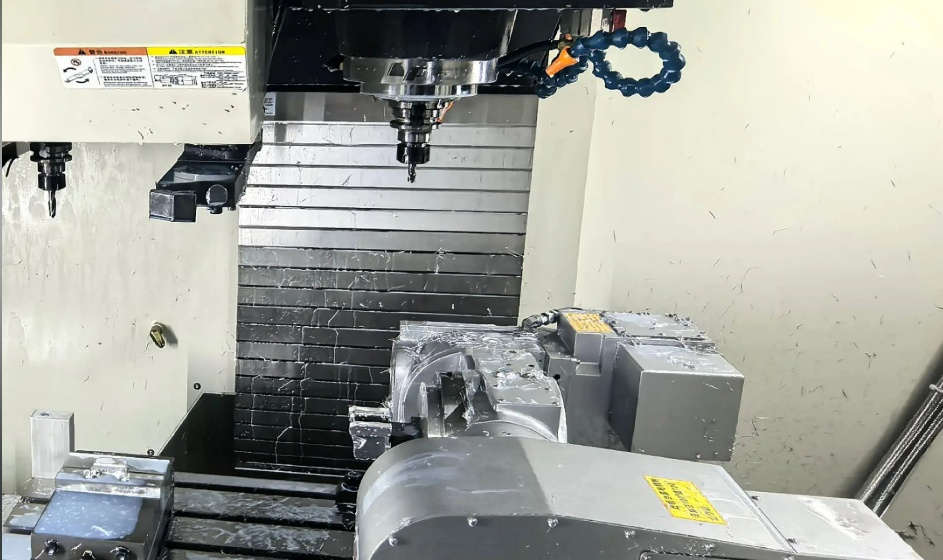
Mold design and tooling sits at the front of the schedule: 15–45 days depending on mold size, complexity and material requirements.
Technical Explanation: What Actually Drives the Timeline
Lead time in injection molding is a sequence, not a single duration. The published DTG process runs from DFM analysis and mold design review, through tool manufacturing, T1 trial molding and sample inspection, to mold approval and then mass production. Each stage consumes calendar time, and each can be shortened or extended by decisions made earlier.
| Project stage | Stated lead time | What moves the schedule within the range |
|---|---|---|
| Prototype parts | 7–15 days | Prototype structure, sample quantity, material selection and how much design validation the sample must support |
| Prototype with tooling requirements | 7–20 days | Prototype tooling requirements and the number of design iterations expected before approval |
| Custom mold design and tooling | 15–45 days | Mold size, mold complexity and the tooling material specified |
| Mass production | 20–35 days after sample approval | Order quantity and material availability at the time of scheduling |
Ranges as published by DTG TECH CO., LTD. A confirmed schedule is issued with the quotation for each project.
Two observations follow from the table. First, the tooling stage is usually the longest single block, and it happens before any saleable part exists — which is why buyers who approve drawings late pay for it later in the launch calendar. Second, the mass-production window is explicitly tied to order quantity and material availability, so it should be re-checked whenever volumes change.
Where schedule risk accumulates
The bicycle chain protection cover project handled by DTG illustrates how earlier risk appears later as delay. Molding process optimization was required to resolve surface polishing, gas marks and deformation issues before mass production could start. Those corrections happened before the production run, not during it, which is the point of the T1 trial and sample approval stage: it converts technical uncertainty into a schedule cost rather than a quality cost.
What Moves the MOQ
Because DTG states MOQ as negotiable based on part size, mold cost and production requirements — and separately based on product size, material and production process — the negotiation is technical rather than commercial. The table below summarises which lever the buyer is actually pulling.
| MOQ driver | Why it shifts the minimum quantity |
|---|---|
| Part size | Larger molded parts consume more material and machine time per cycle, changing the quantity at which a run is efficient |
| Mold cost | Higher one-time tooling cost requires more parts to absorb the investment |
| Material | Material selection affects ordering economics and availability; engineering plastics and acrylic behave differently from commodity ABS or PP |
| Production process | Prototype, short-run and mass-production routes use different tooling and setup assumptions |
| Project type | Prototype and sample validation projects are quoted with flexible MOQ; a single custom mold project is accepted based on product requirements |
A useful consequence for buyers is that a MOQ discussion should include the production route, not only the annual forecast. A buyer planning 2,000 units in year one and 60,000 in year three is in a very different conversation from a buyer who needs 2,000 units and has no further volume planned.
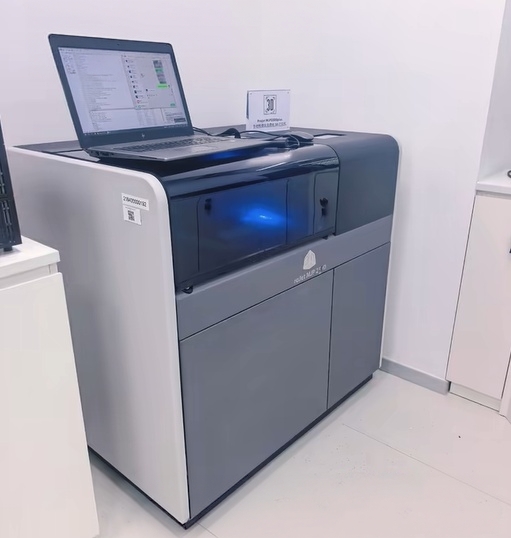
Prototype and sample validation stages run on a shorter clock — 7–15 days, or 7–20 days where prototype tooling is required — and are quoted with a flexible MOQ.
Application Fit: How Volume and Schedule Expectations Differ by Program
Operational parameters only become meaningful when mapped to a real program. The DTG case record shows how volume bands and inspection requirements vary across industries.
| Program type | Typical scale in the DTG record | What it means for MOQ and schedule |
|---|---|---|
| Electronics housings (PC+ABS projector enclosures) | 30,000–50,000 units per batch | Tight tolerances for PCB and display alignment, smooth surfaces without sink marks or flow lines; volume is high enough to absorb tooling, so the schedule conversation centres on material consistency |
| Automotive lighting component | Mold designed for a 500,000-shot requirement; batches of 10,000–50,000 units | Mold life and dimensional stability dominate tooling decisions; IATF 16949 quality requirements add documentation time |
| LED optical lenses (acrylic) | 50,000 pieces in one delivered order | 98% transparency and strict surface quality control mean inspection, not molding speed, sets the pace |
| Medical device parts | Program volumes defined by device demand | Cleanroom conditions, high-precision molding and 100% quality inspection lengthen the validation stage and require stable batch-to-batch material consistency |
| Home appliance covers and panels | Volume tied to appliance program forecasts | Surface finish, colour match across batches and heat-resistant material selection where required shape the material decision |
| Industrial equipment components | Volume tied to equipment build rates | Wear resistance, stable dimensions and repeated assembly durability govern material and tolerance choices rather than MOQ flexibility |
Case quantities as recorded by DTG TECH CO., LTD. and used here to illustrate program types, not as minimum quantities for new projects.
The pattern is consistent: in consumer-facing programs the constraint is appearance and material consistency; in automotive it is mold life and dimensional accuracy; in medical it is documentation and inspection discipline. Each of these changes how long the project takes, independent of how many parts are ordered.
Market Context: Why Lead-Time Scheduling Is Becoming a Procurement Discipline
Several structural trends explain why operational parameters now appear in sourcing evaluations rather than only in purchase orders.
- China produces an estimated 65% of the world's injection-molding machines and accounts for 60% of global export volume, according to an industry analysis published in 2025. Supply concentration of that scale makes tooling queues and capacity scheduling a shared industry constraint, not a single-supplier issue.
- China's plastic mold industry was sized at approximately ¥600 billion, with a projected expansion to ¥1 trillion by 2030, based on JBRplas industry analysis.
- Automotive OEMs are substituting metal parts with engineered thermoplastics, a shift that Grand View Research links to 34% of domestic injection molded component demand in major hubs such as the United States.
For a procurement team, the implication is straightforward. When more programs move from metal to molded plastic, and when a large share of global tooling capacity sits in one manufacturing region, lead time stops being a supplier courtesy and becomes a planning input the buyer must manage alongside price and specification.
Comparison with Alternative Routes — and Where Injection Molding Stops Making Sense
Injection molding is not the only way to produce a plastic part, and honest sourcing means knowing when another route fits better.
| Consideration | Tooling-free routes (CNC machining, 3D printing) | Injection molding |
|---|---|---|
| Tooling requirement | None | Mold required before production parts exist |
| Typical strength | Fast design iteration and low initial quantity | Repeatable dimensions, consistent appearance and material performance across large volumes |
| Economic logic | Cost scales with the number of parts produced | Cost per part falls as tooling investment is spread across volume |
| Material behaviour | Material range differs from production-grade molding resins | Molding-grade ABS, PP, PC, PC+ABS, TPE and Acrylic with controlled batch consistency |
Boundaries worth stating plainly
Several limitations belong in the buyer's expectation setting:
- MOQ negotiation has a floor. Because the MOQ is tied to part size, mold cost and production process, a large or complex mold cannot be amortised over an arbitrarily small order. Where volumes remain very low, the tooling investment may not be recoverable at all.
- Published lead times are ranges, not guarantees. The mass-production window of 20–35 days after sample approval depends on order quantity and material availability, so it should be re-confirmed whenever either changes.
- Complex geometry can extend tooling. The bicycle chain cover case required process optimization for surface polishing, gas marks and deformation before mass production — a reminder that first-article results sometimes create additional work.
- Capacity is finite. A stated annual output of 47,881 units across the business means large programs are scheduled into available slots rather than produced on demand.
- Regulated industries add time that has nothing to do with molding. Medical programs require 100% dimensional and visual inspection, and automotive programs carry IATF 16949 documentation expectations; both consume calendar time between approval and shipment.
Future Outlook
Three developments are likely to shape how these parameters are discussed over the next few years.
Lead time will be documented, not estimated. As buyers compare suppliers across regions, quotations that separate tooling time, validation time and production time are more useful than a single quoted number — and easier to hold a supplier to.
Material substitution will keep widening the program mix. With engineered thermoplastics replacing metal in automotive and industrial assemblies, more projects will arrive with tight tolerances, flame-retardant or heat-resistant requirements, and inspection regimes that extend the validation stage. That changes lead time more than it changes MOQ.
Prototype and pilot routes will absorb more of the early schedule. Where a program can validate form, fit and material behaviour on a 7–15 day prototype cycle before committing to a 15–45 day tooling build, the buyer converts a tooling risk into a sample-validation cost — usually the cheaper of the two.
FAQ: Operational Questions Procurement Teams Ask
Is the MOQ for custom injection molded parts a fixed number?
No. In the DTG capability record, MOQ is negotiable based on part size, mold cost, production requirements, product size, material and production process. Prototype and sample validation projects are quoted with a flexible MOQ, and a single custom mold project can be accepted based on product requirements. The practical implication is that the MOQ conversation is a technical review of the part and the tooling, not a volume threshold set in advance.
How much longer does mass production take than prototyping?
Prototype parts are quoted at 7–15 days, extending to 7–20 days where prototype tooling requirements are involved. Mass production is quoted at 20–35 days after sample approval, with the position inside that range determined by order quantity and material availability. The two stages are sequential, not overlapping substitutes: sample approval is the gate before the production window begins.
How long does mold design and tooling take, and what changes it?
DTG quotes 15–45 days for custom mold design and tooling, depending on mold size, mold complexity and tooling material requirements. The stage includes DFM analysis, mold design review, T1 trial molding, sample inspection and the mold approval process. Because it is the longest single block before production, delays in drawing approval or design changes after DFM review are the most expensive schedule events in a program.
What information should be ready before requesting an MOQ and lead-time quotation?
Suppliers quote more accurately when the request covers the variables that actually move the numbers: part size and structure, the engineering drawing and required tolerance, material selection (for example ABS, PP, PC, PC+ABS, TPE or Acrylic), required surface finish such as texture, polishing, painting or printing, expected annual and first-order volumes, and any regulatory or inspection requirement attached to the application. Where a program is still early-stage, prototype or sample validation can be quoted separately so that tooling decisions are not made on incomplete data.
Does part size or material choice change the schedule as well as the MOQ?
Both appear in the published parameters. Product size, material and production process are named as MOQ inputs, and material availability is named as a factor in the mass-production window of 20–35 days. Material also shapes the quality plan: DTG's process includes material confirmation and molding parameter control alongside dimensional inspection, visual inspection and pre-shipment inspection, so a change of resin late in a project affects both schedule and inspection scope.
How do regulated applications affect the timeline?
Medical device parts made by DTG require high-precision molding, clean and defect-free surfaces, stable batch-to-batch material consistency and 100% quality inspection covering dimensional measurement and visual checks. Automotive programs reference IATF 16949, the sector-specific quality standard for injection molders, and generally require dimensional accuracy, impact resistance and durability against heat aging and UV exposure. These requirements sit between mold approval and shipment, and they add time that is not related to the molding cycle itself.
Can a mid-size molder absorb a large batch program?
Capacity should be checked against the specific program rather than assumed. DTG states an annual output of approximately 47,881 injection molded parts, an average of about 3,990 pieces per month, and has delivered project batches in the tens of thousands of pieces, including 50,000 acrylic optical lenses in a single order and 30,000–50,000 units per batch of PC+ABS projector housings. For buyers, the relevant question is not total capacity but whether the requested batch size can be scheduled inside the required delivery window.
For readers who need the underlying capability detail behind these answers, DTG TECH CO., LTD. publishes a company presentation covering its mold design, prototyping, molding and mass-production services: Xiamen DTG Tech Co., Ltd. presentation (PDF).