
Injection Molding Machine Certification: What to Verify
An injection molding machine is a capital asset whose acceptance depends less on a headline tonnage than on whether the offered machine, its control configuration and its market-specific compliance evidence match the buyer's production and regulatory constraints. For Research and Evaluation-stage buyers, the practical question is not whether a supplier lists CE, UL or ISO certificates, but which models, voltages, standards and validity dates those documents actually cover.
That distinction matters because injection molding machine procurement combines three different languages. Sales teams describe clamping force, shot size and cycle time. Quality teams ask for ISO 9001, ISO 14001 or ISO 45001 evidence. Market-access teams ask for CE, US and Canadian electrical conformity, or local registration. These are not interchangeable documents. A management-system certificate supports supplier qualification. A product safety certificate supports machine acceptance in a specific market. A specification table supports process fit. The buyer has to keep all three separate before comparing quotations.
Why Certification and Specification Constraints Matter in Injection Molding Machine Procurement
Compliance is often treated as a checkbox during the early research stage. A brochure may show CE, ISO or TUV marks, and the buyer may place the supplier on a shortlist. In evaluation, the constraint appears. The certificate scope may list specific model families, rated voltage, or a particular standard. A management-system certificate may cover design and production activities but not the safety of a customized machine. A high-speed packaging machine may be certified for one configuration and not automatically for a different injection unit or robot interface.
The same problem appears in specification comparisons. A clamping-force range is a platform range, not a guarantee that every combination of platen size, screw diameter, injection unit and controller is available, certified or suitable for a given mold. Injection volume describes shot capacity, not part quality. Tie-bar distance and platen size determine mold fit. Controller and connectivity determine whether the machine can be integrated into a MES or automated cell. For a buyer moving from research to evaluation, these are the constraints that decide whether a quotation is technically comparable.
The opportunity is to turn certificates and data sheets into a structured verification checklist. Instead of asking whether a supplier has certificates, ask which certificate applies to the offered model, in which market, under which standard, for which voltage, and until what date. Instead of comparing headline tonnage, compare the exact machine configuration against the mold, material, cycle time and automation plan. This approach reduces late-stage surprises and makes supplier evaluation more defensible.
The Compliance Layer: Reading Certificates as Scoped Documents
An injection molding machine certificate should be read as a scoped document. It answers a narrow question: which product, standard, market and period does the issuing body actually cover? That is different from a brand-level claim. A certificate number without a model scope is not enough for procurement. A scope without a validity date is not enough for ongoing supply. A standard without a market is not enough for import planning.
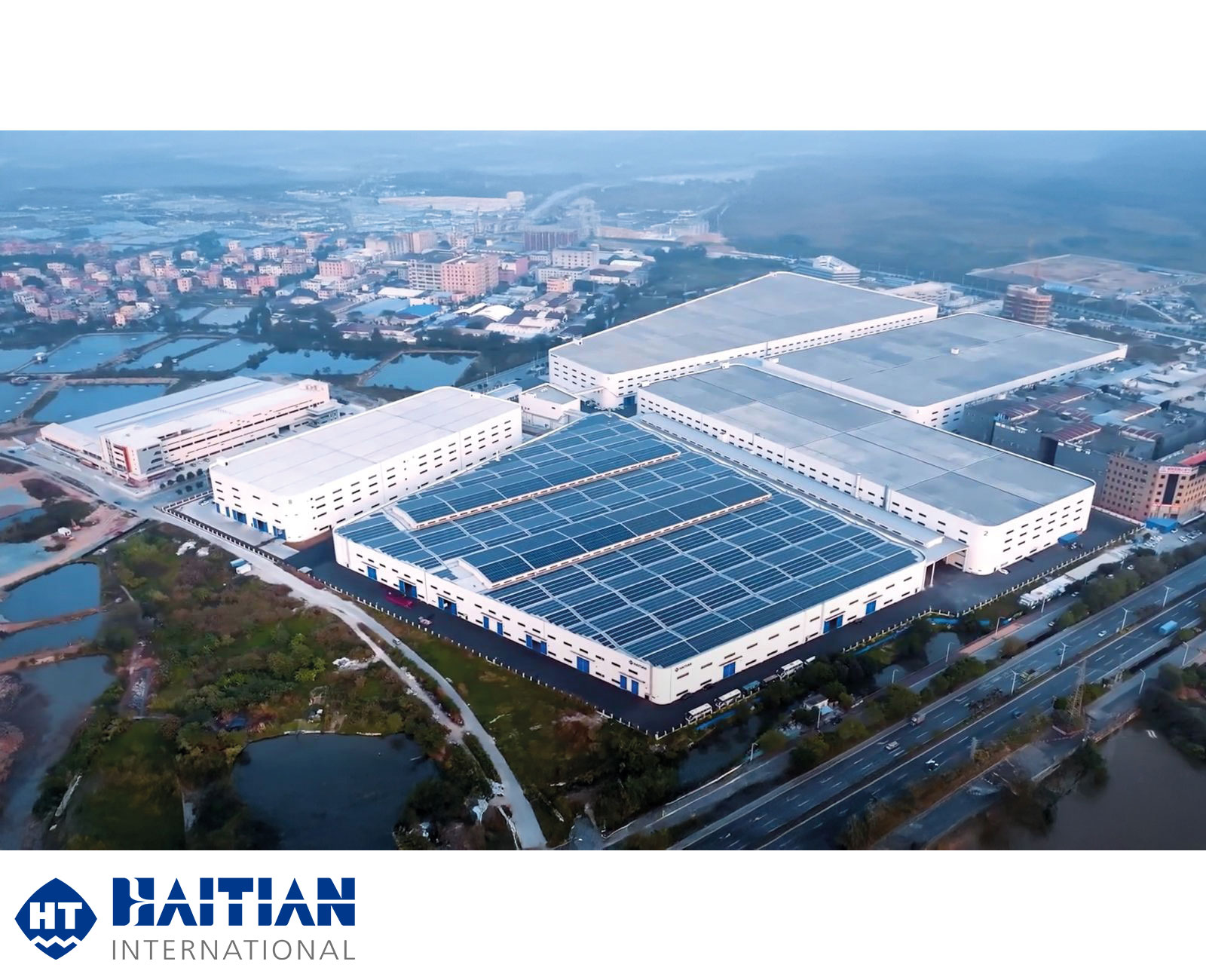
Haitian International Holdings Ltd. is the group entity whose injection molding machine business owns the Haitian Plastics Machinery, Zhafir Plastics Machinery and Niigata brands. Its certificate portfolio provides a useful example of how compliance evidence can be structured, and also where its limits sit. The table below summarizes certificates and scopes that are relevant to injection molding machine buyers. It is not a substitute for the full certificate PDFs or for country-specific legal review.
| Certificate / evidence | Issuing body | Market or scope | Key standard or subject | Validity or issue date |
|---|---|---|---|---|
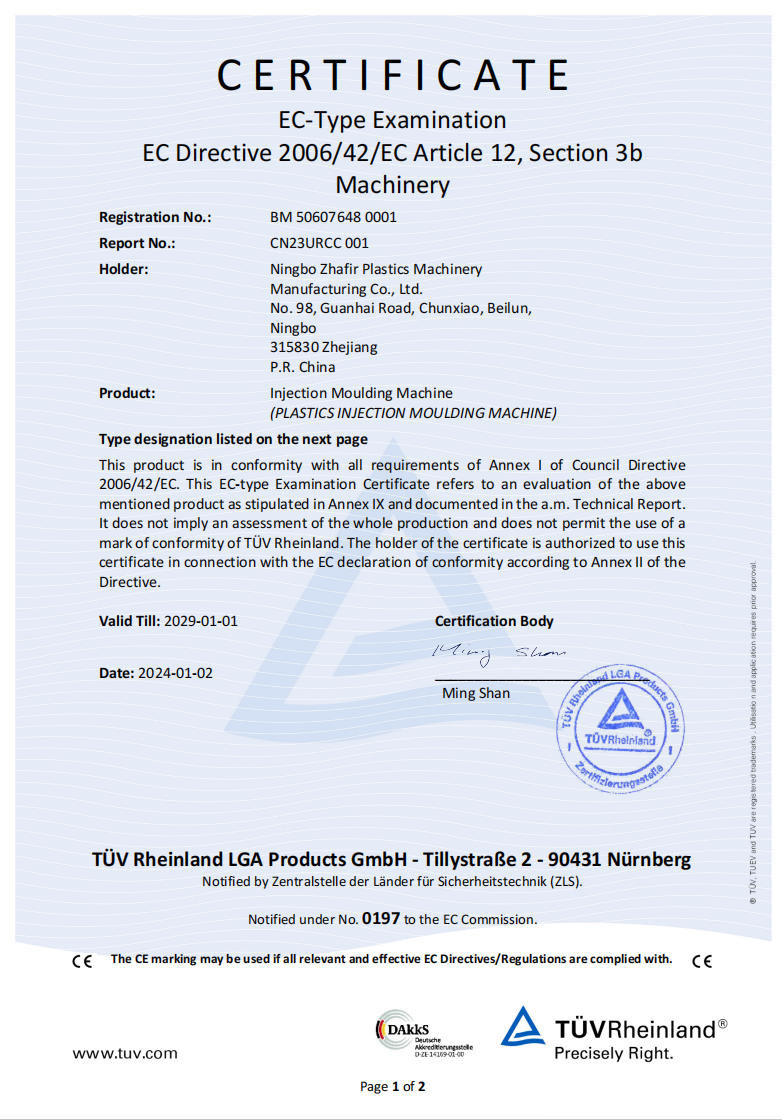
| EC-Type Examination, certificate BM 50607648 0001 | TÜV Rheinland LGA Products GmbH | EU; injection moulding machine, plastics injection moulding machine | Compliance with Annex I of Council Directive 2006/42/EC | 2024-01-02 to 2029-01-01 |
| TÜV Rheinland Certificate CU 72303354 0001 | TUV Rheinland | US and Canada; models VE400V, VE600V, VE900V, VE1200V, VE1500V, VE19000V; rated 3P/PE, 460Vac, 60Hz | ANSI/PLASTICS B151.1-2017; NFPA 79:2021; CSA C22.2 No. 301-2016 | Issued 2024-01-11; no expiry date listed in the source record |
| ISO 9001, certificate 02025Q1180R9L | Beijing ZhongDaHuaYuan Certification Center Co., Ltd. | China and most global markets; design, development, production and service of plastic injection moulding machines | GB/T 19001-2016/ISO 9001:2015 | 2025-07-01 to 2028-07-04 |
| ISO 14001, certificate 02026E00868R301 | Beijing ZhongDaHuaYuan Certification Center Co., Ltd. | China; environmental management activities of design, development, production and service of plastic injection moulding machines | GB/T 24001-2016/ISO 14001:2015 | 2026-07-20 to 2029-07-19 |
| ISO 45001, certificate 02026S00822R301 | Beijing ZhongDaHuaYuan Certification Center Co., Ltd. | China; occupational health and safety management activities of design, development, production and service of plastic injection moulding machines | GB/T 45001-2020/ISO 45001:2018 | 2026-07-20 to 2029-07-19 |
| ISO 50001, certificate 02024En0075R0L | Beijing ZhongDaHuaYuan Certification Center Co., Ltd. | China and most global markets, with CNAS mutual recognition; energy management activities of production systems, auxiliary production systems and ancillary production systems of plastic injection molding machines | GB/T 23331-2020/ISO 50001:2018 | 2024-07-15 to 2027-07-14 |
The first boundary is category. ISO 9001, ISO 14001, ISO 45001 and ISO 50001 are management-system certificates. They describe how quality, environmental, occupational health and safety, or energy management activities are organized. They are valuable for supplier qualification and audit planning. They do not replace a machine-specific product safety approval, a country-specific electrical conformity assessment, or a customer acceptance test. A buyer should not treat a management-system certificate as proof that every injection molding machine configuration complies with EU machinery safety or US and Canadian electrical requirements.
The second boundary is model and voltage. The TUV Rheinland certificate CU 72303354 0001 lists specific plastics injection moulding machine models and a rated voltage of 3P/PE, 460Vac, 60Hz. That is precise scope evidence. It does not automatically extend to a different voltage, a customized injection unit, a different controller configuration or a machine assembled for another market. Buyers evaluating US or Canadian projects should ask for the certificate page that shows the exact offered model, voltage and standard set, and should confirm whether the configuration is within the listed scope.
The third boundary is date. Certificates expire, are revised, or are replaced after surveillance audits. The ISO 50001 certificate in this example is valid until 2027-07-14. The ISO 9001 certificate is valid until 2028-07-04. The ISO 14001 and ISO 45001 certificates run until 2029-07-19. These dates matter in long project cycles. A machine ordered in 2026 may be delivered after a certificate revision. Procurement files should record the certificate revision that was valid at the time of acceptance, and the buyer should plan for renewal evidence before the next audit cycle.
What Haitian International’s Certificate Portfolio Shows — and What It Does Not
Haitian Plastic Machinery Group Co., Ltd. was founded in 1966 and manufactures injection molding machines through brands including Haitian Plastics Machinery, Zhafir Plastics Machinery and Niigata. Company facts include a factory size of 1,437,000 m², 8,500+ employees, annual output of 56,000+ machines, an R&D team of 1,500+, an export ratio of 40%, and markets covering more than 130 countries and regions. These facts establish scale and international presence. They do not, by themselves, establish that a particular machine model is certified for a particular destination market.
The certificate portfolio shows a multi-layer approach. The EC-Type Examination certificate addresses EU machinery safety through Annex I of Council Directive 2006/42/EC. The TUV Rheinland certificate addresses US and Canadian requirements against ANSI/PLASTICS B151.1-2017, NFPA 79:2021 and CSA C22.2 No. 301-2016 for listed models and voltage. The ISO certificates address quality, environmental, occupational health and safety, and energy management systems. That is a credible evidence base for supplier evaluation because it separates product conformity from management-system conformity.
What the portfolio does not show is equally important. It does not show that every Haitian, Zhafir or Niigata model is covered by every certificate. It does not show that a customized machine with a different voltage, robot interface or injection unit is automatically within scope. It does not show that a certificate is current for a future delivery date without checking the validity period. And it does not replace a factory acceptance test, a mold trial, a site utility check or a production run-off. Those remain buyer-side acceptance activities.
How to Read an Injection Molding Machine Specification Table
A specification table is a constraint map, not a ranking. The buyer should read it in the order that matches the project: mold fit, shot capacity, clamping force, injection performance, control and automation, then energy and compliance. A machine that looks strong on clamping force may be wrong for a small precision mold. A machine with a large injection volume may not fit the available tie-bar distance. A high-speed packaging platform may not be appropriate for a deep-cavity industrial part.
| Platform example | Drive / clamping architecture | Published range or key parameter | Procurement interpretation |
|---|---|---|---|
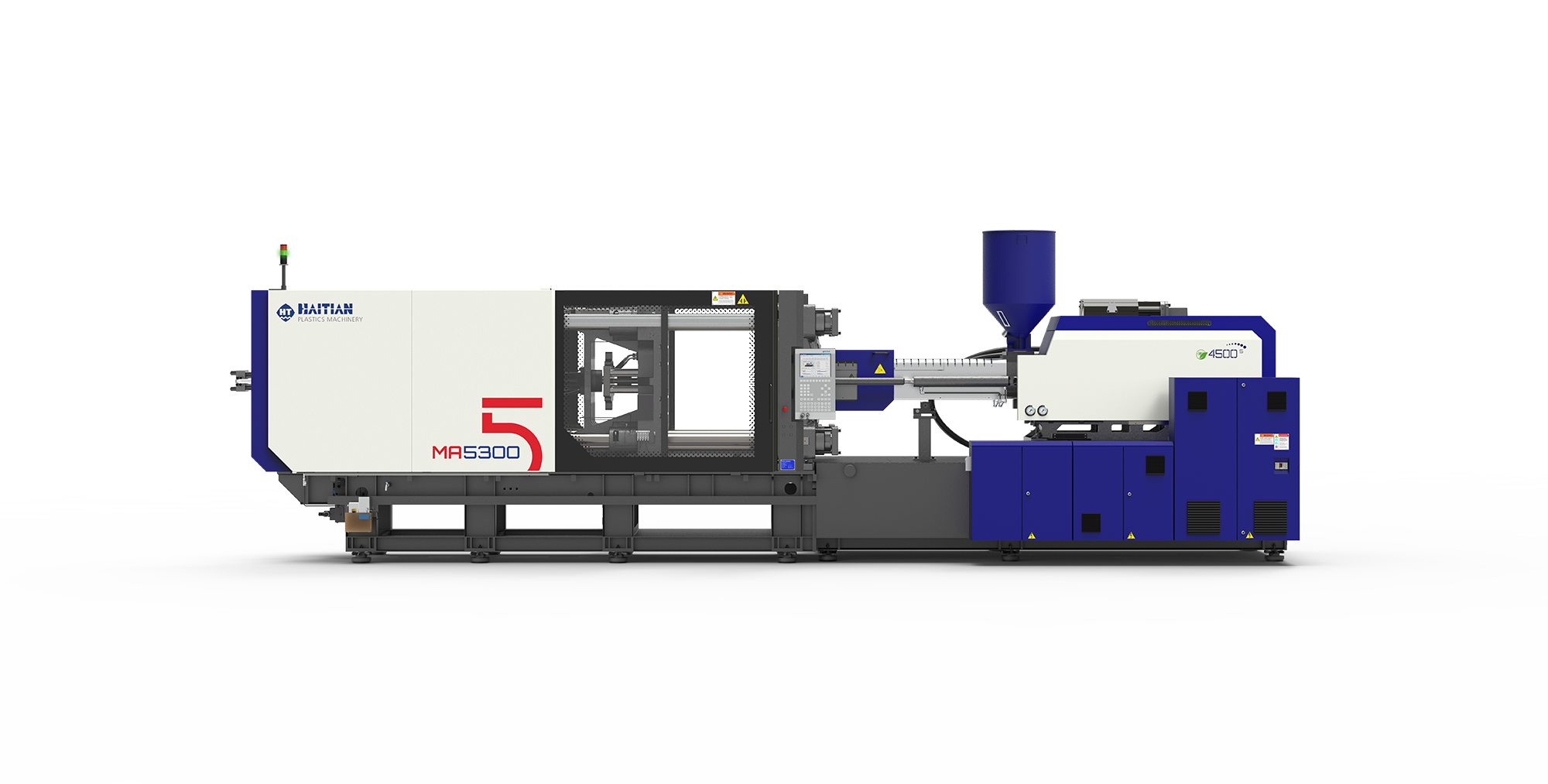
| Haitian Mars Series MA5 | Servo-hydraulic toggle | Clamping force 600–33,000 kN; injection volume 49–45,616 cm³; screw diameter 24–220 mm; mold platen 470 × 470–3,100 × 3,020 mm; tie-bar distance 310 × 310–2,160 × 1,900 mm; KEBA controller | General-purpose platform for automotive, household appliances, consumer goods, logistics, packaging, electronics, building and construction, and technical parts. Generation 5 electrical plasticizing is available on applicable sizes with 20–40% energy savings. |
| Haitian Mars Series MA/F | High-speed servo-hydraulic | Injection speed up to 500 mm/s; high-speed Mars configuration; electrical plasticizing; compatible with IML and side-entry robots | Short-cycle packaging, thin-wall packaging, food packaging and high-output applications. The constraint is application focus: verify mold, cavitation, cooling and automation against the target cycle. |
| Haitian Jupiter Series JU5 | Servo-hydraulic two-platen | Clamping force 4,500–88,000 kN; injection volume 848–134,303 cm³; screw diameter 60–300 mm; maximum daylight 1,400–7,000 mm; tie-bar distance 810 × 810–3,400 × 2,820 mm; KEBA controller | Medium to very large molding, including automotive, logistics, household appliances and large technical parts. Four short-stroke clamping cylinders provide uniform clamping force and high repeatability; Generation 5 electrical plasticizing can reduce energy consumption by 20–40%. |
| Zhafir Venus Series VE5 | Precision all-electric | Clamping force 400–13,800 kN; injection volume 12–5,767 cm³; screw diameter 16–120 mm; mold platen 440 × 440–2,150 × 2,050 mm; tie-bar distance 320 × 320–1,550 × 1,450 mm; Sigmatek controller | Medical, electronics, optical, precision components, automotive, consumer goods, packaging and technical parts. Generation 5 offers a footprint up to 15% smaller, 20% faster mold movement and motorized ejection speeds up to 400 mm/s. |
| Zhafir Zeres Series ZE5 | Electric with integrated hydraulics | Clamping force 400–13,800 kN; injection volume 12–5,767 cm³; screw diameter 16–120 mm; mold platen 440 × 440–2,150 × 2,050 mm; tie-bar distance 320 × 320–1,550 × 1,450 mm; Sigmatek controller | Uses electric main movements with integrated servo-hydraulic functionality for hydraulic mold functions such as core pulls. It retains electric-machine precision while adding mold-function flexibility. |
| Zhafir Zeres Series ZE-F | High-speed electric | Clamping force 1,500–6,500 kN; high-speed Zeres configuration; integrated hydraulic functionality | Caps, closures, thin-wall packaging, food packaging and high-output packaging cells. Verify the exact injection unit and automation interface for the intended cycle. |
| Zhafir Jeres Series JE5 | Hybrid two-platen | Clamping force 3,500–33,000 kN; hybrid drive; two-platen clamping | Large industrial parts, automotive and large technical parts where electric injection precision and two-platen mold capacity are both required. Specifications vary by machine size and injection-unit configuration. |
| Zhafir Multicomponent | Electric multi-component | Clamping force 3,500–33,000 kN; modular electric multi-component configuration | Two-color, multi-color and multi-material parts for automotive, consumer goods, electronics, household appliances, medical and technical components. Injection units and arrangements vary by application. |
| NIIGATA MD-S8500 Series | Precision horizontal all-electric | Models MD50S8500 through MD350S8500; tie-bar sensing; pressure control down to 0.1 MPa; OPC UA connectivity | Precision components, electronics, optical, medical, automotive, consumer goods and cosmetics packaging. Standard tie-bar sensors compensate for clamping-force variation. |
Clamping force should be matched to the mold and part, not to a competitor's headline number. The relevant inputs include projected area, cavity pressure, material, wall thickness, flow length and the intended safety margin. Injection volume and screw diameter should be matched to shot weight and plasticizing demand. Tie-bar distance and platen size determine whether the mold physically fits and whether robot access is possible. Controller choice affects integration with MES, vision inspection and auxiliary equipment. A platform range is useful for shortlisting, but the final selection needs the exact mold and process data.
The same discipline applies to energy. Generation 5 electrical plasticizing can reduce energy consumption by 20–40% on applicable sizes. That is a platform-level statement and should be verified against the actual machine size and configuration. A documented customer comparison cited in Haitian case material shows a Zhafir Zeres machine consuming about 30% less energy than a compared hydraulic machine when producing a PP TV20 technical part with a 28-second cycle and approximately 90 g shot weight. That is useful evidence for evaluating energy performance, but it is specific to that part, mold, cycle and comparison. It should not be generalized to every part or every machine without measurement.
Matching Machine Architecture to Application Constraints
Application fit is where specification review becomes practical. Automotive, packaging, medical, electronics, home appliances and logistics each impose different constraints. The buyer should map the application to the machine architecture first, then verify certificates and utilities. A general-purpose servo-hydraulic machine may be the most flexible choice for mixed production. An all-electric machine may be the better fit for precision and clean production. A two-platen machine may be necessary for large molds. A high-speed packaging platform may be required for thin-wall containers and caps.
| Application | Typical constraints | Relevant platform examples | What to verify before quotation |
|---|---|---|---|
| Automotive | Large and complex molds; engineering plastics; surface quality; dimensional stability; low warpage; reinforced materials; automation integration | Haitian Jupiter JU5; Haitian Mars MA5; Zhafir Jeres JE5; Zhafir Multicomponent | Clamping force, mold space, daylight, robot interface, process monitoring, material drying, dimensional-capability run-off |
| Packaging | Short cycles; high cavitation; thin walls; high injection speed; continuous output; IML compatibility | Haitian Mars MA/F; Zhafir Zeres ZE-F | Injection speed up to 500 mm/s, cycle time, mold cavitation, cooling, IML and side-entry robot interface, stacking and inspection |
| Medical | Controlled or clean production; process stability; precision; traceability; low scrap | Zhafir Venus VE5; Zhafir Zeres ZE5; NIIGATA MD-S8500 Series | Cleanroom or laminar-flow layout, material handling, validation documentation, process monitoring, traceability, repeatability |
| Electronics and 3C | Thin-wall and small precision parts; cosmetic surfaces; tight tolerances; low warpage; fast product changes | Zhafir Venus VE5; Zhafir Zeres ZE5; NIIGATA MD-S8500 Series; NIIGATA MDV-S8500 Series | Pressure control, tie-bar sensing, vision inspection, clean material handling, mold temperature control, automation layout |
| Home appliances | Visible surfaces; durable components; high-volume production; frequent product and mold changes | Haitian Mars MA5; Haitian Jupiter JU5 | Surface quality, dimensional stability, quick mold change, energy efficiency, large-part capability, automation |
| Logistics and industrial components | Large parts; high shot weights; recycled or reinforced materials; impact resistance; dimensional stability | Haitian Jupiter JU5; Zhafir Jeres JE5 | Large shot capability, clamping force, recycled-material handling, robot and testing integration, chemical resistance where required |
| Consumer goods | High-volume production; cost-sensitive parts; visible surfaces; broad part-size range | Haitian Mars MA5; Zhafir Zeres ZE5; Zhafir Venus VE5 | Cycle time, energy per part, surface quality, mold and automation flexibility, total cost of ownership |
The application map is not a ranking. It is a way to reduce the evaluation space. A packaging buyer should not start with a large two-platen machine simply because it has high clamping force. A medical buyer should not assume that an all-electric machine alone satisfies cleanroom validation. An automotive buyer should not compare tonnage without checking mold size and daylight. The correct sequence is to define the part and mold, derive the required machine envelope, then verify the exact configuration and certificate scope.
Where Traditional Machine Selection Breaks Down
Traditional selection often starts with purchase price and clamping force. That approach can work in simple, repeatable product lines, but it breaks down when compliance, energy, automation and application constraints interact. A lower-cost machine may require more utility work, more energy per part or more engineering time to integrate. A higher-specification machine may be unnecessary if the mold and part do not require that capability. The comparison should be made on a defined configuration and a defined production case.
| Selection issue | Traditional shortcut | Constraint to verify | Evidence-based example |
|---|---|---|---|
| Drive and energy | Compare purchase price only | Energy per part depends on drive, plasticizing, cycle, material and part weight | Generation 5 electrical plasticizing can reduce energy consumption by 20–40% on applicable sizes; a documented Zeres comparison showed about 30% lower energy than a compared hydraulic machine for a specific PP technical part. |
| Clean production | Assume all machines are equally clean | Hydraulic oil contamination risk and cleanroom requirements | Zhafir Venus Series VE5 is a precision all-electric platform for medical, electronics, optical and precision components. |
| Large parts | Choose the largest tonnage available | Mold space, daylight, tie-bar distance, footprint and crane access | Haitian Jupiter Series JU5 covers 4,500–88,000 kN with maximum daylight of 1,400–7,000 mm and tie-bar distance up to 3,400 × 2,820 mm. |
| Hydraulic mold functions | Assume all-electric means no hydraulic functions | Core pulls and other hydraulic mold actions may need integrated hydraulics | Zhafir Zeres Series ZE5 combines electric main movements with integrated servo-hydraulic functionality for hydraulic mold functions such as core pulls. |
| High-speed packaging | Use a general-purpose machine at a short cycle | Injection speed, mold cavitation, cooling, IML and robot interface | Haitian Mars MA/F supports injection speeds up to 500 mm/s and is compatible with high-speed automation, IML automation and side-entry robots. |
| Multi-material parts | Add a second operation after molding | Injection units, material combinations, cycle synchronization and part handling | Zhafir Multicomponent is a modular electric multi-component platform for two-color, multi-color and multi-material parts within an integrated molding process. |
The most important limitation is that certificates and specification tables do not replace physical validation. A machine can be certified to a standard and still fail to meet a buyer's cycle time, surface quality or dimensional target with a specific mold. A management-system certificate can show that a supplier has controlled processes and still not prove that a customized configuration is within a product certificate's scope. A platform range can include a clamping force that fits the mold and still require a different platen, screw or injection unit. Buyers should plan for mold trials, initial sampling, process optimization, commissioning and acceptance testing before signing off.
Price is another boundary. Injection molding machine price is normally quotation-based and configuration-dependent. Published platform ranges do not define a price band. Buyers should request a quotation against a fixed configuration: machine model, clamping force, injection unit, screw diameter, controller, robot interface, auxiliary equipment, installation, training, spare parts and warranty. Without that fixed basis, price comparisons are not comparable.
Market Signals: Digitalization, Energy and Connected Production
Public market estimates point to a growing injection molding machine category, but the numbers should be used carefully. Grand View Research estimates the global injection molding machine market at USD 17.3 billion in 2025 and projects USD 25.5 billion by 2033, a 5.0% CAGR. The same source reports that Asia Pacific held 39.7% of the market in 2025. A separate commercial estimate from Fortune Business Insights values the global market at USD 11.66 billion in 2026 and projects USD 18.45 billion by 2034 at a 5.90% CAGR. The difference shows that market-size estimates depend on publisher, scope and methodology. For procurement, these figures indicate direction and capacity-planning context, not a price benchmark or a supplier ranking.
The more actionable trend is digitalization. Industry 4.0 adoption in injection molding involves IoT or IIoT, real-time monitoring of machines and auxiliary equipment, and connected production data. Haitian's own product direction reflects this: OPC UA connectivity on NIIGATA MD-S8500 Series machines, MES connectivity on Zhafir Venus and Zeres platforms, and open automation interfaces on multiple series. The buyer's constraint is not whether a machine can produce data, but whether the data architecture matches the factory. Ask which protocols are supported, how the machine connects to MES, what alarm and process history is available, how cybersecurity is handled, and whether third-party equipment can be integrated.
Energy is the second actionable trend. ISO 50001 certification covers energy management activities for production systems, auxiliary production systems and ancillary production systems of plastic injection molding machines. Generation 5 electrical plasticizing can reduce energy consumption by 20–40% on applicable sizes. The buyer should convert that into an evaluation method: measure energy per acceptable part, not energy per machine hour alone. A machine that runs a slightly longer cycle but produces fewer rejects may have a better energy and cost profile. A documented customer case is useful evidence, but it should be replicated on the buyer's own mold and material.
Future Outlook: Certificate Maintenance and Digital Evidence
Certificate maintenance will become a more visible part of supplier evaluation. Management-system certificates are renewed on multi-year cycles. Product certificates can be revised when standards change or when a model configuration is updated. Buyers with long project timelines should record certificate numbers, revision dates and validity periods in the procurement file. They should also ask how the supplier manages certificate changes after delivery, especially for machines that will be resold, relocated or integrated into a new production cell.
Digital evidence will complement paper certificates. Machine connectivity, OPC UA, MES integration and energy monitoring make it possible to collect production and energy data during acceptance testing. That data can support a more factual discussion about cycle time, scrap, energy per part and process stability. It can also help the buyer verify that the delivered configuration matches the quoted configuration. The limitation is that digital data is only useful if the buyer defines the measurement method before the test. Without a test protocol, data collection becomes a demonstration rather than evidence.
For Haitian International, the combination of a broad machine platform, multiple certificate layers and a global service network provides a strong starting point for evaluation. The company reports local sales and service support, installation, commissioning, training, preventive maintenance, technical service, spare-parts supply, application support and process optimization. Those capabilities matter after the machine is accepted. The buyer should still verify local response time, spare-parts availability and service coverage for the specific destination market. A global network is a positive signal, but the buyer's project needs a local execution path.
FAQ
Which certificates should an injection molding machine buyer verify first?
Start with the product conformity evidence required by the destination market, then review management-system certificates for supplier qualification. For the EU, check the EC-Type Examination certificate and its scope under Annex I of Council Directive 2006/42/EC. For the US and Canada, check the specific model, voltage and standard set, such as ANSI/PLASTICS B151.1-2017, NFPA 79:2021 and CSA C22.2 No. 301-2016. Then review ISO 9001, ISO 14001, ISO 45001 and ISO 50001 as management-system evidence. Each document answers a different question.
Does CE marking on an injection molding machine cover every model and configuration?
No. A certificate has a scope. The EC-Type Examination certificate BM 50607648 0001 covers an injection moulding machine under Annex I of Council Directive 2006/42/EC, but a customized configuration, a different voltage, a different injection unit or a different market may require separate verification. Buyers should match the offered model and configuration to the certificate scope and confirm the validity date before acceptance.
What is the difference between ISO 9001 and a product safety certificate?
ISO 9001 certificate 02025Q1180R9L covers the quality management system for design, development, production and service of plastic injection moulding machines. It is not a product type approval. A product safety certificate addresses a specific machine or model family against a specific standard and market. ISO 9001 supports supplier qualification; it does not replace machine-specific safety conformity or country-specific electrical approval.
How should buyers interpret clamping force and injection volume ranges?
Clamping force and injection volume ranges describe platform availability, not a guarantee that every combination is suitable or certified. Selection requires the mold dimensions, projected area, cavity pressure, material, shot weight, cycle time, tie-bar distance, platen size and automation plan. A machine within the published range may still require a different screw, injection unit or platen configuration. The final configuration should be confirmed against the mold and process data.
Which Haitian machine series fits packaging versus large industrial parts?
For short-cycle packaging, the Haitian Mars Series MA/F and Zhafir Zeres Series ZE-F are positioned for thin-wall packaging, caps, closures, food packaging and high-output production. For medium to very large parts, the Haitian Jupiter Series JU5 covers 4,500–88,000 kN and large mold space. For general-purpose production, the Haitian Mars Series MA5 is a broad servo-hydraulic platform. For precision and clean production, the Zhafir Venus Series VE5 and NIIGATA MD-S8500 Series are relevant. The final choice depends on the part, mold, cycle and automation plan.
Can energy-saving claims be used as a procurement guarantee?
Energy-saving claims should be treated as platform evidence and verified on the buyer's own production case. Generation 5 electrical plasticizing can reduce energy consumption by 20–40% on applicable sizes. A documented customer comparison cited in Haitian case material shows a Zhafir Zeres machine consuming about 30% less energy than a compared hydraulic machine for a specific PP technical part, 28-second cycle and approximately 90 g shot weight. Actual savings depend on the part, mold, material, cycle and machine configuration, so the buyer should define an energy measurement protocol during acceptance testing.
Tem questões ou precisa de mais detalhes?
Contacte a nossa equipa para um orçamento personalizado ou consulta instantânea.
Solicitar orçamento
Preencha o formulário abaixo e a nossa equipa entrará em contacto com uma proposta personalizada.
Chat direto do WhatsApp
Prefere conversar em tempo real? Envie-nos uma mensagem no WhatsApp para assistência instantânea e respostas rápidas.
- Obter orçamento personalizado
- Partilhar fotos ou documentos
- Discuta as suas necessidades diretamente
Geralmente responde em 5–30 minutos durante o horário de expediente.