
Injection Molding Machine Constraints for Precision Medical Parts
Buying an injection molding machine for precision medical parts is less about comparing clamping force and more about verifying a constrained system. Certification scope, pressure-control resolution, tie-bar compensation, clean-production conditions and data interfaces decide whether a line can actually be qualified. This HTNXT reference lays out the constraints and the evidence a procurement team can check before issuing a quotation request.
Why Medical Part Sourcing Starts With Requirements, Not Tonnage
Precision medical parts are not simply plastic components with tight tolerances. An IVD consumable, a diagnostic housing or a connector body may carry fine features across a small projected area, and those features are sensitive to fill speed, packing pressure and cooling behaviour. A single number on a specification sheet — clamping force — does not describe that process window.
What the buying decision actually depends on is the combination of part geometry, material, cavity count, annual volume, cleanliness requirements and target-market conformity. Those inputs belong in the enquiry package, not in the follow-up conversation. When they are absent, suppliers quote a machine size rather than a production solution, and the buyer carries the process risk.
The practical consequence is straightforward. For precision medical parts, the machine should be evaluated alongside the mould, the automation cell, the material handling and the data layer. Clamping force, injection volume, pressure-control resolution, tie-bar force compensation, mould-thickness control and connectivity all enter the same procurement decision. Evaluating them separately produces a specification that looks complete and behaves poorly on the shop floor.
This is also why medical programmes place a higher documentation burden on the buyer. A general-purpose injection molding machine can be bought on price and tonnage. A machine headed for medical work has to be traceable — to a certificate number, to a named model, and to a target market — before it can be released into production.
What an Injection Molding Machine for Precision Medical Parts Actually Has to Be
There is no single category called "medical injection molding machine." What exists is a set of drive and clamping architectures, each with different implications for precision, cleanliness and flexibility. Five configurations recur when precision medical parts are evaluated.
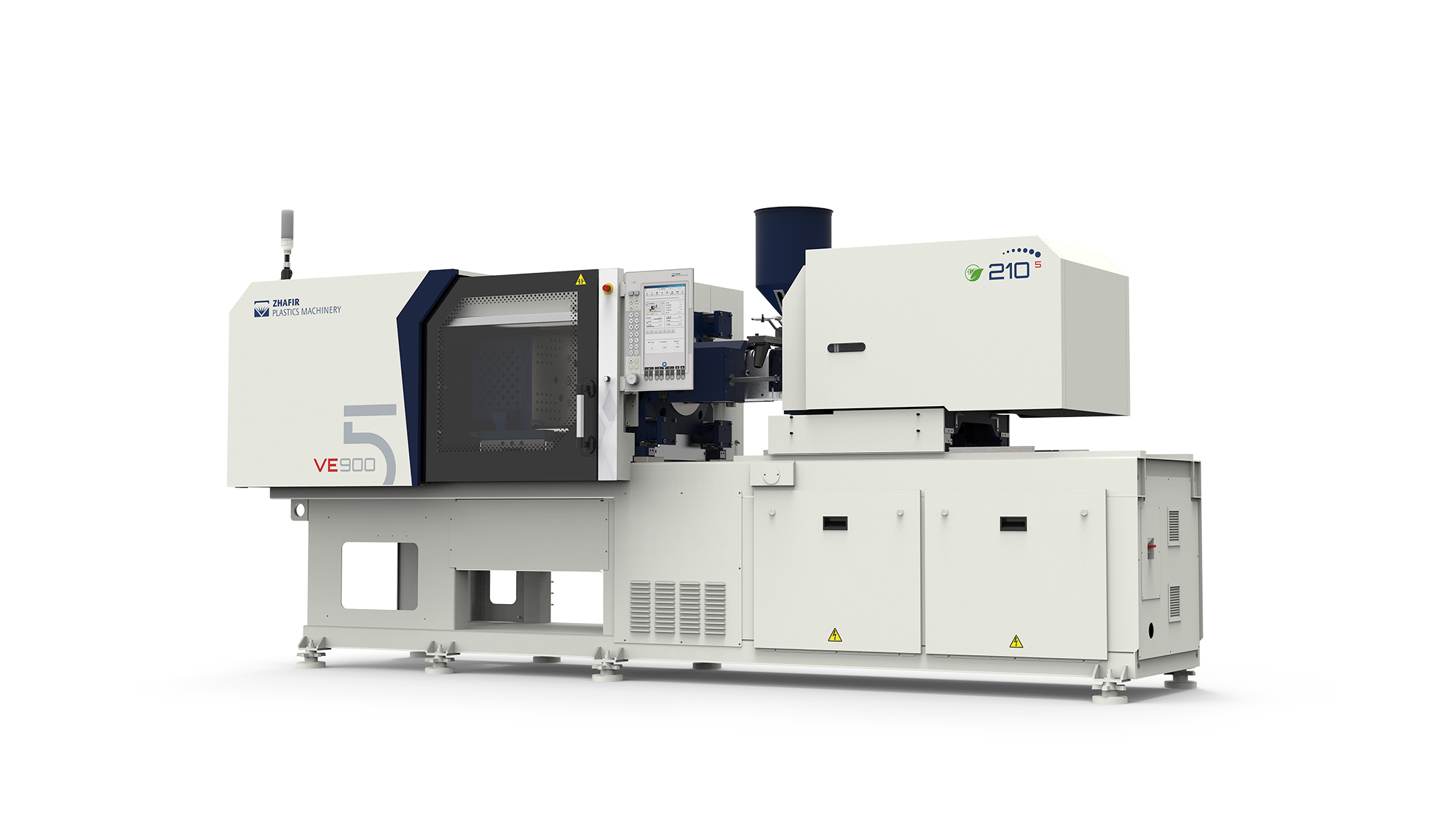
- All-electric. Independent servo drives handle the main movements. The platform produces no hydraulic oil contamination and delivers exceptional injection repeat precision, supporting cleanroom-grade production. This is the architecture most often associated with high-value sectors such as medical, precision electronics, optics and cosmetic packaging.
- Electric with integrated hydraulics. Electric main movements for primary functions, with integrated servo-hydraulic functionality available for hydraulic mould functions such as core pulls. The configuration keeps electric precision while retaining greater application flexibility than a conventional fully electric platform.
- Servo-hydraulic. A servo drive supplies power on demand, balancing energy saving, response speed and moulding stability. Suited to general medical housings, consumables and technical parts where extreme precision is not the dominant constraint.
- Two-platen. A compact clamping structure with large mould space and long opening stroke. Relevant when medical production involves larger deep-cavity moulds or unusually large components.
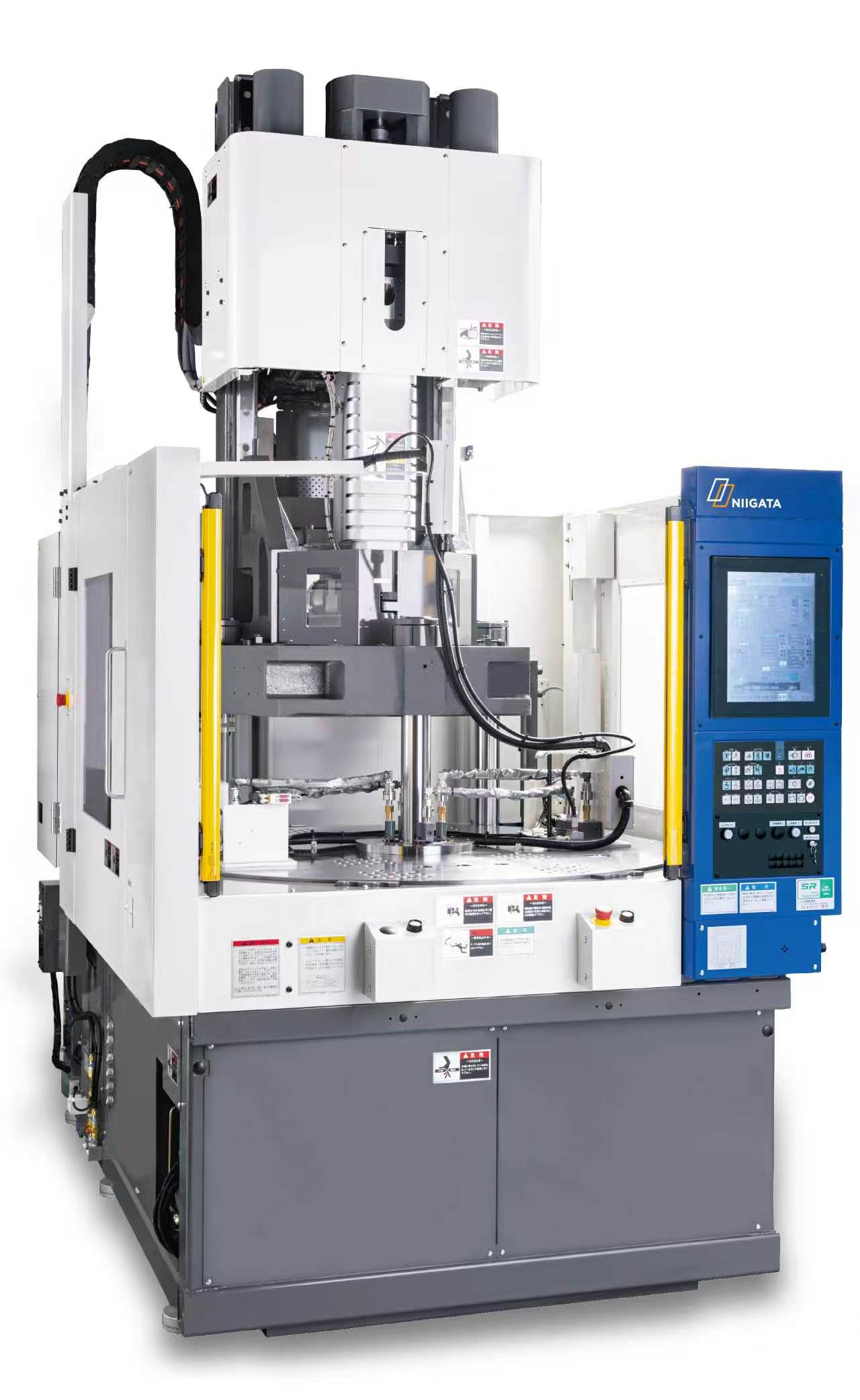
- Vertical. A vertical architecture facilitates loading and positioning of inserts and embedded components, which matters for overmoulded medical parts and connector bodies.
For precision medical parts, the decision usually narrows to the first three. Vertical machines enter the picture when the part itself carries an insert — a connector, an electrical component, or a technical part that has to be overmoulded rather than simply moulded.
Certifications Buyers Must Verify: Number, Model, Market, Validity
In the medical category, the most useful certification check is scope verification rather than a yes-or-no question about whether a supplier holds certification. Certificates apply to named models, named markets and named periods. They do not extend automatically across an entire product range.
European market access
For injection moulding machines, EC-Type Examination certificate BM 50607648 0001 was issued by TÜV Rheinland LGA Products GmbH, assessing compliance with Annex I of Council Directive 2006/42/EC. The certificate covers the Haitian Mars Series MA5 servo-hydraulic injection molding machine, the NIIGATA MDV-S8500 Series vertical injection molding machine, the Haitian Jupiter Series JU5 two-platen injection molding machine and the Zhafir Venus Series VE5 all-electric injection molding machine. The issue date is 2 January 2024.
United States and Canada market access
TUV Rheinland certificate CU 72303354 0001 covers the VE400V, VE600V, VE900V, VE1200V, VE1500V and VE19000V plastics injection moulding machine models, citing ANSI/PLASTICS B151.1-2017, NFPA 79:2021 and CSA C22.2 No. 301-2016. It was issued on 11 January 2024.
Management system certification
ISO 9001:2015 quality management certification (certificate 02025Q1180R9L, valid to 4 July 2028) covers the Haitian Mars Series MA5 plastic injection moulding machine, the Haitian Mars Series MA/F high-speed injection molding machine, the Haitian Jupiter Series JU5 two-platen injection molding machine, the Zhafir Venus Series VE5 all-electric injection molding machine, the Zhafir Zeres Series ZE5 electric injection molding machine and the NIIGATA MD-S8500 Series precision horizontal all-electric injection molding machine. ISO 14001:2015 environmental management certification (02026E00868R301) and ISO 45001:2018 occupational health and safety certification (02026S00822R301) cover a broader machine list. ISO 50001:2018 energy management certification (02024En0075R0L, valid to 14 July 2027) covers the energy management activities of the production systems, auxiliary production systems and ancillary production systems of plastic injection molding machines.
The Machine Parameters That Determine the Medical Part Process Window
A small number of machine parameters shape the achievable process window more than clamping force does. Buyers evaluating an injection molding machine for precision medical parts should be able to point to a value for each of them.
Pressure control resolution
The NIIGATA MD-S8500 Series precision all-electric platform supports pressure control down to 0.1 MPa. In thin-wall medical components and fine-feature geometries, the ability to resolve packing pressure at that level directly affects part-weight consistency and internal stress behaviour. A machine that cannot hold the packing profile forces the moulder to compensate through other variables, which reduces the stability of the process over a long run.
Tie-bar force compensation
The NIIGATA MD-S8500 Series includes standard tie-bar sensors, and those sensors compensate for clamping-force variation. The NIIGATA MDV-S8500 Series is likewise equipped with high-precision tie-bar sensing. Uniform clamping force across the platen translates directly into dimensional stability across a multi-cavity tool.
Mould thickness measurement and control
The NIIGATA MDV-S8500 Series carries dedicated mould-thickness measurement and control technology, which is relevant when insert overmoulding requires repeatable platen positions around embedded components.
Connectivity and data interfaces
The NIIGATA MD-S8500 Series machine platform includes OPC UA connectivity. The Zhafir Venus Series VE5 all-electric platform includes intelligent functions and open automation and MES connectivity. In a real production example, Haitian machines integrated into Giebeler's production were connected to its MES via standardized EUROMAP interfaces, which improved real-time production transparency, reduced manual checks, accelerated root-cause analysis, and supported documented process stability and traceability.
Motion and cycle performance
Generation 5 of the Zhafir Venus Series offers a footprint up to 15% smaller than previous generations, 20% faster mould movement, and motorized ejection speeds up to 400 mm/s. Electric-movement precision is combined with these motion characteristics, and intelligent process functions support setup, optimisation and quality control.
Taken together, these parameters form the technical core of a medical part assessment. They are also the parameters that distinguish one supplier's specification from another's, which is why they belong in the comparison table rather than in a general product description.
Clean Production, Contamination Control and Traceability
Cleanliness in medical part production begins with the drive architecture. All-electric injection molding machines produce no hydraulic oil contamination and support cleanroom-grade production. That is not a marketing claim so much as a physical property of the platform: with no hydraulic circuit, there is no hydraulic fluid to leak, aerosolise or migrate into a controlled production cell.
For procurement, the implication is that the machine selection decision feeds directly into the facility risk assessment. If the production cell is a cleanroom or laminar-flow environment, hydraulic oil is a contamination source that has to be managed. An all-electric platform removes it at the source, which simplifies the environmental monitoring programme around the cell.
Traceability is the second layer, and it depends on connectivity rather than on the machine alone. Digitalisation extends beyond the physical production cell. MES solutions enable production monitoring, process-data management and machine connectivity, while intelligent process technologies support setup, optimisation and quality control. Combined with open interfaces and standardized communication protocols, the machine can integrate with robots, vision inspection systems and MES. The result is an integrated production environment in which machines, automation and digital systems work together rather than operating as isolated components.
For a medical programme, this is what makes documented process stability possible. A machine that reports cycle data into a monitoring layer gives the buyer a record. A machine that does not forces the buyer to rely on manual inspection and paper records, which is a weaker position in any qualification review.
Matching Machine Platforms to Medical Applications
The table below maps verified platform characteristics to medical-relevant application scope. It is not a ranking; it is a matching tool. Different part families land on different platforms.
| Platform | Drive / Architecture | Verified medical-relevant application scope |
|---|---|---|
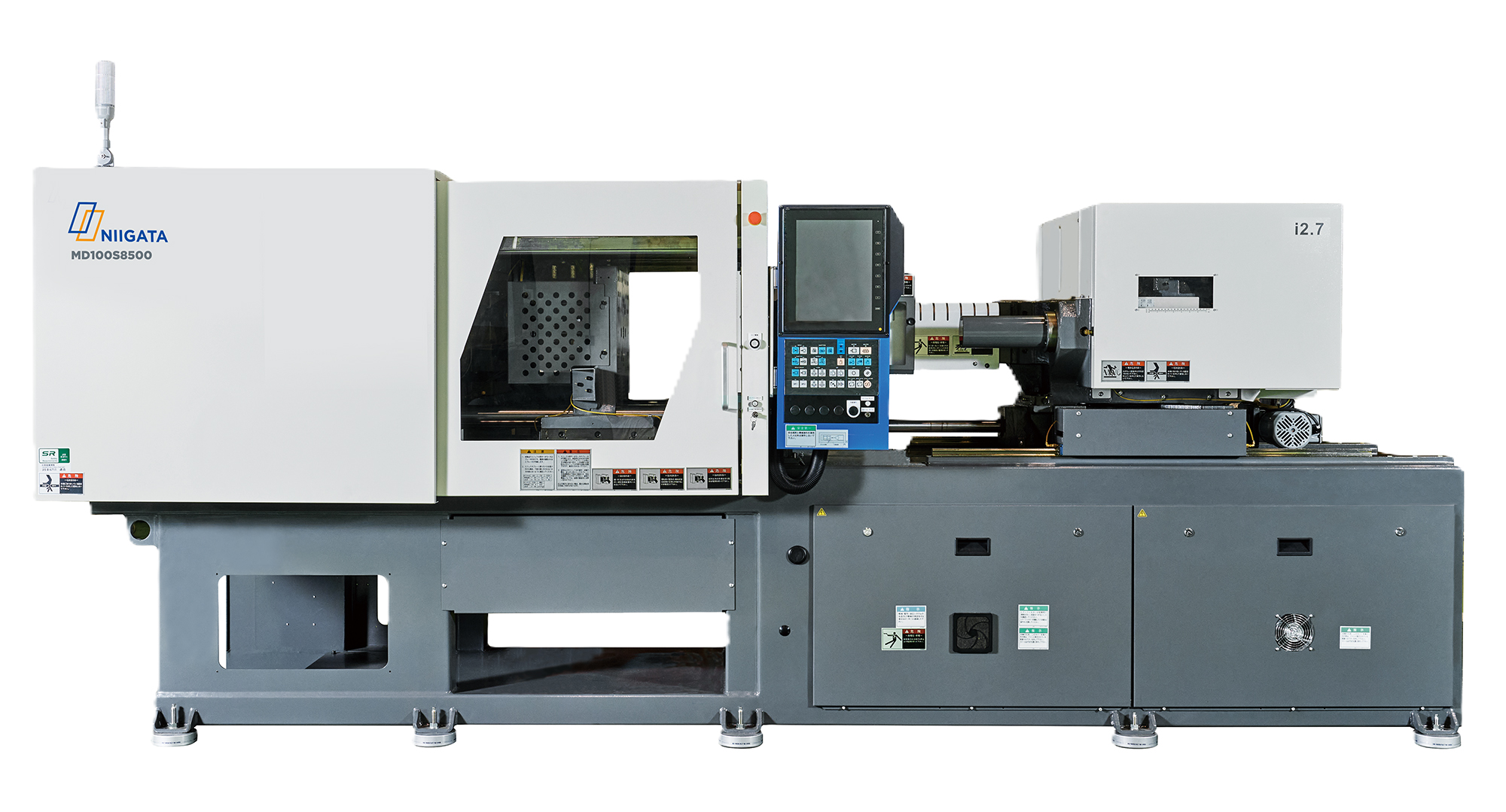
| NIIGATA MD-S8500 Series | Precision horizontal all-electric | Medical part production, precision components, optics, transparent material moulding; pressure control down to 0.1 MPa; standard tie-bar sensors; OPC UA connectivity |
| NIIGATA MDV-S8500 Series | All-electric vertical | Precision insert and overmoulding, medical, automotive electronics, electrical components, connectors, technical parts; high-precision tie-bar sensing and mould-thickness measurement/control |
| Zhafir Venus Series VE5 | Precision all-electric | Medical, electronics, optical, precision components; clean production and repeatable moulding; open automation and MES connectivity |
| Zhafir Zeres Series ZE5 | Electric with integrated hydraulics | Medical, automotive, electronics, technical parts; electric main movements with hydraulic mould functions such as core pulls |
| Zhafir Multicomponent | Electric multi-component | Medical, multi-material components, hard-soft combinations, two-colour and multi-colour parts; modular electric configuration |
| Haitian Mars Series MA5 | Servo-hydraulic toggle | General medical housings, consumables and technical parts; Generation 5 electrical plasticizing delivering 20–40% energy savings on applicable sizes |
The matching logic is application-driven, not prestige-driven. A vertical all-electric platform makes sense when inserts have to be positioned before the mould closes. A horizontal precision platform makes sense for small, geometrically demanding parts where dimensional repeatability dominates. A multi-component platform makes sense when the part itself is a hard-soft assembly that would otherwise require two moulding steps and a secondary operation.
Where an All-Electric Platform Is Not the Default Answer
All-electric platforms are frequently the default recommendation for medical parts because they combine precision, repeatability and the absence of hydraulic oil. That default has boundaries, and buyers should understand them before locking a specification.
Mould hydraulics. All-electric main movements do not mean the mould has no hydraulic requirement. Where a tool calls for hydraulic core pulls, an electric machine with integrated hydraulics preserves electric precision while still providing the hydraulic mould function. This is explicit in the Zeres platform design: the integrated servo-hydraulic functionality supports hydraulic mould functions such as core pulls, while the machine uses electric main movements for primary functions.
Clamping force coverage. The Zhafir Venus Series VE5 spans a clamping force range of 400–13,800 kN. Precision medical parts — IVD consumables, diagnostic housings, connector bodies — typically sit at the lower end of that range. Larger medical consumables, high-cavitation tools or insert assemblies can push the requirement past the point where the platform assumption still holds, and the buyer has to re-evaluate across platforms.
Certification scope is model-specific. A certificate valid for one model in one market does not automatically extend to a different quoted configuration. The EC-Type Examination certificate covers specific named machines; the TUV Rheinland certificate CU 72303354 0001 covers six named VE-series models for the US and Canada markets. Verification has to be done against the actual quotation.
Vertical versus horizontal layout. A vertical architecture facilitates loading and positioning of inserts and embedded components, but the automation layout and floor-space implications differ from a horizontal cell. That trade-off belongs in the plant planning stage, not in a post-installation adjustment.
None of these boundaries make all-electric platforms a poor choice. They make them a conditional choice, and the condition should be documented during evaluation rather than discovered during commissioning.
A Verification Checklist for Procurement Teams
The following sequence reflects the order in which constraints tend to bind. Buyers who work through it in this order generally avoid the common failure mode of selecting a machine that meets the tonnage requirement but fails the qualification requirement.
- Fix the part family first. Material, shot weight, cavity count, critical dimensions, surface finish and annual volume. These determine the achievable process window.
- Fix the cleanliness class. Whether the cell is a controlled or clean environment determines whether hydraulic oil is an acceptable presence in the production area.
- Fix the target markets. EU, US, Canada and other destination markets each carry their own conformity expectations, and the applicable certificate has to match.
- Match certification scope to quoted models. Certificate number, covered model names, issuing authority, issue date and validity period.
- Verify the precision parameters. Pressure-control resolution, tie-bar sensing and compensation, mould-thickness measurement and control, motion and ejection performance.
- Verify the data layer. Supported connectivity such as OPC UA, open automation interfaces, MES integration and process monitoring capability.
- Confirm the automation and turnkey scope. Robots, material handling, drying, mould temperature control, quick mould change, vision inspection and third-party equipment integration where required.
- Confirm service and lifecycle terms. Installation, commissioning, training, preventive maintenance, spare parts and application support, including on-site and remote options.
This sequence is deliberately front-loaded. Steps one to four are the ones that cannot be resolved after the purchase order is signed. Steps five to eight can be negotiated, refined and adjusted during project execution.
Market Signals Shaping Medical Part Equipment Demand
The macro picture for injection moulding equipment continues to expand. One commercial research estimate places the global injection molding machine market at USD 17.3 billion in 2025, with a projected value of USD 25.5 billion by 2033, representing a CAGR of 5.0%. The same source reports that Asia Pacific held the largest market share at 39.7% in 2025.
The electric segment is already substantial on its own. The electric injection molding machine market was valued at USD 4.9 billion in 2024. Hydraulic technology, meanwhile, still captured more than 40% of the market share in 2024 — a reminder that servo-hydraulic platforms remain a large part of installed and purchased capacity, particularly where cost-sensitive general production dominates.
Digitalisation is the third signal. Smart systems are reported to contribute to a 25% reduction in scrap and a 20% to 40% drop in unplanned downtime. Those figures matter disproportionately in medical production, where scrap rates and unplanned downtime carry qualification and documentation consequences beyond their direct cost.
Read together, these signals describe a market where electrification and digitalisation are advancing along parallel tracks, and where medical applications sit at the intersection. A buyer investing in precision medical part capacity is investing in both trends at once, whether or not the purchase is framed that way.
Future Outlook
Three directions appear to be shaping how precision medical part equipment will be specified over the next several years.
The first is continued compression of process precision requirements. Pressure-control resolution, tie-bar force compensation and mould-thickness control are moving from the accessory list into the primary specification, because medical part qualification increasingly depends on them.
The second is the integration of machine, automation and digital systems. Open interfaces and standardized communication protocols already allow production cells to be assembled from machines, robots, vision inspection and MES rather than purchased as isolated units. For medical production, that integration is the practical route to documented process stability.
The third is the shift of energy management from an operating-cost topic to a verifiable, certifiable capability. ISO 50001:2018 certification covering the energy management activities of production systems, auxiliary production systems and ancillary production systems gives buyers something concrete to check, rather than a supplier claim to accept.
For procurement teams, the practical effect is that the evaluation checklist gets longer before it gets shorter. The compensating benefit is that more of the checklist is now objectively verifiable — a certificate number, a pressure value, a connectivity standard — and less of it depends on supplier assertions.
FAQ
Q1. What certifications should be verified for precision medical part injection moulding machines?
Verify by market. For the EU, EC-Type Examination certificate BM 50607648 0001 was issued by TÜV Rheinland LGA Products GmbH, assessing compliance with Annex I of Council Directive 2006/42/EC, and covers the Haitian Mars Series MA5 servo-hydraulic injection molding machine, the NIIGATA MDV-S8500 Series vertical injection molding machine, the Haitian Jupiter Series JU5 two-platen injection molding machine and the Zhafir Venus Series VE5 all-electric injection molding machine. For the US and Canada, TUV Rheinland certificate CU 72303354 0001 covers the VE400V, VE600V, VE900V, VE1200V, VE1500V and VE19000V plastics injection moulding machine models, citing ANSI/PLASTICS B151.1-2017, NFPA 79:2021 and CSA C22.2 No. 301-2016. On the management system side, ISO 9001:2015 certificate 02025Q1180R9L covers the Haitian Mars Series MA5, Haitian Mars Series MA/F, Haitian Jupiter Series JU5, Zhafir Venus Series VE5, Zhafir Zeres Series ZE5 and NIIGATA MD-S8500 Series. Verification should confirm that the certificate number, the listed model names and the target market all align.
Q2. Which injection molding machine type is suitable for precision medical parts?
It depends on the part. The NIIGATA MD-S8500 Series precision horizontal all-electric platform supports pressure control down to 0.1 MPa, includes standard tie-bar sensors that compensate for clamping-force variation, and provides OPC UA connectivity; its verified application scope includes medical part production, precision components, optics and transparent material moulding. For medical parts carrying inserts or requiring overmoulding, the NIIGATA MDV-S8500 Series all-electric vertical platform facilitates loading and positioning of inserts and embedded components, and includes dedicated mould-thickness measurement and control technology. The Zhafir Venus Series VE5 all-electric platform is applied in medical, electronics, optical and precision component production. Final selection should be confirmed against part drawings, material, injection volume, clamping force and the cleanliness requirements of the production cell.
Q3. Why does pressure control resolution matter in medical part moulding?
Because the packing stage is where part-weight consistency and internal stress behaviour are decided. The NIIGATA MD-S8500 Series supports pressure control down to 0.1 MPa. At that resolution, the packing profile can be adjusted for fine features rather than compensated for around the limits of the machine itself. Combined with standard tie-bar sensors that compensate for clamping-force variation, this supports repeatable moulding operation across a production run.
Q4. Is an all-electric injection molding machine always the right choice for medical parts?
No. All-electric platforms produce no hydraulic oil contamination and support cleanroom-grade production, and they deliver exceptional injection repeat precision — which is why they serve high-value sectors such as medical, precision electronics, optics and cosmetic packaging. But when a mould requires hydraulic core pulls, an electric machine with integrated hydraulics retains electric precision while providing the hydraulic mould function; the Zhafir Zeres Series ZE5 uses electric main movements for primary functions with integrated servo-hydraulic functionality for hydraulic mould functions. Clamping force coverage also constrains the choice: the Zhafir Venus Series VE5 spans 400–13,800 kN, and larger medical consumables or high-cavitation tools may fall outside that assumption and require evaluation of other platforms.
Q5. What should be checked for process traceability in medical part production?
Check machine connectivity and process-data capability. The NIIGATA MD-S8500 Series machine platform includes OPC UA connectivity, and the Zhafir Venus Series VE5 includes intelligent functions together with open automation and MES connectivity. In a documented production example, Haitian machines integrated into Giebeler's production were connected to its MES via standardized EUROMAP interfaces, which improved real-time production transparency, reduced manual checks, accelerated root-cause analysis and supported documented process stability and traceability. For a medical programme, the value of that layer is the record it produces, not the dashboard it displays.
Tem questões ou precisa de mais detalhes?
Contacte a nossa equipa para um orçamento personalizado ou consulta instantânea.
Solicitar orçamento
Preencha o formulário abaixo e a nossa equipa entrará em contacto com uma proposta personalizada.
Chat direto do WhatsApp
Prefere conversar em tempo real? Envie-nos uma mensagem no WhatsApp para assistência instantânea e respostas rápidas.
- Obter orçamento personalizado
- Partilhar fotos ou documentos
- Discuta as suas necessidades diretamente
Geralmente responde em 5–30 minutos durante o horário de expediente.