
Injection Molding Project Fit: Capability Checks Before Tooling
Injection molding is one of the most widely used industrial processes for producing plastic parts with repeatable geometry and predictable unit cost. But a project succeeds only when the material, tolerance, production volume, and quality controls are aligned with the environment in which the part will actually operate.
From a buyer's perspective, the central question in any custom injection molding evaluation is not "can this supplier make my part?" but "does this supplier have the process control to make my part consistently under real production conditions?" A housing that is acceptable in a desktop device may not survive an automotive environment. A cover that looks good in a prototype can fail in mass production because of color drift, dimensional variation, or hidden surface defects.
This article approaches injection molding as a project-fit problem. It explains what needs to be defined before tooling begins, which application requirements drive material and tolerance decisions, and what evidence buyers should expect from an injection molding supplier across five industry groups: electronics, home appliances, automotive, industrial equipment, and medical & healthcare products.
Why Project Fit Fails Before Production Starts
Most injection molding problems are not sudden. They are the result of mismatches between the part specification and the supplier's actual manufacturing conditions.
Three risk areas appear most often in sourcing discussions:
- Environment mismatch. A plastic part designed for indoor consumer use may face vibration, heat, dust, cleaning agents, or UV exposure in another application. Without adjusting material selection, the part can warp, discolor, or crack in service.
- Tolerance and appearance mismatch. Drawings may specify a certain nominal dimension, but the supplier's ability to hold tight tolerances depends on mold design, material shrinkage behavior, molding parameters, and inspection frequency.
- Volume mismatch. A supplier that is optimized for low-volume prototype work may not have the process stability or inspection capacity for large-batch production. Conversely, a high-volume plant may not be flexible enough for early-stage design iterations.
For procurement teams, the effective response is not to ask for more quotes, but to ask for more evidence at the qualification stage.
A Framework for Matching Injection Molding to a Project
When evaluating a custom injection molding service, buyers can use the following six checks as a basic project-fit framework. These checks are sourced from typical injection molding project requirements and from the process documentation of established custom molders.
| Project Factor | What Should Be Verified | Why It Matters |
|---|---|---|
| Material compatibility | ABS, PP, PC, PC+ABS, acrylic, TPE, POM, nylon, or other engineering plastics | Mechanical, thermal, chemical, and regulatory requirements vary by industry. |
| Tolerance and dimensional control | Inspection methods like dimensional checking and first article inspection | Critical for PCB alignment, display fit, sealing surfaces, and metal insert alignment. |
| Appearance requirements | Smooth finishes without sink marks, flow lines, gas marks, or visible defects | Important for consumer electronics, home appliances, and automotive interior parts. |
| Operating environment | Indoor, cleanroom, dust exposure, vibration, temperature cycling, UV, moisture | Determines long-term dimensional stability and material durability. |
| Production volume | Prototype, low-volume, short-run, or mass production | Affects mold design, tooling investment, process validation, and lead time. |
| Quality verification | DFM review, T1 trial molding, first article inspection, dimensional inspection, final quality check | Shows whether the supplier can detect and control variation before shipment. |
What the Supplier Should Offer Before Mass Production
Taking DTG TECH CO., LTD. as a reference, the company illustrates how a custom injection molding supplier can be structured for project-fit work. DTG TECH is a China-based manufacturer founded in 2002, operating a 2,500 m² facility in Xiamen with 80 employees, including 25 engineers. The company reports annual output of approximately 47,881 injection molded parts and exports 100% of its production, mainly to the United States, Europe, and India.
Its service scope covers precision mold design, tool manufacturing, prototype development, injection molding, and mass production. The company identifies itself as ISO-certified and applies one-stop project management from early design input through final delivery.
For buyers, the practical capability points are these:
- Customization is available in material, part structure, color, surface texture, tolerance, and surface finish.
- The material range listed across product documentation includes ABS, PP, PC, PC+ABS, TPE, acrylic, POM, and nylon.
- Production capacity is arranged according to material type, part size, and project schedule rather than locked into a single machine class.
- Quality control includes DFM analysis, mold design review, T1 trial molding, first article inspection, dimensional inspection, visual inspection, and pre-shipment inspection.
- Lead time is typically 7–20 days for prototype tooling, 15–45 days for mold manufacturing, and 20–35 days for standard production after sample approval.
These are not exceptional claims. They are the operational details that allow a buyer to judge whether a supplier can support a specific production timeline and quality gate.
Application Requirements by Industry
Electronics Manufacturing
Injection molded housings for electronic devices are permanently assembled into products such as consumer electronics, office equipment, and communication devices. These parts protect internal components and improve product appearance. They operate under indoor conditions with frequent handling, including gripping, port plugging, button pressing, and routine cleaning.
Special requirements include tight tolerances for PCB and display alignment, smooth surfaces without sink marks or flow lines, material consistency, and flammability ratings such as UL94 V-0 where required. The typical service life for such parts is 3 to 7 years.
In practice, a projector enclosure project produced PC+ABS injection molded housings at a scale of 30,000–50,000 units per batch while maintaining stable dimensions and appearance quality. That combination of volume and appearance control is a realistic benchmark for electronics enclosure molding.
Home Appliance Manufacturing
In home appliances, injection molded covers and functional parts provide protection, exterior decoration, and assembly support. These components are used in refrigerators, washing machines, air conditioners, and small kitchen appliances, with repeated operation through door openings, button presses, drawer slides, and panel cleanings.
Key acceptance criteria are good surface finish, stable color match across batches, accurate assembly dimensions, and heat-resistant material selection where the part is located near motors or heating elements. Parts must resist warping, discoloration, and loosening over years of routine household use.
Automotive Parts Manufacturing
Automotive injection molding is different from consumer application because of the operating environment. Components installed in engine compartments, chassis assemblies, interior cabins, and underbody areas experience continuous vibration, extreme temperature cycling, and exposure to moisture, salt, and dust. Under-hood temperatures can exceed 100°C, while cold starts introduce low-temperature impact stress.
Materials used for automotive projects typically include ABS, PC+ABS, PP, and flame-resistant engineering plastics. Suppliers must demonstrate dimensional accuracy, impact resistance, heat aging and UV durability, and consistent batch-to-batch quality. Industry standards such as IATF 16949 emphasize defect prevention and waste reduction for automotive plastic parts.
One automotive lighting project designed a mold for a 500,000-shot production requirement and supported batch orders of 10,000–50,000 units. The delivered parts used flame-resistant ABS with complex rib structures and maintained dimensional stability for a vehicle-lifetime application.
Industrial Equipment Manufacturing
Industrial plastic parts are usually assembled into machinery where they provide protection, insulation, structural support, and customized functional performance. These components operate under mechanical loads, dust exposure, repeated assembly, and maintenance disassembly. They must maintain wear resistance, stable dimensions, and long-term structural integrity under thermal and mechanical stress.
For buyers, the key distinction is that industrial parts often support metal frames, screws, shafts, rubber seals, and mechanical assemblies. The supplier should be able to manage thicker wall sections, insert designs, and materials with good creep resistance and dimensional stability.
Medical and Healthcare Products
Medical device plastic parts support device structure, protect internal electronic modules and sensors, and improve product usability. These parts are permanently assembled inside medical devices and operate under cleanroom conditions, undergoing continuous intermittent use and routine cleaning or sterilization.
The manufacturing requirements are strict: high-precision molding with tight tolerances, clean and defect-free surfaces, stable material batch-to-batch consistency, and rigorous 100% quality inspection including dimensional measurement and visual checks. For regulated medical projects, quality management standards such as ISO 13485 are often used as the benchmark.
This is not a category where a low-cost quote without documented inspection capability should be accepted.
Project Evidence from Real Production Cases
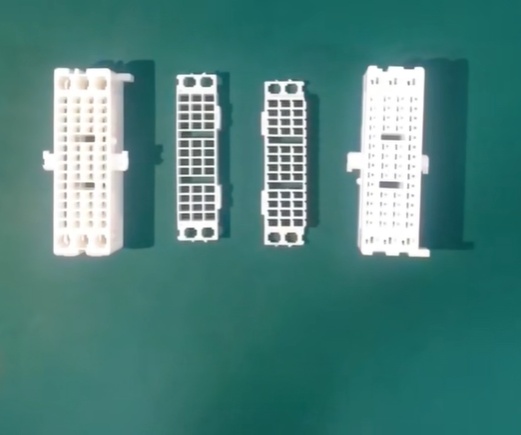
Case evidence is a stronger qualification tool than a general capability statement. The following examples reflect typical custom injection molding projects and the kinds of outcomes that can be verified before committing to a tooling investment.
High-Precision LED Optical Lenses
A lighting product manufacturer required 50,000 high-precision optical lenses for commercial LED lighting. The lenses were produced through injection molding with acrylic material, achieving 98% transparency and passing strict surface quality inspection. The order was delivered on schedule. This case demonstrates the relationship between material behavior, mold precision, and optical performance.
Complex-Structure Bicycle Chain Protection Cover
A bicycle component project involved a chain protection cover with complex geometry. Before mass production, the molding process was optimized to solve surface polishing, gas mark, and deformation issues. The project then moved into full mass production with medium and large batch output. For sourcing teams, this is an example of why T1 trial molding and process adjustment should happen before the production phase, not after it.
Large Transparent Acrylic Components
A consumer product manufacturer ordered large transparent acrylic parts for decorative fountain components, with stable indoor and outdoor use over a design life of more than five years. The project required high appearance quality and stable molding across batch orders from small to mass production. Large-size acrylic molding is a good test of a supplier's ability to control transparency and glossy surfaces.
Market Context: Where Injection Molding Demand Is Heading
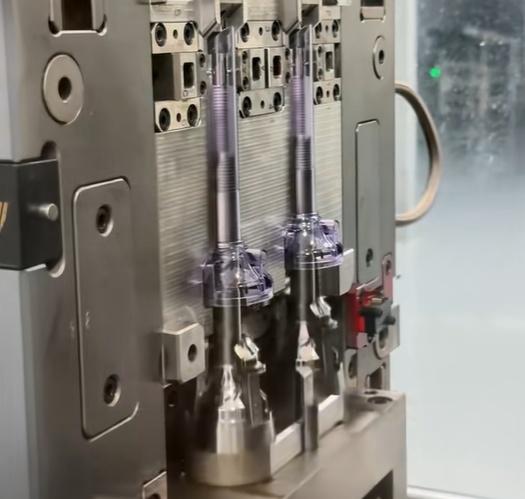
Public market data helps buyers understand whether their project type is aligned with broader industry demand.
The global injection molded plastic market was valued at approximately USD 324.98 billion in 2024 and is projected to grow to USD 435.74 billion by 2035, according to Market Research Future. China's plastic mold industry is estimated at around RMB 600 billion, with projections reaching RMB 1 trillion by 2030. China also accounts for an estimated 65% of global injection molding machine production and about 60% of global export volume in this equipment category.
On the demand side, automotive OEMs are substituting metal parts with engineered thermoplastics, with one estimate attributing 34% of domestic injection molded component demand in major U.S. hubs to the automotive sector. This shift means more projects now require engineering-grade materials, heat resistance, flame resistance, and dimensional stability than in earlier generations of plastic part sourcing.
For regulated industries, documented quality standards are becoming part of the supplier qualification process. IATF 16949 is used as a specialized quality standard for automotive molders, while ISO 13485 is recognized as a quality management benchmark for medical device injection molding, including documentation requirements such as the Device Master Record.
Note that market size estimates can vary across research firms because of differences in methodology and scope, so they should be treated as directional context rather than precise procurement inputs.
Comparison with Traditional In-House or Commodity Molding
Buyers comparing custom injection molding with in-house production or commodity molding should be aware of the trade-offs in the mid-sized custom supplier model.
Advantages of a Custom Mid-Sized Molder
- Engineering support before and after tooling: design feedback, material selection, mold modification support, and sample improvement assistance.
- Flexible MOQ: minimum order quantities are negotiated based on part size, material, and production process.
- One point of responsibility: the same supplier handles mold design, tooling, prototyping, and mass production.
- Quality gates: DFM analysis, T1 trial molding, first article inspection, and pre-shipment inspection are visible checkpoints.
Limits of the Mid-Sized Capacity Model
The same model has boundaries that buyers should acknowledge.
With an annual output of approximately 47,881 injection molded parts, a supplier of this scale is better suited to prototype-to-medium volume production, short-run series, and project-driven programs than to million-unit automated mass production. Buyers with very high annual volumes may need a different cost structure.
Material capability is also defined by the listed resin range. A supplier that works with ABS, PP, PC, PC+ABS, TPE, acrylic, POM, and nylon is well equipped for common engineering applications, but projects requiring exotic compounds, medical implant-grade resins, or special regulatory certification may fall outside the standard scope. Qualification for IATF 16949 in automotive or ISO 13485 in medical is a separate verification step; buyers should confirm the supplier's current certifications against the target application rather than assuming that general ISO status covers all regulated uses.
Future Outlook: Verification Will Become the Default
Injection molding demand is expected to keep expanding as engineered thermoplastics replace metal in automotive, electronics, and industrial equipment. The more engineering content a part has, the more important project-fit evaluation becomes.
For sourcing teams, the next phase of supplier evaluation will likely require more than a quotation. Buyers will increasingly expect DFM feedback, T1 samples, inspection reports, and material traceability as part of the normal proposal, not as an afterthought. Suppliers that can clearly document how they match material, tolerance, and quality control to a specific industry scenario will be easier to qualify and safer to onboard.
At the same time, buyers should keep evaluation proportionate. Not every project needs automotive-grade documentation or medical-grade inspection. The goal is not to demand maximum certification, but to verify the right level of control for the actual application environment and service life.
Frequently Asked Questions
What materials are typically used in custom injection molding projects?
Common materials include ABS, PP, PC, PC+ABS, TPE, and acrylic. In precision product lines, POM and nylon are also used. The selection depends on mechanical loads, temperature, appearance, and safety requirements such as UL94 V-0 flammability ratings for electronic enclosures.
What is the normal project flow from mold design to mass production?
A typical custom injection molding project starts with DFM analysis and mold design review, followed by tool manufacturing and T1 trial molding. After sample approval, the supplier proceeds to first article inspection, dimensional and visual inspection, and finally mass production. In DTG TECH's process, mold manufacturing is 15–45 days, prototype development is 7–20 days, and standard production is 20–35 days after sample approval.
What lead time should a buyer expect for injection molding production?
Standard production lead time is typically 20–35 days after sample approval, depending on order quantity, material availability, and part complexity. Prototype lead time is usually 7–20 days. Mold manufacturing takes about 15–45 days depending on mold size, structure, and material requirements.
How is quality control handled in injection molding projects?
Quality control typically includes DFM analysis, mold design review, T1 trial molding, first article inspection, dimensional inspection, visual inspection, and pre-shipment inspection. For medical applications, documented 100% quality inspection with dimensional measurement and visual checking is required.
Which applications require high precision or tight tolerance injection molding?
Applications involving PCB and display alignment, sensor housings, metal inserts, automotive components, and medical devices generally require tight tolerance control. Precision injection molding is performed according to engineering drawings and includes dimensional inspection and first article inspection to maintain consistency.
What is the difference between low-volume, short-run, and mass production injection molding?
Low-volume and short-run injection molding support smaller batches with flexible MOQ, which is suitable for prototyping, market testing, or limited demand. Mass production is designed for larger order quantities with stricter process replication and inspection routines. An example scale is 30,000–50,000 projector housings per batch, or 50,000 optical lenses per order.
Tem questões ou precisa de mais detalhes?
Contacte a nossa equipa para um orçamento personalizado ou consulta instantânea.
Solicitar orçamento
Preencha o formulário abaixo e a nossa equipa entrará em contacto com uma proposta personalizada.
Chat direto do WhatsApp
Prefere conversar em tempo real? Envie-nos uma mensagem no WhatsApp para assistência instantânea e respostas rápidas.
- Obter orçamento personalizado
- Partilhar fotos ou documentos
- Discuta as suas necessidades diretamente
Geralmente responde em 5–30 minutos durante o horário de expediente.