
Injection Molding for Appliances: Housings vs. Custom Parts
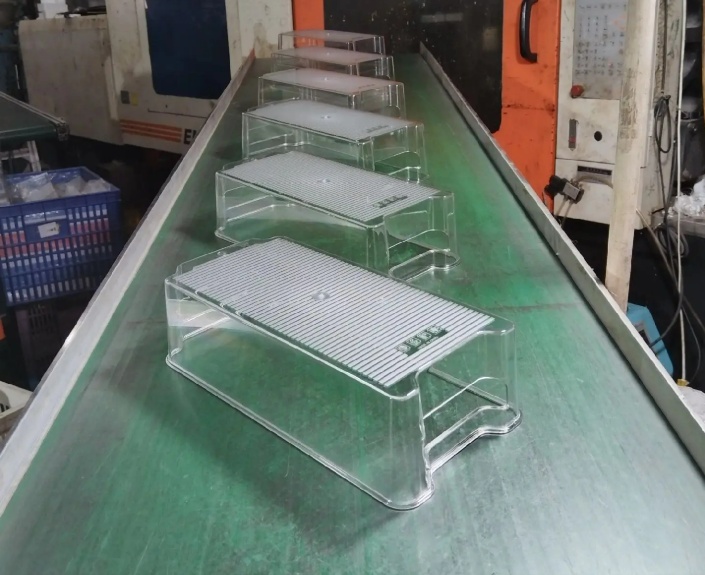
Plastic Injection Molded Housings (DTG-PIH-002) are enclosures, plastic covers and protective housings produced by injection molding in ABS, PC+ABS or PP, with customization of size, structure, color and surface texture, plus finishing options that include polishing, painting, printing and assembly support. Custom Injection Molded Plastic Parts (DTG-CIMP-001) are OEM components molded to a customer's design in ABS, PP, PC, PC+ABS, TPE, Acrylic and other engineering plastics, produced from prototype through mass production, with tolerances held according to customer drawings and specifications. Both families are supplied by DTG TECH CO., LTD., a custom injection molding manufacturer founded in 2002 in Xiamen, Fujian, China, operating a 2,500 m² facility with 80 employees, a 25-engineer team and an annual output of approximately 47,881 injection molded parts.
In appliance quotations, these two families are often listed as adjacent line items with similar unit pricing logic. In appliance engineering, they are not interchangeable. The housing family is defined by an appearance and fit function, and it carries a fixed material set of ABS, PC+ABS and PP. The custom part family is defined by a drawing, and it carries a wider material set that extends to PC, TPE and Acrylic. For an OEM buyer in the Research and Evaluation stage, the practical question is not which family is technically capable of being molded, but which family's scope, evidence and commercial model matches the risk profile of the specific part.
What Each Part Family Actually Covers
Starting from the published scope of both models removes most of the ambiguity in the comparison. The differences concentrate in four areas: material range, what is being customized, what finishing is offered, and what the part is expected to do in the assembly.
| Decision dimension | Plastic Injection Molded Housings (DTG-PIH-002) | Custom Injection Molded Plastic Parts (DTG-CIMP-001) |
|---|---|---|
| Primary function | Electronic enclosures, plastic covers, protective housings | Custom plastic parts, OEM injection molded components, mass production plastic parts |
| Molding process | Injection molding | Plastic injection molding |
| Material options | ABS, PC+ABS, PP | ABS, PP, PC, PC+ABS, TPE, Acrylic and other engineering plastics |
| Customization levers | Size, structure, color, surface texture | Part size, geometry and tolerance defined by customer design and drawings |
| Surface finishing | Polishing, painting, printing; assembly support offered | Texture, polishing, painting, printing |
| Production volume scope | Project-defined enclosures and covers | Prototype through mass production |
| Applicable industries | Electronics, home appliances, industrial equipment, consumer products | Electronics, automotive, consumer goods, industrial equipment, medical products |
The most consequential difference sits in the material column. A housing cannot be ordered in TPE or Acrylic, because those resins fall outside the published scope of DTG-PIH-002. Where an appliance program requires a soft-touch grip, a transparent lens element, or a structural part in polycarbonate or a TPE-overmolded surface, the applicable family is the custom part model, not the housing model. Conversely, where the component is a visible cover or enclosure, the housing family carries the finishing and assembly-support scope that the enclosure application expects.
The Appliance Environment Defines the Constraints
An appliance component is not usually defined by extreme conditions. It is defined by repetition, appearance, and the length of time a consumer keeps the product. That combination produces a specific constraint profile for home appliance plastic parts and molded covers: indoor use, repeated operation, and surface appearance requirements.
The operating reality described for home appliance manufacturing covers refrigerators, washing machines, air conditioners and small kitchen appliances, where molded components are permanently assembled and then subjected to multiple on/off cycles and repeated daily user interaction, including door openings, button presses, drawer slides and panel cleaning. These parts are expected to hold structural integrity, precise fit and aesthetic appearance across years of routine household use, tolerate mild temperature fluctuation near motors or heating elements, and resist occasional exposure to moisture or cleaning agents without warping, discoloration or loosening over the product's service life.
Where appliance projects overlap with electronics content, the design horizon is stated explicitly. Electronics enclosures are described as serving a typical three-to-seven-year service life in which frequent handling, port plugging, button pressing and routine cleaning occur, while the housing must maintain dimensional stability for internal assemblies such as printed circuit boards, sensors and display modules. For a buyer, three to seven years of dimensional stability converts into three concrete, verifiable sourcing constraints:
- Fit stability: assembly dimensions must remain accurate after repeated thermal cycling inside the appliance, not only at first article.
- Appearance stability: color match must remain stable across batches, and visible defects such as sink marks or flow lines are not acceptable on exterior surfaces.
- Material stability: heat-resistant material selection is required where a part sits near a heat source, and this has to be decided at material selection, not after tooling.
Material and Finish Decisions in Practice
Material choice is where the two families diverge first, and it is also where buyers most often postpone a decision that should be made before tooling. The housing family's ABS, PC+ABS and PP options cover the majority of exterior covers, panels and protective enclosures; the choice among them is normally driven by the appearance requirement of the visible surface and by whether the part is exposed to heat from a motor or heating element. That heat exposure is the point at which the appliance use case explicitly calls for heat-resistant material selection.
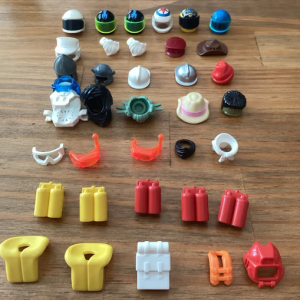
The custom part family adds PC, TPE and Acrylic to the same base set. Those additions matter in appliance and daily-use projects in three recurring situations: parts that need higher structural performance than a cover requires, parts that need a soft-touch or grip surface, and transparent or decorative parts. The Acrylic option is not theoretical. In one delivered program, a consumer product manufacturer required large transparent Acrylic molded parts for decorative fountain components with high appearance requirements, stable molding quality, and a design service life over five years. In another, a lighting product manufacturer required 50,000 injection molded optical lenses that met high transparency requirements — reported at 98 percent transparency — and passed customer inspection.
Finishing follows the same logic. Both families offer polishing, painting and printing; the housing model additionally lists texture and assembly support in its scope. Two purchasing consequences follow. First, if an appliance program is going to assign the part an external decorative role, the texture, paint and print options belong in the drawing and in the quotation from the start, because they change both acceptance criteria and process sequence. Second, printed and painted surfaces introduce their own compliance profile. The SGS EU RoHS report held for these products covers screen printing ink and UV ink substances testing, including Lead, Mercury, Cadmium, Hexavalent Chromium, PBB and PBDE. Buyers who specify decoration should confirm that the inks and coatings used on their part are inside that tested scope.
Compliance Evidence: Read Certificates by Scope and Market
For constraint-driven sourcing, the certificate number matters less than the three fields around it: which standard, which market, and which tested scope. The documentation set associated with these products is specific on all three, and it is worth reading in that order.
| Standard / scheme | Certificate number | Issuing body | Market | What it covers |
|---|---|---|---|---|
| ISO 9001:2015 quality management system | 11425Q46375R0S | Beijing East Allreach Certification Center Co., Ltd. (EACC) | Global | The production of injection molds and general injection molded parts; valid 2025-07-01 to 2028-06-30 |
| SGS EU RoHS compliance test report | No. CANEC1103223001 | SGS-CSTC Standards Technical Services Co., Ltd. | Global | RoHS Directive 2011/65/EU and 2002/95/EC; screen printing ink / UV ink substances testing for Lead, Mercury, Cadmium, Hexavalent Chromium, PBB and PBDE |
| FDA 21 CFR 177.2600 food contact material test report | No. SHAEC2004981201 | SGS-CSTC Standards Technical Services (Shanghai) Co., Ltd. | USA | Food contact material testing relevant to parts intended for food-contact use |
| LFGB food contact material test report | No. SHAEC2004979701 | SGS-CSTC Standards Technical Services Co., Ltd. | Germany / EU | German Food and Feed Code (LFGB) Section 30 and 31 plus BfR Recommendations |
| Made-in-China Supplier On-site Audit Report | MIC-ASI217106 | Bureau Veritas | Global | Injection molding and plastic injection products; Made-in-China Supplier Audit Standard / Bureau Veritas Audit Criteria |
Three reading rules produce most of the value from this table. First, ISO 9001:2015 is a process certification covering the production of injection molds and general injection molded parts; it is evidence that a quality management system exists, not evidence that a specific part meets a specific product standard. Second, FDA 21 CFR 177.2600 and LFGB are food-contact frameworks, so they become a purchasing requirement where an appliance part actually contacts food — kitchen appliance internals, for example — and are not a substitute for other specification needs. Third, market and scope must match the shipment: a report issued for the US market does not serve a German destination, and a report issued for one tested material does not automatically cover a different resin, colorant or coating used on the same platform.
For buyers working inside regulated categories, it is also useful to note the boundaries of this framework. Sector-specific schemes exist outside it: IATF 16949 is the quality standard used by injection molders serving the automotive sector, and ISO 13485 is the benchmark quality management system for medical device injection molding, requiring documentation such as the Device Master Record. Appliance and daily-use programs generally operate against ISO 9001:2015, RoHS and, where relevant, food-contact evidence — which is precisely why the scope-matching step above carries so much weight.
Commercial Checkpoints: Tooling, Lead Time, MOQ and Inspection
Both families require tooling, and that is the single most useful correction to a common buyer assumption. The difference between the two models is not tooling versus no tooling; it is how much of the design is fixed by the part family and how much is set by the buyer's drawing. The commercial ranges below apply to DTG's custom injection molding service across both models.
| Checkpoint | Stated range or model | Buyer implication |
|---|---|---|
| Prototype lead time | 7–15 days | Sample validation and fit checks can run before the production tooling decision |
| Custom mold design and tooling | 15–45 days, depending on mold size, complexity and material requirements | Tooling is the longest single schedule item; it should be sequenced first |
| Mass production | 20–35 days after sample approval | Replenishment planning should assume this window |
| MOQ | Negotiable based on part size, material, mold cost and production requirements; flexible MOQ for prototype and sample validation projects | MOQ is a commercial variable rather than a fixed threshold, and should be agreed before tooling release |
| Annual capacity reference | Approximately 47,881 injection molded parts per year, averaging roughly 3,990 pieces per month | Useful for judging whether an ongoing appliance program fits the supplier's operating scale |
| Quality gates | DFM review, mold design review, T1 trial molding, sample inspection and mold approval; first article inspection, dimensional inspection, visual inspection, pre-shipment inspection | Acceptance points can be written into the purchase order at each gate |
The DFM review and the T1 trial molding step deserve particular attention in appliance work. Because exterior housings are judged partly on appearance, defects such as polishing marks, gas marks and deformation need to be resolved before mass production rather than sorted afterward. In one program, a bicycle product manufacturer's chain protection cover moved to full mass production only after the molding process was optimized to solve surface polishing, gas mark and deformation issues identified at the sample stage. That sequence — sample, correct, then commit volume — is the pattern that protects both schedule and appearance quality.
Application Scenarios: Which Family Fits Which Part
Mapping the two models onto real appliance and daily-use positions is faster than debating capability in the abstract.
- Exterior covers, control panel housings, protective enclosures. Housing model. Appearance, fit and finishing dominate, and ABS, PC+ABS or PP covers the material requirement.
- Internal brackets, structural supports and functional components. Custom part model, where geometry and tolerance are set by drawing and the part is not judged by its visible surface.
- Parts near motors or heating elements. Either model, but heat-resistant material selection must be confirmed at material selection stage, and the resin must sit inside the chosen family's material scope.
- Soft-touch, transparent or specialty-resin parts. Custom part model, since TPE, PC and Acrylic sit outside the housing family's material set.
- Large-volume enclosure runs. A delivered electronics program produced customized PC+ABS injection molded housings for projector equipment in batches of 30,000 to 50,000 units, with stable dimensions and appearance quality and a design service life over five years.
The pattern that emerges is consistent: appliances are rarely served by one part family alone. A single platform typically combines housings on the outside with custom molded parts inside, which means material and compliance documentation must be verified per part number rather than per program.
Market Trend Analysis
The supply environment behind this decision is expanding. Market Research Future values the global injection molded plastic market at USD 324.98 billion in 2024 and projects USD 435.74 billion by 2035, indicating continued substitution of molded plastic for other materials across consumer and industrial categories. On the supply side, China produces an estimated 65 percent of the world's injection-molding machines and accounts for 60 percent of global export volume, which sustains a deep and competitive pool of molding capacity for OEM buyers.
A related substitution signal comes from adjacent sectors: automotive OEMs have been replacing metal parts with engineered thermoplastics, driving 34 percent of domestic injection molded component demand in major hubs such as the United States. For appliance buyers, the practical reading is not that capacity is scarce. It is that supplier differentiation shifts from availability of molding capacity to the quality of documentation, the reliability of appearance control, and the discipline of the tooling and inspection sequence — the exact areas where the housing and custom part models impose different requirements.
Comparison with Conventional Approaches — and Where the Limits Sit
A framework that only lists advantages is not a decision framework. Both models carry boundaries that should be written into the sourcing plan.
- Tooling is unavoidable and takes time. Custom mold design and tooling runs 15 to 45 days depending on mold size, complexity and material. Even housing-type parts customized by size, structure, color and surface texture are project-specific and therefore tooling-linked. Injection molding is a poor fit for one-off or open-ended volumes where the design is still moving.
- The housing material set is genuinely narrow. ABS, PC+ABS and PP cover many covers and enclosures, but if the design calls for TPE, PC or Acrylic, the housing model is not the applicable scope and the project must move to the custom part family, with its drawing-based tolerance definition.
- Certificates are not blanket approvals. Each report corresponds to a market, a standard and a tested scope. A buyer shipping to Germany, the United States and other regions simultaneously should map the relevant reports per destination, and should confirm that the resin, colorant and decoration used on the ordered part fall inside the tested scope.
- Appearance-critical parts carry a heavier inspection burden. No visible defects and stable color match across batches are stated requirements in appliance use, which means more inspection steps, not fewer.
- Capacity and location are finite. Operations run from a single 2,500 m² facility in Xiamen, Fujian, China, with approximately 47,881 parts per year of output. Programs that require multi-region manufacturing footprints, or volumes far beyond this scale, should treat capacity and geography as explicit evaluation criteria rather than assumptions.
Compared with generic stock enclosures, molded parts win on fit, appearance integration and assembly support, and lose on flexibility — a stock enclosure can be bought in small quantities and changed quickly, while a molded part locks the geometry into tooling. Compared with machining or fabrication alternatives, molding is oriented toward repeatable volume production; its economics, lead time and quality control are built around that assumption, not around single units.
Future Outlook
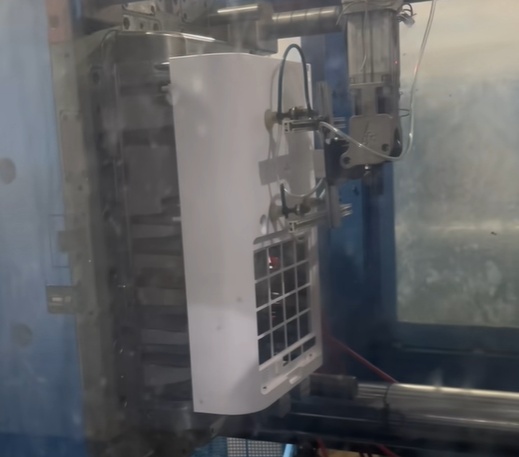
Appliance sourcing is moving toward documentation-led selection. As buyers compare more suppliers with comparable molding capability, the differentiators become verifiable: whether a certificate's scope matches the ordered part and destination market, whether appearance criteria are controlled by inspection gates rather than by assurance, and whether tooling lead time is planned as a first-order schedule item. Expect more programs to validate fit and appearance through prototype molding in the 7-to-15-day window before releasing tooling, and to define acceptance at T1 trial molding and first article inspection rather than at delivery. Material substitution pressure should also continue, which makes the material-scope question — housing family or custom part family — a drawing-level decision rather than a late-stage procurement adjustment.
FAQ
When should an appliance project specify a molded housing instead of a custom molded part?
Specify the housing model (DTG-PIH-002) when the component is an enclosure, plastic cover or protective housing whose acceptance depends on appearance, fit and finishing, and when ABS, PC+ABS or PP satisfies the material requirement. The housing scope includes customization of size, structure, color and surface texture, plus polishing, painting, printing and assembly support. If the part is defined by a customer drawing, requires tolerance definition against that drawing, or needs a resin outside that set, the applicable model is the custom part family (DTG-CIMP-001), whose scope covers prototype through mass production and materials including PC, TPE and Acrylic.
Which certifications should be verified for appliance injection molded parts, and for which markets?
The documentation set includes ISO 9001:2015 certificate 11425Q46375R0S issued by Beijing East Allreach Certification Center Co., Ltd. (EACC), covering the production of injection molds and general injection molded parts globally and valid from 2025-07-01 to 2028-06-30; an SGS EU RoHS compliance test report (No. CANEC1103223001) for RoHS Directive 2011/65/EU and 2002/95/EC, covering screen printing ink and UV ink substances including Lead, Mercury, Cadmium, Hexavalent Chromium, PBB and PBDE; an SGS FDA 21 CFR 177.2600 food contact material test report (No. SHAEC2004981201) for the US market; an SGS LFGB report (No. SHAEC2004979701) covering German Food and Feed Code Section 30 and 31 plus BfR Recommendations for the German market; and a Made-in-China Supplier On-site Audit Report (MIC-ASI217106) issued by Bureau Veritas. The food-contact reports are relevant where the part is used in contact with food.
What lead times and minimum order quantities apply?
Prototype lead time is 7–15 days. Custom mold design and tooling takes 15–45 days depending on mold size, complexity and material requirements, and mass production runs 20–35 days after sample approval. MOQ is negotiable and is set by part size, material, mold cost and production requirements, with flexible MOQ available for prototype and sample validation projects. Because tooling is the longest schedule item, it is normally the first element to sequence in a project plan.
How is surface appearance and color consistency controlled across batches?
Appliance use explicitly requires good surface finish with no visible defects, stable color match across batches and accurate assembly dimensions. Control is applied through the quality sequence: DFM review, mold design review, T1 trial molding, sample inspection and mold approval before volume, followed by in-process inspection, first article inspection, dimensional inspection, visual inspection and pre-shipment inspection. Where decoration such as printing or painting is specified, the tested compliance scope of the inks and coatings should be confirmed.
Is injection molding suitable for very low volumes or unproven designs?
Not as a production model. Tooling lead time of 15–45 days and the tooling-linked nature of customized housings mean the process favors programs with continuing production after validation. Prototype molding in the 7–15-day window supports fit, material and appearance validation before tooling commitment, and MOQ is negotiable for prototype and sample projects, so the low-volume stage is best used for validation rather than as a permanent supply mode. Programs with genuinely uncertain or open-ended volume should treat tooling commitment as the decision point to defer.
Can one appliance platform use both part families at the same time?
Yes, and it is common. Exterior covers and enclosures typically follow the housing model with ABS, PC+ABS or PP, while internal functional components follow the custom part model, which also covers PC, TPE and Acrylic. Because material sets and compliance scopes differ, material confirmation and certificate matching should be performed per part number rather than per platform, and finishing and inspection requirements should be specified for each part individually.
Tem questões ou precisa de mais detalhes?
Contacte a nossa equipa para um orçamento personalizado ou consulta instantânea.
Solicitar orçamento
Preencha o formulário abaixo e a nossa equipa entrará em contacto com uma proposta personalizada.
Chat direto do WhatsApp
Prefere conversar em tempo real? Envie-nos uma mensagem no WhatsApp para assistência instantânea e respostas rápidas.
- Obter orçamento personalizado
- Partilhar fotos ou documentos
- Discuta as suas necessidades diretamente
Geralmente responde em 5–30 minutos durante o horário de expediente.