
Inside All-King Ceramics' 16M m² Porcelain Tile Production
Inside All-King Ceramics’ 16M m² Porcelain Tile Production
Supplier capability evidence, from press to pallet: what a 60,000 m² facility, roughly 320 staff and 25 R&D engineers actually mean for a commercial tile programme.
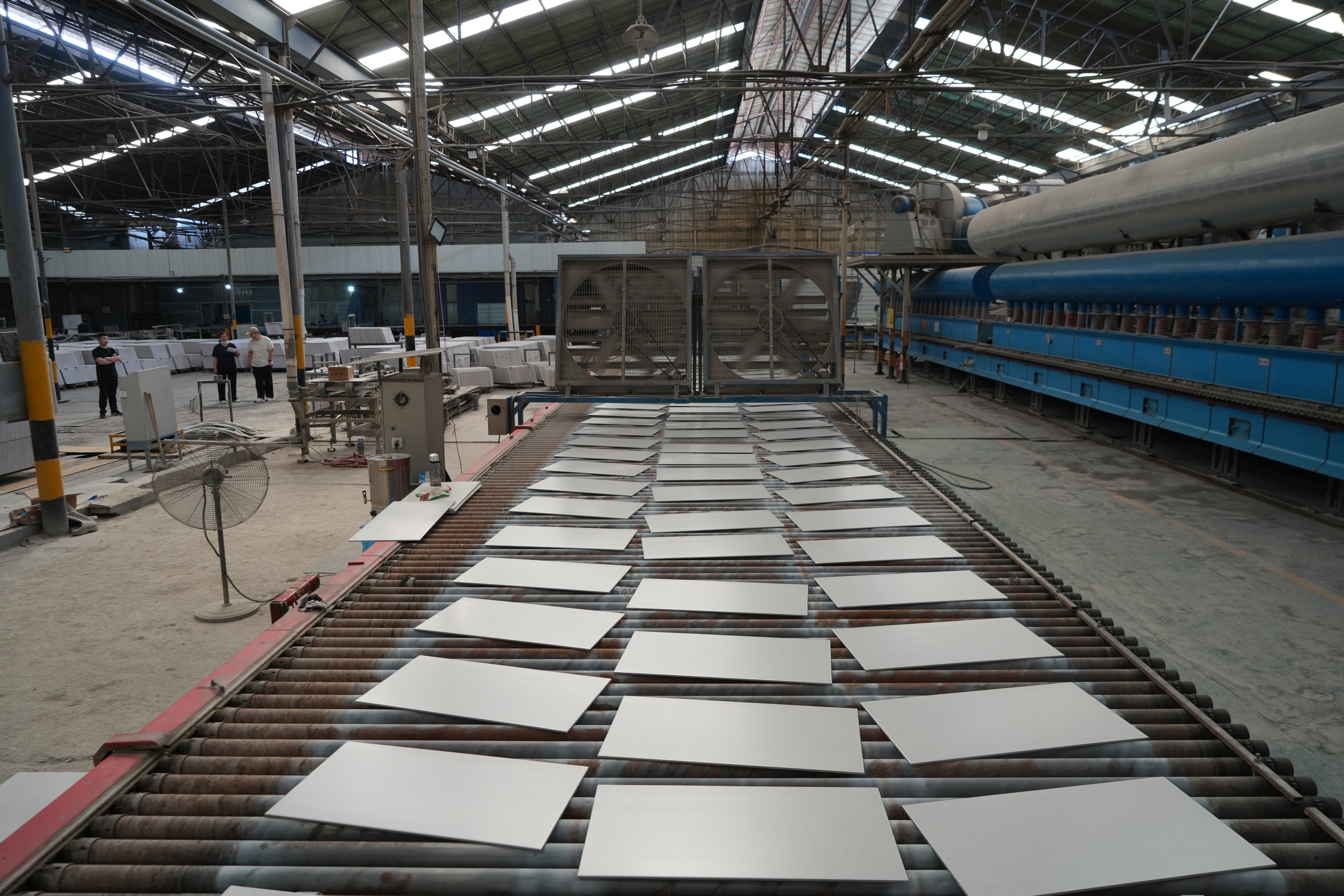
Fig. 1 — Production workshop at the Zibo All-King Ceramics facility. Capacity claims are only useful to buyers when they can be traced to a physical production line.
A commercial porcelain tile order is a production commitment, not a catalogue purchase. When a shopping mall, a hotel podium or a multi-phase apartment development specifies 60x120cm vitrified tiles, the buyer is not choosing a surface — the buyer is choosing a schedule: a fixed volume, a fixed format, a fixed finish and a delivery window that the general contractor cannot move.
ZIBO ALL-KING CERAMICS CO., LTD, trading as All-King Ceramics, is a porcelain and ceramic tile manufacturer and direct exporter based in Zibo, China. Founded in 2011, the company operates a 60,000 m² production facility with approximately 320 employees, including 25 R&D engineers, and reports an annual output of 12–16 million m² of tile. Roughly 70% of that output is exported, with established markets across Australia, New Zealand, South Korea, Southeast Asia, Central Asia, Russia, the Middle East and Latin America.
Capacity statements of that kind are common in building materials. What is less common is the operational detail underneath them: monthly output, format matrix, inspection regime, certificate numbers, and the exact scope printed on each certificate. This article examines the evidence behind All-King Ceramics’ published production figures, and sets out how a project buyer can test the same numbers on any supplier.
Why Capacity Evidence Has Become a Procurement Question
Demand is not the constraint in this category. Grand View Research valued the global ceramic and porcelain tiles market at USD 226.4 billion in 2025 and projects it to reach USD 380.6 billion by 2033. Porcelain tiles accounted for 52.4% of revenue share within that market in 2025, and the commercial end-use segment held the largest revenue share of the ceramic tile market in the same year.
Supply behaviour is the variable. China’s ceramic tile export value reached USD 3.21 billion in 2024, down 27.8% year on year, on a total export volume of 599 million square metres, according to China Customs data. The average export price for Chinese ceramic tiles in 2024 was USD 5.36 per square metre.
Those two movements — stable volume, falling export value — describe a market under sustained price pressure. That is precisely the environment in which price-led sourcing becomes risky. A supplier that wins on unit price is not automatically a supplier that can hold a delivery date across three construction phases, reproduce the same surface character eighteen months later, or supply a documented compliance file to a consultant.
The practical response for buyers is to move part of the evaluation away from price and onto verifiable production evidence. Any porcelain tile supplier’s capacity claim can be tested with five questions:
- What is the stated annual output, and is it expressed as a single figure or a range?
- What is the monthly production capacity, and does it multiply out to the annual claim?
- What format matrix sits behind that capacity?
- What inspection is applied to every batch, and is it documented?
- Which certificates apply to the ordered product, and what scope is printed on each one?
The Operating Footprint Behind All-King Ceramics
All-King Ceramics publishes a defined set of operational figures. They are reproduced below as stated, because the usefulness of supplier data depends on it being checkable rather than summarised.
| Item | Published figure |
|---|---|
| Founded | 2011 |
| Location | Zibo, China |
| Facility area | 60,000 m² |
| Employees | Approximately 320 |
| R&D engineers | 25 |
| Annual output | 12–16 million m² |
| Monthly capacity | 1.2 million m² |
| Export ratio | Approximately 70% |
| Core formats | 60x120cm porcelain (flagship), 75x150cm, 80x80cm, 100x100cm floor tiles, 60x60cm ceramic tiles |
| Production mode | OEM / ODM |
| Minimum order quantity | 400 m² per design; trial orders accepted |
| Production lead time | 7–10 days |
An internal consistency check buyers can run in thirty seconds
A stated monthly capacity of 1.2 million m² annualises to 14.4 million m². That figure sits inside the published 12–16 million m² annual range. This does not independently prove output, but it does show that the two published numbers are internally coherent — which is the first filter to apply when comparing supplier claims, because ranges and monthly figures that cannot be reconciled usually mean one of them is a marketing number.
The second filter is format coverage. All-King Ceramics operates a matrix anchored by 60x120cm porcelain tiles, supported by 75x150cm, 80x80cm, 100x100cm floor tiles and 60x60cm ceramic tiles. This matters for mixed-use developments, where a single site may require large-format porcelain flooring in a lobby, a different format in apartment bathrooms and a ceramic line for secondary areas. A supplier that produces a single format has to sub-contract the remainder, and sub-contracting removes the quality-control chain from the buyer’s sightline.
From Press to Pallet: How Capacity Converts Into Delivery
Capacity becomes useful to a project only when it turns into boxes on a pallet on a known date. Two published figures connect those two ends: production lead time and monthly throughput.
All-King Ceramics states a production lead time of 7–10 days and a monthly capacity of 1.2 million m². For context on scale, a 15,000 m² supply — the size of the company’s reported commercial reference project — equals roughly 10,417 boxes at the stated packing specification of 2 pieces per box covering 1.44 m². Against a stated monthly capacity of 1.2 million m², that order represents roughly 1.25% of one month’s nominal output. The ratio is what gives a manufacturer room to schedule a project order alongside existing commitments rather than around them.
The commercial terms attached to that capacity are also published: a minimum order quantity of 400 m² per design, with trial orders accepted. The MOQ matters for two opposite reasons. It protects colour and batch consistency, because a design run is set up once rather than repeatedly. It also means that a specification split across many small designs will consume scheduling slots disproportionately, so projects with fragmented design packages should plan their release sequence accordingly.
Post-delivery support is part of the same delivery equation: damage compensation, online installation guidance, 24/7 technical consultation, and batch tracking with reordering support. Batch tracking is the mechanism that makes phase-two orders possible — a project delivered over eighteen months needs to reorder the same design and receive a comparable surface, and that depends on production records rather than on goodwill.
What the Published Specifications Actually Mean on Site
For the flagship 60x120cm porcelain tile — supplied in the Marble Series and Travertine models — the published technical parameters are as follows.
| Parameter | Published value | What it governs |
|---|---|---|
| Thickness range | 9.0–10.5 mm | Adhesive and levelling system selection; finished floor height |
| Water absorption | < 0.5% (vitrified) | Stain resistance, dimensional stability, freeze-thaw behaviour |
| Abrasion resistance | PEI 4 / PEI 5 | Surface wear under sustained commercial foot traffic |
| Mohs hardness | 6–7 | Resistance to grit and surface scratching |
| Breaking strength | ≥ 1300 N | Load-bearing behaviour and handling durability of large formats |
| Modulus of rupture | ≥ 35 MPa | Flexural strength under structural movement |
| Packing | 2 pcs/box (1.44 m²/box) | Freight volume, container planning, site handling |
| Body material | Porcelain clay | Density and vitrification behaviour |
Three of these parameters carry most of the decision weight. Water absorption below 0.5% places the product in the vitrified porcelain class, which is the property behind stain resistance and stability in wet or freeze-thaw conditions. PEI 4 and PEI 5 are the abrasion classes used for commercial and heavy commercial traffic, which is the specification line that determines replacement intervals on surfaces that never stop receiving foot traffic. Breaking strength of at least 1300 N and modulus of rupture of at least 35 MPa relate to how a 60x120cm format behaves under load and during handling, where the span of the tile amplifies any weakness.
Thickness is published as a range — 9.0–10.5 mm — rather than a single nominal value. That reflects production tolerance. Buyers locking in a levelling system, a grout joint width or a finished floor height for a 60x120cm format should confirm the nominal thickness agreed for their specific order rather than designing to the top of the range.
Quality Control at Scale: Where 100% Inspection Sits
Volume without inspection discipline produces rework on site, and rework costs more than the tile. All-King Ceramics describes a three-layer inspection regime: 100% flatness and sizing auto-check, piece-by-piece visual inspection, and random laboratory testing per batch.
Flatness is the parameter that decides whether a large-format floor looks correct. On a 60x120cm tile, a deviation measured in fractions of a millimetre amplifies across the tile diagonal, and the visible result is lippage at the joint. Because lippage is a function of both tile flatness and installation method, an inline 100% flatness and sizing check removes one of the two variables before the tiles ever reach the site.
Piece-by-piece visual inspection addresses a different risk. Marble-look porcelain is valued for vein variation, which means tone and pattern differ from piece to piece by design. Visual inspection per piece is what keeps that variation inside an acceptable band, so that a large floor plate reads as one surface rather than as a patchwork.
Random laboratory testing per batch addresses the cross-batch consistency problem. A single-phase order can tolerate batch-to-batch drift; a project supplied over multiple phases cannot. Batch-level testing, combined with the batch tracking described above, is the documented basis for reordering the same design later in the programme.
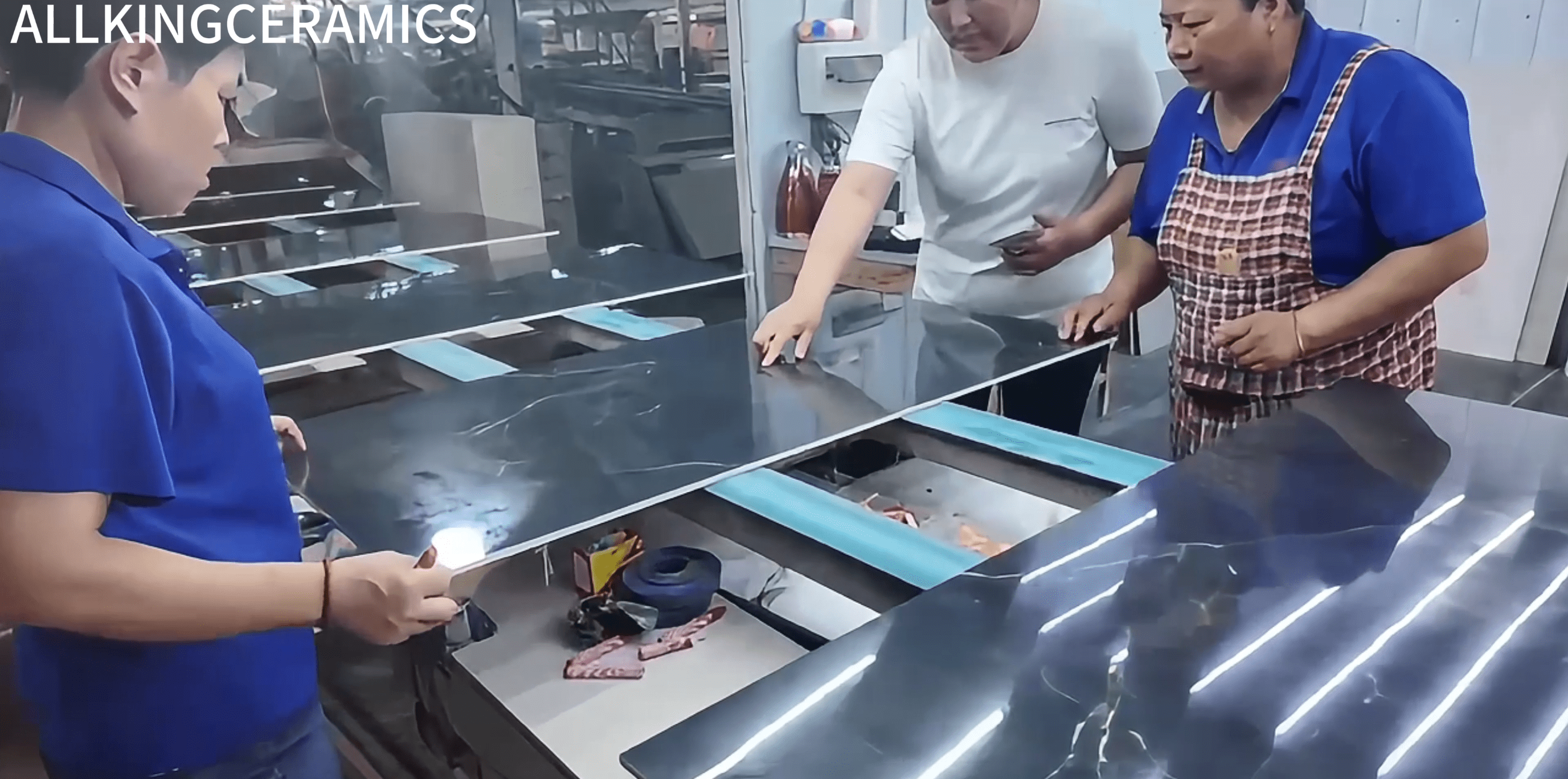
Fig. 2 — On-line quality control: flatness and sizing are checked across output before tiles enter packing.
Certification Evidence and the Scope Printed on Each Document
Certificates are only as useful as their stated scope. All-King Ceramics holds two certifications relevant to its 60x120cm porcelain tile range, including the Marble Series and Travertine models.
| Certification | Certificate number | Issued by | Standard | Stated scope and market |
|---|---|---|---|---|
| CE | AC 50163816 0001 | TUV | EEC | Ceramic tiles — dry-pressed ceramic tiles, for internal flooring; EU market |
| ISO 9001 | 0350521Q30166R1M | XQCC | ISO 9001:2015 | Production and service of ceramic tile (except as required by 3C); global markets |
The product behind these certificates is identified as product code 4765, the Marble Series — a 60x120cm porcelain tile for the building materials industry, classified as a vitrified porcelain tile with water absorption below 0.5%.
Application Fit: Where This Capability Set Is Used
All-King Ceramics reports a commercial reference supply of 15,000 m² covering hotel lobby floors, commercial mall flooring, office building facade, high-end apartment bathrooms and an airport departure hall. The client types behind that work are commercial real estate developers, general contractors, tier-1 building materials wholesalers, hospitality procurement agencies and architectural design firms. Reported outcomes include consistent aesthetic presentation, stain-resistant maintenance and full project acceptance. These are first-party reported results: for a buyer, they are a starting point for reference checks and sampling, not a substitute for either.
The application profile for this product family is commercial real estate, with documented working conditions that include high traffic, frost and freeze-thaw cycling, wet and slippery surfaces, thermal shock and heavy surface load. Typical project types are flooring and wall cladding, commercial fit-out, interior decoration, facade engineering and hotel renovation. The systems that accompany the tile are equally part of the specification: tile adhesive and grout, levelling systems, tile spacers, diamond cutting tools, subfloor preparation systems, and facade hanging systems where wall cladding is involved.
Anti-slip performance is the requirement that most often separates a project specification from a generic order. Documented requirements for this application family include anti-slip ratings of R10/R11, frost resistance, low VOC emissions, acid and alkali resistance, zero water penetration and ISO 13006 compliance. Under DIN 51130, R11 corresponds to a 19°–27° slope and is commonly specified for kitchens and food production areas, while R12 corresponds to 27°–35° and is used in dairy and industrial environments. Because anti-slip rating depends on the surface finish, it should be specified per area — entrance zones, food-service areas, pool surrounds and external thresholds each carry different requirements — rather than applied as a single rating across a whole order.
Comparison: Direct Manufacturing Scale vs Traditional Sourcing Models
Buyers evaluating porcelain tile project solutions rarely compare products in isolation; they compare sourcing models. The table below contrasts the direct-manufacturer model with two common alternatives, using only publicly attributable dimensions.
| Evaluation dimension | Direct manufacturer (All-King Ceramics model) | Trading intermediary | Low-grade ceramic substitution |
|---|---|---|---|
| Production visibility | In-house press, kiln, packing and inspection reported at one 60,000 m² facility | Depends on a third-party factory; the seller does not control the line | Depends on the supplying line |
| Format coverage | 60x120cm flagship plus 60x60cm, 80x80cm, 100x100cm and 75x150cm | Varies by supplier relationships | Typically narrow |
| Water absorption | < 0.5%, vitrified porcelain | Varies by source factory | Higher absorption; ceramic class |
| Certification held | CE (AC 50163816 0001) and ISO 9001 (0350521Q30166R1M) held by the manufacturer | Certificates often belong to the factory, not the seller | Frequently not applicable |
| Order flexibility | 400 m² per design minimum; trial orders accepted; 7–10 day production lead time | Variable | Often lower minimums |
Limits buyers should plan around
A capability profile is only trustworthy when its boundaries are stated alongside its strengths. Six limits apply to the evidence set above:
- Certified application scope is interior. The CE certificate covers dry-pressed ceramic tiles for internal flooring. Exterior facade, cladding and heavy outdoor applications require separate verification.
- Annual output is published as a range. 12–16 million m² is a range, not a fixed figure. Capacity planning for critical schedules should use the conservative end of that range.
- The minimum order quantity is 400 m² per design. Projects with highly fragmented design packages will need a release sequence that groups designs into viable runs.
- Lead time is production only. The 7–10 day figure excludes transit, port handling and customs; total order-to-site time depends on the route.
- Vitrified porcelain is not the lowest-cost material. Against a Chinese ceramic tile average export price of USD 5.36 per square metre in 2024, projects driven purely by unit price will not obtain a like-for-like comparison. Vitrified porcelain should be evaluated on replacement cycle and maintenance cost, not unit price alone.
- Anti-slip performance is finish-dependent. R11 or R12 ratings must be specified per area and confirmed per order; they cannot be assumed across an entire product family.
Market Outlook for Capacity-Backed Tile Supply
Three trends are likely to shape how buyers evaluate porcelain tile suppliers over the next several years.
Commercial demand remains the anchor. With the global ceramic and porcelain tile market projected to grow from USD 226.4 billion in 2025 to USD 380.6 billion by 2033, and with porcelain holding a 52.4% revenue share and commercial end-use holding the largest share of the ceramic tile market, the volume of specification-driven, documentation-heavy project work is set to increase rather than contract.
Export consolidation favours documented suppliers. China’s ceramic tile export value fell 27.8% year on year to USD 3.21 billion in 2024, while export volume remained at 599 million square metres. Falling value against stable volume signals margin compression at the lower end of the market. The predictable result is a supplier base that splits between manufacturers with auditable production and sellers reselling on price. Buyers who move their screening criteria toward capacity evidence, inspection regimes and certificate scope will be selecting from the smaller, more stable group.
Compliance requirements are becoming specification lines. Anti-slip ratings under DIN 51130 and low-emitting material provisions such as LEED v4.1 IEQc4.3 increasingly appear as explicit requirements in commercial and public-space tenders rather than as optional extras. Suppliers who can produce certificate numbers, scopes and batch-level test records will spend less time in clarification rounds and more time in the approved-vendor list.
Frequently Asked Questions
Which certifications apply to All-King Ceramics’ porcelain tiles, and what do they cover?
Two certifications apply. The CE certificate, number AC 50163816 0001, is issued by TUV under the EEC standard for the EU market, with a scope of ceramic tiles — dry-pressed ceramic tiles for internal flooring. The ISO 9001 certificate, number 0350521Q30166R1M, is issued by XQCC under ISO 9001:2015 for global markets, covering the production and service of ceramic tile (except as required by 3C). Both apply to the 60x120cm porcelain tile range, including the Marble Series and Travertine models.
What are the technical specifications of the 60x120cm porcelain tile?
The 60x120cm porcelain tile has a thickness range of 9.0–10.5 mm, water absorption below 0.5% (vitrified classification), abrasion resistance of PEI 4 / PEI 5, Mohs hardness of 6–7, breaking strength of at least 1300 N, and modulus of rupture of at least 35 MPa. The body material is porcelain clay, and packing is 2 pieces per box, covering 1.44 m² per box. Product code 4765, the Marble Series, is a vitrified porcelain tile with water absorption below 0.5%.
What is the minimum order quantity and production lead time?
The minimum order quantity is 400 m² per design, and trial orders are accepted. The stated production lead time is 7–10 days. That lead time covers production only; it does not include ocean freight, port handling, customs clearance or inland delivery, which should be planned as separate schedule items.
Does All-King Ceramics support OEM and ODM customization?
Yes. The stated production mode is OEM / ODM, and the documented customization options are custom size and thickness, custom surface finish, OEM brand logo and packaging, pattern variation including marble vein customization, and custom anti-slip rating. Customization decisions on size, thickness and finish should be confirmed against the certified product scope before they are written into a project specification.
How is quality controlled across production batches?
Three control layers are applied: 100% flatness and sizing auto-check, piece-by-piece visual inspection, and random laboratory testing per batch. Batch tracking and reordering support are provided so that a later phase of the same project can reorder a matching design. Post-delivery support includes damage compensation, online installation guidance and 24/7 technical consultation.
Which export markets does All-King Ceramics serve?
Approximately 70% of production is exported. The company’s stated market coverage includes Australia, New Zealand, South Korea, Southeast Asia, Central Asia, Russia, the Middle East and Latin America, serving contractors, distributors and builders as an OEM/ODM partner. Buyers in markets outside the EU should confirm local approval requirements separately, because ISO 9001 is a management-system certification rather than a product-market approval.