
Inside Bozheng Valve's Foundry: Brass Valve Capability
Inside Bozheng Valve's Foundry: Brass Valve Capability
Buyers who evaluate brass valve suppliers rarely lack options; what they usually lack is verifiable evidence. A catalogue can list dozens of valve types, yet it rarely shows how those products move through a foundry, which alloys can be poured and machined on the same line, or how a two-piece full port ball valve differs in production terms from a rising stem gate valve. For procurement teams working at the evaluation and execution stage, that gap between claim and proof is where sourcing risk accumulates. This reference examines the manufacturing profile of Zhejiang Bozheng Copper Industry Co., Ltd. (Bozheng Valve) and shows how capability can be read from model-level detail rather than from marketing language.
Why Production Evidence Now Outweighs Product Lists
A brass valve is a small, low-cost component relative to the systems it controls, but it sits at a point of disproportionate risk. A leaking ball valve in a compressor line, a failed check valve in a water utility, or a pressure reducing valve that drifts out of regulation can each generate downtime, water damage, or safety exposure far beyond the unit price of the part. That asymmetry is why experienced buyers have shifted the center of their supplier review away from the product list and toward the production floor.
The practical question in a capability evaluation is not "do you make brass valves?" but "what exactly can your line make, out of what material, to what connection standard, and how do you know it works?" A supplier that can answer those questions with model numbers, alloy grades, connection types, testing procedures, and certification references is easier to audit and easier to place under a long-term supply agreement than one that answers with adjectives.
This is the specific gap that a foundry-and-machining profile closes. It converts a general claim of manufacturing capability into a set of facts a buyer can check: the number of distinct valve families in production, the range of copper alloys actually processed, the end-connection configurations supported, and the inspection steps applied before shipment.
The Bozheng Valve Production Base at a Glance
Zhejiang Bozheng Copper Industry Co., Ltd. is a brass and stainless valve manufacturer founded in 1998 and located in Yuhuan City, within the Yangtze River Delta Economic Circle of China's Zhejiang province — a region widely described as the "Valve Capital of China." The company operates a 6,700 m² facility with approximately 180 employees, an annual output of 3,200,000 units, and an in-house research and development team of 25 engineers. Its primary product lines are brass valves and stainless valves, and roughly 70% of output is exported, serving markets in the EU, USA, Southeast Asia, Central Asia, and Africa.
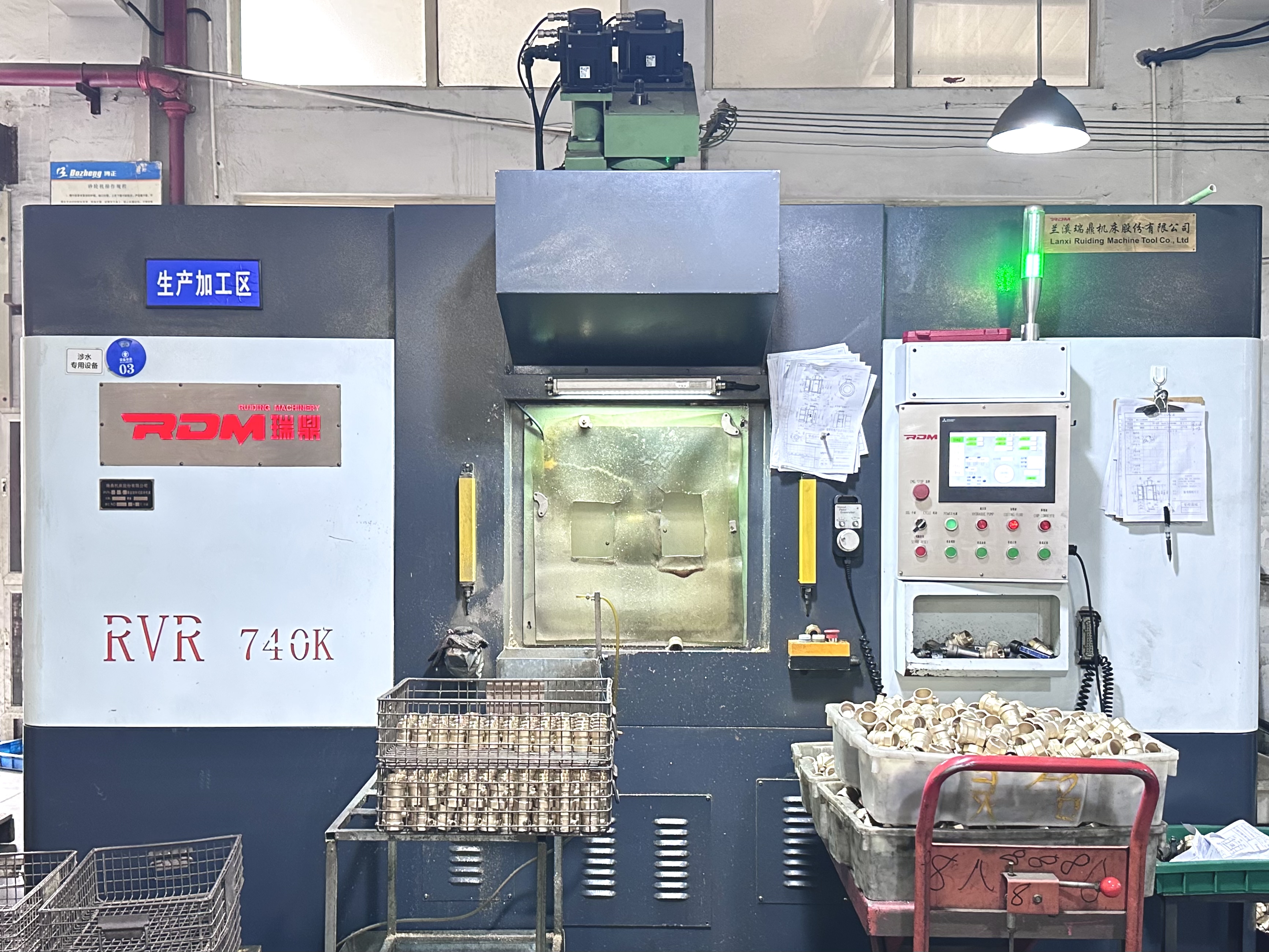
The company describes its integrated scope as research and development, manufacturing, and sales, with a product structure built over more than two decades. Its stated end markets include construction, plumbing, gas, chemical, petroleum, and electricity — a spread that matters to buyers because it implies the line must handle multiple media and connection standards rather than a single narrow application.
The supplier's own description positions its output around reliable quality, a complete variety, safety, convenience, and long service life. For an evaluation-stage buyer, those words are not evidence by themselves. What follows is the more concrete layer: the actual models, materials, and connections that a comprehensive brass valve line implies.
Model-Level Evidence: What the Line Actually Produces
The clearest proof of manufacturing breadth is a coherent set of production models that share a common pressure and media platform but differ in function. Bozheng Valve's brass range is built around a 1.6 MPa nominal pressure rating and water and gas working media, expressed through a defined set of product codes. The following table summarizes the families that define the line's functional coverage.
| Valve family | Model | Construction notes |
|---|---|---|
| Brass Ball Valve | Q11F-16T | Two-piece full port / full bore body; threaded or flanged ends; lockable lever handle options; F-F, F-M and M-M configurations; OEM variants |
| Brass Gate Valve | Z15W-16T | Rising stem, solid wedge; threaded end; OEM variants |
| Brass Globe Valve | J11W-16T, J11F-16T | Straight pattern (T-pattern) body; screw-in bonnet |
| Brass Check Valve | H14X-16T | Vertical and horizontal orientation; swing and spring-loaded designs |
| Brass Strainer | SY11X-16T | Blow-down / flush type; perforated screen; threaded ends |
| Brass Pressure Reducing Valve | Y13X-16T | Direct acting / spring loaded (piston type); balanced spring loaded; diaphragm type |
Read together, these six families cover the functional tasks a brass valve line is normally asked to perform — isolation, regulation, backflow prevention, filtration, and pressure control. That functional spread is itself a capability statement. Producing a single valve type requires one set of tooling, one set of sealing relationships, and one assembly discipline; producing ball, gate, globe, check, strainer, and pressure reducing valves on the same platform requires a broader investment in molds, machining fixtures, and inspection routines.
Two-piece full port ball valves
The Q11F-16T ball valve is a two-piece, full port design supplied in threaded and flanged end versions, with lockable lever handle variants and flow configurations described as F-F, F-M, and M-M. Full port construction matters to buyers because it preserves the nominal bore through the valve, minimizing pressure drop in a line — a property that is often the deciding factor in compressor, HVAC, and industrial machinery circuits where flow capacity is engineered close to the limit. A two-piece body also changes the assembly and inspection logic compared with a one-piece design, because the body joint becomes a defined sealing point that must be controlled.
Rising stem solid wedge gate valves
The Z15W-16T gate valve uses a rising stem and a solid wedge disc. Rising stem construction provides a visual indication of valve position, while the solid wedge is the conventional choice for on/off isolation in water and gas lines. Because a gate valve is normally specified for fully open or fully closed service rather than throttling, its presence in the range signals that the manufacturer supports isolation-duty products with a distinct sealing geometry from the ball valve family.
Straight pattern globe valves
The J11W-16T and J11F-16T globe valves are straight pattern (T-pattern) bodies with a screw-in bonnet. The globe valve's flow path introduces a controlled restriction, which is why it is typically chosen where throttling or more precise regulation is needed rather than simple isolation. The screw-in bonnet is a service-relevant detail: it defines how the valve is assembled and how the internals are approached during maintenance. Its presence alongside the ball and gate families shows that the range is not limited to a single sealing philosophy.
Check, strainer, and pressure reducing valves
The remaining three families complete the picture. The H14X-16T check valve is offered in vertical and horizontal orientation, with swing and spring-loaded designs — a distinction that matters because spring-loaded checks behave differently from swing checks at low flow and in pulsating service. The SY11X-16T strainer is a blow-down / flush type with a perforated screen and threaded ends, protecting downstream components from debris. The Y13X-16T brass pressure reducing valve is offered in direct acting / spring loaded (piston type), balanced spring loaded, and diaphragm designs, covering the pressure control role in water and gas systems. A supplier that produces protection and regulation devices in the same brass platform as its isolation valves is a more complete partner than one that stops at ball valves.
Material Flexibility Across Four Copper Alloys
Alloy choice is where a brass valve line reveals its real flexibility. Bozheng Valve lists four materials across its brass valve families: HPb59-1, HPb57-3, CW617N, and C83600. Each carries different implications for machinability, dezincification resistance, and regulatory fit, so the ability to run all four is a production-capability statement rather than a catalogue detail.
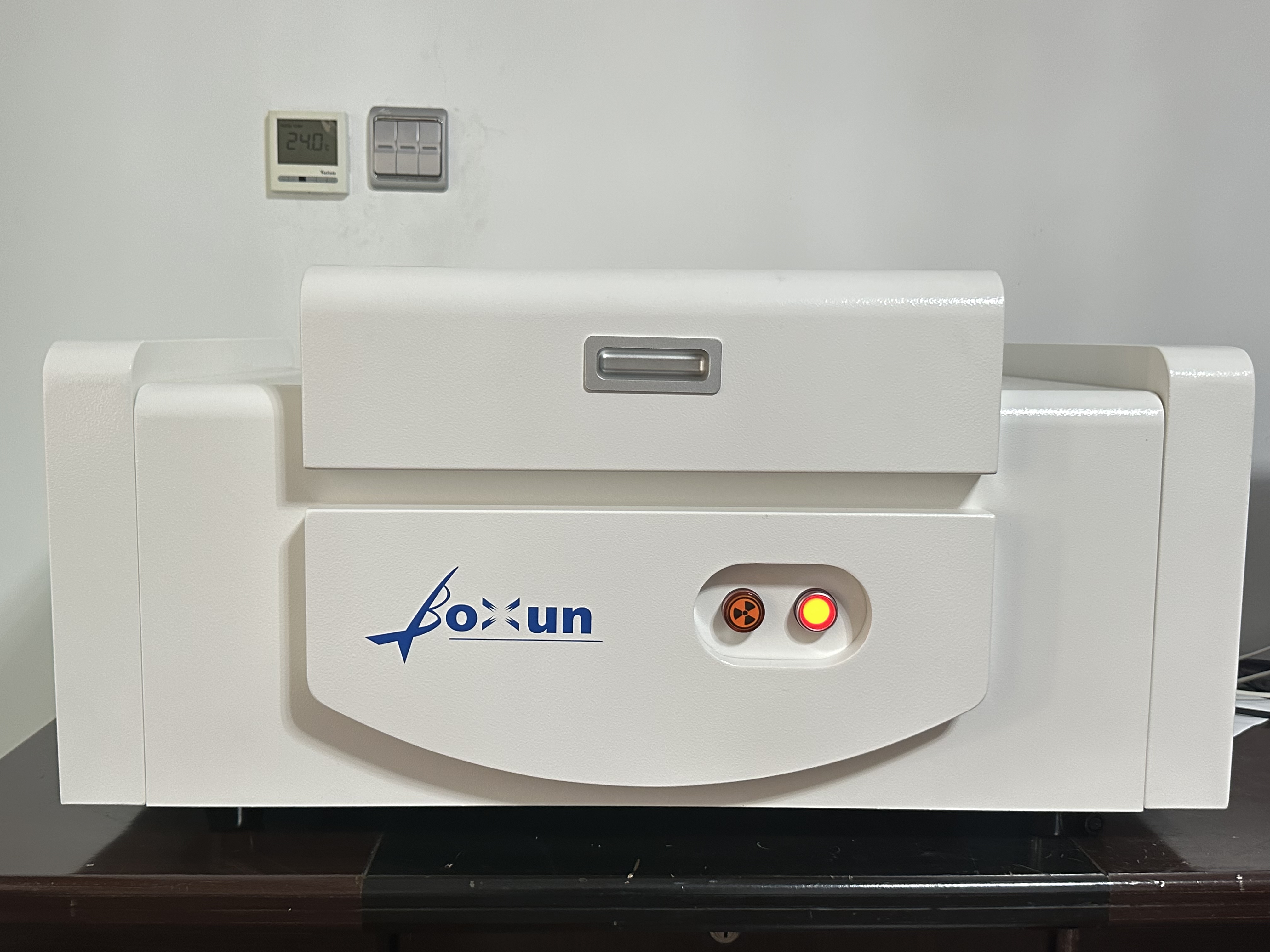
HPb59-1 and HPb57-3 are standard leaded brass grades widely used in plumbing and general industrial service, valued for machinability and consistent casting and hot-forging behavior. CW617N is the alloy referenced in the European standard EN 12165 for brass valves; European buyers frequently specify it as the baseline material for drinking water and heating applications, and it is commonly paired with parallel threads per ISO 228-1. C83600, a cast bronze alloy, is usually associated with heavier cast components. Supporting all four means the manufacturer can respond to a European specification, a general export specification, and a cast-component requirement from the same production organization.
Material flexibility also affects lead time. A line that can only run one grade cannot accept orders outside that grade without requalification. A line that already processes these four grades can move between them within its normal production planning — which is directly relevant to buyers who manage a portfolio of markets with differing material requirements.
End Connections and Configuration Choices
Connection format is one of the first things a buyer must match to site conditions, and it is a frequent source of mismatch when suppliers offer only a default. The Bozheng Valve range is documented with both threaded and flanged end options, and within the ball valve family specifically with F-F (female-female), F-M (female-male), and M-M (male-male) thread configurations and lockable lever handle variants.
The practical significance is straightforward. Threaded connections dominate residential plumbing, HVAC, gas distribution, and smaller industrial lines because they are fast to install in confined spaces. Flanged ends are specified where higher mechanical security, easier maintenance removal, or system standardization requires a bolted joint. When a supplier documents both, the buyer can specify by connection type rather than by supplier limitation. The same applies to handle options: a lockable lever handle is a design decision tied to safety and tamper control, and its availability indicates that the manufacturer treats the valve as a configuration platform, not a fixed stock item.
Quality Control and Certification Evidence
Capability claims become auditable when they are tied to certification and testing. Bozheng Valve holds three independently issued management-system certifications through QPC, all scoped to brass valve production:
| Certification | Certificate number | Standard | Validity |
|---|---|---|---|
| ISO 9001 (quality management) | 20225Q20080R2M | GB/T 19001-2016 | Issued 2025-01-21, expiry 2028-02-25 |
| ISO 14001 (environmental management) | 2024E0305R0M | GB/T 24001-2016 / ISO 14001:2015 | Issued 2024-10-24, expiry 2027-10-23 |
| ISO 45001 (occupational health and safety) | 2022S02003R0M | GB/T 45001-2020 / ISO 45001:2018 | Issued 2025-01-21, expiry 2028-02-25 |
Certification scope matters as much as the certificate itself. In this case the scope is stated as brass valve, and the related products listed against each certificate are the same model families described earlier — the Q11F-16T ball valve, Z15W-16T gate valve, J11W-16T and J11F-16T globe valves, H14X-16T check valve, SY11X-16T strainer, and Y13X-16T pressure reducing valve. That alignment between certificate scope and shipped model is what a buyer's quality team wants to see, because it removes the common problem of a supplier holding certification for a category it no longer produces.
On the shop floor, Bozheng Valve states that quality control includes 100% testing of all products before shipment. In procurement terms this is a pre-shipment acceptance step applied to the full batch rather than a sampled audit. For the buyer, the value of 100% testing is that it shifts defect detection upstream, before goods leave the factory, which is where rework is cheapest and where a shipment-level quality dispute is easiest to avoid.
Where the Range Is Applied
The listed applicable industries for the brass range are construction and building (HVAC and plumbing), compressed air systems, low-pressure steam and boilers, oil and fuel systems, swimming pools and water treatment, and industrial machinery such as mold cooling and hydraulics. This is a coherent envelope: 1.6 MPa nominal pressure, water and gas media, and a working temperature band stated for the ball valve family of 0 °C ≤ T ≤ 80 °C.
The functional uses documented for the products are on/off control, flow regulation, isolation, system protection, and safety applications for water, oil, gas, or air. That vocabulary maps directly onto the valve families: ball and gate valves perform on/off control and isolation, globe valves support regulation, check valves and strainers provide system protection, and pressure reducing valves address pressure safety in downstream networks.
Client types recorded for a delivered project include plumbing wholesalers and distributors, project contractors in HVAC, plumbing and fire protection, OEM manufacturers of boilers, heat pumps, compressors and cooling towers, water and gas utility companies, industrial end users such as factories, mines and power plants, irrigation and agricultural companies, and export trading companies. The project covered 200,000 units across a customer base spanning countries in Africa, Asia, Europe and South America, and the reported outcome after two years of service was stable operation with no break and no leakage, with the case highlighting long lifespan, low maintenance and water saving.
Market Trend Analysis: Why Breadth Is Being Repriced
The brass valve market is large enough that sourcing decisions are increasingly made on structural grounds rather than on unit price alone. According to Dataintelo, the global brass valves market was valued at USD 14.8 billion in 2025 and is projected to reach USD 24.1 billion by 2034. Within that market, Asia Pacific held the largest regional revenue share at 41.2% in 2025, and ball valves alone represented the largest product-type segment at 38.4% of brass valve market share in 2025. For buyers, the concentration of manufacturing in Asia Pacific is precisely why supplier-level capability evidence has become the differentiator — the region is not short of capacity, but it is uneven in verifiable capability.
Export data reinforces the point. According to the Observatory of Economic Complexity, China was the largest exporter of check valves in 2024, with exports valued at USD 730 million, or 19.6% of the global total. Tendata's 2025 analysis of valve trade places China's total valve-related exports under HS Code 8481 at USD 8.06 billion, representing 19.0% of global import value share. A buyer sourcing from this ecosystem is therefore buying from a mature but crowded supply base, where the difference between suppliers is rarely the ability to make a valve and often the ability to document, control, and repeat it.
Two regulatory currents are also reshaping specification. First, lead-free brass valves accounted for over 30% of new brass valve product offerings in early 2024, a shift driven by regulatory pressure in drinking-water applications — which makes a supplier's ability to run multiple alloys, rather than a single legacy grade, commercially relevant. Second, China's Ministry of Industry and Information Technology set new energy efficiency limits for industrial valves for implementation in October 2025, mandating specific sealing grades. Both trends push in the same direction: material and sealing specification is becoming a compliance variable, and suppliers must be able to respond with documented alloy and sealing choices.
Comparison with Traditional Sourcing, and the Limits of a Standard Line
Traditional brass valve sourcing often follows a narrow pattern: a buyer finds a supplier through a trading intermediary, receives a price list for one or two valve types, and places an order. That model works while demand is stable and specifications do not change. It breaks down when a project requires a mix of isolation, protection, and regulation valves, when a market imposes a specific alloy such as CW617N, or when a utility audit asks for certification scope that matches the delivered model. A broader in-house line addresses those failure modes, but it does not remove every boundary, and buyers should understand the limits.
The most important limit is the service envelope. The documented brass valve range is built around a nominal pressure of 1.6 MPa and water and gas media, with the ball valve family stated at a working temperature of 0 °C ≤ T ≤ 80 °C. Applications above that pressure band, at sustained higher temperatures, or in aggressive chemical service sit outside this standard brass offering and require a different material and design route — for example stainless valve construction, which the company also produces. A buyer should not assume that a comprehensive brass line automatically covers high-pressure or high-temperature duty.
The second limit is commercial rather than technical. The stated minimum order quantity is 1 unit for stock goods with a typical production lead time of 30 days, and monthly production capacity is stated at 30,000 units. Stock items can therefore be ordered in very small quantities, while customized OEM/ODM programs follow the standard production cycle. Buyers planning a phased rollout or a peak-season surge should map their schedule against that lead time rather than assuming instant availability. The third limit is scope: certification covers brass valve production under ISO 9001, ISO 14001 and ISO 45001 management systems. Buyers with market-specific product approvals — for example a national drinking-water listing — should confirm the specific approval required for their destination market rather than relying on management-system certification alone.
Customization and Execution Support
For buyers at the execution stage, customization capability determines how closely a standard platform can be adapted to a specific program. Bozheng Valve states that it offers OEM/ODM production services, with customization covering logo, appearance, pressure, material, and color. The commercial framework is equally relevant to planning: the minimum order quantity is 1 unit for stock goods, the typical production lead time is 30 days, delivery terms are FOB or CIF, acceptance is based on pre-shipment testing, and payment terms are stated as 30/70. After-sales support is described as remote support with a one-year warranty.
Taken together, these terms describe a supplier structured for both small evaluation orders and repeat volume programs. A buyer can validate fit with a stock order before committing to a customized specification, and the customizable variables — pressure, material, appearance, and color — align with the most common OEM requests in brass valve procurement.
Future Outlook
The direction of the brass valve market suggests that the value of a manufacturing profile will continue to rise. As lead-free and energy-efficiency requirements tighten, the ability to move between alloys such as HPb59-1, HPb57-3, CW617N and C83600, and to document sealing and material choices against recognized standards, becomes a qualification condition rather than a bonus. Suppliers whose certification scope maps cleanly onto shipped models will be easier to approve; those whose scope and product lists diverge will face longer audits.
For a manufacturer like Bozheng Valve, the strategic question is not whether it can make brass valves — the model range, the four-alloy flexibility, the threaded and flanged connection options, and the 1.6 MPa water-and-gas platform already answer that. The question is whether it can keep documentation, testing, and lead-time discipline aligned as demand and regulation move. For buyers, the practical implication is simpler: evaluate the production evidence first, then the price. A line that can be audited at the model, alloy, and certificate level is a lower-risk partner than a quotation that cannot be traced back to a factory floor.
FAQ
What brass valve types does Bozheng Valve manufacture?
The documented brass range covers six families: the Q11F-16T brass ball valve, the Z15W-16T brass gate valve, the J11W-16T and J11F-16T brass globe valves, the H14X-16T brass check valve, the SY11X-16T brass strainer, and the Y13X-16T brass pressure reducing valve. Together these cover isolation, regulation, backflow prevention, filtration, and pressure control functions.
Which brass materials are available across the range?
The listed materials are HPb59-1, HPb57-3, CW617N, and C83600. CW617N is the alloy referenced in the European standard EN 12165 and is commonly specified for European water and heating applications. Material availability affects both specification fit and production planning, since a line already running a grade does not require requalification to accept an order in it.
What pressure, media, and temperature conditions do these valves cover?
The brass valve families are documented at a nominal pressure of 1.6 MPa with water and gas as the working media. The ball valve family is additionally stated with a working temperature band of 0 °C ≤ T ≤ 80 °C. Applications outside this envelope — higher pressure, sustained higher temperature, or aggressive chemical media — require a different material and design route rather than a standard brass valve.
What end connections and configurations are supported?
Both threaded and flanged end connections are documented. Within the ball valve family, F-F (female-female), F-M (female-male), and M-M (male-male) configurations are listed, along with lockable lever handle variants and OEM versions. Threaded ends are typical for plumbing, HVAC, and gas work; flanged ends suit applications requiring a bolted joint or easier maintenance removal.
How is quality verified before shipment?
Quality control is stated to include 100% testing of all products before shipment, and pre-shipment testing is the stated acceptance basis. The company also holds ISO 9001, ISO 14001, and ISO 45001 certifications issued by QPC with a scope of brass valve, and the product models listed against those certificates match the shipped model families.
What are the minimum order quantity, lead time, and customization options?
The minimum order quantity is 1 unit for stock goods. The typical production lead time is 30 days, and stated monthly production capacity is 30,000 units. OEM/ODM production services are available, with customization covering logo, appearance, pressure, material, and color. Delivery terms are FOB or CIF, payment terms are stated as 30/70, and after-sales support is remote support with a one-year warranty.
What are the limits of a comprehensive brass valve line?
Two boundaries are worth noting. Technically, the standard brass offering is built around 1.6 MPa water and gas service with a 0–80 °C band for the ball valve family, so high-pressure, high-temperature, or aggressive-media duties fall outside it. Commercially, a 30-day typical lead time and a 30,000-unit monthly capacity should be mapped against project schedules rather than assumed to be instantaneous. Management-system certification should also be distinguished from market-specific product approvals.
The full Bozheng Valve product catalogue, including model listings and specifications for the brass valve range, is available for download: BZ Catalogue 2025 2.0. Zhejiang Bozheng Copper Industry Co., Ltd. is based in Yuhuan City, Zhejiang province, China, and manufactures brass and stainless valves for construction, plumbing, gas, and industrial applications.