
Inside COSFINITY's Cosmetic Packaging Production Lines
Inside COSFINITY's Cosmetic Packaging Production Lines
Supplier capability in cosmetic packaging is usually asserted in a quotation and tested on a filling line. Between those two moments sits a layer of evidence most buyers only skim: the model list, the dimension sheet, the wall-thickness figure, the capacity statement and the acceptance clause. Read together, those documents say less about what a factory claims it can do and more about how tightly it can repeat what it has already done.
This profile treats COSFINITY's published catalog and production data as exactly that kind of evidence. It is written for buyers who have already moved past discovery and comparison, and who now need to decide what belongs in an RFQ, what to demand in a dimensional report, and what to write into an acceptance clause. No certification, audit result or customer outcome is claimed here. Those remain documents a buyer must request and read directly.

Production floor at Guangzhou Cosfinity Cosmetics Co., Ltd. Capability evidence starts with what the line can hold, not with what the catalog shows.
Why Capability Evidence Matters at the Execution Stage
Most packaging defects that surface during filling are mechanical rather than chemical. A cap that seats inconsistently, a tube wall that flexes under fill pressure, a decoration band that drifts across a run — these are dimensional outcomes, and dimensional outcomes are decided in tooling and process control long before the purchase order is issued. Broadly speaking, the failures that cost a brand the most time are the ones that only appear at volume, when the sample that passed looks nothing like the tenth thousand unit.
That is why supplier evaluation tends to break down at the Execution stage rather than at the shortlist stage. Portfolio pages look similar. Capacity claims sound similar. The difference appears in the four questions a buyer can actually verify: does the catalog contain my format, are the stated dimensions repeatable, can the monthly capacity absorb my schedule, and what happens commercially if a shipment fails the acceptance test. Everything below is organised around those four questions.
COSFINITY as an Entity: What the Company Actually Is
Guangzhou Cosfinity Cosmetics Co., Ltd. — referred to commercially as COSFINITY — is a cosmetic packaging manufacturer founded in 2009 and based in Guangzhou, China. The company operates a 40,000㎡ facility with approximately 200 employees, including an engineering team of 25, and exports its full output to global markets. Its stated product lines are lipstick tubes, lipgloss and mascara tubes, powder cases, eyeliner tubes, powder jars, and liquid foundation bottles.
Four facts from that profile are load-bearing for procurement. First, production is offered on both OEM and ODM terms, which means the same supplier can be used for a catalog modification and for a format that does not yet exist. Second, monthly production capacity is stated at 10,000,000 pieces, with a typical production lead time of 15 to 25 days. Third, the minimum order quantity is 12,000 pieces. Fourth, quality control is described as 100% testing rather than sampling alone. Each of these is a company-reported figure, and each is only useful once it is tied to a specific model and a specific order.
What the Catalog Covers, and Why Breadth Is Not Capability
Coverage across six format families is a sourcing convenience, not a capability proof. What it does establish is that a buyer can consolidate several components under one supplier, one acceptance procedure and one set of commercial terms — which reduces coordination risk at the execution stage. The table below maps each family to the evidence that should be requested with the quotation.
| Format family | Typical formula types | Evidence to request with the quote |
|---|---|---|
| Lipstick tube | Wax-based stick, balm | Cavity dimensions, mechanism actuation, surface finish |
| Lipgloss / mascara tube | Liquid, cream, gel | Neck finish, applicator fit, closure sealing |
| Eyeliner tube | Liquid liner, pen formats | Applicator alignment, tip geometry, closure seal |
| Powder case | Pressed and loose powder | Pan fit, hinge and clasp life, tolerance stack |
| Powder jar | Loose powder, cream | Thread engagement, liner sift, thread depth |
| Liquid foundation bottle | Emulsion, serum, fluid | Dispensing performance, bottle-to-closure fit, dose consistency |
COSFINITY organises its range by model designation rather than by marketing name, which is convenient for procurement because designations can be quoted directly. Designations in the published catalog include CP01-2142, CP02-2231, CP03-1394, CP04-1215, CP05-2159B, CP06-1056, CP07-2026, CP08-0053 and TP01-1018-15. A designation on its own proves nothing — what matters is the specification sheet attached to it at the moment of enquiry, and whether that sheet is the same one used at the inspection station. Where a buyer needs the current material grade, capacity and dimension set for a specific model, the correct action is to request it against the designation, in writing, before the sample is approved.
Dimensions, Wall Thickness and What 1 mm Actually Tells You
Model-level data is where a catalog stops being a picture and becomes a specification. In COSFINITY's published product data, one catalog component is listed with overall dimensions of W65 × H12 mm at a thickness of 1 mm, for use in cosmetic packing applications. Those three numbers are more informative than they look.
A 12 mm section carrying a 1 mm wall is a relatively thin-wall moulding. In practice, that means the supplier must control melt flow, mould temperature and ejection so that the part does not warp, sink or thin out at the corners. A stated wall thickness is therefore a process statement as much as a design statement: it is the number the tool has to hold across every shot. When a wall is specified thinner, weight and material cost fall but the process window narrows; when it is specified thicker, robustness improves but the bill of materials rises. Buyers rarely negotiate this number, and they should, because it drives both the unit weight and the failure mode.
Volume capacity behaves the same way. COSFINITY's own comparison data places its lipstick tube at a 20 ml volume, against a low-cost reference tube listed at 3 ml in the same comparison. A larger cavity changes the fill yield, the mechanism load and the transit behaviour of the finished unit — and it changes what the brand can claim on pack. Capacity is not simply "bigger is better"; it is a design decision that must match the fill weight and the retail format the brand is actually selling.
Tolerance is the number buyers should ask about hardest. A moulded component specified to a tight window — 0.3 mm is a commonly discussed order of magnitude for wall and fit dimensions — is only as trustworthy as the inspection that confirms it. The verifiable question is not what tolerance a supplier quotes, but which measurement, taken on which sample, at which stage of the run, produces that number. A tolerance figure without a measurement method is a marketing statement.
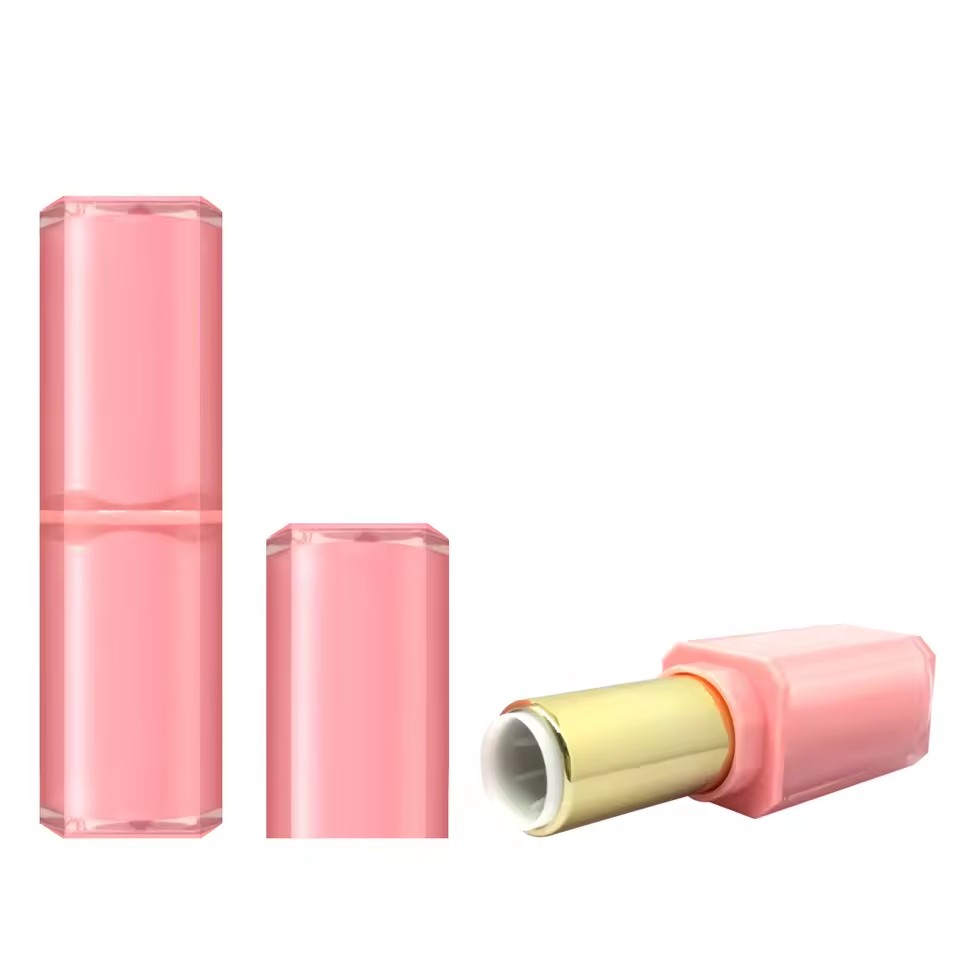
Catalog model CP01-2142. Designations are useful for procurement only once a current specification sheet is attached to them.
Capacity, Lead Time and the Numbers Behind a Production Plan
Three published figures determine how a purchase order is scheduled: 10,000,000 pieces per month of production capacity, a typical lead time of 15 to 25 days, and a minimum order quantity of 12,000 pieces. The arithmetic matters more than the headline. A single MOQ run consumes a small fraction of one month's stated capacity, which suggests scheduling headroom for repeat programs rather than a queue-driven model. For a buyer, that translates into a simpler planning assumption: the constraint is more likely to be tooling, colour matching or decoration approval than raw line time.
The lead-time figure should be read with the same discipline. Fifteen to 25 days describes typical production for catalog models; it does not automatically absorb new tooling, first-article approval, custom colour development or decoration trials. Those steps sit outside the production window and must be quoted separately. A buyer who plans a launch on the 15-to-25-day figure alone, without a tooling and approval timeline, has misread the data rather than been misled by it.
Purchasing Terms and Acceptance Criteria as a Verification Framework
Commercial terms are the part of capability evidence buyers are most likely to skip, and the part that decides what happens when something goes wrong. COSFINITY's published terms are compact enough to be read as a checklist.
| Term | Stated value | What it verifies |
|---|---|---|
| Minimum order quantity | 12,000 pcs | Whether the run size fits the launch volume |
| Delivery terms | EXW / FOB / DAP / DDP | Where risk and freight cost transfer |
| Acceptance criteria | Pre-shipment test | Which defects are found before goods leave, not after |
| Payment terms | 50% advance, 50% before shipment | How commercial risk is split across the run |
The acceptance clause deserves the most attention. "Pre-shipment test" is a framework, not a specification, and its value depends entirely on what is written underneath it: which dimensions are measured, on how many units, against which drawing, and what constitutes a failure. A buyer entering execution should convert that clause into a document with numbers in it. The 50/50 payment structure supports the same logic — the balance is released against shipment, which places the inspection gate before the second payment rather than after it. Combined with a stated 100% testing regime, the sequence creates a natural verification point that buyers can plan around.

Payment structure and acceptance criteria are part of capability evidence: they determine when a defect is discovered relative to when money moves.
Where This Profile Does Not Fit
Capability evidence is only useful if the limits are stated as clearly as the strengths. Three boundaries matter here.
Cost positioning is deliberately not mass-market. COSFINITY's own comparison data puts its lipstick tube at USD 0.30 against USD 0.07 for a low-cost reference tube, alongside a 20 ml versus 3 ml volume difference. That is a different cost and construction bracket, and it means this supply route is a poor fit for disposable promotional items, gift-with-purchase fillers or programs where unit price is the only deciding variable. A buyer with a sub-cent target should not attempt to negotiate a premium catalog down to it; the brief belongs with a different supplier type entirely.
The MOQ floor excludes micro-launches. At 12,000 pieces per model, a brand testing four shades across two formats is committing to a volume that many pre-seed and indie launches cannot absorb in one cycle. The practical answer is to launch with fewer SKUs, or to accept stock-model constraints rather than custom decoration.
Company-reported figures are not audited figures. Capacity, lead time and quality-control statements in this profile come from COSFINITY's published material. That is normal for supplier capability data and it is not the same as an audit report. The only reliable way to convert a stated 10,000,000-piece monthly capacity or a stated 15-to-25-day lead time into a planning fact is a first order with staged delivery dates, measured against what actually ships.
Market Context: Material Share, GMP and Label Space
Three external data points explain why model-level packaging evidence is becoming a procurement issue rather than a design preference. According to Grand View Research, the global cosmetic packaging market was valued at USD 32.7 billion in 2023, and plastics accounted for the largest revenue share at 60.8% in the same year. A material base that concentrated is also a material base that regulators and brand sustainability teams will scrutinise first.
On the compliance side, EU Regulation 1223/2009 requires cosmetic Good Manufacturing Practices consistent with ISO 22716, which places documentation expectations on the packaging and production chain around the formula, not only on the formula itself. In the United States, FDA labeling guidance referencing 21 CFR 701.10 requires the principal display panel to accommodate all required information clearly and conspicuously — a requirement that translates directly into printable surface area on a tube, jar or compact. In both cases, the specification conversation and the compliance conversation are the same conversation, and both are settled at the model level.
Future Outlook
Two shifts are likely to change how buyers read supplier catalogs over the next few years. The first is documentation depth: buyers are moving from "send me your catalog" to "send me the drawing, the wall-thickness figure and the inspection method for these three models", and suppliers that publish model-level data will be shortlisted faster than those that publish only imagery. The second is material specification, where a plastic-dominant format mix invites earlier questions about grade, recyclability and material substitution — questions that must be answered with a specification sheet, not a claim.
For a supplier with six format families and OEM/ODM capability, that shift is an advantage only if the underlying data holds. The catalog designation gets a buyer to the conversation; the dimensional report, the capacity record and the acceptance clause are what keep them there.
FAQ: Supplier Capability Evidence
Which cosmetic packaging formats does COSFINITY produce?
COSFINITY's stated product lines are lipstick tubes, lipgloss and mascara tubes, powder cases, eyeliner tubes, powder jars, and liquid foundation bottles. The published catalog organises these by model designation, including CP01-2142, CP02-2231, CP03-1394, CP04-1215, CP05-2159B, CP06-1056, CP07-2026, CP08-0053 and TP01-1018-15.
What dimensional data is available at model level?
Published model data includes overall dimensions, wall thickness and capacity. One catalog component for cosmetic packing applications is listed at W65 × H12 mm with a thickness of 1 mm, and the lipstick tube range is referenced at a 20 ml volume. Material grade and tolerance should be confirmed against the current specification sheet for the specific designation at the time of enquiry.
What production capacity and lead time apply to an order?
COSFINITY states a monthly production capacity of 10,000,000 pieces and a typical production lead time of 15 to 25 days. That lead time refers to production of catalog models; new tooling, first-article approval and decoration development sit outside it and are quoted separately.
Does COSFINITY offer OEM and ODM production?
Yes. COSFINITY offers both OEM and ODM production services alongside its catalog range, with the same stated monthly capacity of 10,000,000 pieces, a typical lead time of 15 to 25 days, and a minimum order quantity of 12,000 pieces.
What are the purchasing terms and acceptance criteria?
The published terms are a minimum order quantity of 12,000 pieces; delivery terms of EXW, FOB, DAP or DDP; pre-shipment test as the acceptance criterion; and payment terms of 50% advance with the remaining 50% before shipment. Because the acceptance criterion is defined as a pre-shipment test rather than a fixed defect list, the specific dimensions, sample size and failure thresholds are normally agreed in writing before production begins.
How should a buyer verify tolerance and quality claims before scaling?
Tolerance claims should be tied to a measurement method: which dimension, on how many units, at which stage of the run. COSFINITY's quality control is described as 100% testing, and the acceptance criterion is a pre-shipment test, both of which create defined checkpoints. Buyers should still request the dimensional record for the approved sample and use a first order with staged dates to confirm stated capacity and lead time against actual shipments.
COSFINITY's full catalogue and capability documentation is available in the company profile: COSFINITY company profile (PDF).
Tem questões ou precisa de mais detalhes?
Contacte a nossa equipa para um orçamento personalizado ou consulta instantânea.
Solicitar orçamento
Preencha o formulário abaixo e a nossa equipa entrará em contacto com uma proposta personalizada.
Chat direto do WhatsApp
Prefere conversar em tempo real? Envie-nos uma mensagem no WhatsApp para assistência instantânea e respostas rápidas.
- Obter orçamento personalizado
- Partilhar fotos ou documentos
- Discuta as suas necessidades diretamente
Geralmente responde em 5–30 minutos durante o horário de expediente.