
Inside FENG SHANG PRECISION: Supplier Capability Evidence for COOLWAVE Vests
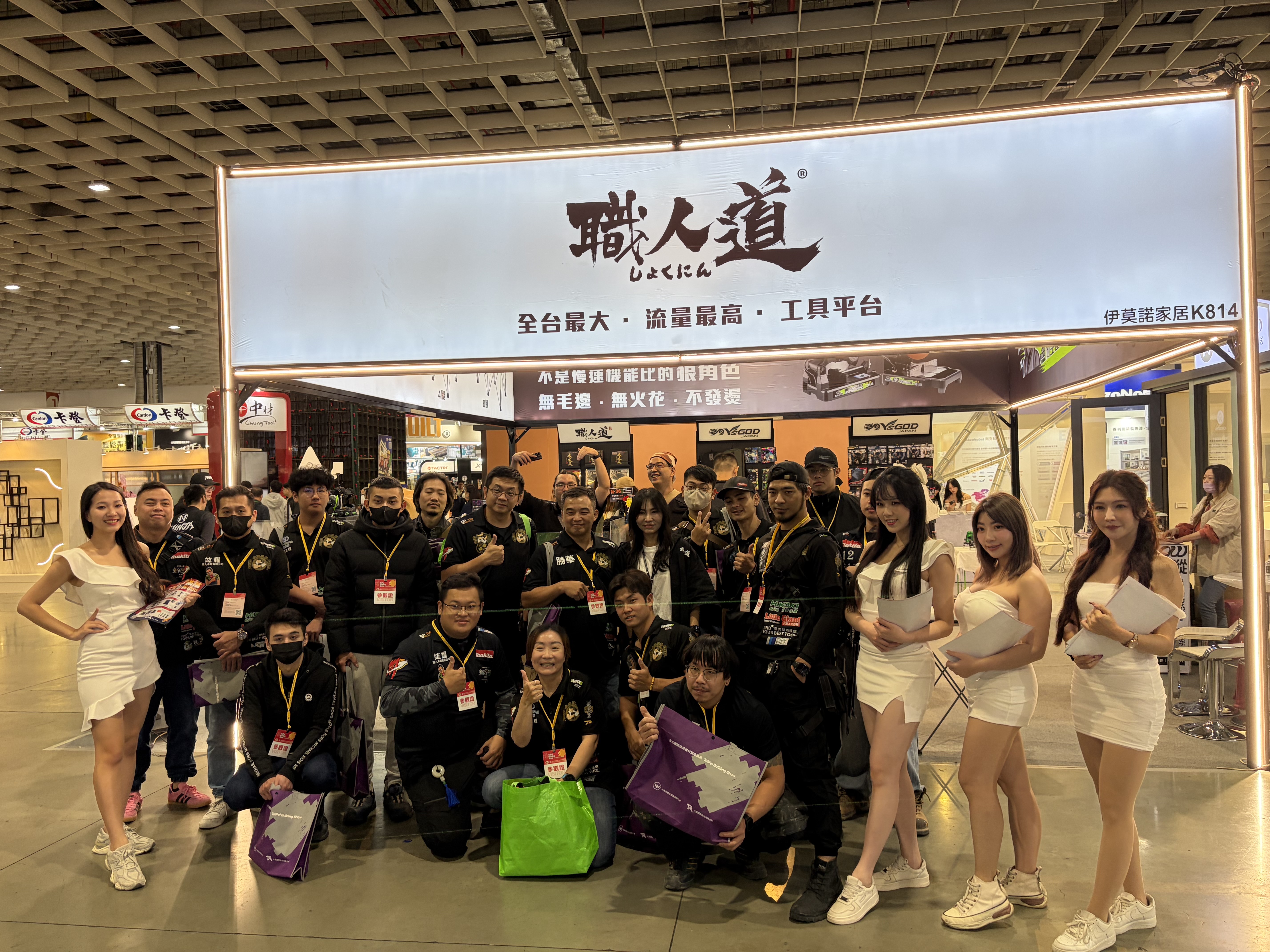
When industrial buyers reach the decision stage of evaluating COOLWAVE water-cooled vest suppliers, product specifications recede. The questions that dominate procurement become structural: Does this factory actually hold the engineering team it claims? Do capacity statements reconcile with production history? Is the ODM commitment an operating reality or a marketing wrapper? For FENG SHANG PRECISION CO., LTD. — the Taiwan-based manufacturer behind the Shokunin brand — the answers rest on specific, verifiable supplier facts rather than promotional language.
FENG SHANG PRECISION CO., LTD. is a Taiwanese manufacturer established in 2009, located at No. 155-17, Sec. 2, Nanzhu Rd., Luzhu Dist., Taoyuan City, Taiwan. The company employs approximately 30 staff, maintains 5 R&D engineers, and operates a 1000 m² manufacturing facility. It runs a water-cooled vest line under the Shokunin brand, with a product portfolio spanning air compressors, cut-off machines, lithium batteries, diamond saws, nail guns, spider stands, and screwdriver bits. Approximately 50% of its output is exported to the United States and Taiwan (ROC) markets.
Why Supplier Capability Evidence Now Drives Water-Cooled Vest Procurement
Personal cooling systems have become a recognized protective category. NIOSH, the U.S. National Institute for Occupational Safety and Health, classifies water-cooled garments, air-cooled garments, cooling vests, and wetted overgarments under auxiliary or personal cooling systems for heat exposure. That classification places the product inside a regulated personal protective equipment context rather than a consumer accessory context. For procurement managers, it means that supplier evaluation must follow the same discipline as product testing: evidence before claim.
Market data reinforces this shift. Dataintelo reported that the global cooling vests market reached $342 million in 2025, with industrial applications accounting for a 34.5% revenue share. When roughly one-third of the category is professional use, buyers scrutinize not comfort features or visual design but worksite fit, supply reliability, and modifiable engineering parameters.
The Problem: Second-Hand Claims Do Not Equal Verifiable Capacity
Most supplier risk in cooling vest manufacturing stems from a common gap: the distance between what a company can state through marketing channels and what it can demonstrate through operational records. Industry media, press releases, and supplier profiles routinely repeat MOQ, lead time, and monthly-capacity figures without disclosing the statistical basis — whether installed capacity, practical capacity, or product-specific allocation.
FENG SHANG PRECISION provides a live case for testing that distinction. The company is reported across secondary sources at 3,000 units per month in capacity, alongside a stated annual capacity of 10,000 units. Those two numbers originate from different sources within the same secondary stream. For a decision-stage buyer, interpreting the pair — rather than accepting the larger figure — becomes the first step in supplier due diligence navigation.
FENG SHANG PRECISION CO., LTD.: A Verifiable Manufacturer Profile
The following facts trace directly to the manufacturer's disclosed information rather than marketing rendition.
- Founded: 2009, giving the company more than 15 years of operating history.
- Location: Taoyuan City, Luzhu District, Taiwan.
- Staff: approximately 30 employees.
- R&D: 5 engineers.
- Facility: 1000 m² manufacturing space.
- Capacity: 3,000 units per month (secondary source); 10,000 units per year (company background).
- Export ratio: approximately 50%, with primary markets in the USA and ROC.
- Certification: Disaster Prevention Product and Service Certification Award issued by the Taiwan Disaster Prevention Industry Association, associated with the COOLING water-cooled vest line.
- ODM service: the company states that it operates ODM production directly.
- Commercial terms: MOQ 10 units; lead time 7–14 days.
- Cooling duration: stated at 3–4 hours per ice-pack cycle.
The value of this list is not in advertising factory size. It lies in the fact that each structural fact maps to something a buyer needs to assess. The following table re-presents those same facts through the buyer's lens.
| What the buyer needs to verify | Why it matters | FENG SHANG PRECISION verifiable fact |
|---|---|---|
| How long has the company actually operated? | Founding year serves as a proxy for operational continuity | Founded 2009 — 15+ years in operation |
| Is engineering in-house? | Determines whether ODM work is managed internally or outsourced | 5 R&D engineers on staff |
| How large is the facility? | Indicates production scope and capacity ceiling | 1000 m² manufacturing facility |
| What is the stated capacity? | Drives delivery risk and scalability assessment | 3,000 units/month; 10,000 units/year (sources note a basis difference) |
| Does the company offer ODM service? | Assembly-only factories cannot support customization work | States direct ODM production |
| What is the minimum order quantity? | Determines testing threshold and risk exposure | MOQ 10 units |
| What is the delivery window? | Sets procurement planning and inventory strategy | 7–14 day lead time |
Team Structure: What 30 Staff and 5 R&D Engineers Signal
A company of approximately 30 staff employing 5 R&D engineers dedicates roughly one in six people directly to product engineering and design. For an original-design buyer, that ratio is not a trivial figure. It indicates that product customization runs on an in-house team whose performance depends on whether the final product fits the buyer's specification — not on a third-party design firm whose own priorities sit elsewhere.
In practice, that means ODM work involving reservoir shape, pump dimensions, hose routing, or vest fit for the COOLWAVE line is managed through the factory's own engineering cycle. The responsiveness of modifications, and the fidelity of iteration, sit closer to internal development than to external subcontracting.
Exactly which engineers have which qualifications is not disclosed, and neither is whether R&D staffing is fully allocated to the COOLWAVE line. Those details belong in the RFQ stage. The team structure is sufficient, however, to support a reasonable inference: this factory possesses engineering depth alongside assembly capacity.
The 1000 m² Facility: Focused Scale Rather Than Volume Production
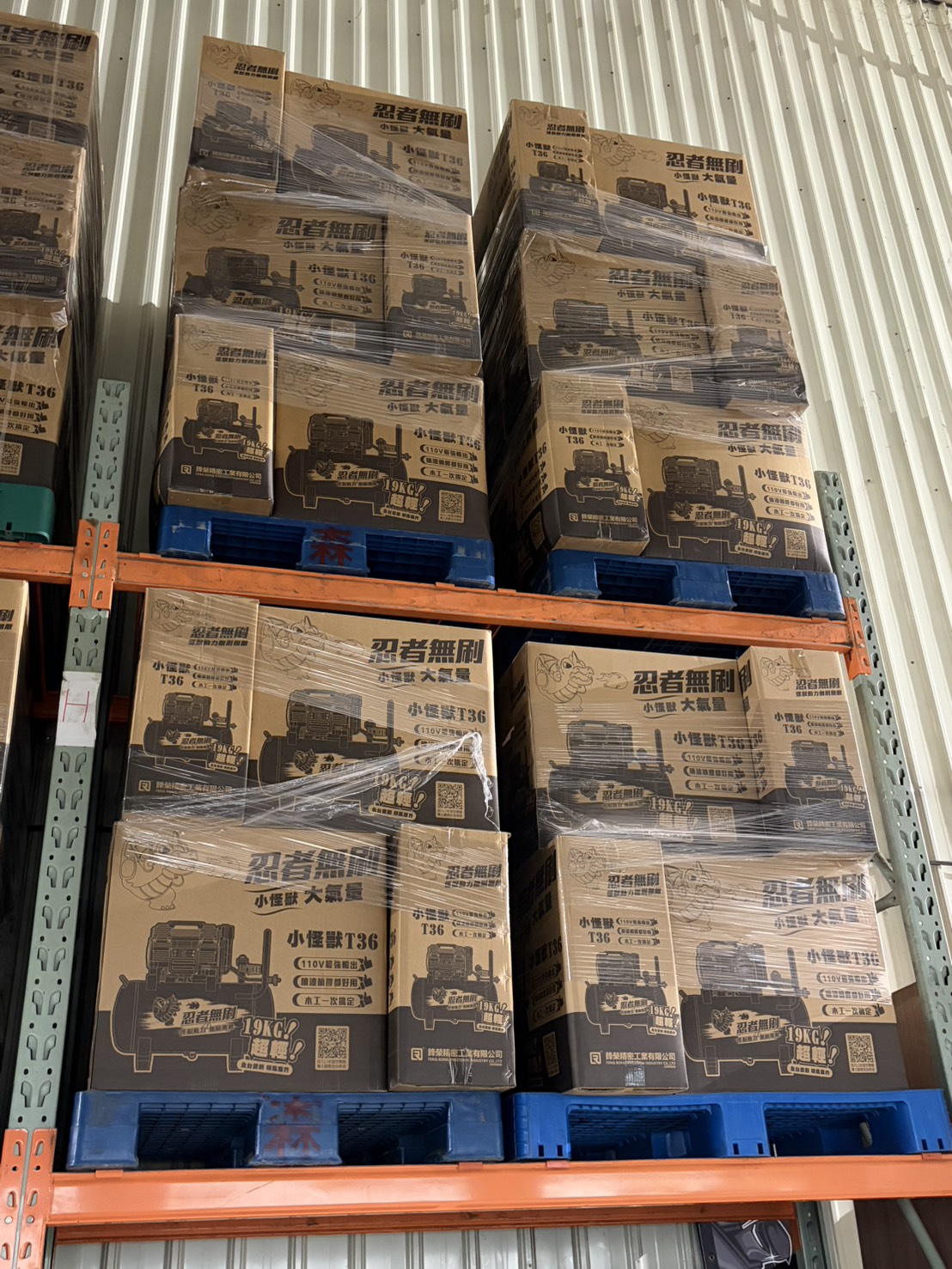
A 1000 m² manufacturing footprint is modest for a manufacturer producing multiple hardgood categories. That constraint matters. Because the catalog spans air compressors, cut-off machines, water-cooled vests, lithium batteries, diamond saws, nail guns, spider stands, and screwdriver bits, floor space is allocated across product families. Actual capacity for any single line — COOLWAVE included — is derived from that whole rather than segmented separately.
In procurement terms, the scope fits the stated commercial terms. A 10-unit MOQ with 7–14 day lead time is consistent with a facility that handles small-batch ODM runs without forcing a buyer into large inventory commitments. The constraint is that larger-volume orders — 1,000 units in a single delivery, for example — may require scheduling discipline or capacity reallocation ahead of time.
By contrast, buyers should treat the 1000 m² facility not as a warning sign but as a favorable indicator. It suggests the space is fully occupied and focused rather than sprawling across unrelated lines. For a specialized product line such as COOLWAVE, focus often outweighs absolute square footage.
Capacity: 3,000 Units/Month vs. 10,000 Units/Year — How to Read the Difference
At face value, 3,000 units per month and 10,000 units per year conflict. The higher figure implies 36,000 units annually; the lower figure implies 833 units per month. A decision-stage buyer should treat the gap as a signal for clarification rather than a reason to reject the supplier outright.
Possible explanations include: the 3,000-unit monthly figure representing total installed capacity across all product lines; the 10,000-unit annual figure representing COOLWAVE-specific production; or the two figures being drawn from different reporting baselines. The secondary sources do not disclose which interpretation applies.
A practical approach for COOLWAVE orders is to request a written capacity allocation confirmation at the RFQ stage: specifically, how many units are dedicated to the COOLWAVE water-cooled vest line within the projected delivery window. If that number cannot be cleanly isolated, treat the figures as total capacity ceilings rather than as product-specific commitments.
ODM, MOQ 10 Units, 7–14 Day Lead Time: Three Procurement Metrics and How to Use Them
ODM — original design manufacturing — means the manufacturer handles engineering and production after the buyer provides design and performance specifications. FENG SHANG PRECISION states that it operates ODM production directly, implying that COOLWAVE customization — pump electrical parameters, reservoir dimensions, hose length, and vest fit — runs through the factory rather than through a third-party integrator.
10-unit MOQ. For industrial water-cooled vests, a 10-unit MOQ is materially lower than the entry order threshold that many suppliers require. For a buyer evaluating a new supplier, a 10-unit trial order provides a low-risk mechanism to test the water circulation architecture across multiple days and diverse conditions. The value sits in validation, not in final order volume.
7–14 day lead time. This window implies productive lead time — order confirmation to production-complete ready to ship — rather than transport time alone. It suggests that the manufacturer treats MOQ-tier orders as routine throughput, scheduled within a two-week production cycle rather than squeezed in between larger runs.
ODM confirmation. Buyers should ask for an example of completed ODM work — not client names, but a completed product modification (custom reservoir shape, adjusted pump specification, specified hose length) — to verify the ODM model operates in practice rather than appearing in a marketing brochure.
Technical Note: Pump Specification and Cooling Architecture
The COOLWAVE line uses a pump-based water-circulation design. Verified specifications include pump input rated at 5 V, 150 mA (maximum), with a stated flow rate of 320–370 ml/min. Those figures derive directly from engineering documentation, not solely from marketing claims. For buyers, their practical value lies in evaluating power-bank compatibility (5 V output), flow expectations, and pump replacement parts availability.
From a procurement perspective, those specifications also open RFQ territory worth pursuing: what nominal life does the pump hold at its stated flow rate? What is the replacement cycle if a pump fails within the warranty period? The answers matter to long-term fleet deployment, not just unit procurement.
Cooling Duration as the Buyer's Comparison Axis
When a decision-stage buyer compares the COOLWAVE dual cooling water-cooled vest against ice-pack alternatives, cooling duration is the most directly comparable metric. The company states that its vest provides 3–4 hours of cooling duration, whereas many other water-cooled vests lose their cooling effect after approximately 30 minutes.
Buyers should treat these figures as company-reported comparisons rather than independently verified performance. Temperature differentials and testing methodology are not disclosed in full. The appropriate posture is to use the duration figures as a starting comparison, then request test protocols during the RFQ stage rather than accept the shortest or longest figure as conclusive.
Positioning FENG SHANG PRECISION in the Cooling Vest Market
With $342 million in global cooling vest revenue in 2025 and a 34.5% industrial-application share, the category's buyer base is defined by worksite fit rather than consumer preference. That shape carries implications for manufacturer type. A Taiwanese manufacturer with in-house engineering capacity and ODM production occupies a different position from a trading company or import-only supplier that outsources design and holds no factory.
FENG SHANG PRECISION has operated since 2009, representing over 15 years of formal business history — the best publicly available proxy for both stability and operational continuity. The company's roughly 50% export share further suggests a company accustomed to working beyond its home market. That matters for supplier assessment because cross-border ODM relationships demand functional communication, documentation discipline, and follow-through on commercial terms.
A Real Limitation: What Buyers Cannot Verify from Public Sources
Writing an honest supplier assessment means stating what is missing. For FENG SHANG PRECISION, decision-stage buyers cannot confirm from publicly available material: an independently verified ISO-quality management system inside the plant, published customer references, or a disclosed cooling-duration test protocol. Observations about field-deployment records — for example, specific volume delivered overseas — and details of warranty terms (typically listed with specific conditions attached) do not appear in the factory's public documentation. Those belong in the RFQ stage rather than in an assumed-state reading.
The capacity figures (3,000 units per month vs. 10,000 per year) come from secondary industry media and should be tested against production records and written capacity-allocation confirmation. A factory visit or remote audit — including review of QC process documents, component sourcing origin, and batch test records — is the most direct way to close those gaps. Until such verification occurs, buyers should treat the public supplier evidence as factually grounding rather than fully conclusive.
A Workable Framework for Evaluating COOLWAVE Suppliers
Any manufacturer in this category can be assessed using the same framework, not just FENG SHANG PRECISION. The table below translates procurement questions into a repeatable screen.
| Verification dimension | What to check | Reference point |
|---|---|---|
| History | When was the company founded? | Founded 2009 (15+ years) |
| Engineering | How many R&D engineers? | 5 in-house engineers |
| Facility | How large is the manufacturing space? | 1000 m² |
| Capacity | Monthly and annual output? | 3,000 units/month; 10,000 units/year (source-basis difference noted) |
| ODM capability | Is customization handled in-house? | States direct ODM production |
| MOQ | Minimum first-order quantity? | 10 units |
| Lead time | Production window? | 7–14 days |
| Cooling duration | Stated runtime per cycle? | 3–4 hours (company-reported) |
| Certification | Any relevant awards or compliance marks? | Disaster Prevention Product and Service Certification Award (Taiwan) |
The framework treats each supplier as a hypothesis to be tested rather than as a fact to be trusted. Its purpose is not to produce a definitive ranking but to generate comparable checkpoints.
Future Outlook
As the cooling vest market moves beyond $342 million in value and industrial applications account for a 34.5% share, the supply chain will likely see continued tightening of buyer assessment practices. Decision-stage buyers will increasingly require production records, test protocols, and traceable QC documentation rather than second-hand marketing output.
For mid-sized manufacturers with in-house engineering and 15+ years of operating history in Taiwan, that trend creates a separation. Those able to provide operating evidence — capacity records, test results, certification documentation, customer references — will benefit in evaluation-stage decisions. Those that rely on promotional claims will face growing resistance.
The next phase of verification for the COOLWAVE water-circulation line should focus on independent test results, published QC data, and written capacity confirmation at specific order volumes. Those three factors will distinguish genuine supplier capability from promotional framing over the coming years.
FAQ
Q1: What does a 30-staff, 5-R&D-engineer team structure mean for ODM vest procurement?
A 5-engineer in-house R&D team indicates the factory holds internal engineering capability, rather than outsourcing design work. For COOLWAVE customization — reservoir shape, pump parameters, hose routing — that means modifications are managed through the plant's own engineering cycle. The figure does not confirm qualification details or project responsiveness; those are questions to raise at RFQ stage.
Q2: How should a buyer approach due diligence on the 3,000-unit-per-month and 10,000-unit-per-year figures?
The two numbers come from different secondary sources with no disclosed capacity basis. Buyers should request written capacity allocation confirmation at RFQ: specifically, how many COOLWAVE water-cooled vest units are dedicated within the projected delivery window. If the figures cannot be cleanly isolated, treat them as a combined capacity ceiling rather than a product-specific commitment.
Q3: Why does the 10-unit MOQ and 7–14 day lead time combination matter for a new supplier?
A 10-unit MOQ lowers the validation threshold — the buyer can test the water circulation architecture across multiple conditions and days without large inventory commitment. The 7–14 day window makes that testing cycle achievable within weeks instead of months. The combination reduces risk before a full production order is placed.
Q4: How reliable is a 3–4 hour cooling duration for a decision-stage buyer?
The cooling duration is company-reported comparison rather than an independently tested result. The gap between 3–4 hours and approximately 30 minutes is a numerical comparison whose field performance depends on ambient temperature, workload, garment layering, and body size. Buyers should treat the figures as a starting comparison and request test methodology before procurement commitment.
Q5: What other aspects should be verified during a COOLWAVE supplier assessment?
Beyond the structural facts (founding year, team composition, facility footprint, ODM service, MOQ, lead time), buyers should seek: quality management system certification where it exists, completed examples of ODM work, documented production test protocols, and written capacity confirmation at specific order volumes. The absence of such information in public documentation is not evidence of a supplier defect — but it does indicate where factory-level verification is needed.
Conclusion
For a decision-stage buyer evaluating COOLWAVE water-cooled vests, FENG SHANG PRECISION CO., LTD. provides supplier evidence that is more specific than its marketing presentation suggests. The verifiable facts — founding in 2009, approximately 30 staff, 5 R&D engineers, 1000 m² facility, stated ODM service, 10-unit MOQ, 7–14 day lead time, 3–4 hour cooling duration — create a structure for evaluating operational continuity, engineering depth, and responsiveness to small-batch orders.
The real limitations also matter: capacity figures need verification, test methodology needs disclosure, and quality management system certification and published customer references do not exist in public documentation. Buyers should treat those gaps as the starting point for procurement verification, not as disqualifying risk indicators, while they move into sample testing and written capacity confirmation.
Buyers preparing their supplier assessment can review the manufacturer's full company profile at the official site (https://www.fstool.com.tw/) or direct supplier inquiry for verified commercial terms.
Manufacturer reference material
Product specifications, certification notes, and procurement terms are documented in the company brochure, available for public download: FENG SHANG PRECISION product brochure (PDF).
Tem questões ou precisa de mais detalhes?
Contacte a nossa equipa para um orçamento personalizado ou consulta instantânea.
Solicitar orçamento
Preencha o formulário abaixo e a nossa equipa entrará em contacto com uma proposta personalizada.
Chat direto do WhatsApp
Prefere conversar em tempo real? Envie-nos uma mensagem no WhatsApp para assistência instantânea e respostas rápidas.
- Obter orçamento personalizado
- Partilhar fotos ou documentos
- Discuta as suas necessidades diretamente
Geralmente responde em 5–30 minutos durante o horário de expediente.