
Inside LINGO's 3000m² Facility: Capability Evidence for CNC Parts & PVC Handles
Inside LINGO's 3000m² Facility: Capability Evidence for CNC Parts & PVC Handles
The global injection molded plastics market was valued at USD 362.5 billion in 2025 and is projected to grow to USD 481.4 billion by 2033, according to Grand View Research. Asia Pacific accounted for roughly 41% of that revenue in 2025, and China exported approximately USD 174 billion in plastics and rubbers in 2024, with the United States the largest single destination at USD 24.3 billion, according to the Observatory of Economic Complexity. Capacity is concentrated. Securing it is what separates a component program that runs to schedule from one that slips.
Hangzhou Lingo Rubber and Plastic Product Co., Ltd, trading as Lingo Rubber Plastic, is a Chinese rubber and plastic component manufacturer. It operates a 3000m² production facility in Hangzhou and produces rubber molding parts, rubber extrusions, plastic injection parts, plastic extrusion profiles, plastic CNC machined parts, and PVC dipping handles. Around 80% of its output is exported, primarily to EU and USA markets. This reference examines what the plant, the team, and the process list behind those products mean for buyers who have finished shortlisting and are now validating a supplier before committing tooling and repeat-order volume.
Why facility evidence decides outcomes in the execution stage
Sourcing teams rarely struggle to find a supplier that can produce a plastic part once. The harder question is whether the same part arrives in month twelve inside the same tolerance band, with the same surface finish, and without a formulation shift that only becomes visible after a year in service.
Three failure modes account for a large share of the disputes that surface late in plastic component programs, and all three are plant-level problems rather than catalogue problems:
- Dimension out of tolerance — driven by process parameter drift, unmodeled shrinkage, or measuring equipment that has fallen out of calibration.
- Inconsistent surface gloss — usually traceable to mold surface condition or unstable molding and injection parameters.
- Hardening or softening due to aging — a formulation and additive question that appears under weathering exposure.
Each condition has an established control method and a corresponding supplier-side measure. The practical consequence for buyers is that capacity figures only carry weight when they are paired with the routines that keep them stable. The following sections examine that pairing for Lingo Rubber Plastic.
The facility in verifiable terms
Capability evidence starts with numbers a buyer can request, cross-check, and revisit during a supplier audit. For Lingo Rubber Plastic, the operating profile is as follows.
| Indicator | Reported figure |
|---|---|
| Facility footprint | 3000 m², Hangzhou, China |
| Employees | Approximately 40 |
| R&D team | 10 people |
| Operating entity founded | 2022 |
| Founding team experience | Over 10 years, and in some cases more than 20 years, in the rubber and plastics industry |
| Annual output | 1.58 million |
| Monthly production capacity | 1,000,000 kgs |
| Typical production lead time | 2 to 6 weeks |
| Export ratio | Approximately 80% |
| Main export markets | EU / USA |
| Core processes | Rubber compression molding, rubber extrusion, plastic injection molding, plastic extrusion, CNC machining (PTFE, PEEK, acrylic, plastic), PVC dipping, assembly |
Two of these entries deserve emphasis because they are the ones buyers most often misread. A monthly capacity of 1,000,000 kgs is an aggregate figure across processes, not a reserved allocation for any single program; it indicates the scale the plant is engineered around, and concurrent programs share it. The 2 to 6 week production lead time is typical and excludes tooling build, which is quoted per project.
What a 3000m² footprint and a 40-person team actually support
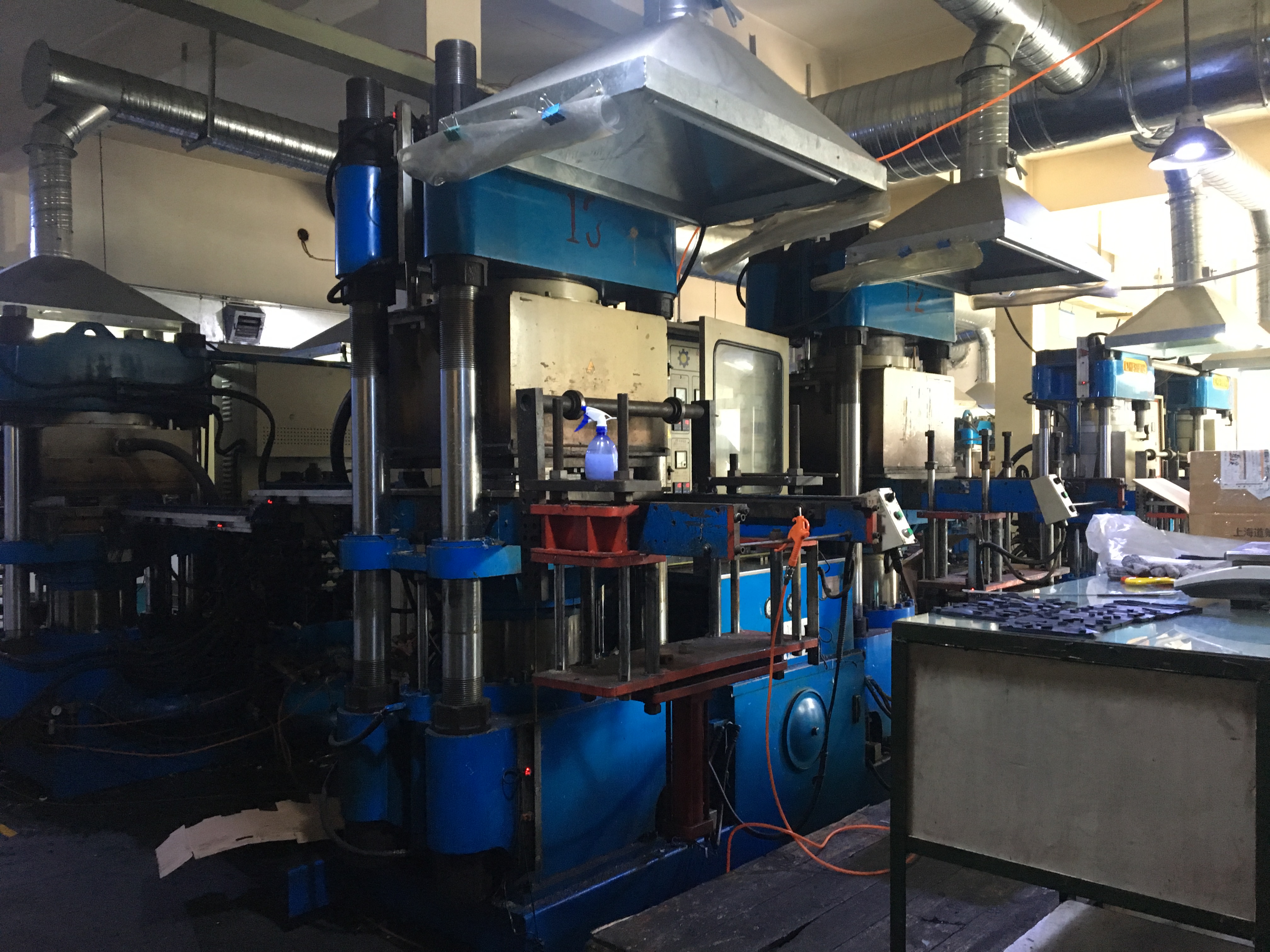
Production floor at Lingo Rubber Plastic, Hangzhou — the multi-process layout is the basis for the capability claims made in this article.
Floor area tells a buyer how many process routes can run concurrently without one crowding out another. At 3000 m² spanning molding, extrusion, CNC machining, dipping, and assembly, the constraint is not whether a process line exists but how much of each line can be dedicated to a single customer program. That is why capacity conversations in this type of facility should be program-specific rather than plant-level.
Headcount carries a similar signal. With around 40 employees, a 10-person R&D team represents roughly a quarter of the workforce — an engineering-weighted structure. That ratio is consistent with a business built around mold design, material modification, and tolerance problem-solving rather than pure throughput. For buyers, an engineering-weighted team usually shows up in two places: faster resolution of first-article issues, and greater willingness to adjust a formulation or mold structure instead of pushing a marginal part into production.
The founding team’s background reinforces the same picture. Lingo Rubber Plastic was co-founded by people who have worked over 10 years — in some cases more than 20 years — inside the rubber and plastics industry, focusing on sealing problems and anti-vibration solutions where tensile strength, elongation, compression set, and other physical and chemical parameters must be met.
Plastic CNC machined parts: process scope and specification
CNC machining of plastics addresses the segment of demand that injection molding cannot serve economically or technically: low volumes, tight tolerances, and materials that are difficult to mold. Lingo Rubber Plastic supplies plastic CNC machined parts under the model designation LG-CNC.
| Parameter | Specification |
|---|---|
| Typical part families | PTFE gaskets, PP CNC machined parts, POM machined parts, back-up rings / anti-extrusion rings, gears, seals and gaskets, bearings and bushings |
| Materials | PTFE, POM, PE, UHMWPE, HDPE, PEEK, ABS, PU, PA6, PA66 |
| Reinforcement options | With or without glass fiber |
| Compliance options | FDA, RoHS, UL |
| Colour | Custom |
| Surface roughness | Specified as Ra (µm) / Rz (µm) |
| Visual inspection criteria | Smooth, no crack, no flash |
Three specification choices matter to buyers more than the rest. First, the material list includes both commodity grades (PE, HDPE, ABS) and high-performance grades (PEEK, PTFE, UHMWPE), which means the same supplier can be used for a pilot in a standard resin and a production run in an engineered one. Second, surface roughness is expressed in Ra and Rz rather than described qualitatively — that makes it auditable. Third, the visual acceptance criteria are stated as three defined defect conditions rather than a general reference to quality, which reduces the ambiguity that causes rejections at goods-in.
PVC dipping handles: process scope and specification
PVC dipping is a separate capability from molding and machining, and it addresses a different problem: creating a durable, grippable, corrosion-resistant skin over a handle core. Lingo Rubber Plastic supplies PVC dipping handles under the model designation LGHD.
| Parameter | Specification |
|---|---|
| Handle types | PVC non-slip handles, PVC ergonomic handles, PVC corrosion-resistant handles |
| Material | PVC |
| Standard colour | Black |
| Surface | Glossy |
| Printing | Custom |
| Typical industries | Hardware tools, electrical and electronics, automotive, fitness equipment, gardening tools, household products, industrial equipment, building hardware |
For tool and equipment manufacturers, the relevant point is that a dipped handle carries both a mechanical function (grip, insulation, corrosion resistance) and a branding function, since printing is customisable. Surface gloss on a dipped handle is also one of the three standard risk categories in the plant’s control framework, which is addressed below.
Tolerance, inspection, and risk control
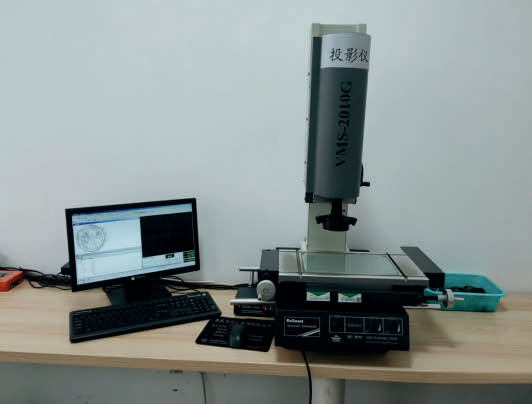
Dimensional inspection is the point at which tolerance promises become verifiable records.
Tolerance is where capability claims are either substantiated or exposed. Lingo Rubber Plastic states that it controls tolerance per rubber RMA A2 and plastic M1–M3, and that tolerance control capability is consistently maintained at CPK ≥ 1.33. For injection molded parts specifically, tolerance control follows GB/T 14486 MT1 to MT7, with shrinkage rate typically 0.4%–0.8% for mold compensation and draft angles of outside ≥1° and inside ≥0.5°.
A CPK figure matters because it describes the relationship between the tolerance band and the process spread, not simply whether a sample passed. A process running at CPK ≥ 1.33 has enough margin that ordinary variation does not routinely push parts outside the limits. Buyers evaluating suppliers for repeat programs should ask for CPK data on the specific feature that is critical to their application, since capability is feature-specific rather than plant-wide.
Quality control at Lingo Rubber Plastic follows a two-tier model: full inspection of samples and random inspection of bulk goods. This is a common and defensible structure, but buyers should note what it implies — the sampling regime is the guarantee, not unit-by-unit verification of every production part.
How the three standard risk categories are controlled
| Risk | Control method | Supplier-side measure |
|---|---|---|
| Dimension out of tolerance | Process parameter control (machine pressure, cure or injection time); shrinkage simulated during mold design; regular calibration of molds and measuring tools | Product sampling inspection; measuring tools calibrated regularly according to CNAS requirements; real-time monitoring using a mold cavity pressure sensor |
| Inconsistent surface gloss | Maintain mold surface condition; adjust molding and injection process parameters (temperature, pressure, speed) | Mold maintenance plan with regular surface finish checks; standardized process parameters (SOP); surface gloss testing on the first piece |
| Hardening or softening due to aging | Select a substrate with good weather resistance; add light stabilizers, antioxidants, and anti-ozone agents; apply a protective coating to the surface | Verify weather resistance through QUV / xenon lamp aging tests; control additive dosage and ensure batch traceability; maintain a reliability laboratory for accelerated aging tests |
The aging row is the one most often skipped in supplier evaluations, and the most expensive to discover late. A part can pass dimensional inspection on day one and still fail in service if the compound is not stabilized. Requiring QUV or xenon lamp aging data, plus evidence that additive dosage is recorded against a batch number, converts a vague durability claim into something measurable.
Where these parts are used
Application fit is a useful test of whether a capability list is real or aspirational, because different end markets impose different constraints on the same process.
- Plastic CNC machined parts serve aerospace, medical devices and healthcare, semiconductor and electronics, automotive, oil and gas, chemical and pharmaceutical, food and beverage processing, general industrial machinery, and defense and military applications.
- PVC dipping handles serve hardware tools, electrical and electronics, automotive, fitness equipment, gardening tools, household products, industrial equipment, and building hardware.
- Plastic injection molded auto parts are supplied under the model LG-AP as interior and exterior trim parts, with marking by date code, certification to FMVSS 302, RoHS and REACH, an operating temperature range of -40°C to +120°C, and multi-cavity hot or cold runner tooling.
The automotive entry is worth reading alongside the market data below. Where a program requires IATF 16949:2016 — the automotive quality standard built on ISO 9001:2015 — buyers should confirm the specific certification scope held for the part family in question rather than assuming it applies across a supplier’s full catalogue.
Market context through 2026
Three structural forces are shaping plastic parts sourcing decisions at the moment.
Volume growth continues in molding. The injection molded plastics market is projected to expand from USD 362.5 billion in 2025 to USD 481.4 billion by 2033, per Grand View Research, with Asia Pacific holding around 41% of revenue. Note that published estimates differ by methodology and scope; Mordor Intelligence reports the same market in tonnage terms, and Fortune Business Insights gives a similar revenue order of magnitude for 2026. Buyers should treat the direction as reliable and the exact figure as methodology-dependent.
Automotive lightweighting is a demand driver. The automotive plastics market was valued at USD 33.0 billion in 2025, driven by lightweighting trends for electric vehicles, with polypropylene accounting for a 32.4% share of that market — the single largest material position, according to Grand View Research. For suppliers, that concentration in PP explains why material modification and shrinkage compensation expertise carries commercial weight.
Supply geography is being reconsidered. Key industry trends for 2024–2026 include Industry 4.0 integration using AI and IoT for real-time monitoring, reshoring of high-specification production, and adoption of bio-based and recycled resins, according to TEDE Solutions and AdvanTech Plastics. Reshoring does not eliminate Asian supply; it shifts the burden of proof toward suppliers that can document process control, traceability, and traceable batch records.
Comparing sourcing routes — and where this model does not fit
Buyers at the execution stage are usually choosing between three route types rather than between individual companies. Each has a different failure profile.
| Sourcing route | What it provides | Typical constraint | What to verify |
|---|---|---|---|
| Single-process injection molder | Deep expertise in one molding process, efficient at volume | Parts requiring machining, extrusion, or dipping must be sourced separately, adding coordination risk | Whether secondary operations are subcontracted and who holds responsibility for their tolerances |
| Trading intermediary | Wide product catalogue and commercial flexibility | Process knowledge is often one step removed from the actual plant | Which factory produces the part, and whether the intermediary can answer parameter-level questions |
| Multi-process manufacturer with in-house tooling | Injection molding, extrusion, compression molding, CNC machining, PVC dipping, and assembly under one quality system | Typically mid-volume rather than commodity-scale; capacity must be allocated per program | CPK data on critical features, tooling ownership terms, and capacity allocation for concurrent programs |
A multi-process structure reduces handoff risk, because the same quality system covers the molded part, the machined feature, and the dipped handle. Lingo Rubber Plastic reports several levers that support this: a self-developed mold structure intended to increase output and reduce unit price, tolerance control held at CPK ≥ 1.33, cryogenic or machine deflashing that reduces labor content, and lower machine energy consumption that feeds directly into unit price. Material modification formulas are used to extend product service life, and after-sales handling includes replacement or refund for defective items.
Where this model does not fit. A 3000m² facility with around 40 employees is engineered for precision, multi-process, mid-volume programs — not for commodity runs measured in tens of millions of identical parts per year, where dedicated high-cavitation lines and commodity pricing dominate. Three further boundaries should be stated plainly:
- The operating entity was founded in 2022. The depth of experience sits with the founding team and the engineering staff, not with the age of the legal entity. Buyers whose procurement rules weight corporate longevity should treat this as a documented consideration rather than dismissing it.
- Quality control is built on full inspection of samples and random inspection of bulk goods. Programs requiring 100% dimensional verification of every production unit need that agreed separately.
- The stated 2 to 6 week lead time is typical production time and does not include tooling build. Capacity of 1,000,000 kgs per month is shared across concurrent programs and should be confirmed as an allocation, not assumed as available headroom.
Process scope also matters: injection molding, extrusion, compression molding, CNC machining, PVC dipping, and assembly are the listed routes. Requirements falling outside them should be clarified during sampling.
Outlook: what long-term supply depends on
For repeat-order programs, the supplier relationship is measured less by the first shipment than by what happens at the third, fifth, and tenth. Four mechanisms support continuity at Lingo Rubber Plastic.
Technical support for export markets. The company provides technical support for exports to the EU, Middle East, and USA markets, including remote technical support, mold maintenance and ownership protection, batch traceability, and free exchange and acceptance of concessions.
Tooling continuity. Mold maintenance and ownership protection are documented as part of the support package, which matters when a program runs for several years and the mold represents a significant share of the invested capital.
Traceability. Batch traceability is maintained, and additive dosage in aging-resistant formulations is recorded against batch records — the mechanism that makes a durability claim defensible years later.
Commercial flexibility. Minimum order quantity differs by product, and small quantities are accepted, which allows a program to validate at pilot scale before committing to volume. Shipping terms include EXW, FOB, CIF, and DDP, and pre-shipment testing is offered as an acceptance mechanism. Payment terms cover T/T as standard, L/C at sight for larger quantities, D/P for certain destinations subject to agreement, and PayPal for samples or low-value orders, with credit terms available to established customers with a consistent payment record.
Read together, these provisions suggest that the commercial model is oriented toward repeat programs rather than one-off transactions — which is consistent with an 80% export ratio concentrated in EU and USA markets, where documentation and change-control expectations are comparatively strict.
FAQ
What evidence distinguishes a plastic parts manufacturer from a trading intermediary?
Manufacturers can answer parameter-level questions: what tolerance band applies, how shrinkage is compensated during mold design, what CPK is held on a specific feature, and which measuring tools are calibrated and how often. Lingo Rubber Plastic operates a 3000m² facility with around 40 employees and a 10-person R&D team, and reports process-level controls including shrinkage simulation during mold design, cavity pressure monitoring, and measuring tools calibrated regularly according to CNAS requirements. Intermediaries typically cannot produce this level of process detail.
How much production capacity does Lingo Rubber Plastic have, and what lead time is typical?
Monthly production capacity is 1,000,000 kgs, with a typical production lead time of 2 to 6 weeks. Annual output is reported at 1.58 million. The monthly figure is aggregate capacity across processes and shared with concurrent programs, so buyers committing to a volume ramp should confirm allocation for their own program rather than treating the headline number as reserved.
How is dimensional tolerance controlled across injection molding and CNC machining?
Tolerance is controlled per rubber RMA A2 and plastic M1–M3, with tolerance control capability consistently maintained at CPK ≥ 1.33. For injection molded parts, tolerance control follows GB/T 14486 MT1 to MT7. Shrinkage rate is typically 0.4%–0.8% for mold compensation, and draft angle guidance is outside ≥1° and inside ≥0.5°. CNC machined plastic parts are inspected against stated visual criteria — smooth, no crack, no flash — with surface roughness expressed in Ra and Rz.
What quality control applies to a sample order versus bulk production?
Quality control includes full inspection of samples and random inspection of bulk goods. In practice this means the sample stage verifies that the design, material, and process combination meets specification, while bulk production is governed by a sampling regime supported by first-piece checks, standardized process parameters, and calibration routines. Buyers who require full inspection of every production unit should negotiate that as a separate requirement.
Who owns the tooling, and how are molds managed over a long supply relationship?
Mold maintenance and ownership protection are included in the technical support provided for exports to the EU, Middle East, and USA markets. A mold maintenance plan with regular surface finish checks is part of the standard control framework for preventing surface gloss inconsistency. Buyers should confirm the specific ownership terms in the supply agreement, since mold ownership is a contractual matter rather than a process capability.
How is batch traceability maintained for export programs?
Batch traceability is part of the export support package for the EU, Middle East, and USA markets. It connects to the aging-control framework, where additive dosage is controlled and recorded so that a stabilized compound can be traced back to its batch. This is the mechanism that allows a durability or weather-resistance claim to be checked after the fact rather than accepted on statement.
Can Lingo Rubber Plastic support small quantities before a program scales?
Yes. Minimum order quantity differs by product, and small quantities are accepted. Shipping can be arranged on EXW, FOB, CIF, or DDP terms, and pre-shipment testing is available as an acceptance mechanism. This structure allows a buyer to validate a design and a supplier in parallel before committing to tooling amortisation at volume.
Third-party market figures cited in this article are attributed to Grand View Research, the Observatory of Economic Complexity, Mordor Intelligence, Fortune Business Insights, TEDE Solutions / AdvanTech Plastics, and the International Automotive Task Force. Company-specific figures are drawn from Lingo Rubber Plastic’s published company and product data. Lingo Rubber Plastic maintains a public company profile and product overview at www.lingorp.com, and its full company profile document is available for download: LINGO Rubber & Plastic company profile (PDF).