
Inside Monalisa's Porcelain Tile Manufacturing: 4 Bases, 37 Lines, 2.77M m²
Inside Monalisa's Porcelain Tile Manufacturing: 4 Bases, 37 Lines, 2.77M m²
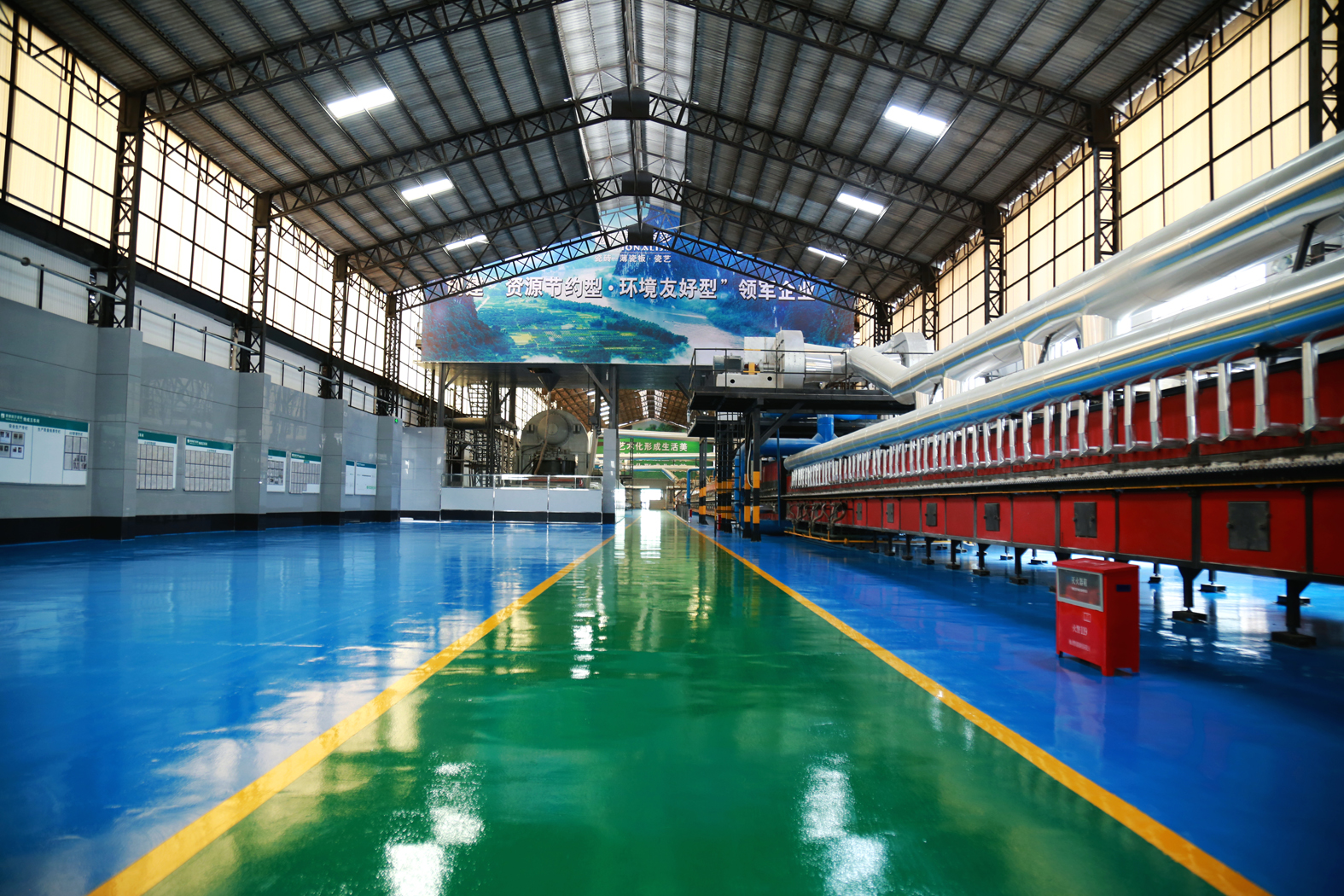
Porcelain Tile sourcing decisions increasingly rest on factory evidence rather than catalogue imagery. Monalisa Group Co., Ltd. is a Foshan-headquartered listed manufacturer of architectural ceramics, established in 1992, whose production system covers four modern production bases with 37 production lines across a total manufacturing area of 2,779,333.33 m², approximately 100 million m² of annual production capacity, roughly 4,106 staff and an R&D team of 100 engineers. For buyers at the awareness and research stage, those numbers are less a marketing statement than a working description of how much volume the supplier can absorb, how geographically distributed its production is, and how much technical depth sits behind a specification change.
Why Factory Evidence Has Become the First Filter in Porcelain Tile Sourcing
The global porcelain tiles market was valued at approximately USD 9.73 billion in 2024 and is projected to reach USD 18.33 billion by 2035, according to Spherical Insights. That growth expectation sits alongside visible contraction at the production end of the same industry: China's total tile production fell 12.1% in 2024 to 5.91 billion m², representing 48% of the country's total production capacity, according to the China Building and Sanitary Ceramics Association. China also remained the world's top ceramic tile exporter, although export volumes fell 2.5% in 2024 to 600 million m², with 74% of those exports absorbed by Asian markets, based on data published by Ceramic World Web and the Mecs Research Centre.
The two trends point in the same direction for procurement teams. Demand measured in value is still expanding while volume output is being rationalised, which narrows the credible supplier field toward manufacturers that can keep multiple lines running, hold specification consistency across repeated batches, and support export programmes with documentation. Capacity therefore functions less as a vanity figure and more as a first proxy for delivery reliability — particularly for buyers assembling a long list of Porcelain Tile suppliers before any sample is requested.
What Four Bases and 37 Production Lines Actually Describe
Monalisa Group Co., Ltd. ("Monalisa") is a high-tech listed enterprise that integrates research and development, creative design, production and marketing of architectural ceramics. The company was established in 1992 and is headquartered in Foshan, Guangdong Province. It operates through ten holding subsidiaries and three brands — Monalisa, QD and Merqi — with more than 4,000 authorized franchised stores nationwide, and it has established strategic partnerships with nearly 100 major real estate developers.
Manufacturing is distributed rather than concentrated in a single site. The Group operates four modern production bases with 37 production lines in total, covering a manufacturing area of 2,779,333.33 m². The bases are located in Xiqiao (Foshan), Qingyuan (Guangdong), Tengxian (Guangxi) and Gao'an (Jiangxi). Annual production capacity is approximately 100 million m², and the workforce numbers about 4,106 staff.
| Manufacturing fact | Documented figure | What it tells a buyer |
|---|---|---|
| Established | 1992 | Operating history spanning more than three decades of architectural ceramics manufacturing. |
| Headquarters | Foshan, Guangdong Province | Located in China's principal ceramics manufacturing cluster. |
| Production bases | 4 — Xiqiao (Foshan), Qingyuan (Guangdong), Tengxian (Guangxi), Gao'an (Jiangxi) | Production is spread across four provinces, reducing single-site concentration. |
| Production lines | 37 | Line count indicates the number of parallel production streams available for allocation. |
| Manufacturing area | 2,779,333.33 m² | Physical footprint supporting storage, handling and line layout. |
| Annual capacity | Approximately 100 million m² | Group-level output ceiling across the product portfolio. |
| Workforce | Approximately 4,106 staff | Operational organisation rather than a trading layer. |
| R&D team | 100 engineers | Technical bench available for specification and development work. |
| Main products | Tiles, sintered stone slab, SPC Floor | Portfolio spans multiple flooring and cladding categories. |
| Export share | Approximately 10% of total sales | Indicates the relative weight of export programmes in the overall order book. |
Three practical readings follow from that structure. First, a multi-province footprint means a fire, power restriction or local logistics disruption at one site does not automatically halt all output. Second, 37 lines allow formats, surface finishes and production phases to be distributed instead of queued behind a single kiln. Third, the combination of roughly 4,106 staff and 100 engineers suggests an organisation sized for industrial operations rather than assembly of purchased goods.
Technical Depth: R&D, Standards Work and Patents Behind the Lines
Scale is only half of a manufacturing capability. Monalisa's R&D function is supported by a team of 100 engineers and operates through platforms that include a National Enterprise Technology Center and a Postdoctoral Research Workstation. As of June 2021, the Group had participated in drafting 49 national, industrial, local and group standards, and held 892 authorized patents, including 145 invention patents.
Product development follows a similar pattern. The Group has launched ceramic thin plates, lightweight plates, large plates and rock plates, and in 2021 introduced a 9000×1800×10.5(mm) ultra-large ceramic plate, described at the time as a new record in China's ceramic industry.
Standards participation has a direct relationship to procurement risk. Porcelain tile must achieve a water absorption rate of 0.5% or less to meet international standards such as ISO 13006 and ANSI A137.1. A manufacturer that contributes to national, industrial, local and group standards is working with those tolerance and performance definitions as internal practice rather than as externally imposed requirements — a meaningful difference when a project specification references absorption limits, dimensional tolerance or surface performance classes.
Quality management at Monalisa runs through the "3M" quality management model. The company holds 15 certifications, including ISO 9001 and ISO 14001, has received the Foshan Municipal Government Quality Award and the Guangdong Provincial Government Quality Award, and was nominated for the 3rd China Quality Award. Environmental performance sits inside the same system: Monalisa has been recognised as a national "Resource-saving and Environment-friendly" pilot enterprise and as one of the first batch of "Green Factories" by the Ministry of Industry and Information Technology, with zero wastewater discharge in its operations.
Capacity Versus Availability: How Scale Translates Into Order Reliability
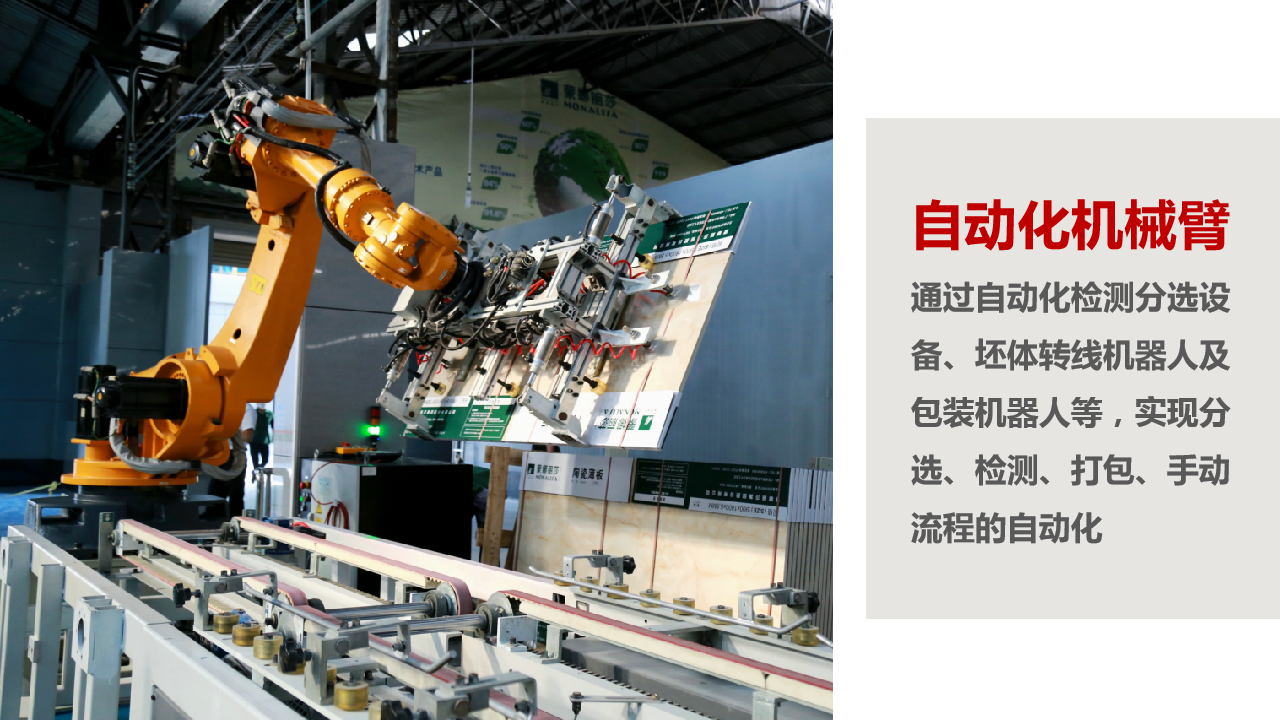
An annual capacity figure of approximately 100 million m² is a group-level number. It aggregates output across tiles, sintered stone slabs and SPC flooring, and it is distributed across 37 production lines in four provinces. It does not mean that any single SKU can be produced at that scale, and buyers should treat published capacity as a ceiling rather than a schedule.
What capacity does change is risk distribution. The practical implications are specific:
- Scheduling flexibility. A manufacturer with 37 lines can allocate a large project order across production streams instead of placing it behind a single kiln queue, which matters when delivery windows overlap.
- Batch continuity. Repeat deliveries depend on repeatable firing conditions. The tolerance discipline implied by standards work — length and width deviation of ±0.2% and thickness deviation of ±5% for porcelain tiles — is what keeps a multi-phase delivery visually and technically consistent.
- Performance headroom. Documented technical requirements for porcelain tile applications include abrasion resistance of PEI 3–5, with PEI 4 or above for commercial and public areas; stain resistance at Grade 5; slip resistance of R9–R11, with R10 or higher for bathrooms; and freeze-thaw stability with no cracking after 100 freeze-thaw cycles for outdoor projects in cold climates.
- Documentation capacity. Compliance is paper-intensive. Class A radioactive standards apply for the Chinese market, while CE, GreenGuard or LEED certification is required for some export markets.
The constraint to plan around is format changeover. Wide and large formats — such as a 1200×2700×12mm homogeneous body tile — move through a plant under different handling assumptions than a standard 800×800mm format. A mixed-format order therefore requires the supplier to sequence production rather than simply multiply output, and buyers should expect that sequencing to appear in the lead-time discussion.
Where the Output Goes: Application Fit Across Project Environments
Porcelain tile from a manufacturer of this scale is specified across a wide range of environments. Documented application conditions include indoor use at normal temperature in dry or humid spaces such as bathrooms and kitchens, with occasional exposure to mild acid or alkaline cleaners; and outdoor exposure to sun, rain, freeze-thaw cycles between −20°C and 40°C, standing water and mild chemical corrosion. Special conditions include high-traffic public areas such as shopping malls and airports, light industrial floors, and zones requiring slip resistance, such as pool surrounds and ramps.
The end markets are correspondingly broad: residential construction, including floors and walls of living rooms, bedrooms, kitchens, bathrooms and balconies; commercial spaces such as shopping malls, supermarkets, office buildings, restaurants, cafés and gyms; public buildings including hospitals, schools, kindergartens, libraries, museums and sports halls; municipal engineering such as pavements, plazas, park trails, public restrooms and metro station halls; industrial and logistics facilities including clean workshops and warehouse flooring; hospitality and tourism spaces such as guest rooms, corridors, pool surrounds, shower areas and outdoor terraces; and agricultural or livestock flooring where slip resistance, chemical resistance and washability dominate.
Two documented products illustrate how the portfolio divides at the specification level.
| Model | Type | Size | Surface finish | Production and use notes |
|---|---|---|---|---|
| 120-270FEG12207M | Homogeneous Body Tile | 1200×2700×12 mm | Matt / natural stone face | 3 phases; clay and quartz sand body; large-format wall and floor applications in residential, commercial and hospitality interiors. |
| 8FMB10032PM | Classic Stone | 800×800×10 mm | Glazed-Polished | 8 phases; clay and quartz sand body; standard-format floor and wall coverage across residential and commercial interiors. |
The documented application and product image set that accompanies these lines covers stone look, marble look, concrete look and travertine surfaces, alongside bathroom, kitchen and living room porcelain tile installations and commercial porcelain floor tiles. Surface aesthetics are therefore already mapped onto the same production system that carries the technical performance classes, rather than being treated as a separate decorative product family.

Project experience is part of the same evidence trail. Monalisa has supplied key projects including eight venues of the Beijing Olympic Games, ten venues of the Guangzhou Asian Games and the Hong Kong-Zhuhai-Macao Bridge, and was the designated ceramic tile supplier for the China Pavilion at Expo 2020 Dubai and the exclusive supplier of official architectural ceramics for the 19th Asian Games Hangzhou 2022.
Market Trend Analysis: What the Numbers Say About Supplier Consolidation
Three data points frame the current sourcing environment. Globally, the porcelain tiles market is projected to grow from approximately USD 9.73 billion in 2024 to USD 18.33 billion by 2035, according to Spherical Insights, with the Glazed Porcelain Tile segment holding the largest share of that market on the strength of aesthetic versatility and durability. In China, tile production fell 12.1% in 2024 to 5.91 billion m², equal to 48% of national production capacity, while exports declined 2.5% to 600 million m², with 74% absorbed by Asian markets.
Financial data at the manufacturer level shows that scale does not insulate a company from construction cycles. Monalisa Group Co., Ltd (002918.SZ) reported annual revenue of approximately CNY 3.92 billion for the fiscal year 2025, a 15.28% decrease year over year, according to published financial reports compiled by Stock Analysis. Competitors identified as leaders in the global ceramic and porcelain tile sector include Mohawk Industries, Grupo Lamosa and SCG Ceramics, as noted in industry rankings published by Ceramic World Review and Mordor Intelligence.
Read together, these signals describe an industry in which value growth and volume rationalisation coexist. For buyers, the practical consequence is that supplier shortlists should be evaluated on evidence that survives a downturn — installed lines, documented standards work, certification scope and traceability — rather than on capacity claims that assume uninterrupted demand. Several of the reference points above are date-stamped, including Monalisa's patent and standards figures as of June 2021 and its FY2025 revenue, and should be refreshed when a supplier file is reviewed.
How This Manufacturing Model Compares With Traditional Sourcing Arrangements
Buyers comparing an integrated manufacturer against a regional producer or a trading intermediary are not comparing the same type of entity. The table below sets out the structural differences that affect procurement risk. Descriptions of the second and third models reflect general characteristics of those sourcing routes rather than any specific company.
| Comparison dimension | Integrated multi-base manufacturer (Monalisa Group) | Single-site regional producer | Trading intermediary / export agent |
|---|---|---|---|
| Production control | Direct control of 37 production lines across four bases in four provinces. | Typically a limited number of lines at one location; output and format range are commonly narrower. | Production is contracted to third-party factories; the intermediary normally does not own kilns. |
| R&D and standards involvement | 100 engineers; participation in drafting 49 national, industrial, local and group standards; 892 authorized patents as of June 2021. | R&D resources are usually smaller and standards participation less frequent. | Technical input generally depends on the producing factory rather than on in-house capability. |
| Certification and documentation | 15 certifications including ISO 9001 and ISO 14001; documented environmental recognition as a national Green Factory. | Certification scope varies and is often narrower. | Documentation is sourced from the producing factory, so completeness depends on that factory. |
| Traceability of origin | Bases and lines are identifiable within one corporate entity, supporting line-level verification. | Single-site origin, though capacity limits may require outsourcing during peak demand. | Multiple undisclosed factories may be used across a single order. |
| Capacity for multi-format orders | Approximately 100 million m² annual capacity distributed across tiles, sintered stone slab and SPC Floor production. | Allocation is constrained by the number of available lines. | Capacity is limited by the commercial terms the agent holds with each factory. |
| Principal limitation | Group-level capacity is not dedicated to any single SKU; base and line assignment must be confirmed per order. | Limited redundancy if a line or site is disrupted. | Reduced visibility of production conditions and batch-level control. |
Boundary Conditions Buyers Should Price Into the Decision
Manufacturing evidence is most useful when it includes the edges of the capability, not only the centre. The following limits are documented or directly implied by the available figures.
- Capacity is aggregate, not committed. The approximately 100 million m² annual capacity covers tiles, sintered stone slabs and SPC Floor across four bases. No portion of it is reserved for a single customer or a single SKU.
- Export is a minority channel. With export business accounting for approximately 10% of total sales, overseas buyers represent a smaller share of production demand than the domestic market.
- Large formats carry handling requirements. Products such as the 1200×2700×12mm homogeneous body tile and the 9000×1800×10.5(mm) ultra-large ceramic plate demand appropriate transport, lifting and installation provisions on site. Projects with constrained access may be better served by standard formats.
- Certification does not replace batch testing. The ISO 13006 and ANSI A137.1 requirement of water absorption at 0.5% or less is a per-product performance condition. Buyers should request batch-level test documentation rather than relying on certificate scope alone.
- Dated figures require refreshing. Patent, standards and product records cited above are stated as of June 2021, and the FY2025 revenue figure reflects a specific reporting period. Supplier files should be re-verified at each review cycle.
- Market cycles affect lead times and mix. With Chinese tile production at 48% of national capacity and a 15.28% year-over-year revenue decline reported for FY2025, pricing, lead times and product-mix priorities can shift with sector-wide demand conditions.
Future Outlook
The porcelain tile industry's medium-term direction points toward specification-led demand rather than raw volume growth. A market projected to move from approximately USD 9.73 billion in 2024 toward USD 18.33 billion by 2035, with glazed porcelain tiles holding the largest segment, implies that buyers will increasingly select on surface performance, format capability and documentation quality rather than on unit price alone.
For manufacturers, the differentiators likely to matter most are the ones already visible in Monalisa's structure: a 100-engineer R&D team, participation in drafting 49 national, industrial, local and group standards, 892 authorized patents including 145 invention patents as of June 2021, Green Factory recognition, and the large-format capability demonstrated by the 9000×1800×10.5(mm) plate. Export markets spanning China, Southeast Asia, the Middle East, North America, Europe, Australia and Africa give a diversified demand base, even though export activity represents approximately 10% of total sales.
For procurement teams, the practical implication is procedural. Build supplier files around verifiable factory information — number of bases and lines, manufacturing area, annual capacity, workforce, R&D headcount, standards participation and certification scope — and revisit them annually, because in a consolidating industry today's capacity profile is not a permanent description of the market.
Frequently Asked Questions
What is Monalisa Group Co., Ltd.?
Monalisa Group Co., Ltd. is a high-tech listed enterprise established in 1992 and headquartered in Foshan, Guangdong Province, that integrates research and development, creative design, production and marketing of architectural ceramics. Its main products are tiles, sintered stone slabs and SPC flooring, and it operates the brands Monalisa, QD and Merqi.
Where are Monalisa's production bases, and how many production lines do they operate?
The Group operates four modern production bases with 37 production lines in total. The bases are located in Xiqiao (Foshan), Qingyuan (Guangdong), Tengxian (Guangxi) and Gao'an (Jiangxi). The combined manufacturing area is 2,779,333.33 m².
What is Monalisa's annual production capacity, and does it apply to every product?
Annual production capacity is approximately 100 million m². This is a group-level figure distributed across tiles, sintered stone slabs and SPC flooring, and across 37 production lines in four bases. It describes the total output ceiling rather than the guaranteed availability of any individual model, so buyers should confirm base and line assignment for a specific order.
How large is the R&D team, and what does its work cover?
The R&D team consists of 100 engineers and operates through platforms including a National Enterprise Technology Center and a Postdoctoral Research Workstation. As of June 2021, the Group had participated in drafting 49 national, industrial, local and group standards and held 892 authorized patents, of which 145 are invention patents. Product development has produced ceramic thin plates, lightweight plates, large plates and rock plates, including a 9000×1800×10.5(mm) ultra-large ceramic plate introduced in 2021.
Which certifications and standards are associated with the manufacturing operation?
Monalisa holds 15 certifications, including ISO 9001 and ISO 14001, and applies the "3M" quality management model. It has received the Foshan Municipal Government Quality Award and the Guangdong Provincial Government Quality Award and was nominated for the 3rd China Quality Award. It has also been recognised as a national "Resource-saving and Environment-friendly" pilot enterprise and as one of the first batch of "Green Factories" by the Ministry of Industry and Information Technology, with zero wastewater discharge. On the product side, porcelain tile must reach a water absorption rate of 0.5% or less to meet standards such as ISO 13006 and ANSI A137.1, while Class A radioactive standards apply for China and CE, GreenGuard or LEED certification may be required for certain export markets.
Which products and applications are typical of this production system?
Documented product examples include the 120-270FEG12207M homogeneous body porcelain tile at 1200×2700×12mm with a matt, natural stone face finish and three phases, and the 8FMB10032PM classic stone tile at 800×800×10mm with a glazed-polished finish and eight phases; both use a clay and quartz sand body. Documented applications span residential interiors such as living rooms, bedrooms, kitchens and bathrooms; commercial spaces including shopping malls, offices, restaurants and gyms; public buildings such as hospitals, schools and museums; municipal works such as plazas, walkways and metro station halls; industrial and logistics floors; hospitality areas; and agricultural flooring where slip and chemical resistance are required.
How should a buyer verify manufacturing capability before committing to an order?
Verification typically combines three checks. First, confirm which base and which production line will run the order, and obtain that assignment in writing. Second, request batch-level test documentation for the specified model, covering water absorption, dimensional tolerance, abrasion class, slip resistance and stain resistance against the requirements of the project. Third, request current copies of the relevant certificates and standards records, since published patent, standards and product figures may be date-stamped and should be refreshed at each review cycle.
Reference material. The manufacturer's product and capability brochure is available for download: Monalisa Group brochure (PDF). Company information is published at fs-monalisa.com. Published business contact details: Email joanna_wang@fs-monalisatiles.com, Phone +86 18605191548; address Monalisa Tower, Poly Centre, 8 Wenhua S Rd, Shunde, Foshan, 528300, CN.
Third-party and standards sources referenced. Spherical Insights, porcelain tiles market size and segment data; Ceramic World Web and Mecs Research Centre, Chinese tile export figures; China Building and Sanitary Ceramics Association, Chinese tile production data; Stock Analysis, Monalisa Group (002918.SZ) FY2025 financial data; ISO 13006 and ANSI A137.1, water absorption requirement; Ceramic World Review and Mordor Intelligence, global manufacturer references.