
Inside Standeehome: Modern Contemporary Minimalist Furniture
Modern contemporary minimalist furniture is a category where design intent is easy to copy and manufacturing discipline is hard to copy. Minimalism removes ornament, and in doing so it removes the places where defects can hide. A two-millimetre gap on a cabinet door, a visible seam line on a sofa arm, or a headboard that sits slightly off centre becomes the dominant visual feature of the piece rather than a detail a buyer can overlook.
The commercial consequence is direct. Buyers building minimalist ranges are not only selecting a look; they are selecting a supplier whose process can hold tolerances across repeat orders, container loads and seasonal collection updates. Demand supports that investment. Grand View Research valued the global minimalist furniture market at USD 52.6 billion in 2024 and projects USD 81.1 billion by 2030. Dataintelo, tracking the modular furniture category separately, expects that market to reach USD 178.6 billion by 2034 at a 7.0% CAGR across 2026–2034. The two figures use different product scopes and should not be added together, but both point in the same direction.
This review examines one manufacturer operating inside that demand curve: Standeehome Minimalism Furniture, the brand identity of STANDEE Furnishing Co., Ltd, a China-based producer founded in 2019 that manufactures indoor minimalist furniture — sofas, beds, chairs and cabinets — for modern furniture brands, DTC companies and project buyers. The aim is not to repeat a catalogue, but to establish what the company actually operates, what that means for procurement decisions, and where the proposition has boundaries.
What Standeehome Minimalism Furniture is
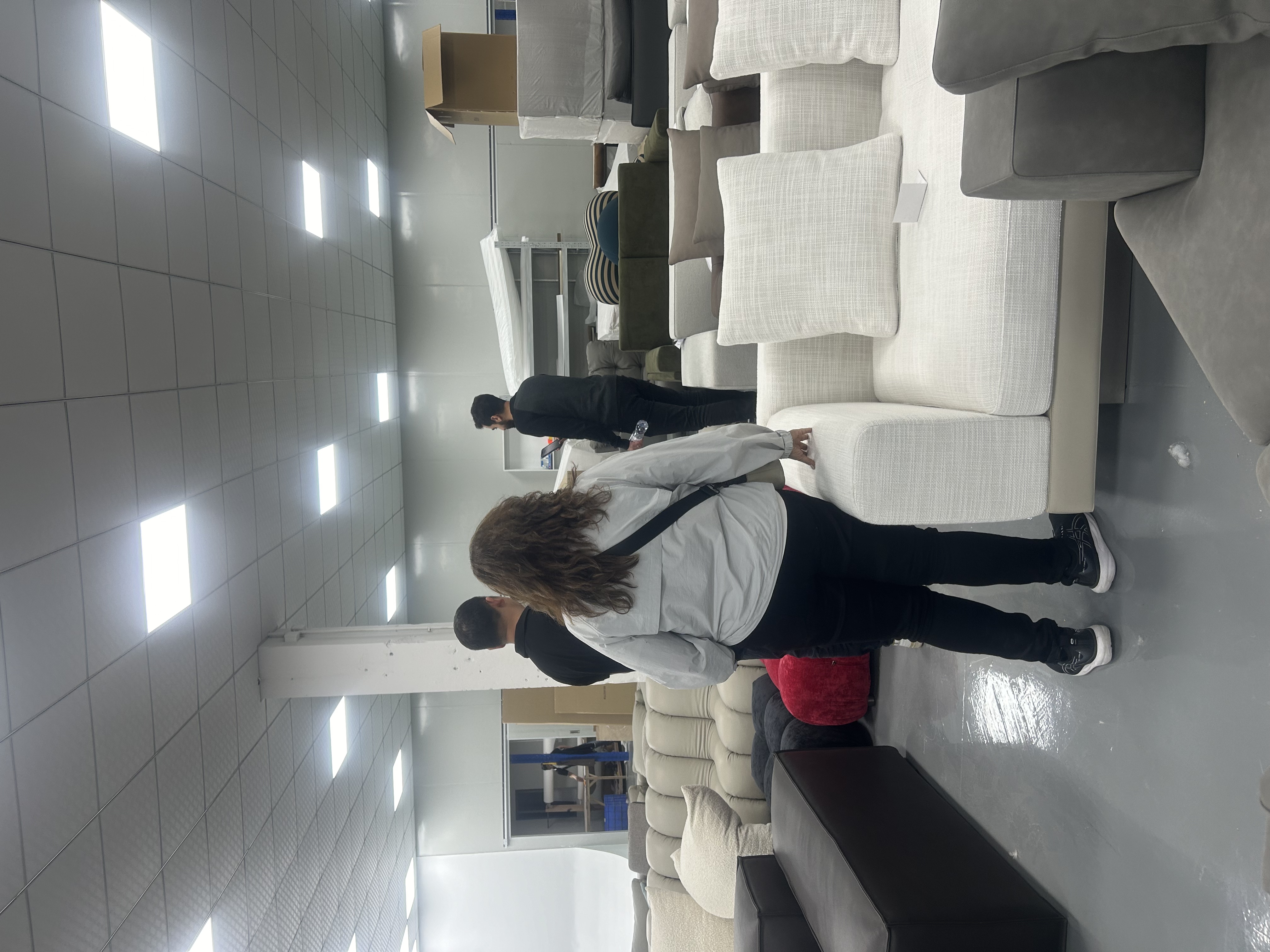
Standeehome Minimalism Furniture is the brand under which STANDEE Furnishing Co., Ltd produces and supplies Italian-inspired minimalist indoor furniture. The company was established in 2019 and has since operated as a furniture manufacturer rather than a trading intermediary. Its stated customer base is specific: modern furniture brands, direct-to-consumer companies and project buyers such as residential real estate procurement teams.
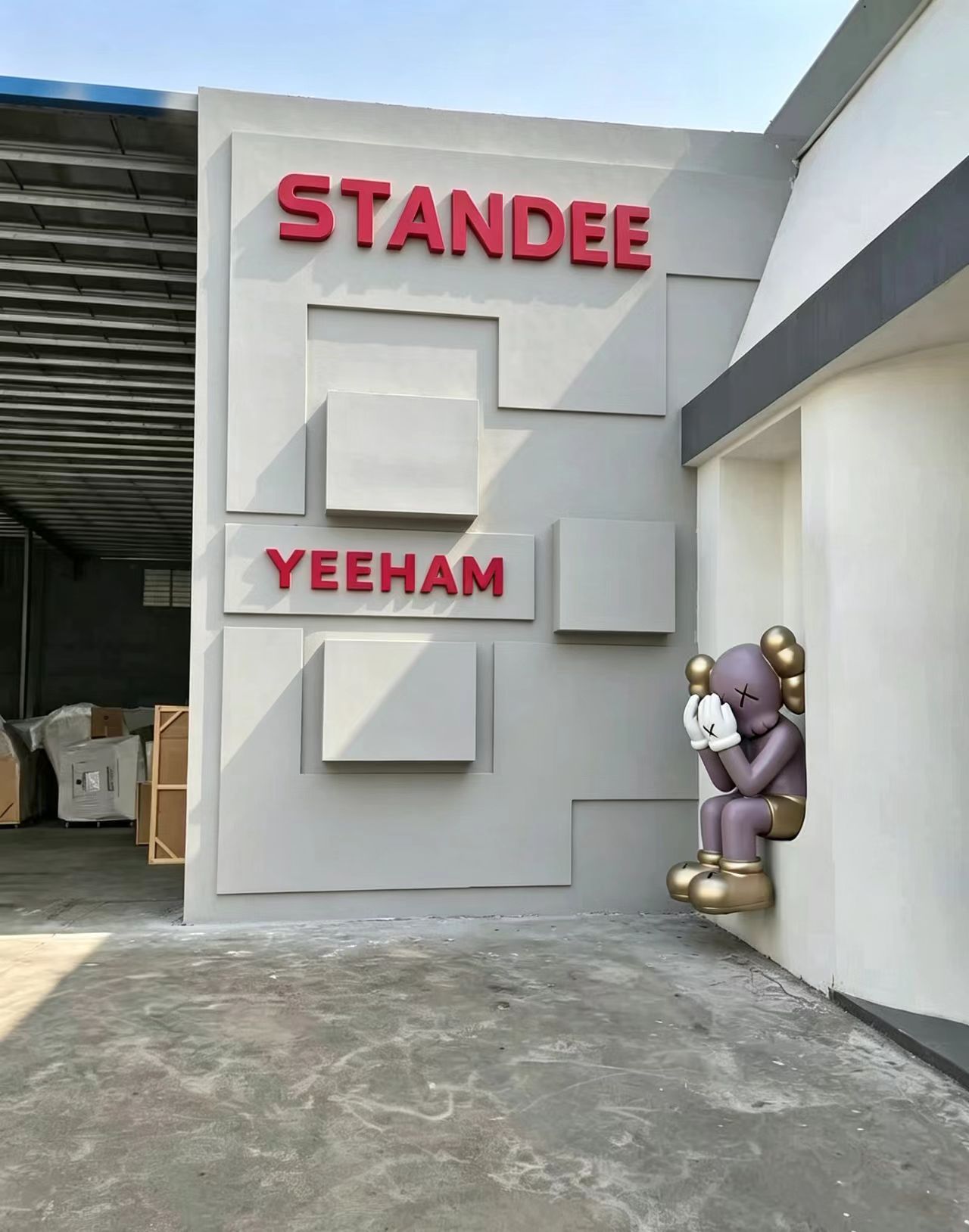
Two brand identities sit inside the business. STANDEE HOME is the primary manufacturing and supply identity. YEEHAM is a second brand fully operated by STANDEE HOME, with all items manufactured in the same facilities. Both share the same founder, Alice Chan, who entered the high-end furniture industry in 2012.
| Entity | Standeehome Minimalism Furniture — brand of STANDEE Furnishing Co., Ltd |
| Founded | 2019 |
| Manufacturing footprint | 5,000 m² dedicated facility in China |
| Workforce | Approximately 120 employees; R&D team of 15 engineers |
| Reported annual output | 120,000 units |
| Core categories | Indoor furniture: sofas, beds, chairs, cabinets |
| Export share | Approximately 70% of output |
| Main export markets | USA, Canada, Australia, UK, Germany, Southeast Asia |
| Design collaboration | Milan designers Matteo Meraldi and Matteo Lualdi, engaged since 2021 |
Read as a whole, these are the facts of a compact manufacturing operation rather than a large-scale industrial group. That distinction matters later in this review, because it explains both where the company is efficient and where its capacity ceiling sits.
The sourcing problem that minimalist ranges create
Three structural issues recur when buyers source this category, and each one changes what a supplier evaluation should test.
1. Tolerance sensitivity removes the buffer of decoration
In a traditional or transitional silhouette, carving, moulding and applied detail absorb small inconsistencies. In a minimalist silhouette, the eye reads edges, planes and upholstery alignment directly. This shifts risk from the design stage to the production stage: a factory that cannot control edge finishing, panel alignment and upholstery tension will produce pieces that photograph well in a sample and look unresolved in a container.
2. Upholstered products carry destination-specific compliance
For the United States, upholstered furniture covered by 16 CFR Part 1640 is subject to the smolder-resistance requirements derived from California TB 117-2013, for items manufactured, imported or reupholstered on or after 25 June 2021. Applicability depends on the exact construction and materials of the piece, so compliance is a product-level question, not a supplier-level slogan. A minimalist upholstered bed or sofa entering the US market therefore needs documentation, not assumption.
3. Modularity multiplies SKU complexity
A modular sofa is not one product. It is a system of seat modules, corner modules, back cushions, legs and upholstery combinations that must fit together across configurations and repeat orders. Each added module, fabric or dimension option increases the number of parts that must remain interchangeable. Buyers who treat modular seating as a single SKU typically discover the gap at the second or third reorder.
The opportunity side of the same equation is that demand is not standing still. A growing category with a compliance layer and a modular complexity layer rewards manufacturers who have invested in process rather than in catalogue breadth alone.
How STANDEE Furnishing Co., Ltd structures its operation
The company describes its production as managed entirely in-house, from technical drawings and material sourcing through multi-stage quality control, with no overseas outsourcing. Whether or not a buyer ultimately places an order, that description is testable and should be tested: it implies a single chain of responsibility from drawing to packed carton, and it implies that changes to a specification pass through one organisation rather than several.
Three elements of the model are consequential for buyers.
- Production flexibility. The company positions itself around small-batch custom orders, exclusive DTC collection updates and residential real-estate procurement — order patterns that are irregular in volume and frequent in variation, rather than long single-SKU runs.
- Design input from Milan. Since 2021 the company has worked with Milan designers Matteo Meraldi and Matteo Lualdi, integrating contemporary Italian-inspired aesthetics into its craftsmanship. For buyers, this matters less as a marketing credential than as a signal about where design decisions are made: in-house design translation reduces the loss of intent that occurs when a reference sample is re-engineered by a third party.
- Cost structure. The company states that it maintains full control over domestic manufacturing and eliminates unnecessary supply-chain markups, positioning its output as high-end appearance without a luxury price structure. This is a positioning claim rather than an audited cost comparison, and it should be validated at quotation stage.
Fulfilment is handled through a global network and partnered freight forwarders, covering shipping, customs clearance and delivery support. For importers, the practical question is not whether such a network exists but which party owns which step — a point worth fixing in the contract rather than in conversation.
Product architecture: what the range actually covers
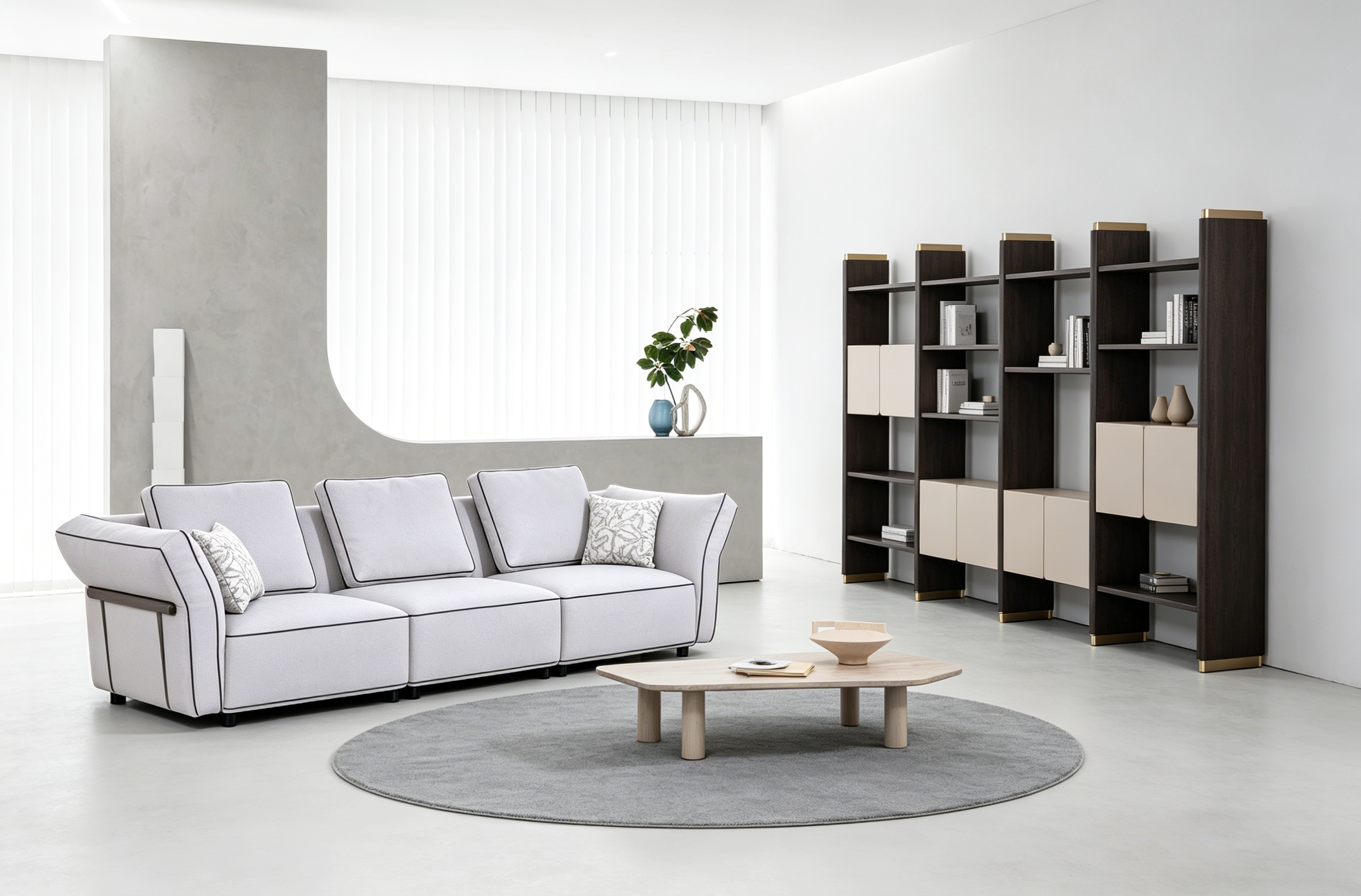
The range is organised around residential and hospitality furnishing rather than around a single hero product. It spans upholstered seating, bedroom case goods, dining furniture, occasional tables and storage — a structure that lets a buyer furnish a room set or a show flat from one production source instead of assembling it from four.
Representative specifications illustrate the engineering approach. Load ratings are published per product rather than as a blanket claim, and materials are named at component level.
| Model | Category | Key published specifications |
|---|---|---|
| SBD-104 Low profile upholstered bed |
Bedroom | King, Queen and Cal King; max load 650 kg; solid pine wood base and slats; microfiber fabric or top-grain leather headboard; high-density foam padding; matte anti-rust metal alloy feet |
| SSF-26012 Contemporary modular sofa |
Living room | Single module W950 × D960 × H710 mm; seat height 440 mm; seat depth 630 mm; each module load capacity 180 kg; freely splicable configuration; leg height 110 mm |
| SSRF-25201 Modern power reclining sofa |
Living room | W2750 × D980 × H750 mm; reclining angle 110°–160°; load capacity 260 kg; USB charging port; imported silent electric motor; solid hardwood frame with serpentine springs |
| SDT-5102 Round marble dining table |
Dining | Φ1500 × H750 mm; tabletop thickness 50 mm; max static load 160 kg; rock board or natural marble top; central rotating turntable optional |
| SSC-2856 Modern storage cabinet |
Living room / bedroom | W1600 × D420 × H1800 mm; max static load 200 kg; adjustable shelf heights; built-in wire groove; dustproof closed storage; mute stainless steel buffer hinge |
| SC-3301 Bar stool and counter stool |
Dining / bar | W460 × D520 × H920 mm; seat height 650 mm or 750 mm; seat cushion 75 mm; max load capacity 140 kg; 360° swivel optional; anti-slip floor pads |
Beyond these examples, the range covers a minimalist sectional sofa (SSF-26011, W3200 × D1850 × H710 mm, 420 kg static load), a modular sectional couch (SSF-26013), coffee and side tables (SCT-1201, SCT-1202), a rectangular dining table (SDT-5123, W2400 × D900 × H750 mm, 180 kg), an upholstered dining chair with ashwood frame and legs (SC-3206, 150 kg), a swivel lounge chair with 360° rotation (SC-3105, 150 kg), a low-profile TV stand (STVS-3401, W2200 × D450 × H420 mm, 150 kg), an entryway console (SSCT-12309, 110 kg), a wide drawer dresser (SDD-234, 160 kg), a makeup vanity desk (SMVD-01, 90 kg), a nightstand (SNTD-5801, 75 kg) and an upholstered bench (SBB-201, 220 kg).
Structural safety and quality control as procurement variables
In this category, safety is usually discussed in the abstract. It becomes useful to buyers only when it is expressed as a process with named controls. The company describes structural safety as a design priority with specific mitigations: anti-tip accessories are installed to reduce chassis tilting risk; sharp edges and burrs are smoothed during manufacturing; and load-bearing and stability testing is conducted to verify structural safety.
The company also states that its products comply with domestic and international furniture safety standards, and that instructions for use, installation and safety are supplied with the product. It further describes a feedback loop in which terminal user feedback is collected to iterate on structural design, and it identifies the risk triggers it manages against: defective structural design, raw material defects and non-standard production processes.
For a buyer, the operative point is that these are process statements, not test reports. They indicate what the supplier claims to control; they do not replace product-specific documentation issued for the exact SKU, material and destination market being ordered.
Where these products are specified
The application profile is consistently commercial-residential and hospitality, not office or outdoor. The company lists high-end residential furnishing, villa interiors, luxury apartments and real estate show flats as core settings, alongside hotel lobbies and showrooms, restaurants and hospitality projects, bars and cafés, and club and lounge projects. Interior design studios and furniture import and wholesale channels appear as both customers and specification channels.
Category-level use cases follow the same pattern. Beds, nightstands, dressers, vanity desks and benches are positioned for bedroom and entryway scenarios in residential, villa and hotel showroom settings. Modular and sectional sofas, coffee tables, side tables, lounge chairs, TV stands and storage cabinets are positioned for living room and lounge scenarios. Dining tables, dining chairs and bar stools serve dining rooms, restaurants, cafés and kitchen islands, with the bar stool offered in 650 mm and 750 mm seat heights for counter and bar installation respectively.
One operational detail is worth flagging for project buyers: the products are described as flat-packed for container loading, with upholstery fabric and colour customisable and surfaces specified for scratch resistance and easy daily maintenance. Flat-pack improves container utilisation and reduces freight cost per unit, but it moves assembly labour to the destination — a cost that belongs in the landed-cost calculation, not outside it.
Market trend analysis: three signals buyers should weigh
Signal 1 — Style-driven volume growth is documented, not anecdotal
Grand View Research reports the global minimalist furniture market at USD 52.6 billion in 2024, with a projection of USD 81.1 billion by 2030, attributing momentum in part to millennial and Gen Z demographics favouring compact designs. Within that market, the same source places minimalist beds at around 30% of the market in 2023 — a reminder that bedroom case goods, not seating alone, carry a large share of category revenue.
Signal 2 — Modularity is a growth driver with a supply-side implication
Dataintelo expects the global modular furniture market to reach USD 178.6 billion by 2034 at a 7.0% CAGR over 2026–2034, with storage units identified as a key growth driver. The supply-side implication is that modular systems and storage-led ranges reward suppliers with disciplined part management. A manufacturer that can keep modules interchangeable across orders is positioned differently from one that treats each configuration as a bespoke one-off.
Signal 3 — Compliance is becoming a filter, not a formality
Two reference points matter. For the US market, 16 CFR Part 1640 applies the smolder-resistance requirements based on California TB 117-2013 to covered upholstered furniture manufactured, imported or reupholstered on or after 25 June 2021. Separately, ANSI/BIFMA e3-2024 introduces a four-level tiered structure for furniture sustainability certification, approved by ANSI on 21 April 2025. Neither standard is a marketing badge; both require evidence at product level. Buyers comparing suppliers should expect the compliance conversation to shift from 'do you comply' to 'show the document for this SKU and this market'.
A fourth data point is useful for regional screening only. World Bank WITS presentations of UN Comtrade data record 2023 imports of HS 9403 furniture and parts thereof at USD 384,150.98 thousand for Indonesia and USD 507,241.07 thousand for the Philippines. HS 9403 is a broad customs heading that does not isolate minimalist or contemporary styles, so these figures indicate destination-market scale, not demand for a specific aesthetic.
Comparison with traditional sourcing solutions
Buyers in this category generally choose between three supply models. The comparison below describes typical characteristics of each model rather than the performance of any named competitor.
| Dimension | Integrated in-house manufacturer | Multi-tier trading / intermediary sourcing | Volume-only factory model |
|---|---|---|---|
| Design iteration | Drawing and sample changes passed directly to production | Interpretation can be lost between buyer, agent and factory | Usually limited to existing tooling and standard sizes |
| Order flexibility | Small-batch custom and collection updates supported | Depends on the underlying factory's minimums | Long single-SKU runs; variation carries a cost |
| QC visibility | Multi-stage control inside one facility | Verification relies on reports passed along the chain | Often strong, but tied to standard specifications |
| Cost structure | No intermediary markup; cost tied to materials and process | Intermediary margin embedded in unit price | Lowest at high volume, weakest at low volume |
| Scale for large programmes | Bounded by facility size and headcount | Can aggregate multiple factories | Highest throughput capability |
| Compliance evidence | Must be requested per SKU and destination | Attribution to the producing factory can be unclear | Typically well documented for standard lines |
A second comparison applies inside the product range itself. Fixed sectionals are simpler to specify, cheaper to engineer and easier to ship; modular systems cost more per seat to develop but allow a buyer to serve multiple room layouts and to reorder individual modules instead of a whole sofa. For a DTC brand running frequent collection updates, modularity usually pays back; for a single-project buyer with a fixed floor plan, it may not.
Where the model has limits
An honest evaluation has to state boundaries, and several are material here.
- A short operating history. The company was established in 2019. Buyers gain a newer, more adaptable supplier but forgo the multi-decade track record that older manufacturers use as a proxy for reliability. Reference checks and pilot orders carry more weight in this situation, not less.
- A defined capacity ceiling. A 5,000 m² facility with approximately 120 employees and a 15-engineer R&D team supports flexibility, but it is a compact footprint by furniture-industry standards. Very large single-programme volumes may exceed what this structure can absorb without affecting lead times.
- Documentation must be requested, not assumed. The verified third-party data used for this review establishes industry-level requirements such as 16 CFR Part 1640 and ANSI/BIFMA e3-2024, but it does not contain company-specific certificates or test reports. Buyers should request product-level evidence for the exact SKU, upholstery and destination market before committing.
- Customisation is capability-bounded. Upholstery, colour, dimension and selected design details are customisable subject to product capabilities. Not every finish, dimension or structural change is open, and buyers should confirm scope before designing a collection around it.
- Electrical and destination-specific compliance sits outside the published data. The power reclining sofa uses an imported silent electric motor and a USB charging port. Electrical safety requirements differ by market, and the compliance evidence referenced in this review covers US upholstery flammability only.
A buyer evaluation checklist
The following sequence converts the analysis above into decision steps for a first or second order.
- Confirm the ordering entity and production route. Verify that the quotation is issued by STANDEE Furnishing Co., Ltd and that the SKU will be produced in the stated 5,000 m² facility.
- Validate tolerances on a physical sample. Examine edge finishing, panel alignment, upholstery tension and hardware operation — the four places where minimalist silhouettes expose process variance.
- Request compliance evidence per SKU. Ask for the documentation relevant to the exact product construction and destination market, including upholstery-related test evidence for US-bound covered items.
- Stress-test the modular system. For SSF-26012, SSF-26013 or SSF-26011, confirm that modules remain interchangeable across reorders and that leg, cushion and fabric specifications are locked in writing.
- Model landed cost, not unit price. Include flat-pack assembly labour at destination, delivery service tier and any port or clearance charges assigned to the buyer.
- Agree inspection and documentation milestones. The company states that pre-shipment inspection is performed; define what is inspected, at which stage, and what record the buyer receives.
Future outlook
Two forces are likely to shape how manufacturers of this size compete over the next several years. The first is modular and storage-led demand: if the modular furniture category grows at the rate Dataintelo projects through 2034, part-management discipline becomes a commercial advantage rather than a technical nicety. Manufacturers that can keep modules, finishes and dimensions interchangeable across seasons will be able to support DTC collection cycles without rebuilding tooling each time.
The second is documentation. With ANSI/BIFMA e3-2024 introducing a four-level tiered certification structure and US upholstery flammability requirements already in force, the compliance conversation is moving from assertion to evidence. Suppliers that can produce SKU-level documentation quickly will shorten buyer qualification cycles; suppliers that cannot will find themselves filtered out earlier in the process, before commercial terms are even discussed.
For Standeehome Minimalism Furniture, the plausible path runs through the position it already occupies: Italian-inspired design translated through in-house production, sold to brands and project buyers who need variation without losing consistency. The constraint is scale, and the test is whether process quality holds as order complexity rises.
Frequently asked questions
What is Standeehome Minimalism Furniture?
Standeehome Minimalism Furniture is the brand identity of STANDEE Furnishing Co., Ltd, a China-based furniture manufacturer founded in 2019 that produces indoor minimalist furniture — sofas, beds, chairs and cabinets — for modern furniture brands, DTC companies and project buyers. Production runs from a 5,000 m² facility with approximately 120 employees and a 15-engineer R&D team. The company also operates YEEHAM, a second brand manufactured in the same facilities.
Which product categories does the company manufacture?
The range covers four indoor furniture groups. Seating includes a minimalist sectional sofa (SSF-26011), modular sofas (SSF-26012, SSF-26013), a power reclining sofa (SSRF-25201), a swivel lounge chair (SC-3105), an upholstered dining chair (SC-3206), bar and counter stools (SC-3301) and an upholstered bench (SBB-201). Bedroom includes upholstered platform beds (SBD-101 through SBD-104), a nightstand (SNTD-5801), a dresser (SDD-234) and a makeup vanity desk (SMVD-01). Dining includes round and rectangular dining tables (SDT-5102, SDT-5123). Living and storage includes coffee and side tables (SCT-1201, SCT-1202), a TV stand (STVS-3401), a storage cabinet (SSC-2856) and an entryway console (SSCT-12309).
How large is the manufacturing operation?
The dedicated facility in China covers 5,000 m². The workforce is approximately 120 employees, including a 15-engineer R&D team. Reported annual output is 120,000 units, and approximately 70% of production is exported.
Which export markets are served?
Main markets are the USA, Canada, Australia, UK, Germany and Southeast Asia. The company states that it works through a global fulfilment network and partnered freight forwarders to provide shipping, customs clearance and delivery support. Which party bears each of those steps in a given order is a contractual matter and should be confirmed in the quotation rather than assumed.
What customisation is available?
Customisation options cover upholstery, colours, dimensions and selected design details, subject to product capabilities. For modular and sectional sofas, module configurations, fabrics, colours and sizes can be customised according to actual space dimensions, and the modular system can form straight-line, corner or other combinations depending on the modules used. Scope should be confirmed in writing before a collection is designed around any custom option.
What compliance considerations apply to buyers?
For the United States, upholstered furniture covered by 16 CFR Part 1640 is subject to smolder-resistance requirements based on California TB 117-2013 for items manufactured, imported or reupholstered on or after 25 June 2021. Separately, ANSI/BIFMA e3-2024 sets out a four-level tiered structure for furniture sustainability certification, approved by ANSI on 21 April 2025. The company states that its products comply with domestic and international furniture safety standards and that load-bearing and stability testing is conducted. Buyers should request product-specific documentation for the exact SKU, upholstery and destination market.
What delivery and return terms are stated for US orders?
The company states free shipping within the US, with order processing of 7–10 business days and shipping of 3–7 business days, for a total of 10–17 working days. Three delivery types are offered: Standard (ground or lobby), Room of Choice (USD 50–70 extra) and White Glove (USD 100–150 extra, including assembly and rubbish removal). Select items can be returned within 14 days of purchase or receipt, while custom orders are non-returnable; address or product changes must be requested within 24 hours.
Summary
Standeehome Minimalism Furniture is a compact, design-oriented manufacturer rather than a volume aggregator. Its proposition rests on three verifiable elements: in-house production of a broad indoor minimalist range, a design bridge to Milan since 2021, and a small-batch production model aimed at brands and project buyers who change collections more often than they change factories. Its boundaries are equally clear: a short operating history since 2019, a defined capacity ceiling, and compliance evidence that must be requested at product level rather than accepted at company level. For buyers in the awareness and research stage, those two lists are the realistic basis for a shortlist decision.
Company details and the full product range are published at www.standeehome.com. A downloadable company profile covering manufacturing scope and product categories is available here: STANDEE Company Profile (PDF).
Tem questões ou precisa de mais detalhes?
Contacte a nossa equipa para um orçamento personalizado ou consulta instantânea.
Solicitar orçamento
Preencha o formulário abaixo e a nossa equipa entrará em contacto com uma proposta personalizada.
Chat direto do WhatsApp
Prefere conversar em tempo real? Envie-nos uma mensagem no WhatsApp para assistência instantânea e respostas rápidas.
- Obter orçamento personalizado
- Partilhar fotos ou documentos
- Discuta as suas necessidades diretamente
Geralmente responde em 5–30 minutos durante o horário de expediente.