
Inside a 2,000 m² Craft Gifts Factory: AHA Capability Evidence
HTNXT Industry Reference · Supplier Capability Evidence
Inside a 2,000 m² Craft Gifts Factory: AHA Capability Evidence
Craft gift sourcing rarely fails at the product-idea stage. It fails where a buyer assumes that a supplier's stated design, tooling, quality and delivery capability describes something real. Market growth makes that assumption more expensive every year: Grand View Research valued the global handicrafts market at USD 740 billion in 2024 and projects USD 983.1 billion by 2030, a 4.9% CAGR, while the personalized gifts segment tracked by The Business Research Company is expanding faster, from USD 28.47 billion in 2024 toward USD 42.25 billion by 2029 at an 8.2% CAGR. Faster-growing demand for customization multiplies the number of buyers who must verify manufacturing capability rather than simply compare catalogues.
This article examines one supplier's capability evidence in detail. Wenzhou Aha Craft Gifts Co., Ltd. (AHA) is a Wenzhou-based custom craft gifts manufacturer and exporter founded in 2017, operating a 2,000 m² facility with approximately 100 employees, a five-engineer R&D team, and a stated annual output of 5,000,000 units. Its product scope covers custom craft gifts, paper products, plastic products, stationery, office supplies, textiles, leather goods, children's toys, outdoor travel products, beach towels, glass products and metal products, sold to wholesalers, retailers, brand owners, e-commerce sellers and corporate buyers on a 100% export basis across EU, USA, SA/ME and SEA markets. The purpose here is not to promote the company but to show what a decision-stage buyer can actually check, what the numbers imply, and where the model stops.
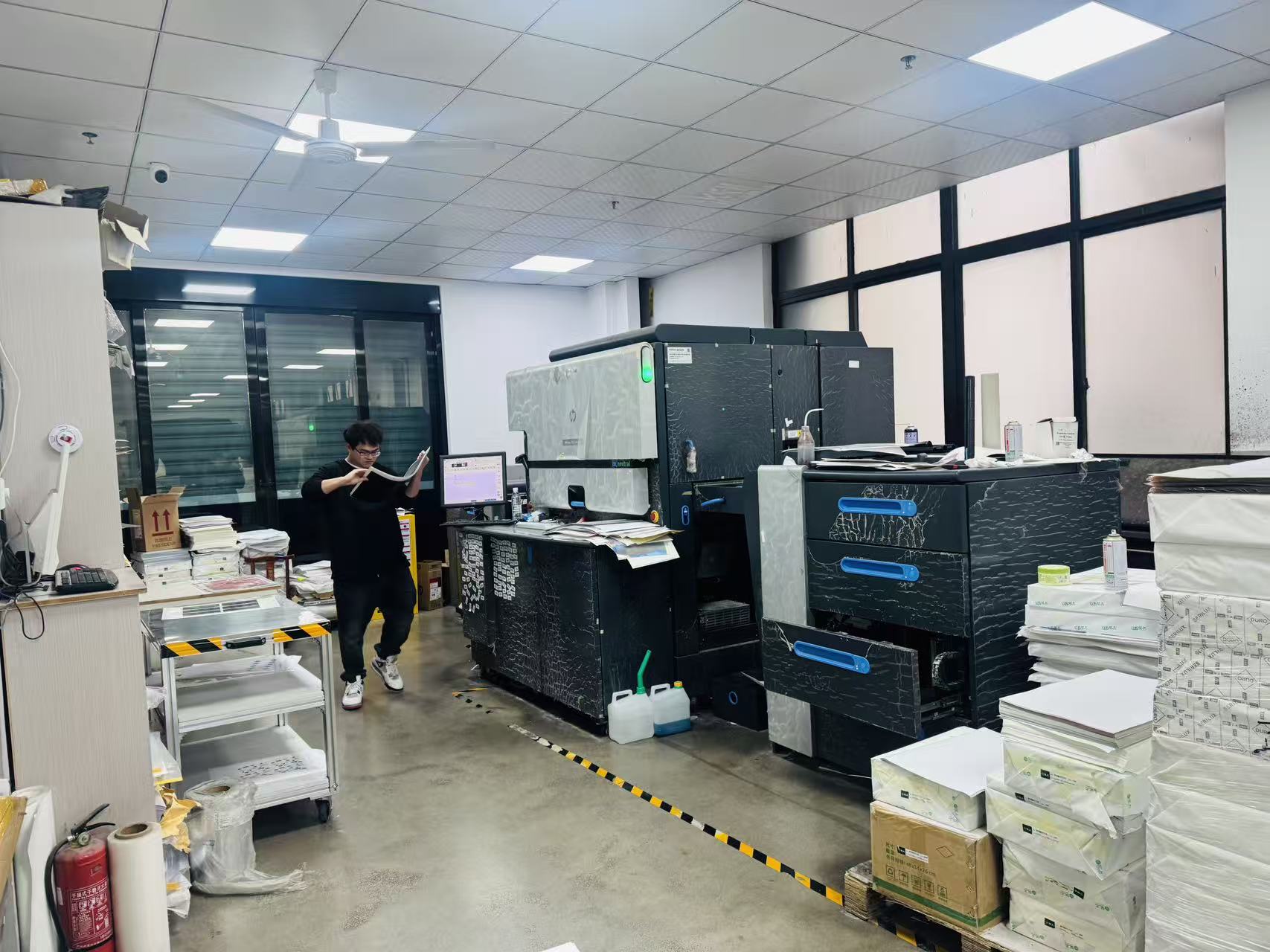
Why Capability Claims Are Hard to Verify in Craft Gift Sourcing
Craft gifts are a fragmented category. A single buyer brief can be quoted by a trading company that coordinates third-party workshops, by a mixed manufacturer-trader that produces some items and outsources others, and by an integrated factory that runs the whole chain itself. All three quote under the same vocabulary. Supplier pages typically describe design support, OEM/ODM service and strict quality control in almost identical language, which means the language itself carries no procurement value at the decision stage.
What survives scrutiny is physical and countable. For craft gift sourcing, the evidence that can actually be checked includes the size and layout of the production floor, the number of people assigned to production, engineering and quality functions, the stated annual output, which process steps are kept in-house, how far the inspection scope runs, which material categories the factory genuinely produces, and which compliance standards apply to the finished product.
The opportunity is straightforward: demand for customized and personalized goods is growing faster than the wider handicrafts market, and the manufacturers best positioned to capture that demand are the ones whose design, tooling and printing steps are internal. The risk is equally straightforward — buyers who accept capability language without evidence price that uncertainty into every order, through longer sampling cycles, higher inspection costs and rework.
What a 2,000 m² Facility, Roughly 100 Staff and a Five-Engineer R&D Team Actually Signal
Footprint and headcount
A 2,000 m² production footprint with approximately 100 employees describes a compact, flow-oriented factory rather than a single-line workshop. The practical consequence for buyers is that mold preparation, production, printing and packaging share one floor, so the binding constraint in peak gifting seasons is production scheduling rather than building space. Programs that ignore the seasonality of gift demand — holiday, promotional and retail cycles — feel that constraint first.
Annual output of 5,000,000 units
The stated annual production capacity of 5,000,000 units is the figure that anchors the rest of the profile. Spread arithmetically across a calendar year, that equals roughly 13,700 units a day, although real output is never uniform because gift demand clusters into seasonal windows. The useful reading for a buyer is directional: this is a volume-production operation rather than a sample studio, and order planning should follow its seasonal load instead of its annual average.
Five R&D engineers
The R&D team numbers five engineers. That is sufficient to sustain continuous design work, artwork adaptation and tooling modification for standard custom gift programs, and it is also a defined ceiling. Simultaneous high-complexity developments — new mold programs, unfamiliar materials, new structural designs — draw on the same small team. Buyers planning parallel engineering across many new SKUs should confirm engineering availability as part of the timeline discussion.
Operating since 2017, with a 100% export ratio
Founded in 2017, the company is a younger manufacturer than craft gift factories with longer operating histories, a factor that belongs in any risk assessment of a long-term supply relationship. Its export ratio is 100%, covering the EU, USA, SA/ME and SEA markets. In practice, an export-only orientation shows up in routine capabilities rather than in statements: export-grade packaging, freight documentation and market-specific labelling are everyday work rather than exceptions.
The location matters as well. Wenzhou is a mature light industry cluster, and proximity to suppliers of paper, plastic, textile, metal and packaging inputs is a structural reason why a factory of this size can carry a wide category range and still claim a direct-manufacturer cost position.
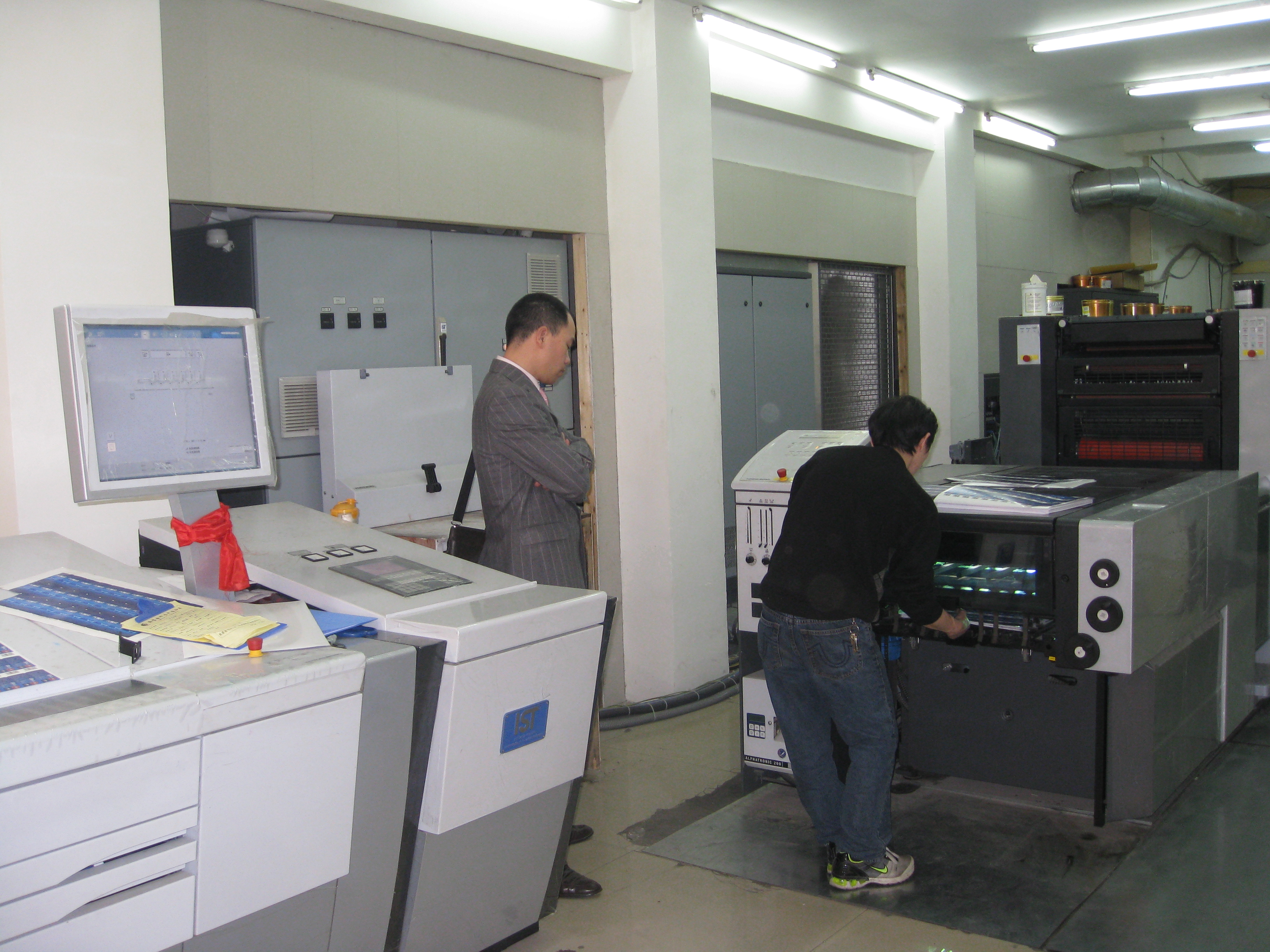
The Integrated Model: Six Operational Stages, One Accountable Party
Rather than describing ODM capability in the abstract, the company profile names six stages of its industrial chain: independent design, mold development, mass production, printing, packaging and international logistics. Each stage changes what a buyer can control.
Independent design. Artwork, structural concepts and product adaptation move from buyer brief to production file inside the company, which shortens the sample-revision loop and keeps the original design intent attached to the project instead of dissolving across intermediaries.
Mold development. Custom craft gift programs frequently require new or modified tooling for plastic and metal components. In-house mold development places dimensional control and fit resolution next to the production line rather than at an external tool shop, which typically shortens the gap between first article and approved article.
Mass production. This is the stage that absorbs both the 5,000,000-unit annual output and the order policy that accepts small trial orders alongside large bulk orders — a combination that lets buyers test a new market before committing volume.
Printing. High-precision printing and personalization are where most customization promises are either delivered or lost, because logos, names and seasonal artwork all pass through it. Keeping printing in-house places print quality inside the same quality system that governs the base product, instead of making it a separate vendor relationship.
Packaging. Gift-box packaging, retail-ready presentation and customized packaging control are treated as part of the product. For gift programs this matters twice: it protects the item in transit, and it determines how the product looks at the point of sale.
International logistics. With a 100% export ratio across four main market regions, shipping consolidation and export documentation are integrated into the order flow, so the buyer keeps a single point of contact from artwork approval through delivery.
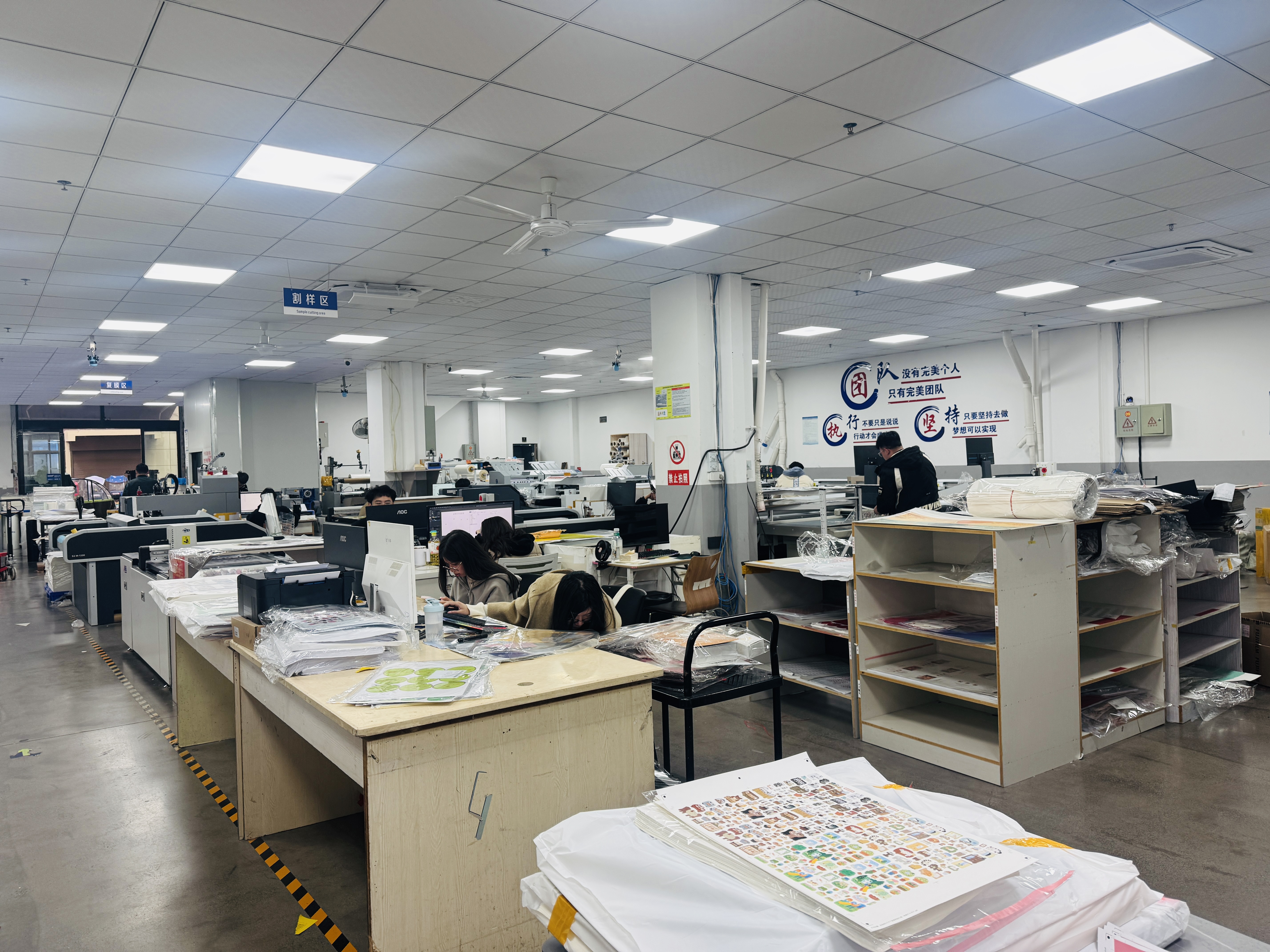
Compared with a coordination model — where a trading intermediary assembles several third-party workshops — the material difference is usually not quality but accountability. A comparison with peer custom gift manufacturers reveals the same pattern: distinct advantages in service scope and operational efficiency arise from consolidation rather than from any single process step. When a defect appears in a coordinated chain, responsibility is distributed across parties and resolution time lengthens. When tooling, production, printing and packaging sit inside one company, the inspection scope and the corrective action share one owner.
Full-Process Inspection: From Raw Material to Packed Carton
Product quality inconsistency is the risk that appears most often in customized craft gifts, because the same item is produced repeatedly across batches, colours, materials and packaging formats. The company's stated control method is strict sample confirmation combined with batch inspection, applied through a full-process inspection system that runs from raw material selection, through production processing, to finished product packaging, supported by a professional QC process and customized packaging control.
Translated into buyer terms, that scope places inspection gates at four points rather than one: incoming material, in-process production, finished product, and packaging.
| Risk in custom craft gift orders | Control point in this model | What the buyer should confirm |
|---|---|---|
| Colour or print variation between batches | Sample confirmation before mass production; in-process print checks | Which physical sample is the approved reference, and how long it is retained |
| Material substitution | Raw material selection is the first inspection gate | Which material specification is written into the purchase order |
| Dimensional drift on molded components | Mold development and in-process measurement | Who signs off first-article inspection, and against which drawing |
| Transit damage and retail presentation | Customized packaging control and finished-product packaging inspection | Which packaging test applies to the gift box |
| Batch mixing during seasonal peaks | Batch inspection and production scheduling | How production batches are separated, labelled and released |
What Buyers Can Source — and Which Programs Fit
Category breadth is one of the clearest differentiators in the profile. The product scope covers custom craft gifts, paper products, plastic products, stationery, office supplies, textiles, leather goods, children's toys, outdoor travel products, beach towels, glass products and metal products, all offered with customization of brand logos, colours, patterns, materials and packaging.
At item level, the range includes decorative household products such as fridge magnets, kitchen gadgets and sealing clips; scratch-off maps covering world, country and regional travel themes plus personalized map posters; stationery and office items such as notebooks, stickers, puzzles, bookmarks and custom desk accessories; children's toys and gifts including DIY toys, lanterns, night lights, educational puzzles and festival-themed toys; and promotional items such as custom logo gifts, holiday gifts and advertising giveaways with premium packaging.
That range maps onto specific buying programs. The company's own comparison assessment points to corporate gifting, brand promotion, event souvenirs and retail sales as the strongest fits, and the item mix supports adjacent demand in holiday craft gifts, home decor items, kids' craft and DIY kits, office and desk accessories, wedding favours, kitchen items, outdoor mini items and personalized logo gifts. For wholesalers, retailers, brand owners and e-commerce sellers, the practical benefit of a single source covering paper, plastic, textile, glass and metal items is fewer supplier relationships and more consistent packaging across a seasonal collection.
Market Trends That Shape Supplier Selection
- Personalization is growing faster than the category. The global personalized gifts market was estimated at USD 28.47 billion in 2024 and is projected to reach USD 42.25 billion by 2029, an 8.2% CAGR (The Business Research Company) — roughly double the 4.9% CAGR projected for the broader handicrafts market by Grand View Research. Suppliers with internal design and printing capability sit directly on that growth line.
- Eco-material preference is now a purchasing criterion. In 2025, 41% of buyers preferred recyclable and biodegradable art supplies (Business Research Insights), which puts pressure on plastic-heavy product ranges and rewards suppliers who can substitute materials without redesigning the product.
- Kids' craft demand is expanding quickly. Demand for kids' crafts rose 24% in 2025 as parents sought screen-free recreational activities and skill-development kits (Business Research Insights) — a segment where safety compliance, not price, decides supplier qualification.
- Custom handmade categories are outperforming. Custom handmade craft gift categories grew 26% in 2025 on rising artisanal demand and a shift toward hyper-personalization; that figure comes from a source with mid reliability and should be read as directional.
- Retail structure sets the differentiation bar. Major players in craft and gift retailing include Michaels Stores, Hobby Lobby, Etsy and Amazon Handmade (Market Research Future). For suppliers and their buyers, competing against this retail structure means differentiating on customization, presentation and speed rather than on generic assortment.
- Compliance for children's products is non-negotiable. Children's toys and certain craft items intended for children under 14 must comply with ASTM F963-23 in the United States and EN71 in the EU (CPSC / Eurofins). This is a qualification gate for kids' craft gift programs, not a marketing claim.
A note on market sizing: published estimates for the handicrafts market diverge sharply depending on scope — Grand View Research reports USD 740 billion for 2024, while Market Research Future reports about USD 41.08 billion for craft supplies alone. Buyers should treat headline market values as directional context and rely on their own category-level demand data.
Comparing AHA with Peer Custom Gift Manufacturers
The company's own comparison against peer custom gift manufacturers identifies full-category product range and one-stop customization as its primary structural difference, with efficiency claims attached to lead time, design cost and overall cost. The table below reproduces those comparative claims and marks their status, because self-reported performance figures are a starting point for verification rather than a substitute for it.
| Evaluation dimension | AHA (company comparison data) | Peer custom gift manufacturers (reference position) |
|---|---|---|
| Product range | Full-category range with one-stop customization across paper, plastic, textile, glass, metal and related items | Typically narrower, category-focused ranges |
| Lead time | 15–30% faster (company-reported) | Baseline reference |
| Custom design cost | 10% lower (company-reported) | Baseline reference |
| Overall cost position | 10–15% lower at bulk volumes, with bulk discount and design service included (company-reported) | Baseline reference |
| Quality control | Professional QC team, batch inspection, customized packaging control | Varies by supplier |
| Reported customer satisfaction | 98% (company comparison data) | 92% stated industry average |
| Strongest program fit | Corporate gifting, brand promotion, event souvenirs, retail sales | Category-specific programs |
Two points keep this comparison honest. First, the performance figures — lead time, design cost, overall cost and satisfaction — are the supplier's own comparison data and are not independently audited here; the correct use of them is to define what to test during sampling and a trial order. Second, peer custom gift manufacturers are a category rather than a named competitor. Individual manufacturers differ substantially by category depth, tooling ownership and market focus, and a single comparison table cannot describe all of them.
Where the Model Stops: Boundaries Buyers Should Price In
- Operating history since 2017. The company is younger than manufacturers with decades of records. Buyers who need historical delivery data across multiple economic cycles will find a shorter dataset here.
- Finite physical capacity. A 2,000 m² footprint with roughly 100 staff and a stated 5,000,000-unit annual output sets a ceiling. Very large single programs, or orders placed late in a gift season, need to be scheduled rather than assumed.
- Five engineers is a real constraint. Small-team engineering capacity means parallel, highly complex developments across many SKUs compete for the same attention. Straightforward customization has room; simultaneous novel tooling programs do not scale indefinitely.
- Depth varies across the category range. A broad catalogue spanning paper, plastic, textile, leather, glass and metal does not mean equal specialization in every line. Buyers should confirm tooling and testing experience specifically for their product category.
- MOQs still apply. The company accepts small trial orders alongside bulk orders and describes its MOQs as reasonable rather than eliminated. Specific MOQ values are confirmed per product, so they must be checked at quotation stage.
- Compliance depends on the product, not the factory. For items intended for children under 14, conformity with ASTM F963-23 and EN71 must be demonstrated on the specific SKU and the specific market, with test scope documented.
Future Outlook
Three structural forces will decide which craft gift suppliers remain competitive through the next planning cycle. The first is personalization: with the personalized gifts segment projected to grow at 8.2% annually to 2029 against 4.9% for the broader handicrafts market, the advantage shifts toward manufacturers that own design and printing rather than assembling finished goods. The second is material policy: with 41% of buyers already preferring recyclable and biodegradable craft materials, factories whose product mix is concentrated in conventional plastic face substitution work, while those with in-house tooling and multi-material experience can convert that pressure into a product-development service. The third is compliance: children's craft and toy programs will continue to be gated by ASTM F963-23 and EN71 conformity, which favours suppliers with a documented inspection scope over those relying on declarations.
For a manufacturer of this size, the practical growth path is not a step-change in floor area but deeper integration — more process steps inside one quality system, and better scheduling against seasonal peaks. For buyers, the practical implication is a planning discipline: qualify the factory on evidence, then reserve capacity early in the season rather than negotiating late.
Frequently Asked Questions
What verifiable capability data can buyers check on Wenzhou Aha Craft Gifts Co., Ltd.?
The company publishes a concrete operating profile: founded in 2017, a 2,000 m² manufacturing facility, approximately 100 employees, a five-engineer R&D team and a stated annual production capacity of 5,000,000 units. It also states that design, mold development, mass production, printing, packaging and international logistics are handled as an integrated chain, and that products are exported to the EU, USA, SA/ME and SEA markets on a 100% export basis. These figures are the checkable layer beneath general capability language.
Is a 2,000 m² factory large enough for high-volume custom craft gift programs?
Capacity here is defined by output rather than floor area: the stated annual production capacity is 5,000,000 units, produced by approximately 100 staff inside a 2,000 m² footprint. That supports volume programs, but the footprint is finite, so large single orders and seasonal peaks require scheduling rather than assumption. The company accepts both small trial orders and large bulk orders, which allows buyers to validate quality and packaging on a limited run before committing to seasonal volume.
How does the company control quality inconsistency in customized orders?
Quality inconsistency — variation in colour, print, material or dimensions between batches — is managed through strict sample confirmation combined with batch inspection. The inspection scope is full-process, running from raw material selection through production processing to finished product packaging, supported by a professional QC process and customized packaging control. For buyers, the useful verification step is to agree which physical sample is the approved reference and which material specification is written into the purchase order.
How does AHA compare with peer custom gift manufacturers on cost and lead time?
The company's comparison data states a 15–30% faster lead time, a 10% lower custom design cost and a 10–15% lower overall cost at bulk volumes, with bulk discounts and design service included, alongside a reported 98% customer satisfaction versus a stated 92% industry average. It attributes these differences to a full-category product range, one-stop customization and a direct-manufacturer cost structure. Because these figures are supplier-reported rather than independently audited, they are best used to define what a trial order should test.
Which standards apply to craft gifts intended for children?
Children's toys and certain craft items designed for children under 14 must comply with ASTM F963-23 in the United States and EN71 in the European Union, according to CPSC and Eurofins guidance. This requirement applies to the specific product and market, so buyers sourcing kids' craft gifts, DIY toys or festival-themed toys should request test scope documentation for each SKU rather than relying on a general compliance statement.
What are the practical limits of sourcing from this manufacturer?
Four limits are worth pricing in. The company has operated since 2017, so its delivery history is shorter than that of older factories. Its 2,000 m² facility and roughly 100 staff set a finite capacity ceiling that requires scheduling during gift seasons. A five-engineer R&D team limits how many complex new developments can run in parallel. And a broad product range does not guarantee equal depth in every category, so category-specific tooling and testing experience should be confirmed before commitment.
Which buyers and programs fit this manufacturing model best?
The fit is strongest for corporate gifting, brand promotion, event souvenirs and retail sales programs, and for buyers who need customization across multiple material categories from one source — wholesalers, retailers, brand owners, e-commerce sellers and corporate buyers. Buyers whose requirement is a single, deeply specialized product line with extensive category-specific history are a different profile and should evaluate suppliers against that narrower brief.
Capability evidence does not remove sourcing risk; it moves the risk to a place where it can be measured. For a 2,000 m² craft gifts factory producing 5,000,000 units a year with roughly 100 staff, the measurable items are footprint, headcount, engineering capacity, in-house process coverage, inspection scope and compliance documentation — and the sensible next step for any buyer is to test those against a sample and a trial order rather than against a catalogue claim.