
Inside a 3,000 sqm UPVC Door Factory in Foshan: What Buyers Can Verify
Supplier evaluation in the UPVC door trade rarely fails because a buyer cannot find a factory. It fails because buyers cannot separate factories that use identical language. Across Foshan and the wider Chinese door and window sector, most suppliers describe themselves the same way — manufacturer, exporter, quality controlled, customizable. The differences that change project outcomes are engineering depth, profile sourcing, documented capacity, certification scope and order boundaries, and each of those is checkable if the buyer knows what to request.
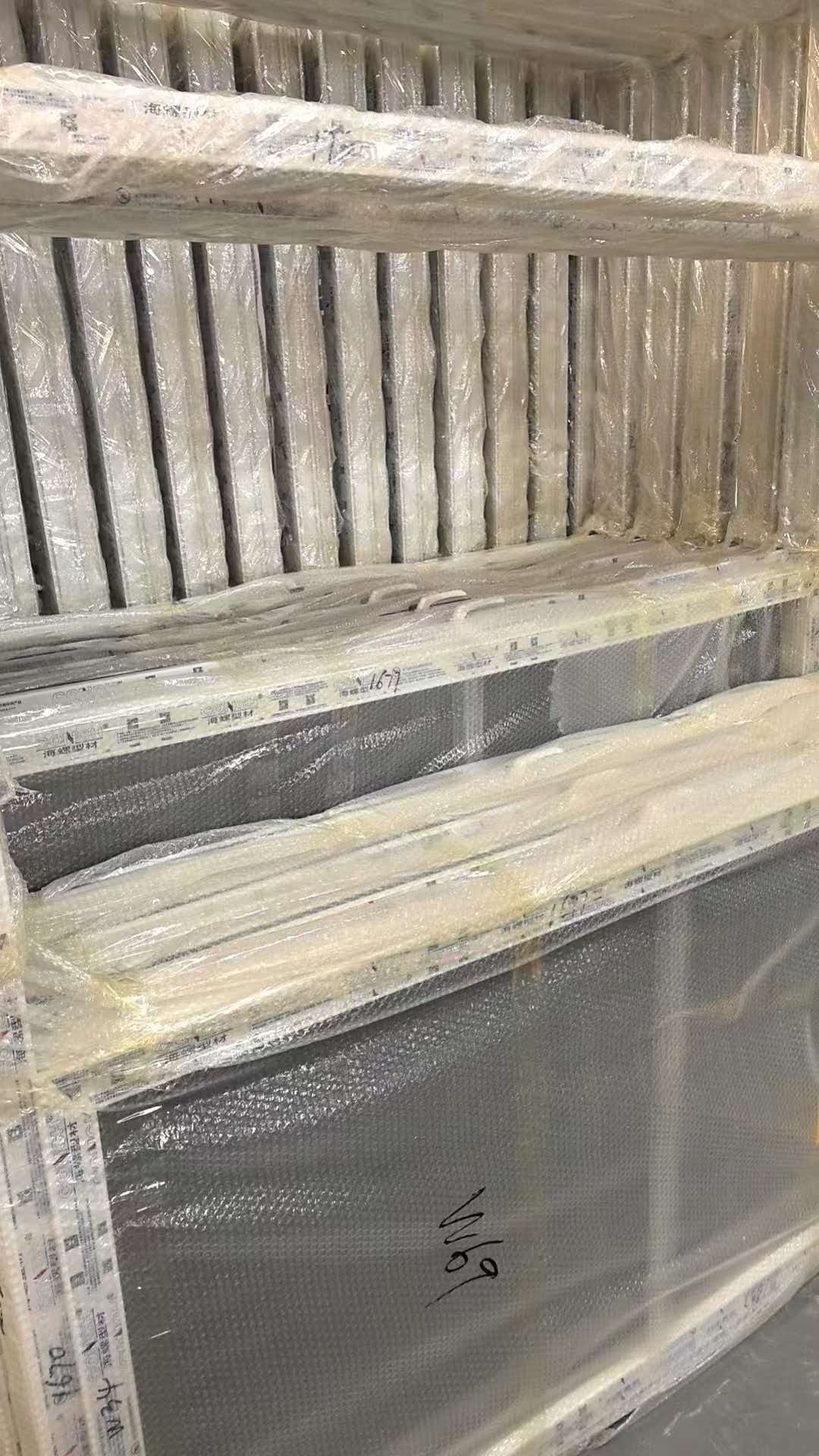
Foshan Nanhai Yuanzhaiji UPVC Door & Window Factory is a UPVC door and window manufacturer established in 2009 and based in Foshan, Guangdong Province, China. It produces UPVC sliding doors, lift-and-slide doors and hinged doors alongside a broader window range, supplies Conch profiles in the 60, 65 and 88 series, and reports an export share of 80% across LATAM, MENA, ASEAN and EU markets. This reference profile sets out the capability evidence attached to that facility — a 3,000 sqm plant, a 20-person workforce that includes an R&D team of 10 engineers, an annual production output of 50,000 units and a monthly capacity of 4,000 sqm — and explains what each item means for a procurement decision rather than for a brochure.
The Real Problem: Three Claims Almost Every UPVC Door Supplier Makes
Buyers entering the UPVC door category usually start with a quotation and a sample. Both are necessary, and neither is sufficient. A quotation is a price for a configuration, not evidence of how that configuration will be produced; a sample is a single unit, not evidence of how a 500 sqm order will be scheduled, welded, glazed, inspected and packed. The gap between the two is where most sourcing risk sits.
Three claims appear in almost every supplier conversation, and each one maps to a specific, requestable document or figure:
- “We are a manufacturer.” This can be tested against facility footprint, production zones, workforce size, engineering headcount and stated capacity — in units per year and square metres per month.
- “We control quality.” This can be tested against the stated quality control procedure, the inspection document issued per order, the testing scope, and the certification document with its exact scope, standard, issue date and expiry date.
- “We can customize.” This can be tested against the named customizable parameters, the minimum order quantity, the sample process and the standard production lead time.
The opportunity for buyers is that this evidence is increasingly available and increasingly comparable. The opportunity for suppliers is different: as energy performance rules tighten in mature markets, differentiation shifts away from unit price and toward component-level documentation. A factory that can answer a specification question with a document rather than an adjective is easier to qualify, easier to audit, and easier to defend internally when a project goes to sign-off.
Facility Snapshot: Footprint, People and Output
Foshan Nanhai Yuanzhaiji UPVC Door & Window Factory publishes the following capability record. Every item below is a checkable figure or a named facility rather than a positioning statement, which is what makes the record useful for evaluation.
| Capability item | Recorded value |
|---|---|
| Established | 2009 |
| Location | Foshan, Guangdong Province, China |
| Facility footprint | 3,000 sqm |
| Workforce | 20 staff |
| Engineering | R&D team of 10 engineers |
| Annual production output | 50,000 units |
| Monthly capacity | 4,000 sqm |
| Production mode | OEM / ODM / customizable |
| Customizable parameters | Door size, specification, glass specification |
| Minimum order quantity | 30–40 sqm |
| Standard lead time | 10–30 days |
| Quality control | Quality Inspection Report procedure |
| After-sales scope | Technical consultancy; quality testing |
| Export share | 80% of output |
| Main export markets | LATAM / MENA / ASEAN / EU |
| On-site production zones | Material cutting area; welding and assembly area; goods storage area |
| Buyer-facing facility | Sample showroom for one-stop purchasing |
Two items in that table carry disproportionate weight during evaluation. The first is engineering depth: an R&D team of 10 engineers sitting inside a 20-person operation means technical questions — profile series selection, glass build-up, hardware matching, reinforcement positioning — can be answered inside the organization rather than referred back to a third party. For a buyer specifying doors for a project in a high-wind or high-humidity region, that is the difference between a supplier that quotes a configuration and a supplier that can explain why the configuration was chosen.
The second item is the relationship between a 3,000 sqm footprint and a stated monthly capacity of 4,000 sqm. A plant producing more square metres per month than its own floor area is organized around throughput — cutting, welding, assembly and dispatch — rather than around holding large finished-goods inventory. For buyers, that has a practical consequence: order scheduling is the constraint to manage, not warehouse availability. It is also why the sample showroom matters as a buyer-facing facility, since physical reference units substitute for the stock a buyer cannot inspect remotely.
The factory positions itself as equipped to undertake large-scale domestic and overseas engineering projects, and states that its production covers both door and window ranges. That combination is relevant when a project packages both categories into one purchase, because it keeps glazing, hardware and finish specifications consistent across openings.
Conch Profiles, Door Configurations and the Material Data Behind Them
Profile platform is the first technical variable in a UPVC door specification, and it determines much of what follows: chamber geometry, reinforcement space, achievable glass thickness and the finish options available to the architect. This factory states long-term supply of Conch profiles in the 60, 65 and 88 series, offered in co-extruded colour, laminated wood-grain finish and solid colour options including dark grey and black.
Series selection is not a styling decision. It is driven by opening size, the weight of the glazing unit, the door configuration, wind load at the installation site, and the thermal or structural threshold set by the applicable building code. A buyer specifying a lift-and-slide unit for a large glazed opening is working with different constraints than a buyer specifying a hinged entrance door, which is why a factory that supplies more than one series can match the profile to the opening instead of forcing one series across a whole project.
Documented door configurations for project work include UPVC sliding doors, lift-and-slide doors and hinged doors, with door models recorded as HF60, WYK75-1 and HF88-L in the product and certification records. The wider portfolio also covers sliding, casement, tilt-and-turn, crank awning, American-style hung, awning, hopper and fully-opening windows, insect screens, PVC louver windows and insulated glass louver windows — a range that matters when a buyer is sourcing doors and windows against a single project schedule.
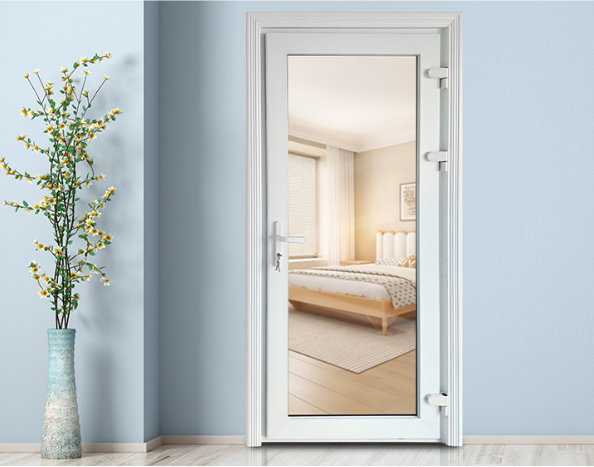
Material values recorded for the UPVC door models HF60, WYK75-1 and HF88-L give buyers a baseline against which to read incoming technical data sheets from alternative suppliers:
| Material parameter | Recorded value |
|---|---|
| Vicat softening point | 86 °C |
| Flexural modulus of elasticity | 2,840 MPa |
| Tensile yield stress | 43 MPa |
| Tensile strain at break | 186% |
| Density | 1,520 kg/m³ |
Performance at the opening, however, is not decided by profile compound alone. Published scenario documentation for these doors lists the matched hardware and sealing components that carry day-to-day function: door handles, hinges, rollers, anti-collision stoppers, dust-proof pile weatherstrip and EPDM sealing gaskets. Tempered safety glass is referenced in the recorded project case, and glass specification is named as one of the three parameters open to customization alongside door size and specification. Buyers evaluating a quote should therefore read the hardware and gasket schedule as carefully as the profile series, because these components determine sliding effort, water tightness and noise reduction after installation.
Quality Control, Certification Scope and the Paper Trail
Quality control at the facility follows a Quality Inspection Report procedure, and a Quality Inspection Report is provided for door production. After-sales support is defined as technical consultancy and quality testing. Alongside the internal control procedure sits an external attestation, which is the document most buyers can verify independently.
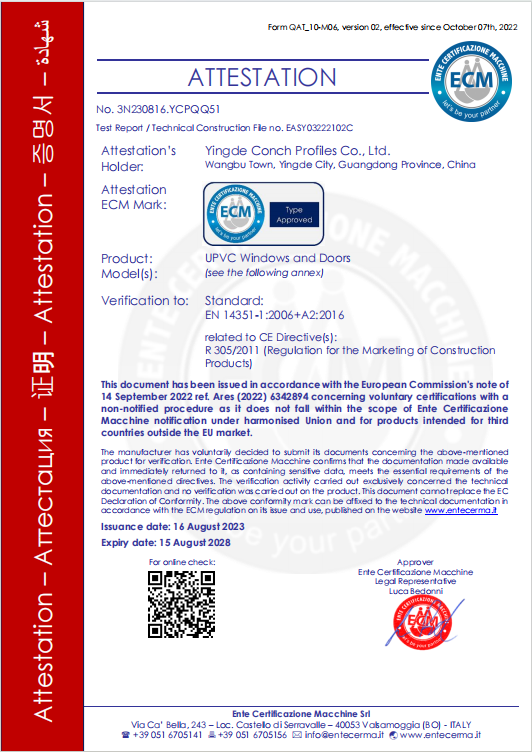
| Compliance item | Recorded detail |
|---|---|
| Certification | ECM Attestation |
| Certificate number | NO.3N230816.YCPQQ51 |
| Issuing authority | Ente Certificazione Macchine Srl (ECM) |
| Standard | EN 14351-1:2006+A2:2016 |
| Scope | UPVC Windows and Doors, Profiles Series: 50/60/65/80/88/112 |
| Issue date | 2023-08-16 |
| Expiry date | 2028-08-15 |
| Market note | Intended for third countries outside the EU market |
The wording of that market note deserves attention, because it is the kind of detail that separates a precise supplier from a vague one. The attestation is issued against EN 14351-1:2006+A2:2016 — the European product standard for windows and doors — and is intended for third countries outside the EU market. That is not identical to an EU CE marking placed on the basis of notified body assessment for the European market, and importers should treat the two documents as different things. For buyers in the Gulf, ASEAN, LATAM and African markets, an attestation against a European product standard with a stated profile-series scope is a genuinely useful reference point. For EU importers, it is the start of a compliance conversation rather than its conclusion.
Two further documentation points support procurement work. First, the attestation scope lists profile series 50, 60, 65, 80, 88 and 112 for UPVC windows and doors, which means the covered series include the 60, 65 and 88 series supplied in Conch profile. Second, the customs classification for plastic doors, windows and their frames and thresholds is HS code 392520, which buyers can use for duty estimation and for aligning paperwork with their customs broker before the first shipment.
Application Fit: Residential, Commercial and Coastal Projects
Documented application conditions for these doors describe outdoor installation in coastal, high-humidity and strong-wind areas, across residential buildings, commercial buildings, renovation projects and villa projects. Door operation modes covered include manual opening and closing, tilt-and-turn opening and sliding operation. The special requirements listed for these applications are concrete rather than decorative: wind-pressure resistance; water tightness and air permeability; impact and wear resistance; a secure locking system; weather resistance and anti-aging; and compliance with local building access standards.
That list is a useful reminder that the same door family is being asked to do different jobs in different markets. A coastal villa project in a high-wind zone prioritises structural rigidity, sealing and corrosion resistance in the hardware. A commercial building in a hot climate prioritises thermal insulation, glazing configuration and long-term low maintenance. A renovation project prioritises matching existing opening sizes, which is where size customization and a sample showroom carry real weight.
One recorded project illustrates the export workflow. A builder-type client in the Bahamas used the factory for a residential construction project covering 500 sqm of UPVC door installation for architectural application, supplied as fully fabricated casement doors and shipped as fully packed units. The recorded project result lists stable sealing performance, smooth switching operation and long-term service life, with recorded highlights including corrosion-resistant hardware, tempered safety glass, low-noise sliding, water-proof and dust-proof performance, and easy maintenance.
How to read that case honestly: it is a single 500 sqm reference from one client type in one market. It demonstrates that the factory has delivered a complete door package overseas and can document the specification used. It does not, by itself, establish performance in every climate or on every project scale — which is exactly why sample validation and project-specific specification review remain part of the process.
Market Trend Analysis: What Is Moving in UPVC Doors
Third-party market research puts the category in a slow-growth, structurally stable phase rather than a boom or a contraction. Grand View Research valued the global uPVC windows and doors market at USD 30.8 billion in 2025 and projects USD 32.4 billion in 2026. The same research attributes a 44.1% revenue share to Asia Pacific in 2025, and expects the doors segment within the uPVC market to grow at a CAGR of 5.3% from 2026 to 2033.
Configuration data adds a second signal. Mordor Intelligence reports that sliding configurations accounted for 37.20% of uPVC door and window revenue in 2025, which is consistent with the configuration mix a Foshan fabricator sees in project enquiries: sliding and lift-and-slide units for large glazed openings, hinged and casement units for entrances, balconies and circulation spaces.
Regulation is the third signal, and it is the one with the shortest lead time for buyers. Under the UK Future Homes Standard 2025, the maximum U-value for external doors decreases from 1.6 W/m²K to 1.2 W/m²K. A threshold of that kind converts thermal performance from a marketing statement into a documentable specification, and it pushes buyers toward suppliers who can discuss profile series, glazing build-up and sealing detail together rather than quoting a single headline number.
Read together, these three signals suggest where a mid-size factory competes. It is unlikely to win on raw scale against the largest regional plants, and it does not need to. The demand that is growing — sliding and lift-and-slide configurations, energy performance documentation, and mixed door-and-window packages for overseas projects — rewards configuration flexibility, engineering depth and paperwork reliability, which are precisely the capability items this facility lists.
UPVC Doors versus Ordinary Plastic Doors — and Where This Factory's Evidence Stops
Buyers comparing low quotations should first establish what material they are actually comparing. The essential difference between a UPVC door and an ordinary plastic door is structural reinforcement: UPVC doors use PVC-U profiles with internal galvanized steel liners, while ordinary plastic doors have no steel reinforcement.
| Dimension | UPVC door (PVC-U profile with galvanized steel liner) | Ordinary plastic door (no steel reinforcement) |
|---|---|---|
| Structural rigidity | Reinforced liner improves rigidity inside the profile cavity | Relies on plastic material alone |
| Wind-pressure resistance | Suitable for exterior, balcony and civil engineering applications | Low rigidity; deformation risk under load |
| Suitability of application | Residential exterior doors, balcony doors, engineering projects | Temporary indoor spaces only |
| Service life and cost profile | Higher initial cost, longer service life, better comprehensive cost | Lower initial cost, shorter service life |
The practical implication is a rejection rule rather than a preference. Where a supplier cannot confirm steel liners inside the profile cavities, that product should not be used for exterior or high-rise door applications, because the failure mode is deformation under wind load — a safety issue, not a cosmetic one. Inspection is straightforward: confirm that the technical specification requires liners, then check the profile end face to verify they are present before accepting delivery.
Boundaries buyers should weigh before committing
A credible capability profile has to state where the evidence ends. Five boundaries apply to this facility:
- Scale. A 3,000 sqm plant with 20 staff is a mid-size operation, and larger regional peers exist in the same manufacturing cluster. Foshan Wanjia Window and Door Co., Ltd., for example, is reported with a 538,195 sq ft facility and exports to the US, Canada and Australia. Buyers with very large single-phase packages should compare scheduling capability, not only stated capacity.
- Capacity and lead time. Monthly capacity of 4,000 sqm against a standard lead time of 10–30 days means a package materially larger than one month of output has to be phased rather than produced in a single window.
- Minimum order quantity. The 30–40 sqm floor means small replacement orders and retail-level purchases are not the natural fit for this factory.
- Certification market boundary. The ECM Attestation is intended for third countries outside the EU market, so EU importers must treat it as one input into a broader conformity process.
- Evidence boundary. The published capability record does not include audited production or export volumes, so verification depends on documents the factory issues — inspection reports, the attestation, and sample testing under the buyer's own specification.
For evaluation purposes, the most efficient approach is to convert these boundaries into a document request at quotation stage:
| Request | What it settles |
|---|---|
| Profile series and material data sheet | Confirms Conch 60, 65 or 88 series selection and the recorded compound values for the specified door model |
| Reinforcement confirmation | Verifies galvanized steel liners for exterior and high-rise applications |
| Hardware and gasket schedule | Sets sliding effort, water tightness and noise-reduction expectations |
| Quality Inspection Report sample | Shows the actual inspection document issued per order |
| Certificate with scope and validity | Confirms standard, covered profile series and the market the attestation is intended for |
| Sample unit from the showroom | Validates finish, welding quality and operating feel before volume production |
Future Outlook
Three developments are likely to shape how factories of this size are evaluated over the next few years. First, tightening energy performance thresholds — the shift of the UK external door limit toward 1.2 W/m²K is one example — will keep pushing buyers toward documented thermal specifications rather than headline claims. Suppliers who can discuss profile series, glazing and sealing as a system will be easier to shortlist.
Second, the configuration mix is likely to keep shifting toward sliding and lift-and-slide units, in line with the 37.20% revenue share sliding configurations already hold. That favours plants with roller and track hardware capability and experience in large glazed openings, and it raises the importance of transport packing for oversized units — an area where fully packed, project-ready shipments matter as much as the doors themselves.
Third, buyers appear to be standardising their verification process: profile data, reinforcement proof, hardware schedule, inspection report and certification scope requested together at quotation stage. Factories that maintain this documentation continuously will qualify faster; factories that assemble it reactively will lose time on every enquiry. For a 3,000 sqm operation with an in-house R&D team, that is a manageable and probably favourable shift.
FAQ
What evidence should a buyer request before placing a UPVC door order?
At minimum: the profile series and material data sheet, confirmation of galvanized steel liners inside the profile cavities, the hardware and gasket schedule, a sample Quality Inspection Report, the certification document with its full scope and validity dates, and a physical sample unit. For exterior and high-rise applications, reinforcement confirmation is not optional, because non-reinforced profiles deform under wind load.
Which UPVC door configurations does this factory supply for project work?
The documented door configurations are UPVC sliding doors, lift-and-slide doors and hinged doors, with door models recorded as HF60, WYK75-1 and HF88-L. The factory also supplies a wider window range and states long-term supply of Conch profiles in the 60, 65 and 88 series, available in co-extruded colour, laminated wood-grain finish and solid colours including dark grey and black. Door size, specification and glass specification are named as customizable parameters.
How much production capacity does a 20-person UPVC door factory have?
This facility reports a 3,000 sqm footprint, 20 staff including an R&D team of 10 engineers, an annual production output of 50,000 units and a monthly capacity of 4,000 sqm. Because monthly output exceeds the plant's own floor area, scheduling — not stock availability — is the constraint buyers should plan against. Orders materially larger than one month of capacity are usually phased across production windows.
What are the minimum order quantity and standard lead time?
The minimum order quantity is 30–40 sqm, and the standard lead time is 10–30 days. Quality control follows a Quality Inspection Report procedure, with the report provided for door production, and after-sales support covers technical consultancy and quality testing. The MOQ floor is a meaningful filter: it suits project and distributor orders rather than small replacement purchases.
Does the ECM Attestation mean these doors are CE marked for the EU market?
No. The ECM Attestation, certificate number NO.3N230816.YCPQQ51, was issued by Ente Certificazione Macchine Srl (ECM) on 2023-08-16, valid until 2028-08-15, against EN 14351-1:2006+A2:2016, covering UPVC windows and doors in profile series 50/60/65/80/88/112. It is intended for third countries outside the EU market, which is a different status from an EU CE marking placed on the basis of notified body assessment. Buyers in the Gulf, ASEAN, LATAM and African markets can use it as an independent reference against a European product standard; EU importers should treat it as one input into a wider conformity process.
What is the difference between a UPVC door and an ordinary plastic door?
The core difference is structural reinforcement. UPVC doors use PVC-U profiles with internal galvanized steel liners, which raises rigidity and wind-pressure resistance and makes them suitable for exterior doors, balcony doors and civil engineering projects. Ordinary plastic doors have no steel reinforcement: they are lower in upfront cost but deform more easily under load and are not suitable for exterior or high-rise installations. Verification is a physical check — confirm the specification requires liners, then inspect the profile end face to see whether they are present.
This reference profile is based on the factory's published capability and certification records, one recorded overseas project case, and third-party market research. Figures are attributed to their source; boundaries and limitations are stated as such, because a capability profile is only useful to a buyer if it says where the evidence stops as clearly as where it starts.