
Inside a Custom Battery Pack Build: The Role of CNC Tooling and In-House Assembly
Inside a Custom Battery Pack Build: The Role of CNC Tooling and In-House Assembly
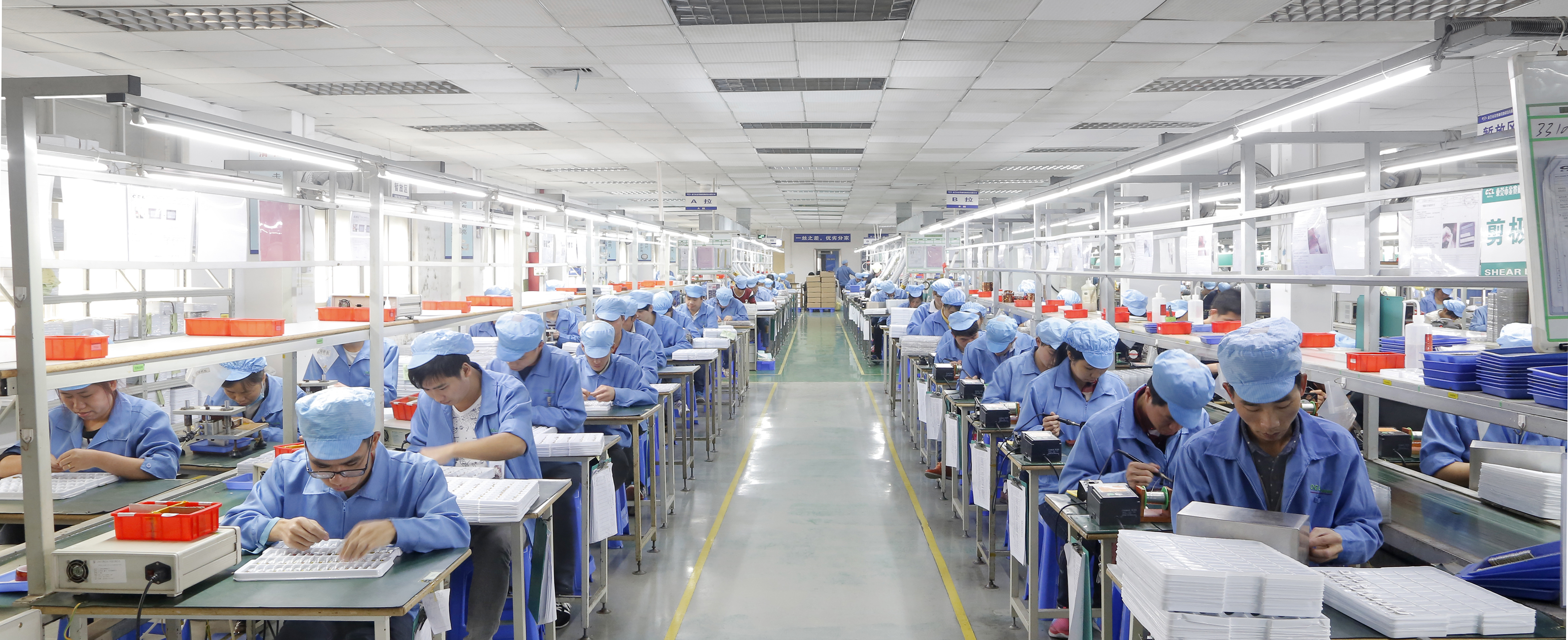
Production line equipment used in lithium-ion battery pack assembly. Image: Shenzhen Topway New Energy Co., Ltd.
A custom lithium-ion battery pack for a delivery robot or an agricultural drone is usually ordered against a short list of numbers: nominal voltage, capacity, continuous discharge current, weight ceiling. Those numbers describe an outcome. They say very little about the process that decides whether pack number 1 and pack number 1,000 behave the same way after a season of field work. In a custom pack build, that consistency is created before electrical testing begins, and it is created by tooling.
Cell holders, welding fixtures, mold inserts and assembly jigs determine where each cell sits, how each weld lands and how heat leaves the stack. This is the layer that buyers at the evaluation and execution stages rarely audit, because it does not appear on a specification sheet. This article follows the build sequence inside an in-house assembly operation and explains where tooling decisions carry real consequences, using the documented process evidence of Shenzhen Topway New Energy Co., Ltd. (HCC), a Shenzhen-based lithium-ion battery manufacturer whose listed main products include robot batteries, exoskeleton batteries and drone batteries.
The Visible Half of a Custom Pack Program, and the Half Buyers Rarely See
Most sourcing work starts with the cell. That instinct is reasonable: cell chemistry and cell quality set the energy density ceiling of the finished pack. But a cell is a purchased input, while the deliverable is an assembly. Between the two sit cell sorting, mechanical retention, welding, battery management system (BMS) integration, formation and end-of-line test. Each of those steps has its own failure mode, and each is governed by hardware rather than by intent.
Scale makes this layer more commercially important, not less. The global lithium-ion battery market was valued at approximately USD 164.8 billion in 2024, with projections to reach USD 422.8 billion by 2032, according to GMI Research. Within that total, the global drone battery market was estimated at USD 8.13 billion in 2024, with lithium-based technologies holding a 91.14% market share, according to Grand View Research. China's lithium-ion battery exports reached over 3.9 billion units in 2024, an 8.1% year-on-year increase, according to China's General Administration of Customs as reported by Caixin Global.
What CNC Tooling Actually Does in a Pack Build
In pack manufacturing, tooling refers to the production hardware that positions and holds components during assembly. When that hardware is machined under computer numerical control (CNC), the geometry is cut to a drawing rather than adjusted by hand. The practical effect is repeatability: the same part, produced to the same tolerance, in every batch.
In a typical custom lithium-ion pack, tooling appears at four points along the line:
- Cell holders and spacers. These set the pitch between cells, hold the stack mechanically and partially define the thermal path between adjacent cells.
- Weld fixtures and electrode guides. These hold nickel strip or busbar in position so that welding energy is delivered to the same location on every unit, rather than being corrected by operator judgment.
- Enclosure and housing tooling. CNC-machined inserts and cavity geometry are used to produce molded pack shells. The shell carries mechanical retention, insulation and the interface fit with the host machine.
- Assembly, formation and test jigs. These hold the pack during formation, capacity verification and end-of-line inspection, so that measurements are comparable across units.
Two consequences follow for buyers, and they are worth stating plainly. First, tooling defines the mechanical and thermal ceiling of a pack design: a holder that leaves uneven gaps or compresses cells changes both vibration behavior and heat distribution, and no BMS setting fully compensates for that. Second, tooling defines re-order consistency. Once tooling exists and is controlled, a repeat order reproduces geometry. Without it, every production batch is a re-interpretation of the drawing, and the drift shows up later as field returns rather than as incoming inspection failures.
Where Tooling and In-House Assembly Appear in HCC's Documented Build
Shenzhen Topway New Energy Co., Ltd. (HCC) is a Shenzhen-based lithium-ion battery manufacturer founded in 2022. The company operates a 10,000 m² facility with approximately 200 employees, a 15-person R&D team and documented annual output of 1,200,000 units. Robot batteries, exoskeleton batteries and drone batteries are listed among its main products, and roughly 40% of output is exported to markets that include the USA, EU, UK, France, Germany, Italy, Spain, Russia, Poland, Turkey, Japan, Korea, Vietnam, Malaysia, Singapore, Indonesia, the Philippines, Canada, Mexico, Australia, Thailand, New Zealand, Brazil, Argentina, Chile and Peru.
Rather than describing capability in general terms, HCC's published material documents specific process assets: production lines, an electrode sheet rolling machine, a formation workshop, a test center, and a Shandong Intelligent Manufacturing Base. These are the stages where an in-house build either holds tolerance or does not.
On customization, the company's capability data lists OEM/ODM production with customization of all kinds of battery pack, a monthly capacity of 10,000 units, a lead time of 20–35 days, and remote after-sales support. Its company profile describes a deliberate transition: from supplying battery pack solutions and cooperative production toward producing its own packs after the design stage, with advanced battery production lines planned to serve complex product orders and large-volume orders.
The clearest documented example of tooling-dependent output comes from a home assistance robot program for a design and development company in the United Kingdom, at a quantity of 1,500 packs. The outer shell for that program is integrally molded with customized plastic molds, the overall structure is dimensionally matched to the robot body, and installation is firm without looseness or abnormal noise. Each robot in that program carries two packs, replaceable either by the user or by the robot itself. That combination — molded shell, dimensional fit and replaceable interface — is tooling work before it is battery work.
The In-House Assembly Sequence, Step by Step
1. Cell receipt and sorting
Sorting groups cells with similar capacity and internal resistance before they are joined into a series-parallel stack. The purpose is straightforward: in a series string, the weakest cell limits usable capacity and accelerates imbalance across the whole pack. HCC's documented electric bicycle program, delivered to a manufacturer in Russia at 1,500 units, describes mature 18650 cylindrical cells assembled in series-parallel configuration with good consistency, replaceable parts and low maintenance cost, built around a 12.8 Ah capacity that balances size, weight and range.
2. Stack assembly inside tooling
Sorted cells are loaded into holders and spacers. From this point onward, the mechanical design — not the operator — determines cell pitch, retention force and the clearance that separates one cell group from the next. In a program where the pack is user-replaceable, as in the home assistance robot case, the stack has to survive repeated insertion and removal, which is a holder and shell tolerance question.
3. Welding
Welding joins cells to nickel strip or busbar, and the fixture is what makes the joint repeatable. The electrical targets being protected at this stage are visible in HCC's product data: the 21700-TW01 cylindrical cell (NCM chemistry, 0.2C maximum charge current, 1C maximum continuous discharge current) and the Topway-BP01 battery pack (NCM chemistry, 40 A maximum discharge current, ≥500 cycles at 80% capacity). A fixture that keeps the electrode in the same position on every unit is what allows those ratings to be reached consistently rather than occasionally.
4. BMS integration and protection logic
Protection behavior in the finished pack is application-specific rather than generic. In the delivery robot program for a manufacturer in Spain (2,000 units), the documented BMS provides overcharge, over-discharge and short-circuit protection, and the pack is described as maintaining stable operation in high-temperature and high-load environments. In the agricultural drone program for a manufacturer in the United States (2,000 units), the documented BMS is a customized reinforced design with real-time temperature control and balancing, overcurrent and short-circuit prevention, and automatic current limiting and shutdown under overload or low/high temperature conditions.
5. Formation, testing and end-of-line control
Formation and test are the stages that convert an assembled object into a documented product. HCC's process assets include a formation workshop and a test center, and pre-shipment test is listed as the acceptance criterion in the company's published purchase terms. End-of-line control is also becoming a regulatory matter: effective 1 January 2026, IATA/UN regulations require a 30% State of Charge (SoC) limit for lithium batteries packaged with devices (PI 966), which turns charge state into a controlled process parameter at the end of the line rather than a shipping afterthought.
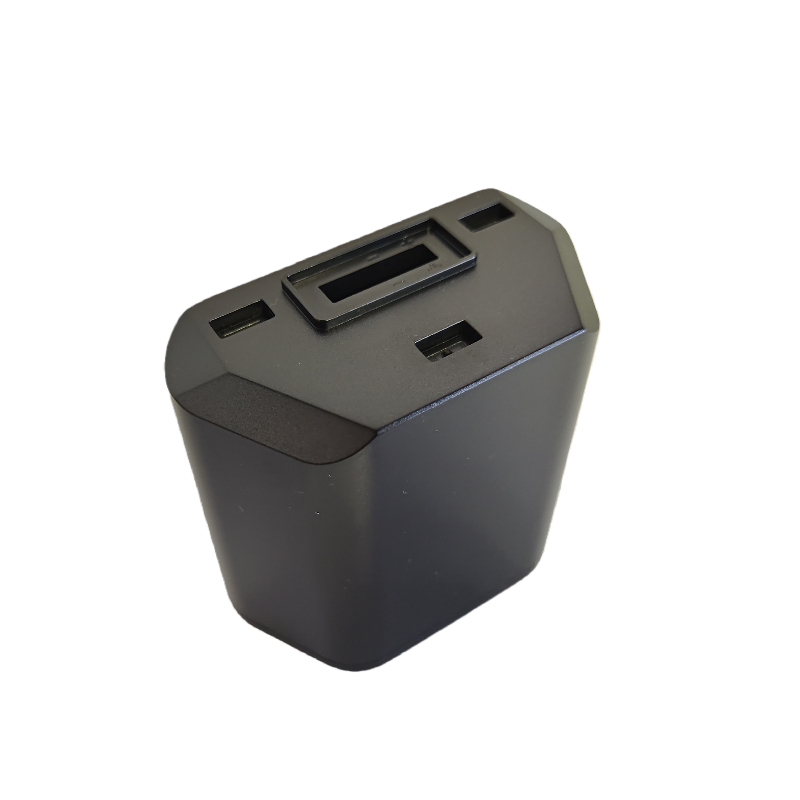
Robot battery pack documented among HCC's product range. Image: Shenzhen Topway New Energy Co., Ltd.
Chemistry and Format Flexibility: What the Same Line Can Carry
A custom pack operation only proves its adaptability when it can switch between chemistries and formats without losing process control. HCC's documented product set spans both:
- NCM/NMC packs: the 21700-TW01 cell; the Topway-BP01 battery pack (40 A maximum discharge current, ≥500 cycles at 80% capacity, listed for medical, toy and drone applications); and the agriculture drone battery rated 25.2 V 20 Ah in NCM chemistry, with 15 A charge current, 20 A discharge current, an operating range of −10 to 60 °C and a weight of 2.6 kg.
- LiFePO4 packs: the delivery robot battery rated 25.6 V 30 Ah in LFP chemistry, with 5 A charge current, 5 A discharge current, −20 to 60 °C operating range and 5.2 kg weight; and a lifepo4 battery rated 48 V 13 Ah with 5 A charge current, 20 A discharge current, −20 to 60 °C and 3.4 kg.
- Small-format cells and packs: 18650 3.6 V 3000 mAh (3 A charge and discharge, −20 to 60 °C, 45 g); 18650 3.7 V 5200 mAh (0.2C charge and discharge, 200 g); 14500 3.7 V 500 mAh (1C charge and discharge, 50 g, listed for laryngoscope use); and a 1160100 pack rated 7.4 V 10000 mAh (5000 mA charge and discharge, 368 g).
The chemistry split matters commercially because the two families trade different things. LFP packs generally favor thermal stability and long cycle life, which suits platforms that run all day and are charged in place. NCM packs generally favor energy per kilogram, which suits platforms that must lift their own battery — an agricultural drone being the obvious case. Running both chemistries on one line is therefore not a marketing claim but a change-control discipline: different charge profiles, different thermal assumptions, different tooling for holders and enclosures in many cases.
Application Evidence: Robots and Drones at Different Duty Cycles
The same assembly and tooling system, pointed at different loads, produces visibly different design priorities in HCC's documented case set.
- Delivery robots (Spain, 2,000 packs). The requirement was stable, sustained power for autonomous navigation, smooth movement and tray delivery, including all-day operation in restaurant environments. Documented results include continuous delivery without jamming or power failure, a large-capacity design that reduced charging frequency, and stable operation under high-temperature and high-load conditions.
- Agricultural drones (USA, 2,000 packs). The requirement was high-rate instantaneous high-current output with stable voltage during low-altitude, high-load flight, plus resistance to high-current heating. The documented build uses selected long-life cells with enhanced structural technology and the reinforced BMS described above.
- Exoskeleton robots (USA, 10,000 packs). The requirement was instantaneous overload capability of 3–5C to support 20–50 kg loads, 2.5–4 hours of endurance, and a lightweight module. Documented figures include a 5 Ah capacity, full protection against overcharge, over-discharge, overcurrent and overheating, cycle life of 800–2000 times, and fast charging to full in 1.5–2 hours.
- Home assistance robots (UK, 1,500 packs). The requirement was a compact, replaceable pack with a molded shell that matches the host product's appearance and fit, with two packs per robot.
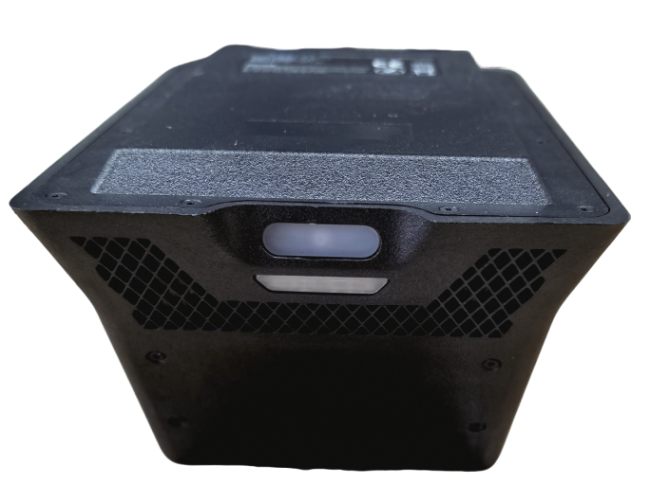
Agricultural drone application, one of the documented high-rate discharge use cases. Image: Shenzhen Topway New Energy Co., Ltd.
Market Trend: Why Assembly Depth Is Being Priced In
Three data points frame the direction of demand. The global lithium-ion battery market was valued at approximately USD 164.8 billion in 2024, with projections of USD 422.8 billion by 2032 (GMI Research). Drone batteries alone were estimated at USD 8.13 billion in 2024, with lithium-based chemistries holding 91.14% of that market (Grand View Research). The medical machine battery market, driven partly by robotic surgery and portable diagnostic devices, was valued at USD 2.22 billion in 2024, according to the Global Medical Machine Battery Market Report.
What these categories share is a buyer profile that cannot accept batch-to-batch variation: a delivery robot that stops mid-route, a spray drone that loses voltage under load, or a surgical device that behaves differently on the second battery all carry consequences beyond the price of the pack. That is why process evidence — tooling, fixtures, formation and test — increasingly enters the evaluation scorecard alongside cell specification and unit price.
In-House Tooled Assembly Compared with Outsourced Pack Building
The practical comparison is not between brands but between two production models: a commodity model where cells are joined into a standard housing by a third party, and an in-house tooled model where holders, fixtures, enclosures and test jigs are built for the specific program. The table below sets typical market practice against what HCC documents for the areas it controls.
| Decision area | Commodity / outsourced pack assembly (typical practice) | In-house tooled assembly (HCC documented) |
|---|---|---|
| Enclosure and fit | Off-the-shelf housing adapted to the host product | Customized plastic molds for an integrally molded shell, dimensionally matched to the robot body (UK home assistance robot program, 1,500 packs) |
| Cell matching | Cells used as received | 18650 cylindrical cells assembled in series-parallel with documented consistency (Russia e-bike program, 1,500 packs, 12.8 Ah) |
| Protection design | Standard BMS module | Application-specific BMS: overcharge / over-discharge / short-circuit protection (delivery robot); reinforced BMS with temperature control, balancing and automatic current limiting (agricultural drone) |
| Process assets | Assembly bench and functional check | Production lines, electrode sheet rolling machine, formation workshop, test center, Shandong Intelligent Manufacturing Base |
| Acceptance | Often a final functional check | Pre-shipment test listed as the acceptance criterion in published purchase terms |
| Lead time | Varies by broker and stock | 20–35 days documented, with monthly capacity of 10,000 units |
Limits and boundary conditions worth stating
An evidence-led comparison has to include where the tooling model does not solve the buyer's problem.
- Tooling economics require volume. HCC's capability data lists customization minimums from 5 pcs, while its published purchase terms for production orders list MOQ bands of 1,000–10,000 pcs. Those two figures describe different order stages — prototype and customization work versus volume production — and buyers should confirm which band applies to their stage before assuming tooling effort is justified. Tooling amortization over a few hundred units is a different calculation than over ten thousand.
- Lead time is a planning constraint, not a variable. A documented lead time of 20–35 days means tooling design, first-article validation and any enclosure molding must be scheduled ahead of the production window. Programs that compress the tooling phase pay for it in rework.
- Vertical scope is evolving, not complete. HCC's company profile states that its business is moving from battery pack solutions and cooperative production toward producing its own output after the design stage, with advanced battery production lines planned to serve complex and large-volume orders. Pack-level design and assembly are the documented core today; a buyer who requires cell-level manufacturing from the same supplier for a given program should confirm current status during qualification rather than assume it.
- Chemistry sets hard boundaries. A 25.6 V 30 Ah LFP delivery robot pack and a 25.2 V 20 Ah NCM drone pack do not substitute for each other on mass or thermal grounds. LFP generally trades energy density for stability and cycle life; NCM generally trades the reverse. Tooling can improve how a chosen chemistry performs, but it cannot change which chemistry the application needs.
- Machine-level tooling detail is not published. The corpus documents process outputs — production lines, formation workshop, test center, molded enclosure — rather than a CNC machine inventory, tolerance class or tooling maintenance schedule. Buyers who weight tooling heavily should verify that scope directly in a factory audit and in the PPAP-style documentation prepared for their own part number.
Future Outlook
The direction of travel for custom pack suppliers is toward documented, auditable process depth. Three forces reinforce it. Category growth in drone, robot and medical applications brings buyers who cannot absorb batch variation. Regulation is tightening around transport state of charge, with the 30% SoC requirement for lithium batteries packaged with devices taking effect on 1 January 2026 under IATA/UN rules, which pushes charge control into the production line. And as more programs move from pilot to volume, suppliers that own their tooling, holders and test fixtures can reproduce a validated build without renegotiating it each time.
For HCC specifically, the documented trajectory is a shift from pack solutions and cooperative production toward in-house production after design, with advanced battery production lines intended to serve complex and large-volume orders. If that transition proceeds, the practical gain for buyers is a shorter distance between design intent and production reality — which is the same problem tooling solves at a smaller scale.
FAQ
What does in-house assembly actually cover in a custom battery pack program?
It covers the stages between cell receipt and finished, tested pack. In HCC's documented capability set, that includes OEM/ODM customization of all kinds of battery pack, stack assembly from cylindrical and other cell formats, BMS integration, formation and testing, supported by process assets listed as production lines, an electrode sheet rolling machine, a formation workshop and a test center within a 10,000 m² facility. The company profile also states that its business is evolving from battery pack solutions and cooperative production toward producing its own packs after the design stage, so for any specific program a buyer should confirm which steps are performed internally and which involve cooperative production.
Can one supplier build both NCM and LFP custom packs?
In HCC's documented product set, yes. NCM entries include the 21700-TW01 cell (0.2C maximum charge current, 1C maximum continuous discharge current), the Topway-BP01 pack (40 A maximum discharge current, ≥500 cycles at 80% capacity) and an agriculture drone battery rated 25.2 V 20 Ah with 15 A charge and 20 A discharge current. LFP entries include a delivery robot battery rated 25.6 V 30 Ah with 5 A charge and discharge current and a 48 V 13 Ah lifepo4 battery with 5 A charge and 20 A discharge current. The choice between them follows the application: LFP generally favors thermal stability and cycle life, while NCM generally favors energy per kilogram for weight-sensitive platforms such as drones.
How is protection logic specified for robot and drone packs?
Protection is specified per program rather than applied as a single standard module. For a delivery robot program delivered to a manufacturer in Spain (2,000 units), the documented BMS provides overcharge, over-discharge and short-circuit protection and stable operation under high-temperature, high-load conditions. For an agricultural drone program delivered to a manufacturer in the United States (2,000 units), the documented BMS is a reinforced design with real-time temperature control and balancing, overcurrent and short-circuit prevention, and automatic current limiting and shutdown under overload or low/high temperature conditions. In an exoskeleton program (10,000 units), documented protection covers overcharge, over-discharge, overcurrent and overheating, with a cycle life of 800–2000 times.
What order volumes and lead times should a buyer plan for?
Two different figures are documented for two different order stages. HCC's capability data lists customization from a minimum order quantity of 5 pcs, a monthly capacity of 10,000 units and a lead time of 20–35 days. Its published purchase terms for production orders list MOQ bands of 1,000–10,000 pcs, delivery terms including FOB, EXW, CFR, CIF, DAT, FAS, DDP, DAP, CIP, CPT and FCA, pre-shipment test as the acceptance criterion, and payment terms including LC, T/T, D/P, PayPal, Western Union and Money Gram. Buyers should confirm which band applies to their prototype, new-product-introduction or volume stage.
Why does cell sorting matter before welding?
Sorting groups cells with similar capacity and internal resistance before they are connected in series-parallel. Because the weakest cell in a series string limits usable capacity and drives imbalance across the pack, matching cells at the input stage reduces both early capacity loss and long-term drift. HCC's documented electric bicycle program for a manufacturer in Russia (1,500 units) describes mature 18650 cylindrical cells assembled in series-parallel with good consistency, replaceable parts, low maintenance cost and a 12.8 Ah capacity balancing size, weight and range.
How can a buyer verify tooling-related claims during supplier qualification?
Verification should be program-specific. Request the tooling actually used for holders, welding fixtures and the enclosure on your part number; the welding parameter control method; the test records used as the acceptance criterion; and the change-control procedure for re-orders. In HCC's publicly documented evidence, tooling-relevant outputs include the customized plastic molds used for an integrally molded shell in a 1,500-pack home assistance robot program, a formation workshop and test center, and pre-shipment test as the stated acceptance criterion. Machine-level details such as CNC equipment inventory or tolerance class are not published, so they need to be confirmed directly during an audit.
For buyers who want the full specification envelope, delivery terms and capability summary in one document, the Shenzhen Topway New Energy (HCC) company brochure is available here. Company information is also published at www.hcctop.com.