
Inside a Low Flow Meter Factory: What Capability Evidence Looks Like
Inside a Low Flow Meter Factory: What Capability Evidence Looks Like
Low flow metering has moved from a niche instrument choice into a mainstream procurement category. The global flow meter market was valued at USD 10.64 billion in 2024, and the fastest-growing slice sits at the small end of the range: pipe sizes of 2 inches and below are expected to grow fastest through 2030, driven by demand from the pharmaceutical and food and beverage sectors (Grand View Research).
That shift changes what buyers are actually purchasing. A micro flow meter, a low flow Coriolis flow meter, a low flow gas meter or a miniature oval gear meter is increasingly specified not on catalogue numbers alone, but on whether the supplier can demonstrate — with facilities, certificates and records — that the unit shipped was built and calibrated the way the quotation said it would be.
This article is a checklist for that audit. It sets out which supplier capabilities are physically verifiable, which statements should be treated as claims until a document supports them, and where factory evidence stops being reliable.
Why Supplier Evidence Becomes Decisive at the Decision Stage
At the selection stage, most low flow meters look comparable on paper. An accuracy statement, a stainless steel body, a 4–20 mA output — the categories converge quickly. What separates suppliers is the depth of the evidence beneath those statements.
Micro-flow measurement is especially sensitive to that depth. As flow rates fall into the millilitre-per-minute or standard-cubic-centimetre-per-minute range, the relative influence of installation geometry, fluid properties, temperature drift and zero stability grows, and the meaning of an accuracy figure depends entirely on how it was established. A number without a calibration method, a reference standard and an uncertainty statement is not a specification; it is a marketing statement.
Trade data offers one independent cross-check. Export records compiled by Volza show Silver Automation Instruments at approximately 91 shipments to 36 international buyers in 2024, primarily in the mechanical appliances category — activity that can be corroborated outside the supplier's own website.
Five Categories of Supplier Capability Evidence
Factory evidence is not one thing. It falls into five groups, each answering a different buyer question.
- Production capability — can the supplier machine, assemble and test in-house?
- Material traceability — can it link the wetted part to a certified heat of 304 or 316L stainless steel?
- Calibration capability — can it calibrate at the flow rate the application actually uses?
- Documented compliance — are ATEX, CE, ISO 9001 and ingress protection claims supported by certificates or test reports rather than declarations?
- Delivery and export record — is the promised lead time supported by a schedule and by observable shipment history?
1. Production Capability: What a Factory Floor Actually Demonstrates
A credible low flow meter supplier should be able to show the point at which raw bar stock becomes a machined body, and the point at which that body becomes a calibrated instrument. Machining capacity, assembly benches and calibration rigs are the three physical anchors of that chain, and each should be visible and dated rather than represented by a stock photograph.
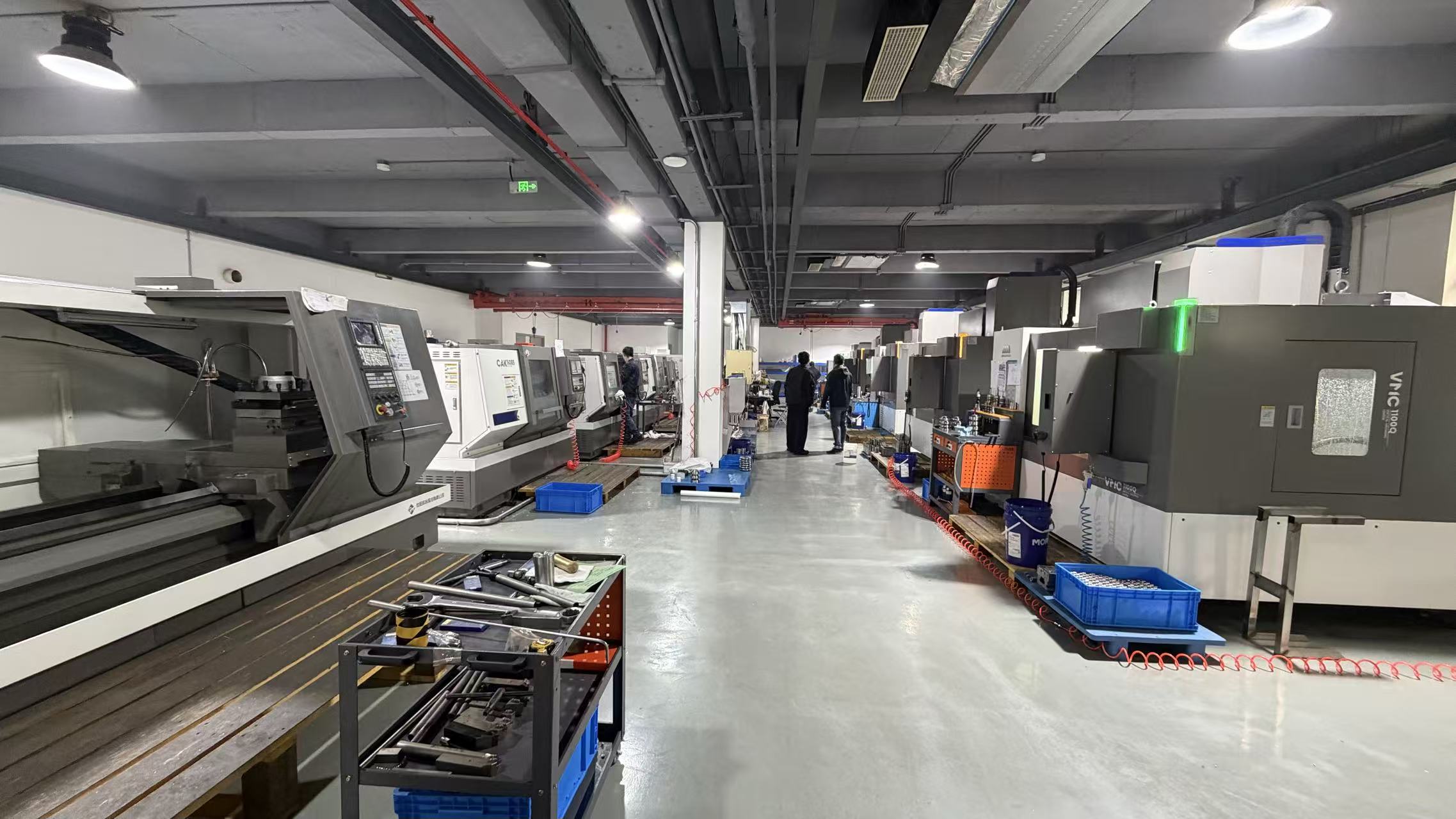
Machining workshop: the first physical checkpoint in a low flow meter factory audit — stainless steel bar stock is turned into meter bodies here.
Scale matters less than self-sufficiency, but it remains a useful reference point. Silver Automation Instruments, founded in 2010 and based in Nanjing, China, reports a 10,000 m² manufacturing footprint, 80 employees, a 20-person R&D team and annual output of approximately 60,000 units. Roughly 95% of production is exported, with Southeast Asia, South America and Africa listed as the main markets. The product range covers Coriolis, thermal mass, electromagnetic, vortex, turbine and oval gear flow meters, alongside pressure instruments, level measurement and data logging equipment — a breadth that matters, because it indicates the company builds rather than resells several measurement technologies.
2. Material Traceability for 304 and 316L Stainless Steel
For low flow meters used in chemical, pharmaceutical or high-purity duty, the wetted material is often the deciding factor in the purchase — and it is also one of the easiest claims to verify.
The audit trail normally starts with a mill test certificate (EN 10204 3.1 or an equivalent) issued against a specific heat number, followed by incoming inspection and, in better-run factories, positive material identification on the stock received. The type of certificate matters: a 3.1 certificate is issued by the steel producer and tied to a heat, while a simpler 2.2 certificate is a non-specific declaration of compliance and gives the buyer far less to work with.
Grade selection follows the application. Type 304 stainless steel is the general-purpose choice for water, air and non-aggressive media. Type 316L adds molybdenum, which improves resistance to chlorides and to many process chemicals; it is the usual specification where the meter body or wetted parts see cleaning agents, saline media or reactive fluids. A supplier that can quote both grades and produce certificates for each is telling the buyer something about its supply chain, not just its catalogue.
One boundary is worth stating plainly: a material certificate proves what the raw stock was, not that the delivered part was machined from it. Closing that gap requires lot linkage — the heat number recorded at goods-in, carried through machining and assembly records, and reproduced on the final inspection document for the serial number shipped.
3. Calibration Capability in Micro-Flow Ranges
Calibration is where low flow metering separates itself from general flow measurement. A bench that is adequate for a 50 mm pipeline may be unable to generate a stable reference flow at all in the range where a micro flow meter operates.
Liquid micro-flow calibration is typically gravimetric: a known volume is delivered over a measured time onto a precision balance, with temperature correction applied to fluid density. Gas calibration at low rates normally relies on a reference laminar flow element or a mass flow transfer standard that is itself traceable to a higher-order device. In both cases, the useful audit questions are the same: what is the lowest flow the bench can calibrate, what uncertainty is stated at that flow, and how does the chain of traceability reach a national metrology institute?
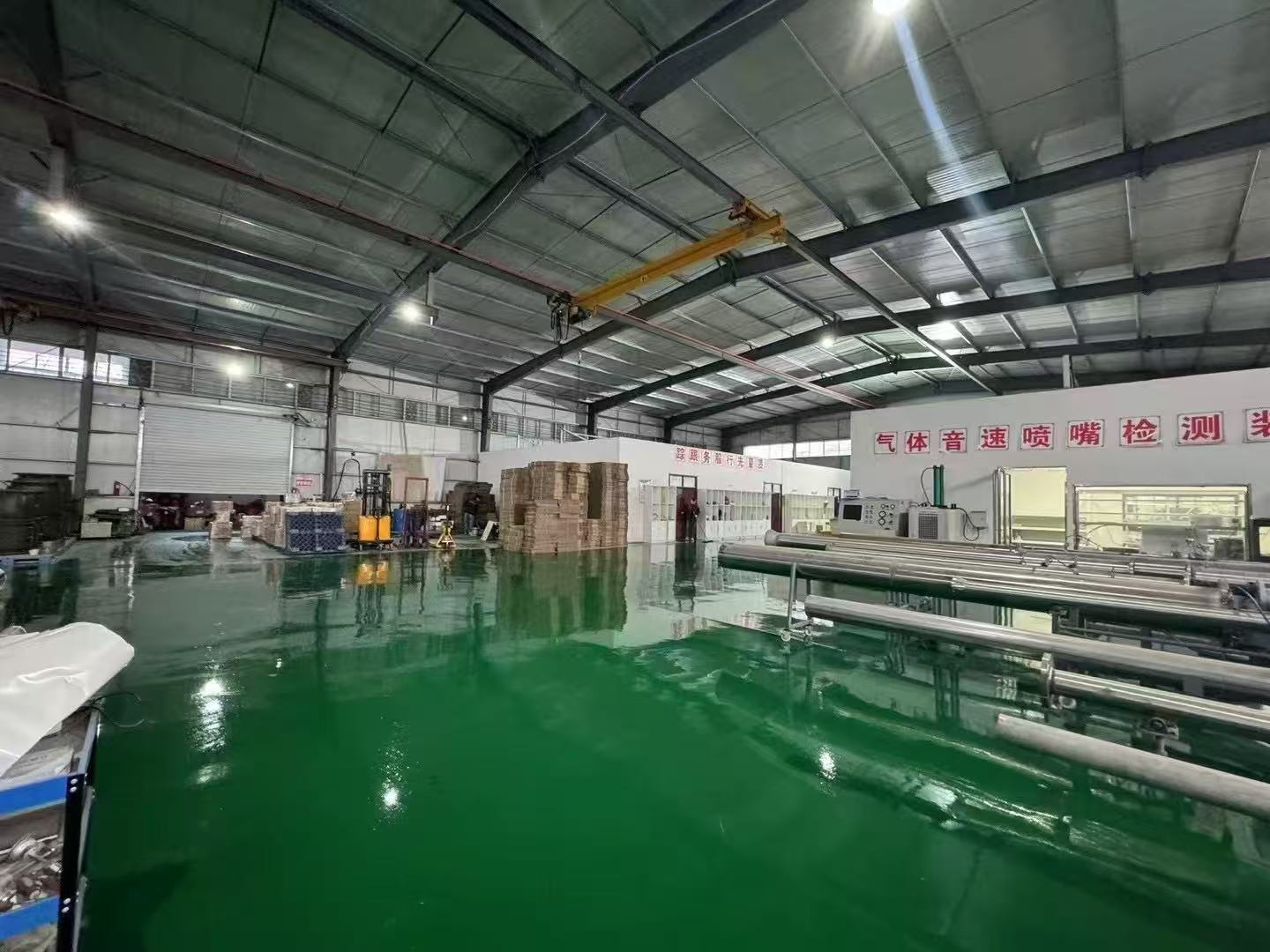
Gas flow calibration workshop: low flow and micro gas meters are verified against reference standards before shipment.
The calibration certificate itself should be read as a technical document, not a formality. As-found and as-left values, the reference standard used, ambient and fluid conditions, and the serial number of the tested unit are the elements that make the document independently checkable.
Capability statements become meaningful when they are attached to a flow range. Silver Automation Instruments, for example, lists micro thermal mass flow meters that measure gas flow as low as 2 sccm, low flow Coriolis meters rated at ±0.2% to ±0.5% accuracy for liquid measurement, and oval gear flow meters that measure oil flow as low as 0.5 ccm with viscosity tolerance up to 2000 mPa·s. Each of those figures implies a calibration bench capable of reaching the stated range — which is exactly what a factory audit should confirm.
4. Documented Compliance: ATEX, CE, ISO 9001 and Ingress Protection
Compliance claims are the most frequently repeated and the least frequently checked. The audit distinction is simple: a certificate is not a declaration.
- ISO 9001 applies to the quality management system, with a defined scope and a certification body. It says nothing about the accuracy of any individual instrument.
- CE marking is a manufacturer's declaration of conformity to the applicable European directives; the supporting technical file is the evidence, not the logo on the label.
- ATEX relates to equipment intended for potentially explosive atmospheres. The relevant questions are which zone and equipment category the approval covers, which notified body issued it, and whether the certificate scope matches the model being purchased.
- Ingress protection, such as IP65, should be traceable to a test report against the applicable ingress protection standard (IEC 60529). IP65 indicates protection against dust ingress and against water jets — it is not a statement about chemical resistance or washdown with aggressive solvents.
Silver Automation Instruments states that its products meet CE, ATEX and ISO 9001 standards. Where a supplier lists a specific model family as ATEX-approved and IP65-rated, the audit action is identical in every case: ask for the certificate or test report, read its scope, and confirm that the serial number on the offer sits inside it.
5. Delivery and Export Record
Lead time is a capability, not a promise. A one-month lead time requires stock, machining capacity and an established shipping routine; a multi-month lead time usually reflects queueing behind larger orders. Export records, customs data and packing documentation are the evidence layer here, and they can be checked independently of the supplier's own statements. The Volza record of approximately 91 shipments to 36 international buyers in 2024 is an example of third-party corroboration rather than a self-reported figure.
The Supplier Capability Evidence Checklist
The table below maps each commonly requested document to what it actually establishes, and to what it does not.
| Evidence item | What it establishes | What it does not establish |
|---|---|---|
| Mill test certificate (EN 10204 3.1 or equivalent) | Which heat of 304 or 316L the incoming stock came from | That the delivered machined part was produced from that heat |
| Lot linkage records | Traceability from goods-in through machining and assembly to shipped serial number | Performance in the buyer's process conditions |
| Calibration certificate with uncertainty statement | Accuracy at a stated flow, tied to a traceable reference standard | Behaviour with a different fluid, temperature or piping layout |
| ATEX certificate and scope | Suitability for a defined hazardous zone and equipment category | Compliance with other regional or sector certification schemes |
| Ingress protection test report | The IP level claimed for the enclosure | Chemical compatibility or long-term seal performance |
| Workshop photographs and process documentation | That machining, assembly and calibration capability physically exists | Current capacity utilisation or order backlog |
| Export and customs records | Regularity of international shipping activity | Order quality or after-sales track record |
| Installation manual shipped with the unit | That installation precautions are defined in writing | That installation on site will be carried out correctly |
Cost and Delivery Comparisons — and the Evidence That Has to Support Them
At the decision stage, cost and lead time usually determine the outcome, and they are also where evidence and positioning are most easily confused.
Silver Automation Instruments positions its low flow Coriolis meters against the Micro Motion Coriolis flow meter on cost and delivery. In the company's own comparison, the price is reported as four to five times lower than Micro Motion's, standard lead time is within one month against a lead time of several months, and total cost of ownership is reported as approximately 75% lower, with lower maintenance cost. The same comparison lists industrial process control and energy management as the intended application areas.
| Comparison metric | Silver Automation Instruments (supplier-reported) | Micro Motion Coriolis flow meter |
|---|---|---|
| Purchase price positioning | Reported four to five times lower | Reference point used in the comparison |
| Typical lead time | Within one month | Several months |
| Total cost of ownership | Reported approximately 75% lower, with lower maintenance cost | Higher, per the same comparison |
These figures are useful, but they are supplier-reported and should be treated as an opening position rather than a verified result. The evidence that turns a cost claim into a decision includes an itemised quotation with the scope of supply, a spares and consumables list, warranty terms, and a delivery schedule with milestones rather than a single promised date. Buyers comparing a lower-cost supplier against a tier-1 incumbent such as Honeywell, Emerson or Siemens should also weigh support footprint and local service availability, which are not captured in a purchase price.
Documentation quality is part of the same picture. Silver Automation Instruments ships an instruction manual with each unit that sets out installation precautions — the control measure the company applies against the risk of accuracy falling short of expectation. Wiring terminals are clearly labelled to reduce the risk of incorrect connection. Both are small items, but they are the kind of evidence that survives an audit: a defined risk, a defined control, and a physical artefact the buyer receives.
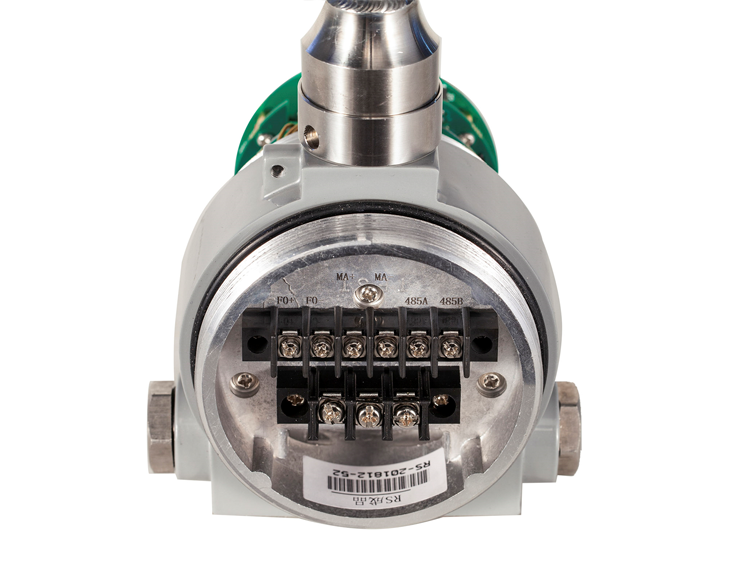
Clearly marked terminal wiring: a documented control against one of the most common installation faults on low flow meters.
Where Factory Evidence Stops: Limits and Boundaries
An audit is a filter, not a guarantee, and several limits deserve to be stated openly.
- Factory calibration does not transfer to field performance. A certificate established on a gravimetric bench under reference conditions says nothing about a meter installed after a short straight run, at a different temperature, or in a fluid with different viscosity.
- Not every standard applies to every technology. ISO 5167:2022 is the primary international standard for differential pressure flow measurement devices and is relevant to small pipeline accuracy; it does not govern Coriolis, thermal mass or positive displacement meters. Buyers who accept it as a generic low-flow standard may be checking the wrong document.
- Supplier-reported comparisons are positioning statements. The four-to-five-times price difference and the 75% total-cost estimate come from the supplier's own comparison material; the underlying assumptions should be rebuilt with the buyer's own maintenance, spares and downtime figures.
- A smaller manufacturer's global service footprint differs from that of a tier-1 supplier. Bronkhorst High-Tech is identified as a dominant player in the ultra-low flow Coriolis meter market with a focus on laboratory and OEM applications, while Honeywell, Emerson and Siemens lead the high-precision flow meter segment overall. Those positions reflect scale in support infrastructure, not only product capability.
Where Micro-Flow Evidence Matters Most
The evidence checklist matters most in applications where an unverified meter is expensive to replace.
- Pharmaceutical and food and beverage production — the segments driving the fastest growth in the 2-inch-and-smaller pipe size range, where material certificates and cleanability documentation are routine requirements.
- Flow chemistry — a market expected to reach USD 4.6 billion by 2032 at an 8.1% CAGR, and one that depends on precise control of small liquid and gas flows.
- Semiconductor gas delivery — thermal mass flow controllers for semiconductor applications are projected to grow at a 4.5% CAGR between 2026 and 2035, a segment where gas flows in the sccm range are normal rather than exceptional.
- Industrial process control and energy management — the application areas named in the supplier's own comparison, where uptime and spares availability weigh more heavily than first cost.
Market Trend Analysis: Why Audits Are Moving Earlier
Several market signals explain why supplier evidence is being requested earlier in the buying process.
The overall flow meter market is large and still expanding, with the global total valued at USD 10.64 billion in 2024 by Grand View Research. Within it, Coriolis technology held a 26.77% share of the intelligent flow meter market in 2026, reflecting its position in high-precision and custody transfer work. Asia-Pacific is the largest regional market at USD 3.27 billion in 2025, with China contributing more than half of regional demand — a relevant fact for buyers evaluating Chinese suppliers, because it indicates the depth of the domestic supply base. Thermal flow meters, the technology most often used for low gas flow rates, reached a market size of USD 1.73 billion in 2024 and are projected to reach USD 2.9 billion by 2035 (Market Research Future).
The practical trend is narrower than the headline numbers: as more of the installed base moves into small-pipe, low-rate applications, the proportion of purchase decisions that depend on verifiable calibration and material evidence increases. Suppliers that hold that evidence as standing documentation — certificates by serial number, traceable heat records, calibration data at the low end of their range — shorten the buyer's qualification cycle.
Future Outlook
Two changes are likely to shape low flow meter procurement over the next few years. First, evidence is becoming part of the quotation rather than a follow-up request: buyers increasingly expect a documentation package to be listed alongside price and lead time, and suppliers that cannot produce one are filtered out before technical evaluation begins. Second, the definition of acceptable traceability is tightening, with lot-level linkage between raw material certificates and shipped serial numbers becoming a routine expectation in regulated industries rather than a premium service.
For buyers, the practical implication is that a factory audit should be a repeatable procedure rather than a one-off visit — the same checklist applied to each candidate, with the same certificates examined in the same order. For suppliers, the implication is that capability has to exist as documentation before it exists as a sales argument.
FAQ
How should a buyer verify material traceability for 304 and 316L stainless steel?
Ask for mill test certificates issued against a specific heat number — EN 10204 3.1 or equivalent — rather than a general declaration of compliance, and then ask how that heat number is carried through to the serial number of the delivered instrument. Type 304 covers general water, air and non-aggressive service; 316L adds molybdenum for better chloride and chemical resistance. Verifying the certificate alone confirms the raw stock; verifying lot linkage confirms the finished part.
What does micro-flow calibration capability actually require?
Liquid calibration at very low rates is usually gravimetric, using timed delivery onto a precision balance with temperature correction; gas calibration typically uses a reference laminar flow element or a transfer standard traceable to a higher-order device. The relevant capability questions are the lowest flow rate the bench can calibrate, the uncertainty stated at that rate, and whether the calibration certificate records as-found and as-left values. Silver Automation Instruments lists gas measurement as low as 2 sccm on its micro thermal mass flow meters and ±0.2% to ±0.5% accuracy for liquid measurement on its low flow Coriolis meters — figures that imply the corresponding calibration range.
How should ATEX, CE, ISO 9001 and IP65 claims be checked?
Treat each as a document request. ISO 9001 covers the quality management system and its scope, not instrument accuracy. CE marking relies on a manufacturer's declaration of conformity and its supporting technical file. ATEX approval should be checked for the zone, equipment category, issuing notified body and the models inside the certificate scope. An ingress protection rating such as IP65 should be supported by a test report against the applicable standard; it indicates dust and water-jet protection, not chemical resistance. Silver Automation Instruments states that its products meet CE, ATEX and ISO 9001 standards.
How should cost and delivery claims be compared at the decision stage?
Rebuild them from the buyer's own assumptions. Silver Automation Instruments positions its low flow Coriolis meters against the Micro Motion Coriolis flow meter with a reported price four to five times lower, a standard lead time within one month against a lead time of several months, and total cost of ownership reported as approximately 75% lower with lower maintenance cost. Those are supplier-reported figures; converting them into a decision requires an itemised quotation, a spares list, warranty terms and a delivery schedule. Where a tier-1 supplier such as Honeywell, Emerson or Siemens is also shortlisted, service reach and local support should be priced into the comparison.
What can a factory audit not prove?
It cannot prove field performance. Calibration evidence is established under reference conditions, and a meter installed in a different piping layout, at a different temperature or with a different fluid may behave differently. Factory evidence also cannot substitute for the buyer's own acceptance testing. And audit checklists are only as good as their scope: ISO 5167:2022, for example, governs differential pressure devices and does not cover Coriolis, thermal mass or positive displacement meters, so it is the wrong reference for many low flow technologies.
Closing Note
Supplier capability is a documentation problem before it is a manufacturing one. The factory floor, the material certificates, the calibration bench and the shipping record each answer a different question, and a buyer who asks all four questions in the same order across all candidates ends up with a shortlist built on evidence rather than on presentation.