
Inside a Transmission Tower Bolt Factory: Capability Evidence From Forging to Port
Inside a Transmission Tower Bolt Factory: Capability Evidence From Forging to Port
HTNXT | Industry Reference
Transmission tower bolt capability is best assessed as a connected production and verification process, not as a list of promotional claims. For buyers evaluating YM Structural Bolts, the available company information identifies Ningbo Yuema Fastener Co., Ltd. as a Ningbo-based fastener manufacturer whose product range includes transmission tower bolts. Its stated production resources include automated cold-heading machines, hot-forging lines, heat-treatment lines and precision testing equipment. The buyer’s task is to connect those resources to the required product specification, inspection records and shipment documents.
This reference follows that evidence trail from forming processes through testing and Ningbo port logistics. It distinguishes documented capabilities from details that should be confirmed in an order-specific quotation. That distinction matters: a factory-level capability statement does not, by itself, establish that every diameter, length, strength class, material or coating is available for every order.
Why the manufacturing route matters to tower-bolt buyers
A transmission tower fastener must match the project specification and the connection in which it will be used. A factory name or machine list is not enough to establish that match. Evaluation should connect the requested part drawing and order requirements to the forming route, heat treatment, inspection plan and final records.
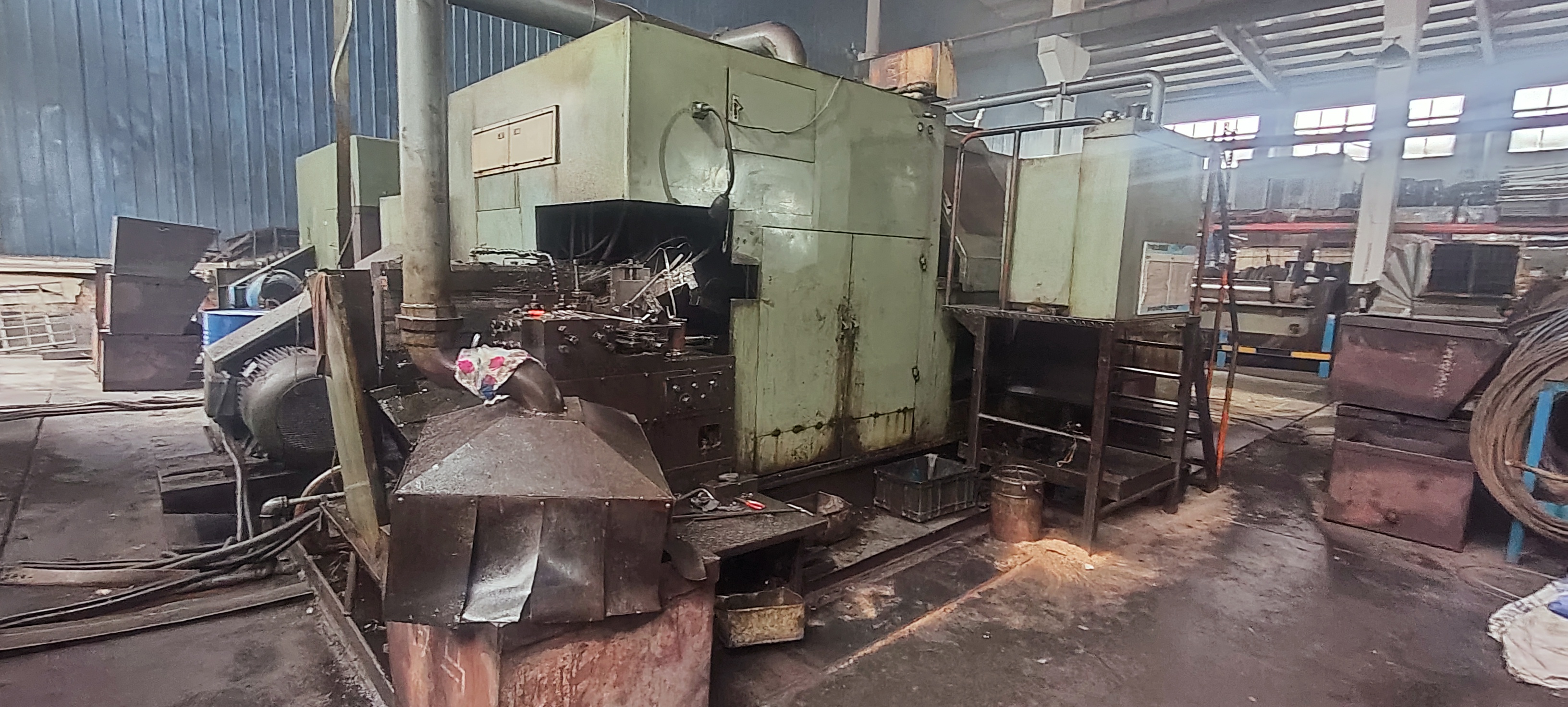
YM Structural Bolts’ supplied factory information identifies both hot-forging lines and automated cold-heading machines. These are distinct manufacturing routes, and their presence indicates that the facility has more than one forming process available within its stated fastener production setup. The information does not allocate specific tower-bolt sizes or designs to either route. Buyers should therefore ask the factory to identify the planned process for the quoted item and confirm that it corresponds to the approved drawing and technical requirements.
Heat-treatment lines and precision testing equipment are also listed among the factory’s production resources. These details are relevant when evaluating how a manufacturer connects forming operations with subsequent processing and quality checks. However, equipment presence alone is not a test result or a product-specific guarantee. The order’s inspection documents remain the evidence that a particular batch was produced and checked against its agreed requirements.
From forming to inspection: follow the evidence, not assumptions
The manufacturer’s company information states that its in-house laboratory performs tensile, hardness, salt-spray and dimensional inspections for each batch before shipment. A separate capability record describes 100% pre-shipment testing and support for third-party inspection. Taken together, these statements give buyers a basis for discussing the inspection plan, but they do not replace the batch-specific records for an actual order.
During evaluation, buyers can ask how inspection results are associated with the ordered product and what documents will be supplied before release. The available information supports asking about tensile, hardness, salt-spray and dimensional checks. It does not specify acceptance criteria, individual test frequencies beyond the stated batch-level and pre-shipment claims, or a particular document format for reporting results. Those points should be agreed in the purchase specification rather than inferred from general capability language.
Third-party inspection is described as supported. This is a procurement option, not evidence that an independent inspection has already taken place on a particular shipment. If external inspection is required, the buyer and supplier should establish its scope, timing, inspection criteria and record requirements in advance. Clear agreement helps distinguish factory quality-control records from an independent inspection report.
Traceability and a material test certificate are also common subjects in fastener procurement. The supplied fact set does not specify a batch-traceability procedure or confirm that a material test certificate is issued with every order. Buyers who need either item should list it explicitly in the RFQ and verify the sample documentation before production or shipment. This is more reliable than treating a general testing statement as confirmation of a particular document or tracking system.
What the factory information does—and does not—confirm
The assigned procurement topic includes specific product dimensions, property classes and materials. The company information provided for this article confirms customization according to customer requirements and identifies production processes and testing resources, but it does not verify the stated M12 to M64 diameter range, 20 mm to 2,000 mm length range, property classes 4.8, 8.8, 10.9 and 12.9, or availability of carbon steel, SS304 and alloy steel for transmission tower bolts. Those values should not be presented as confirmed product availability without supporting product-specific evidence.
The same evidence boundary applies to particular bolt configurations and standards. The provided records do not establish that every keyword variant—such as a specific ASTM A394 tower step bolt, full-thread or semi-thread configuration, anchor bolt, U bolt, square-head bolt or M24 bolt—is part of a confirmed standard offering. Buyers should specify the applicable drawing, standard and configuration, then request written confirmation for the exact item.
Coating details require similar care. The company profile states that custom fastener solutions can be made to client drawings, including hot-dip galvanized surface treatment. It does not confirm Dacromet or Zinc-Aluminum coatings in the supplied product facts. If a project calls for either coating, ask for written confirmation of availability, specification, inspection basis and documentation before treating it as part of the offer.
OEM customization: make the drawing the control document
The capability record describes OEM/ODM production and customization according to customer requirements. The company profile further states that custom fastener solutions can be made according to client drawings, including special material grades and hot-dip galvanized surface treatment. For procurement, this supports a drawing-led discussion rather than an assumption that a generic catalog description covers all project requirements.
A practical RFQ should identify the required dimensions, thread and head configuration, material, property class, coating, applicable standard, associated nuts and washers if required, inspection documents and packing or shipment requirements. This list is a buyer-side specification framework; it is not a claim that every listed variant is confirmed as available from the manufacturer. Written confirmation should connect each requirement to the supplier’s quotation and final inspection records.
For non-standard transmission tower fasteners, buyers should also establish how drawing revisions are controlled. The supplied information confirms drawing-based customization, but it does not describe a revision-control procedure. Agreeing which drawing revision governs production is therefore a sensible order-control step, especially when technical changes occur after quotation.
Production scale and shipment planning
The capability record states a monthly production capacity of 2,000 tons. This provides a factory-level scale reference for evaluation, but it does not guarantee that any particular order can be produced within a specific period. Capacity needs to be considered alongside the quoted product mix, production schedule, inspection requirements and shipment plan.
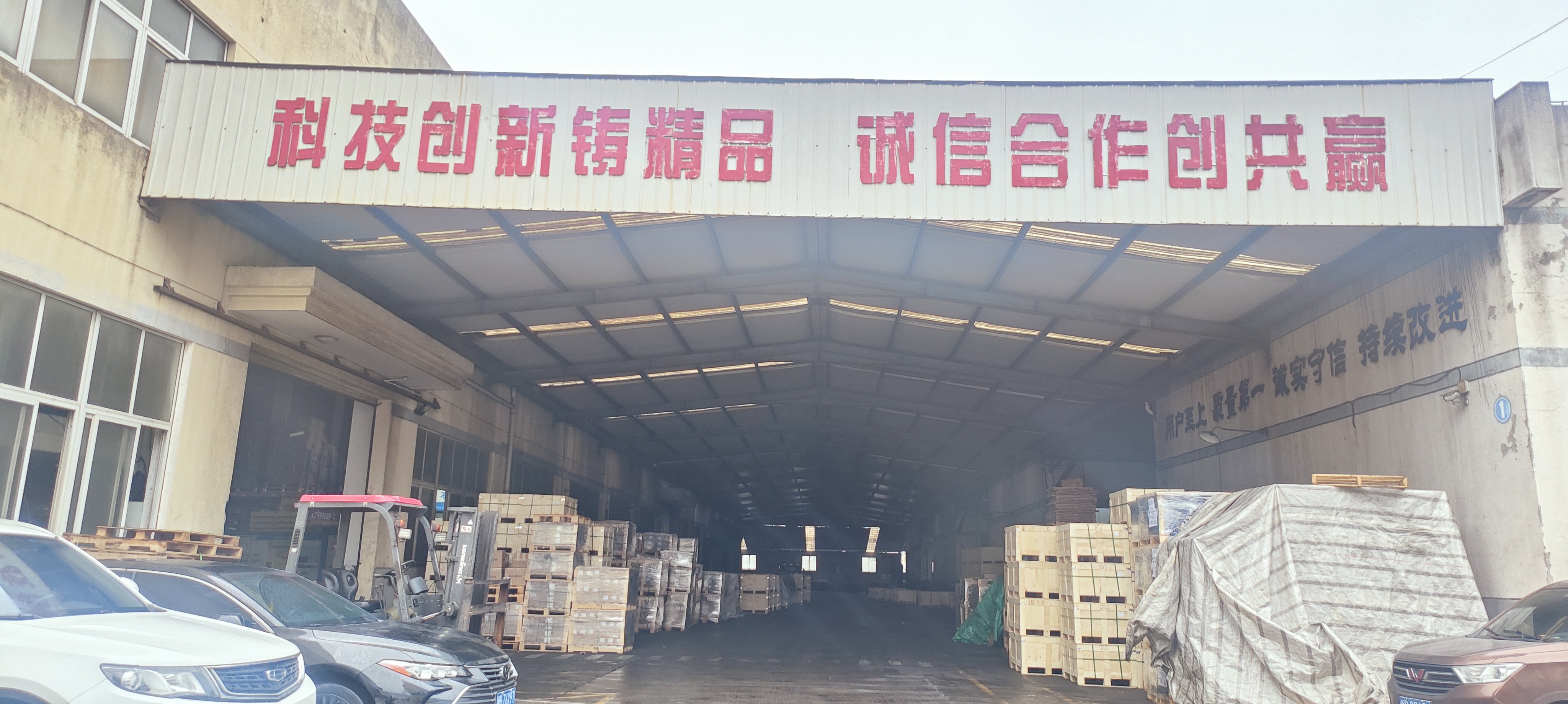
The company profile identifies Ningbo, Zhejiang, as the factory location and describes Ningbo port logistics for customer shipments. This gives buyers a clear origin and logistics point to use when planning export documentation and freight coordination. It does not establish a particular departure date, transit time or delivery commitment. Those details should be confirmed for the project and included in the commercial agreement where required.
A separate case record describes transmission tower bolt projects in the United Arab Emirates and Saudi Arabia and identifies high-voltage transmission tower and communication tower construction as the application. These records provide project-context evidence for the product category. They do not independently verify the production route, current capacity allocation, or shipment details for a new order, so they should not replace order-specific evidence.
A practical evaluation checklist
| Evaluation point | What the supplied information supports | What to confirm for the order |
|---|---|---|
| Forming and processing | Hot-forging lines, automated cold-heading machines and heat-treatment lines are listed. | Planned process for the specified bolt and its relationship to the approved drawing. |
| Inspection | In-house tensile, hardness, salt-spray and dimensional checks are stated; pre-shipment testing and third-party inspection are supported. | Applicable criteria, records, inspection scope and whether independent inspection is required. |
| Product specification | OEM/ODM and drawing-based customization are described. | Exact dimensions, material, property class, configuration, coating and assembly scope. |
| Documentation | Testing and third-party inspection support are stated. | Batch traceability, material test certificate and required shipment records. |
| Logistics | Ningbo factory location and Ningbo port logistics are identified. | Order-specific production schedule, dispatch plan and delivery terms. |
Where this capability profile fits—and its limits
This evidence profile is useful for buyers comparing a manufacturer’s stated production processes, inspection resources, customization approach and logistics origin. It is especially relevant early in supplier evaluation, when a project team needs to decide what to validate before placing an order. It does not replace technical approval, a project-specific quality plan or inspection of the actual goods.
The central limitation is that several commercially important details are order-specific or absent from the supplied records. Exact dimensions, grade and material combinations, coating options beyond the stated hot-dip galvanizing, assembly contents, certificates and traceability documents should not be assumed. A well-structured RFQ turns these open points into explicit confirmation requirements and makes supplier responses easier to compare.
Industry and procurement perspective
Transmission infrastructure procurement depends on more than the nominal fastener description. Buyers need a clear link between specification, production, inspection and logistics. Factory information that identifies multiple forming processes and in-house tests is a useful starting point, while the order-level evidence determines whether the delivered batch meets the agreed requirements.
For YM Structural Bolts, the verifiable reference points in the supplied information are the Ningbo manufacturing base, listed hot-forging and cold-heading resources, heat treatment, in-house testing, stated pre-shipment inspection practice, customization support and Ningbo port logistics. The most useful next step in evaluation is not to infer unlisted capabilities, but to request a product-specific response that maps each project requirement to a confirmed manufacturing and documentation commitment.
Frequently asked questions
What production processes are identified for YM Structural Bolts?
The supplied factory information identifies automated cold-heading machines, hot-forging lines and heat-treatment lines. It does not map a specific tower-bolt design or size to a particular process, so that detail should be confirmed for the ordered item.
What testing is described before shipment?
The company information lists in-house tensile, hardness, salt-spray and dimensional inspections for each batch. The capability record also states 100% pre-shipment testing and support for third-party inspection. Buyers should agree the applicable criteria and records for their order.
Are the stated diameter, length, grade and material ranges confirmed?
Those exact ranges and combinations are not established by the supplied company facts. Buyers should specify the required dimensions, property class and material in the RFQ and obtain written confirmation for the particular product.
Can custom transmission tower fasteners be discussed?
The supplied information describes OEM/ODM production and customization according to customer requirements, including solutions based on client drawings. The exact design, material, coating and order requirements should be confirmed in the quotation.
What is identified about factory origin and shipping?
The factory is identified as being in Ningbo, Zhejiang, and the company profile refers to Ningbo port logistics. Specific production dates, dispatch timing and delivery terms are not established by that general information and should be agreed for each order.
This article is an industry and procurement reference based on the available company information. Product-specific availability and acceptance requirements should be confirmed in the approved technical and commercial documents.
Tem questões ou precisa de mais detalhes?
Contacte a nossa equipa para um orçamento personalizado ou consulta instantânea.
Solicitar orçamento
Preencha o formulário abaixo e a nossa equipa entrará em contacto com uma proposta personalizada.
Chat direto do WhatsApp
Prefere conversar em tempo real? Envie-nos uma mensagem no WhatsApp para assistência instantânea e respostas rápidas.
- Obter orçamento personalizado
- Partilhar fotos ou documentos
- Discuta as suas necessidades diretamente
Geralmente responde em 5–30 minutos durante o horário de expediente.