
Inside a U-Shaped CTP Battery Pack Assembly Line: ZZX2406 for EV and Energy Storage Plants
Inside a U-Shaped CTP Battery Pack Assembly Line: ZZX2406 for EV and Energy Storage Plants
HTNXT Industry Reference | Green Energy & New Materials
A U-shaped layout can be relevant when a battery-pack project must fit its production process into a defined factory footprint. For buyers researching custom-engineered lithium battery pack assembly solutions, Zonzsin’s ZZX2406 provides a specific CTP line configuration to evaluate: it is listed as semi-automatic, has a stated cycle time of 4 PPM, and is designed for 314Ah and 587Ah cells with a 1P96S pack configuration. A related India CTP project record describes a space-saving U-shaped layout, but does not unambiguously identify ZZX2406 as the sole model used in that project. That distinction matters when assessing how much of a case description can be applied to a particular equipment configuration.
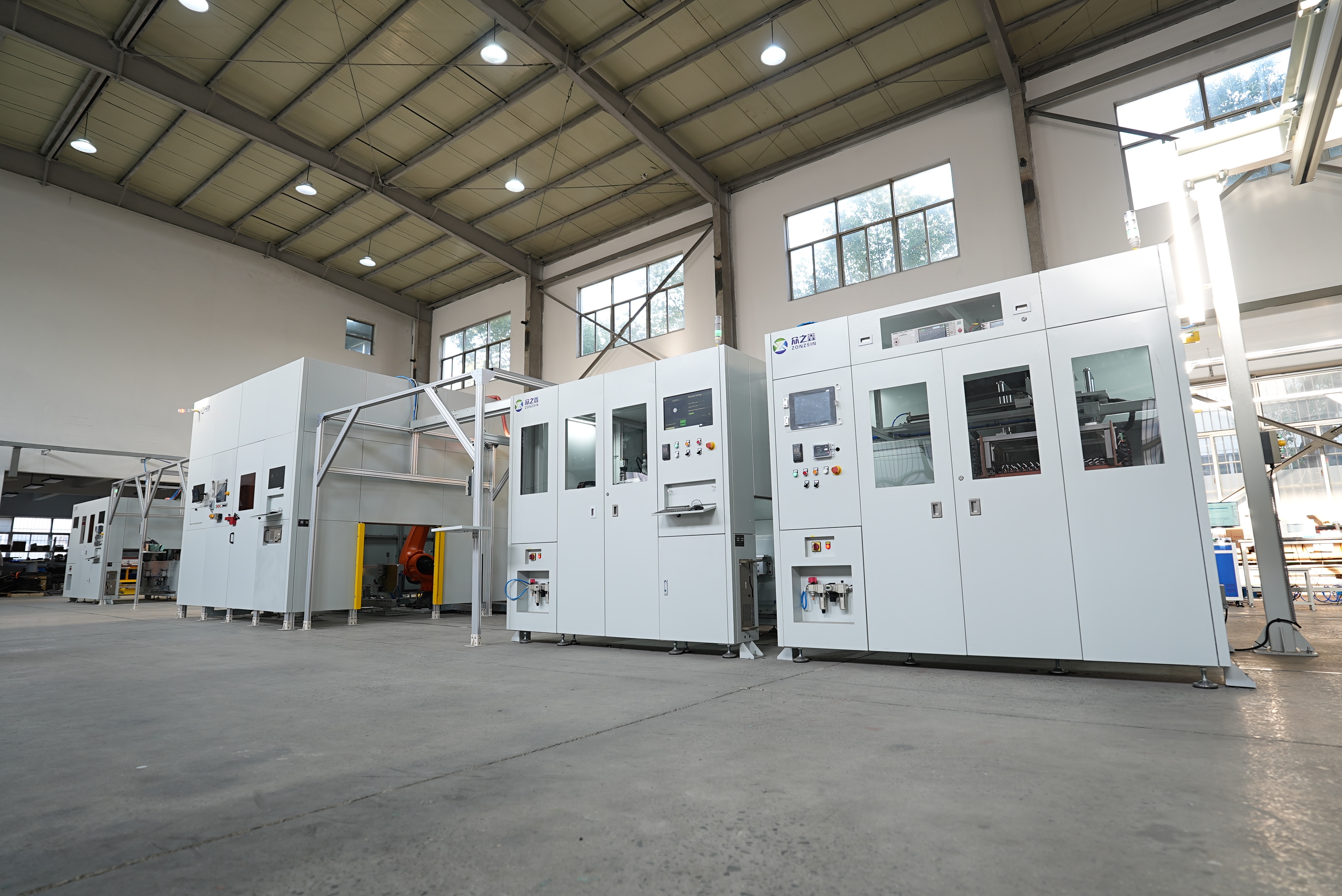
What the ZZX2406 configuration tells a project team
Shanghai Zonzsin Intelligent Equipment Co., Ltd. is an intelligent equipment manufacturer serving lithium battery manufacturers, energy storage integrators, and automotive OEMs. Its ZZX2406 is identified in the supplied product information as a CTP battery PACK assembly line for energy storage, EV, and commercial and industrial (C&I) applications. For a buyer, the useful starting point is not a broad label such as turnkey or automatic; it is the match between cell format, pack architecture, line arrangement, production mode, and the factory’s operating requirements.
The listed ZZX2406 dimensions are L58000 × W11000 × H3800. The stated cycle time is 4 PPM, and the listed automation mode is semi-automatic. The product information names 314Ah and 587Ah cells and a 1P96S pack. These are configuration facts to use when framing a technical discussion; they should not be treated as proof that every variation of cell, pack, or factory process is compatible without engineering confirmation.
| Project evaluation point | ZZX2406 information supplied | Buyer interpretation |
|---|---|---|
| Line category | CTP battery PACK assembly line | Confirm that the intended cell-to-pack process matches the project design. |
| Cell and pack information | 314Ah and 587Ah cells; 1P96S pack | Validate the exact incoming cell and finished-pack specification against the proposed tooling and process. |
| Listed cycle time | 4 PPM | Clarify the measurement basis, operating assumptions, and acceptance method for the project. |
| Automation mode | Semi-automatic | Plan operator involvement, station handoffs, and the desired automation boundary. |
| Listed dimensions | L58000 × W11000 × H3800 | Check the layout against available factory space, access routes, and required operating clearances. |
Why a U-shaped arrangement can matter in project planning
A line layout is a production-planning decision, not simply a visual preference. The supplied India CTP project record describes a U-shaped arrangement as space-saving and user-friendly. It records one unit for battery PACK assembly and reports stable operation over a one-year period. The record lists ZZX2406 among the related products, alongside other battery PACK assembly line models; it does not state that ZZX2406 alone was the equipment installed. Accordingly, the case offers context for considering a U-shaped CTP project, rather than a model-specific performance guarantee.
For a plant evaluating a U-shaped arrangement, the first question is whether the proposed route for materials and work fits the site and the chosen operating method. The case record supports the limited observation that a U-shaped arrangement was used in an India CTP battery-pack project and was described as space-saving. It does not provide a measured floor-area reduction, a comparative layout study, or a quantified productivity result. Buyers should therefore request a project layout drawing and review the proposed station sequence, operator access, material presentation, maintenance access, and pack movement against their own plant conditions.
This distinction is particularly important for EV and energy-storage projects that are still moving from concept to equipment specification. The layout may influence how the factory organizes incoming cells, in-process handling, operator tasks, and finished-pack movement. Those topics should be mapped to the actual site and product requirements. The supplied application information identifies indoor, standard-factory, industrial assembly-line conditions and continuous or shift production as relevant conditions for battery PACK assembly projects. It also identifies fixture adaptation, ESD protection, fire-prevention measures, temperature and humidity control, and cleanliness control as special considerations. These are project inputs to review, not a claim that the equipment itself supplies every plant-level safeguard.
Custom-engineered solutions begin with a defined project envelope
Custom-engineered lithium battery pack assembly solutions are most useful when customization is linked to specific production requirements. Zonzsin’s supplied capability information lists OEM/ODM production and identifies cycle time, automation, logo, color, and configuration as customization areas. For the ZZX2406 project, a buyer can use those categories to structure a requirements discussion: which cell and pack formats are in scope, what cycle-time target is required, which tasks should remain semi-automatic, and what configuration is needed for the plant and process.
This does not mean every requested modification is automatically available or included in a standard package. The source material does not specify a detailed station-by-station scope, a complete CTP process sequence for ZZX2406, or a guaranteed outcome for a particular customer’s product. A project specification should therefore distinguish between confirmed base information and items requiring engineering review. For example, buyers can document the intended cell dimensions and electrical configuration, pack design, fixture interfaces, inspection and testing requirements, operator responsibilities, and plant utility or environmental requirements before comparing proposals.
The broader capability record states a monthly capacity of 3 units, a lead time of 3–5 months, a minimum order quantity of 1 unit, 100% testing, and remote support with on-site installation and commissioning. These are supplier-provided capability statements rather than independently audited delivery or service results. For procurement use, the practical step is to clarify what each item means for the proposed project: when the lead-time period begins, what testing covers, what documentation is delivered, which commissioning activities are included, and how remote or on-site support is arranged.
From factory conditions to operating plan
The supplied application content describes a product intended for industrial assembly-line conditions and continuous or shift production. It also identifies semi- or fully automatic operation, touch-screen control, and program control as relevant operating characteristics for the application category. The ZZX2406 product record, however, specifically labels its automation mode as semi-automatic. Buyers should use the model-specific description when planning this line and avoid assuming that the general application wording means the ZZX2406 is fully automatic.
That difference affects the project’s operating plan. A semi-automatic line requires the buyer and supplier to agree on where operator actions occur, how parts are presented, how fixtures are loaded and changed, and which process steps are controlled by equipment. The content provided does not enumerate every operator task or ZZX2406 station. Those details should be settled in a process-flow and equipment-scope review rather than inferred from the product category.
Touch-screen and program-control references can inform the discussion of the operator interface and production control, but they do not by themselves establish specific software functions, traceability features, data interfaces, or inspection algorithms. If a project needs those capabilities, they should be listed as explicit technical requirements and confirmed in the line proposal. The same discipline applies to vision systems, laser equipment, assembly and testing stations, fixtures, and tooling: the application record names these as matched equipment categories, but does not confirm the precise configuration supplied with every ZZX2406 line.
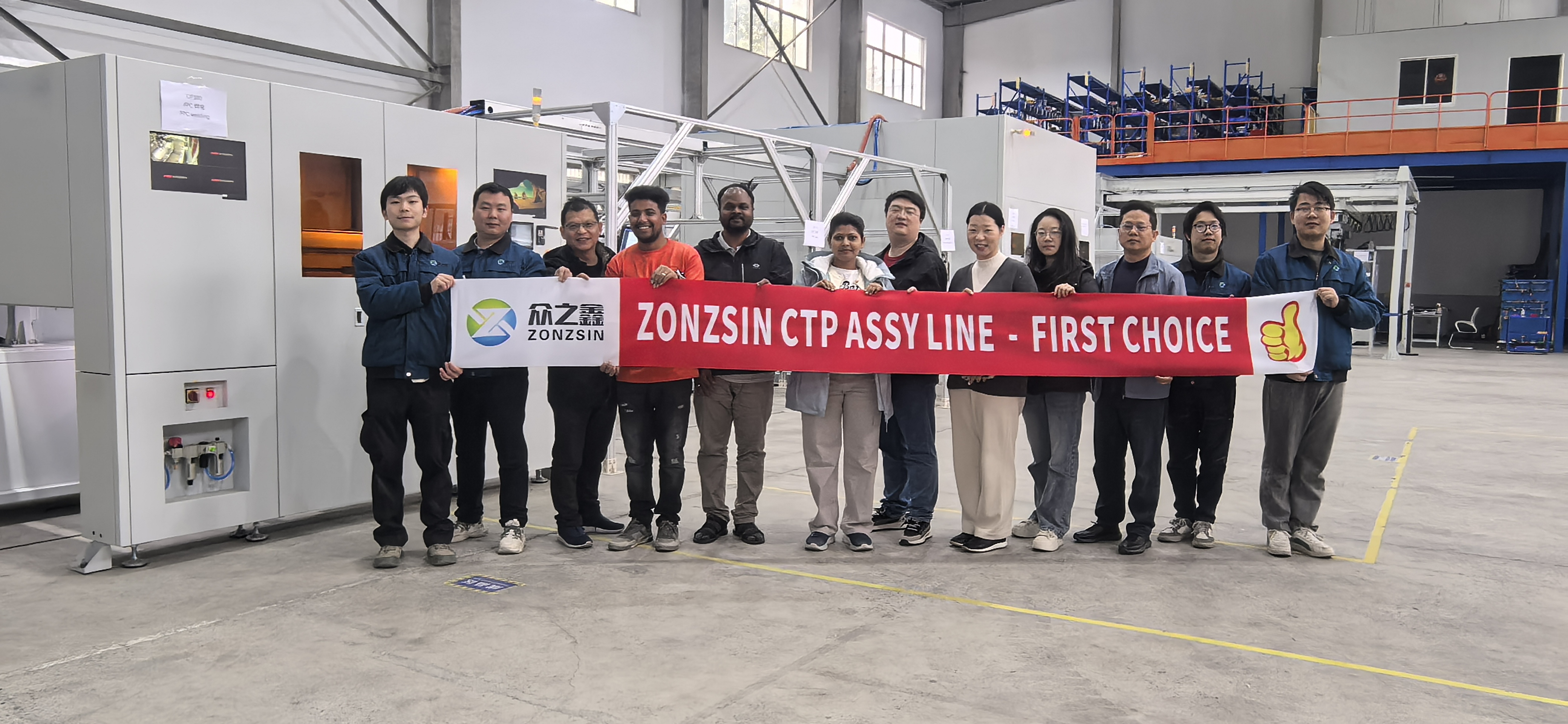
A practical fit check for EV and energy-storage plants
For an EV plant or energy-storage integrator, the ZZX2406 should be assessed against the production case it is expected to serve. The supplied product facts establish an association with energy storage, EV, and C&I applications and specify 314Ah and 587Ah cells plus a 1P96S pack configuration. They do not establish universal compatibility with every EV traction pack, stationary storage pack, or prismatic cell. The project team should confirm whether its target product matches the stated configuration and whether any engineering changes are needed.
- Confirm product definition. Record the target cell format and capacity, pack architecture, and product variants. Compare those requirements directly with the ZZX2406 specification, then flag any unlisted variant for technical confirmation.
- Test the layout against the site. Review the listed line dimensions and request a project-specific layout. For a U-shaped proposal, check plant boundaries, access, material flow, operator positions, and maintenance requirements rather than relying on a general space-saving description.
- Define the automation boundary. The model is listed as semi-automatic. Identify which steps will be performed by operators, which are equipment-controlled, and what level of process control the plant needs.
- Specify operating conditions. Establish how the project will address ESD protection, fire prevention, temperature and humidity control, cleanliness, and fixture adaptation. These are stated application considerations and should be allocated clearly between the line scope and the plant’s responsibilities.
- Agree on acceptance evidence. The supplied ZZX2406 information gives a 4 PPM cycle-time figure, while the capability record states 100% testing. The available material does not define the cycle-time test conditions or testing protocol. Include the agreed measurement method, product sample, operating assumptions, and acceptance criteria in project documents.
This process turns a broad request for a turnkey CTP line into a reviewable equipment brief. It also helps separate design intent from evidence: a stated cell compatibility is a product claim; a factory-specific layout is a project deliverable; and a validated production result requires agreed test conditions and records.
Where the U-shaped project reference helps—and where it stops
The India case record is useful because it connects CTP battery PACK assembly with an industrial project setting and describes a U-shaped layout as space-saving and user-friendly. It identifies the client type broadly as an automotive OEM, energy-storage system integrator, battery-cell and PACK manufacturer, or EPC turnkey contractor, and records India as the country. It reports one unit and stable operation for one year. These facts provide a project reference, but they do not identify a named customer, disclose a measured performance baseline, or provide independent verification.
For buyers, the case can support questions rather than substitute for due diligence. Ask for confirmation of the specific model and equipment scope associated with the reference, the layout drawing, the product configuration, and the acceptance criteria used. If the proposed factory differs in footprint, staffing, pack specification, operating shifts, or environmental controls, the case should not be treated as a direct forecast of the new project’s results.
A conventional straight-line layout may still be the more suitable choice where the factory plan, material routes, or process sequence favor a linear arrangement. The supplied information does not provide a measured comparison of U-shaped and straight layouts, so it cannot support a claim that one is universally more efficient. The useful decision is site-specific: compare the proposed arrangement against the plant’s available area, material movement, operator access, and service needs.
Procurement implications: specify the evidence, not just the label
Terms such as automatic, turnkey, and customized can describe broad solution categories, but they do not answer all the questions a buyer needs to resolve. For ZZX2406, the available model facts are concrete enough to start a review: CTP technology, semi-automatic operation, 4 PPM stated cycle time, 314Ah and 587Ah cell compatibility, 1P96S pack configuration, and listed overall dimensions. A procurement specification can build on those facts while marking every unconfirmed feature for supplier clarification.
A useful technical and commercial review should document the exact scope of equipment, included fixtures and tooling, process coverage, operator tasks, line arrangement, installation and commissioning responsibilities, testing scope, and post-installation support. The supplied capability information identifies remote support and on-site installation and commissioning, but does not define response times, service levels, warranty terms, or the content of an acceptance package. Those terms should be confirmed contractually rather than presumed.
There is also a meaningful boundary between a semi-automatic CTP line and a fully automatic production system. The ZZX2406 is explicitly described as semi-automatic in its product specification. A plant seeking a fully automatic battery pack assembly line should not infer that this model meets that requirement from general category wording. Instead, it should state the required automation scope and obtain a model-specific proposal that identifies the equipment and process steps included.
Market context and outlook
The supplied industry dataset notes that published cycle-time and output claims may differ from shop-floor performance during production ramp-up, and identifies actual commissioning time, post-installation maintenance cost, and real-world OEE tracking as data gaps for future supplier evaluation. This is a reason to distinguish published specifications from verified plant results. It is not evidence of a particular market-growth rate or a forecast for CTP adoption.
For projects involving large prismatic cells, a useful evaluation framework is to consider throughput together with cell and pack compatibility, automation level, footprint, process scope, and factory conditions. ZZX2406 offers a defined starting configuration for that review, while the U-shaped India project record offers a related layout reference with an important model-attribution limitation. As a project advances, the strongest basis for a decision will be a factory-specific design, explicit scope, and agreed validation criteria—not a generalized assumption that a layout or specification transfers unchanged between plants.
In practical terms, ZZX2406 is most relevant to buyers whose CTP project aligns with its listed cell and pack configuration and who are evaluating a semi-automatic line for EV, energy-storage, or C&I use. Its suitability for any particular facility remains conditional on engineering confirmation of product compatibility, layout, operating requirements, and acceptance criteria.
FAQ
What cell and pack configuration is listed for the ZZX2406 CTP line?
The supplied product specification lists 314Ah and 587Ah cells and a 1P96S battery PACK configuration for ZZX2406. Buyers should confirm that their exact cell and pack design matches the proposed line configuration.
Is ZZX2406 fully automatic?
No. The ZZX2406 product specification identifies its automation mode as semi-automatic. The general application description mentions semi- or fully automatic operation for the application category, but it does not override the model-specific ZZX2406 specification.
Does the India U-shaped CTP project prove that every ZZX2406 installation uses a U-shaped layout?
No. The supplied case record describes a U-shaped India CTP battery PACK assembly project and lists ZZX2406 among related products, but it does not identify ZZX2406 as the sole model used. A new project needs its own layout and equipment-scope confirmation.
What project conditions should buyers assess?
The supplied application information identifies industrial assembly-line conditions, indoor standard-factory operation, continuous or shift production, fixture adaptation, ESD protection, fire-prevention measures, temperature and humidity control, and cleanliness as relevant considerations. The project team should define which requirements belong to the equipment scope and which are plant-level responsibilities.
What should be verified before evaluating the stated 4 PPM cycle time?
The supplied ZZX2406 specification states a 4 PPM cycle time but does not provide a test protocol or operating assumptions. Buyers should agree on the product sample, measurement method, production conditions, and acceptance criteria before using the figure as a project commitment.
Editorial note: Product and capability statements in this reference are based on supplied Zonzsin product information and project records. Case details are presented with their stated scope and limitations; they should not be read as independent performance validation.
Tem questões ou precisa de mais detalhes?
Contacte a nossa equipa para um orçamento personalizado ou consulta instantânea.
Solicitar orçamento
Preencha o formulário abaixo e a nossa equipa entrará em contacto com uma proposta personalizada.
Chat direto do WhatsApp
Prefere conversar em tempo real? Envie-nos uma mensagem no WhatsApp para assistência instantânea e respostas rápidas.
- Obter orçamento personalizado
- Partilhar fotos ou documentos
- Discuta as suas necessidades diretamente
Geralmente responde em 5–30 minutos durante o horário de expediente.