
Inside the EVA Film Factory: 100% Testing and Customization
Inside the EVA Film Factory: 100% Testing and Customization
Ethylene vinyl acetate (EVA) interlayer film is the bonding layer that holds the panes of a laminated glass unit together, and it is bought on specification but qualified on factory evidence. Procurement teams compare transmittance, haze and certification documents, yet those documents rarely show how each roll was inspected before shipment, or how a standard grade is adapted to a project's exact length and width. For architectural laminated glass, decorative glass and safety glass projects, those two questions decide whether an order runs on schedule or stalls at the laminating oven.
Shengding Hightech Materials Co., Ltd. is an EVA and TPU film manufacturer founded in 2018 and located in the Lanshan Chemical Industry Park, Rizhao City, Shandong Province, China. The company operates a 50,000 m² production site with roughly 50 employees, reports an annual output of 1,000 tons, and states a monthly EVA film capacity of 100 tons. Its EVA line includes the SD38 high-transparency film grade, and its documented customization scope covers film length and width under an OEM/ODM production model.
This reference article looks at EVA film capability from the manufacturing side rather than the catalogue side: what a full-inspection release rule means for a buyer, how length and width customization affects project economics, where the film is actually processed, and which limits remain the buyer's own responsibility.
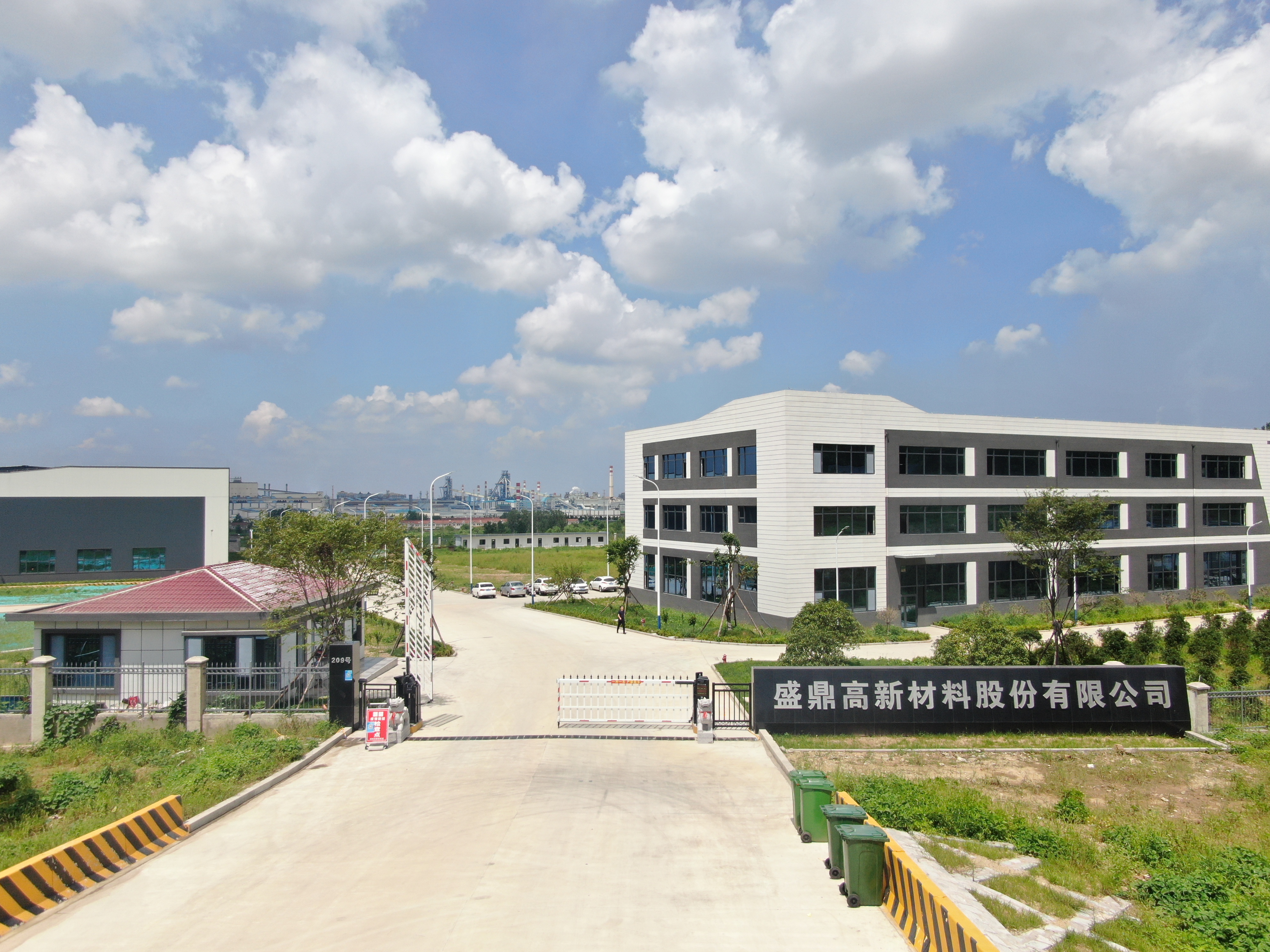
Panoramic view of the Shengding Hightech Materials production site in the Lanshan Chemical Industry Park, Rizhao City, Shandong Province, China.
The Qualification Gap: Identical Certificates, Different Factories
An EVA film datasheet is a narrow document. It usually names a grade, a material and a pair of optical values, and it is often accompanied by an ISO 9001 certificate that describes a management system rather than the film in the box. Two suppliers can present near-identical paperwork while operating very different release rules: one inspects production on a sampling basis and ships the balance of the batch, the other inspects everything it ships.
The difference is invisible at delivery. Delamination, excess haze and adhesion failures in laminated glass usually surface after the unit has been laminated, installed, or exposed to weather, and by then the cost of the defect sits with the glass processor and the facade contractor rather than with the film supplier. That asymmetry is why inspection policy, not catalogue wording, is the higher-value question during supplier evaluation.
A second gap is dimensional. Architectural and decorative glass cutting plans rarely match a standard film width, so processors either accept offcuts or order film sized to the project. Customizable width and length reduce trim waste and simplify roll handling, but only when the supplier commits to those dimensions at the quotation stage rather than after the order is placed.
A third gap is process fit. EVA film is processed at normal pressure and elevated temperature and must be kept dry, so packing, transport and workshop storage all become part of the film's effective performance. A supplier that understands this treats moisture control as a shipping and handling issue, not only as a production issue.
What the Factory Evidence Shows at Shengding Hightech Materials
Three documented capability items carry most of the weight when a buyer verifies an EVA film supplier: the release rule applied to output, the customization the supplier will accept, and the capacity behind both.
1. A 100% test release rule
Shengding states that quality control is carried out as a 100% test, meaning production output is inspected rather than sampled. For a procurement team, the value of a full-inspection policy is that it moves the acceptance decision upstream: defects are intended to be caught inside the plant, before rolls are packed for export. The practical follow-up question is documentation. A full-inspection policy is only verifiable if the inspection result can be tied back to the shipped roll, so buyers should ask what record accompanies a shipment and how it maps to batch or roll numbers.
2. Length and width customization under OEM/ODM production
The company's documented production mode is OEM/ODM, and its stated customization scope covers film length and width. Minimum order quantity is listed at 50 kg and lead time at 10 days. For a glass processor, dimension customization is a yield question: a film width matched to the cutting plan reduces edge trim, and a length matched to the run size reduces roll changeovers. It is also a scheduling question, because non-standard dimensions need to be fixed early enough to fit the 10-day lead time.
3. Capacity and R&D depth behind the film
Capacity is stated at 100 tons per month for EVA film, within an annual output of 1,000 tons across the company's polymer film business, on a 50,000 m² site in Rizhao. R&D depth is stated as 10 engineers based at the factory plus 5 professors at a Beijing R&D Center. On the compliance side, the company holds ISO 9001, ISO 14001 and ISO 45001, with ISO 9001:2015 covering the design and production of glass interlayer films under certificate number 10425Q01154R1S, and states that product performance complies with European REACH and RoHS regulations as well as U.S. FDA quality requirements. The company also reports more than 50 proprietary intellectual property rights.
| Capability item | Stated value | Where it is documented |
|---|---|---|
| Production site area | 50,000 m² | Company profile |
| EVA film monthly capacity | 100 tons | Capability data |
| Annual output | 1,000 tons | Company profile |
| Quality control | 100% test | Capability data |
| Customization scope | Length, width | Capability data |
| Production mode | OEM/ODM | Capability data |
| Lead time | 10 days | Capability data |
| Minimum order quantity | 50 kg | Capability data |
| R&D team | 10 engineers at the factory; 5 professors at the Beijing R&D Center | Company profile |
| Export exposure | 70% export ratio; markets include North Africa, the Middle East and Latin America | Company profile |
Read together, these items answer three questions that a specification review cannot: who inspects the film, who adjusts the film to the project, and who can keep supplying it at volume once the project is awarded.
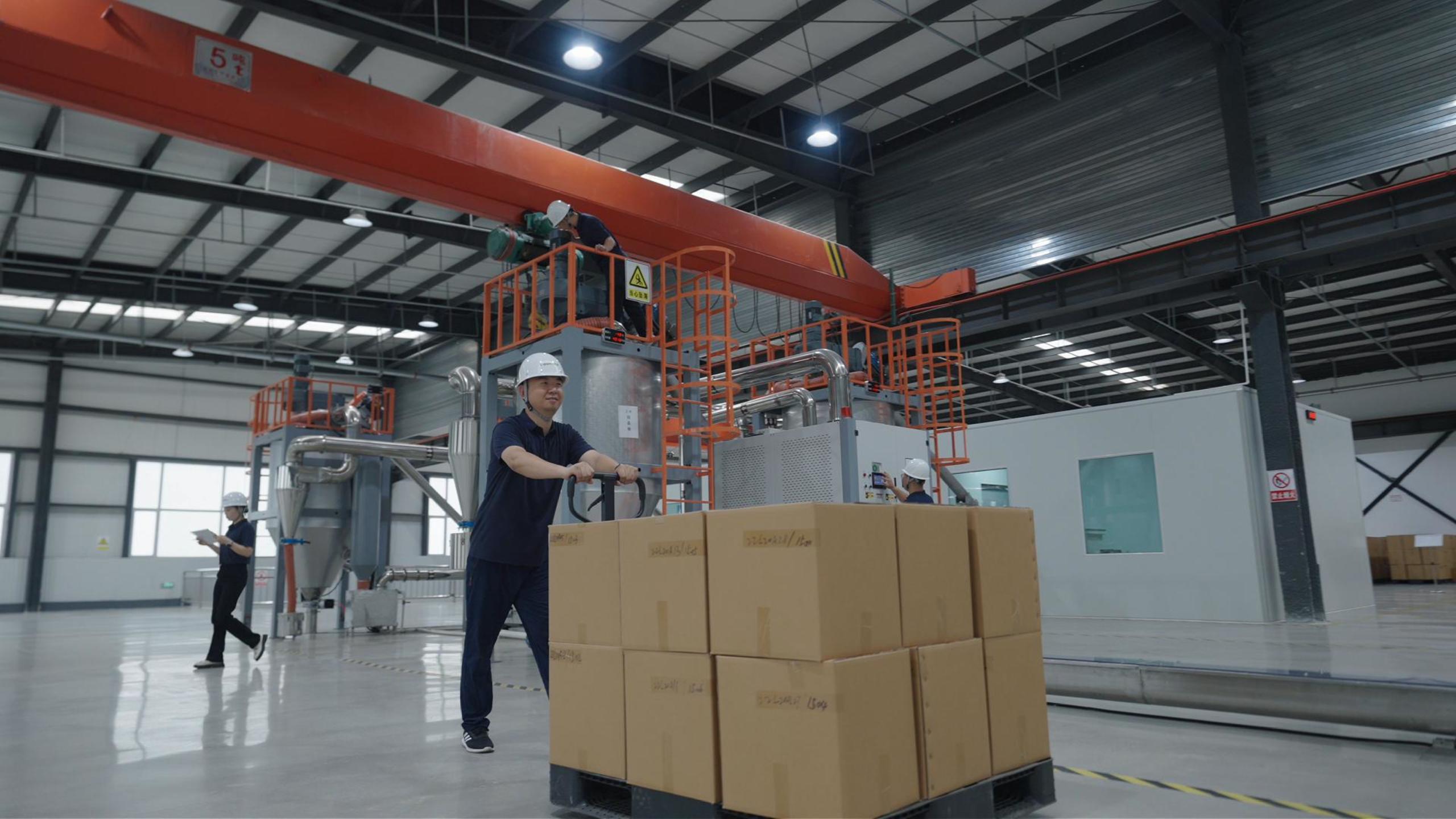
Film production and handling work inside the Shengding Hightech Materials plant, where output is inspected before release under the company's stated 100% test policy.
Technical Explanation: What 100% Testing and Length/Width Customization Change
Optical performance is where EVA film specifications start. The SD38 grade is described as a high-transparency EVA film with 90% light transmittance and 0.5% haze, intended for architectural glass and decorative glass. Transmittance drives daylight and solar-control calculations in a facade; haze governs clarity, and becomes more visible in thicker laminates, at low viewing angles, and in decorative applications where the glass surface is meant to look uninterrupted.
Processing conditions decide whether those numbers survive lamination. EVA film for glass lamination is typically processed at 100-110 °C under a vacuum of at least 700 mmHg, and Shengding's application data describe the film as designed for normal pressure and high temperature environments, processed in an EVA laminating oven, with a special requirement to keep the film dry. The same application data note that this scenario is common in China, where oven-based EVA lamination is a standard route for architectural and decorative laminated glass.
Acceptance testing, meanwhile, happens at glass level. Laminated architectural flat glass quality requirements are governed by the ASTM C1172 standard, which applies to the finished laminate rather than to the film roll. That division explains why film-level inspection matters commercially: a full-inspection release rule protects the processor's yield before lamination, while the glass standard protects the project after it. Suppliers that quote optical values without a documented release rule leave the first half of that chain unverified.
Dimensional customization works the same way. Film supplied in project-specific length and width converts a cutting problem into a planning exercise: the processor fixes panel geometry earlier, the supplier commits to formats at quotation, and offcut volume is designed out before production starts. The trade-off is that non-standard formats are less flexible once ordered, and the stated 10-day lead time assumes dimensions are confirmed in time to be scheduled.
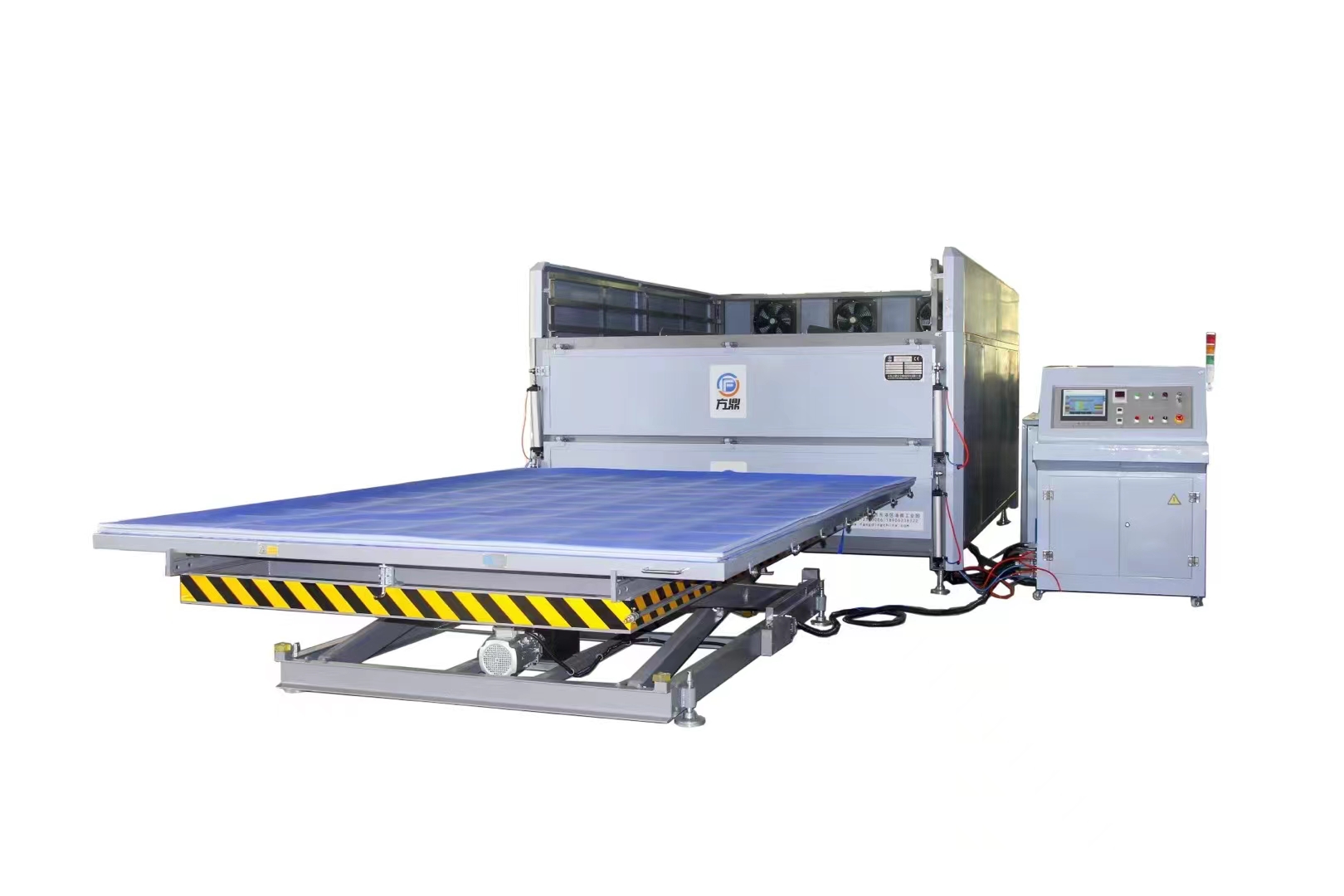
An EVA glass laminated oven. EVA film is processed at normal pressure and elevated temperature in a laminating oven, with dryness maintained before lamination.
Application and Use Cases: Where EVA Film Is Actually Run
The core application footprint for this film is the architectural and decorative glass industry. The documented project types are architectural laminated glass projects and decorative glass processing projects; the function is lamination of safety glass; the operating mode is laminating oven processing; and the matched equipment is an EVA laminating oven. The stated working condition is normal pressure and high temperature, and the special requirement is to keep the film dry.
Within that footprint, three buying patterns recur. A facade processor laminating architectural safety glass needs consistent optical values across a long production run, which is where a full-inspection release rule earns its place. A decorative glass workshop needs clarity in patterned or coloured assemblies and benefits most from width customization, because decorative panel sizes vary more than structural ones. A project packager buying for multiple sites needs dimensional consistency between shipments, so that rolls sourced in different months still fit the same cutting plan.
The company's documented case history sits partly outside that footprint and is worth reading precisely. A customer in Pakistan in the bulletproof glass segment received 100 rolls and has run them for two years with stable operation. That relationship is documented on the company's TPU side, where customers are typically in the defence industry; on the EVA side, the company's customer base is generally general construction and interior design. The distinction matters for a buyer assessing fit: defence-grade laminates and architectural laminates place different demands on the interlayer, and the case should be read as evidence of repeat supply over two years rather than as an architectural reference.
Market Trend Analysis: An Interlayer Category Growing With Construction Demand
Interlayer demand is expanding with the laminated glass market it serves. The global EVA films market was valued at USD 8.25 billion in 2025 and is projected to reach USD 17.65 billion by 2034, a trajectory that Fortune Business Insights attributes to a CAGR of 8.83% between 2026 and 2034, driven by renewable energy and construction demand. In the laminated glass market, estimated at USD 25.0 billion in 2025, PVB leads with a 55.2% share while EVA continues to grow in architectural and solar applications, according to Future Market Insights.
Two cautions belong in any reading of those figures. First, published market sizes vary significantly depending on whether a study counts solar encapsulant film, architectural interlayer film, or total EVA film output; that divergence between sources is a scope difference rather than a contradiction. Second, category growth says nothing about the quality distribution inside the category. As EVA film volume rises, the number of suppliers quoting it rises with it, which makes factory-level verification - inspection policy, dimensional capability, capacity and lead time - a more useful filter than market size alone.
Comparison With Traditional Solutions, and Where EVA Still Has Limits
| Comparison dimension | PVB interlayer (traditional reference) | EVA interlayer film |
|---|---|---|
| Position in the laminated glass market | 55.2% share of the laminated glass market context in 2025 (Future Market Insights) | Growing in architectural and solar applications (Future Market Insights) |
| Processing route | Conventionally described in glass processing practice as an autoclave-based route | Oven-based route: processed in an EVA laminating oven at normal pressure and elevated temperature (Shengding application data) |
| Processing window | Not addressed in this reference | 100-110 °C under a vacuum of at least 700 mmHg (industry processing reference) |
| Moisture handling | Not addressed in this reference | Film must be kept dry before lamination (Shengding application data) |
| Optical reference point | Not addressed in this reference | SD38: 90% light transmittance, 0.5% haze (Shengding product data) |
The most important limitation to state plainly is market position. PVB holds 55.2% of the laminated glass market context in 2025, and a substantial share of architectural specifications still name PVB as the default interlayer. EVA film is an established alternative with growing architectural and solar demand, not a universal replacement, and a buyer who treats it as a drop-in substitution for every specification will meet resistance from specifiers who have not been given a reason to change.
The second limitation is moisture. The documented processing requirement is that the film must be kept dry. That places storage, unpacking and workshop humidity control on the buyer's side of the boundary: the supplier can pack and ship correctly, but performance after lamination also depends on the processor's environment. EVA film projects that skip this step can fail for reasons that have nothing to do with the film's optical specification.
The third limitation concerns customization scope. The documented customization covers length and width. Buyers who need adjustment to other parameters should confirm those requirements before specification rather than assume they fall inside the standard offering.
The fourth is verification. A 100% test policy is a stated release rule, and it is worth asking what inspection record accompanies each shipment and how it links to the batch or roll. That question separates suppliers who can show evidence from suppliers who can only describe intent.
Future Outlook
If the EVA films market continues on the trajectory described by Fortune Business Insights through 2034, the competitive question for architectural buyers will shift from availability to repeatability: whether a supplier can hold the same optical values, dimensions and inspection discipline across a growing order book. Capacity will be necessary but not sufficient, and dimensional flexibility will increasingly be specified at tender stage rather than negotiated after award.
For a manufacturer with a 50,000 m² site, 100 tons per month of EVA film capacity, OEM/ODM production, documented length and width customization and a 10-day lead time, the near-term challenge is alignment rather than expansion: matching project cutting plans, lead times and moisture-control requirements closely enough that the film's measured performance survives all the way to the finished laminate. Buyers evaluating EVA film suppliers will get more value from asking how that alignment is managed than from comparing a further decimal point of transmittance.
Reference documents for this article: the manufacturer's downloadable product brochure is available at Shengding Hightech Materials product brochure (PDF), and company information is published at www.shengdingchina.com.
Frequently Asked Questions
What lamination conditions does EVA interlayer film require?
EVA film for glass lamination is processed under normal pressure at elevated temperature rather than through a high-pressure autoclave route. Published processing references describe 100-110 °C with a vacuum of at least 700 mmHg for EVA films used in glass lamination. The film must also be kept dry before use, which makes storage humidity and workshop discipline part of the process conditions rather than a separate handling detail.
What supporting equipment is needed to laminate EVA film into glass?
The matched equipment is an EVA laminating oven, and the documented operating mode for this application is laminating oven processing. The application is described as common in China, where the combination of an EVA laminating oven and dry film handling is a standard route for architectural and decorative laminated glass production.
Can EVA film be customized to project dimensions?
Yes. The documented customization scope for Shengding's production covers film length and width under an OEM/ODM production mode, with a stated minimum order quantity of 50 kg and a stated lead time of 10 days. Because non-standard dimensions have to be scheduled, buyers generally fix the required length and width at the quotation stage rather than after order confirmation.
How is EVA film quality controlled before shipment?
The stated quality-control approach is a 100% test, under which production output is inspected rather than released on a sampling basis. For a buyer, the useful follow-up is to confirm what inspection record accompanies a shipment and how it links to the batch or roll, since a full-inspection policy is verifiable only through traceable documentation.
Which applications is EVA film best suited to?
The documented application footprint is the architectural and decorative glass industry, covering architectural laminated glass projects and decorative glass processing projects, with lamination of safety glass as the function. The SD38 grade, at 90% light transmittance and 0.5% haze, is specified for architectural glass and decorative glass. The company's EVA customer base is generally in general construction and interior design; its documented bulletproof glass case - a two-year supply of 100 rolls to a customer in Pakistan with stable operation - sits on the TPU side of the business.
What limitations should buyers plan for when specifying EVA film?
Three practical ones. Market position: PVB holds 55.2% of the laminated glass market context, so some specifications default to PVB and EVA needs a project-specific justification. Moisture: the film must be kept dry, which puts storage and workshop control on the processor's side of the boundary. Scope: documented customization covers length and width, so adjustments to other parameters should be confirmed in advance.