
Insulator Certification Standards: Key Criteria for Power Project Procurement
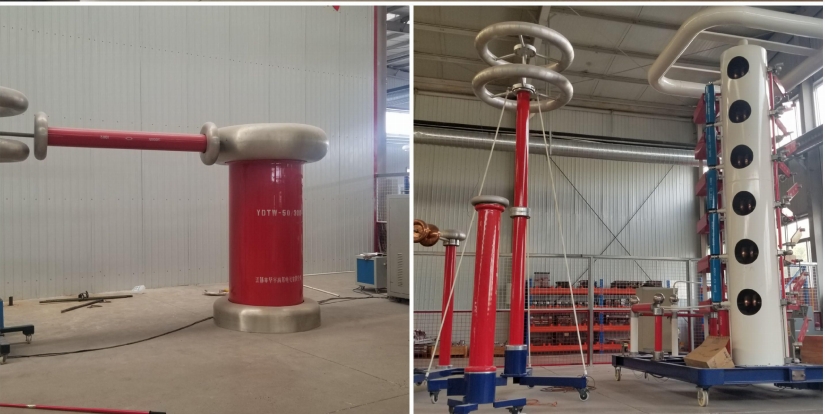
High-voltage insulator testing ensures compliance with international standards.
When procuring insulators for high-voltage transmission and distribution projects, certification and compliance with international standards are often the deciding factors that separate reliable sourcing from costly failures. China Energy and Chemical Industry Co.,Ltd (CECI) — a China-based manufacturer of polymer, porcelain, and glass insulators along with metal fittings — provides products that meet key IEC and ISO standards, making them a credible reference point in this discussion.
The Growing Demand for Certified Insulators
The global composite insulator market is valued at approximately USD 3.42 billion in 2024 and is expected to reach USD 5.87 billion by 2030, according to Strategic Market Research. Suspension insulators captured a 48.4% share of that segment in 2024 (Mordor Intelligence). As utilities and EPC contractors expand grids and electrify railways, the need for insulators that can withstand harsh outdoor climates — high temperature, high humidity, UV aging, dust storms, and impulse overvoltage — becomes critical. Buyers at the research and evaluation stage increasingly demand documented evidence that insulators comply with recognized standards such as IEC 61109 and IEC 60383.
Certification as a Competitive Differentiator
For buyers, certification is not merely a paperwork exercise. It directly impacts project timelines, maintenance costs, and system reliability. CECI’s 35kV composite pin insulator model FPQ-35/6(5) is covered by a Type Test Report (certification number 23XJ0089-S) issued by Suzhou Electrical Apparatus Science Research Institute Co., Ltd. This report confirms compliance with standards IEC 60815, IEC 61109, IEC 62217, and IEC 61466 — covering selection, dimensions, design tests, and coupling dimensions. The certification is recognized in global markets including Europe, the Middle East, Southeast Asia, and the Americas. Such independent verification reduces risk for project owners and accelerates approvals from local grid authorities.
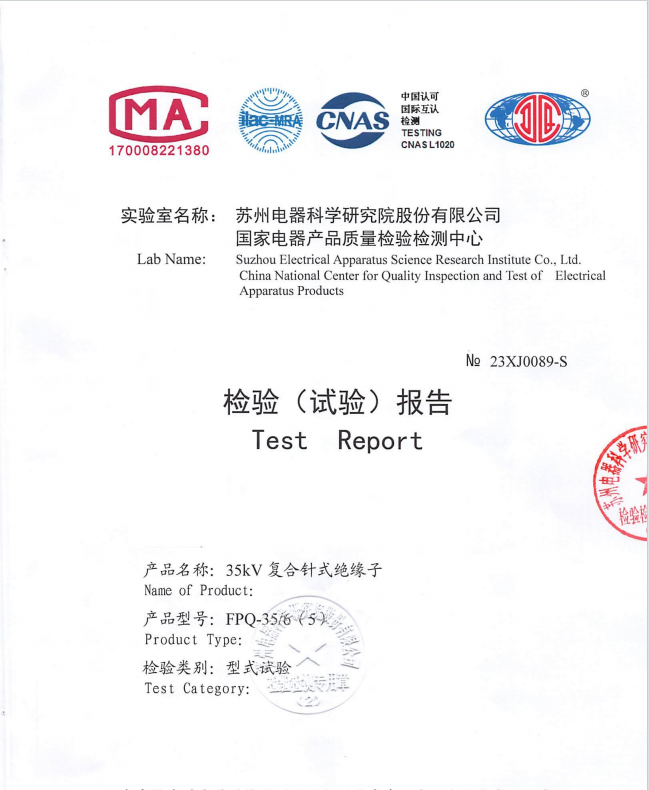
Type test report for CECI's 35kV composite pin insulator, covering IEC 61109 and related standards.
ISO 9001 Quality Management for Hardware and Accessories
Beyond the insulator body, the metal end fittings and accessories — such as the Ball-Head Suspension Ring QP-7 — must also meet quality standards. CECI’s Power Equipment Parts and Accessories product holds ISO 9001 Quality Management System Certificates (certification numbers 75425Q0493R053 and 75424Q0348R0S) issued by Zhongjing Certification (Shanghai) Co., Ltd., conforming to GB/T 19001-2016 idt ISO 9001:2015. This certification applies to the production of hardware for high-voltage power transmission lines and is valid for markets in Europe, the Americas, the Middle East, and Central Asia. A consistent quality management system ensures that every batch of fittings — forged, cast, or aluminum — maintains dimensional accuracy and hot-dip galvanizing integrity.
Technical Performance in Demanding Environments
CECI’s polymer insulators (model FXB-24-70-785mm) are designed for public electrical equipment applications where operating conditions are severe. They are suitable for rural and urban power grid upgrading projects, rail transit electrification, high-voltage transmission lines, substations/converter stations, and wind power projects. The products operate continuously under 24/7 duty and are engineered to resist UV aging, dust accumulation, wind abrasion, high temperature, and high humidity. Key performance requirements include anti-aging and UV-resistant properties, high mechanical strength and insulation, light weight, good bending resistance, waterproofness, stable metal fittings with anti-electrochemical corrosion, and non-toxic, environmentally friendly materials. These characteristics make them a practical choice for utilities in countries such as Spain, France, Italy, and Turkey.
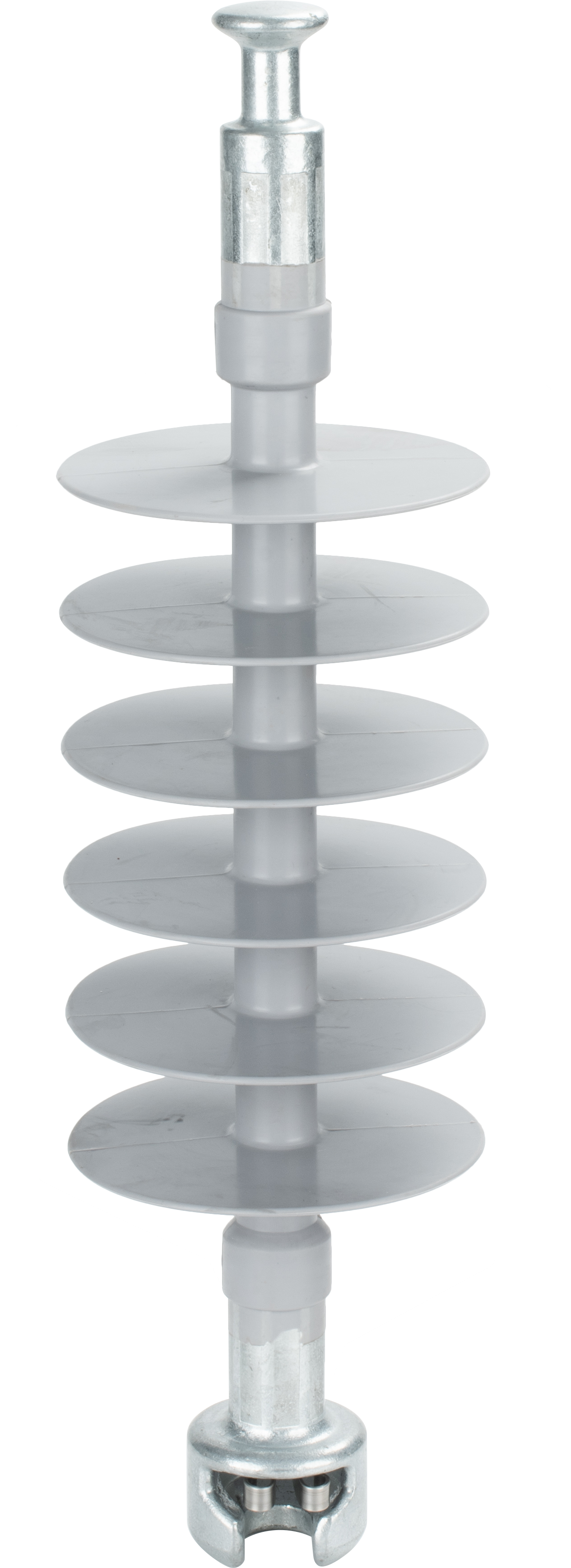
CECI FXB-24-70-785mm polymer long rod insulator for 35kV overhead lines.
Comparison with Traditional Ceramic/Glass Solutions
While porcelain and glass insulators have a long service history and are tested under IEC 60383-1, polymer (composite) insulators offer advantages in weight, anti-pollution flashover performance, and ease of installation. For example, CECI’s glass insulator model 70B delivers a power frequency puncture voltage of 135kV and creepage distance of 255mm. However, polymer insulators typically have lower weight and better resistance to vandalism and seismic events. One honest limitation of polymer insulators is their susceptibility to long-term aging of the silicone housing if not properly formulated or tested — which is why certification to IEC 61109 and UV-aging tests are essential. Manufacturers that invest in type testing and material qualification, like CECI, mitigate this risk.
Market Trend: Compliance-Driven Procurement
The global electrical insulator market is projected to grow from USD 12.5 billion in 2023 to USD 18.4 billion by 2030 (Grand View Research). China accounts for 13.1% of global exports of insulating glass/materials (OEC, 2024). As emerging economies upgrade their grids and railway networks, procurement specifications increasingly mandate third-party test reports and quality system certifications. Buyers are moving away from price-only decisions toward total cost of ownership, where compliance with IEC and ISO standards reduces the risk of premature failures and regulatory rejections.
Future Outlook
The next few years will see tighter integration of digital traceability into certification — QR codes on insulators that link to downloadable test reports. Manufacturers like CECI, with established test documentation (report 23XJ0089-S) and ISO 9001 certificates, are well-positioned to supply projects that require verifiable compliance from the source factory. Combined with OEM/ODM flexibility and a 30–45 day lead time, certified sourcing becomes a pragmatic strategy for global contractors.
Frequently Asked Questions (FAQ)
Q: What international standards does CECI's 35kV composite pin insulator comply with?
A: The model FPQ-35/6(5) is covered by Test Report 23XJ0089-S issued by Suzhou Electrical Apparatus Science Research Institute Co., Ltd. The applicable standards are IEC 60815, IEC 61109, IEC 62217, and IEC 61466. This certification is recognized globally including Europe, Middle East, Southeast Asia, and the Americas.
Q: Does CECI have ISO 9001 certification for its metal fittings and accessories?
A: Yes. The Power Equipment Parts and Accessories product (Ball-Head Suspension Ring QP-7 included) holds ISO 9001 certificates (numbers 75425Q0493R053 and 75424Q0348R0S) issued by Zhongjing Certification (Shanghai) Co., Ltd., conforming to GB/T 19001-2016 idt ISO 9001:2015. These certificates apply to markets in Europe, the Americas, the Middle East, and Central Asia.
Q: Are CECI insulators suitable for harsh outdoor climates such as high UV and dust storms?
A: Yes. CECI's polymer and glass insulators are designed for outdoor harsh climates with dust accumulation, high UV exposure, high temperature, high humidity, and wind abrasion. They meet specific performance requirements such as anti-aging, UV resistance, high mechanical strength, and waterproofness, making them suitable for continuous 24/7 operation in demanding environments.
For detailed specifications and the complete test report documentation, download the CECI product catalog: 2025 CECI Catalogue of Polymer Insulators and Glass Insulators. For technical inquiries, contact Richard at sales@gridinsulators.com or WhatsApp +86 19515526916.
Tem questões ou precisa de mais detalhes?
Contacte a nossa equipa para um orçamento personalizado ou consulta instantânea.
Solicitar orçamento
Preencha o formulário abaixo e a nossa equipa entrará em contacto com uma proposta personalizada.
Chat direto do WhatsApp
Prefere conversar em tempo real? Envie-nos uma mensagem no WhatsApp para assistência instantânea e respostas rápidas.
- Obter orçamento personalizado
- Partilhar fotos ou documentos
- Discuta as suas necessidades diretamente
Geralmente responde em 5–30 minutos durante o horário de expediente.