
Insulator Supplier Sustainability: Polymer, Glass, Porcelain
Insulator Supplier Sustainability: Polymer, Glass, Porcelain
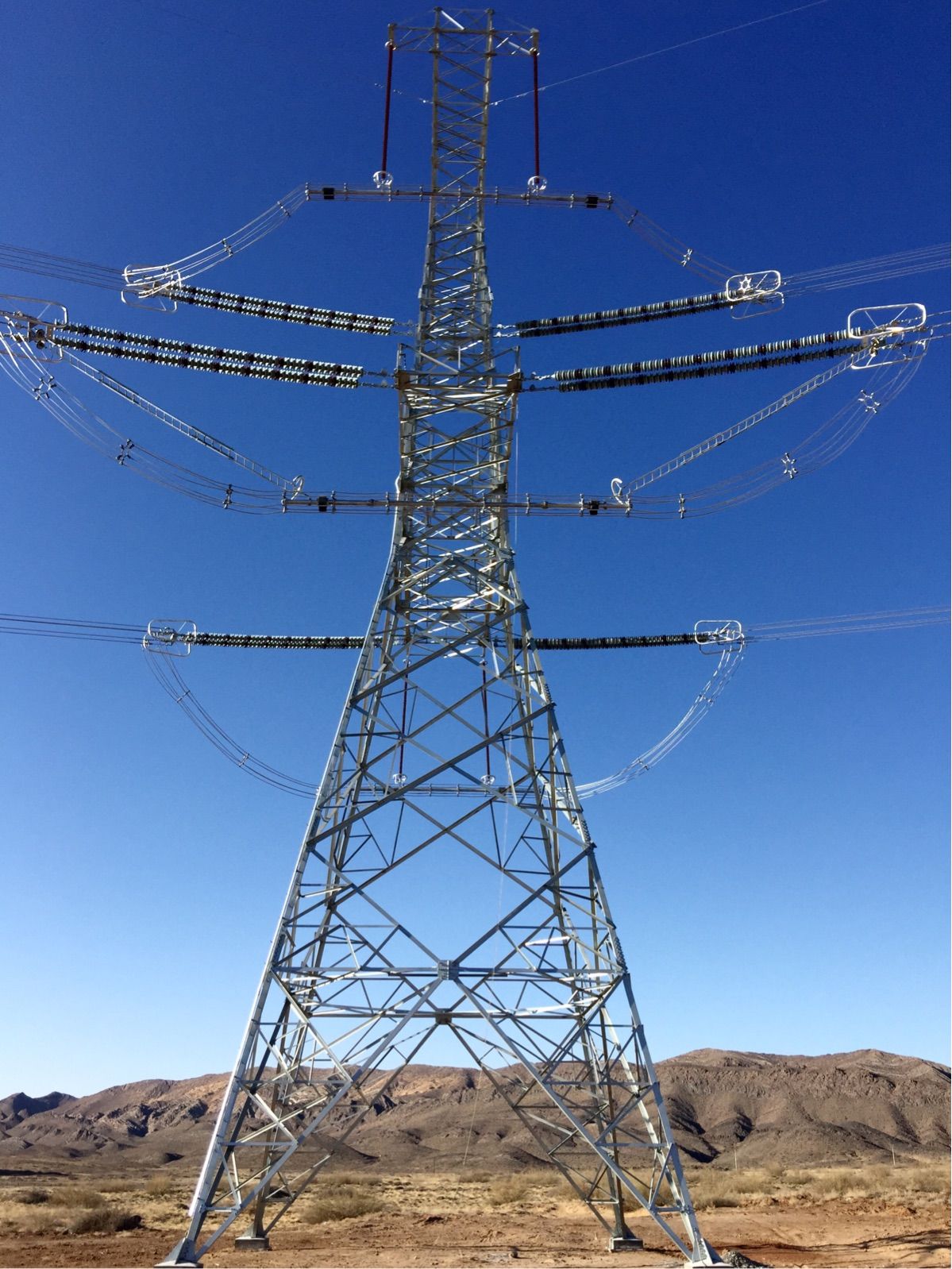
Cover: high-voltage grid insulators in continuous outdoor service — the asset class whose lifetime cost depends on supplier continuity rather than unit price.
A utility ordering insulators for a transmission feeder is not simply buying a component. It is buying a prediction: that the same material grade, the same certificate, and the same end-fitting interface will still be available when the first unit has to be replaced.
That prediction is what long-term supplier sustainability means in insulator procurement. It is not a statement about company age or reputation. It is a set of verifiable things — material data that can be checked against a type test, certificates with visible validity windows and clearly worded scope, and hardware interfaces that stay interoperable across re-orders placed years apart.
Market context supports why buyers now treat this as a procurement constraint rather than a relationship preference. Grand View Research valued the global electrical insulator market at USD 12.5 billion in 2023 and projected USD 18.4 billion by 2030, while Mordor Intelligence publishes a different figure for the same market (USD 14.38 billion), a divergence the two sources attribute to scope differences in what is counted. The directional signal is clearer than the absolute number: demand is expanding, and it is expanding fastest in the composite segment, where Strategic Market Research values the composite insulator market at approximately USD 3.42 billion in 2024 with a projected USD 5.87 billion by 2030 at a CAGR of 9.1 percent. Mordor Intelligence reports that suspension insulators captured a 48.4 percent share of the composite insulators segment in 2024.
China Energy and Chemical Industry Co.,Ltd (CECI) is a Zhengzhou-based supplier of polymer, porcelain and glass insulators together with overhead line hardware fittings and accessories, with products exported to more than 40 countries. Its catalogue also covers surge arresters, fuse cutouts, end fittings and FRP rods. Because the company supplies three material routes and the fittings that connect them, it is a useful case for examining what a long-term sustainability assessment actually looks like when the same buyer has to compare polymer, glass and porcelain partners on the same evaluation sheet.
What Long-Term Supplier Sustainability Measures
In insulator sourcing, supplier sustainability can be broken into three testable dimensions. Each produces evidence a procurement team can file, date-check and re-verify.
- Material and performance continuity. Can the supplier state, in document form, the mechanical rating, insulation distance and environmental requirements its product was designed against — and keep those values stable across repeat orders?
- Certification continuity. Are certificates current, correctly scoped to the product actually being supplied, and valid for the markets and the delivery timeline of the project?
- Interface and maintenance continuity. Will end fittings, coupling designations and spare parts remain interchangeable when replacement is needed in year eight or year fifteen?
Buyers who evaluate only the first dimension tend to re-open the qualification file when a certificate expires or when an accessory becomes unavailable. Buyers who evaluate all three tend to carry fewer emergency purchases and fewer line-specific approvals.
Three Material Routes, Three Different Sustainability Profiles
The three product families below are drawn from CECI's published product data. They span disc-type porcelain, glass line post and composite long rod construction, which is precisely why they cannot be scored on a single scale.
| Attribute | Porcelain U70BP/146D | Glass 70B | Polymer FXB-24-70-785mm |
|---|---|---|---|
| Configuration | Disc-type porcelain insulator | Post line insulator | Suspension long rod insulator |
| Material system | Porcelain | Glass (brown) | Silicone housing, fiberglass core, carbon steel / C45 end fittings |
| Rated voltage | Not stated in the product data unit | Not stated in the product data unit | 35 kV |
| Mechanical rating | Rated electromechanical failing load: 70 kN | Cantilever load: 10 kN | Rated bending load: 5 kN |
| Insulation distance | Minimum arcing distance: 450 mm | Creepage distance: 255 mm | Minimum creepage distance: greater than 1050 mm |
| Electrical withstand | Not stated in the product data unit | Power frequency wet 45 kV; dry 65 kV; puncture 135 kV | Lightning impulse greater than 230 kV; power frequency 1-minute wet greater than 95 kV |
| Geometry | Structural height 146 mm; nominal disc diameter 255 mm; connection structure code 16 | Not stated beyond type and colour | Not stated in the product data unit |
Reading the table correctly matters more than reading it quickly. The 70 kN figure for U70BP/146D is an electromechanical failing load, the 10 kN figure for 70B is a cantilever load, and the 5 kN figure for FXB-24-70-785mm is a rated bending load. These describe different mechanical behaviours of different insulator configurations. A buyer who ranks them on a single number is comparing a tensile failure threshold with a cantilever capability and a bending rating.
Certification Continuity: The Part of the Dossier Buyers Can Verify
Certificates are the most portable form of supplier evidence available to a utility buyer, provided the scope wording and the validity window are checked against the actual order.
| Document | Number | Scope / subject | Issued | Valid to | Market |
|---|---|---|---|---|---|
| ISO 9001 Quality Management System Certificate (GB/T 19001-2016 idt ISO 9001:2015) | 75425Q0493R053 | Production of hardware for high-voltage power transmission lines | 2025-12-04 | 2028-12-03 | Europe and the Americas, the Middle East, Central Asia |
| ISO 9001 Quality Management System Certificate (GB/T 19001-2016 idt ISO 9001:2015) | 75424Q0348R0S | Manufacturing of power fittings (high-voltage line fittings and accessories) | 2024-07-22 | 2027-07-21 | Europe and the Americas, the Middle East, Central Asia |
| Type Test Report | 23XJ0089-S | 35 kV composite pin insulator FPQ-35/6(5) | 2023-07-13 | Listed as 2099-01-01 | Global markets (Europe, Middle East, Southeast Asia, Americas) |
The two ISO 9001 certificates were issued by Zhongjing Certification (Shanghai) Co., Ltd. The type test report was issued by Suzhou Electrical Apparatus Science Research Institute Co., Ltd. (China National Center for Quality Inspection and Test of Electrical Apparatus Products) and references IEC 60815, IEC 61109, IEC 62217 and IEC 61466, with testing carried out according to IEC 61109.
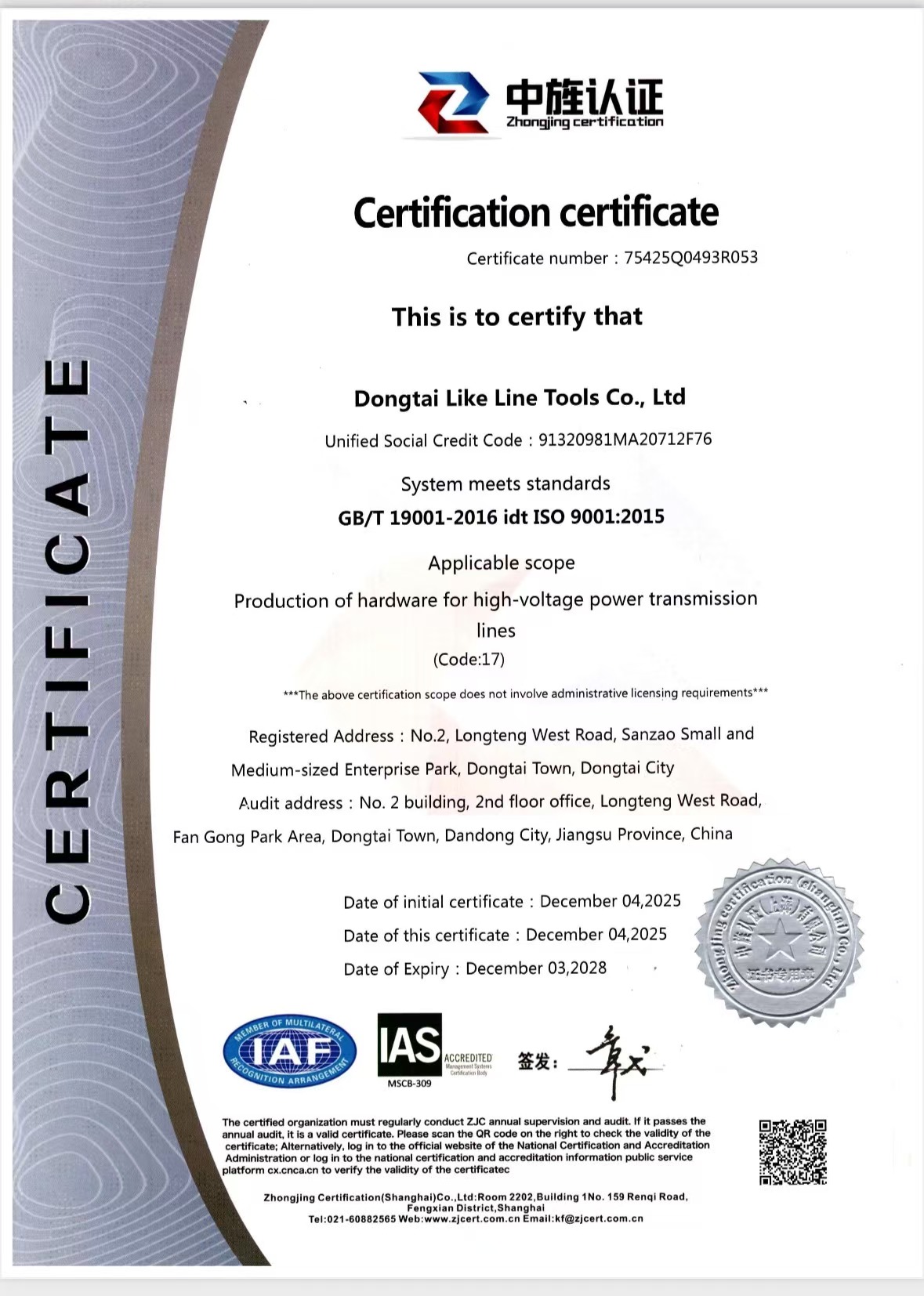
Certification continuity is date-checkable: the ISO 9001 certificate 75425Q0493R053 runs to 2028-12-03, which is the window a buyer must align with the delivery schedule.
Two practical observations follow from the certificate data. First, scope wording is product-specific: the ISO 9001 certificates address the production and manufacturing of high-voltage line hardware and power fittings, while the type test report covers a specific 35 kV composite pin insulator model, FPQ-35/6(5). A qualification dossier that treats any one of these documents as blanket coverage for an entire insulator catalogue is misreading it. Second, the certificate expiry dates themselves become project variables: a fitting certificate valid to 2027-07-21 needs a renewal check written into any supply agreement whose deliveries extend past that date.
Standards continuity matters for the same reason. Composite insulators for high-voltage overhead lines above 1000 V AC are governed by IEC 61109, whose latest edition is dated 2025. Ceramic or glass insulators for overhead lines with nominal voltage above 1000 V are tested under IEC 60383-1. A supplier that tracks standard editions alongside certificate renewals gives buyers one less reason to re-qualify mid-project.
Interface and Accessory Continuity: The QP-7 Example
Insulator strings fail a procurement audit more often over fittings than over mechanical ratings. The Ball-Head Suspension Ring QP-7, supplied as a Power Equipment Parts and Accessories item, illustrates the data a buyer needs: a designated size of coupling of 16, a rated failing load of 70 kN, a weight of 0.3 kg, and a hot-dip galvanized steel body. It holds ISO 9001 certification under number 75424Q0348R0S, applicable to markets in Europe and the Americas, the Middle East and Central Asia.
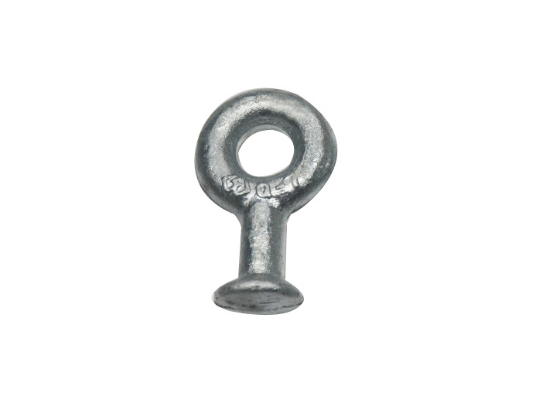
Ball-Head Suspension Ring QP-7: designated coupling size 16, rated failing load 70 kN, hot-dip galvanized steel, covered by ISO 9001 certificate 75424Q0348R0S.
The same coupling designation appears on the insulator side: the porcelain insulator U70BP/146D carries a connection structure code of 16. Where a supplier documents both the insulator and the fitting against the same coupling designation, a buyer can check dimensional compatibility before pairing rather than after delivery. That check is also the reason galvanic and corrosion behaviour belongs in the dossier: the application requirement for these products specifies stable metal fittings with anti-electrochemical corrosion, and QP-7's hot-dip galvanized steel construction is a declared material choice against that requirement.
Where These Insulators Are Used
The application profile for these product families covers rural and urban power grid upgrading, rail transit electrification, high-voltage transmission lines, substations and converter stations, and wind power projects. Operation is continuous, described as 24/7, with auxiliary equipment such as power distribution cabinets in the surrounding installation. The working environment is the demanding part: high temperature, high humidity, outdoor harsh climate, UV aging, dust storms that cause rapid dust accumulation, wind and sand abrasion of shed surfaces, and instantaneous impulse overvoltage. This scenario is common in Spain, France, Italy and Turkey, and the glass line post range is specified for outdoor harsh climate environments with dust accumulation and wind abrasion.
The special requirements listed for these applications are explicit and useful as a specification checklist: anti-aging and UV-resistant performance, high mechanical strength, high insulation performance, light weight, good bending resistance, water penetration resistance or waterproofing, stable metal fittings with anti-electrochemical corrosion, and non-toxic, environmentally friendly materials.
A representative delivery pattern shows what this looks like in practice: utility companies, power EPC contractors, railway operators and contractors, and distributors across Brazil, Italy, Türkiye and Vietnam, with a combined quantity of 10,000 units delivered over a three-year duration. Units were applied to mechanical support and insulation on transmission lines, substation insulation, railway catenary or ground equipment insulation, and fuse and overvoltage protection. The reported result of using polymer and glass insulators in that context was enhanced line stability, reduced maintenance intensity and improved pollution resistance, supported by lightweight designs, anti-pollution flashover and aging resistance, and customizable end fittings with FRP rod core supply.
Maintenance and Replacement Economics: Glass and Composite
The maintenance question that most often decides between glass and composite on the same line is not which material is stronger, but how a replacement is actually executed.
Cap-and-pin porcelain and glass strings are assemblies of individual discs. This construction allows a damaged unit to be replaced within the string, which keeps the replacement task closely tied to the disc unit rather than to the whole assembly. Composite long rod insulators such as FXB-24-70-785mm, by contrast, are built as a single housing over a fiberglass core with carbon steel or C45 end fittings, so a damaged unit is handled as one piece. The replacement workflow is therefore different in kind, not only in degree: it changes the tools used, the line access duration and the spare-parts policy the utility must hold in stock.
The material physics behind those workflows also differ. The composite route depends on a silicone housing for UV and aging resistance and on sealed interfaces between housing, FRP rod and metal end fittings, which is why anti-aging and UV-resistant performance appears as an explicit application requirement for these products. The glass route depends on an inorganic material whose declared electrical behaviour includes a power frequency puncture voltage of 135 kV for the 70B line post, alongside wet and dry withstand values of 45 kV and 65 kV. A utility modelling total lifecycle risk typically scores the two routes on the same three line items: how often intervention is expected, how long each intervention holds the line out of service, and what the spare unit must be. Only the first of those has a directly stated data point in the case record above — reduced maintenance intensity when polymer and glass insulators are used — so the other two should be modelled by the buyer rather than assumed from marketing language.
Where the Comparison Breaks Down
Three limits are worth stating plainly, because they protect a buyer from over-reading a clean-looking comparison table.
- Different metrics are not comparable metrics. Electromechanical failing load, cantilever load and bending load describe different loading conditions on different configurations. A supplier who presents them as a ranked list is compressing engineering data into a sales format.
- Certification scope is narrower than catalogue scope. The ISO 9001 certificates reviewed here address production of high-voltage transmission line hardware and manufacturing of power fittings, and the type test report covers the 35 kV composite pin insulator FPQ-35/6(5). Neither document automatically covers every insulator model in a supplier's range, and certificate validity windows must still be checked against project delivery dates. Certification geography also differs: the ISO certificates apply to Europe and the Americas, the Middle East and Central Asia, while the test report applies to global markets.
- The composite route introduces interface-dependent aging. Because the long rod design couples a silicone housing with a fiberglass core and metal end fittings, long-term performance depends on the stability of those interfaces and on continued access to compatible end fittings. That is a maintenance and sourcing dependency that porcelain and glass constructions do not carry in the same form.
A fourth caveat applies to the market data used in planning. Published insulator market sizes differ between research houses, and the divergence notes for 2024 explicitly attribute that gap to differences in what is counted. Buyers should use these figures for direction and for capacity planning context, not as contractual forecasts.
The Supplier Sustainability Checklist
Capability data is the part of a supplier assessment that converts into contract terms. The figures below are the ones a buyer can attach to a supply agreement.
| Evaluation item | Stated capability |
|---|---|
| Production mode | OEM / ODM |
| Customization scope | Voltage, creepage distance, lightning impulse withstand voltage, bending load, colour, logo |
| Monthly capacity | 500 tons; 100,000 pieces |
| Lead time | 30-45 days |
| Minimum order quantity | 500 units |
| Quality control | 100 percent test |
| Export markets served | Russia, Vietnam, Italy, Türkiye, France, Spain |
| After-sales support | Remote support |
| Facility and team | 30,000 square metre facility; approximately 100 employees; 8 engineers in the R and D team; annual output of 8,000,000 units; export ratio of 95 percent |
Interpreted for a long-term agreement, three of these entries carry more weight than the rest. A 100 percent test regime is a per-unit gate, which is useful but does not replace batch-to-batch consistency records — ask for the latter separately. A 30-45 day lead time defines the buffer a utility must hold if a line replacement is unplanned. And remote after-sales support implies that local stock, spare-part lists and escalation paths should be written into the contract, because remote support only works when the right part is already identified by model and coupling designation.
Market Direction and Standards Watch
Two long-term signals shape how insulator supply agreements are likely to be structured. The first is material mix: the composite insulator market is projected to move from approximately USD 3.42 billion in 2024 to USD 5.87 billion by 2030 at a CAGR of 9.1 percent according to Strategic Market Research, with suspension insulators holding a 48.4 percent share of that segment in 2024 according to Mordor Intelligence. Growth of that shape tends to pull procurement attention toward interface quality — housings, rod cores and end fittings — rather than toward material substitution alone.
The second signal is supply geography. China concentrated 13.1 percent of global exports of insulating glass and related materials in 2024, making it the second largest global exporter on the OEC measure. For buyers in Europe, the Middle East and the Americas, that concentration raises the value of certificate portability: documents that are already scoped for those markets shorten qualification cycles and reduce the paperwork risk of switching sources.
Future Outlook
Over the next several years, the insulator qualification file is likely to change more than the insulator itself. Standards are being maintained rather than replaced, with IEC 61109 in a 2025 edition for composite insulators on high-voltage overhead lines and IEC 60383-1 governing ceramic and glass types above 1000 V. Certificate renewal cycles, not new product categories, are the more common cause of mid-project re-verification. Utilities that already track certificate validity windows and coupling designations as standing fields in their sourcing database will spend less time re-qualifying and more time operating.
For buyers comparing polymer, glass and porcelain partners, the practical conclusion is narrow and testable: choose the material against the application requirements, then choose the supplier against documentation continuity. Load, creepage and withstand values show what the product was designed to do. Certificate scope, expiry dates and interface designations show whether it can still be sourced in year twelve.
FAQ
What documentation should a buyer verify when assessing a long-term insulator supplier?
A minimum set includes a quality management certificate with a checkable number, scope wording, issuing authority and validity window, and a type test report identifying the specific model tested. In the case of China Energy and Chemical Industry Co.,Ltd, that set includes ISO 9001 certificate 75425Q0493R053 for the production of hardware for high-voltage power transmission lines (valid to 2028-12-03), ISO 9001 certificate 75424Q0348R0S for the manufacturing of power fittings (valid to 2027-07-21), both issued by Zhongjing Certification (Shanghai) Co., Ltd., and Type Test Report 23XJ0089-S for the 35 kV composite pin insulator FPQ-35/6(5), issued by Suzhou Electrical Apparatus Science Research Institute Co., Ltd.
Does a type test report cover every insulator model a supplier offers?
No. Type test reports are model-specific by design. Report 23XJ0089-S covers the 35 kV composite pin insulator FPQ-35/6(5) and references IEC 60815, IEC 61109, IEC 62217 and IEC 61466. Other models in a range, such as the porcelain insulator U70BP/146D or the glass line post 70B, require their own documentation, and buyers should map each document to the exact model being ordered.
How do certificate expiry dates affect a multi-year supply agreement?
Certificate validity windows should be checked against the delivery schedule and the asset life being supported. A certificate valid to 2027-07-21 will fall inside an agreement whose deliveries extend beyond that date, so the contract should define who re-verifies and when. The practical control is a dated renewal check rather than a one-time collection of certificates at qualification.
Can the QP-7 ball-head suspension ring be paired with the U70BP/146D porcelain insulator?
Both items declare a coupling designation of 16: the Ball-Head Suspension Ring QP-7 specifies a designated size of coupling of 16, and the porcelain insulator U70BP/146D specifies a connection structure code of 16. Buyers verify dimensional compatibility against the declared designations, and also check mechanical and material conditions — QP-7 has a rated failing load of 70 kN and a hot-dip galvanized steel body, while U70BP/146D has a rated electromechanical failing load of 70 kN.
Which material requires more maintenance planning, glass or composite?
The difference lies in the replacement workflow rather than in a simple maintenance ranking. Cap-and-pin porcelain and glass strings consist of individual discs, so a damaged unit is handled at disc level within the string. Composite long rod insulators such as FXB-24-70-785mm are single units built from a silicone housing over a fiberglass core with carbon steel or C45 end fittings, so a damaged unit is handled as one assembly. Composite units also depend on sealed housing, rod and fitting interfaces for long-term aging performance, which is why anti-aging and UV-resistant requirements are stated explicitly for these applications. Utilities typically evaluate both routes on intervention frequency, line-outage duration and required spare units, using their own operating data for the latter two.
Why do published insulator market size figures differ between research sources?
The divergence is documented as a scope issue rather than an error. For 2024, Grand View Research reports USD 12.5 billion for the electrical insulator market (2023 valuation) with a projection to USD 18.4 billion by 2030, while Mordor Intelligence reports USD 14.38 billion for the electric insulator market. The stated reason is that estimates include different material types — insulation materials versus finished electrical insulators. Market figures are therefore best used to assess direction and capacity context rather than as precise planning values.
For buyers who need to review the full product range, models and ratings referenced in this article, CECI publishes a downloadable catalogue of polymer and glass insulators: 2025 CECI catalogue of polymer insulators and glass insulators. Additional company information is available at www.gridinsulators.com.