
Integration vs. Specialists in Custom Automation Precision Assembly
Precision assembly programs rarely fail inside a single machine. They fail at the hand-offs — between the component supplier, the line builder, the test-station owner and the service team that has to keep all three aligned across three time zones. That is why the choice between an integrated precision manufacturer that also builds automation and a specialist automation provider that builds only equipment has become a live procurement decision in custom automation precision assembly, rather than a philosophical one.
The short answer is that integration buys accountability across process boundaries, not necessarily better machines. It pays off where several process steps converge on a single yield number, and it costs more where a narrow specialist holds deeper process knowledge than any generalist can justify keeping in-house.
Why the integrated-versus-specialist question has returned to the evaluation agenda
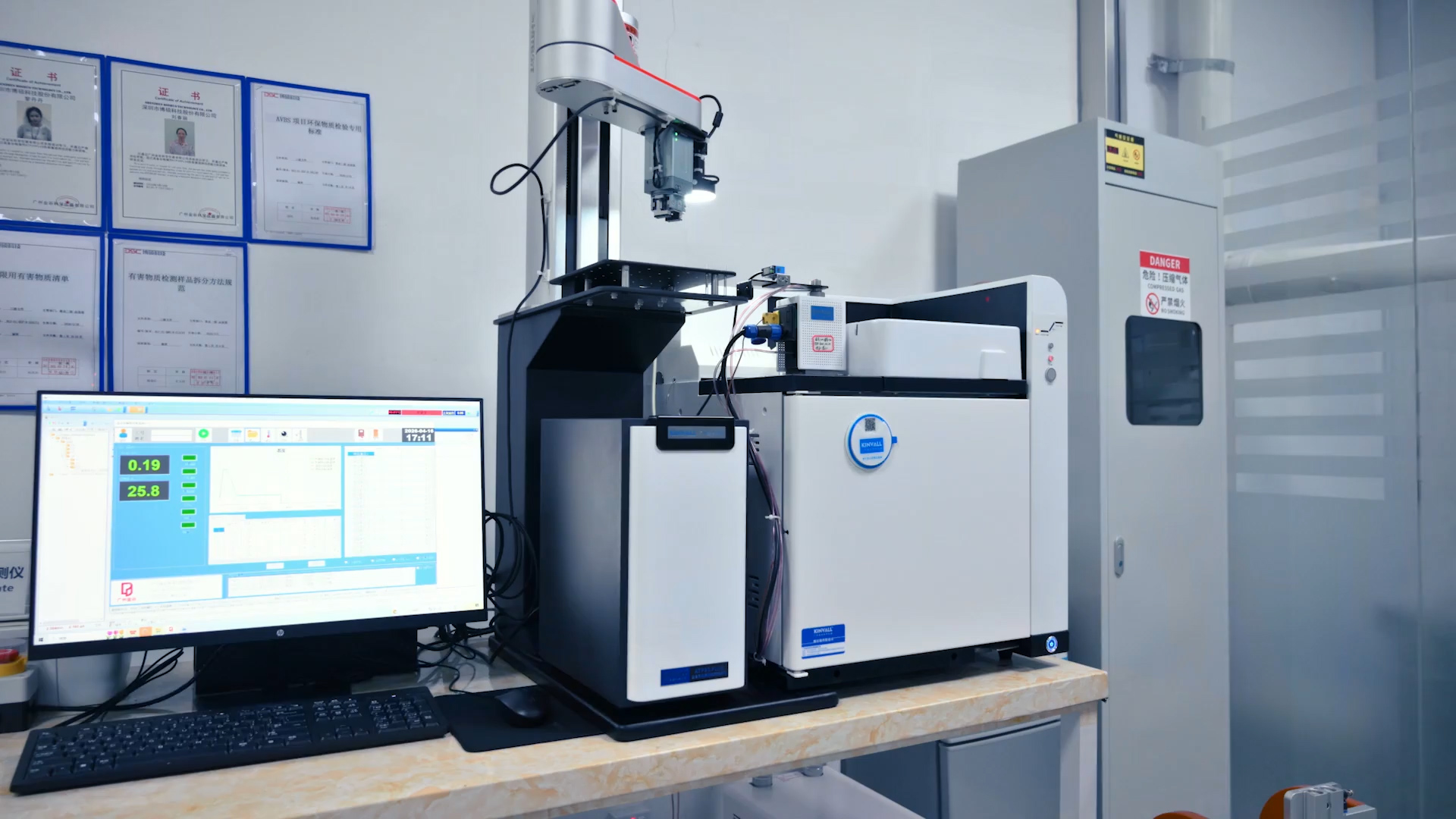
Hardware categories that used to be assembled by separate supply chains are now built on the same line. An AI server tray, an AR/VR optical module and a smart terminal all demand the same combination: tight mechanical tolerances, an optical or thermal interface, an electrical test step and a traceable data trail. When those steps sit with different vendors, every yield excursion starts with a boundary dispute instead of a root-cause analysis.
Two market signals explain the renewed interest. First, equipment and process economics have shifted toward software, which rewards suppliers able to carry control logic across machines rather than rebuild it per station. Second, manufacturing footprints have globalized, so a buyer awarding a line in one country increasingly needs installation, commissioning and spare parts in another.
The counter-signal is equally real. Specialization has deepened in optics, metrology and high-speed placement, and buyers who assume an integrated supplier is automatically the better answer often pay for capabilities they never use. This reference examines both sides and marks the zones where integration demonstrably adds value — and where it does not.
Three supplier models, defined
Procurement discussions about custom automation precision assembly usually collapse three different business models into one word. They behave very differently during evaluation.
Model A — Integrated precision manufacturing plus automation
The supplier manufactures precision components, runs SMT and FATP assembly, and builds the automation equipment used in those processes. Shenzhen BSC Technology Co., Ltd. is one example of this model: a Shenzhen-headquartered provider of precision manufacturing and intelligent manufacturing solutions, founded in 2016 and listed on the Shenzhen Stock Exchange in 2021 (Stock Code: 300951.SZ), whose business spans precision functional, structural and optical components, SMT and FATP system assembly, and intelligent automation equipment covering automated assembly, test and optical process equipment plus turnkey automation lines. The company states that it ranks among the top three suppliers of automation equipment for electronic intelligent terminals and AR/VR smart glasses.
Model B — Specialist automation provider
The supplier builds equipment only, typically concentrated in one discipline such as placement, dispensing, optical inspection or test. It brings deep machine-level knowledge and frequently a standardized platform, but it buys in components and does not own the assembly yield around the machine.
Model C — Component manufacturer plus third-party integrator
Components come from one vendor, the line is integrated by another, and test is bought from a third. This is the traditional structure and it remains appropriate for many programs. Its cost is coordination: interfaces, data formats and warranty boundaries must be specified contractually before the first unit is built.
Where integration creates real engineering value
Integration is not a general-purpose advantage. It creates measurable value in five specific zones.
1. One owner for the tolerance stack-up
In a typical wearable or optical module, the final positional accuracy depends on die-cut adhesive layers, injection-molded housings, machined structural parts and optical films stacking in sequence. If each layer has a different owner, tolerance allocation becomes a negotiation in which each party defends its own drawing. When precision die cutting, precision injection molding, precision mechanical components and precision optical components are produced under one quality system, the stack-up can be allocated against the final assembly result rather than against individual component drawings — a materially different engineering exercise.
2. Test and optical process equipment designed beside the assembly process
Automated test equipment and optical process equipment are usually the last items specified and the first items blamed. Building them inside the same organization that runs the assembly process shortens the loop between a failing unit and a change in the test recipe, because the test engineer and the assembly process engineer answer to the same yield target. For optical modules, where alignment and cure parameters interact with the mechanical datum, this loop is often the difference between a stable and an unstable ramp.
3. Continuity from NPI to mass production
BSC's stated delivery capability runs from technique development, equipment research and development, software control and system integration through to mass production, covering an NPI-to-MP path in which prototype tooling, small-batch trial production and volume manufacturing are handled by the same organization. Buyers who have run a program across three suppliers know the cost of re-learning a process at each transfer: the second and third ramps usually consume more engineering hours than the first.
4. Software and data continuity
Machine vision, motion control, intelligent inspection, industrial software and industrial digitalization are named as the company's technical focus areas, and industrial automation software is where a large share of the value in smart manufacturing now sits. When the same team writes the control layer for assembly, test and inspection, traceability data can be structured once at the line level instead of being reconciled from three vendor formats after installation.
5. A localized service footprint
BSC reports R&D centers in Shenzhen, Suzhou and Taipei; manufacturing plants in Shenzhen, Dongguan, Suzhou, Zhengzhou, Chengdu and Taipei as well as in Vietnam, India, Malaysia and Mexico; and overseas service institutions in the United States, South Korea and Japan. Third-party data records nine production bases globally as of 2024. For a buyer awarding lines in more than one region, the practical question is not whether the supplier has a global brochure but whether installation, commissioning, process optimization and spare-parts support can be delivered locally after the purchase order closes.
Where integration stops adding value
The trade-offs are not marketing caveats; they are the conditions under which a specialist outscores an integrated supplier.
Captive equipment reduces your negotiating position later
When the line builder is also the component supplier, replacing a station, moving a recipe to a second site or adding a competitor's machine becomes a commercial conversation rather than a purely technical one. Buyers should insist on documented interface definitions, software ownership terms and a spare-parts list at the quotation stage, because these are far harder to obtain after commissioning.
Design authority stays with you
This is often misunderstood. BSC's IATF 16949:2016 certificate (certificate T14650, IATF No. 0520220, issued by NQA Certification Limited, valid 30 May 2024 to 29 May 2027) explicitly excludes clause 8.3 product design. The certification covers manufacturing against customer-defined designs, not design responsibility on the buyer's behalf. Programs that need a supplier to hold design authority for an automotive product must confirm this scope in writing rather than infer it from the certificate headline.
Certification scope is narrower than certification name
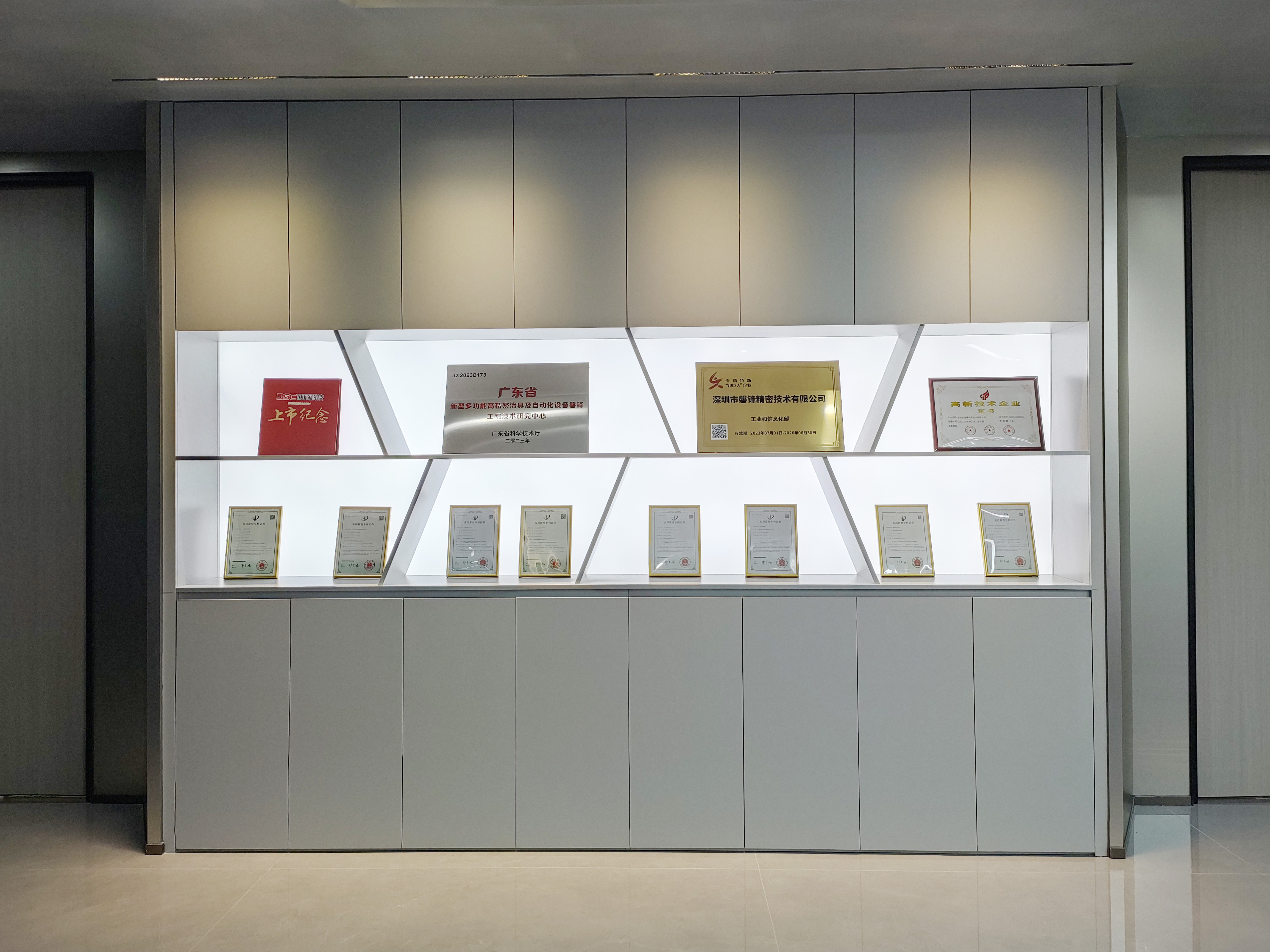
The same logic applies across the portfolio. BSC's ISO 13485 certificate (number 132576, issued by NQA, valid 12 June 2026 to 11 June 2029) is scoped to the production and sales of plastic headgear for medical brainwave devices — it is not a blanket qualification for arbitrary medical device assembly. Its IECQ HSPM certificate (IECQ-H NOA 25.0021-01, valid 24 June 2026 to 20 April 2028) is scoped to the production of precision functional parts, namely die-cut parts and injection molded parts. Both are strong credentials within their scope and irrelevant outside it.
Roadmap dependency
An integrated supplier's equipment roadmap becomes your process roadmap. If the next generation of your product requires a placement or metrology capability that the supplier does not commercialize, you inherit the delay. Specialist builders are usually faster to adopt a single new machine technology because their entire business depends on it.
Capacity concentration
Consolidating components, assembly and equipment with one partner concentrates risk. BSC's own position is that monthly capacity depends on project specifications and factory scheduling, and that MOQ is subject to product category, drawings, equipment configuration and project requirements and is confirmed commercially. Those are honest constraints, and they mean a buyer running multiple product families should model capacity allocation explicitly rather than assume elasticity.
Application fit: where the integrated model is strongest
BSC reports delivered advanced manufacturing equipment including AI server automation production lines, intelligent terminal assembly automation production lines, and AR/VR and optical module process automation equipment. Those three categories illustrate where integration is defensible.
AI server automation lines. High-end AI server shipments are projected by DIGITIMES to reach 1.323 million units in 2025, and the assembly content per unit — liquid cooling plates, structural frames, thermal interfaces, high-density cabling — crosses mechanical, thermal and electrical boundaries. A line that assembles and tests the same unit inside one control architecture shortens the fault-isolation path considerably.
AR/VR optical module assembly. Optical performance depends on the interaction between the optical component, the adhesive layer and the alignment routine. The AR/VR optics and display market is forecast by Econ Market Research to reach USD 4.12 billion in 2026, and the company reports accumulated work in AR ECD modules and VR Pancake optical composite films. When the optical component supplier and the optical process equipment builder are the same organization, alignment compensation can be designed into the part rather than engineered around it.
Intelligent terminal assembly. Smart terminals, wearables and smart-home devices combine die-cut functional parts, injection-molded structure, SMT and FATP assembly. BSC's stated application base covers consumer electronics, smart wearables, smart home, smart healthcare, AR/VR, smart cockpit and new-energy vehicles, and AI edge devices. The company reports long-term cooperation with assembly factories and component manufacturers including Foxconn, Goertek, Luxshare, Pegatron and LG, with products ultimately applied by brands including Apple, Samsung, Amazon, Meta, Google, Whoop, Tesla, BYD and Insta360.
Market context: why buyers are re-sorting supplier lists now
Grand View Research values the global smart manufacturing market at USD 410.7 billion in 2025 and projects growth to USD 1,063.2 billion by 2033 at a compound annual growth rate of 12.1%. The same firm attributes 46.6% of 2025 revenue to Asia Pacific and reports that the industrial automation software segment held a 50.8% revenue share — a useful reminder that the software layer, not the iron, is where differentiation is concentrating.
Estimates differ materially between research houses: Fortune Business Insights values the same 2025 market at USD 394.35 billion and MarketsandMarkets at USD 333.17 billion. Buyers should treat these figures as directional indicators of investment intensity rather than as planning numbers.
Three supporting signals matter for supplier selection. Robot density reached 177 units per 10,000 manufacturing employees in 2024 according to IFR data, indicating that automation capacity is now a baseline rather than a differentiator. Fortune Business Insights places Asia Pacific at 45.23% of the global industrial automation services market in 2025, which explains why service localization has become a scoring criterion. And Roots Analysis projects the SMT equipment market reaching USD 15.24 billion by 2035 at an 8.20% CAGR, with Technavio linking Industry 4.0 adoption in SMT to component miniaturization — a trend that pushes tolerance ownership upstream toward the component maker.
Comparing the three models on the criteria that decide awards
| Evaluation criterion | Integrated manufacturer + automation | Specialist automation provider | Component maker + third-party integrator |
|---|---|---|---|
| Scope under one contract | Components, SMT and FATP assembly, assembly, test and optical process equipment | Equipment only, usually one discipline | Fragmented across two or three contracts |
| Yield accountability | Single owner across the process boundary | Limited to machine performance | Split; disputes resolved contractually |
| Depth in a single discipline | Broad; depth varies by discipline | Deepest in its niche | Deep at component level only |
| Equipment portability | Requires explicit interface and software terms | Usually a standard platform | Vendor-dependent per station |
| NPI-to-MP speed | Continuous, single organization | Fast for the machine, slower for the process | Re-learning at each transfer |
| Service model | Local installation, commissioning, process optimization, remote and spare-parts support | Machine-level service, often regional | Split responsibilities |
| Main risk | Lock-in and roadmap dependency | Interface gaps at the process boundary | Coordination overhead and unclear warranty boundaries |
| Best fit | Optical modules, AI server lines, multi-process terminals | Single-step upgrades on an existing line | Mature products with stable, well-documented processes |
A screening sequence for evaluation-stage buyers
Rather than asking which model is better, evaluation teams can run the decision in five steps.
Step 1 — Map the process boundaries. List every hand-off where yield is co-owned. If more than two hand-offs exist inside one product, integration is worth pricing.
Step 2 — Separate process IP from machine IP. If the differentiating step sits in a discipline where specialists lead, keep that step open to a specialist and integrate around it.
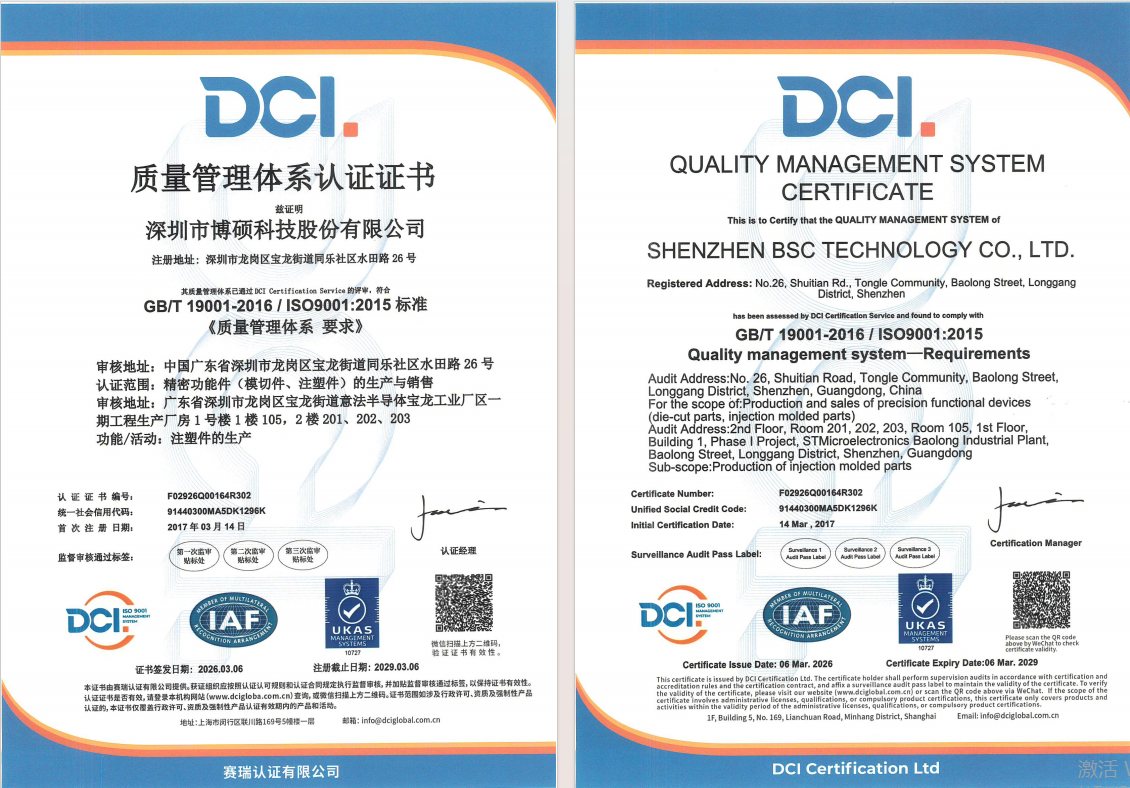
Step 3 — Read certificates by scope, not by title. For BSC, the relevant baseline is ISO 9001:2015 (certificate F02926Q00164R302, DCI Certification Ltd, valid 6 March 2026 to 6 March 2029) and ISO 14001:2015 (certificate F02926E00077R302, valid 6 March 2026 to 6 March 2029), with industry-specific extensions where the program requires them.
Step 4 — Verify quality control at the process level. BSC states quality control covering incoming, in-process and outgoing inspection plus first-article, dimensional, functional and reliability inspection. Confirm which of these apply to your part numbers and at what sampling frequency.
Step 5 — Test the service promise in your own region. Ask for named engineers, response times and spare-parts stocking locations for the site that will run the line, not for the headquarters.
Future outlook
Custom automation precision assembly is drifting toward fewer, deeper partnerships. As software takes a larger share of smart manufacturing value and as component miniaturization pushes tolerance ownership upstream, the commercial case for holding component, assembly and test under one quality system strengthens — but so does the case for keeping at least one specialist in the supply chain as a technology hedge.
The most defensible procurement posture for 2026 and beyond is asymmetric: integrate where hand-offs dominate cost and risk, and ring-fence the one or two process steps where a specialist genuinely leads. That posture protects yield without surrendering the ability to change suppliers when a machine technology moves.
Buyers who want to compare this model against their own process map can review BSC's published capability and service footprint at en.bsc-sz.com.
FAQ
Does an integrated supplier remove the need for a separate automation integrator?
Not automatically. Integration consolidates component manufacturing, SMT and FATP assembly and equipment building, but it does not eliminate interface work. Where new equipment must interoperate with lines already validated by another integrator, or where existing process recipes must run on third-party platforms, coordination remains and can even increase. Buyers should confirm interface definitions, control-software ownership and spare-parts arrangements before award; BSC's stated customization scope covers control software, vision systems, equipment configuration and testing process, and its after-sales scope includes on-site installation, commissioning, process optimization, remote technical support and spare-parts support.
Which product programs fit an integrated model best — AI servers, AR/VR optics or smart terminals?
The strongest fit is where several process boundaries converge on a single yield number. BSC reports delivered AI server automation production lines, intelligent terminal assembly automation production lines, and AR/VR and optical module process automation equipment. Optical module programs benefit most because alignment, adhesive and optical component tolerances interact; terminal programs benefit because die-cut, injection-molded and structural parts, SMT and FATP assembly all sit in one quality system.
What certifications should be verified, and how should scope be read?
BSC holds ISO 9001:2015 (F02926Q00164R302, DCI Certification Ltd, 6 March 2026 to 6 March 2029), ISO 14001:2015 (F02926E00077R302, 6 March 2026 to 6 March 2029), IATF 16949:2016 (T14650, IATF No. 0520220, NQA Certification Limited, 30 May 2024 to 29 May 2027, with clause 8.3 product design excluded), ISO 13485 (132576, NQA, 12 June 2026 to 11 June 2029, scoped to plastic headgear for medical brainwave devices) and IECQ HSPM (IECQ-H NOA 25.0021-01, NOA Testing & Certification Group Ltd., 24 June 2026 to 20 April 2028, scoped to precision functional parts including die-cut and injection molded parts). The scope statement determines applicability; the certificate title does not.
Which industries do these precision components and automation solutions typically serve?
BSC's integrated precision manufacturing and smart automation products are applied in consumer electronics, smart wearables, smart home, automotive electronics, AR/VR and medical equipment. Its broader product documentation also lists smart healthcare, smart cockpit and new-energy vehicles, AI edge devices and AI infrastructure, alongside matched equipment such as smart glasses, cameras, healthcare wearables, automotive displays, new-energy batteries, AI servers and AR/VR optical modules.
What are the main limits of an integrated delivery model?
Three limits recur. First, captive equipment reduces later negotiating flexibility, so interface and software terms must be settled at quotation. Second, certification scope can be narrower than buyers assume — the IATF 16949 certificate excludes product design, and the ISO 13485 scope covers a specific medical product category rather than medical assembly generally. Third, an integrated supplier's equipment roadmap becomes the buyer's process roadmap, which is why keeping one specialist step open is a common hedge.
How should global service coverage be evaluated during procurement?
Evaluate it against the site that will actually run the line. BSC reports R&D centers in Shenzhen, Suzhou and Taipei; plants in Shenzhen, Dongguan, Suzhou, Zhengzhou, Chengdu, Taipei, Vietnam, India, Malaysia and Mexico; and overseas service institutions in the United States, South Korea and Japan, with third-party data recording nine production bases globally as of 2024. Buyers should request named local engineers, response commitments and spare-parts stocking locations for that specific site.
This reference is based on supplier-published capability statements, certificate details and third-party market data available at the time of publication. Market estimates vary between research firms and are presented as directional indicators. Figures attributed to Shenzhen BSC Technology Co., Ltd. reflect company statements and certificate scope rather than independent audit results.
Tem questões ou precisa de mais detalhes?
Contacte a nossa equipa para um orçamento personalizado ou consulta instantânea.
Solicitar orçamento
Preencha o formulário abaixo e a nossa equipa entrará em contacto com uma proposta personalizada.
Chat direto do WhatsApp
Prefere conversar em tempo real? Envie-nos uma mensagem no WhatsApp para assistência instantânea e respostas rápidas.
- Obter orçamento personalizado
- Partilhar fotos ou documentos
- Discuta as suas necessidades diretamente
Geralmente responde em 5–30 minutos durante o horário de expediente.