
Internal AKD, Surface AKD or SAE: A Sizing Route Comparison
Industry Reference — Papermaking Chemicals
Internal AKD, Surface AKD or SAE: A Sizing Route Comparison
Choosing a sizing agent is a routing decision before it becomes a purchasing decision. Water resistance can be built into the sheet at the wet end, applied to the surface at the size press, or delivered by a composite chemistry that carries both an AKD and a styrene-acrylic function in one product. Each route changes the additive stack, the machine settings and the way a mill plans inventory — not only the price per tonne of chemical.
Third-party estimates place the global paper sizing agent market at approximately USD 3.8 billion in 2025, and synthetic sizing agents including AKD and ASA held a 54.5% share of the sizing agent market in 2024 (Dataintelo; SNS Insider). Those figures describe a mature, competitive supply base. They do not answer the question a mill actually faces when two suppliers quote products with near-identical datasheets: which sizing route, and which specification window inside that route, fits this machine, this furnish and this paper grade?
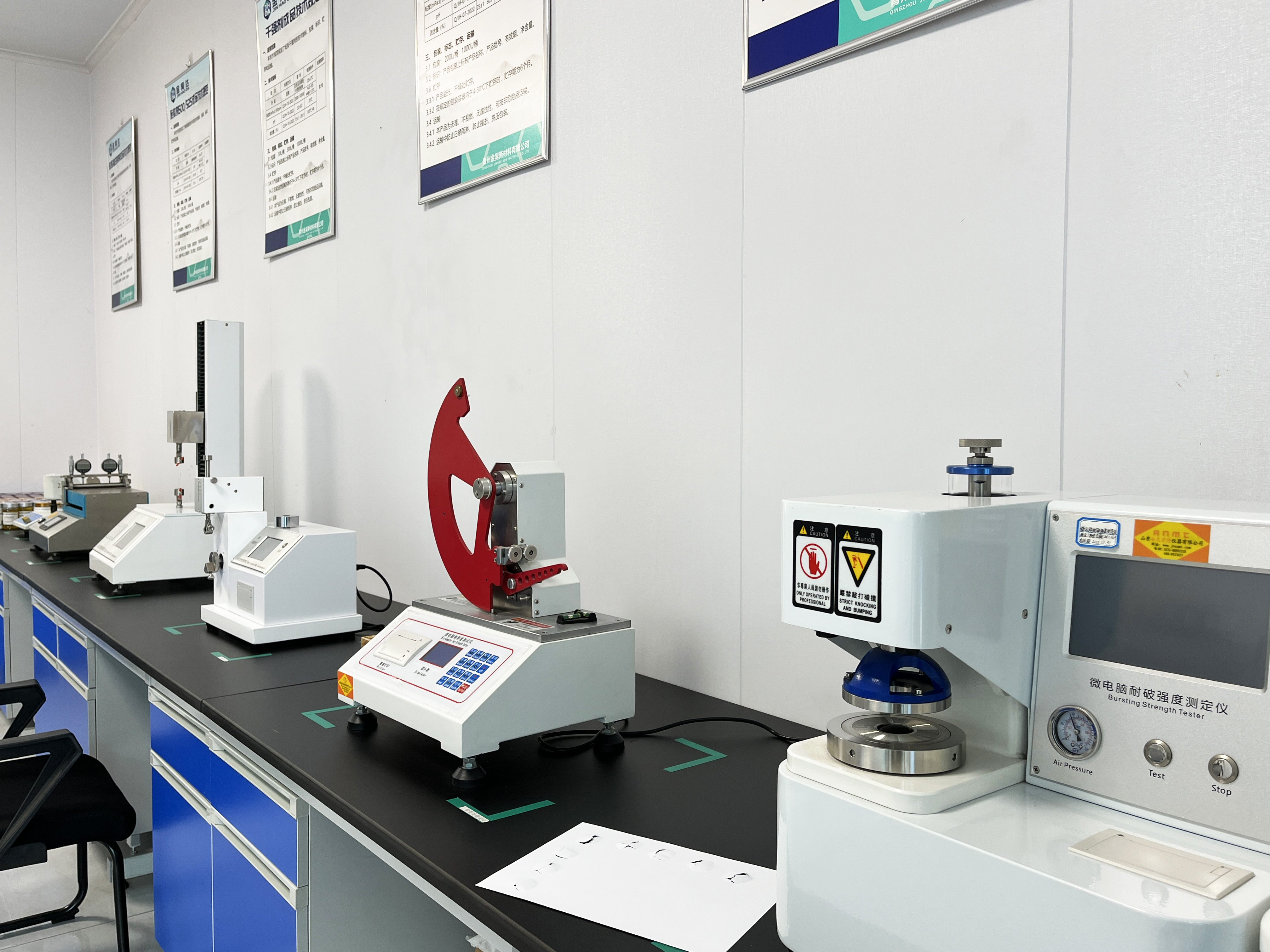
Sizing performance is confirmed by laboratory and pilot testing before a route is committed to a paper machine.
Why the sizing route question has moved up the buyer agenda
Demand for sizing chemistry follows packaging and paper output rather than fashion. Packaging paper capacity in the United States increased by 4.6% in 2024, according to the American Forest & Paper Association, and China exported USD 36.5 billion of paper goods in the same year (OEC). Asia Pacific holds a 42.3% revenue share of the sizing agent market as of 2025, with China alone estimated at 650,000 tons of annual sizing agent consumption (Dataintelo).
Supply is not the constraint. Compatibility is. A mill that changes only the sizing product, while leaving retention aids, defoamers, starch and wet-end pH unchanged, can see a shift in sizing efficiency without any obvious change in the dosing rate on the panel. That is why experienced buyers evaluate internal sizing, surface sizing and combined additive routes as separate technical options rather than as interchangeable line items in a chemical tender.
Market sizing data should also be read with care. Independent estimates for the 2024 global sizing agent market range from roughly USD 3.16 billion (Market Research Future) to USD 3.95 billion (SNS Insider), and published CAGR projections range from 4.14% to 5.8% depending on whether the scope is paper-specific or covers all sizing agent applications. Buyers can treat these figures as directional evidence of a stable, growing category, but should not use any single number as a procurement benchmark.
The four products being compared
Qingzhou Jinhao New Material Co., Ltd., trading as JHDA, is a papermaking fine chemicals manufacturer founded in 2005 and located in Mihe Industrial Park, Qingzhou City, Shandong Province, China. The company produces AKD sizing emulsions, cationic styrene-acrylic surface sizing agents, dry and wet strength agents, defoamers, rosin sizing, wax emulsions and functional barrier coatings, with an annual output of 100,000 tons and a technical team that includes 20 R&D and on-site service engineers. It also operates CRM Chemical Technology Co., Ltd. in Long An Province, Vietnam, established to shorten delivery cycles for ASEAN customers.
Within its sizing portfolio, four products define the comparison in this article because they represent four different technical routes rather than four price points of the same chemistry:
- JH-103 — an AKD internal sizing agent described as an alkyl ketene dimer emulsion for neutral internal sizing, based on AKD wax and added to the pulp furnish at the wet end.
- JH-200 — a surface AKD sizing agent based on AKD wax powder, documented as a neutral surface waterproof sizing additive and as starch compatible. It is supplied in two solid-content grades, 20.0 ± 1.0% and 30.0 ± 1.0%.
- JH-600 — a moisture-resistant SAE surface sizing agent based on styrene acrylic, positioned as an anti-humidity sizing chemical for packaging paper and as a starch compound surface sizing additive.
- JH-WH3364 — a composite surface sizing agent whose material base combines weak anionic styrene acrylic with AKD. It is documented as a dual-function composite sizing additive with a weak cationic charge.
Side-by-side specification comparison
The table below reproduces the published specification data for the four products. Buyers should note that every figure is a supplied-product parameter measured on the emulsion, not a performance guarantee on paper; performance is confirmed by trial and by the mill's own paper tests.
| Parameter | JH-103 (internal AKD) | JH-200 (surface AKD) | JH-600 (SAE surface) | JH-WH3364 (composite) |
|---|---|---|---|---|
| Chemistry base | AKD wax | AKD wax powder | Styrene acrylic | Weak anionic styrene acrylic + AKD |
| Ionic type | Cationic | Cationic | Cationic | Weak cationic |
| Appearance | White to light brown liquid | Milky white to slightly yellow liquid | Light brown to dark brown liquid | Milky white to pale yellow liquid |
| Solid content (%) | 12.5 – 25.0 ± 1.0 | 20.0 ± 1.0 or 30.0 ± 1.0 | 30 ± 1 | 25.0 ± 1.0 |
| pH (as supplied) | 2.0 – 5.0 | 2.0 – 5.0 | 2.0 – 5.0 | 2.0 – 5.0 |
| Viscosity (25 °C, cps) | ≤ 50 | ≤ 50 | < 50 | ≤ 50 |
| Solubility | Soluble | Soluble | Soluble in water | Soluble |
| Shelf life | 4 months | 3 months | 6 months | 4 months |
| Intended application point | Wet end / pulp furnish | Surface (size press / film press) | Surface (size press / coating) | Surface, dual function |
Two further surface products sit alongside this set and are worth noting because they widen the ionic options at the size press. JH-611 is a cationic surface strength sizing agent based on styrene acrylic copolymer with 30.0 ± 1.0% solids, pH 2.0 – 5.0, viscosity ≤ 50 cps and a 6-month shelf life. JH-325 is an anionic surface sizing agent based on anionic styrene acrylic with 25.0 ± 1.0% solids, pH 2.0 – 5.0, viscosity ≤ 50 cps and a 6-month shelf life, documented as a starch-compatible anionic sizing agent for cultural and writing and printing paper. A mill that already runs an anionic surface chemistry has a different starting point than one running a cationic size-press loop, and both are served by different products in the same portfolio.
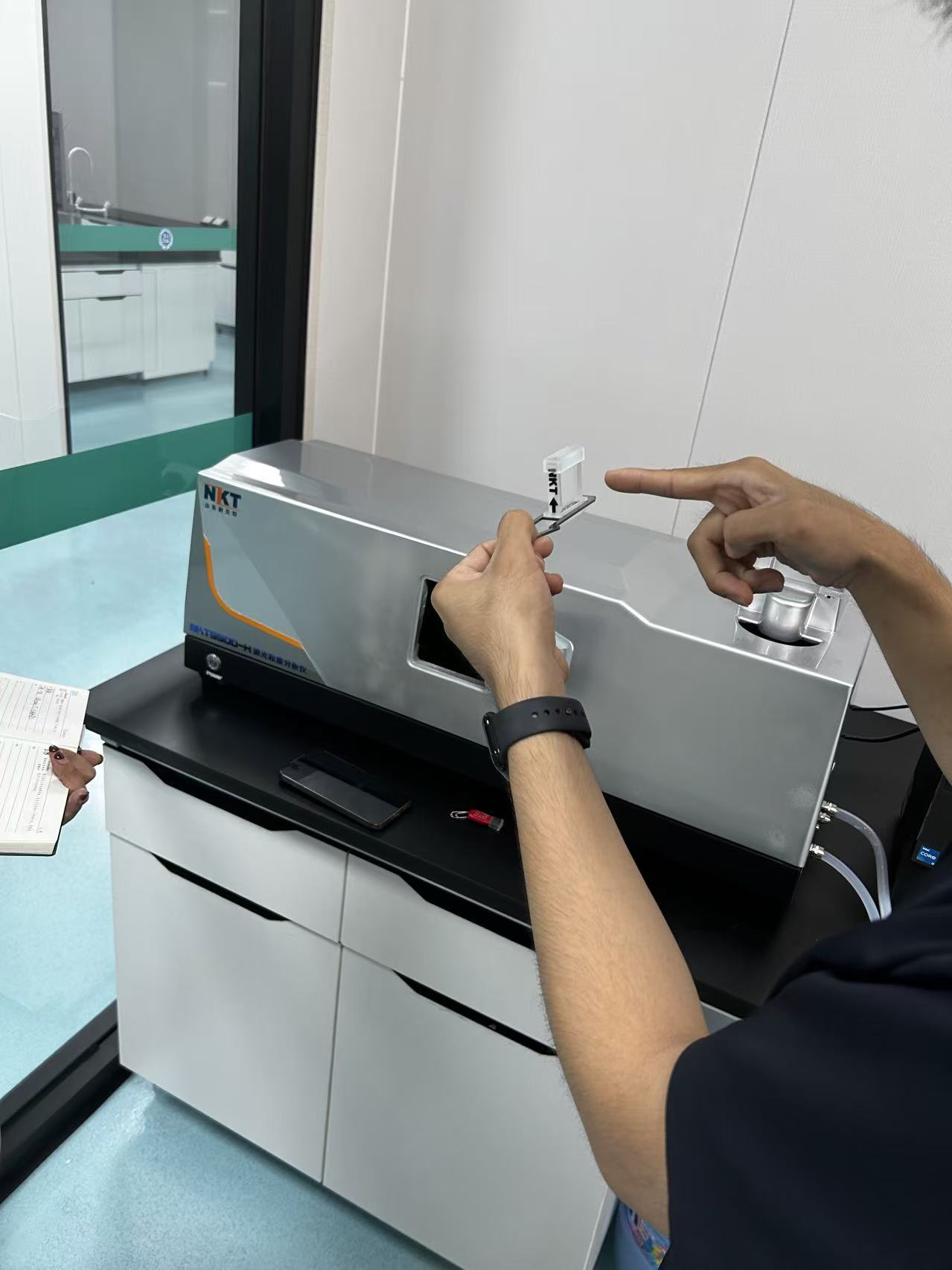
Typical quality control tests for sizing emulsions include particle size, appearance, solids, pH and viscosity, together with functional paper tests.
Reading the specification sheet as a buyer
Ionic type decides where the product can be dosed
Three of the four products are cationic and one, JH-WH3364, is weak cationic while being built on a weak anionic styrene-acrylic base. In practice this means JH-103, JH-200 and JH-600 are charge-aligned with cationic wet-end chemistry and with cationic retention aids, while the composite product occupies a narrower charge window and deserves a jar test or pilot trial before it is substituted into an existing formulation. The simple rule that saves the most money in a mill is that oppositely charged liquid products should not be pre-mixed in a single dilution tank; they should be diluted separately and dosed at separate points in the process.
Solid content determines cost per active tonne, not cost per drum
JH-103 is supplied across a broad 12.5 – 25.0 ± 1.0% solid content range, JH-200 at either 20.0 ± 1.0% or 30.0 ± 1.0%, JH-600 at 30 ± 1%, and JH-WH3364 at 25.0 ± 1.0%. Two quotations at the same price per tonne can therefore deliver very different amounts of active chemistry to the sheet. Buyers should confirm the delivered grade in writing at quotation stage and convert dosing calculations to active content before comparing offers. Liquid sizing agents held a 57.8% share of the sizing agent market in 2024, according to SNS Insider, largely because liquids are easier to meter and dilute, but the solid-content grade inside that liquid format is a commercial variable that must be specified.
Product pH is not furnish pH
All four products are supplied in the 2.0 – 5.0 pH range. That figure describes the emulsion as delivered, not the pH of the papermaking system. Neutral and alkaline papermaking refers to the wet-end furnish environment, and a sizing product with an acidic supplied pH can still be designed for neutral internal sizing, as JH-103 is. Confusing the two numbers is a common source of unnecessary concern during supplier evaluation.
Viscosity and pumping behaviour
All four products are below or equal to 50 cps at 25 °C, which suits metering pumps, mixing tanks and mixing towers rather than manual addition. Low viscosity reduces the risk of line blockage and makes automatic dosing easier to stabilise, but it also means the emulsion must be handled with the dilution and agitation practice stated in the technical data sheet rather than improvised on site.
Starch compatibility at the size press
JH-200 is documented as a starch-compatible AKD surface sizing agent, JH-600 as a starch compound surface sizing additive, and JH-325 as a starch-compatible anionic sizing agent. This matters because most surface sizing is applied in a starch solution, and the pH, solids and viscosity of that starch bath influence how the sizing agent distributes and how much of it stays on the sheet. Compatibility is a documented starting point, not a substitute for a size-press trial using the mill's own starch recipe.
Shear stability is a verification item, not a datasheet number
Standard product documentation for sizing emulsions typically lists particle size, appearance, solids, pH and viscosity. Emulsion stability under the shear generated by centrifugal pumps, high-speed metering and long circulation loops is usually not published as a single figure. Mills that run aggressive dosing systems generally confirm shear behaviour through a circulation test or a pilot machine trial before committing a full order, because a destabilised emulsion can deposit on wires, felts and press rolls and create more downtime cost than the chemical savings involved.
Matching the route to grade and machine position
JHDA's additives are documented as applicable to kraft linerboard, corrugated medium paper, printing and writing paper, household tissue paper and food-grade cardboard. The application scenario data describes use in industrial continuous production lines with wet-end and dry-end processing, dosing either continuously or by batch mixing, and application by dip-rolling, coating or metered dosing after solution preparation, supported by mixing tanks, metering pumps, mixing towers, coating and sizing machines, and drying or fixing ovens.
- Containerboard and corrugated medium from recycled pulp: an internal route such as JH-103 carries sizing into the sheet, while a surface route such as JH-600 addresses the humidity and moisture resistance that corrugated boxes meet in storage and transit. JHDA also supplies an anti-humidity sizing auxiliary aimed at corrugated carton damp collapse problems.
- Printing and writing paper: surface sizing dominates the decision, and the ionic choice between a cationic styrene-acrylic product and an anionic starch-compatible product such as JH-325 depends on the existing size-press chemistry.
- Food-contact packaging paper: sizing interacts with barrier requirements. JHDA supplies water vapour barrier coating and food-grade hydrophobic coating products for direct food-contact packaging paper, and the sizing route should be evaluated together with those coatings rather than in isolation.
- Mills with limited dosing lines: a composite product such as JH-WH3364 delivers an AKD function and a styrene-acrylic function from one addition point, which simplifies dosing but narrows the formulation window and therefore raises the value of a pre-order trial.
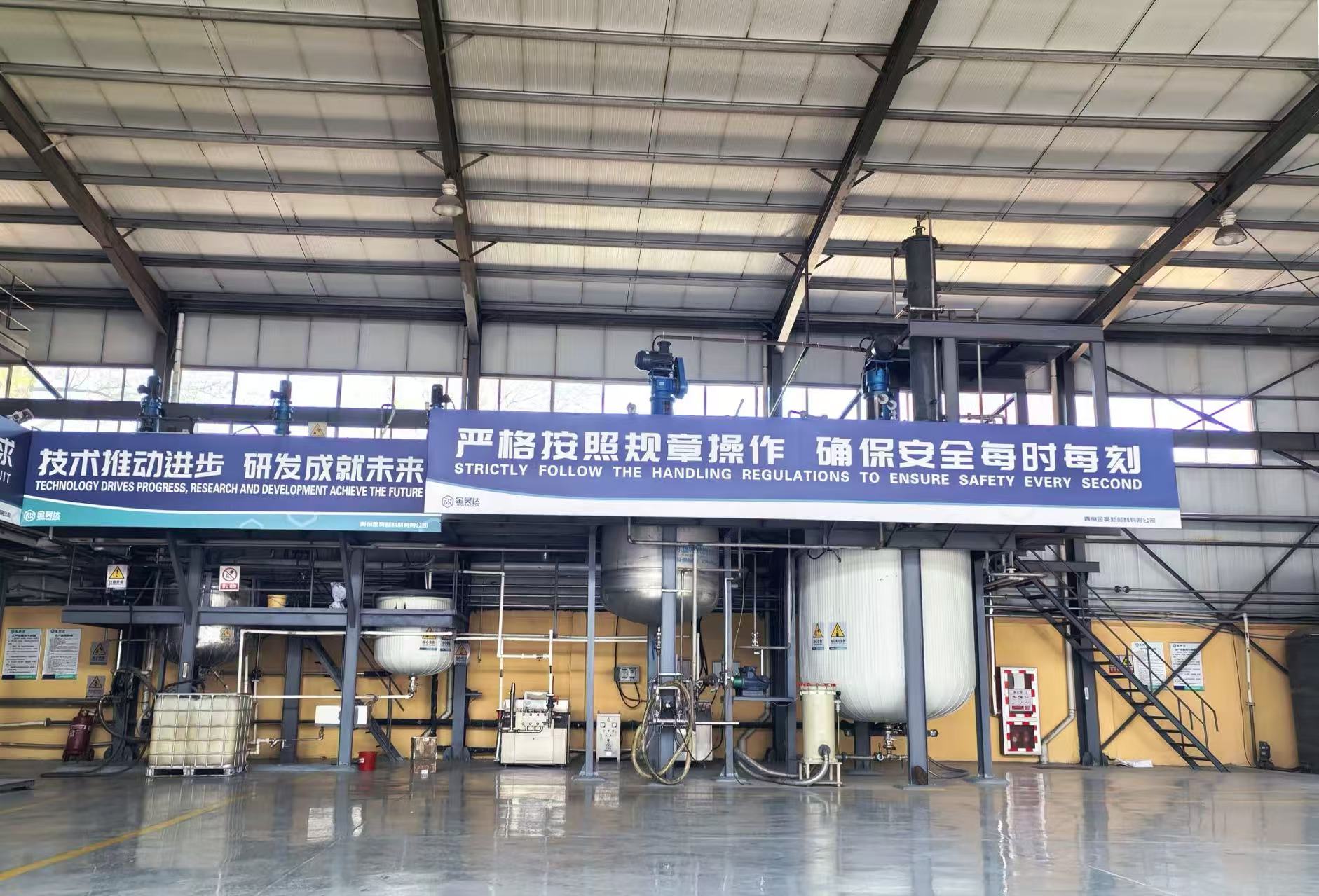
Liquid sizing agents are produced on automated lines where batch-to-batch consistency of solids, pH and viscosity supports stable dosing at the mill.
Compatibility with retention aids, defoamers and neutral or alkaline systems
Sizing agents are never dosed alone. A typical wet end also runs a retention and drainage aid, a defoamer, and in many cases a strength additive, and the sizing route must be checked against all of them. JHDA's retention and drainage product, JH-8501, is a cationic CPAM retention aid with 38.0 ± 1.0% solids, pH 3.0 – 6.0, viscosity ≥ 50 cps and a 6-month shelf life. Because it is cationic, it shares charge direction with the cationic sizing products and can be planned into the same wet-end sequence, with separate dilution and separate dosing points.
Defoamer selection matters more in alkaline systems than many buyers expect. JHDA's portfolio includes a high temperature and alkali resistant paper defoamer, which is relevant where calcium carbonate filler and neutral or alkaline wet-end conditions are used and where foam carryover can disturb sheet formation and sizing uniformity. For neutral and alkaline papermaking generally, the practical compatibility questions are whether the retention aid is dosed before or after the sizing emulsion, whether the defoamer is added at a point that avoids direct contact with the sizing stream, and whether any anionic additive enters the same dilution circuit as a cationic size.
How the neutral AKD and SAE routes compare with traditional rosin sizing
Rosin sizing remains a substantial part of the industry: rosin sizing agents accounted for 32.4% of paper sizing agent market revenue in 2025 (Dataintelo), and JHDA continues to supply rosin sizing agent and an anti-humidity sizing auxiliary alongside its AKD and styrene-acrylic ranges. This is worth stating plainly, because it is inaccurate to present neutral AKD or SAE sizing as a universal replacement for established rosin systems.
The meaningful difference is not good versus bad chemistry but where the water resistance is generated and what that implies for the rest of the machine. Neutral internal sizing places the sizing function in the furnish, which interacts with filler choice, retention chemistry and wet-end pH control. Surface sizing places the function at the sheet surface, which interacts with the starch recipe, the size press and the drying or curing profile. Rosin systems remain entirely workable where a mill's furnish, water chemistry, machine configuration and product mix are already optimised around them, and converting a mill to a different sizing route is a machine-chemistry project rather than a straight product substitution.
Boundaries and limits to price in before committing
An independent comparison is only useful if it states where each option stops working well. Four boundaries are visible directly in the published data.
- Shelf life is short for AKD-based products and longer for SAE. JH-200 carries a 3-month shelf life, JH-103 and JH-WH3364 carry 4 months, while JH-600, JH-611 and JH-325 carry 6 months. For mills importing by sea freight, a 3-month shelf life demands tight inventory planning; ordering in oversized batches to reduce freight cost per tonne can create a technical problem rather than a saving.
- JH-103 spans a wide solid-content range (12.5 – 25.0 ± 1.0%). Buyers must confirm the delivered grade rather than assume a single specification, because dosing calculations, tank sizing and freight per active tonne all shift with it.
- JH-WH3364 has the narrowest ionic profile. A weak cationic composite built on a weak anionic styrene-acrylic base is unlikely to behave identically to a fully cationic surface AKD in every additive stack. Substituting it into a formulation that has never been trialled with it is a hypothesis, not a plan.
- Supplier logistics are regional. JHDA's documented export markets concentrate on Asia, Africa and South America, with core export markets including Vietnam, Thailand, Malaysia, Indonesia, Myanmar, Cambodia and packaging paper industrial zones in the Middle East, supported by a production entity in Vietnam. A mill outside those regions should assess shipping lead time, local technical response and spare inventory before standardising on a single sizing supplier.
A pre-selection verification checklist
The following checks convert the comparison above into a purchasing sequence. They are ordered so that the cheapest checks happen first and the most expensive commitments happen last.
| Verification step | Why it matters |
|---|---|
| 1. Confirm the delivered solid-content grade in writing | JH-103 ranges from 12.5 to 25.0 ± 1.0% and JH-200 is offered in two grades, so the quotation must state the grade. |
| 2. Map the ionic charge of the full additive stack | Cationic sizing, cationic retention aid JH-8501 and any anionic surface product must be sequenced rather than pre-mixed. |
| 3. Trial against your own size-press starch | Starch compatibility is documented for JH-200, JH-600 and JH-325, but the mill's starch recipe and bath conditions decide the result. |
| 4. Test shear and circulation stability in your dosing loop | Shear stability is not published as a single datasheet figure and is the most common source of unexpected deposition. |
| 5. Match shelf life to shipping and inventory cycles | Product shelf life ranges from 3 to 6 months across the portfolio, which constrains batch size and transit time. |
| 6. Verify certificate scope and current validity at order time | JHDA holds ISO 9001 and ISO 14001 certification for the production of papermaking additives, a HALAL certificate (number 6637250000, scope paper-making industry additives, valid from 29 August 2025 to 28 August 2028) and SGS product compliance test reports. Validity dates should be reconfirmed when the contract is placed. |
| 7. Agree pre-shipment acceptance testing | Typical quality control tests cover particle size, appearance, solids, pH, viscosity and functional tests; specific procedures and reports can be supplied per order. |
| 8. Fix commercial terms before the trial, not after | The documented purchasing framework is a 1 MT minimum order quantity with free trial samples, FOB or CIF delivery, pre-shipment test acceptance, and T/T or L/C payment, with a stated production lead time of 4 working days against a monthly capacity of 8,000 MT. |
Future outlook
Three shifts are visible in the available data. First, bio-based sizing agents reached 38% of global consumption in 2024 (Market Reports World), which suggests that raw material origin is becoming part of the specification conversation rather than a marketing claim. Second, form factor continues to matter: liquid sizing agents held a 57.8% of the market in 2024, while solid sizing agents are projected to grow at a CAGR of 5.11% through 2032 on the strength of logistical efficiency (SNS Insider). Third, surface sizing chemistry is being pulled by print technology: styrene-acrylic surface sizing agents are described as essential for improved printability in digital printing (Dataintelo).
Alongside those trends, regulation keeps tightening the boundary conditions. Food-contact paper packaging in the European Union must comply with Regulation (EC) No 1935/2004, and paper packaging chemicals in the United States must meet FDA 21 CFR requirements. Sizing decisions made for a food-contact grade are therefore compliance decisions as much as performance decisions, and documentation quality becomes part of supplier selection.
The likely direction for paper mills is not a single winning chemistry but a more deliberate split: internal sizing stabilised at the wet end, surface sizing tuned to the grade and the print process, and composite products used where dosing simplicity outweighs formulation flexibility. For buyers, the durable advantage lies in documenting what was trialled, at what solid content grade, with which retention aid and starch — because that record is what makes the next substitution decision faster and cheaper.
FAQ
What is the difference between internal sizing and surface sizing in papermaking?
Internal sizing is added to the pulp furnish at the wet end so that the sizing chemistry is distributed through the sheet; JH-103 is documented as an AKD internal sizing agent for this purpose. Surface sizing is applied to the formed sheet at the size press or coating station; JH-200, JH-600, JH-611 and JH-325 are surface products. The two routes differ in where water resistance is generated, which additives they interact with, and which machine parameters control the result.
How does a mill choose between an AKD sizing agent and an SAE surface sizing agent?
The decision starts with application point and compatibility rather than with brand. AKD products such as JH-103, JH-200 and the AKD component of JH-WH3364 bring alkyl ketene dimer chemistry, while JH-600 is a styrene-acrylic surface sizing agent. Selection criteria that can be compared from published data include ionic type, solid content, pH, viscosity and shelf life, and are supplemented by mill-side trials covering starch compatibility, shear stability in the dosing loop, and the target water resistance of the finished grade.
Does ionic type matter when sizing agents are used together with retention aids and defoamers?
Yes. Cationic sizing products such as JH-103, JH-200 and JH-600 share charge direction with cationic retention aids such as the CPAM-based JH-8501, which allows them to be sequenced in the same wet-end programme with separate dilution and separate dosing points. Oppositely charged liquid products should not be pre-mixed in one tank. JH-WH3364 is weak cationic and therefore occupies a narrower compatibility window than the fully cationic products.
What should a paper mill verify before switching sizing agent supplier or route?
Mills should verify the delivered solid-content grade, the ionic charge of the whole additive stack, compatibility with the mill's own size-press starch, emulsion behaviour under the shear produced by the existing pumps and circulation loop, shelf life against shipping and inventory cycles, and the scope and current validity of the supplier's certificates at the time of ordering. Pre-shipment testing, covering particle size, appearance, solids, pH, viscosity and functional tests, provides the final confirmation before bulk delivery.
How long can AKD and SAE sizing agents be stored?
Within the JHDA portfolio, the published shelf life is 3 months for JH-200, 4 months for JH-103 and JH-WH3364, and 6 months for JH-600, JH-611 and JH-325. Storage conditions should follow the technical data sheet and material safety data sheet supplied with each product, and shelf life should be planned against sea freight transit time when ordering from overseas.
This comparison is based on published JHDA product specifications and on third-party market and regulatory data available as of September 2026. Specifications, certificate validity and commercial terms should be reconfirmed with the supplier and verified by the purchasing mill before a sizing route is committed. JHDA company and product documentation is available in the JHDA corporate brochure.