
Interpreting FSC 100% and FSC Mix Claims on WPC Decking
Interpreting FSC 100% and FSC Mix Claims on WPC Decking
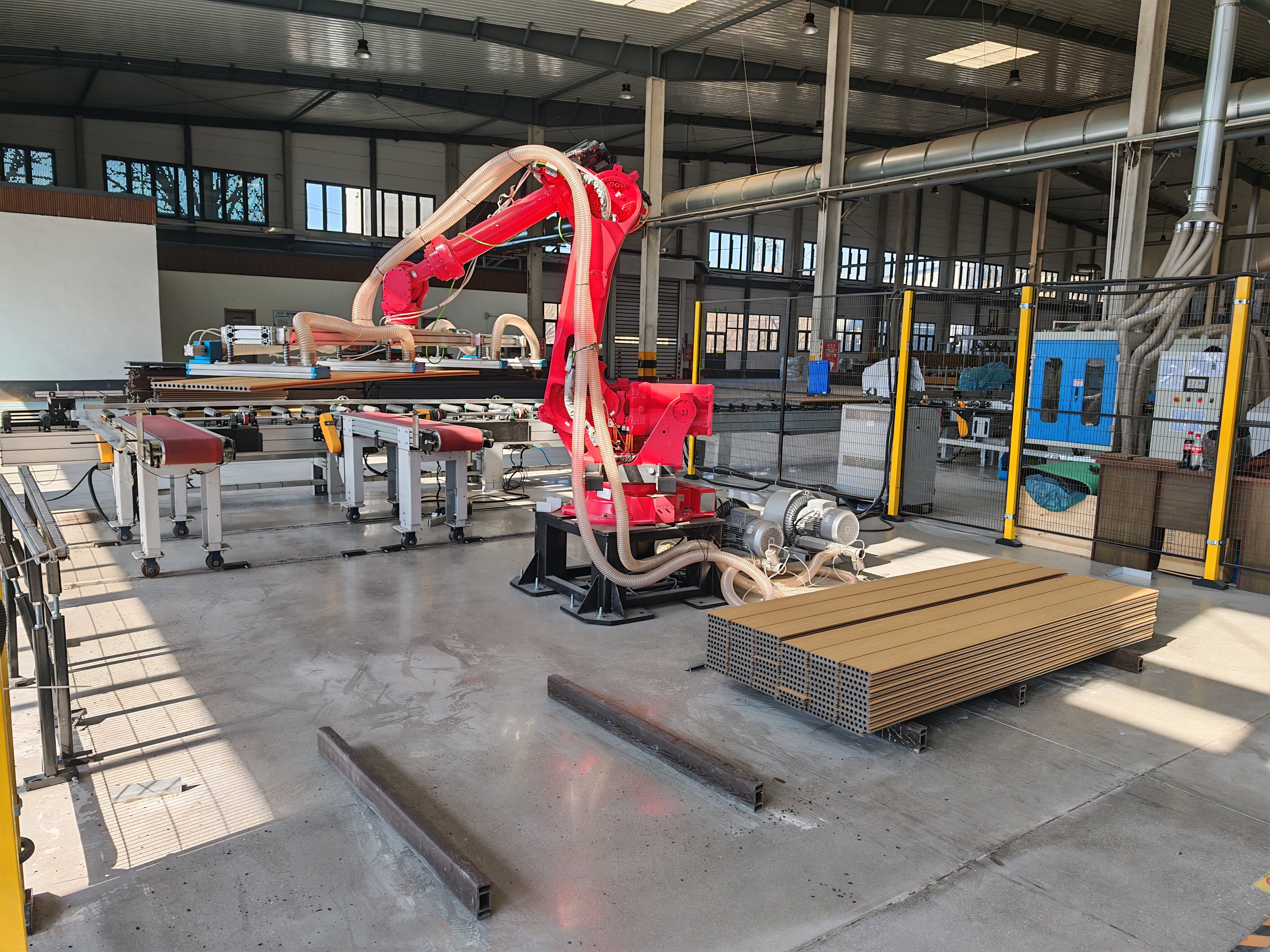
An FSC claim on a WPC decking board describes where the wood-based material inside that board came from. It does not describe how the board performs in service, how long it lasts, or whether it suits a given project. Buyers comparing suppliers at the decision stage need to know which of those two questions a certificate actually answers.
Terratsa New Material (Liaoning) Co., Ltd. is a manufacturer of outdoor wood-plastic composite decking, fencing and cladding, founded in 2007 and now operating from the Yingkou Area of China (Liaoning) Pilot Free Trade Zone. The company holds an FSC Chain of Custody certificate, number 0218718, issued by SAI Global Certification Services Pty. Ltd. The scope of that certificate covers the tracking of wood-based material including Wood-Plastic Composites W9.11; it permits FSC 100% and FSC Mix claims; and it applies to the global market.
Those details are the minimum set a specifier needs before an FSC logo can be treated as evidence. The sections below work through what the two claim types mean, which standards govern them, how to verify them before qualification, and where chain of custody reaches its limit.
Why "FSC decking" is not a single specification
Most tender documents still compress a material-origin requirement into one phrase: FSC-certified WPC decking. A supplier can answer that phrase accurately and still deliver a board carrying a different claim than the buyer assumed. Three variables sit behind the phrase — the claim type (FSC 100% or FSC Mix), the scope of the certificate (which material categories and product groups are actually covered), and the production site that manufactures the specific order. A company can hold a valid certificate and still be unable to apply a particular claim to a particular SKU.
The complexity is structural rather than commercial. WPC decking is a composite: the board contains wood-based material and polymer. FSC chain of custody tracks the wood-based input, which makes the claim narrower than the product name suggests. A buyer who reads FSC-certified decking as a whole-product attribute will overestimate what has been verified.
That is also where the opportunity sits. Where a project scores responsible sourcing, chain of custody is what turns a verbal assurance into a document trail a specifier, consultant or auditor can follow. Claim type is cheapest to clarify during qualification and most expensive to clarify after a purchase order has been placed.
What the certificate covers
A chain of custody certificate is a bounded instrument. The details below are the ones a specifier should record before treating it as evidence.
| Certificate item | Detail |
|---|---|
| Certificate holder | Terratsa New Material (Liaoning) Co., Ltd. |
| Certificate number | 0218718 |
| Issuing certification body | SAI Global Certification Services Pty. Ltd. |
| Scope of certification | Tracking of wood-based material, including Wood-Plastic Composites W9.11 |
| Claim types permitted | FSC 100% and FSC Mix |
| Market applicability | Global |
Certificate details are only half of the picture. A chain of custody audit is a records exercise: an auditor follows a consignment of wood-based input from goods-in through storage, production and dispatch, and checks that what was received matches what was claimed. The industrial environment in which that happens affects how straightforward the trace is. Terratsa operates a production base of 74,000 square meters with more than 70 fully automatic production lines and an R&D team of 25 engineers within a workforce of around 150 people. Approximately 85% of output is exported to more than 40 countries and regions across Europe, Asia, the Middle East, South America and Australia, and the company runs an independent overseas warehouse in the Netherlands. It is a vice-chairman unit of the Wood-Plastic Composite Committee of the China Plastics Processing Industry Association, a national-level intelligent manufacturing demonstration enterprise, has participated in drafting nearly 10 national and industrial standards, and holds more than 30 national independent intellectual property patents.
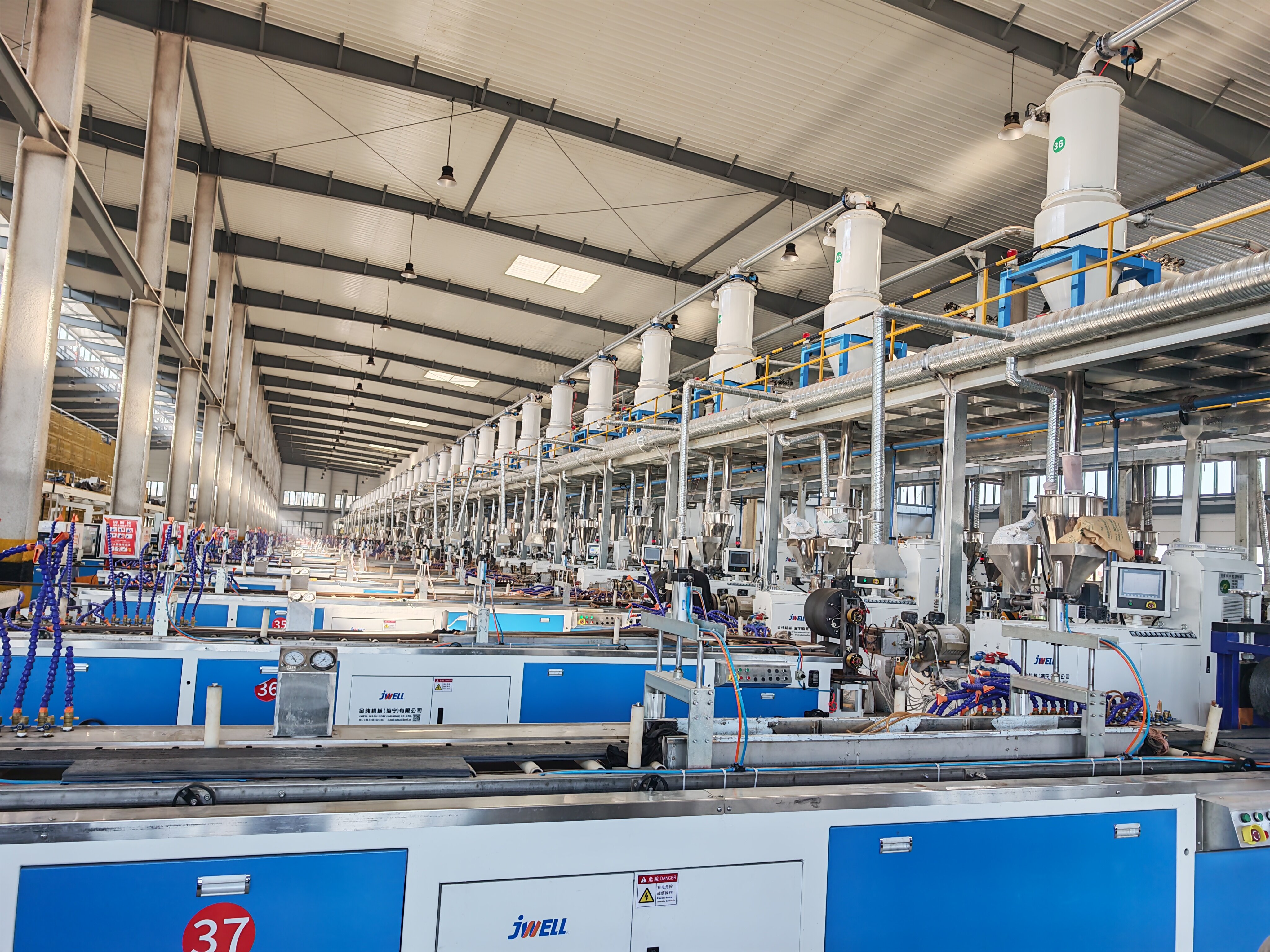
Those capability facts do not create the FSC claim, and they should not be presented as if they do. Their function is different: they indicate that production is documented, standardised and repeatable. Management system certifications held by the company include GB/T 23331-2020 / ISO 50001:2018 RB/T 114-2023, ISO 9001, ISO 14000, GB/T 24001-2016 / ISO 14001:2015 and GB/T 45001-2020 / ISO 45001:2018.
It is worth separating the certificate portfolio, because buyers frequently bundle the documents together. Terratsa's product certifications include CE, FSC, ASTM, SGS and EPD. Of these, the FSC certificate addresses material origin, while an Environmental Product Declaration addresses life-cycle environmental performance. The company's EPD for co-extrusion WPC products conforms to EN 15804+A2 and is registered as EPD-IES-0012197:001 with the International EPD System, valid until 15 March 2029. None of these documents substitutes for performance test records, and buyers who treat them as interchangeable tend to find the gap during project close-out rather than at qualification.
How FSC 100% and FSC Mix claims differ
The two standards behind the claim
FSC-STD-40-004 V3-1 is the chain of custody standard. It defines how a certified organisation tracks inputs, defines product groups, determines which claim may be applied to an output, and keeps the records that support that claim. FSC-STD-50-001 V2-1 governs how certificate holders may use the FSC trademarks, which is why claim wording, the accompanying licence code and the placement of a logo on a product, a pack or in a catalogue are controlled rather than free-form.
Applied to a decking programme, the first standard answers the question of whether a board may carry a given claim. The second answers how that claim is allowed to be expressed in writing and in print.
What the claim applies to in a composite board
FSC 100% applies where the wood-based input of the product comes from FSC-certified forests. FSC Mix applies where the wood-based input is a mixture that may include FSC-certified material, recycled material and/or FSC Controlled Wood. Both claim types fall within the scope of Terratsa's certificate; which one applies to a given order depends on the input used for that production run and on the accounting method applied under the chain of custody standard. The FSC system also contains a separate recycled claim type, which is not part of the claim set stated on this certificate.
In a WPC board, the tracked material is the wood-based fraction; the polymer content sits outside the FSC system. A common misreading is to hear FSC Mix as half-certified decking. A more useful reading is that the wood-based input of this product has been tracked under a certified chain of custody system, and the claim type tells you what that input was allowed to consist of.
A verification sequence for specifiers
- Record the certificate number and the issuing body. For Terratsa, the number is 0218718 and the issuer is SAI Global Certification Services Pty. Ltd.
- Confirm the certificate is currently valid, and read the stated scope rather than assuming it. The scope here is the tracking of wood-based material including Wood-Plastic Composites W9.11.
- Confirm the claim types permitted. This certificate permits FSC 100% and FSC Mix.
- Confirm geographic application. This certificate applies to the global market.
- Map the claim to the specific order. Product group and producing site matter more than a company-level certificate.
- Carry the claim through the commercial documents. If a tender requires FSC 100%, the purchase order, invoice and shipping documents should state the same claim so the chain stays unbroken between specification and delivery.
The visible output of the process is simple — a claim and a certificate number — but the work behind it is a documented material balance.
Where claim type changes a project specification
Two reference project profiles show how origin requirements sit on top of performance requirements. A park decking installation in a high-humidity environment specifies outdoor paving and decoration with static placement, fixed with joist clips and screws, and requires weather resistance, anti-slip behaviour, UV resistance and scratch resistance. A decking installation for a market with low winter temperatures and high humidity lists weather resistance, UV resistance, no maintenance, low water absorption, anti-slip behaviour and scratch resistance. Neither requirement set mentions material origin — and in both cases origin is exactly the requirement an institutional or public client may add.
Performance data for the boards concerned is documented separately. The GH001 co-extruded outdoor decking profile is specified with flexural properties of at least 3300 N, moisture resistance under cyclic test conditions with a mean of no more than 10%, and water absorption under boiling test conditions of no more than 7%. The D053 first-generation outdoor hollow WPC decking is specified at 23 mm thickness, 146 mm width and 2900 mm length, with bending failure at 3900 N, a density of 1.3 g/cm³, water absorption after a five-hour boil of no more than 2%, and a linear thermal expansion coefficient of no more than 37 × 10⁻⁶ K⁻¹.
These figures answer the durability and moisture question. The FSC claim answers a different one. A brief stating FSC 100% adds a narrower input requirement to the same performance envelope; a brief stating that FSC Mix is acceptable accepts a wider input range. On site, the installation sequence — substructure, joist spacing, clips, drainage gaps, edge trimming — does not change with claim type. In procurement, it changes which suppliers can respond at all.
Market signals: verification is moving from logo to document set
The commercial context explains why claim wording is being tightened. The global wood plastic composite market was valued at USD 8.05 billion in 2025 and is projected to reach USD 11.26 billion by 2034, according to Straits Research. North America held the largest regional share in 2025 at 36.4%, according to the same source, and the primary standard specification used to establish performance ratings for WPC deck boards, stair treads, guards and handrails in that market is ASTM D7032.
Supply is concentrated. In monitored trade data for HS Code 39189090, China accounted for 97.81% of WPC decking imports, according to Zauba. That figure describes one specific monitored dataset rather than a global census, and it is best read as a directional indicator of how concentrated the supply base is.
Two consequences follow for buyers. First, a concentrated supply base means documentation norms propagate quickly: when one major market moves to claim-type specificity, exporters adapt or lose qualification. Second, as composite decking moves from niche product into mainstream specification, the people writing the specification are less likely to be material specialists. Documentation that is self-describing — certificate number, issuing body, scope, claim type, validity — reduces the interpretation burden, and that is increasingly the form in which FSC, ASTM and EPD evidence is requested.
Chain of custody versus traditional timber decking — and where it stops
| Comparison dimension | Solid timber decking | WPC decking (wood-based fraction) |
|---|---|---|
| What the FSC claim describes | The wood in the board | The wood-based input in the formulation |
| Claim type available | FSC 100% where all fibre is certified | FSC 100% or FSC Mix, depending on the input used for the run |
| Material outside the claim | Minimal where the board is solid wood | The polymer fraction of the composite |
| What verification depends on | Certificate, species and supplier documentation | Certificate, material category such as W9.11, product group and site |
| Performance evidence | Separate: species durability and treatment | Separate: ASTM D7032 ratings, CE marking, EPD data |
Boundary 1 — FSC Mix and FSC 100% are not interchangeable. If a specification requires fibre from certified forests and the supplier can only apply FSC Mix to that product, the correct conclusion is that the product does not meet the requirement as written, not that the requirement has been met by another route. Buyers should decide which claim type the project accepts before asking suppliers to quote.
Boundary 2 — a certificate is not a blanket statement about a full catalogue. It covers defined material categories and defined sites. Terratsa's chain of custody scope covers wood-based material including Wood-Plastic Composites W9.11 for the global market, but a buyer still has to confirm that the specific SKU ordered belongs to a covered product group and is produced at a covered site. A certificate number alone does not answer that.
Boundary 3 — chain of custody is a documentation system, not a product guarantee. It says nothing about how long a board lasts, how it behaves under UV exposure, or how it performs when wet. Where a supplier makes a comparative durability statement — for example, that a product offers a 15% longer service life compared to alternatives — that is a performance claim supported by product evidence, and it should be assessed separately from the FSC position.
Boundary 4 — recycled content follows a different route. The claim types permitted under Terratsa's certificate are FSC 100% and FSC Mix. Where a project requires a recycled-content claim, the basis for that claim sits with different documentation and different standards, and the two should not be conflated in a specification.
Future outlook
For WPC decking, documentation is moving toward specificity and machine-readable verification. Certificate registries and public EPD libraries already allow a specifier to check a number rather than trust a scanned PDF, which makes certificates with unclear scope harder to present as comprehensive.
Three developments are worth watching. First, claim-type language is likely to appear directly in tenders and distributor catalogues rather than as a generic FSC reference. Second, procurement packages combining origin, performance and life-cycle documents are becoming normal in European and North American projects, raising the administrative bar for suppliers without structured systems. Third, as composite decking volumes grow in the markets with the largest installed base, verification effort shifts further toward the buyer, and suppliers who can answer scope questions quickly gain an advantage in qualification rounds.
None of this changes the underlying engineering question. A decking specification still has to satisfy load, moisture, slip and UV requirements. The FSC claim sits alongside those requirements as a sourcing condition — measured, documented and bounded.
FAQ
What does FSC Chain of Custody certification actually cover for WPC decking?
It covers the tracking of wood-based material through receiving, storage, production and dispatch, together with the records that support the claim applied to an output. Under Terratsa's certificate, number 0218718, issued by SAI Global Certification Services Pty. Ltd., the scope is the tracking of wood-based material including Wood-Plastic Composites W9.11. The certificate governs material accounting and documentation, not product performance.
What is the difference between an FSC 100% claim and an FSC Mix claim?
FSC 100% applies where the wood-based input of the product comes from FSC-certified forests. FSC Mix applies where the wood-based input is a mixture that may include FSC-certified material, recycled material and/or FSC Controlled Wood. Both claim types are permitted under Terratsa's certificate, and which one applies to a specific order depends on the input used for that production run and the accounting method applied under the chain of custody standard.
How can a buyer verify an FSC certificate before placing an order?
Record the certificate number and the issuing body — for this supplier, 0218718 issued by SAI Global Certification Services Pty. Ltd. — then confirm validity, the material categories and product groups within scope, the permitted claim types, and the geographic application. For Terratsa, the permitted claims are FSC 100% and FSC Mix and the certificate applies to the global market. Finally, map the certificate to the specific SKU and producing site rather than to the company as a whole.
Does an FSC claim cover the plastic content of WPC decking?
No. In a wood-plastic composite board, the material tracked under chain of custody is the wood-based fraction. The polymer content sits outside the FSC system, so an FSC claim on a WPC board is not a whole-product certification. Recycling claims relating to the polymer fraction would rest on different documentation and different standards.
Which standards govern chain of custody and the wording of FSC claims?
FSC-STD-40-004 V3-1 is the chain of custody standard, covering input tracking, product group definition, claim determination and record keeping. FSC-STD-50-001 V2-1 governs how certificate holders may use the FSC trademarks, including on-product labels, catalogue and promotional wording, and the display of the licence code. Both standards sit behind the single claim a buyer sees on a specification sheet.
Does an FSC certificate replace performance testing such as ASTM D7032?
No. FSC addresses material origin, while ASTM D7032 is the primary standard specification for establishing performance ratings for wood-plastic composite deck boards, stair treads, guards and handrails. Terratsa's portfolio includes CE, FSC, ASTM, SGS and EPD documentation, and its EPD for co-extrusion WPC products conforms to EN 15804+A2 under registration EPD-IES-0012197:001, valid until 15 March 2029. Each document answers a different procurement question.
Can an FSC Mix product be offered where a project brief specifies FSC 100%?
Those are different claims, and one does not satisfy the other. If a brief requires wood-based input from FSC-certified forests and the supplier can only apply FSC Mix to that product group, the product does not meet the requirement as written. The practical decision is to establish, at specification stage, which claim type the project accepts and whether a mixed input is permitted alongside the required performance ratings.
Further documentation: Terratsa New Material (Liaoning) Co., Ltd. publishes its decking product documentation as a downloadable brochure (PDF) and maintains product information at terratsa.com.