
Investment Casting Fit for Valve Bodies
Investment Casting Fit for Valve Bodies
For valve bodies and related structural or mechanical components, investment casting is worth evaluating when the part’s geometry, material requirements, and downstream machining can be assessed together. The process is not automatically the right choice for every valve design: the decision depends on the drawing, operating conditions, required material grade, critical dimensions, inspection plan, and order requirements. WAYSCAN METAL PRODUCTS CO. , LTD produces precision castings, including investment castings, in stainless, carbon, and alloy steels, and its company profile also identifies machining workshops and inspection equipment.
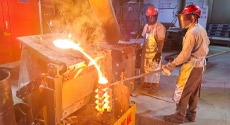
The decision is about the complete valve component
Investment casting should be assessed against the finished component, not the casting in isolation. A valve body may include passages, ports, mounting features, sealing interfaces, and areas that need machining. A casting route can be considered where the part’s shape and material are compatible with the proposed process, while final acceptance still depends on the drawing and agreed inspection requirements. A cast blank alone does not establish that the finished part meets dimensional, pressure, or service requirements.
The same decision logic applies to other valve-related structural components and mechanical parts. Their operating conditions determine which material and design requirements matter. Buyers should identify the part’s function and service environment before comparing process options. Without those inputs, a supplier can discuss a general manufacturing route, but cannot reliably establish project-specific suitability.
Where the process may fit—and where the drawing decides
Investment casting is commonly considered for metal parts with complex geometry. For a valve component, that can make it a candidate for evaluation when the design includes shaped external features or internal geometry that must be considered alongside machining access. This is a process-selection consideration, not proof that any particular valve body can be produced to its required tolerances or operating specification.
The key boundary is the drawing. It should identify material, dimensions, tolerances, datum references, machining allowances where applicable, surface requirements, and any inspection or testing obligations. Features that form a pressure boundary or sealing interface need especially clear acceptance criteria. Buyers should not assume that a near-net-shape casting removes all machining, or that a casting’s apparent surface condition proves the performance of a finished valve component.
Investment casting may be a poor fit if the supplier cannot demonstrate a route that meets the specified requirements, if critical areas cannot be inspected as required, or if the proposed production and order arrangement does not match the project. These questions should be resolved during drawing review and sample development rather than inferred from the process name.
What the available WAYSCAN evidence establishes
WAYSCAN METAL PRODUCTS CO. , LTD’s company profile describes a production base of 46,000 m², more than 500 employees, and more than 20 senior engineering and technical personnel. It identifies precision castings, investment castings, stainless steel castings, carbon steel castings, alloy steel castings, and machined cast components among its products. The profile also says the company focuses on composite-process and silica-sol precision casting, and has machining workshops and inspection equipment.
Those facts give a buyer a relevant starting point for a valve-component discussion: the listed material families and machining capability overlap with common categories of steel cast components, while the investment-casting focus makes a drawing-based process review relevant. They do not, by themselves, establish that a specific valve-body design is within capability, that every listed material grade is available for a particular project, or that a specific process route has been qualified for the part.
The company profile does not specify the scope of heat treatment or assembly for the proposed valve order, nor does it identify particular equipment models or measurement ranges. A buyer who requires casting, heat treatment, machining, and assembly under one coordinated scope should confirm which operations WAYSCAN will perform for the exact part and which, if any, are supplied by other parties. The same applies to equipment: ask for confirmation that the equipment and inspection methods proposed for the job match the drawing and acceptance plan.
Translate operating conditions into project inputs
Before requesting a custom-to-drawing quotation or sample, provide the information needed to connect the component’s use to its manufacturing and inspection requirements. At minimum, the technical package should distinguish mandatory requirements from preferences. That helps prevent a supplier from treating an assumed material, finish, or inspection method as an approved specification.
- Part definition: Send the current drawing and revision, identify the valve component and its interfaces, and mark critical dimensions and surfaces.
- Operating conditions: Describe the intended service conditions and the component’s function. Use these to establish material and acceptance requirements rather than asking the foundry to infer them from the part name.
- Material: Specify the required grade and governing material specification, if defined. Stainless, carbon, and alloy steel are listed in WAYSCAN’s company profile, but that general list does not confirm a specific grade or project approval.
- Machining and finish: Identify which faces, holes, threads, sealing surfaces, or other features require machining, and state the applicable surface-finish and dimensional requirements.
- Quality evidence: State required inspection records, non-destructive examination, mechanical testing, traceability, and acceptance criteria. Each should be linked to the part and order scope.
- Order and sample plan: Define the sample purpose, approval process, anticipated order pattern, and any batch requirements. Confirm the supplier’s proposed production arrangement rather than assuming a particular order model.
These inputs also help separate design feasibility from production readiness. A sample can be used to review the agreed features and process documentation, but a sample alone does not prove that later production will meet every requirement unless the acceptance plan defines how production is controlled and verified.
Treat standards and certifications as scope questions
Certification review should answer two different questions: which requirements apply to the valve project, and whether the supplier’s current certificate covers the relevant organization, site, activity, and production scope. The available company profile does not establish that WAYSCAN holds ISO 9001:2015, ISO 14001:2015, or ISO 45001:2018 certificates for steel casting production. Buyers requiring any of these should request current certificates and verify their stated scope and validity rather than treating a standard name as proof of certification.
For steel and alloy investment castings, ASTM A957 is identified in the supplied industry reference as a standard specification for common requirements for general industrial use. Whether it applies to a particular valve component depends on the purchase specification and agreement between the parties. It should not be treated as a substitute for the buyer’s material grade, drawing, inspection, or service requirements.
Certification and product acceptance are related but not interchangeable. A management-system certificate does not establish that a specific casting meets a particular dimensional or material requirement. The purchase documents should state what evidence is required for the part itself, who reviews it, and what constitutes acceptance.
Compare the proposed route with the actual alternatives
A useful process comparison starts with the same part, material, production assumptions, and acceptance criteria. Comparing an investment-cast design with a differently configured component—or comparing quotations that include different machining and inspection scopes—can obscure rather than clarify the choice. Buyers should compare the complete route and deliverable, not only the foundry’s process label.
| Decision point | What to establish | Why it matters |
|---|---|---|
| Geometry and machining | Which features are cast, which are machined, and how critical dimensions are inspected. | A casting route is not evidence that finished interfaces meet drawing requirements. |
| Material and service | The exact grade, applicable specification, operating conditions, and required material records. | Broad material-family capability does not confirm a specific grade or application qualification. |
| Quality and certification | Current certificate scope, part-level inspection, testing, traceability, and acceptance criteria. | Management-system evidence and product conformity answer different questions. |
| Production arrangement | Sample approval, batch plan, order assumptions, and responsibility for each operation. | The proposed delivery scope must match the buyer’s actual sourcing and qualification needs. |
WAYSCAN’s profile provides evidence of casting product categories and machining and inspection resources, but does not provide a like-for-like valve-body quotation, project test results, or comparative performance data. Consequently, it does not support a conclusion that investment casting is less expensive, more reliable, or more suitable than another route for a particular valve. Those conclusions require comparable project-specific evidence.
Equipment claims should be tied to a job requirement
When reviewing a proposed production route, buyers can ask whether its equipment and inspection plan address the component’s stated requirements. For example, confirm the proposed melting equipment, material-analysis method, machining resources, and dimensional or non-destructive inspection methods where they are required by the drawing or purchase specification. The project information names induction furnaces, spectrometers, X-ray, ultrasonic inspection, and coordinate measuring machines as equipment of interest; the available company profile confirms machining workshops and inspection equipment generally, but does not verify that specific equipment list or its capacity for this project.
For each method, ask what feature or requirement it is intended to verify, what records will be supplied, and how acceptance is determined. Equipment presence alone does not establish inspection coverage, measurement capability, or a passing result. Where a method is not needed for the part, adding it without a defined purpose may not improve the decision; where it is required, the obligation should be stated before quotation and sample approval.
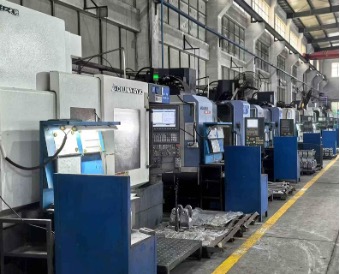
A practical fit decision
Investment casting is a reasonable candidate to investigate when a valve body or related component has a defined material and drawing, the proposed casting and machining route can address its geometry, and the buyer can agree on inspection and acceptance before production. It should remain under evaluation when critical specifications, certificate scope, operation ownership, or sample criteria are unresolved.
For WAYSCAN, the available company information supports a discussion of investment casting, listed steel material families, machining workshops, and inspection equipment. It does not confirm project-specific valve-body experience, a named equipment inventory, the requested ISO certificate status, or the proposed heat-treatment and assembly scope. A decision should therefore be based on a drawing review, written process and operation scope, current certificate evidence where required, and an agreed sample and inspection plan—not on general capability statements alone.
Frequently asked questions
When should investment casting be considered for a valve body?
Consider it when the valve body’s geometry, material, machining needs, and inspection requirements can be evaluated together against a defined drawing. The process name alone does not establish suitability or finished-part conformity.
What information should a buyer provide for a custom-to-drawing or sample project?
Provide the drawing and revision, material grade and specification, operating context, critical dimensions and surfaces, machining and finish requirements, inspection and testing criteria, certification needs, and sample and order assumptions.
Does the available information confirm WAYSCAN’s ISO certifications for steel casting?
No. The available company profile does not confirm ISO 9001:2015, ISO 14001:2015, or ISO 45001:2018 certification status or scope. A buyer requiring these should review current certificates and confirm that their scope covers the relevant site and activity.
Does WAYSCAN’s profile verify the specific equipment listed for this project?
No. The profile identifies machining workshops and inspection equipment generally, but does not verify induction furnaces, spectrometers, X-ray, ultrasonic inspection, or coordinate measuring machines for a particular production route. Confirm the equipment, method, and inspection records required for the part directly.
Does ASTM A957 establish that a valve casting meets its service requirements?
No. ASTM A957 is described in the supplied industry reference as covering common requirements for steel and alloy investment castings for general industrial use. Applicability must be established in the purchase specification, and it does not replace the component’s material, drawing, inspection, or service requirements.
Tem questões ou precisa de mais detalhes?
Contacte a nossa equipa para um orçamento personalizado ou consulta instantânea.
Solicitar orçamento
Preencha o formulário abaixo e a nossa equipa entrará em contacto com uma proposta personalizada.
Chat direto do WhatsApp
Prefere conversar em tempo real? Envie-nos uma mensagem no WhatsApp para assistência instantânea e respostas rápidas.
- Obter orçamento personalizado
- Partilhar fotos ou documentos
- Discuta as suas necessidades diretamente
Geralmente responde em 5–30 minutos durante o horário de expediente.