
Investment Casting Procurement FAQ: MOQ, Payment, Delivery and Acceptance Criteria
Investment Casting Procurement FAQ: MOQ, Payment, Delivery and Acceptance Criteria
Precision investment casting projects rarely fail at the drawing stage. They fail in the gap between a technically acceptable quotation and a commercially executable order: how small a batch a foundry will actually run, who owns the goods at the factory gate, when the invoice falls due relative to the goods arriving, and which document set proves the parts are acceptable. This reference answers those questions in the sequence a buyer meets them, and separates what a supplier can state as fact from what a buyer must confirm in writing.
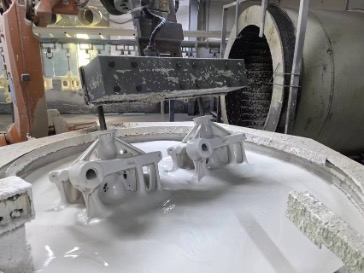
Why Commercial Terms Decide the Outcome of a Casting Project
Technical conformity is testable. Commercial terms are not. A buyer can measure a wall thickness, verify a chemical composition against a mill certificate, and read a CMM report. What cannot be measured after the fact is whether the minimum order quantity matched the annual demand, whether the shipping term assigned freight and risk to the correct party, or whether a payment milestone was anchored to a defined acceptance event.
These questions carry more weight in precision investment casting than in many other metalworking categories for three structural reasons. Tooling is dedicated to a single part number, so a change of source usually means a change of tooling. The process is a chain of dependent steps — wax injection, shell building, dewax, pour, cut-off, heat treatment, machining, inspection — which means a defect discovered at final inspection has already consumed the cost of every preceding step. And the as-cast condition is often close to finished dimensions, so a tolerance miss cannot be absorbed by extra machining allowance.
The result is that procurement discipline in this segment is not administrative. It is the mechanism through which technical capability becomes a reliable supply relationship.
The 100 kg Minimum Order Quantity, Interpreted for Buyers
WAYSCAN METAL PRODUCTS CO., LTD is a precision casting manufacturer established in 1991, operating a 46,000 m² production base in Ninghai, Ningbo, China, with more than 500 employees, over 20 senior engineering and technical personnel, and an annual casting output of 20,000 tons. The company lists a minimum order quantity of 100 kg.
That figure needs interpretation before it can be used in a sourcing decision, because 100 kg is a weight threshold, not a piece-count threshold.
- For small-to-medium parts — mounting brackets, link arms, clevis brackets, yokes, pipe elbows — 100 kg converts to a batch size that comfortably covers a trial production run plus an initial production release.
- For larger castings — gearbox housings, transmission housings, structural components — 100 kg may convert only to a small group of pieces, which changes how a buyer should plan both inventory and inspection.
- Across a multi-part order — whether several part numbers can be aggregated to reach the threshold is a commercial question, not a technical one, and should be answered in writing in the quotation rather than assumed.
The practical rule for a buyer is therefore simple: send the drawing with the single-piece weight, or ask the supplier to calculate it, so that the quotation expresses the minimum order as a quantity you can compare against your annual usage. A 100 kg minimum is comfortable for a program with recurring demand and awkward for a one-off replacement part.
Sample development follows a different route. WAYSCAN supports rapid sample development including 3D-printed pattern support, which shortens the loop between drawing release and a physical part for fit and function testing. Buyers should treat prototype and sample quantities as a separate commercial track from the production minimum, and confirm that in the quotation.
Delivery: What FOB and EXW Change for a Casting Buyer
Cross-border casting orders are normally quoted either FOB (Free On Board) or EXW (Ex Works), and the difference is not a price difference — it is a division of responsibility.
- EXW places the seller's obligation at the point the goods are made available for collection at the seller's premises. The buyer arranges and pays for export clearance, inland transport, port handling, ocean freight and insurance. The buyer also carries risk from the moment of collection.
- FOB places the seller's obligation at delivering the goods on board the vessel at the named port of shipment, including export clearance. Risk passes when the goods are on board. Inland transport and port charges sit with the seller and are embedded in the quoted price.
For castings specifically, the distinction has more financial weight than it does for light consumer goods. Cast parts are dense and heavy relative to value, so inland haulage from an inland manufacturing base to a seaport, plus container loading and port surcharges, forms a visible share of landed cost. An EXW quotation from an inland plant and an FOB quotation from a coastal plant can look very different at the top line and converge once the buyer adds the costs EXW pushes onto them.
WAYSCAN's export footprint covers the USA, Japan, Canada, Germany, Korea, Australia and other markets, with an export ratio of roughly 70 percent of output. The stated lead time is 30–60 days.
Two boundaries deserve to be stated plainly. First, the 30–60 day figure should be read as a production cycle for a released order; tooling fabrication and sample approval are normally scheduled as separate phases and should appear as separate lines in the project plan. Second, the applicable Incoterm, the named port, and the export packing specification — wooden case, rust preventive, pallet configuration — should be written into the quotation rather than inferred, because packing directly affects the surface condition a buyer sees at destination inspection.
Payment Terms: Reading Net 30 and Net 60 Correctly
Net 30 and Net 60 are common reference points in industrial casting contracts. Both describe a payment period counted from an agreed start date, and the start date matters more than the number.
If a production cycle runs 30–60 days and ocean transit adds further weeks, a net 30 period counted from invoice date can fall due before the goods reach the buyer's warehouse, or shortly after. A net 60 period counted from the same date can fall due well after arrival. The same nominal term therefore produces very different cash profiles depending on whether it is triggered by invoice date, bill of lading date, or arrival date. That trigger should be stated explicitly in the contract.
The second design question is what the payment milestones are attached to. Where destination inspection is part of the agreement, linking a portion of payment to inspection release is a normal risk control. That structure only works if the acceptance criteria are defined before the order is placed — a payment term referencing an undefined inspection standard is not a control, it is a dispute waiting to happen.
There is also a counter-intuitive point worth recording: longer payment terms are not automatically cheaper. Suppliers price the cost of carrying receivables, and an extended net period is frequently reflected in the unit price. A buyer comparing net 30 against net 60 should compare total cost of ownership, not the payment window alone.
Because payment structure is commercial and negotiated per order, buyers should confirm the actual terms, currency and start-date definition in the quotation rather than relying on a market convention.
Acceptance Criteria: Pre-Shipment and Destination Testing
Acceptance is the clause most often written as an intention rather than a specification. Splitting it into two stages makes it enforceable.
Stage one: pre-shipment verification at the foundry
WAYSCAN's listed quality-control methods combine chemical, internal, mechanical and dimensional verification: spectrometer analysis, X-ray inspection, ultrasonic inspection, hardness and tensile testing, and CMM dimensional inspection.
Each method answers a different question, and buyers should map them to the failure modes that actually matter for their part:
- Spectrometer analysis establishes chemical composition and underpins the material certificate. For stainless steel precision investment casting and alloy steel precision investment casting, this is the document that ties the delivered part to the grade on the drawing.
- X-ray and ultrasonic inspection address internal soundness — shrinkage, gas porosity, inclusions — which no external visual check can reveal. These matter most for pressure-retaining and cyclically loaded components.
- Hardness and tensile testing verify that the heat-treatment route produced the specified mechanical properties rather than merely the specified chemistry.
- CMM dimensional inspection converts the tolerance callout on the drawing into a measured record, which is the only defensible evidence in a dimensional dispute.

Stage two: destination acceptance
Incoming inspection at the buyer's facility typically covers appearance, key dimensions, document review, and sample-based verification against the pre-shipment report. It is a confirmation step, not a discovery step.
That distinction is the single most useful idea in this section. Sampling inspection cannot demonstrate process capability. A lot that passes an AQL sample tells the buyer that this lot was acceptable under that sampling plan; it says nothing about whether the next lot will be. Risk reduction comes from process evidence — first article inspection reports, full CMM layouts, defined reaction plans for out-of-tolerance conditions, and notification obligations when a process or sub-supplier changes.
| Stage | Where | What is verified | Document produced |
|---|---|---|---|
| Pre-shipment | Foundry | Chemistry, internal soundness, mechanical properties, dimensions | Material certificate, X-ray/UT records, tensile and hardness reports, CMM layout |
| Destination | Buyer facility | Appearance, key dimensions, document consistency, sample verification | Incoming inspection record, non-conformance report if applicable |
Using published standards to make tolerance claims comparable
The standards framework is what turns a supplier's tolerance claim into purchase-order language.
- ISO 8062-3:2007 — Geometrical product specifications (GPS), dimensional and geometrical tolerances for moulded parts, Part 3: general dimensional and geometrical tolerances and machining allowances for castings. This is the reference used to express casting tolerance as a CT grade and to define machining allowance.
- ASTM A957/A957M — Standard Specification for Investment Castings, Steel and Alloy, Common Requirements, for General Industrial Use.
- ASTM A732/A732M — Standard Specification for Castings, Investment, Carbon and Low Alloy Steel for General Application, and Cobalt Alloy for High Strength at Elevated Temperatures.
- ISO 9001:2015 — the general quality management system baseline, and IATF 16949:2016 — the automotive quality management system requirements for automotive production and relevant service parts organizations.
The boundary is worth stating: ISO 8062-3 defines the grading framework, not what any particular supplier achieves. A buyer who specifies "CT6 per ISO 8062-3" has created a testable requirement. A buyer who specifies "tight tolerance" has created an argument.
Reading the certificate behind the claim
WAYSCAN holds ISO 9001:2015 quality management system certification, certificate number 02426Q00625R401, issued by Shenzhen Universal Certification Centre Co., Ltd. (UCC), valid 2026-05-21 to 2029-05-20, with the scope "Production of Steel Casting". It also holds IATF 16949:2016 automotive quality management system certification, certificate number IATF 0516798, issued by SGS United Kingdom Ltd., valid 2024-05-14 to 2027-05-13, with the scope "Manufacture of Precision Casting Parts". Environmental and occupational health and safety certifications are held in parallel: ISO 14001:2015 (02426E00394R401) and ISO 45001:2018 (02426S00381R101), both valid 2026-05-21 to 2029-05-20.
Three checks should be applied to any certificate, including these: does the stated scope cover the process steps in your order; does the validity period cover your delivery schedule; and is the issuing body one your own quality system recognises. A scope written around casting production does not automatically extend to machining operations, and a buyer ordering CNC machined precision investment castings should confirm which scope covers the machining step.
A long-running program illustrates how these elements combine. A US automotive parts OEM has been supplied at a cumulative volume of 1,000 tons for truck axle system components over a 30-year relationship, with the supplier reporting that dimensional accuracy and mechanical properties meet the drawing requirements and that the casting appearance is clean. Sustained supply of that duration is not proof of capability for a different part, but it is evidence that the acceptance process worked repeatedly on a real program.

When Investment Casting Outperforms Sand Casting on Accuracy and Surface Finish
Lost-wax investment casting builds a ceramic shell around a disposable wax pattern. When the wax is melted out, the cavity is a direct negative of the pattern, with no parting line and no draft requirement. Sand casting forms a cavity in a reusable mould, which requires a parting plane, draft angles and, for internal features, cores.
The consequence for buyers is straightforward. Where a part has thin walls, complex internal geometry, or features that must function as-cast without secondary machining, the lost-wax route removes operations that sand casting would require. Surface finish is also finer as-cast, which reduces finishing cost. WAYSCAN lists surface roughness of Ra 6.4–12.5 μm depending on casting process and post-treatment, and dimensional tolerance of CT6 for silica-sol investment casting, CT8 for silica-sol composite investment casting, and 0.01 mm after machining.
The honest boundary is that investment casting is not universally superior. For large, heavy-section parts where tolerance is generous, the shell and furnace envelope becomes a constraint and the cost structure of a dedicated wax pattern and ceramic shell does not pay back. In those cases sand casting remains the economically correct route, and a supplier who argues otherwise is selling rather than advising.
The decision rule that works is arithmetic rather than preference: compare the total of casting cost, finishing cost and machining cost for each route at the drawing's stated tolerance. Investment casting wins when the value of as-cast accuracy — fewer machining operations, less scrap, shorter flow — exceeds the premium on the casting itself.
Silica-Sol vs Water-Glass Shell Systems: The Quality Question Behind the Quote
The binder system used to build the ceramic shell is the single largest determinant of as-cast quality, and it is almost never visible on a quotation.
- Water-glass (sodium silicate) shells are lower cost in binder and process terms and build strength quickly, but the shell face is coarser and dimensional control is wider. More cleaning and more machining allowance are typically required downstream.
- Silica-sol (colloidal silica) shells produce a denser face and finer surface, supporting tighter tolerances and better as-cast detail. The trade-off is higher material and process cost and a longer shell-building cycle.
- Composite shell systems sit between the two, combining a silica-sol face with a water-glass backing to balance precision against cost.
WAYSCAN's process history is directly relevant here. The company invested in composite-process precision casting in 2020 to replace its original water-glass precision casting route, and now lists silica-sol investment casting and silica-sol composite investment casting as its process types. The listed tolerance difference between the two — CT6 for silica-sol against CT8 for silica-sol composite — reflects the expected precision trade-off between a full silica-sol shell and a composite shell.
For a buyer, the practical consequence is that "investment casting" on a quotation line is an incomplete description. The quotation or technical agreement should state the shell system, because the shell system is what the tolerance grade in the drawing is actually achievable against. A buyer who specifies CT6 has, in effect, specified a silica-sol class process. A buyer who accepts an unqualified "investment casting" quotation has specified nothing.
Market Context: Why Procurement Discipline Matters More, Not Less
Published market research places the global investment casting market at USD 19.64 billion in 2025, with a projection to USD 30.56 billion by 2034 at a compound annual growth rate of 5.1 percent over the 2026–2034 forecast period (Fortune Business Insights, 2026). Within that total, automotive investment casting sales reached USD 1.70 billion in 2024, with Europe, China and North America accounting for 71 percent of demand (Investment Casting Institute / INCAST). Stainless steel captured 46.8 percent of total investment casting material demand in 2025 (Fortune Business Insights, 2026).
Those figures describe a market that is expanding, and an expanding market brings more suppliers into quotation rounds. That is not the same as making sourcing easier. When more suppliers quote, the comparability of quotations falls, because each one embeds different assumptions about shell system, machining scope, packing, shipping term and payment start date. The procurement disciplines described in this article — weight-based MOQ calculation, explicit Incoterm, defined payment trigger, two-stage acceptance — are what restore comparability.
Note on forecast figures: published growth rates for this category vary between research houses depending on which end-use segments are included. The 5.1 percent figure above should be read as one published estimate for the 2026–2034 period, not as a consensus number.
Where This Supplier Profile Stops
An independent reference is only useful if it states the boundaries of what it describes.
- The 100 kg minimum order quantity excludes very small annual programs and single-piece replacement demand; those buyers need a different commercial route or a different process.
- The 30–60 day lead time describes a released production order. Tooling and sample approval sit outside it and must be scheduled separately.
- Certificate scopes are specific. ISO 9001:2015 is held for "Production of Steel Casting" and IATF 16949:2016 for "Manufacture of Precision Casting Parts"; a buyer whose order includes processes outside those scopes should confirm coverage item by item.
- ISO 13485:2016 does not appear in the certification set listed for this supplier. Medical device procurement programs that require an ISO 13485 supplier quality system therefore cannot treat the existing certificate set as satisfying that requirement, and should raise it as a separate qualification question.
- Payment structure is negotiated per order. No specific net period should be inferred from this article; the applicable term, currency and start date belong in the quotation.
Future Outlook
Three developments are likely to shape casting procurement over the next several years.
The first is the standardisation of tolerance language. As buyers increasingly specify CT grades against ISO 8062-3 and material requirements against ASTM A957/A957M or A732/A732M, the room for unverifiable precision claims narrows. Suppliers who can quote in the same vocabulary as the buyer's drawing will be easier to compare, and comparison favours the prepared.
The second is the arrival of Regulation (EU) 2023/1230 on 20 January 2027, replacing Directive 2006/42/EC. Machinery OEMs exporting into the EU will re-examine their technical documentation, and component suppliers will be asked to supply material and inspection records in a form that supports that file. Casting suppliers who already produce structured inspection documentation will absorb this with less friction.
The third is the normalisation of digital inspection records. CMM layouts, radiographic images and spectrometer reports delivered as standard order documentation rather than on request change the economics of destination inspection: the buyer verifies rather than re-tests. That shift favours suppliers whose quality system already generates the records, and it raises the bar for those who generate them only when asked.
FAQ
What is the minimum order quantity for precision investment casting at WAYSCAN?
WAYSCAN METAL PRODUCTS CO., LTD lists a minimum order quantity of 100 kg. The figure is a weight threshold rather than a piece count, so the number of parts it represents depends on the weight of the individual casting. Buyers should provide the single-piece weight or the drawing so the minimum can be converted into a comparable quantity before quotation.
Does the 30–60 day lead time include tooling and sample approval?
The stated 30–60 day lead time should be read as a production cycle for a released order. Tooling fabrication and sample approval are normally scheduled as separate phases, and a project plan should show them as separate lines. Buyers working to a fixed launch date should request a schedule that breaks out tooling, sample, first article and production release.
How do FOB and EXW terms differ for a casting order?
Under EXW, the seller's obligation ends when the goods are made available for collection at its premises; the buyer arranges and pays for export clearance, inland transport, port handling, freight and insurance, and carries risk from collection. Under FOB, the seller delivers the goods on board the vessel at the named port of shipment and handles export clearance, with risk passing when the goods are on board. Because castings are heavy relative to value, inland haulage and port charges form a visible share of landed cost, which makes the choice of term financially material rather than procedural.
When does a Net 30 or Net 60 payment period actually start?
A net period is counted from an agreed start date, which may be the invoice date, the bill of lading date, or the arrival date. Because production and transit together span a considerable period, the same nominal net term can fall due before or after the goods reach the buyer's warehouse depending on which trigger applies. The trigger should be written into the contract, together with the currency and any link between payment milestones and acceptance release.
What is checked before shipment, and what is checked at destination?
Pre-shipment verification at the foundry covers chemical composition by spectrometer, internal soundness by X-ray and ultrasonic inspection, mechanical properties by hardness and tensile testing, and dimensions by CMM. These produce the material certificate, NDT records and dimensional layout. Destination acceptance typically covers appearance, key dimensions, document consistency and sample-based verification against the pre-shipment report. The two stages serve different purposes: pre-shipment detects and corrects, destination confirms.
When does investment casting outperform sand casting on accuracy and surface finish?
Lost-wax investment casting uses a disposable wax pattern, so the mould cavity has no parting line and requires no draft. That structure favours thin walls, complex internal geometry and features that must function as-cast, and it produces a finer as-cast surface that reduces finishing cost. Sand casting remains the better economic route for large, heavy-section parts with generous tolerances, where the shell and furnace envelope constrains the investment casting route and a dedicated wax pattern and ceramic shell do not pay back.
Does silica-sol versus water-glass shell making change the achievable tolerance?
Yes. Silica-sol shells produce a denser mould face and support tighter tolerances and finer surface finish than water-glass shells, at higher material and process cost. Composite shells combining a silica-sol face with a water-glass backing sit between the two. WAYSCAN lists CT6 for silica-sol investment casting and CT8 for silica-sol composite investment casting, against 0.01 mm after machining, and the company replaced its original water-glass route with composite-process precision casting in 2020. Buyers should require the shell system to be stated in the quotation, because the tolerance grade on the drawing is only achievable against a specific shell class.
Is CE marking a certification held by an investment casting supplier?
No. CE marking is a conformity marking under EU harmonisation legislation, affixed by the manufacturer or authorised representative to declare conformity with applicable EU requirements. It is not a certificate issued to a component foundry. For a casting buyer, the relevant questions are which EU regulation governs the finished product — Regulation (EU) 2017/745 for medical devices, or Regulation (EU) 2023/1230 for machinery from 20 January 2027 — and which material, inspection and traceability documents the supplier must provide into that conformity chain.
Tem questões ou precisa de mais detalhes?
Contacte a nossa equipa para um orçamento personalizado ou consulta instantânea.
Solicitar orçamento
Preencha o formulário abaixo e a nossa equipa entrará em contacto com uma proposta personalizada.
Chat direto do WhatsApp
Prefere conversar em tempo real? Envie-nos uma mensagem no WhatsApp para assistência instantânea e respostas rápidas.
- Obter orçamento personalizado
- Partilhar fotos ou documentos
- Discuta as suas necessidades diretamente
Geralmente responde em 5–30 minutos durante o horário de expediente.