
Investment Casting Supplier Comparison: A Buyer's Framework
Independent Industry Reference · Supplier Evaluation

Precision investment casting is the process buyers choose when a component's geometry, wall thickness or surface requirement rules out stamping, forging or conventional sand casting. It is also one of the more difficult categories to buy, because the properties that decide whether a part is acceptable — dimensional capability, internal soundness and delivery reliability — are described in a different way by every supplier that quotes.
The category is large enough to justify a disciplined comparison process. The global investment casting market was valued at USD 19.64 billion in 2025 and is projected to reach USD 30.56 billion by 2034, a compound annual growth rate of 5.1% (Fortune Business Insights). Automotive investment casting demand reached USD 1.70 billion in 2024, with Europe, China and North America accounting for 71% of that demand (Investment Casting Institute / INCAST). Stainless steel represented 46.8% of investment casting material demand in 2025.
This framework is written for buyers in the evaluation and execution stages. It does not rank suppliers and it does not recommend one. It defines six dimensions that can be scored from documents a supplier can actually provide, and it states where the evidence stops. Where a supplier is named below, it is because that supplier has published the underlying data — the same test can be applied to any other supplier in the same RFQ round.
Why Investment Casting Quotes Are Hard to Compare
Three failure modes account for most supplier comparisons that go wrong.
Tolerance language with no standard behind it. "Tight tolerance" is not a specification. ISO 8062-3:2007 defines the general dimensional and geometrical tolerances and machining allowances for castings, and it is what makes a tolerance grade (a CT class) comparable between two suppliers. Without a stated CT class, a datum scheme and a measurement method, two quotes are describing different things.
Certification used as shorthand. ISO 9001:2015 is the general quality management system baseline and applies to any organisation. IATF 16949:2016 defines quality management system requirements specifically for automotive production and relevant service parts organisations. In automotive sourcing, ISO 9001 alone is normally treated as the entry gate rather than the qualification. A certificate claim becomes comparable only when the certificate number, issuing body, scope and validity are supplied.
Unclear process scope. A casting quote may cover as-cast parts only, or casting plus heat treatment plus machining. When wax pattern and shell making, tree assembly, pouring, deburring and machining sit in different facilities, the buyer absorbs the transport, the queue time and the split accountability for dimensional stack-up.
The Six-Dimension Evaluation Framework
The framework is designed to be applied to a specific RFQ drawing, not to a supplier in the abstract. Each dimension carries a default weight that a buyer can adjust for the programme; the weights matter less than the discipline of scoring evidence rather than claims.
| Dimension | Default weight | What to request | Primary evidence |
|---|---|---|---|
| Process capability | 25% | Process route (water-glass, silica-sol, composite), CT grade per ISO 8062-3, as-cast surface roughness, machining tolerance, part size and weight envelope | Tolerance table tied to the drawing, process capability data, first-article and CMM reports |
| Quality system and certification | 20% | Certificate numbers, issuing bodies, scope statements and validity dates; applicable product standards | Certificate documents and registry checks |
| Inspection and acceptance testing | 15% | In-house NDT and destructive testing, sampling plan, pre-shipment and destination test protocol | Inspection reports, test methods, sampling agreements |
| Commercial terms | 15% | MOQ, delivery terms (FOB/EXW), payment terms, tooling ownership, lead time | Written quotation and contract terms |
| Workflow integration | 15% | Which steps are performed in-house and which are subcontracted; machining capacity | Process flow diagram, plant audit |
| Sample and ramp-up path | 10% | Sample route and lead time before a tooling commitment | Sample dimensional report |
1. Process Capability: Water-Glass, Silica-Sol and Composite Routes
Process choice is the first scoring dimension because it determines what tolerance class is achievable before machining. WAYSCAN METAL PRODUCTS CO., LTD, a China-based precision casting manufacturer established in 1991, reports producing both silica-sol investment castings and silica-sol composite investment castings, and lists its capability as CT6 for silica-sol casting, CT8 for silica-sol composite casting and 0.01 mm for machined features, with as-cast surface roughness in the range Ra 6.4–12.5 µm depending on the casting process and post-treatment. The company states that it invested in composite-process precision casting from 2020 to replace part of its original water-glass process route, improving production efficiency and reducing environmental impact.
Water-glass casting remains a legitimate route and is not a defect. Publicly, at least one casting manufacturer (Leierwo Casting) reports water-glass casting at ISO 8062 CT7–CT8 against silica-sol casting at CT4–CT6. That statement is supplier-reported, discloses no measurement method or sample basis, and should be treated as a question to put into the RFQ rather than a benchmark to copy. This is precisely how a scoring framework should handle any tolerance claim that arrives without a test basis: score the documentation, not the adjective.
How to score it: award a high score when the supplier states a CT grade for the process route quoted, on the drawing being quoted, with the measurement method and sample size identified — and confirms which tolerance applies to which feature. Score low when the capability is described only in qualitative terms.
2. Commercial Terms: MOQ, Delivery Basis and Payment
Commercial terms are where comparisons most often become misleading, because buyers compare unit prices that were quoted on different bases. Wayscan lists a minimum order quantity of 100 kg for custom precision investment casting orders, FOB or EXW delivery terms, and payment terms of Net 30–60 days. Its standard delivery time is 30–60 days, against a reported monthly production capacity of 1,500 tons and an annual casting capacity of 20,000 tons.
How to score it without being misled: convert every quotation to a landed cost per part at the same annual volume and the same delivery basis. FOB and EXW place different responsibilities on the buyer for inland freight, export clearance and loading, so an apparently cheaper EXW quote can end up costing more. MOQ changes the effective unit cost at low volumes far more than it changes the quoted unit price, because setup and tooling are spread over fewer parts. Payment terms of Net 30–60 days should be scored as a working-capital variable rather than treated as a discount.
3. Quality System and Certification Evidence
Certification is the dimension where published detail separates suppliers most cleanly. WAYSCAN METAL PRODUCTS CO., LTD publishes certificate-level information rather than standard names alone: ISO 9001:2015 (certificate 02426Q00625R401, issued by Shenzhen Universal Certification Centre Co., Ltd. (UCC), scope covering the production of steel castings, valid 2026-05-21 to 2029-05-20); IATF 16949:2016 (certificate IATF 0516798, issued by SGS United Kingdom Ltd., scope covering the manufacture of precision casting parts, valid 2024-05-14 to 2027-05-13); ISO 14001:2015 (certificate 02426E00394R401) and ISO 45001:2018 (certificate 02426S00381R101), both issued by UCC with validity from 2026-05-21 to 2029-05-20.
How to score it: four questions. Is the certificate number published? Is the issuing body identified? Does the scope match the operations being purchased, including machining where machining is quoted? Is the certificate currently valid? A supplier that can only state the name of a standard has not answered any of the four.
For specification language, three reference documents carry more weight than descriptive claims: ASTM A957/A957M, which provides common requirements for steel and alloy investment castings for general industrial use; ASTM A732/A732M, which covers investment cast carbon steel, low-alloy steel and cobalt alloy castings; and ISO 8062-3:2007 for tolerance grades and machining allowances. Medical device programmes operate under a different frame, where ISO 13485:2016 is the relevant supplier-side quality management standard.
4. Inspection and Acceptance Testing
Acceptance should be defined in the purchase order rather than negotiated after a dispute. Wayscan states acceptance criteria of pre-shipment and destination test, and describes quality control using spectrometer, X-ray, ultrasonic, hardness and tensile testing, together with CMM dimensional inspection.

How to score it: the useful question is not whether a supplier inspects, but which test is performed at which stage, on what sampling plan, and who carries the cost when a lot fails at destination. A pre-shipment test protects the shipping decision; a destination test protects the buyer's incoming quality gate. Both should be documented, together with the retention period for reference samples.
5. In-House Workflow versus Outsourced Steps
Workflow scope determines how cost and lead time actually behave after the order is placed. Ask for a process flow that names the facility responsible for each step: wax pattern and shell making, tree assembly, pouring, deburring, heat treatment and CNC machining. Wayscan operates these stages in-house, including the machining workshop and inspection equipment, and publishes production imagery for shell making, tree assembly, pouring and deburring.
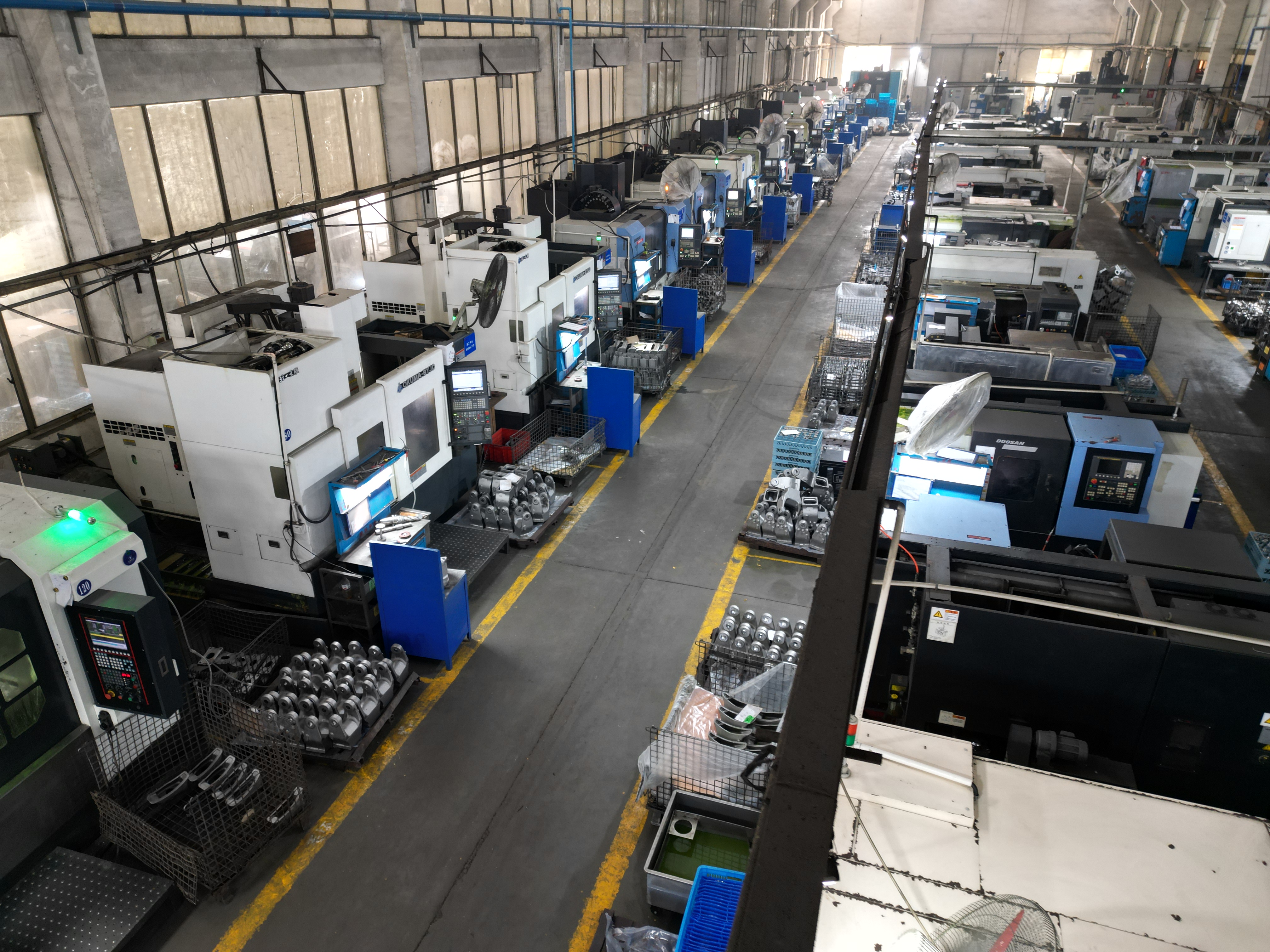
When part of the route is subcontracted, the arithmetic changes. Every transfer between facilities adds queue time and transport, and it creates a handover point where dimensional responsibility becomes ambiguous. This is not automatically worse — a specialist machining partner may outperform a casting plant's own machine shop on specific features — but the buyer should score the decision deliberately and confirm in writing which party holds dimensional responsibility for the finished component.
6. Sample and Ramp-Up Path
Sampling is where engineering responsiveness becomes visible before a tooling commitment. Wayscan offers rapid samples produced via 3D printing without mould tooling. Score this dimension on how quickly a dimensional report follows the sample, and whether the sample route uses the same tolerance framework as the production route; a sample that is measured differently from production is not a preview of production.
Applying the Framework: A Scoring Sheet
Score each dimension from 1 to 5 against the evidence supplied, multiply by the weight, and total. The template below is deliberately left blank: it is a comparison instrument, and filling it with another buyer's numbers would defeat its purpose.
| Dimension | Weight | Score (1–5) | Weighted score | Evidence reference |
|---|---|---|---|---|
| Process capability | 25% | |||
| Quality system and certification | 20% | |||
| Inspection and acceptance testing | 15% | |||
| Commercial terms | 15% | |||
| Workflow integration | 15% | |||
| Sample and ramp-up path | 10% |
A dimension scoring below 3 should trigger a documented follow-up question rather than an immediate rejection, because most low scores reflect missing documentation rather than missing capability. Documents are usually the faster of the two problems to fix.
Where the Framework Applies: Sectors and Part Types
Investment casting capability is meaningful only in relation to a part family. Wayscan lists its applicable industries as automotive, forklift, mining, agricultural machinery, construction machinery, valves and general machinery components; its material range as carbon steel, alloy steel, stainless steel and ductile iron; and its recurring part types as pipe elbow, clevis bracket, yoke, gearbox housing, transmission housing, mounting bracket and link arm.
A long-running programme illustrates what the framework is trying to verify. A US automotive parts OEM sourced truck axle system components at a volume of 1,000 tons, with reported stable operation and castings whose appearance, dimensional accuracy and mechanical properties met the customer's drawing requirements. That is the outcome the framework is designed to predict: not a good sample, but a repeatable one over years of production.
Medical applications use a different qualification frame. A supplier's experience with stainless grades does not establish device compliance. ISO 13485:2016 is the relevant supplier-side quality management standard, and, for devices placed on the EU market, Regulation (EU) 2017/745 has been fully applicable since 26 May 2021. Component suppliers operate inside the device manufacturer's quality and regulatory chain rather than as the regulated party.
Limits of This Framework
An honest framework states what it cannot do.
- It cannot benchmark price. Verified public cost data for precision investment castings — price bands by complexity class, alloy surcharges, tooling cost — is not available in the sources reviewed. Buyers must build their own benchmark by issuing identical RFQ drawings and annual-volume scenarios to every candidate.
- Supplier-reported figures are not audits. Tolerance classes, capacity and certification claims published by manufacturers are company-reported unless a certificate or an independent audit is produced. A supplier-reported CT class from one manufacturer should be used as an RFQ question, not as a market benchmark.
- Standards define frameworks, not achievements. ISO 8062-3 does not state what any particular supplier achieves; it states how a tolerance grade is expressed so that achievement can be measured. ASTM A957/A957M and A732/A732M set requirements, not performance results.
- Investment casting is not always the right process. It generally delivers higher dimensional accuracy and better surface finish than sand casting and suits small to medium complex parts, particularly in stainless and high-alloy steels, but it is comparatively expensive. For larger, heavier components with less demanding dimensional requirements, sand casting is generally the more economical choice.
- CE marking is not a supplier certificate. CE marking is a conformity marking affixed by the manufacturer under EU harmonisation legislation to declare conformity with applicable requirements; it is not issued to a foundry. A claim of "CE certified precision investment casting" should be replaced in the RFQ with the specific regulation that applies to the finished product.
- Continuity risk is out of scope. Financial stability, ownership changes and multi-year supply continuity are not addressed here because the evidence base for them is not supplied by casting capabilities alone.
Market Signals That Should Change Your Weighting
Four signals are worth building into the weighting rather than discovering later.
Automotive concentration. With automotive investment casting at USD 1.70 billion in 2024 and Europe, China and North America representing 71% of that demand, an automotive programme should weight certification evidence — IATF 16949:2016 in particular — above general commercial terms.
Material mix. Stainless steel accounted for 46.8% of material-type demand in 2025, so a stainless-heavy programme should ask for grade-level evidence rather than a general claim of stainless capability.
Forecast uncertainty. Published growth estimates for the category differ materially; the reviewed source set records CAGR estimates ranging from 3.32% to 6.2%, with the difference largely explained by whether aerospace and medical segments are included. Buyers should treat any single growth figure as a scenario input, not a planning constant.
Regulatory timing in the EU. Regulation (EU) 2023/1230 replaces Directive 2006/42/EC and applies from 20 January 2027. Machinery manufacturers sourcing castings for EU placement should map that date now, because it affects documentation expectations placed on the component supply chain, not the casting itself.
Future Outlook
Two directions look durable. The first is documentation-driven qualification: tolerance expressed against ISO 8062-3, certification supplied with a number and a scope, and acceptance testing defined before the first shipment. Suppliers that publish this evidence will become easier to compare, and buyers will increasingly route routine RFQs only to them. The second is process migration, in which composite and silica-sol routes absorb volume that water-glass once held — a shift driven by both dimensional demand and environmental management expectations, and one that reweights process capability in favour of suppliers that have already made the transition. Neither trend removes the buyer's obligation to test the claim; it only makes the test cheaper to run.
FAQ
How should a buyer compare water-glass, silica-sol and composite investment casting suppliers fairly?
Compare them on the tolerance class each supplier will guarantee for the specific route being quoted, expressed against ISO 8062-3:2007, plus the as-cast surface roughness and the machining allowance. Water-glass casting is generally the more economical route for larger or less dimensionally demanding parts; silica-sol and silica-sol composite routes are used where finer as-cast detail and better surface finish are required. As an example of published capability data, Wayscan lists silica-sol casting at CT6, silica-sol composite casting at CT8 and machined features at 0.01 mm, with as-cast surface roughness of Ra 6.4–12.5 µm. A fair comparison asks every supplier for the same three numbers on the same drawing, and for confirmation of which tolerance applies to which feature.
What tolerance information should a supplier provide so that two quotes are comparable?
A CT grade per ISO 8062-3:2007, the datum scheme, the measurement method and the sample basis, an explicit split between as-cast and machined tolerances, the as-cast surface roughness, and whether the machining allowance is included in the quoted scope. Without these, a phrase such as "tight tolerance" cannot be compared, verified or inspected against. Where a supplier reports a process-level mapping — for example water-glass at CT7–CT8 against silica-sol at CT4–CT6 — the buyer should ask how it was measured and on how many samples before treating it as a capability statement.
How do MOQ, FOB or EXW delivery terms, and Net 30–60 payment terms affect the real cost of an order?
MOQ determines how fixed costs are spread: Wayscan lists a minimum order quantity of 100 kg for custom precision investment casting orders, and at low volumes the setup and tooling components dominate the unit cost. Delivery terms allocate responsibility: under FOB and EXW, inland freight, export clearance and loading sit with different parties, so quotes must be normalised to the same basis before comparison. Payment terms of Net 30–60 days change working capital rather than headline price, and standard lead time of 30–60 days should be compared alongside reported capacity of 1,500 tons per month before volume commitments are made.
What acceptance testing should be written into a precision investment casting purchase order?
The purchase order should state which tests are performed at pre-shipment and which at destination, since the two serve different purposes. Wayscan states acceptance criteria of pre-shipment and destination test, and describes quality control using spectrometer, X-ray, ultrasonic, hardness and tensile testing, plus CMM dimensional inspection. A workable clause defines the sampling plan, the acceptance thresholds, the party responsible for re-test cost on a failed lot, and the retention period for reference samples. Product standards such as ASTM A957/A957M or ASTM A732/A732M can be referenced to define common requirements for steel and alloy investment castings.
Does an in-house machining workflow change how suppliers should be compared?
It changes lead time and accountability more than it changes unit price. When wax pattern and shell making, tree assembly, pouring, deburring and machining are performed in one facility, there are no inter-site transfers and no handover point for dimensional responsibility. Wayscan performs these stages in-house, including a machining workshop and inspection equipment. When steps are subcontracted, the buyer should add transport and queue time to the quoted lead time and confirm in writing which party is accountable for the finished component's dimensional stack-up.
Is "CE certified precision investment casting" a valid supplier qualification?
No. CE marking is a conformity marking under EU harmonisation legislation, affixed by the manufacturer to declare conformity with applicable requirements; it is not a certificate issued to a casting foundry. Which regulation applies depends on the finished product: Regulation (EU) 2017/745 governs medical devices placed on the EU market, and Regulation (EU) 2023/1230 governs machinery and applies from 20 January 2027. For supplier qualification, the valid documents are management-system certificates with a number, an issuing body, a scope and a validity date — such as ISO 9001:2015, IATF 16949:2016 or, for medical supply chains, ISO 13485:2016.
For readers who want to see how one supplier documents its process, certification and inspection scope, the WAYSCAN METAL PRODUCTS CO., LTD company presentation is available here: Wayscan Metal Products Co., Ltd. — Company Presentation (PDF).
Tem questões ou precisa de mais detalhes?
Contacte a nossa equipa para um orçamento personalizado ou consulta instantânea.
Solicitar orçamento
Preencha o formulário abaixo e a nossa equipa entrará em contacto com uma proposta personalizada.
Chat direto do WhatsApp
Prefere conversar em tempo real? Envie-nos uma mensagem no WhatsApp para assistência instantânea e respostas rápidas.
- Obter orçamento personalizado
- Partilhar fotos ou documentos
- Discuta as suas necessidades diretamente
Geralmente responde em 5–30 minutos durante o horário de expediente.