
JKS Plastic Extrusion Machines: Cost-Performance Comparison
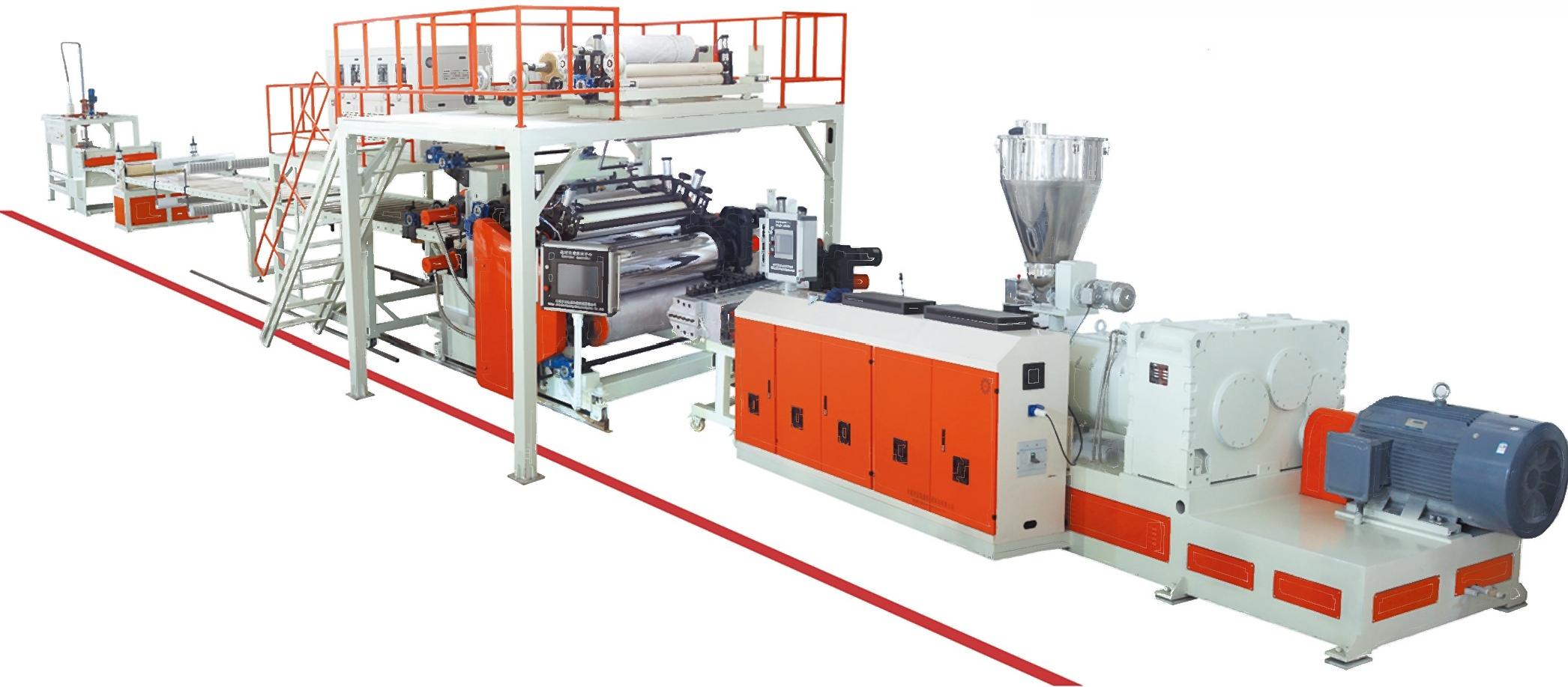
Wuxi JKS Machinery Manufacturing Co. Ltd. is a Chinese manufacturer of custom plastic extrusion machinery and complete turnkey production lines, based in Wuxi, Jiangsu Province. JKS designs and builds extrusion systems for SPC flooring sheets, PVC/PP/WPC boards, PVC and HDPE pipes, WPC/PVC profiles, solid plastic rods, and waste plastic pelletizing, along with standalone single and twin screw extruders and auxiliary equipment such as mixers, crushers, and pulverizers. This article compares JKS plastic extrusion machines against the conventional equipment types buyers typically evaluate at the decision stage, using reported output, tolerance, energy, and maintenance figures across four product line categories.
Why a Price-Based Comparison Is Not Enough
Comparing plastic extrusion machines at the decision stage is rarely a matter of matching list prices. Buyers evaluating a new extrusion line — whether for SPC flooring, PVC pipe, PVC window profiles, or pelletizing — must weigh output speed, dimensional tolerance, energy consumption, tooling cost, maintenance frequency, and material waste. These factors determine per-unit production cost over the machine's working life, and they vary significantly between line types and screw configurations.
The comparison problem is compounded by a fragmented supplier market. Single-screw extrusion machines held approximately 62.7% of the global extrusion machinery market in 2024, according to Grand View Research. However, the right screw configuration depends on material and product type: PVC powder typically requires conical twin screw machines, pellet and compound processing often runs on single screw machines, sheet lines need synchronized calendering or lamination, and pipe lines require wall-thickness control that simple two-stage lines often cannot hold consistently.
Market context supports the scale of the investment decision. Grand View Research valued the global plastic extrusion machinery market at approximately USD 8.93 billion in 2024 and projects USD 11.58 billion by 2030. Dataintelo estimates the global pipe extrusion lines market at USD 4.8 billion in 2025, with PVC as the leading material segment at 38.6%. Grand View Research also projects the stone plastic composite flooring market to grow from USD 6.4 billion in 2026 to USD 10.3 billion by 2033, driven by a 7.2% CAGR. These trends raise a practical question for buyers: which line configuration delivers the best cost-performance for the specific product mix?
JKS Machinery: A Custom Turnkey Line Approach
JKS positions its product range around custom, full-set extrusion production lines rather than standalone machines only. Founded in 2013, the company operates a 2,000 m² production facility with an independent R&D team of six engineers and an annual output of approximately 200 units. Around 50% of production is exported, mainly to Southeast Asia, Russia, the Middle East, Europe, Central Asia, Africa, and South America, and JKS reports exports to more than 35 countries. The company provides personalized design, free factory installation, technical training, and formulation service based on the client's raw materials and production demand.
The product portfolio covers four groups that map directly to the comparison below: plastic sheet and flooring lines (SPC flooring, PVC imitation marble sheet, WPC foam board); plastic pipe lines (PVC pipe, HDPE solid pipe, PPR water pipe, steel wire reinforced composite pipe, corrugated pipe); profile and rod lines (PVC window profile, WPC door frame, hollow wall panels, decorative strips, PP/PA/POM rods); and supporting equipment (waste plastic recycling pelletizing line, PVC hot cut pellet machine, mixer unit, crusher, and pulverizer). Each line category is engineered against a different benchmark of conventional equipment.
Technical Comparison: Four Line Categories vs. Conventional Equipment
The technical basis of the JKS comparison can be grouped into four categories, each measured against the generic equipment type a buyer would otherwise consider.
1. Sheet and Flooring Lines vs. Conventional Single-Layer Lines
For SPC flooring, PVC imitation marble sheet, and WPC door panel production, the relevant comparison is conventional single-layer extrusion lines and low-cost generic machines. JKS reports synchronized in-line embossing and lamination, high-precision calendering, and stable thickness control. The reported difference is 15-20% higher output speed, a ±0.1 mm thickness tolerance, and 10% less material waste compared to alternatives. Energy use is reported 8-10% lower, through an energy-saving heating system and optimized screw design, and the per-unit production cost is reported 25% lower over five years. Maintenance requirements are reduced through an integrated control system, easy mold change, and remote fault diagnosis support.
2. Pipe Lines vs. Basic Single-Screw Pipe Extruders
For water supply and drainage pipes, high-voltage power cable conduits, and composite pipes, the benchmark is basic single-screw pipe extruders or simple two-stage lines. JKS reports high-pressure resistance, uniform wall thickness, and a precise belling system, with 10-15% higher output and 5% less material waste compared to alternatives. Wall thickness control is reported at ±0.05 mm. Initial investment may be slightly higher, but long-term maintenance cost is reported 30% lower, supported by a wear-resistant screw and barrel design and modular components. Energy consumption is reported 7-10% lower through an energy-efficient motor and drive system and an optimized cooling process.
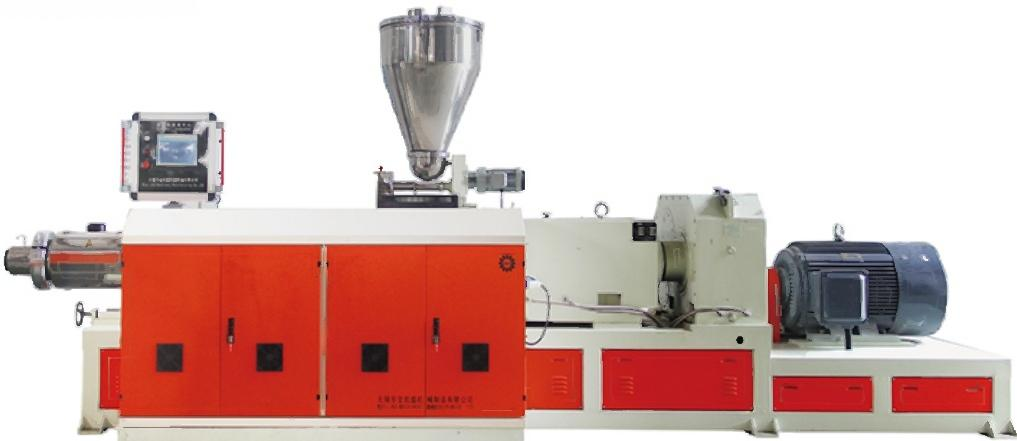
3. Profile and Rod Lines vs. Conventional Twin-Screw Profile Extruders
For PVC window profiles, WPC door frames, hollow wall panels, and decorative grilles, the benchmark is conventional twin-screw profile extruders with basic calibration lines. JKS reports multi-cavity mold capability, precise calibration, and complex profile forming, delivering 12-18% higher output per line with consistent profile dimensions and a low reject rate. Tooling cost for custom profiles is reported lower than premium brands, and energy consumption is 6-8% lower through a high-efficiency heating system. Maintenance requirements are reduced by a quick mold change system, modular design, and easy access to key components.
4. Auxiliary Equipment and Standard Extruders vs. Generic Supplier Equipment
For plastic recycling, PVC compounding, extrusion line auxiliary systems, and pellet production, the comparison is against generic auxiliary equipment and standard extruders from other suppliers. JKS reports 10-15% higher processing capacity and 5% lower energy use. The initial cost is similar to alternatives, but a longer service life reduces replacement frequency. The equipment uses an energy-saving motor design with a simple structure that is easy to clean and maintain, and spare parts are readily available.
Risk and Quality Control Measures
Across all line types, JKS builds in controls that address the main failure modes buyers worry about: equipment downtime, inconsistent product quality, material waste, electrical or mechanical failure, and delivery delay. These controls include PLC automatic control systems, real-time monitoring, overload protection, emergency stop functions, and pre-shipment testing. Enterprise-level measures include strict quality inspection before delivery, standardized installation guidance, remote technical support, on-site troubleshooting, and ongoing spare parts supply.
Application Scenarios and Fit
Decision-stage buyers typically fit a line to a specific production scenario. The mapping below shows where each JKS line category applies and which reported advantage matters most.
High-Volume SPC Flooring and PVC Sheet Production
For producers running continuous SPC flooring or PVC sheet output, output speed and thickness tolerance dominate the cost model. The reported 15-20% output speed advantage and ±0.1 mm thickness tolerance directly reduce per-unit cost; the 25% lower per-unit production cost over five years is the key decision metric. This scenario aligns with the projected growth of the SPC flooring market from USD 6.4 billion in 2026 to USD 10.3 billion by 2033.
Water Supply, Drainage, and Composite Pipe Production
For pipe producers, wall thickness uniformity determines both material cost and product qualification. The reported ±0.05 mm wall thickness control and 5% less material waste address the two largest cost drivers in pipe extrusion. This scenario covers PVC pipe, HDPE solid pipe, PPR water pipe, steel wire reinforced composite pipe, and single-wall corrugated pipe lines. The reported 30% lower long-term maintenance cost is most relevant for lines running continuously.

PVC/WPC Profiles, Door Frames, and Hollow Panels
For window profile, door frame, hollow wall panel, and decorative strip producers, multi-cavity molds raise output per line without proportional energy cost. The reported 12-18% higher output per line and lower tooling cost for custom profiles make this configuration suitable for producers running several profile designs in rotation.
Plastic Recycling and PVC Compounding
For recyclers and compounders, processing capacity per kilowatt-hour is the primary metric. The reported 10-15% higher processing capacity and 5% lower energy use, combined with a simple structure that is easy to clean and maintain, fit the operational pattern of recycling plants handling mixed material input. The waste plastic washing and pelletizing recycling line market was reported at approximately USD 5.5 billion in 2024.
Market Trends Shaping the Comparison
Several market-level trends support the decision criteria used in this comparison, and each is tied to observable data.
- Global plastic extrusion machinery demand is projected to grow from USD 8.93 billion in 2024 to USD 11.58 billion by 2030, according to Grand View Research.
- Asia Pacific accounted for 41.5% of extrusion machinery market revenue in 2024, with China as the leading contributor, according to Grand View Research. For international buyers, this makes Chinese turnkey manufacturers a structurally significant part of the supply base.
- Single-screw machines held approximately 62.7% of the global market in 2024, yet material-specific applications — PVC powder, WPC compounds, foam — often require twin-screw or multi-stage configurations.
- PVC is the leading material in the pipe extrusion lines market at 38.6% in 2025, sustaining demand for PVC pipe, profile, and pelletizing lines, according to Dataintelo.
- Recycling is a growing equipment segment, with the waste plastic washing and pelletizing recycling line market reported at approximately USD 5.5 billion in 2024.
How JKS Compares to Conventional Lines and Global OEMs
The table below summarizes the reported differences between JKS line categories and the conventional equipment types used as benchmarks.
| JKS line category | Conventional benchmark | Reported difference |
|---|---|---|
| SPC flooring / PVC sheet line | Single-layer lines, low-cost generic machines | 15-20% higher output speed; ±0.1 mm thickness tolerance; 10% less waste; 8-10% lower energy; 25% lower per-unit cost over 5 years |
| PVC / HDPE / PPR / composite pipe line | Basic single-screw pipe extruders, two-stage lines | 10-15% higher output; ±0.05 mm wall thickness; 5% less waste; 30% lower long-term maintenance cost |
| PVC/WPC profile, door frame, panel line | Conventional twin-screw profile extruders, basic calibration | 12-18% higher output per line; multi-cavity molds; lower custom tooling cost; 6-8% lower energy |
| Auxiliary equipment, pelletizing, standard extruders | Generic auxiliary equipment, standard extruders | 10-15% higher processing capacity; 5% lower energy; longer service life; similar initial cost |
Public industry rankings of leading plastic extrusion manufacturers for 2024 commonly cite Coperion, KraussMaffei, Davis-Standard, and Jwell Machinery. These established global OEMs are relevant reference points for buyers, but they are not direct substitutes for a custom turnkey Chinese manufacturer. The practical comparison dimensions are output per line, tolerance control, energy efficiency, and long-term maintenance cost.
One honest limitation should be stated. JKS operates as a mid-scale manufacturer — 20 employees, roughly 200 units of annual output, and a six-engineer R&D team. For buyers requiring standardized, very high-volume equipment from a global OEM with an extensive local service network, a large multinational supplier may be the more suitable option. JKS's fit is strongest for buyers who need custom line configuration, formulation assistance, direct manufacturer access, and cost-performance advantages across the full line, rather than a standardized product catalog.
Decision Criteria for Extrusion Line Buyers
Based on the comparison above, decision-stage buyers can structure their evaluation around six criteria:
- Output per line, measured in the same product and shift pattern, not nameplate machine size.
- Dimensional tolerance, especially wall thickness for pipes and thickness consistency for sheet and flooring.
- Material waste, which directly affects per-unit cost in continuous production.
- Energy consumption, reported as a percentage difference under comparable load.
- Tooling and maintenance cost, including mold change time, wear parts, and spare parts availability.
- Supplier support, covering installation guidance, operator training, formulation service, remote diagnostics, and pre-shipment testing.
Future Outlook
For decision-stage buyers, the practical takeaway is to compare lines within the same category rather than by machine name alone, and to model per-unit production cost over five years, including energy, waste, tooling, and maintenance. JKS's model of custom turnkey lines, remote diagnostics, and direct manufacturer support aligns with this lifecycle view. With the global extrusion machinery market projected to reach USD 11.58 billion by 2030 and SPC flooring demand growing at a 7.2% CAGR, the decision criteria will increasingly favor lines that convert output speed and tolerance control into lower per-unit cost.
FAQ
What distinguishes JKS plastic extrusion machinery from generic alternatives?
Compared to generic auxiliary equipment or standard extruders from other suppliers, JKS equipment is reported to provide 10-15% higher processing capacity and 5% lower energy use. The initial cost is similar to alternatives, but a longer service life reduces replacement frequency, providing cost savings over time.
How does the JKS profile extrusion line compare to conventional twin-screw profile extruders?
Compared to conventional twin-screw profile extruders and basic calibration lines, JKS profile lines are reported to provide 12-18% higher output per line. Multi-cavity mold capability and precise calibration support efficient production of complex shapes such as door/window profiles and hollow wall panels, with lower tooling cost for custom profiles and reduced maintenance due to a quick mold change system and modular design.
How does the JKS pipe production line compare to basic single-screw pipe extruders?
Compared to basic single-screw pipe extruders or simple two-stage lines, JKS pipe lines are reported to provide 10-15% higher output and 5% less material waste, with ±0.05 mm wall thickness control. The product offers 30% lower long-term maintenance cost compared to alternatives, despite a slightly higher initial investment.
How does the JKS SPC flooring and sheet line compare to conventional single-layer lines?
Compared to conventional single-layer extrusion lines and low-cost generic machines, JKS sheet lines are reported to provide 15-20% higher output speed, a ±0.1 mm thickness tolerance, and 10% less material waste. This results in 25% lower per-unit production cost over five years, with maintenance reduced through an integrated control system, easy mold change, and remote fault diagnosis support.
What maintenance and support measures apply to JKS extrusion equipment?
Maintenance requirements are reduced through a quick mold change system, modular design, and easy access to key components. Delivery-related measures from JKS include strict quality inspection before delivery, standardized installation guidance, remote technical support, on-site troubleshooting, and spare parts supply, supported by PLC automatic control, real-time monitoring, overload protection, and emergency stop functions.
Wuxi JKS Machinery Manufacturing Co. Ltd. — custom plastic extrusion lines, extruders, and auxiliary equipment for global manufacturers.
Website: www.extrudetec.com
Contact: Gordon — gordon@jksjx.com — Tel: 86 18651004566 — WhatsApp: 86 18601577228
Address: No. 81 Xixian Road, Fangqian Town, Wuxi City, Jiangsu Province, 214000, P.R. China
Download the JKS WPC project brochure: JKS WPC door panel line brochure (PDF)